Find us at booth #83, join us for a harbor side happy hour, or catch Gorish’s talk.

Sept, 16-18 > Learn more

%20(1).avif)
Mamta Tainwala

June 26, 2026
%20(1).png)
You become a great SDR manager by mastering three levers: high-quality prospecting that points your team at the right accounts, sustained motivation that keeps call volumes high, and sharp communication coaching that turns dials into booked meetings. On top of that, the best managers continuously refine call scripts with A/B testing, use data to coach individuals, and lead by example by getting on the phones themselves. The role is not just hitting team targets; doing it well builds the reputation and leadership skills that open the next step in your sales career.
Cold calling is not dead, whatever LinkedIn says, though its effectiveness varies by industry. For SDR managers, the job is to make every dial count by combining the right targets, a motivated team, and disciplined coaching. This guide covers the core drivers of cold calling success, how to generate more meetings from the same number of dials, and how mastering this role propels your career in sales leadership.
You become a great SDR manager by treating three things as your core job: pointing the team at the right prospects, keeping them motivated enough to maintain high activity, and coaching the communication skills that convert conversations into meetings. Everything else, including scripts, tools, and analytics, exists to amplify those three.
The managers who scale success do not just set quotas and hope. They build the targeting, the environment, and the skills, then use data to coach individuals on what is actually working. The sections below break each lever down, then cover how excelling at the role sets up your own move into senior sales leadership.
The three core drivers of cold calling success are high-quality prospecting, motivation with high call volumes, and effective communication. Get these right and conversion follows; neglect any one and the others cannot compensate.
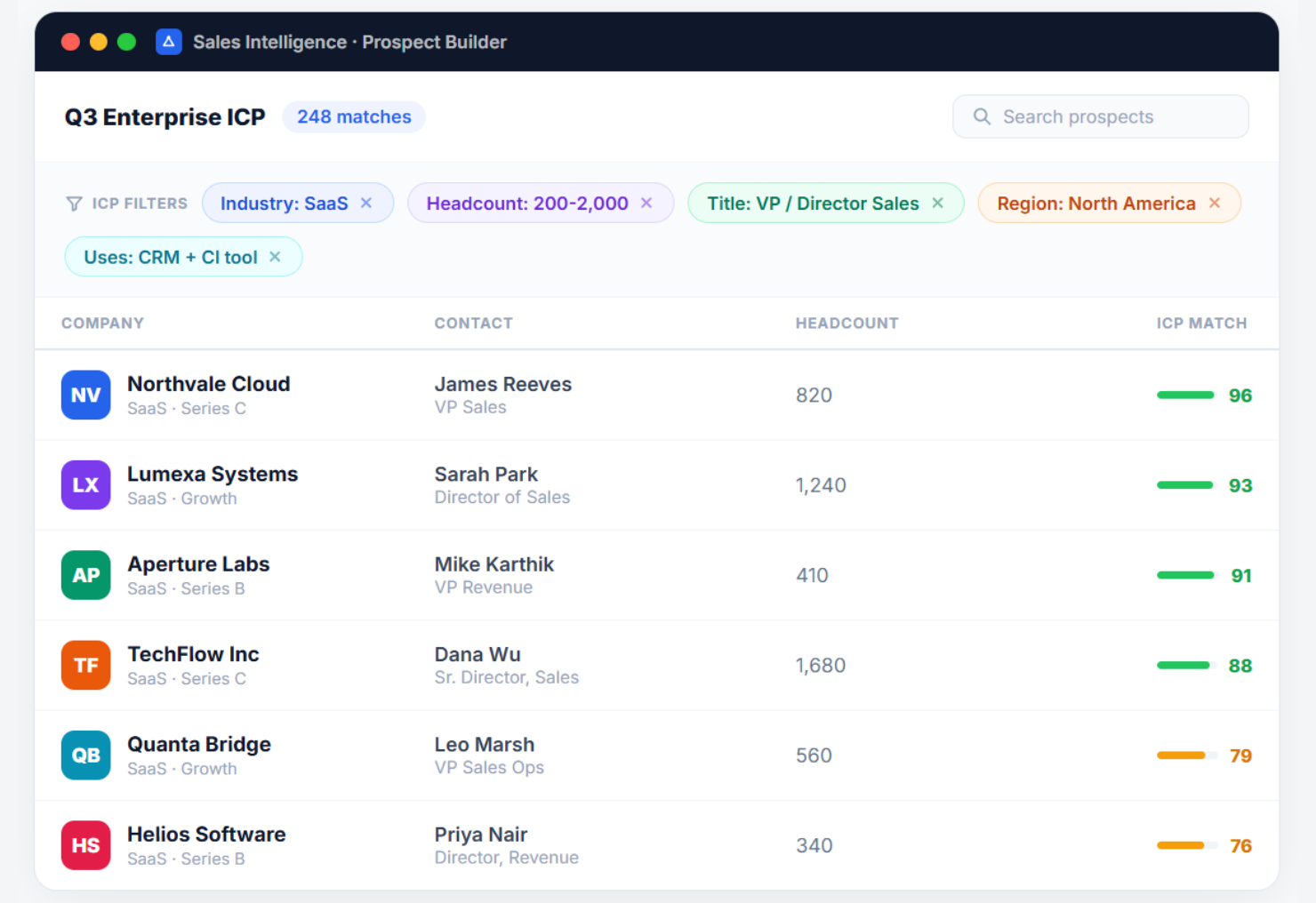
Without good lists, cold calling success is hard. Your team should be razor-focused on finding the right prospects based on your ICP, a consistent method for testing messaging, and any warm lists they already have access to. By constructing targeted lists and zeroing in on account relevance, your team's effectiveness can rise dramatically, because the same pitch lands far better on a well-matched account than a random one.
Tools make this faster: LinkedIn Sales Navigator, ZoomInfo, and similar platforms help your team pinpoint the right contacts, gather intel, and build laser-focused lists so cold prospects feel as warm as possible. It is also worth pointing your team at practitioners who publish strong prospecting content, such as Jed Mahrle, Anthony Natoli, and Matthew Lakajev, so they keep learning creative approaches to list-building and dialing.
You keep an SDR team motivated by setting clear goals and incentives, recognizing wins, staying accessible, and leading by example on the phones. Motivation and high call volumes are tightly linked, and sustaining both is one of an SDR manager's hardest and most important jobs.
Practical tactics that work: implement gamification like leaderboards and achievement badges, or performance-based rewards, to drive healthy competition; applaud small wins and share success stories to keep the team atmosphere buoyant; be approachable and someone the team looks up to; and pick up the phone yourself, especially during a slowdown or a soft market, because nothing steadies a team like a manager who still dials. Healthy rivalry plus genuine recognition creates an environment where exceptional performance becomes the norm.
The communication skills SDR managers should coach are rapid rapport-building, active listening, and confident objection handling. Mastering these subtle nuances is what separates a dial that ends in a hang-up from one that ends in a booked meeting.
Train your team to build rapport quickly, listen actively rather than waiting to talk, and handle objections with calm confidence. As Dale Carnegie observed, you make more friends by becoming interested in other people than by trying to get them interested in you, and that principle is the foundation of a good cold call. Reps who connect genuinely over the phone create outsized impact, so invest real coaching time here rather than treating it as something reps either have or lack.
You generate more meetings from the same number of dials by refining your call script through A/B testing, leveraging dialers and analytics for efficiency, and coaching reps against the patterns that convert. The goal is higher yield per dial, not just more dials.
Constantly scrutinize and fine-tune your call script through A/B testing, customizing it for different prospect personas. Experiment with diverse script variations and monitor their effectiveness so you can discern the most successful approaches and roll them out across the team. A script is never finished; it is a hypothesis you keep testing.
Capitalize on technology like dialers and CRM systems to make the team more efficient and better prepared to track progress. Automated dialers can be a major productivity boost, and automatic logging of call recordings and transcripts means you can actually examine call data for patterns. Look for the words, phrases, question styles, pauses, or mirroring techniques that increase prospect curiosity and meetings booked, then coach to them. Tracking the right things and revisiting them with intent often enough is the key to consistent improvement.
.png)
Ongoing coaching matters because it is what compounds individual rep improvement over time, turning a one-off training into sustained skill growth. Steady coaching and feedback help reps continuously refine their cold-calling ability.
The manager's job is to encourage a culture of learning and growth, where reps feel comfortable seeking advice rather than hiding struggles. Consistent, specific feedback (tied to real call data, not vague impressions) is what moves a rep from average to strong. The teams that improve fastest are the ones where coaching is a regular rhythm, not a quarterly event.
Get started for free with Sybill
Coaching is only as good as the call data behind it. Sybill records and analyzes every call, so coaching and performance insights show exactly which patterns convert, and Magic Summary means reps never lose time to manual note-taking.
Get started for free with Sybill →
Being a great SDR manager advances your career by building a strong reputation and developing the leadership skills that senior roles require. The role is a proving ground for sales leadership and, for some, for founding a company.
You build a reputation by being valuable across the organization: helping marketing with feedback on call scripts and what is working, helping account executives by being a reliable source of qualified leads, and helping sales leadership by motivating the team, delivering results, keeping attrition in check, and laying a solid foundation for revenue growth. That reputation opens doors. At the same time, the role develops essential leadership skills (communication, problem-solving, and decision-making) that prepare you for higher-level positions. Master cold calling leadership and you are well positioned to move up.
AI makes SDR managers more effective by removing the manual busywork that eats into selling and coaching time, and by turning every call into coachable data. The two biggest drains on an SDR team, administrative overhead and the difficulty of reviewing calls at scale, are exactly what AI addresses.
This is where Sybill helps. Magic Summary captures every call automatically so reps spend their time dialing instead of writing notes, CRM Autofill keeps records current without manual entry, and personalized email follow-ups go out in the rep's own voice. For managers, coaching and performance insights surface the language and techniques that convert across the team, so coaching is grounded in evidence rather than gut feel. As Sybill CEO Gorish Aggarwal puts it, the goal is to give managers the data to coach well and give reps their time back to sell.
Yes, cold calling remains effective, though its impact varies by industry. Despite claims that it is dead, many top performers still book significant pipeline through the phone, especially when calls are backed by high-quality prospecting and strong communication skills.
The most important skills are building targeted prospect lists, motivating a team to sustain high activity, coaching communication skills like rapport and objection handling, and using call data to coach individuals. Leading by example on the phones is also a defining trait of strong SDR managers.
Motivate an SDR team with clear goals and incentives, gamification like leaderboards and badges, recognition of small wins, genuine accessibility, and leading by example by dialing yourself, particularly during slow periods or soft markets.
By increasing yield per dial: A/B test and refine call scripts for different personas, use dialers and CRM automation for efficiency, and analyze call data to find the words, questions, and techniques that convert, then coach the whole team to them.
Excelling as an SDR manager builds a strong cross-functional reputation and develops core leadership skills like communication, problem-solving, and decision-making. Both open doors to higher-level sales leadership roles and, for some, to founding a company.
Prospecting tools like LinkedIn Sales Navigator and ZoomInfo improve list quality, dialers improve efficiency, and conversation intelligence tools like Sybill automate call logging and follow-ups while surfacing the coaching insights that lift conversion rates.
Yes, cold calling remains effective, though its impact varies by industry. Despite claims that it is dead, many top performers still book significant pipeline through the phone, especially when calls are backed by high-quality prospecting and strong communication skills.
The most important skills are building targeted prospect lists, motivating a team to sustain high activity, coaching communication skills like rapport and objection handling, and using call data to coach individuals. Leading by example on the phones is also a defining trait of strong SDR managers.
Motivate an SDR team with clear goals and incentives, gamification like leaderboards and badges, recognition of small wins, genuine accessibility, and leading by example by dialing yourself, particularly during slow periods or soft markets.