Find us at booth #83, join us for a harbor side happy hour, or catch Gorish’s talk.

Sept, 16-18 > Learn more

%20(1).avif)
Mamta Tainwala

June 24, 2026
%20(12).png)
You use a CRM to boost customer retention by turning customer data into three retention drivers: personalized communication that makes customers feel recognized, timely follow-ups that keep you relevant after the sale, and segmentation that delivers the right message to the right group. A modern CRM stores purchase history, preferences, and interaction records in one place, and when paired with automation and AI, it converts that data into the consistent, well-timed outreach that keeps customers loyal.
This matters because retaining a customer is far cheaper than acquiring a new one, and small improvements in retention compound into significant revenue over a customer's lifetime. The teams that win at retention are not working harder; they are letting their CRM handle the personalization, timing, and targeting at a scale no rep could manage manually.
You use a CRM to boost customer retention by acting on the customer data it already holds. A CRM is only a retention tool when its records (purchase history, communication logs, preferences) are turned into timely, relevant, personalized outreach. Left as a static database, it does nothing for loyalty.
The mechanism is straightforward: the CRM gives you a complete view of each customer, automation handles the timing and consistency that humans forget, and segmentation ensures the message fits the recipient. The three sections that follow break down each retention driver, and the final sections cover the complementary tactics and the AI layer that make the whole system run with less manual effort.
CRM data matters for retention because you cannot keep customers you do not understand. A CRM consolidates each customer's purchase history, communication records, and preferences into a single view, which is the raw material for every retention tactic that follows.
Without that consolidated data, personalization is guesswork, follow-ups are forgotten, and segmentation is impossible. With it, a rep or an automated workflow can see exactly where a customer is in their relationship with you and act accordingly. The quality of your retention efforts is capped by the quality and freshness of your CRM data, which is why keeping records clean and current is the foundation of everything else.
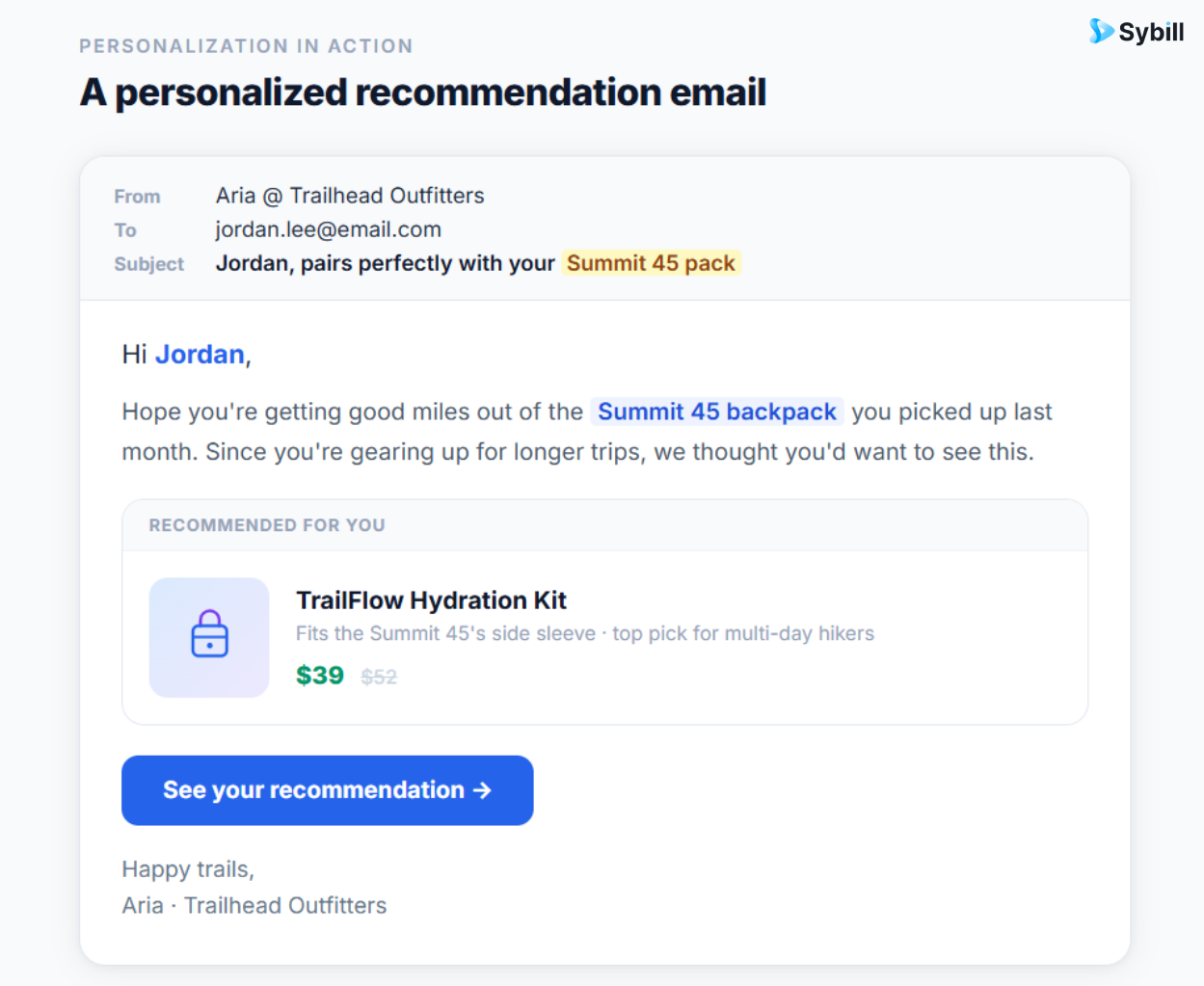
Personalized communication improves retention by making customers feel recognized rather than processed. When outreach reflects who the customer is and what they have bought, it builds the sense of an individual relationship instead of a mass broadcast, and recognized customers are far more likely to stay.
A CRM makes this possible at scale through custom fields and dynamic content. Practical examples include emails that greet customers by first name, reminders triggered by their location or timezone, and offers tailored to previous purchases. The shift is from sending the same message to everyone to sending a relevant message to each person, which is the difference between communication customers ignore and communication they value.
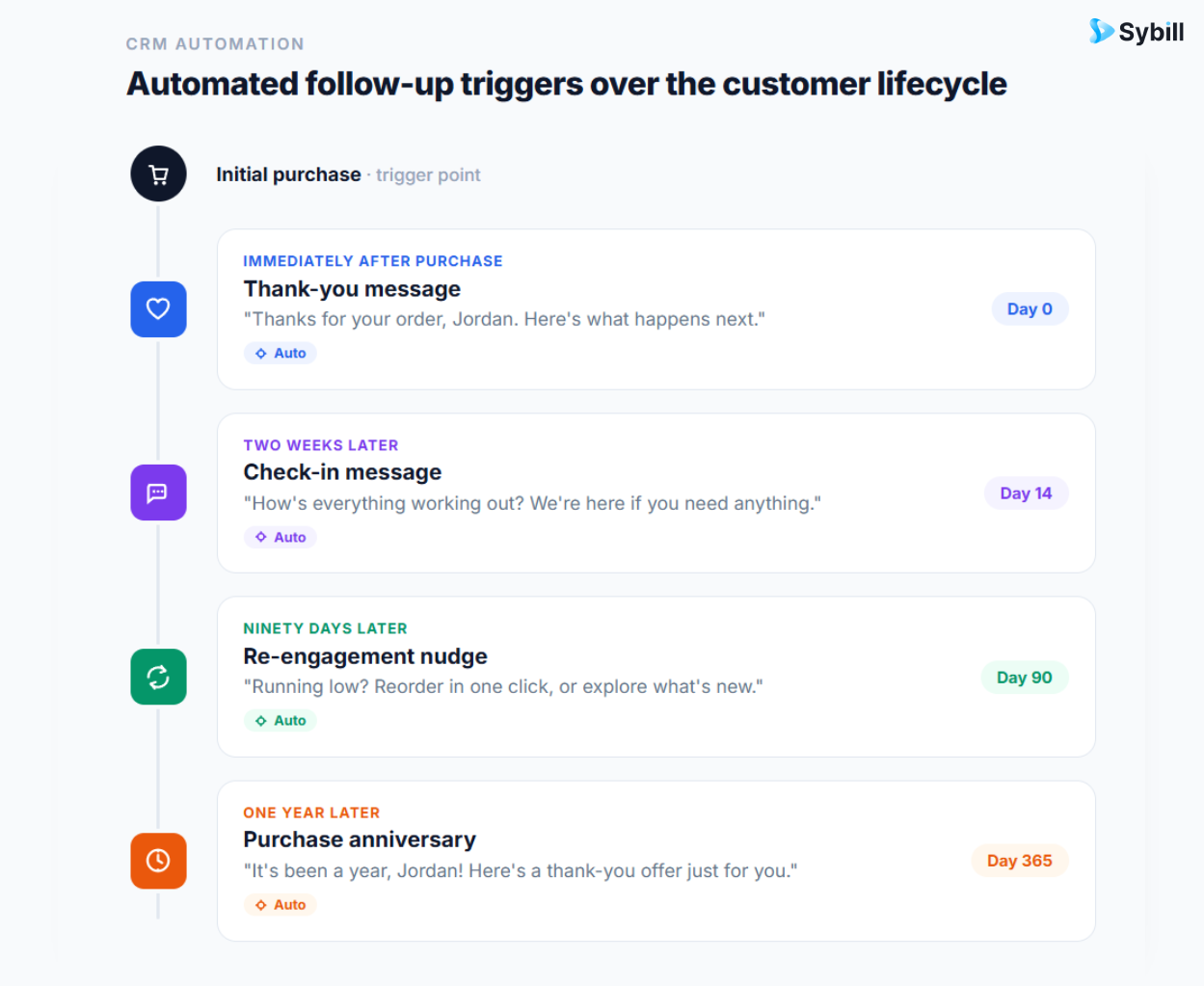
Timely follow-ups reduce churn by keeping you present and relevant after the sale, which is exactly when customers are most likely to drift toward a competitor. Staying connected post-purchase signals that the relationship matters beyond the transaction.
A CRM turns this into a reliable system rather than a matter of memory. Automated campaigns and reminders let you celebrate the anniversary of a customer's first purchase, send a genuine thank-you, or check in at the right moment, so no milestone goes unmentioned. The effect compounds: each well-timed touch reinforces the relationship, and a customer who hears from you at the right moments rarely has a reason to go looking elsewhere.
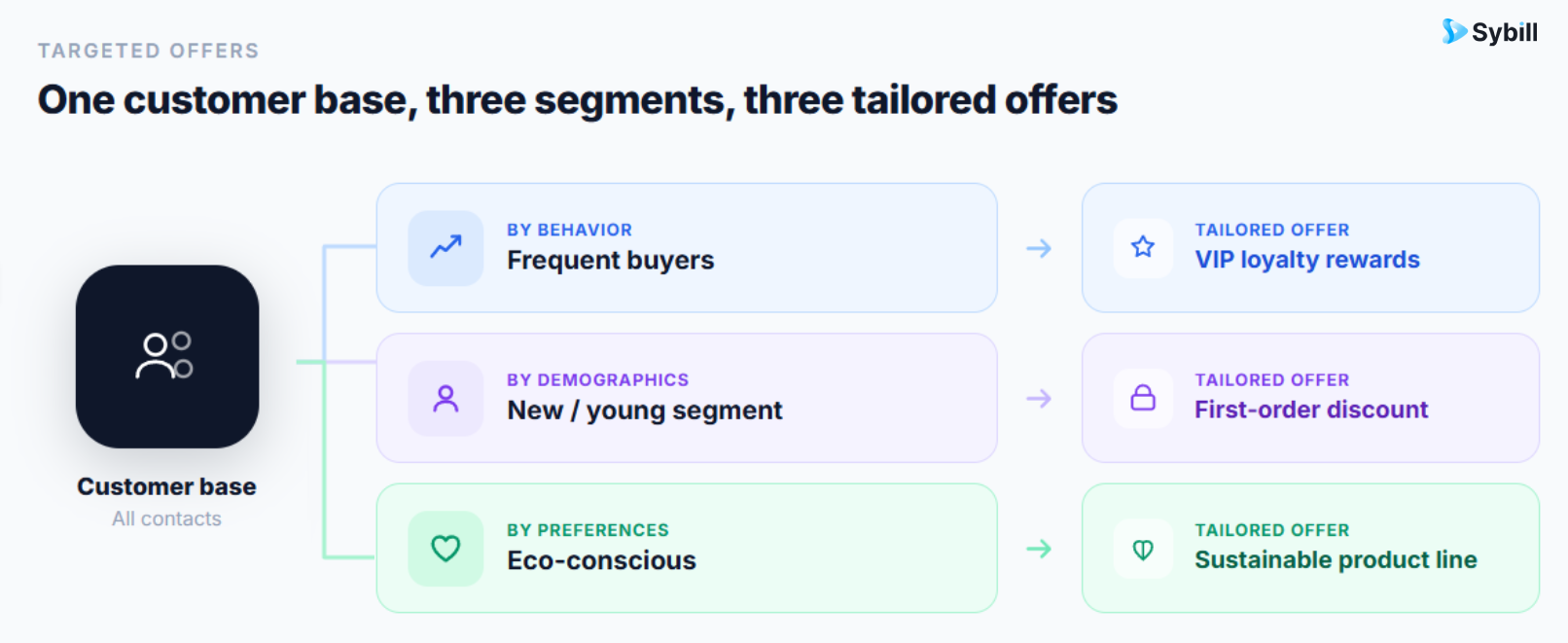
Segmentation strengthens retention by ensuring each customer receives content and offers that fit their specific needs, rather than generic messaging that fits no one well. Grouping customers by behavior, demographics, or preferences lets you craft messages that actually resonate.
The classic example is an e-commerce store selling both vintage and modern home decor: by segmenting customers on past purchases, it can send laser-targeted emails showing the items each group is most likely to want. Modern CRMs offer advanced segmentation that lets you slice your contacts by purchase patterns, engagement level, industry, or lifecycle stage. The tighter the segment, the more relevant the message, and relevance is what keeps customers engaged enough to stay.
Other retention strategies that complement a CRM include surprise-and-delight moments, exceptional customer service, and exclusive customer events. These are not powered by the CRM alone, but the CRM makes them easier to orchestrate by keeping customer data fresh and accessible.
Surprise-and-delight gestures (an unexpected perk, a handwritten note, early access) create memorable moments that deepen loyalty. Service that goes beyond the expected turns a transaction into a relationship. Exclusive events, virtual or in person, make customers feel like insiders. The CRM's role is to surface the right moments and the right people for these efforts, so they land with the customers most likely to respond.
Get started for free with Sybill
Your CRM can only drive retention if its data stays fresh, and that is exactly the part reps skip when they are busy. Sybill's CRM Autofill keeps records updated automatically after every call, and personalized email follow-ups go out in your own voice. Get started for free with Sybill
AI makes CRM-driven retention easier by turning conversations into clean data and timely action automatically, removing the manual upkeep that causes CRMs to go stale. The biggest failure point in CRM-driven retention is not strategy; it is that records do not get updated and follow-ups do not get sent.
This is where Sybill acts as the layer between conversations and the CRM. After every call, Magic Summary captures what was discussed and how the customer felt, CRM Autofill populates custom fields automatically so the data stays current, and personalized email follow-ups are drafted in your writing style and tone for the right moment. The result is a CRM that stays fresh without manual effort and a retention motion that actually runs instead of sitting in a backlog. As Sybill CEO Gorish Aggarwal puts it, the goal is to turn every conversation into the next right action automatically.
A CRM improves customer retention by consolidating customer data into a single view and enabling personalized communication, timely follow-ups, and targeted segmentation. It lets you act on each customer's history and preferences consistently and at scale, which is what keeps customers engaged and loyal.
The features that matter most are custom fields and dynamic content for personalization, automated campaigns and reminders for timely follow-ups, and segmentation tools for targeted messaging. Analytics that track engagement and churn signals are also valuable for spotting at-risk customers early.
Retaining an existing customer typically costs far less than acquiring a new one because there is no need to generate awareness, build trust from scratch, or fund a full sales cycle. Existing customers also tend to spend more over time and refer others, increasing their lifetime value.
Segmentation helps keep customers by ensuring each group receives relevant offers and content rather than generic messaging. Grouping customers by purchase behavior, preferences, or lifecycle stage makes communication resonate, which sustains the engagement that drives retention.
Yes. AI improves CRM-driven retention by automatically updating CRM records from calls and emails, drafting personalized follow-ups, and surfacing insights about customer sentiment. This keeps data fresh and outreach timely without the manual effort that usually causes retention programs to lapse.
Surprise-and-delight gestures, exceptional customer service, and exclusive customer events all support retention. A CRM complements these by keeping customer data current and helping you identify the right moments and customers to target with each gesture.
A CRM improves customer retention by consolidating customer data into a single view and enabling personalized communication, timely follow-ups, and targeted segmentation. It lets you act on each customer's history and preferences consistently and at scale, which is what keeps customers engaged and loyal.
The features that matter most are custom fields and dynamic content for personalization, automated campaigns and reminders for timely follow-ups, and segmentation tools for targeted messaging. Analytics that track engagement and churn signals are also valuable for spotting at-risk customers early.
Retaining an existing customer typically costs far less than acquiring a new one because there is no need to generate awareness, build trust from scratch, or fund a full sales cycle. Existing customers also tend to spend more over time and refer others, increasing their lifetime value.