Find us at booth #83, join us for a harbor side happy hour, or catch Gorish’s talk.

Sept, 16-18 > Learn more

%20(1).avif)
Mamta Tainwala

March 31, 2026
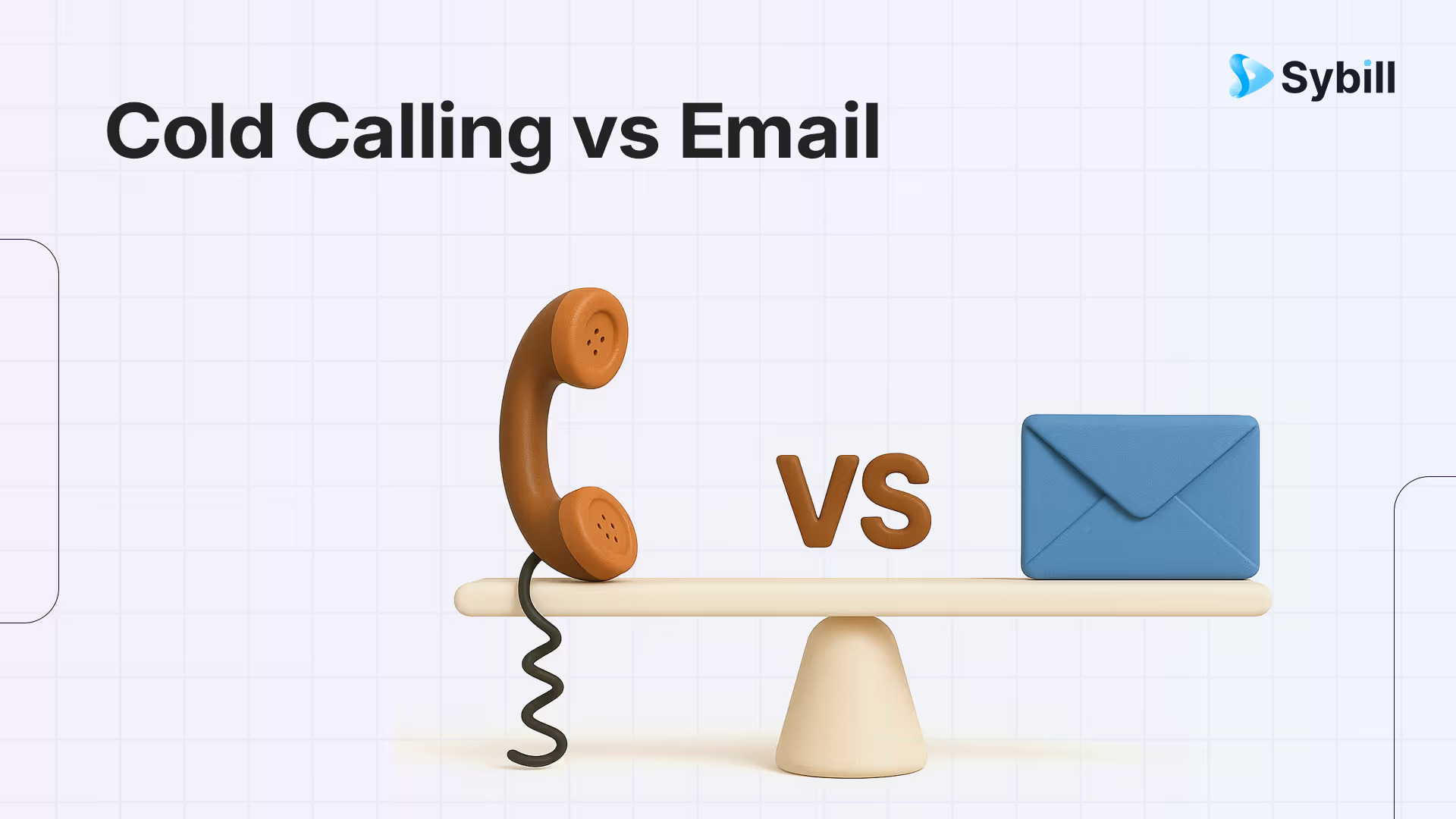
If prospecting had a courtroom, cold calling vs email would be the trial everyone sneaks out to watch. One side argues for the power of a live voice that secures time on the calendar in minutes. The other cites reach, forwardability, and polite persistence in the inbox. Opinions are loud. Results are quieter. The only question that matters is simple: what converts better for your buyers right now.
Here is the headline most teams miss. Conversion is not a vibe, it is a scoreboard. Track the cold call conversion rate from live connects to booked meetings. Track the email response rate from replies to qualified conversations. Layer in meetings per outreach hour and pipeline created. When you look at the full chain, the winner stops being a belief and starts being a pattern.
Context decides the fight. Senior executives with an urgent problem often pick up because a short call saves them a week. Distributed teams in research mode reply to a crisp email they can forward to engineering or finance. The edge comes from timing and signals, not blind loyalty to a channel. In the pages that follow, you will see how to choose the first touch, when to switch lanes, and how to blend both so your outreach feels timely, useful, and human.
Cold calling converts better when urgency, complexity, or seniority is high, as a live voice can surface context and secure calendar time in minutes, with the best windows being 10 AM to noon and 4 to 5 PM local time midweek. Email converts better for scale, documentation, and multithreaded follow-up, especially when buyers prefer asynchronous communication and need shareable artifacts for internal stakeholders. The highest-converting approach in 2025 is a signal-guided hybrid sequence that starts with the channel the buyer last engaged on, escalates to a call when intent spikes, and uses email to confirm and advance next steps, tracked by reply rate, meeting rate, pipeline per hour, and win rate by first-touch channel.
Before picking a side, define conversion with care. You will avoid false winners.
Track the full chain. Email might win on replies while calls win on meetings, or vice versa for your ICP.
When cold calling converts better
A live call reduces friction. It lets you clarify the problem, defuse default objections, and secure time on the calendar while energy is high.
When email converts better
Email scales and threads well. It creates shareable context, supports visuals, and is easy to measure. It is ideal for warming up accounts and aligning multiple roles before a live call.
The hybrid sequence that wins most often
Think of channel choice as a decision tree, not a bet. Let signals pick the branch.
Cadences that respect buyers and win meetings
Here is a simple, proven seven day sequence for net new outreach. Adjust windows based on your ICP and time zone.
Stop after seven days if there is no signal. Shift to a low frequency nurture with useful content, not pressure.
Subject: saving build time on [specific workflow]
Body: “Saw your team shipping more [feature area]. Teams in your stage usually lose [X] hours on [bottleneck]. If a short teardown of two options would help, I can send a 2 slide summary today. Worth it?”
“Two minute ask. Teams with similar approval paths save a week by aligning on just three terms early. I can send a short memo today and hold a 12 minute call tomorrow to confirm the fit. Does 10:40 a.m. work, or is 2:30 p.m. cleaner?”
Subject: recap and next two steps
Body: “Thanks for the time. Here is the decision memo we discussed, the two tradeoffs we will resolve, and the owners for each. Holding Tuesday 11:00 a.m. for the review. Tell me if you prefer another slot.”
Track weekly, and decide with data.
Put these in a single dashboard. Run A/B tests on opener lines, subject lines, and time windows. Keep what works, drop what does not.
Common pitfalls to avoid
C-suite and VPs
Start with a short email that frames an executive level outcome, then call late morning to secure time. Keep the ask specific and brief.
Directors and ICs
Start with a value packed email that shows you understand their workflow, then call in the afternoon to confirm a short working session.
Procurement and finance
Send a forwardable summary with terms and risks up front, then call in a window that matches their review cadence. Be direct about approvals.
Compliance and Courtesy
AI makes the choice easier by reading the signals you already have. It learns which contacts answer calls, which reply to email, and which need a nudge in both. It predicts a likely response window, proposes the right channel, and drafts a message that fits the buyer’s role and stage. Your team spends less time guessing and more time having qualified conversations.
Cold calling and email are not rivals. They are partners. Let signals choose the first touch, use voice when stakes are high, use email to align stakeholders, and keep testing your mix. The result is more meetings, cleaner pipeline, and a smoother path to a signed deal.
Neither wins everywhere. Cold calling converts better for urgency, complexity, and senior decision makers. Email converts better for scale, threading, and documentation. Use signals to pick for each account.
Track meetings booked per connect and pipeline per calling hour. Benchmarks vary by industry and role, so test in your data rather than chasing generic numbers. Look at reply rate per segment, then the meeting rate of those replies. Improve with tighter subject lines, clearer asks, and timing that matches when your cohort usually engages.
Start on the buyer’s preferred channel, escalate to a call when intent spikes, and use email to confirm and move the process forward.