Find us at booth #83, join us for a harbor side happy hour, or catch Gorish’s talk.

Sept, 16-18 > Learn more


Tamanna Mishra

May 20, 2026
.png)
Generative AI for sales had its cute experimental phase.
You know the one. Reps asking ChatGPT to “make this email sound warmer.” Managers testing AI call summaries. RevOps leaders wondering whether the shiny new AI feature inside every tool would actually fix their CRM hygiene problem.
In 2026, that phase is over.
Generative AI for sales is no longer just about faster writing. It is about turning sales context into action. The real value is not “Can AI write an email?” Any decent tool can do that now. The better question is: Does the AI know what happened in the deal, what the buyer cares about, what the rep promised, what CRM needs, and what should happen next?
That is where the conversation gets interesting.
Also read: If you are comparing platforms, check out our guide to the best generative AI sales tools in 2026. This guide explains the strategy. That one helps you shortlist the tools.
Generative AI for sales refers to artificial intelligence that creates sales-ready outputs using data from prospects, accounts, conversations, CRM records, emails, meetings, and deal activity. In plain English, it helps sales teams create and act faster.
It can generate:
But here is the catch: generating an output is the easy part.
The hard part is generating the right output based on the right context at the right moment.
A generic AI tool can write a follow-up email. A useful sales AI tool writes the follow-up based on the actual call, the buyer’s objections, the product discussed, the promised next step, and the tone your rep normally uses.
That difference matters.
Because sales is not a content factory. It is a timing, trust, and execution game.
In generative AI’s early days, most teams were still asking basic questions.
Can AI write a decent outbound email?
Can it summarize a sales call?
Can it help reps prep faster?
Can it reduce manual CRM work?
Those were fair questions at the time. But by 2026, the bar is higher.
AI-generated content is no longer impressive on its own. The market has moved from simple productivity to workflow intelligence.
Here is the shift:
.png)
The novelty has worn off. Now the question is whether generative AI can actually improve sales execution.
That means helping reps follow up faster, update CRM accurately, prepare for calls, personalize without sounding fake, spot deal risk, and make managers less dependent on “quick pipeline update?” Slack messages.
Because let’s be honest. Nobody bought AI so reps could spend more time babysitting another tool.
Sales teams are using generative AI because the modern sales workflow has become wildly overloaded.
Buyers are more informed. Buying committees are bigger. Deal cycles are longer. Personalization expectations are higher. Sales reps are still expected to research, prospect, run calls, manage follow-ups, update CRM, forecast accurately, and somehow not drown in admin.
.png)
Generative AI helps by reducing the work around the work.
The most obvious use case is time savings.
Generative AI can summarize meetings, draft follow-ups, create notes, update fields, and turn loose conversations into structured outputs. This is not glamorous, but it matters.
Reps do not lose hours because one task takes forever. They lose hours because every call creates a swarm of tiny tasks. Notes. CRM. Follow-up. Next step. Manager update. Forecast hygiene. Internal recap.
AI helps compress that chaos.
Personalization used to mean choosing between quality and volume.
You could write 20 thoughtful messages or 200 generic ones. Generative AI changes that, but only when it has real context.
Bad AI personalization says:
“Congrats on your recent growth.”
Good AI personalization says:
“You mentioned during our call that your team is struggling with handoffs between SDRs and AEs. Here is how we typically see teams solve that without adding another manual review step.”
One sounds like a mail merge wearing a fake mustache. The other sounds like a rep who listened.
Generative AI can help managers identify coaching moments across calls, emails, and deal activity.
Instead of reviewing random call recordings, managers can see patterns:
That is useful because sales coaching often fails for a boring reason: managers do not have time to inspect every detail manually.
AI gives them a better starting point.
A good sales call can lose momentum fast.
The buyer was interested. The problem was real. The timeline was promising. Then the follow-up takes two days, CRM is half-updated, and the next step is vague.
Poof. Momentum gone.
Generative AI helps sales teams close that gap by turning call context into immediate next steps.
This is where the strongest sales AI tools are moving: not just insight, but execution.
Not all generative AI for sales is created equal.
Some tools help you write. Some help you think. Some help you execute. The difference is massive.
.png)
Most sales teams start at Level 1 or 2. That is fine, but it is not where the real money is.
The real value starts at Level 3, when AI understands the actual sales conversation. It gets stronger at Level 4, when AI turns that understanding into workflow automation. It becomes strategic at Level 5, when AI helps teams inspect deals, identify risk, coach reps, and prioritize pipeline action.
In 2026, the winners are not the teams with the most AI tools. They are the teams whose AI understands the most context and removes the most friction.
Generative AI now touches almost every part of the sales process. But some use cases matter more than others.
.png)
Generative AI can help reps prepare faster by summarizing company updates, industry trends, funding news, leadership changes, hiring patterns, and account priorities.
That is useful, but only if it connects to the sales motion.
A rep does not need a Wikipedia page on the account. They need to know:
Research without relevance is just homework with better formatting.
Pre-call prep is one of the highest-impact generative AI use cases because it improves the quality of the conversation before the conversation happens.
A strong AI pre-call brief should help reps understand the account, the person, the previous interactions, the open opportunity, and the likely talking points.
This is where Sybill’s Pre-Meeting Brief becomes useful. Instead of walking into meetings with scattered notes and a vague memory of the last interaction, reps can quickly get context on the buyer, the deal, and the conversation history.
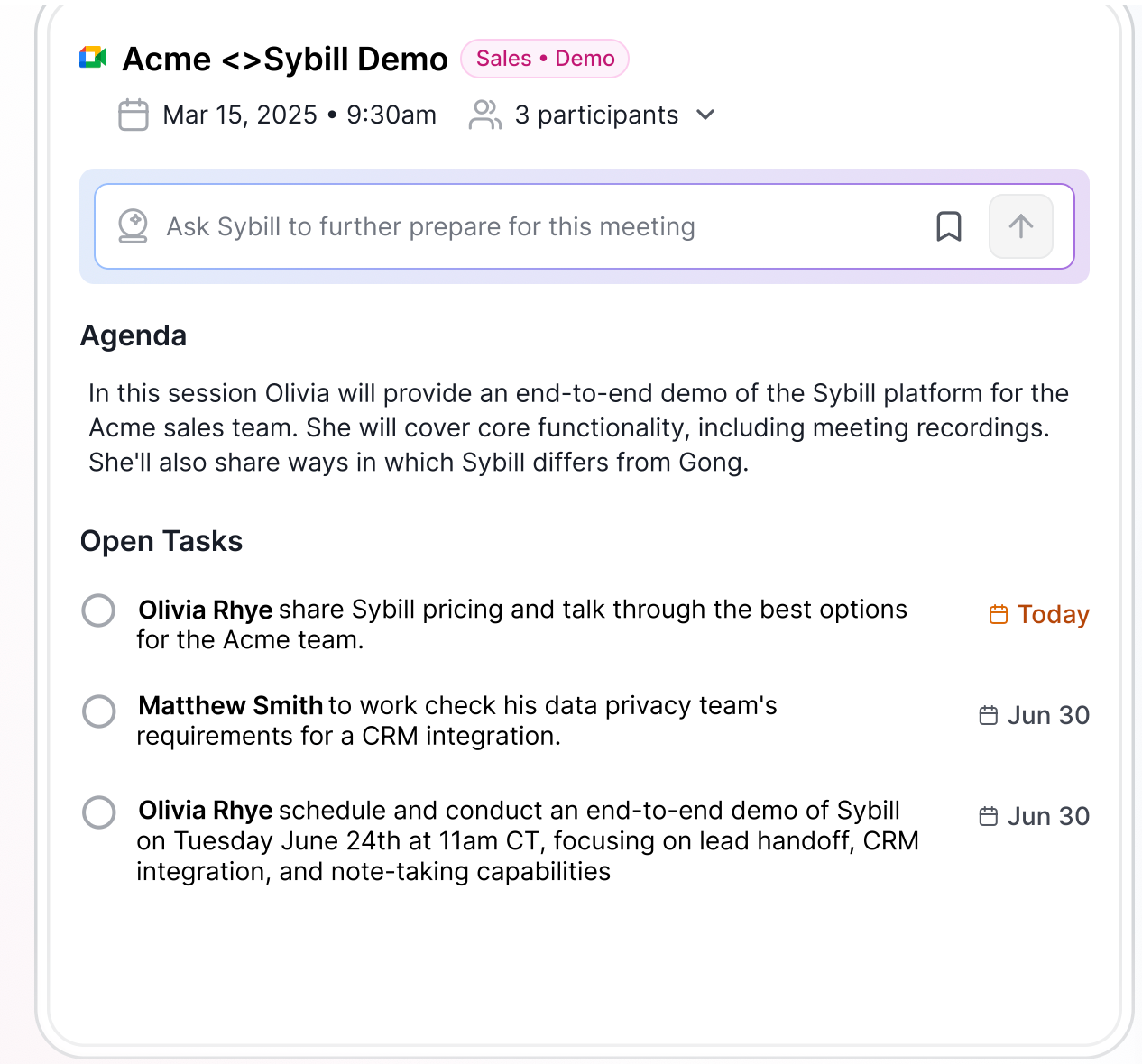
That matters because discovery calls are not pop quizzes. Reps should not be improvising from scratch.
Generative AI is already widely used for outbound emails and follow-ups. But the quality range is brutal.
At the low end, you get generic AI sludge:
“Hope this email finds you well. I noticed your company is innovative.”
Please, no.
At the high end, generative AI uses actual deal and buyer context to create messages that feel specific, timely, and relevant.
Sybill’s Email Follow Ups are built around this principle. The follow-up is not created from a blank prompt. It is based on what was actually discussed, what the buyer cared about, and what needs to happen next.
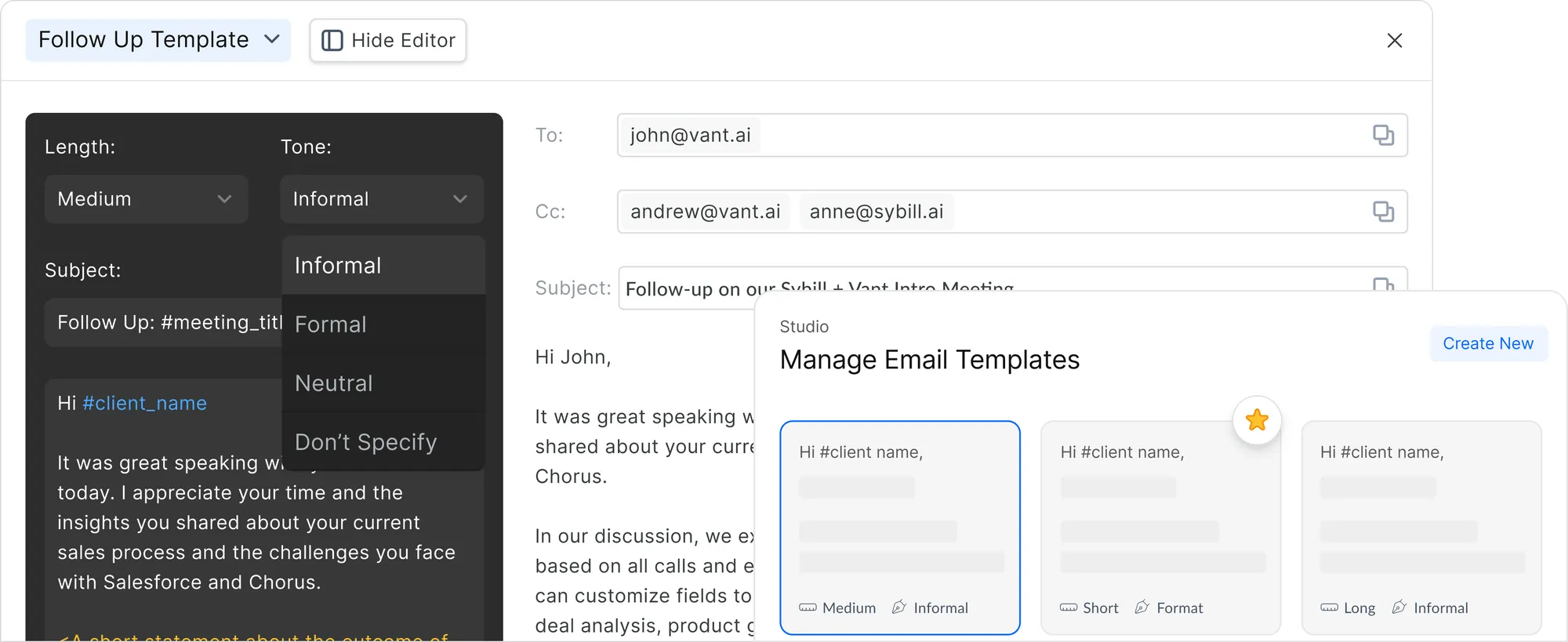
That is the difference between AI that writes and AI that remembers.
Call summaries are one of the most common generative AI for sales use cases. But summaries alone are not enough.
A sales summary should capture:
And then that context needs to go somewhere useful.
This is where Sybill’s Magic Summary and CRM Autofill work together. Magic Summary captures what mattered in the conversation. CRM Autofill updates the right fields without forcing reps to manually translate messy call notes into structured CRM data.
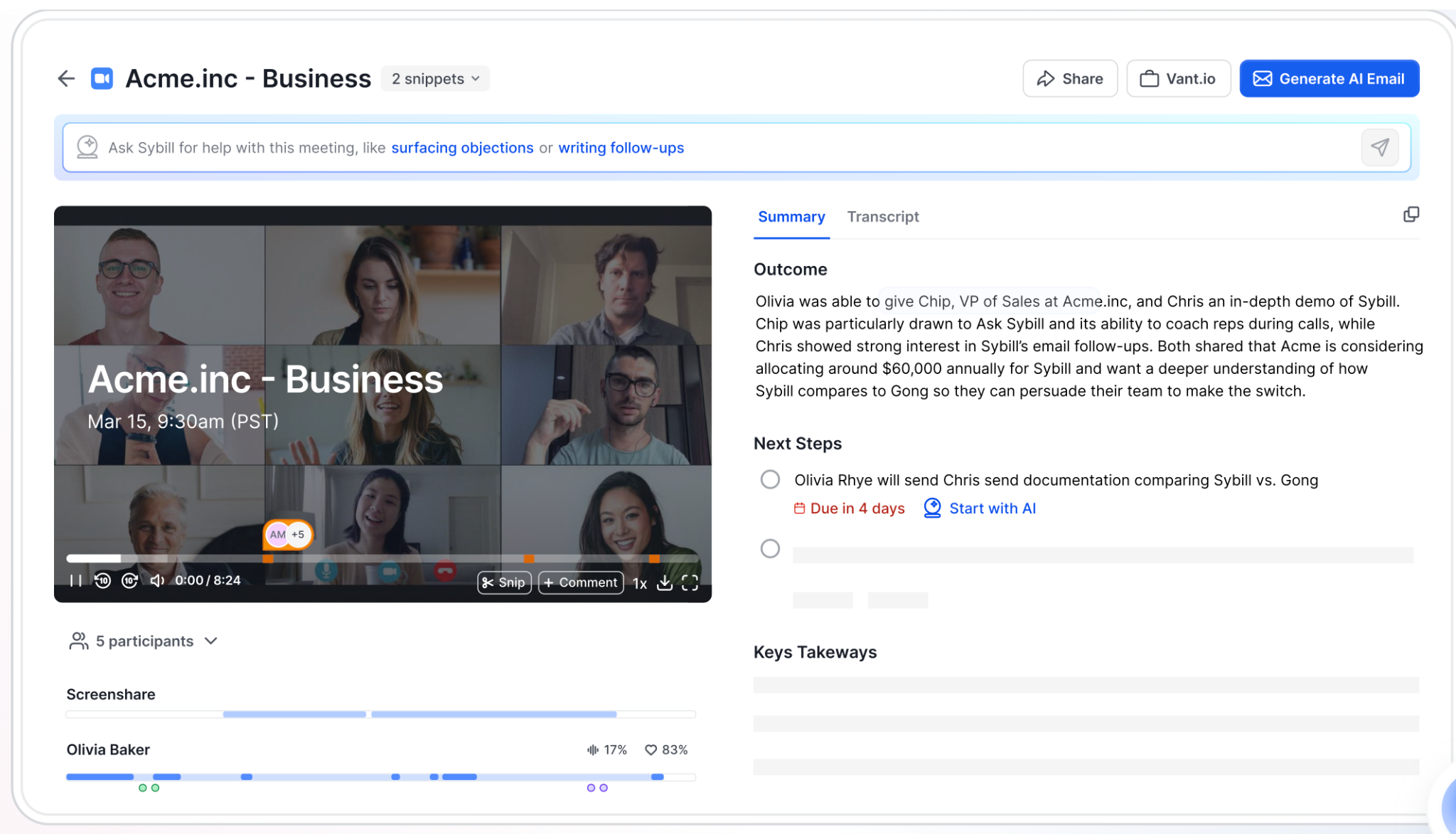
That is a big deal because CRM hygiene is usually treated like a rep discipline problem. Often, it is a workflow design problem.
If updating CRM feels like punishment, reps will avoid it.
Generative AI can also help managers inspect deals more intelligently.
Instead of asking reps for status updates, managers can use AI to understand:
Sybill’s Ask Sybill and Deal Pipeline support this kind of inspection. Leaders can ask questions about deal health, risks, objections, buyer needs, and next steps without digging through call recordings, CRM notes, and Slack threads.
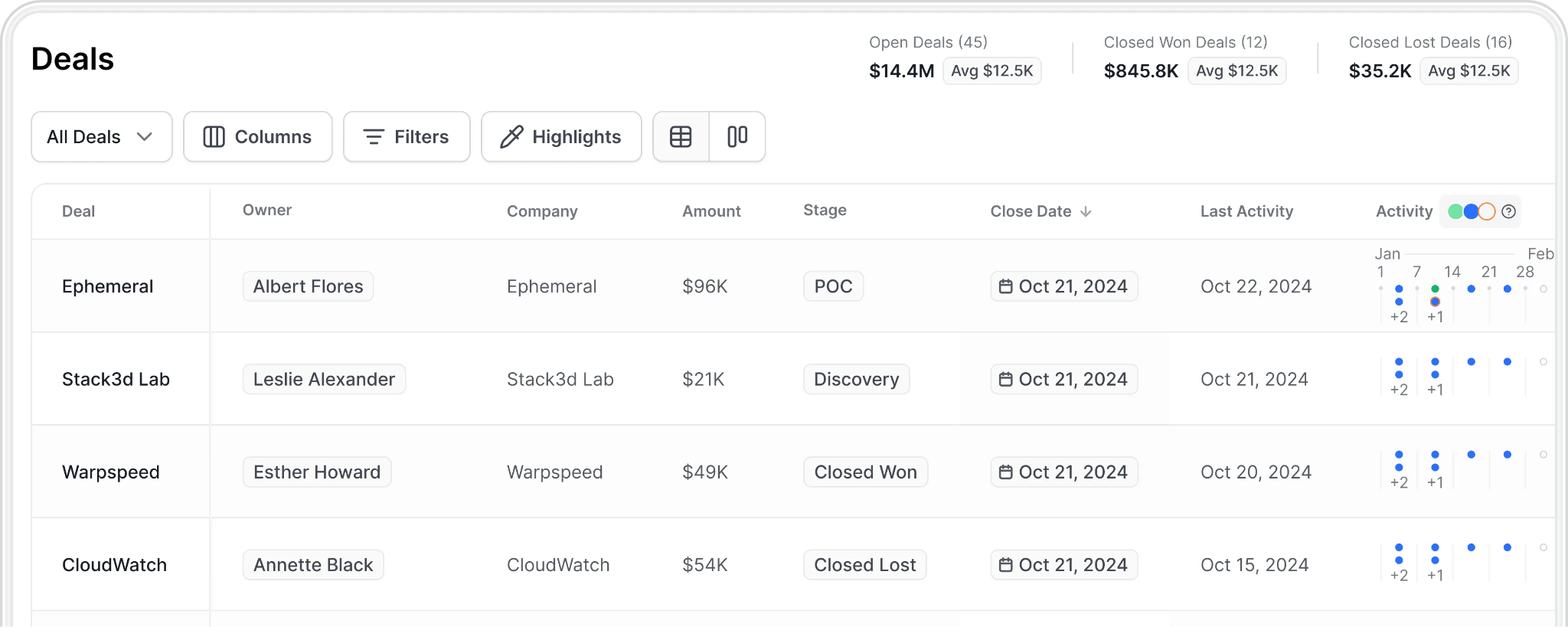
That saves time, but more importantly, it gives managers a cleaner view of reality.
Because “commit” in CRM does not always mean commit in real life.
Sales coaching is one of the most underrated use cases for generative AI.
AI can identify patterns across calls and deals, then help managers coach with evidence instead of vibes.
For example:
Sybill’s Personal Coach can help surface these moments so coaching becomes more specific, timely, and tied to actual conversations.
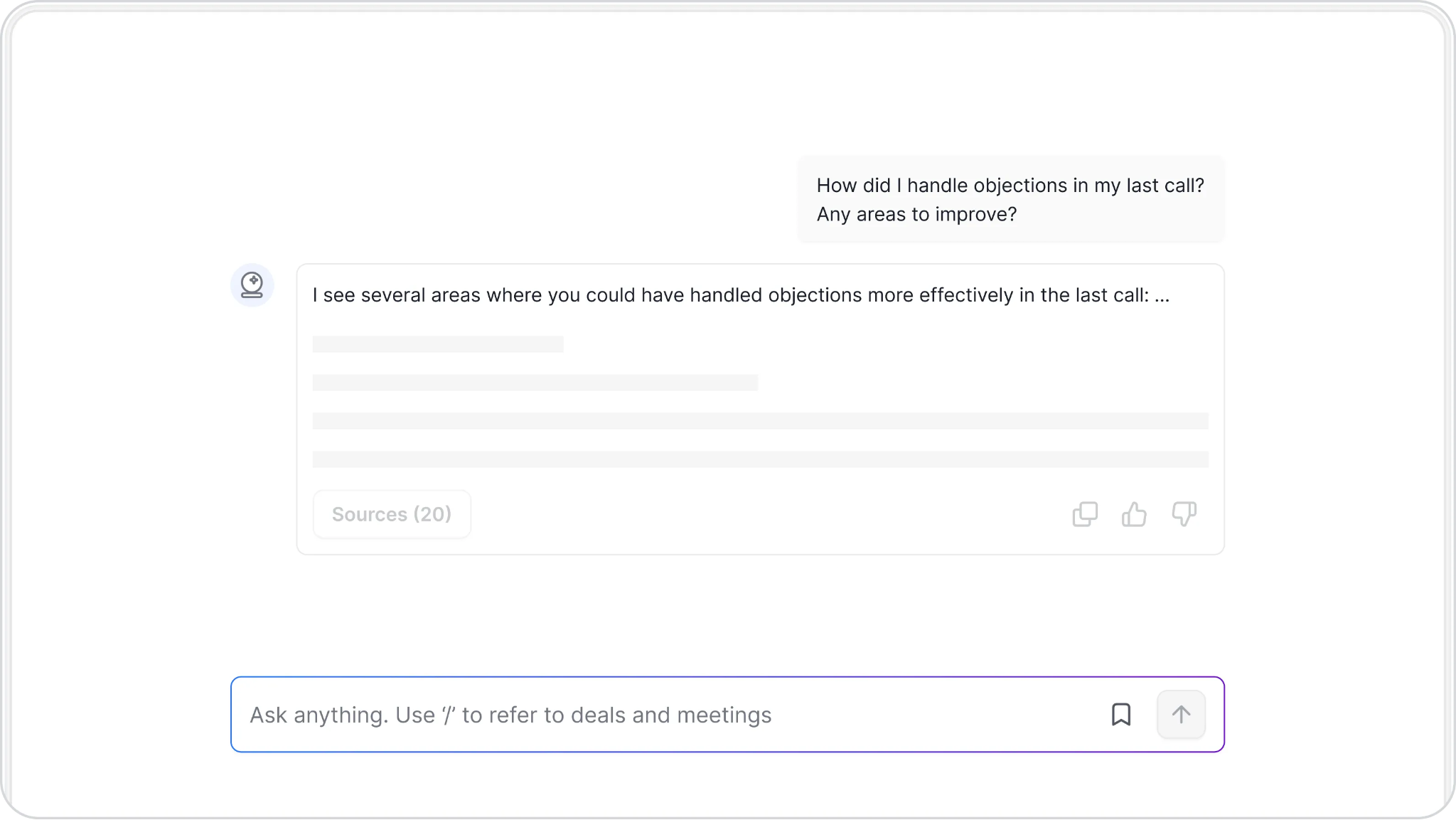
Great coaching is not “be more consultative.” That is a fortune cookie.
Great coaching sounds like:
“You asked strong discovery questions, but you accepted a vague next step. Next time, confirm the owner, date, and decision path before ending the call.”
That is coaching someone can use.
One of the biggest mistakes sales teams make in 2026 is assuming all AI tools solve the same problem.
They do not.
General-purpose AI tools like Claude are excellent for reasoning, writing, summarizing, brainstorming, and structuring ideas. Claude Code is built for developer workflows like coding, debugging, and technical execution. OpenClaw-style GTM AI points toward more agentic, workflow-driven AI.
Also read:
But sales teams need more than a smart blank page. They need AI that understands the deal.
.png)
This is the simplest way to think about it:
Claude can help a rep write a stronger email.
Sybill can write the email based on the actual sales call, update CRM, create next steps, and help the manager understand deal risk.
Both are useful. They are not the same job.
Generative AI is powerful, but it is not magic. Used badly, it creates a new flavor of mess.
This is the most common failure.
AI-generated personalization often sounds specific but says nothing meaningful. It mentions the prospect’s company, industry, or role, but does not connect to a real business problem.
That is not personalization. That is decoration.
Real personalization should reflect buyer context, pain, urgency, and relevance.
Also read: How Generative AI is Levelling Up Sales Personalization (And Why You Can’t Afford to Wait)
Generative AI can sound confident even when it is wrong.
That becomes dangerous in sales when reps use AI-generated account claims, competitor mentions, or buyer assumptions without verifying them.
The fix is simple: use AI to accelerate thinking, not replace judgment.
If your CRM is a landfill, your AI will not magically turn it into a Japanese zen garden.
Generative AI depends on the quality of the data and context it receives. Poor CRM hygiene, disconnected systems, and missing call notes will limit what AI can do.
This is why sales AI needs to capture fresh context from actual interactions, not just rely on stale fields.
Every sales tool now has AI. That sounds convenient until your reps are switching between six AI assistants, each with a different version of reality.
One tool summarizes calls. Another writes emails. Another scores leads. Another updates CRM. Another forecasts pipeline.
Congratulations, your AI stack now needs a project manager. Unfortunately, that project manager is your AE.
The smarter move is to reduce fragmentation and prioritize AI that fits naturally into the workflow.
Not every sales moment should be automated.
AI can draft. AI can suggest. AI can summarize. AI can remind. But reps still need judgment, emotional intelligence, negotiation skills, and business understanding.
The goal is not to remove the human from sales. The goal is to remove the avoidable drag around selling.
Buying an AI tool is easy. Building a useful AI workflow is harder.
Here is a practical way to approach it.
.png)
Do not begin with “we need an AI strategy.”
Start with a real bottleneck.
For example:
Pick one problem. Solve it properly. Then expand.
Generative AI is only as useful as the context it can access.
Sales context usually lives across:
If AI cannot access the right context, reps will be forced to feed it manually. That kills adoption.
The best early use cases are tasks that are repetitive, time-consuming, and easy to review.
Start with:
These create immediate value without requiring teams to hand over strategic judgment too early.
AI can support negotiation, pricing, objection handling, and deal strategy, but humans should still make the final call.
Sales involves nuance. Buyer politics. Timing. Trust. Internal power dynamics. Procurement weirdness. The stuff no model can fully understand from a transcript alone.
Use AI as the co-pilot, not the captain.
Do not measure generative AI success by how many outputs it creates.
Measure whether it improves the sales workflow.
Track:
The best generative AI for sales should save time and improve deal execution. One without the other is not enough.
The right generative AI approach depends on what your team is trying to fix.
If your team mostly needs brainstorming and writing help, a general-purpose AI assistant may be enough.
If your team needs outbound content at scale, look at content and engagement tools.
If your team needs better sales execution, prioritize AI that connects conversation context to CRM, follow-ups, next steps, coaching, and pipeline visibility.
Use these criteria:
.png)
The key is to avoid buying AI based on demo magic.
A good demo shows you what AI can generate. A good implementation shows you what work AI can remove.
The future of generative AI for sales is not more prompts.
It is more context, more workflow automation, and more intelligent execution.
Generative AI for sales will increasingly:
In other words, generative AI will become less visible but more useful.
The best AI will not feel like a separate tool you visit. It will feel like the sales workflow finally stopped fighting you.
The first wave of generative AI for sales was about speed.
Write faster. Summarize faster. Research faster. Draft faster.
That was useful. But it was only the beginning.
The 2026 version is about context and execution. Sales teams do not just need AI that produces words. They need AI that understands deals, remembers conversations, updates systems, guides reps, and helps managers see what is really happening in the pipeline.
Because sales has not changed at its core. Deals still move because of timing, relevance, trust, and follow-through.
Generative AI simply determines how well your team manages those four things at scale.
If you want sales AI that does more than generate content, Sybill is built for that next layer. It turns real buyer conversations into summaries, CRM updates, follow-ups, tasks, coaching insights, and deal visibility, so reps spend less time managing sales work and more time actually selling.

Generative AI for sales is artificial intelligence that creates sales-ready outputs such as emails, call summaries, CRM updates, account research, coaching feedback, and next steps using customer, deal, and sales activity data.
Generative AI is used in sales to personalize outreach, prepare for meetings, summarize calls, automate CRM updates, draft follow-ups, coach reps, inspect deals, and identify pipeline risks.
Examples include AI-generated prospecting emails, automatic call summaries, personalized follow-up messages, AI-powered pre-call briefs, CRM field autofill, objection-handling suggestions, and sales coaching insights.
No. Generative AI will not replace skilled sales reps. It will reduce repetitive work and help reps sell with better context. Human skills like trust-building, negotiation, active listening, and judgment still matter.
AI sales tools may include predictive scoring, automation, analytics, or forecasting. Generative AI sales tools specifically create new outputs, such as messages, summaries, recommendations, and action plans, based on available sales data.
Sales teams can use generative AI safely by choosing secure tools, verifying AI-generated claims, protecting customer data, keeping humans involved in judgment-heavy decisions, and ensuring AI outputs are based on accurate deal context.
Generative AI for sales is artificial intelligence that creates sales-ready outputs such as emails, call summaries, CRM updates, account research, coaching feedback, and next steps using customer, deal, and sales activity data.
Generative AI is used in sales to personalize outreach, prepare for meetings, summarize calls, automate CRM updates, draft follow-ups, coach reps, inspect deals, and identify pipeline risks.
Examples include AI-generated prospecting emails, automatic call summaries, personalized follow-up messages, AI-powered pre-call briefs, CRM field autofill, objection-handling suggestions, and sales coaching insights.