Find us at booth #83, join us for a harbor side happy hour, or catch Gorish’s talk.

Sept, 16-18 > Learn more


Tamanna Mishra

April 27, 2026
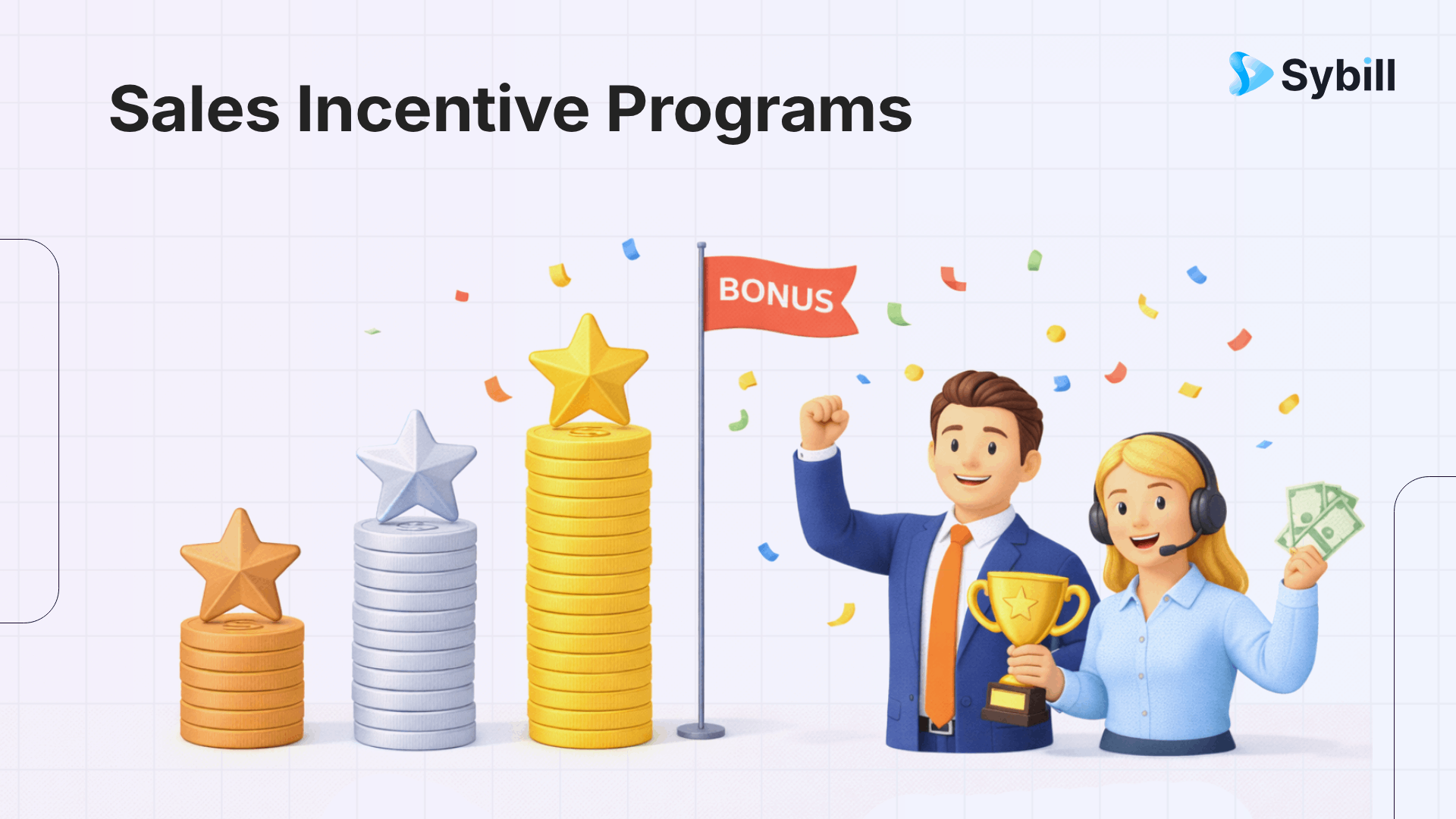
If sales incentive programs were as easy as adding commission and yelling “Let’s go,” every sales floor would feel like The Wolf of Wall Street. Big energy. Bigger promises. Zero follow-through. In reality, most sales incentive programs fail quietly. No drama. Just disengaged reps, rushed deals, and motivation that fades faster than a kickoff playlist.
The problem is not effort. It is lazy incentive design. The “just add commission and vibes” approach might spike short-term activity, but it rarely improves sales rep motivation in any meaningful way. Reps learn how to game the system, chase the wrong deals, or burn out trying to hit targets that reward luck over skill.
The most effective sales incentive programs in 2026 reward specific selling behaviors — not just closed deals — using a mix of commissions (50-70% of variable pay), SPIFFs for strategic objectives like multi-threading or discovery quality, milestone bonuses tied to pipeline hygiene, and non-cash recognition that reinforces repeatable sales motions. The shift from outcome-only incentives to behavior-led programs improves deal quality, shortens ramp time, and increases forecast reliability because reps are rewarded for how they sell, not just what they close, with AI tools like Sybill providing the conversation data needed to verify and reward the right behaviors at scale.
In 2026, modern SaaS selling demands more. Buying cycles are longer. Buyers are sharper. Pressure is constant. Sales incentives cannot be louder. They have to be smarter. The best sales incentive programs are shifting away from pure output-based rewards and toward behavior-led, insight-driven models that reinforce how great selling actually happens.
This is not a feel-good take on sales incentive ideas or another list of prizes. It is a no-nonsense guide to sales incentives that change rep behavior, not just leaderboard screenshots.
But first…
A sales incentive program is a structured way to reward how sales happens, not just what gets closed. That is the simplest sales incentive program meaning. It exists to guide behavior, not to throw money at outcomes and hope for the best.
Here’s the plain-English version.
A sales incentive plan reinforces the actions and habits that lead to repeatable wins. It complements commission, it does not replace it.
The easiest way to remember it:
When done right, incentives provide direction first and motivation second. That is what makes them powerful.
For a deeper dive on sales salary structures, read this blog.
Most sales incentive plan problems are not obvious failures. They are slow leaks. Motivation drops. Deal quality suffers. Burnout creeps in. All while the dashboard still looks fine.
Here is where traditional sales incentive programs break down.
Vanity incentives reward luck, not skill
Big bonuses often go to the rep with the best territory or timing. Skill, discipline, and repeatable execution get overlooked. Over time, high performers disengage and mediocrity gets normalized.
Lagging indicators run the show
Most sales incentive plans rely on closed-won revenue and quota attainment. These signals arrive too late to influence behavior. They measure outcomes, not the quality of selling that produced them.
One-size-fits-all SPIFFs ignore deal complexity
A fast SMB deal and a six-month enterprise deal get treated the same. This pushes reps toward easy wins and shallow pipelines instead of strong deal construction.
Bad behavior gets quietly rewarded
Rushed discovery, aggressive discounting, and overpromising are common side effects. Many sales incentive program challenges are created by incentives that value speed over substance.
Burnout becomes the incentive
When effort and reward feel disconnected, sales rep incentive programs stop motivating and start draining energy.
Modern sales teams need behavior-aware incentive design that reinforces how deals are built, not just how they close.
Great sales incentive programs do not act like caffeine. They act like GPS. One gives a temporary boost. The other tells you where to go and how not to crash.
That difference is why sales incentive programs improve performance.
Motivation vs clarity. Clarity wins.
Motivated reps still make chaotic choices. Clear incentives remove guesswork. They answer one question every rep is quietly asking: what actually matters here?
Incentives shape daily rep behavior
What gets rewarded gets repeated. If incentives reward sloppy discovery or rushed closes, that is exactly what reps will do. If they reward clean follow-ups and smart deal progression, behavior shifts without constant coaching.
Winning sales motions get reinforced
Think less “Wolf of Wall Street heroics” and more Moneyball. Good sales productivity incentives reward repeatable motions, not one lucky swing.
Ramp time drops
New reps do not have to decode tribal knowledge. Incentives make priorities obvious. Skill adoption happens faster because expectations are visible, not implied.
The pipeline stops lying
Better incentives lead to better deal hygiene, stronger follow-up quality, and forecasts that leadership can actually trust.
This is the real performance lift. Not hype. Not hustle culture. Just incentives that turn daily behavior into predictable results.
If you want to know how to build a sales incentive program that actually works, start by forgetting leaderboards and prizes. Great sales incentive plan design is about precision.

Outcomes are the result. Behavior is the lever.
Reward actions reps can control, not just numbers they chase at the end of the quarter.
Focus on:
When incentives reward behavior, performance becomes repeatable.
Not all selling motions are equal.
A strong sales incentive program accounts for reality:
Alignment beats fairness. Reps should be rewarded for the difficulty of the work, not just the result.
If reps need a calculator, a spreadsheet, and three Slack messages to understand the plan, you have already lost.
Simple incentives:
Clarity scales. Complexity kills adoption.
Gut feel is biased. Memory is selective.
Modern sales incentive programs rely on objective signals from real activity, not end-of-quarter narratives. AI-powered insight makes incentives fairer by rewarding what actually happened, not who tells the best story.
Markets change. Pipelines shift. Incentives must keep up.
Review your sales incentive program every quarter. Keep what works. Kill what does not. Incentives should evolve with the business, not fossilize inside a comp plan.
The best sales incentive programs are not secret playbooks guarded by elite companies. They follow clear patterns. Different industries. Similar principles. The difference is execution.
Here is what shows up again and again in high-performing sales incentive program examples.
These programs work because they align incentives with how winning sales actually happens.
Cash still matters. But cash alone is table stakes. The most effective sales incentive ideas tap into leverage, growth, and control. That is where modern motivation lives.

Here are creative sales incentives that high-performing teams actually respond to.
These incentives say, we see your potential, not just your number.
Experiences compound. Swag does not.
Nothing motivates like control.
Modern reps value leverage over gimmicks. Growth over trophies. Freedom over flash. That is why the smartest sales incentive programs look nothing like pizza parties.
Small teams do not struggle with motivation. They struggle with incentive plans that create more friction than focus. The best sales incentive programs for small businesses work because they are built around constraints, not despite them.
What goes wrong
SMBs copy incentive plans from larger companies. Multiple tiers. Exceptions. Manual tracking. The result is confusion, slow adoption, and constant “how does this work?” conversations.
What works instead
Use one clear incentive per priority. If it cannot fit on a single slide, it is too complex. Simplicity keeps SMB sales incentives visible, understood, and actionable.
What goes wrong
Small teams assume great incentives require big cash rewards. This leads to underwhelming bonuses that fail to change behavior.
What works instead
Focus on low-cost, high-impact incentives. Learning budgets, leadership access, and role expansion often outperform cash. These incentives scale without straining budgets.
What goes wrong
Revenue-based incentives reward short-term wins but do nothing to improve how reps sell. Bad habits get locked in early.
What works instead
Shift toward skill-based incentives. Reward discovery quality, follow-up discipline, and deal progression. These skills compound and improve outcomes quarter after quarter.
What goes wrong
Individual-only incentives create silos. Knowledge stays locked. Collaboration disappears.
What works instead
Introduce team-based incentives tied to pipeline health or execution quality. SMB sales incentives should reinforce shared wins, not internal rivalries.
What goes wrong
SMBs assume sophisticated incentive programs require enterprise tooling and headcount.
What works instead
With the right insights, small teams can run world-class incentive programs that are fair, objective, and easy to manage. Better signals beat more rules.
For small businesses, simplicity is not a compromise. It is the strategy.
AI sales incentive programs exist for one reason. Traditional incentives are built on partial truth.
Spreadsheets show outcomes.
CRMs show activity.
Neither shows how selling actually happens.
AI changes how incentives are measured: Instead of relying on lagging metrics, data-driven sales incentives use real signals from day-to-day selling. Not just what closed, but what moved deals forward.
From activity tracking to behavior intelligence: Call volume and email counts are noise. AI looks at discovery depth, objection handling, follow-up quality, and deal momentum. That is behavior intelligence, not checkbox reporting.
Objective signals from real conversations: Modern incentive design pulls insight directly from sales conversations. What questions were asked. How objections were handled. Whether next steps were clear. This replaces guesswork with evidence.
Bias drops out of the equation: When incentives rely on memory and manager judgment, bias creeps in. AI creates a more level playing field by evaluating effort consistently across reps.
Rewarding the right effort finally becomes possible: Sales leaders can stop rewarding who shouts the loudest or closes the fastest. With the right signals, incentives reinforce skill, discipline, and execution quality.
Tools like Sybill make this shift practical by turning everyday sales conversations into fair, actionable insight without adding overhead.
Effective sales incentive programs are not about dangling rewards. They are about alignment. When incentives are clear, reps do not have to guess what matters. They know where to focus, how to prioritize, and what good performance actually looks like.
The future of sales incentives belongs to insight-led design. Not louder bonuses. Not more SPIFFs. Better signals. When incentives are built on real behavior, not vague outcomes, performance stops feeling random and starts becoming repeatable.
Clarity creates fairness. Everyone knows the rules. Effort is visible. Skill gets rewarded, not just timing or territory. That is how trust builds inside sales teams.
Clarity also creates focus. Reps spend less time gaming the system and more time doing the work that moves deals forward. Leaders stop reacting to results and start shaping behavior earlier in the cycle.
That is the real power of effective sales incentive programs. Not motivation. Direction. When incentives align people, process, and insight, performance follows.
Corporate sales incentive programs use a mix of sales incentive rewards to drive behavior and performance. Common rewards include cash bonuses and commission accelerators for outcomes, recognition-based rewards for visibility, experience-based rewards like learning or events, and career advancement incentives that unlock growth and leadership opportunities.
A regular sales incentive plan review keeps incentives relevant. Most teams benefit from quarterly reviews, with annual resets for structure. Market shifts, sales motion changes, and team maturity should trigger updates sooner. Incentives must evolve as fast as the business to stay effective.
Sales incentive programs vs commission is not an either-or choice. Commission works well for straightforward selling. Incentives add leverage when deals are complex or behaviors matter. The best teams use both intentionally, pairing commission with incentives that guide how reps sell, not just what they close.