Find us at booth #83, join us for a harbor side happy hour, or catch Gorish’s talk.

Sept, 16-18 > Learn more


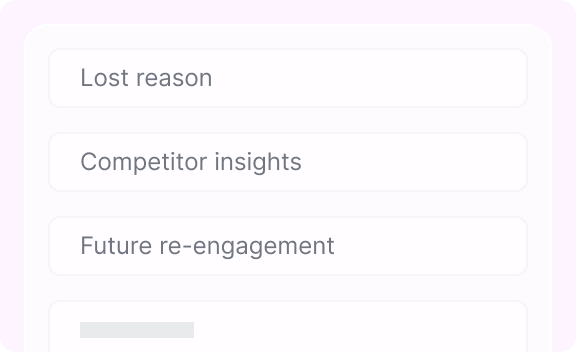
Capture why you won, hand off key context to CS, and flag early expansion signals so new customers get value fast.
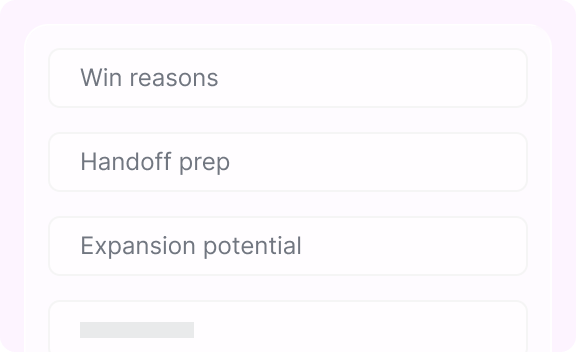
Add these fields and let your meeting summary write itself.
Summarize the main outcome of this meeting (decision made, next step agreed, or status update).
Generate a list of action items assigned during the meeting, including owners and due dates.
Pull light personal or professional details mentioned in calls, emails, or Slack that can be used as rapport-building openers in future conversations.
Summarize current qualification details discussed in the meeting. Include decision makers, budget, timing, use case, and fit criteria. Keep it structured and deal-focused.
List the core business challenges or frustrations the prospect shared in this meeting. Write them in the prospect’s language where possible. Keep them short, clear, and bulleted.
List the meeting participants and their roles. Note any new attendees and their relevance to the deal. Keep the format simple and easy to scan.
Identify questions the prospect asked during the meeting. Summarize both the question and the answer provided. Highlight recurring themes like pricing, integrations, or support.
Capture the most important insights from the meeting. Focus on what moved the deal forward, new information learned, or risks uncovered. Keep it concise, in bullet points if possible.
Summarize in the buyer’s own words why they chose us. Highlight specific product capabilities, evaluation criteria, or business outcomes that tipped the decision. Keep it concise and quotable.
Generate onboarding notes for CS. Include buyer goals, executive sponsors, key risks, and any promised deliverables. Present in a structured format that CS can action immediately.
Flag early expansion signals mentioned in the meeting (interest in additional products, features, teams, or geographies). Suggest when and how to reintroduce these topics post-onboarding.
Get the meeting recap at a glance, written straight from the conversation.
Write your email like a top Account Executive.
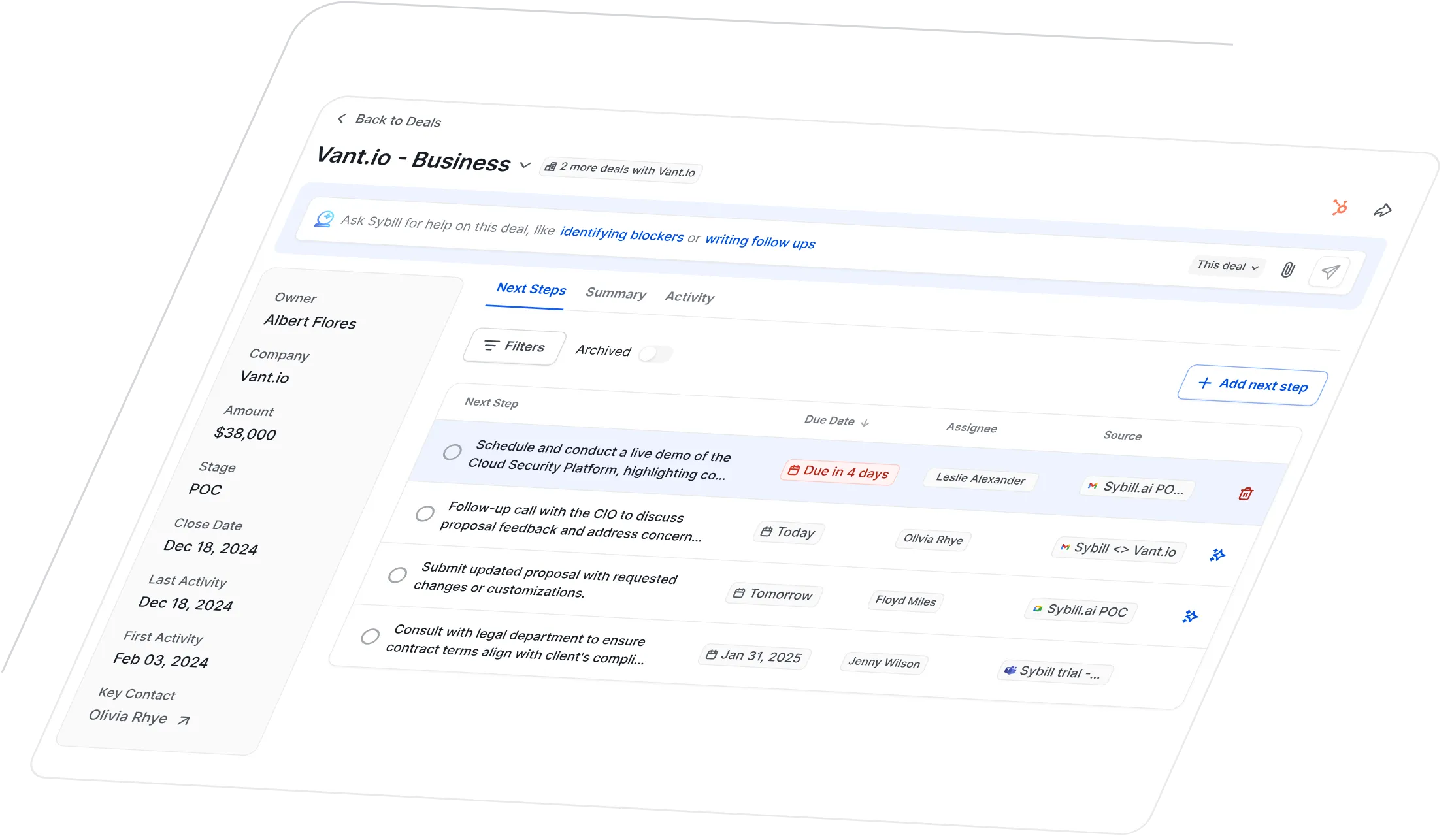
Get smarter with every deal.






.avif)