Find us at booth #83, join us for a harbor side happy hour, or catch Gorish’s talk.

Sept, 16-18 > Learn more


Spot where to grow the company — footprint, whitespace, value realized, and the expansion play to run.
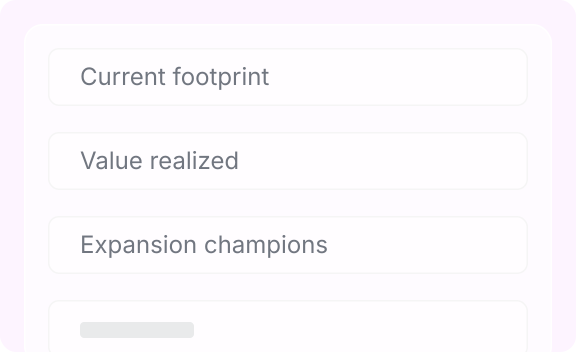
Add these fields and let the company summary write itself.
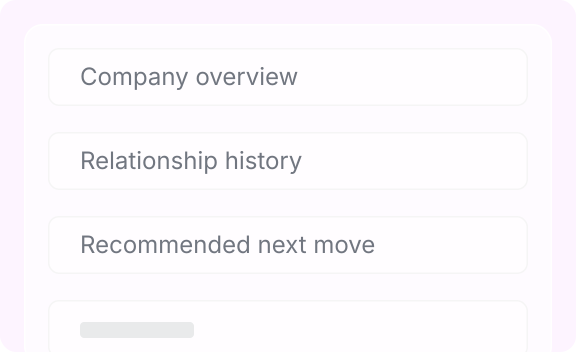
Summarize what this company does — industry, size, and business model. A few sentences that give anyone a quick grasp of the company.
Give a deal-aware snapshot of the company: the primary/latest opportunity (name, stage, amount, owner), the number of open deals, and where the overall relationship stands. One short paragraph.
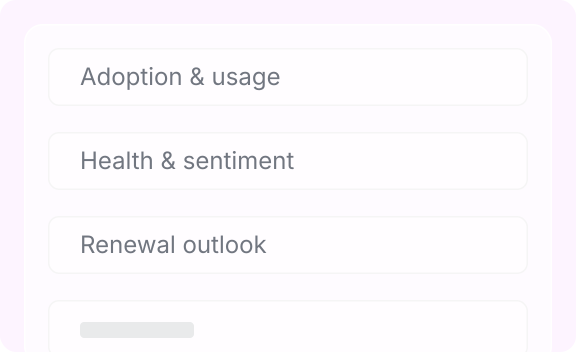
Summarize how this company uses us today — seats/licenses in use, integrations set up, active use cases, and adoption pockets. Note where adoption is strong vs. thin.
Summarize what the customer wants next, in their own words — desired rollout scope, outcomes they're after, and blockers to getting there (e.g. SSO/SCIM, security review, budget). Contrast with the current state.
Map the key people across the whole company: champions, economic buyers, influencers, and blockers. For each, note title, role in the decision, and engagement level. Pull from all deals and interactions, not just one.
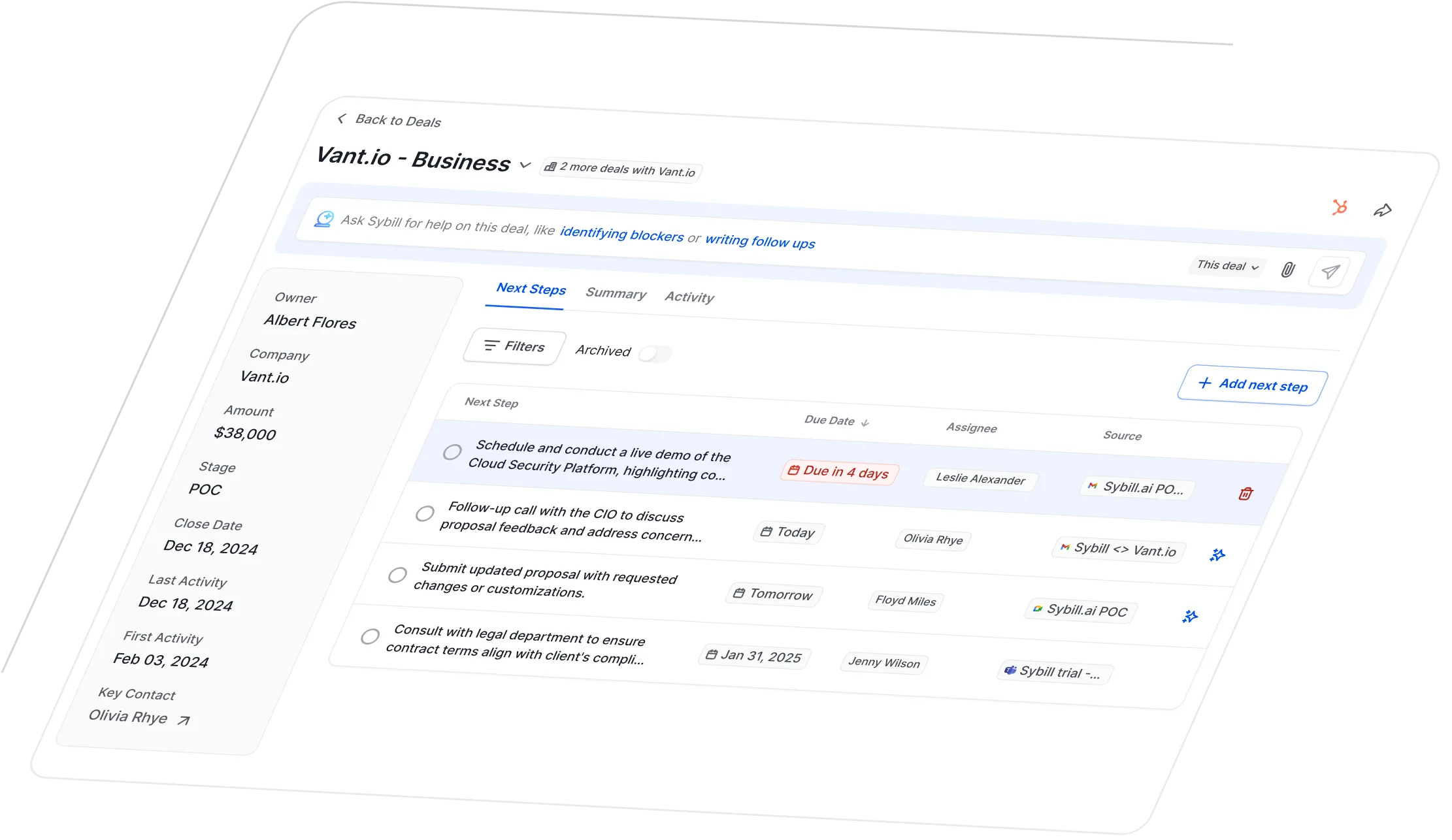
Extract open action items across all of this company's deals, meetings, and email threads. Assign each to the right owner; keep them short and prioritized by urgency.
Summarize what the company has today — products, seats, teams using us — as the base to expand from.
Identify expansion and cross-sell opportunities across the company — new teams, use cases, products, geographies — with the signal or quote behind each.
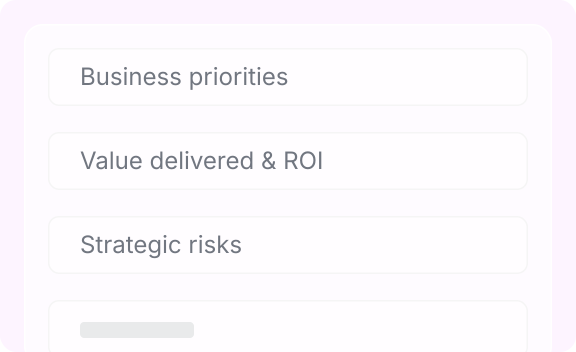
Summarize the value and ROI the company has realized so far, with proof points and quotes we can use to justify expansion.
Identify who could sponsor an expansion — champions and economic buyers for the new scope — and their influence and motivation.
Recommend the most promising expansion motion and the next step to open it, tied to the company's stated goals.
Get the company's overview at a glance, kept current from every conversation.

Write your email like a top Account Executive.
Get smarter with every deal.