Find us at booth #83, join us for a harbor side happy hour, or catch Gorish’s talk.

Sept, 16-18 > Learn more

%20(1).avif)
Mamta Tainwala

March 31, 2026
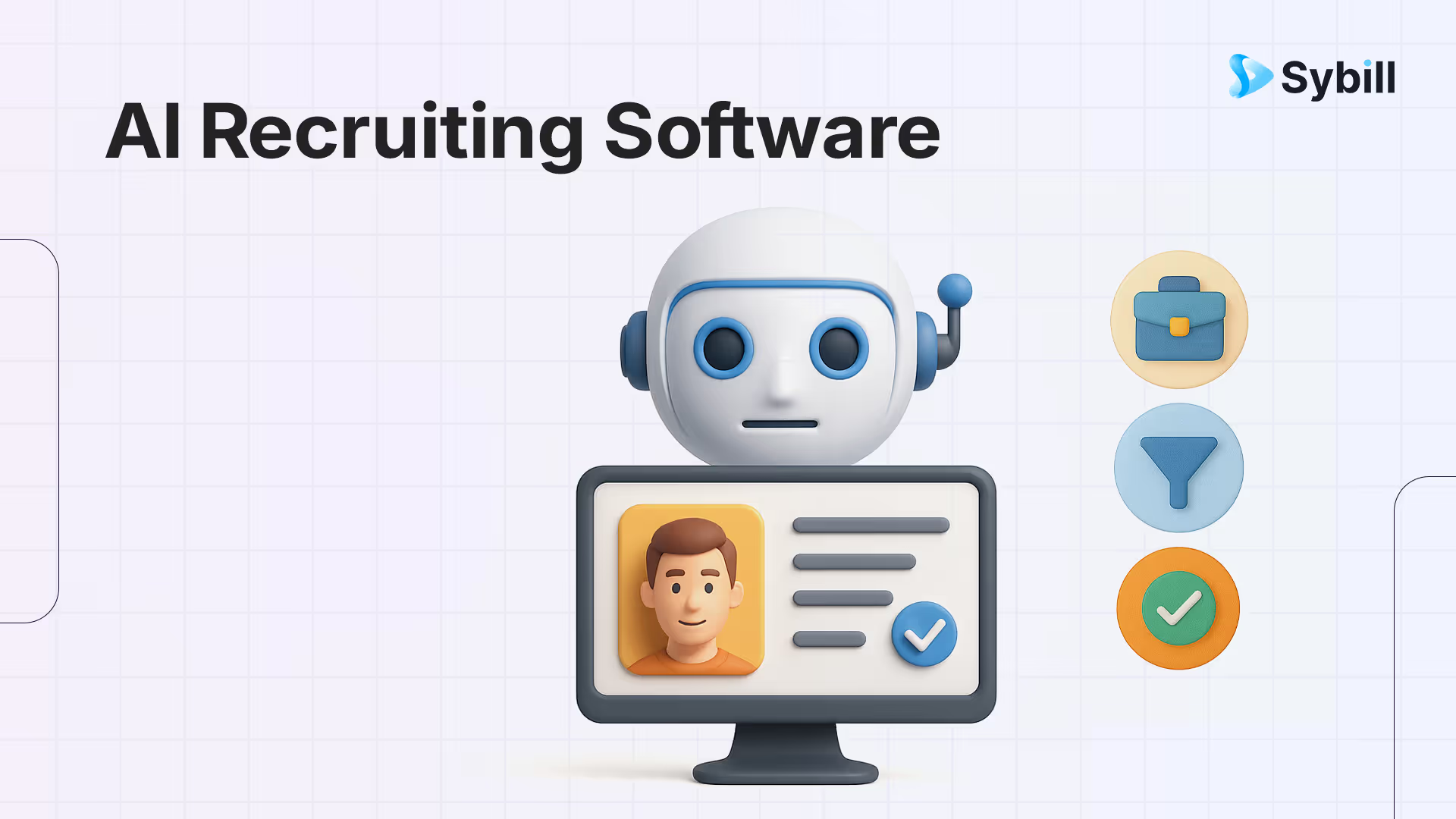
If recruiting in 2025 feels like speed-running Tetris on Level 29, you are not imagining it. Job requisitions stack up, candidates vanish mid-process, and every vendor promises an “AI copilot.” This guide cuts through the noise. You will get a plain-English map of the AI recruiting software landscape, the must-have capabilities for different team sizes, and how to evaluate tools for accuracy, speed, fairness, and compliance. We also include vendor spotlights, real implementation pitfalls, and where Sybill can help your team run structured, bias-aware interviews with less busywork.
The best AI recruiting software in 2025 includes Eightfold AI for enterprise talent intelligence and skills-based matching, SeekOut for external sourcing with diversity analytics, Paradox for high-volume conversational screening and scheduling, Greenhouse for AI-assisted interview plans and structured scorecards, Lever for ATS and CRM with AI summaries and ROI dashboards, and the Workday plus HiredScore stack for unified enterprise governance. Key capabilities to evaluate are skills matching accuracy, candidate rediscovery, agentic screening automation, structured interview generation, responsible AI controls with bias audit artifacts for NYC Local Law 144 and EU AI Act compliance, and measurable ROI on time-to-fill and quality-of-hire metrics.
The HR tech market moved from “AI-adjacent features” to AI-native workflows. Platforms ship agents that write job descriptions, shortlist candidates, and coordinate interviews. LinkedIn and Microsoft’s Hiring Assistant push this further by orchestrating sourcing, outreach, and scheduling inside the ecosystem where most candidates already live. Expect more consolidation: Workday has doubled down on AI capabilities and acquisitions, which will influence enterprise roadmaps.
Regulatory reality check:
These are representative examples to anchor your evaluation, not a full RFP list.
Eightfold has invested in skills taxonomies that map adjacent and emerging capabilities so teams can staff for growth areas instead of only backfilling titles. Buyers report stronger results when they align Eightfold’s skills graph with internal career frameworks and run quarterly reviews of inferred skills to keep recommendations current. The platform’s success depends on clean historical data, so plan a short data hygiene sprint before rollout.
Where it shines: global scale, skills graph, internal mobility, and rediscovery. Enterprises value reach and breadth.
Considerations: platform depth requires strong change management.
Who buys it: global TA leaders aligning around skills. (Eightfold)
SeekOut’s strength shows up when roles need hyper specific experience across industries or certifications. Teams that pair SeekOut’s filters with structured outreach templates see higher reply rates because the shortlists are more relevant and the messages are more grounded in a candidate’s actual background. The product also supports building talent pools ahead of demand, which helps when headcount approvals shift late in a quarter.
Where it shines: external sourcing, diversity analytics, and ongoing AI releases.
Considerations: pricing and learning curve are frequent review themes.
Who buys it: teams prioritizing fresh pipelines and competitive sourcing. (SeekOut)
Paradox is most effective in high volume funnels where completion speed matters more than long form applications. Recruiters can tune knockout logic by location and shift, which reduces wasted interviews and improves candidate satisfaction for frontline roles. Implementation goes smoothly when operations teams define clear escalation rules for edge cases like missing work authorization or schedule conflicts.
Where it shines: screening, reminders, and instant scheduling via chat or SMS, now on a path to deeper Workday integration.
Considerations: best for frontline and hourly roles, measure conversion lift.
Who buys it: retail, hospitality, logistics, healthcare systems. (paradox.ai)
Greenhouse users benefit when they enable structured hiring across the board rather than a few roles. Auto suggested scorecards and summaries work best if the organization agrees on a small, shared set of competencies per job family. Reporting becomes more reliable once interviewers adopt consistent rating notes, which then improves calibration meetings and reduces time to decision.
Where it shines: AI-assisted interview plans, auto-filled scorecards, and job description help built into structured hiring.
Considerations: ensure governance for generated content and question banks.
Who buys it: mid-market and enterprise teams running structured hiring. (support.greenhouse.io)
Lever’s blended ATS and CRM approach suits companies that run ongoing nurture for silver medalists. Teams that tag feedback with consistent labels unlock stronger recommendations in future cycles and create a living memory of what good looks like for each role. Adoption improves when hiring managers receive short training on how to read AI summaries and when to request a follow up interview for clarification.
Where it shines: AI interview summaries and recommendations inside reporting, helpful for lean teams.
Considerations: validate quality-of-hire metrics and inputs.
Who buys it: high-growth SaaS and mid-market teams. (Lever)
Workday Recruiting fits organizations that want talent workflows close to their core HR and finance data. Centralized governance helps security and audit teams review access, data sharing, and retention in one place.
HiredScore focuses on orchestration and explainability so recruiters and compliance teams can see why a profile is being surfaced. The product routes candidates based on intent, recency, and fit signals, which helps high volume organizations reduce manual triage.
Where it shines: governance posture, certifications, and a consolidated AI roadmap for large enterprises already on Workday.
Considerations: suite lock-in and change management across HRIS and TA.
Who buys it: global enterprises standardizing on Workday. (Newsroom | Workday)
Sourcing brings talent to the door. Selection decides quality of hire. Sybill helps teams run consistent, fair interviews and debriefs using:
Use Sybill alongside your ATS and sourcing stack to create a closed loop from JD to offer. (For related reading, link “structured interviews” to your internal piece on rubric design and link “AI meeting summaries” to your Sybill product page.)
Days 0–30: Prove the basics
Days 31–60: Standardize the loop
Days 61–90: Optimize and scale
A simple ROI frame:
AI recruiting software is not a silver bullet. It is a force multiplier when you deploy it against specific bottlenecks, measure results, and hold vendors to documented standards for fairness and governance. Start small, prove it on one role, standardize the loop, and scale. The teams that win in 2025 will combine great sourcing, predictable interviews, and transparent decisions. That is how you hire faster, fairer, and with more confidence.
No. It removes repetitive work like first-pass screening, scheduling, and note taking so recruiters can focus on relationship building, calibration with hiring managers, and closing. Treat AI as a workflow accelerator, not a decision maker.
Use tools that provide bias testing, human-in-the-loop review, and audit-ready exports. Publish a short AI use policy for candidates, log when automation influences a step, and run periodic bias checks on scored or ranked outcomes. Keep humans accountable for final decisions.
Track time-to-screen, time-to-schedule, candidate completion rate, pass-through rate by stage, and onsite-to-offer. Pair these with vacancy cost and agency spend. Compare a 60–90 day pre-AI baseline to a post-implementation period to isolate impact.