Find us at booth #83, join us for a harbor side happy hour, or catch Gorish’s talk.

Sept, 16-18 > Learn more

%20(1).avif)
Mamta Tainwala

September 23, 2026
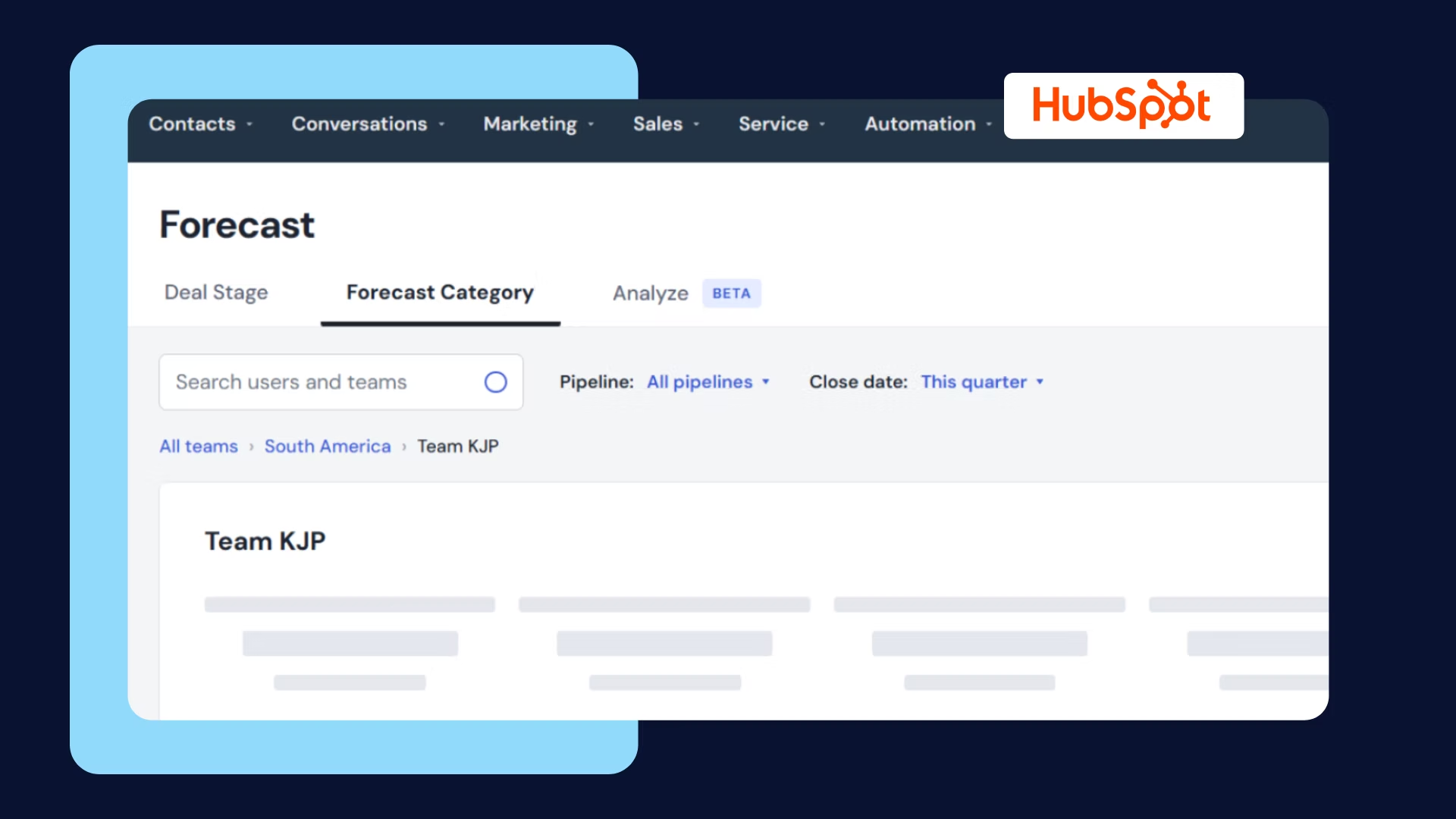
Here is the uncomfortable truth about HubSpot forecasting: the machinery is fine. The forecast tool rolls up cleanly, the categories are sensible, weighted pipeline does exactly what the probabilities tell it to. Forecasts miss anyway, and industry data says most do: AM World Group's roundup of forecasting research puts 79% of sales organizations missing their quarterly forecast by more than 10%. The miss is almost never a math problem. It is an input problem: the deal records the rollup aggregates describe the deals as a rep remembered them days ago, filtered through optimism, not as the conversations left them.
So this guide spends one section on the machinery and the rest where the accuracy actually lives: the four input failures that produce forecast variance, the coaching questions that pressure-test a Commit, a pre-forecast diagnostic you can run this week, and the structural fix, which is making deal records update from conversations instead of memory.
The native stack, gated at Professional and above (Sales Hub pricing breakdown):
All four consume the same raw material: deal stages, close dates, amounts, and qualification properties. Which means all four inherit whatever is wrong with them.
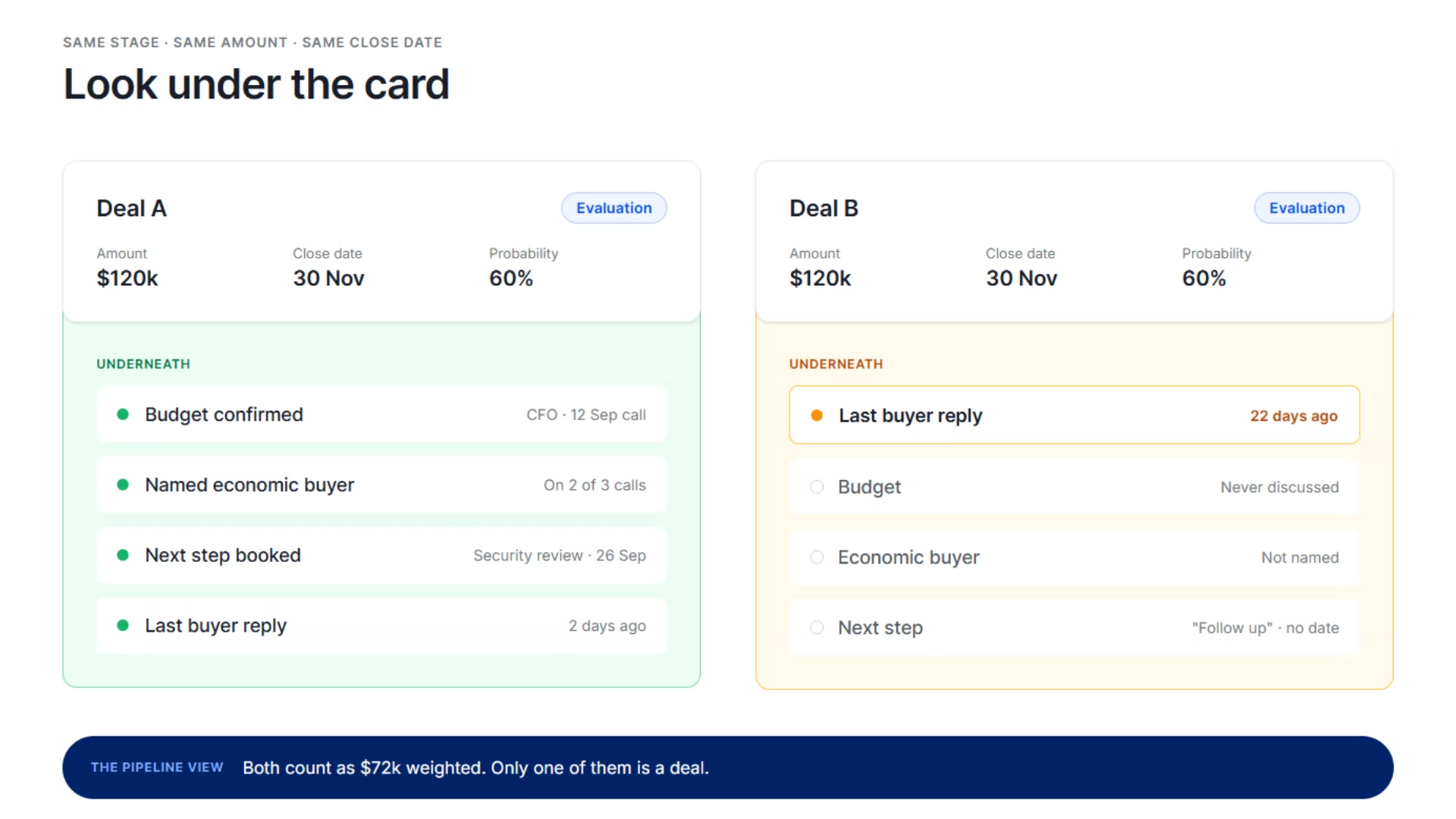
1. The stage label outruns the evidence. Two deals sit in "Evaluation": one where the economic buyer confirmed budget last Tuesday, one where the economic buyer went quiet three calls ago. With blank qualification fields, your pipeline report literally cannot tell them apart, so the forecast counts both. A stage is a claim; the fields are the evidence; and stages without evidence are the illusion of pipeline, the same drift mechanics as our data hygiene deep dive.
2. "Commit" means something different to every rep. For one rep it's a verbal from the champion, for another it's paperwork in procurement, for a third it's a good feeling about the last call. Unenforced definitions turn categories into personality tests, and the rollup math is brutal: a handful of reps each running modestly optimistic compounds into a team number that is off by a meaningful slice of someone's quota before a single deal actually moves.
3. Close dates drift without witnesses. A date pushed forward once is a deal event; pushed forward twice without a documented reason is a pattern, and three deals quietly slipping two weeks each erases a month of projected revenue with no alert firing anywhere.
4. Activity metadata impersonates deal health. HubSpot logs that emails sent and meetings happened; it does not know what happened inside them. A deal with eight logged activities can be a stalled deal where the rep is pitching a champion with no authority while the economic buyer disengaged, and the activity log will call it healthy. The signals that actually predict outcomes (a competitor entering, stakeholder breadth thinning, a commitment made and missed) live in the conversations, and they reach the forecast only if something puts them there.
Three questions, one per failure mode, each testing evidence rather than confidence:
Run the same three every week and the definitions enforce themselves, because reps prepare for the questions they know are coming, and the sandbagging and happy-ears cancel each other into something resembling a number. The deeper fix is making the answers visible before the call, which is the next section's job.
Everything above shares one root: the forecast reads properties, and properties update at the speed of rep discipline, which loses to a busy calendar every single week. The fix has three layers, and only the first two are process:
Sybill has analyzed around 33 million sales conversations, and in a HubSpot forecast architecture its job is precisely this third layer: every call and meeting becomes a summary and HubSpot fields that fill themselves through the native integration, so the qualification evidence is current when the pipeline report opens.
Deal inspection reads the risk signals across the whole pipeline (the competitor that entered, the engagement that thinned, the commitment that lapsed), and Ask Sybill answers the forecast call's questions before the call: which Commit deals lack a confirmed economic buyer, what changed on this account since last week, what is actually blocking the deals in Best Case. The coaching layer inherits the same evidence, and the quarter's misses feed the win-loss loop so next quarter's categories get smarter.
Forecast from evidence, not optimism. Sybill fills HubSpot from every conversation and flags the deals whose stories changed, before the forecast call. Get started for free with Sybill.
The before-and-after is worth spelling out, because it is where the accuracy argument becomes a time argument:
The same current-fields property extends past the quarter: closed deals hand CS a populated record instead of a debrief call, and the misses feed pattern analysis instead of folklore.
Run these against the pipeline the day before the call:
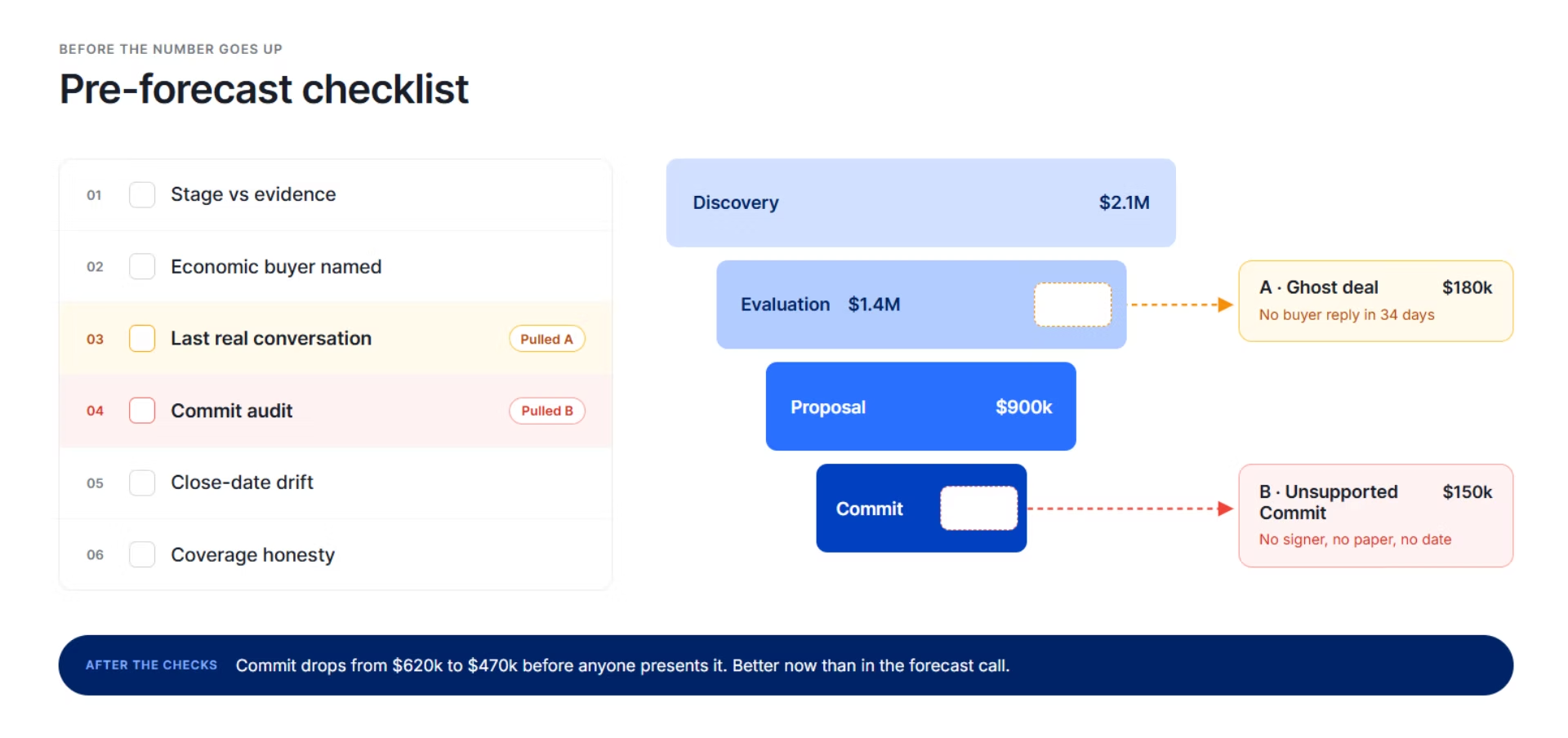
HubSpot's forecasting machinery deserves more trust than it gets, and the inputs deserve far less. Nearly every miss traces to the same chain: a conversation happened, the record didn't change, the stage kept its label, the category kept its optimism, and the rollup faithfully aggregated fiction. Process fixes (exit criteria, the three questions, the diagnostic) narrow the gap and are worth running from Monday; the durable fix removes the dependency entirely, because a forecast built on fields that update themselves from conversations is the only version where the number going to the CRO describes the pipeline that actually exists. Everything else is confidence, compounded.
Fix the inputs, run the three questions until nobody needs them, and let the diagnostic retire itself. The rollup was never the problem.
Get started for free with Sybill or book a demo and forecast from what buyers actually said.
Because activity logging captures timing metadata (emails sent, meetings held), not deal content. If qualification fields, buyer-committee properties, and close-date reasons are blank, the forecast aggregates stage labels and optimism rather than evidence, and slippage stays invisible until quarter-end. Industry research collected by AM World Group finds 79% of sales organizations miss quarterly forecasts by more than 10%.
At Professional and Enterprise: the forecast tool with rep and manager submissions and rollups, forecast categories (Commit, Best Case, Pipeline), weighted pipeline using per-stage probabilities configured per pipeline, and reporting plus workflow-based staleness alerts. All of them read deal stages, amounts, close dates, and properties, so their accuracy is exactly the accuracy of those inputs.
Enforce one company-wide definition per category, anchored to documented buyer actions rather than rep confidence, and pressure-test on every call: what did the buyer commit to and who committed, what remains for this to close and whose move is it, and when did the economic buyer last engage directly. Categories validated against field evidence aggregate honestly; categories left to interpretation aggregate personalities.
The common heuristic is 3x to 5x quota in active pipeline, with one caveat that decides whether the number means anything: coverage only counts on documented deals. A 4x ratio where late-stage deals carry blank qualification fields is four quotas' worth of question marks, so measure field completion alongside coverage or the ratio flatters you.
Sybill removes the forecast's dependency on manual updates: every call and meeting writes HubSpot fields automatically, deal inspection flags the risk signals across the pipeline (competitor entries, thinning engagement, lapsed commitments, close-date drift), and Ask Sybill answers forecast-call questions like which Commit deals lack a confirmed economic buyer. The rollup stays HubSpot's; the inputs stop being memory.
Because activity logging captures timing metadata (emails sent, meetings held), not deal content. If qualification fields, buyer-committee properties, and close-date reasons are blank, the forecast aggregates stage labels and optimism rather than evidence, and slippage stays invisible until quarter-end. Industry research collected by AM World Group finds 79% of sales organizations miss quarterly forecasts by more than 10%.
At Professional and Enterprise: the forecast tool with rep and manager submissions and rollups, forecast categories (Commit, Best Case, Pipeline), weighted pipeline using per-stage probabilities configured per pipeline, and reporting plus workflow-based staleness alerts. All of them read deal stages, amounts, close dates, and properties, so their accuracy is exactly the accuracy of those inputs.
Enforce one company-wide definition per category, anchored to documented buyer actions rather than rep confidence, and pressure-test on every call: what did the buyer commit to and who committed, what remains for this to close and whose move is it, and when did the economic buyer last engage directly. Categories validated against field evidence aggregate honestly; categories left to interpretation aggregate personalities.