Find us at booth #83, join us for a harbor side happy hour, or catch Gorish’s talk.

Sept, 16-18 > Learn more

%20(1).avif)
Mamta Tainwala

September 23, 2026
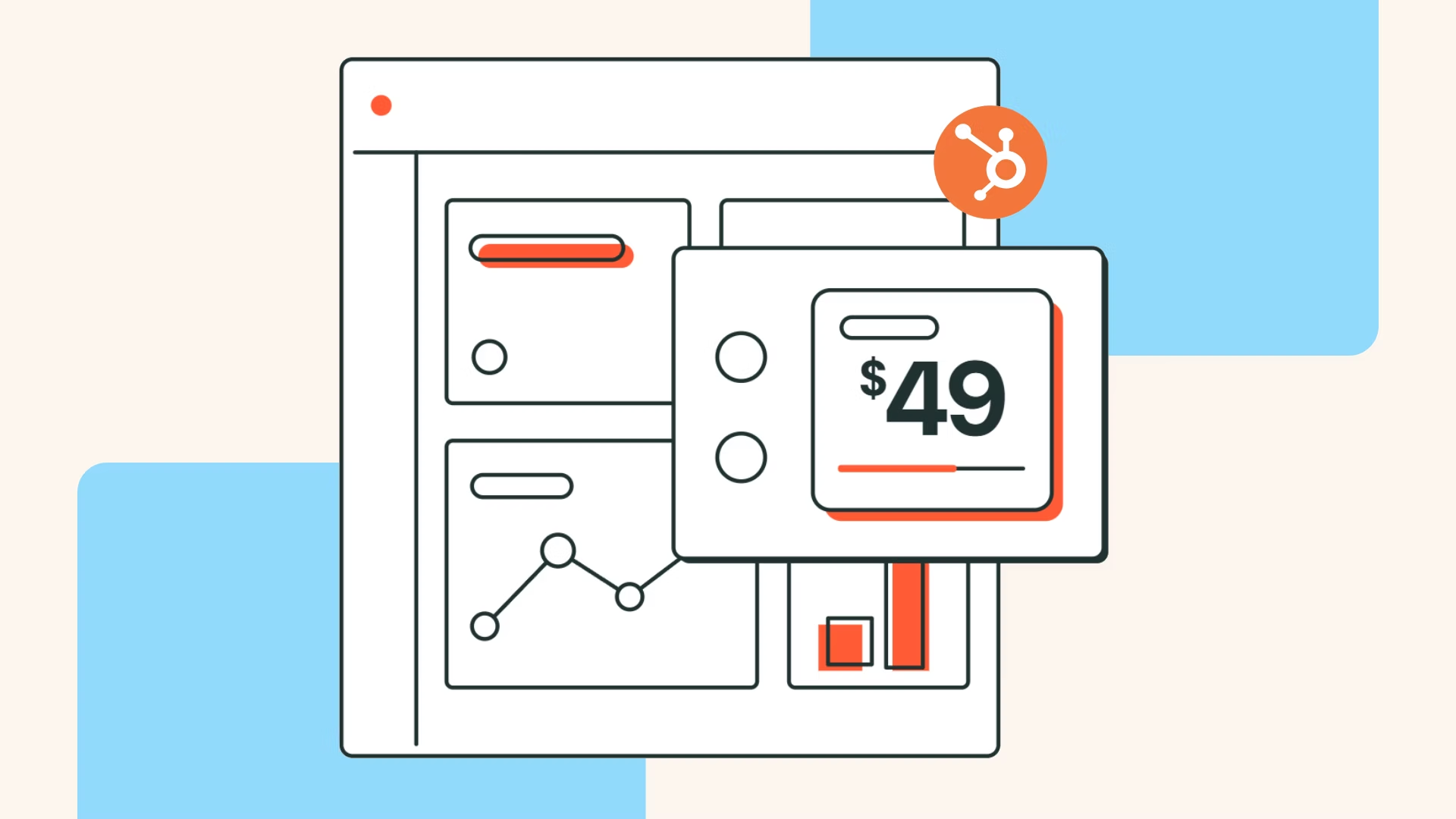
HubSpot Sales Hub pricing is genuinely simple on the surface: per-seat tiers at $15, roughly $100, and $150, plus a famously capable free CRM underneath. The complexity lives one layer down, in what each tier actually gates, the seat types introduced with the 2024 pricing model, the mandatory onboarding fees, and the credits quietly metering the newer AI features. This guide prices all of it honestly (figures checked against HubSpot's own published guidance and current 2026 breakdowns; confirm against the live pricing page before signing, since promotional rates come and go), then answers the question the pricing page can't: when each upgrade actually pays.
Four tiers, per seat, with annual billing carrying the lower rates (current guides put monthly billing roughly 20 to 30% higher):
The seat model matters as much as the tier. Since HubSpot's 2024 pricing change, full sales seats carry the tier price while core seats (roughly $45 to $50 at these tiers) cover teammates who need access without the selling toolset, and Professional and Enterprise let you mix them. A 10-person team where seven sell and three coordinate should never pay ten sales-seat prices, which is the single most common overspend in first-year contracts.
The tier pages list dozens of features; four gates decide most upgrade decisions:
Everything else on the tier pages (shared inboxes, playbooks, deal pipelines per portal, calling allocations) matters at the margin, and the four gates above decide the tier for the overwhelming majority of teams. Price against the gates, not the checklists.
Two costs the tier table doesn't show:
Three honest year-one snapshots on annual billing (seat mix per the model above, credits and calling extra):
The pattern across all three: the sticker seat is the floor, onboarding and metering set the real year-one number, and the annual-versus-monthly choice moves the bill by a fifth or more. Negotiate at renewal too; volume, multi-year, and multi-Hub bundles all create room.
One timing note that saves real money: if a mid-year upgrade is plausible (a Starter team that will need sequences by Q3), price the year as if the upgrade already happened, because paying Starter for six months and then Professional plus onboarding mid-cycle usually lands within a few hundred dollars of having started on Professional, without the quarter of improvised cadences in between. Tier arbitrage rarely beats buying the machinery your motion is about to need.
And one boundary rule for the Enterprise conversation, the same discipline as everywhere in this cluster: don't pay for the same capability twice. Enterprise's conversation intelligence and a dedicated conversation layer overlap at the call level, so decide deliberately which owns it before signing either, because the expensive stack is the one where both invoices cover the same conversations.
Here is the uncomfortable arithmetic under every tier decision: Professional's workflows trigger on properties, Enterprise's predictive scoring models properties, forecasting rolls up properties, and the tier price buys none of the properties being true. A $150 Enterprise seat forecasting from stale fields is a $15 Starter guess with better charts, which is why the data hygiene problem sits underneath the pricing page like a foundation under a staircase.
That layer is bought separately, and it is Sybill's job in a HubSpot stack at any tier. Sybill has analyzed around 33 million sales conversations, and through its HubSpot integration every call and meeting becomes a summary and fields that fill themselves, with follow-ups drafted in the rep's voice, commitments captured as tasks, and deal signals read across the pipeline. The practical effect on the tier decision: whichever tier you buy earns its price, because the machinery it gates finally runs on what buyers actually said, and the wider integration landscape covers the rest.
Whatever the tier costs, it runs on data. Sybill fills HubSpot from every call and meeting automatically, so the seats you're paying for work with the truth. Get started for free with Sybill.
Sales Hub's pricing is honest by SaaS standards: the tiers are real, the free CRM is the industry's most generous, and the per-seat model scales the way it says. The traps are all in the second layer: paying sales-seat prices for coordinators, discovering onboarding in the first invoice, metering the Breeze credits at demo volume instead of real volume, and upgrading a tier to buy machinery that then runs on fields nobody fills. Price the seat mix, model the credits, put the sequences test at the center of the Starter-to-Professional call, reserve Enterprise for governance-and-scale reasons, and buy the truth layer once, whichever step of the staircase you're standing on.
And verify every figure against HubSpot's live pricing page the week you sign, because promotional rates move and this post will age exactly as fast as they do.
The tier buys the machinery, the seat mix and credits set the invoice, and the data decides whether any of it was worth signing. Get all three right and the staircase pays for itself.
Get started for free with Sybill or book a demo and make every Sales Hub seat run on what buyers actually said.
Four tiers, per seat: Free at $0, Starter at $15 per seat monthly on annual billing ($20 monthly), Professional at roughly $90 to $100 per seat plus a mandatory $1,500 one-time onboarding fee, and Enterprise at $150 per seat, typically an annual commitment, plus $3,500 onboarding. Monthly billing runs roughly 20 to 30% above annual rates, and promotional Starter pricing appears periodically.
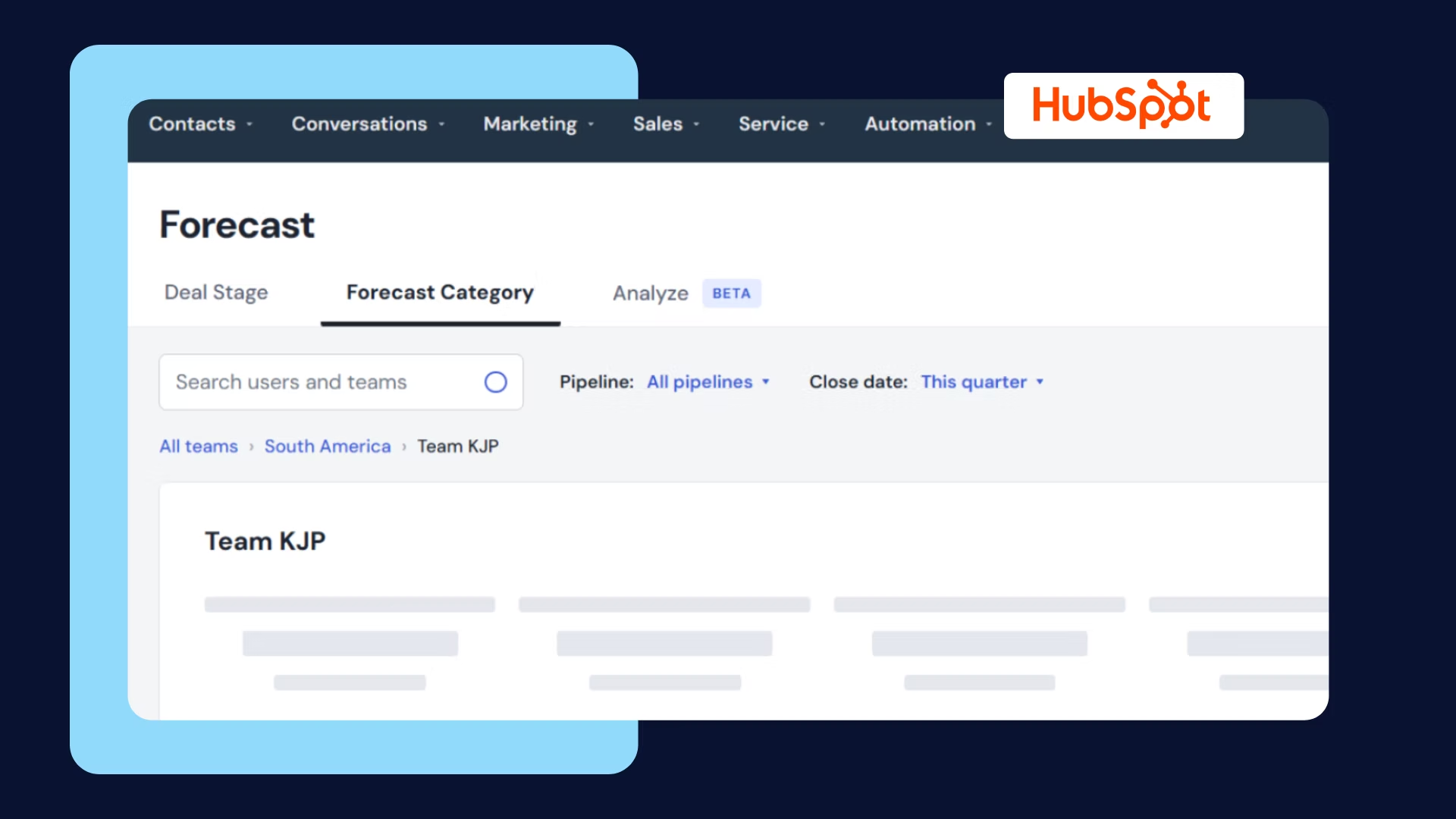
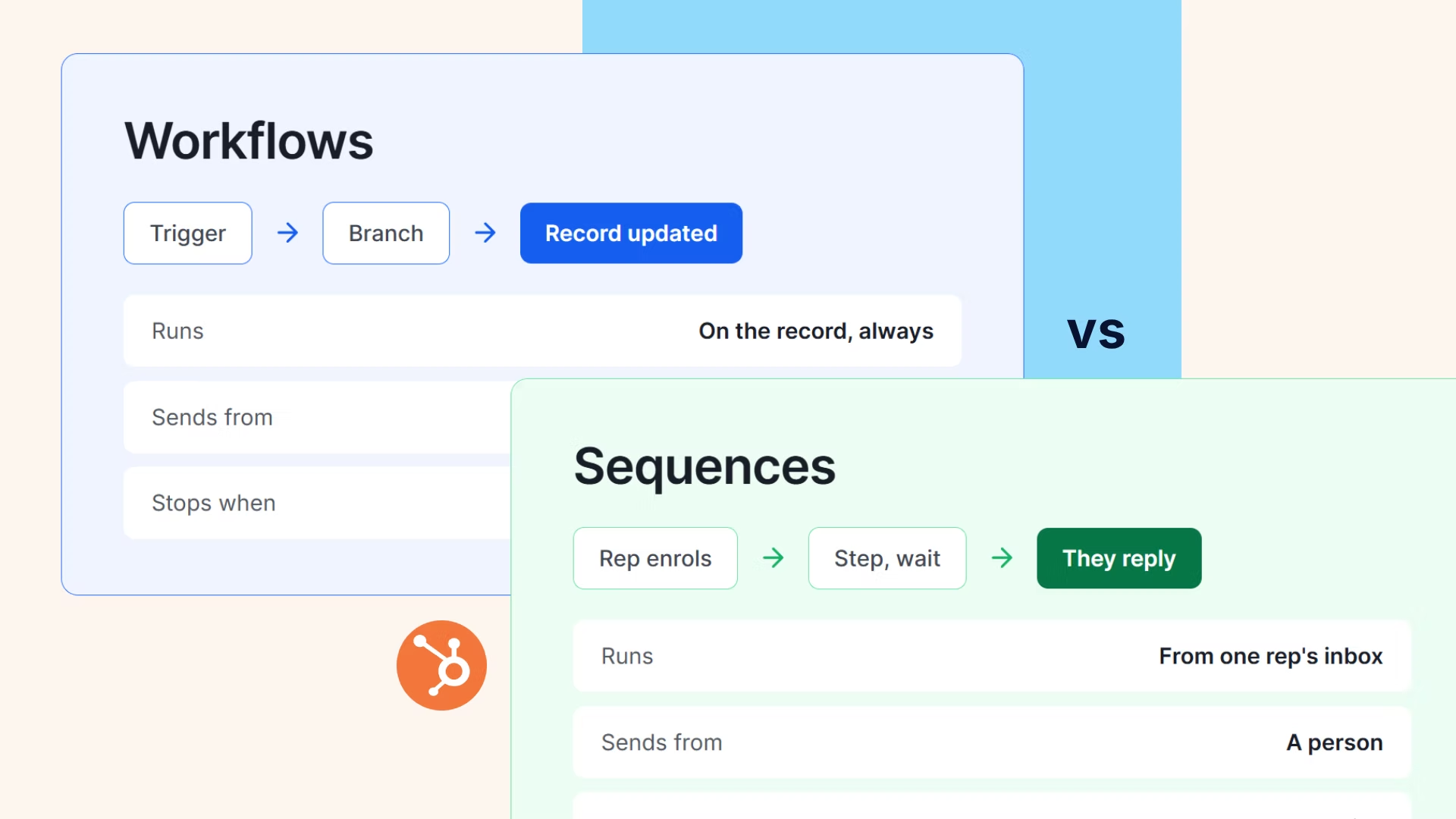
Professional is where the sales machinery unlocks: email sequences, workflow automation, forecasting, custom reporting, and the credit-metered Breeze Prospecting Agent. Starter covers the basics (simple automation, calling, scheduling, no HubSpot branding) but includes no sequences and no workflows, which makes the outbound motion the cleanest upgrade test: the day you need sequences, Professional stops being optional.
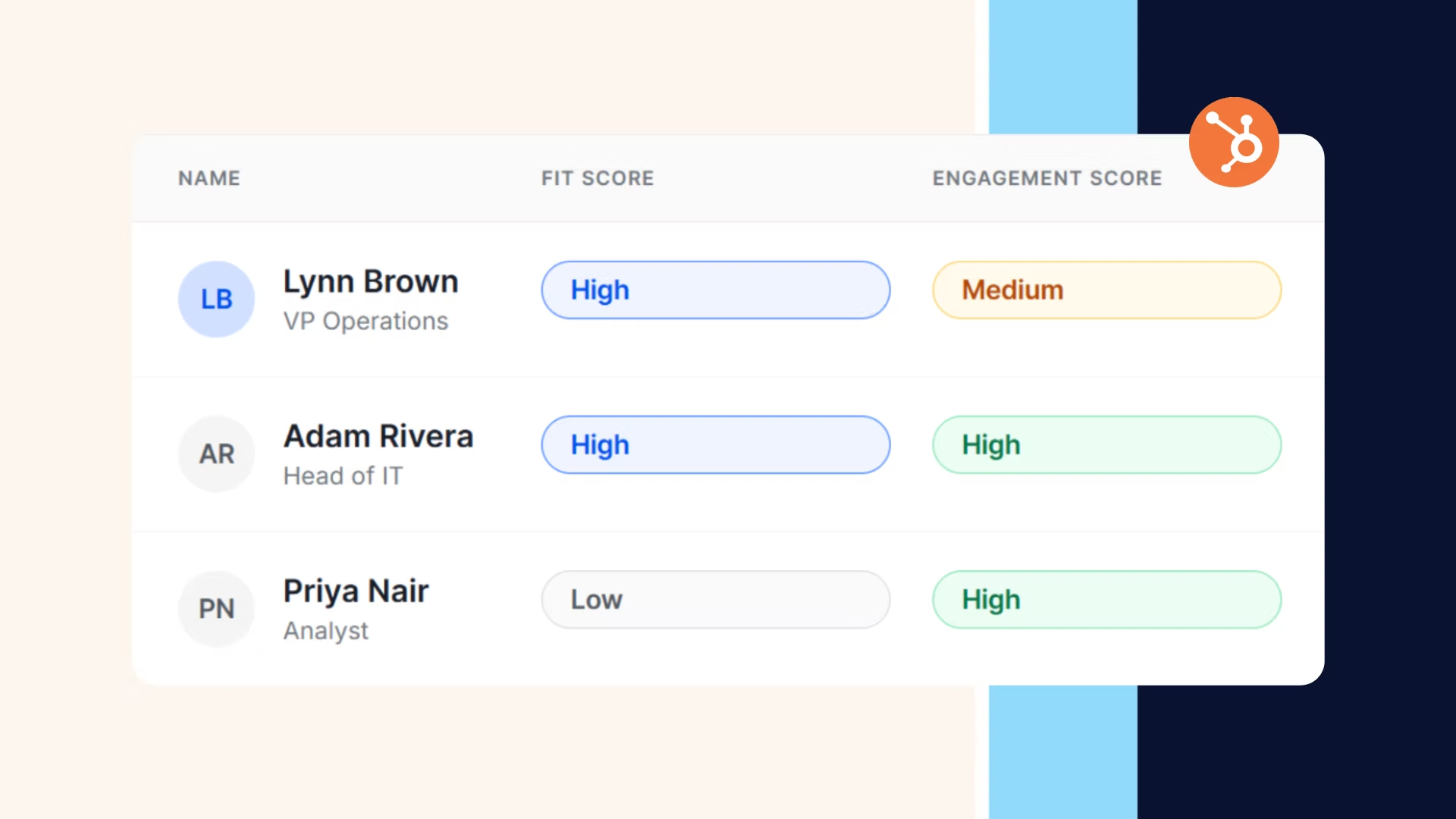
The governance and intelligence layer on top of Professional: predictive lead scoring (machine-learned likelihood to close), conversation intelligence, advanced permissions, and the controls for running many teams in one portal. It pays on scale and governance rather than on any single feature, and it carries a $3,500 mandatory onboarding fee with annual-style commitment.
The recurring ones buyers miss: mandatory onboarding ($1,500 Professional, $3,500 Enterprise), HubSpot Credits metering AI features (guides cite about 100 credits per monitored contact monthly for the Breeze Prospecting Agent against about 3,000 included on Professional, with extra credits around $10 per 1,000), calling minutes beyond allocations, the monthly-billing premium, and paying full sales-seat prices for teammates who only need core seats.
Since HubSpot's 2024 seat model, full sales seats carry the tier price and the complete selling toolset, while core seats (roughly $45 to $50 at paid tiers) give access without the sales machinery, and Professional and Enterprise portals can mix the two. Pricing non-selling coordinators as core seats is the most reliable saving in a first-year contract.
At each tier, the machinery is competitive with the category, and the honest qualifier is that all of it (workflows, forecasting, scoring) runs on CRM properties. Teams that automate their data capture, so fields reflect what buyers actually said rather than what reps remembered to type, get the tier they paid for; teams that don't are buying better charts over the same guesses.
Four tiers, per seat: Free at $0, Starter at $15 per seat monthly on annual billing ($20 monthly), Professional at roughly $90 to $100 per seat plus a mandatory $1,500 one-time onboarding fee, and Enterprise at $150 per seat, typically an annual commitment, plus $3,500 onboarding. Monthly billing runs roughly 20 to 30% above annual rates, and promotional Starter pricing appears periodically.
Professional is where the sales machinery unlocks: email sequences, workflow automation, forecasting, custom reporting, and the credit-metered Breeze Prospecting Agent. Starter covers the basics (simple automation, calling, scheduling, no HubSpot branding) but includes no sequences and no workflows, which makes the outbound motion the cleanest upgrade test: the day you need sequences, Professional stops being optional.
The governance and intelligence layer on top of Professional: predictive lead scoring (machine-learned likelihood to close), conversation intelligence, advanced permissions, and the controls for running many teams in one portal. It pays on scale and governance rather than on any single feature, and it carries a $3,500 mandatory onboarding fee with annual-style commitment.