Find us at booth #83, join us for a harbor side happy hour, or catch Gorish’s talk.

Sept, 16-18 > Learn more

%20(1).avif)
Mamta Tainwala

March 31, 2026
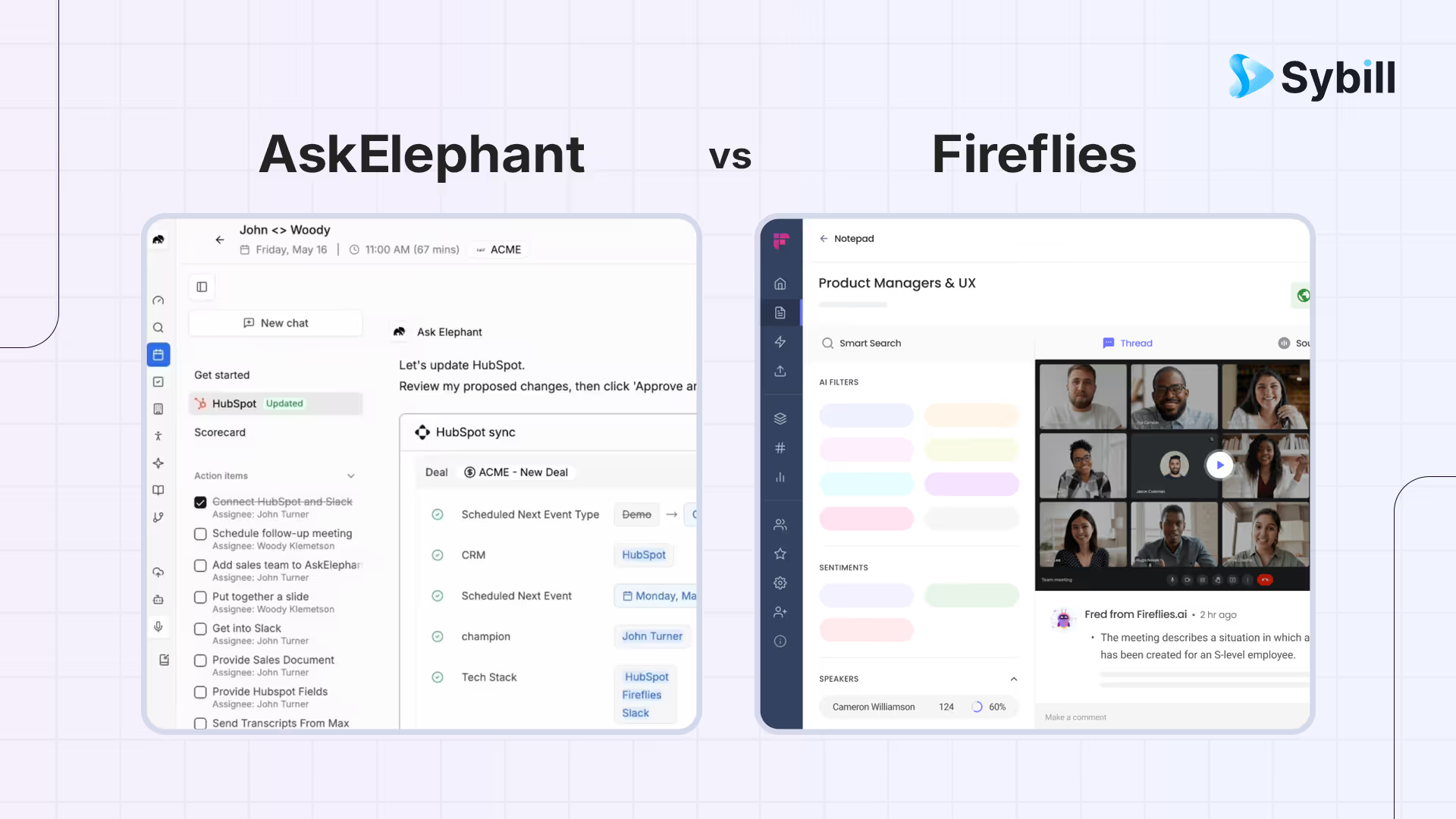
If meeting tools were coworkers, AskElephant is the tidy operations partner who builds checklists, labels every container, and hands you a clean brief before you even join the call. Fireflies is the energetic generalist who shows up to every meeting, records everything that moves, and then spins transcripts into highlights, tasks, and content on demand. One bets on agent style workflows wrapped around meetings, especially if your process lives in HubSpot or a similar CRM. The other bets on coverage, speed, and breadth so you never wonder what was said, who said it, or where to find it.
Both can be excellent. They simply come from different philosophies. AskElephant starts with guided capture and practical automations tied to your GTM stack. Fireflies starts with frictionless recording and real time transcripts that unlock searchable memory and fast reuse. This deep dive walks through where each product excels from pre call prep to coaching and analytics, how to evaluate them in a real world bake off, and why many sales teams ultimately choose Sybill when the goal is not just documentation but momentum.
AskElephant is a meeting-led assistant with pre-call briefs, mobile capture, summaries, and agent-style workflows that push structured data into CRM and collaboration tools, especially strong for HubSpot-first teams and field sales. Fireflies is an AI notetaker and meeting engine with real-time transcripts, layered summaries, a built-in Q&A assistant, and broad integrations across conferencing, collaboration, CRM, and project tools. AskElephant wins on guided capture and automated after-call workflows; Fireflies wins on universal coverage, live transcription, and searchable meeting memory at scale. For revenue teams that want meeting capture plus one-click follow-ups, CRM autofill, deal workspaces, and evidence-backed pipeline answers, Sybill combines the strengths of both with execution features built for sales momentum.
A meeting led assistant that records conversations, prepares briefs, generates summaries and follow ups, and wires agent style workflows into your CRM and collaboration tools. It is especially appealing for teams that run their motion in HubSpot and want mobile capture for sellers who live on the road.
An AI notetaker and meeting engine that joins your calls, produces real time transcripts and summaries, lets you query meetings with a built in assistant, and pushes highlights, tasks, and notes into the rest of your stack. It is designed to scale across functions with a wide integration surface and strong search.
AskElephant emphasizes getting the rep into the meeting with context. Typical flows include a brief that combines calendar information, past notes, and CRM fields. The goal is to put buyer details, open threads, and hard questions in front of the rep without extra clicks. For busy account executives or founders who sell between other work, this is worth its weight in gold, since it shortens the ramp into each conversation.
Fireflies focuses on making sure the recorder is there, the transcript starts instantly, and early markers like speaker labels and topics attach to the right places. It feels like a modern call studio. Reps who work heavy meeting calendars appreciate that they never have to worry about pressing record. If your motion relies on live collaboration in the doc during a call, Fireflies’ real time transcript is a magnet for attention because everyone can scan back and catch exact phrasing.
What to check in a trial: Put a new rep into both tools for a week. Does the AskElephant brief actually change the first five minutes of discovery. Does Fireflies’ live transcript change how often the team captures exact words like must have, budget guardrail, or security requirement.
AskElephant records meetings on web and mobile, then attaches lightweight agent flows. Sellers can upload captured audio from mobile, which matters for onsite conversations or ad hoc calls that never make it to Zoom. Calendar awareness reduces the friction of naming and organizing artifacts. During the call, note capture is available for humans who prefer typing key moments that the summary should emphasize.
Fireflies runs a high coverage model. It joins the meeting, captures the full conversation, and streams a transcript in real time. When the call ends, a summary, action items, and tags are generated without babysitting the workflow. Teams that care about verbatim evidence and speed notice that content decisions happen within minutes. If your leaders want to paste an exact buyer quote into a deck or a Slack thread, this model shines.
Reliability checklist: Run the same thirty minute discovery twice. In AskElephant, verify that the recording is attached to the right account or opportunity and that the brief fields were accurate. In Fireflies, verify that speaker diarization, time stamps, and real time transcript quality match what the conversation felt like. If your deals are multilingual or cross regional, push a few calls in different languages and score accuracy.
AskElephant writes structured summaries that emphasize purpose, top themes, objections, and agreed next steps. Because the product centers on agent flows, the summary is designed to be consumed by both humans and downstream automations. This is especially useful when you want summaries to populate a CRM timeline, a deal room, or a renewal tracker without copying text by hand.
Fireflies produces a layered output. The first layer is a human readable recap with action items and key moments. The second layer is a searchable transcript with highlights and snippets that you can turn into quotes, social posts, or enablement clips. The third layer is Q and A with the assistant, which lets non attendees ask questions like where did they raise timeline risk or which competitor was mentioned and then jump to the exact moment.
Quality checks that matter: Read the summaries cold, as if you had not attended the call. Did AskElephant capture decision criteria, buyer roles, and the reason change matters to them. Did Fireflies capture exact buyer phrasing well enough that a follow up can mirror their language. Which output would you forward to a VP without editing.
The golden hour after a meeting is when deals either accelerate or stall. AskElephant aims to help reps ship a credible follow up within minutes and to send structured payloads into CRM or HubSpot notes so the account record reflects reality. Agent recipes can create tasks, schedule reminders, or fill fields that RevOps needs for reporting.
Fireflies is optimized for speed and reuse. You can ask the assistant to draft the follow up, extract a mutual action list, build a mini timeline, and package the right snippets. The tool’s strength is how quickly a rep can move from transcript to shareable asset, especially in a content heavy motion where product marketing or customer success needs clips for a deck or a knowledge base.
How to score the golden hour. Time the steps from hangup to send in both tools, using two real customer meetings. Count the number of manual edits in the follow up, the number of clicks to get tasks into your system of record, and the consistency of the next steps captured. Involve a manager to judge tone and accuracy, since more emails is not the goal, better emails is.
AskElephant treats CRM sync as a core promise. Notes, follow ups, and structured elements map into the right places. For HubSpot first teams, this feels native. The agent pattern helps because you can define which fields should be updated after certain meeting patterns. If you have a qualification method like MEDDIC or SPICED, you can build simple rules that enforce consistency across the team without writing a custom integration.
Fireflies integrates with major CRMs and collaboration tools, and it can auto populate call logs, notes, and tasks. The focus is on getting everything into the right systems quickly and making the transcript searchable everywhere your team lives. For some teams, that is enough, since a human then moves critical details into structured fields during a review. For others, that extra human pass becomes the friction they wanted to avoid, which is why you should test how far you can push Fireflies’ templates and integrations to fill structured data automatically.
Trust test: Pick ten opportunities and look at them one week later. Which product left the account timeline cleaner, which fields were consistently filled without a manager nag, and which summaries read like living documentation rather than scattered text blobs. Share those screenshots with RevOps, then ask what they still had to fix by hand.
AskElephant offers search across meetings and notes with a pragmatic goal, find the right conversation quickly and use the information to move your deal. The product’s philosophy is that search is great, answers are better, and automations are best, so many teams wire common questions into agent recipes that package the right artifacts for reviews.
Fireflies invests heavily in retrieval. The transcript is searchable by keyword and topic, and the built in assistant can answer specific questions with time stamped references. For onboarding, enablement, or cross functional collaboration, this is a superpower because you can find every instance of a feature request, a pricing pushback, or a compliance question in seconds. For leaders, it reduces the guesswork in weekly narrative updates.
The experiment: Give a manager a list of five questions to answer using only each product. Questions like where did we commit to a security review on the ACME renewal, how many times did timeline slip come up in Q3, and which calls contained a competitor mention for Contoso. Score time to answer and confidence in the evidence.
AskElephant supports coaching with call coverage, structured summaries, and tasks that remind managers to follow up. Some teams wire agent flows that flag risky patterns or missing fields so managers get a to do list with clips attached. The emphasis is on practical interventions that change behavior week by week rather than a heavy analytics layer.
Fireflies looks like a modern call library out of the box. Highlights, playlists, soundbites, and analytics make it easy to create a set of best practice clips. The assistant helps you assemble a reel for a specific objection or product area. Enablement teams love this because they can build repeatable content without begging for raw recordings and manual editing time.
Coaching drill. Ask both tools to create a ten minute playlist of the best discovery questions asked by your top rep, then share it with a new hire. In the next team sync, ask the new hire to list three things they learned. The faster you produce the reel and the clearer the lesson, the better the tool fits your enablement style.
AskElephant leans into agent recipes and CRM centric workflows. Teams that standardize on HubSpot often find adoption smoother because the atomic unit of work is a meeting followed by a set of actions that land in the CRM. If your environment includes a handful of core tools rather than a sprawling platform zoo, this focused approach reduces surface area and risk.
Fireflies takes a different angle, integrate with as much of your stack as possible so transcripts, summaries, and tasks appear wherever people are already looking. Conferencing, dialers, collaboration apps, CRMs, project tools, even social schedulers show up in customer stories. That breadth frees teams to experiment. It also means you should assign a single owner for template governance so outputs stay consistent.
Governance checklist. Before your trial, pick three templates for follow ups, three task patterns for your project tool, and three summary structures for the CRM timeline. Configure both products to produce these formats, then score how consistent the outputs are after ten calls across five reps. Consistency is the difference between knowledge and noise.
AskElephant’s mobile capture is a genuine differentiator if your reps spend time in the field or do a lot of impromptu calls. Being able to upload a quick debrief and still get a structured summary and follow up keeps deals moving between formal meetings. Field sales, partnerships, and founder led sales see this benefit quickly.
Fireflies focuses on coverage across traditional web conferencing and dialers. For teams that live entirely on Zoom, Meet, or Teams, the live transcript and immediate summary feel like magic. If you run many hallway conversations or phone only calls, plan how you will capture those edge cases. Some teams simply add a habit, drop a summary in the CRM after the call and tag the Fireflies space for context.
AskElephant and Fireflies both target GTM teams, and both offer enterprise controls, yet your risk profile will determine how you evaluate them. If your buyers resist visible bots or you sell into high compliance environments, make sure you can configure recording notices and retention appropriately. If your legal and security teams care about where transcripts live, who can download audio, and how long assets persist, build those rules into your pilot criteria. Involve a skeptical stakeholder early, it saves time later.
AskElephant frames plans around meeting capture, assistant capability, and agent style workflows, with tiers that unlock deeper automation and governance. The pricing is approachable for teams that want to start quickly and add sophistication later.
Fireflies frames plans around recording volume, workspace features, and admin controls. The free and entry level tiers are helpful for testing adoption and for rolling out to cross functional collaborators who only need to search or comment. As you add analytics, AI assistance, and governance, expect to climb tiers.
A simple way to model cost. Add not only license fees but the minutes and clicks saved per rep, the reduction in manager prep time, and the improvements in CRM field completeness. A tool that saves twenty minutes per meeting and increases follow up quality is often cheaper than it looks on a price sheet.
AskElephant’s strength in agent style flows can feel prescriptive if your team wants unlimited knobs and dials for analytics or if you plan to instrument very complex outreach sequences inside the meeting tool itself. Plan for the balance between helpful guardrails and the need for tinkering.
Fireflies’ breadth can become a governance challenge if many people create templates and rules without a single owner. The live transcript can tempt teams to overproduce content. Set a content taxonomy early so your library stays useful rather than becoming a junk drawer.
Choose AskElephant if your GTM stack revolves around meetings that require fast follow ups, clean CRM notes, and predictable after call actions. If you are HubSpot first, if your reps often capture on mobile, or if you want agent recipes that encode your process without heavy admin work, AskElephant matches your rhythm.
Choose Fireflies if you want comprehensive coverage and fast reuse across a wide set of tools. If your teams care about live transcripts, instant summaries, and a strong search experience for onboarding and cross functional collaboration, Fireflies delivers a lot of value quickly. If your enablement team builds clip libraries and playbooks, you will feel at home.
When the goal is not just notes but momentum, many teams end up with Sybill. Sybill starts with the same fundamentals, then goes further in the places that create revenue outcomes every single day.
Magic Summaries encode the pieces managers ask for in every review, intent, objections, stakeholder roles, and next steps, formatted so a rep can act immediately. This is not a generic recap, it is a blueprint that feeds follow ups and CRM without translation.
One click follow ups actually get sent. The content reflects the language the buyer used, it stays on brand, and it lands in inboxes minutes after the call. Reps stop rewriting and start shipping. Leaders see a measurable change in the speed and quality of buyer communication.
CRM Autofill respects your methodology. Whether you run MEDDPICC, SPICED, or a custom framework, Sybill fills structured fields from calls and emails so your filters are trustworthy. Forecast and pipeline reviews stop relying on gut feel because the data has teeth.
Deal Workspace centralizes deal health, blockers, and multithreading status. A rep can see what is missing and what to do next, a manager can coach without assembling screenshots, and a leader can validate risk with the evidence one click away.
Ask Sybill answers plain language questions across calls, emails, CRM, and calendar. Ask which Q4 deals mentioned security review and have no identified economic buyer, ask for every pricing objection at Globex with timestamps, ask to draft a mutual action plan based on the last three calls. You get answers with the receipts attached so decisions happen faster and with more confidence.
Sybill gives you the approachable capture that people adopt quickly, the execution that eliminates busywork, and the answers that reduce meetings about meetings. If your output is revenue and not just documentation, that combination is very hard to beat.
No. Fireflies is more like a generic note taker that can be used only because the live transcript, search, and clip sharing are useful in many kinds of meetings. The sales team usually adopts it first, then adjacent teams follow once they see the clip library and assistant in action.
AskElephant integrates with multiple CRMs and collaboration tools, yet it is especially popular with HubSpot first teams because agent recipes make it easy to push structured outcomes into records that people actually use. If your deal reviews live inside HubSpot, the fit feels natural.
Teams that want outcomes rather than just documentation pick Sybill because it eliminates the two biggest gaps that remain after capture and summary, sending excellent follow ups without friction, and maintaining reliable structured CRM fields without nagging. Add Deal Workspace for day to day coaching and Ask Sybill for evidence backed answers, and the operating rhythm gets faster, clearer, and less manual.