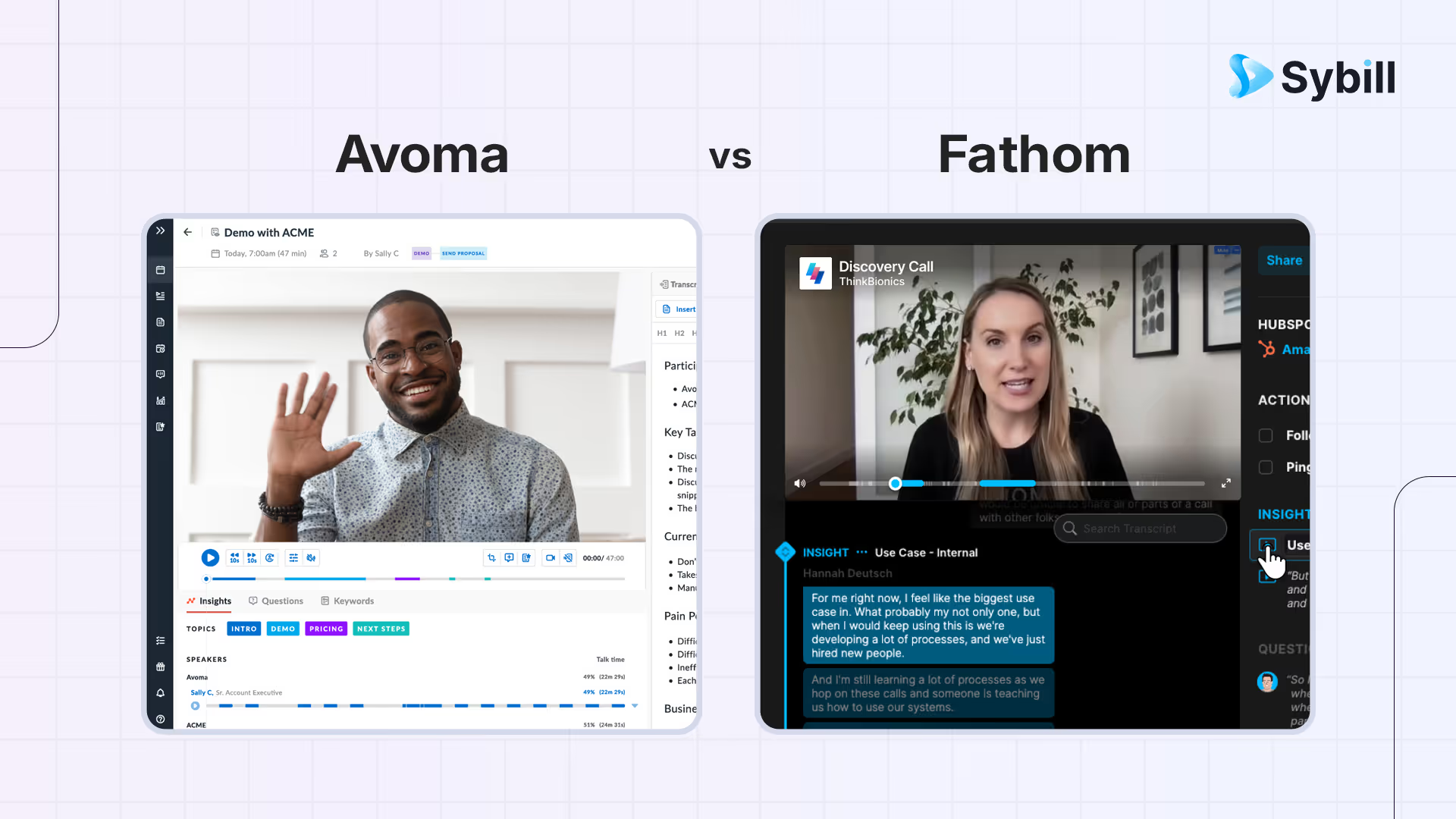
If meeting tools were coworkers, Avoma is the dependable assistant who shows up on time, captures the call, writes tidy notes, drafts the follow up, and updates CRM before you even tab over. Fathom is the meticulous notetaker who turns a bumpy discussion into an effortless recap with action items and clips that are easy to share. One optimizes for capture quality, CRM hygiene, and coaching coverage. The other optimizes for delightful simplicity and fast reuse across your team.
Avoma is an AI meeting assistant that records calls, produces structured notes with coaching signals, drafts follow-ups, and syncs to CRM with an AI Coach for conversational analytics, best for teams that want end-to-end meeting lifecycle management. Fathom is a polished AI notetaker that records meetings, generates clean summaries and action items, and helps teams share insights with minimal configuration, ideal for teams that value simplicity and fast adoption. Avoma wins on coaching analytics and CRM workflow breadth; Fathom wins on output polish and ease of use. For teams that want meeting capture plus one-click follow-ups, CRM autofill including custom fields, deal workspaces, and evidence-backed pipeline Q&A, Sybill delivers execution-focused features that advance deals beyond what either notetaker offers alone.
TL;DR: Quick chooser
- Avoma: AI meeting assistant that attends calls, produces structured notes and follow ups, syncs to CRM, and offers an AI Coaching Assistant that auto-scores every interaction for 100 percent coverage. Best when you want predictable capture, governed updates, and consistent coaching signals for managers.
- Fathom: AI notetaker that joins Zoom, Meet, or Teams, records and transcribes, generates summaries and action items, and makes highlight sharing fast. Free for individuals with optional team and premium features. Best when you want simple setup, polished recaps, and quick clip creation.
- Sybill: a selling assistant focused on execution, with Magic Summaries, one-click follow ups, CRM Autofill, Deal Workspace, and Ask Sybill answers across calls, email, CRM, and calendar. Best when your priority is momentum, cleaner pipeline reviews, and fewer clicks for reps.
Head to head comparison
1) Pre-call preparation and kickoff
- Avoma
- One-minute setup and predictable recorder attendance across conferencing tools.
- Keeps reps focused on discovery while the assistant handles capture and structure.
- Fathom
- Lightweight onboarding via Zoom/Meet apps with a guided test call.
- Immediate post-call insights reduce the urge to multitask during the meeting.
Trial prompt: give two new reps the same sequence for a week, then have a manager rate the first five minutes of each discovery for context, confidence, and question quality.
2) Capture model, optics, and reliability
- Avoma
- Notetaker attends and records to produce a transcript and structured notes.
- Designed to be “always on” so teams stop worrying about whether capture started.
- Fathom
- Notetaker joins Zoom, Meet, or Teams; recording and transcription are automatic, with clean diarization and quick delivery.
Reliability checklist: run two identical thirty-minute discoveries per tool, verify timestamps and speaker separation, and note how quickly the team is alerted if something fails.
3) Summaries and the shape of the output
- Avoma
- Structured notes tuned for readability and handoff, plus auto-generated follow ups.
- AI Coaching Assistant adds objective scores so managers can triage at scale.
- Fathom
- Clear recaps with action items and up to a library of templates on paid plans, so the output fits different meeting types without heavy editing.
Quality checks that matter: read each recap cold as if you missed the call; confirm reason for change, buyer roles, and unambiguous next steps; pick the one you would forward to an executive without edits.
4) The golden hour after a call
- Avoma
- Creates a clean recap and follow up, then logs notes and call data to CRM so timelines never go empty.
- Fathom
- Delivers instant summaries and highlight links so you can send a credible follow up in minutes and share clips with product or success.
Golden hour scoring: minutes from hangup to send, manual edits required, clicks to create tasks, manager score for tone and buyer language.
5) CRM hygiene and data trust
- Avoma
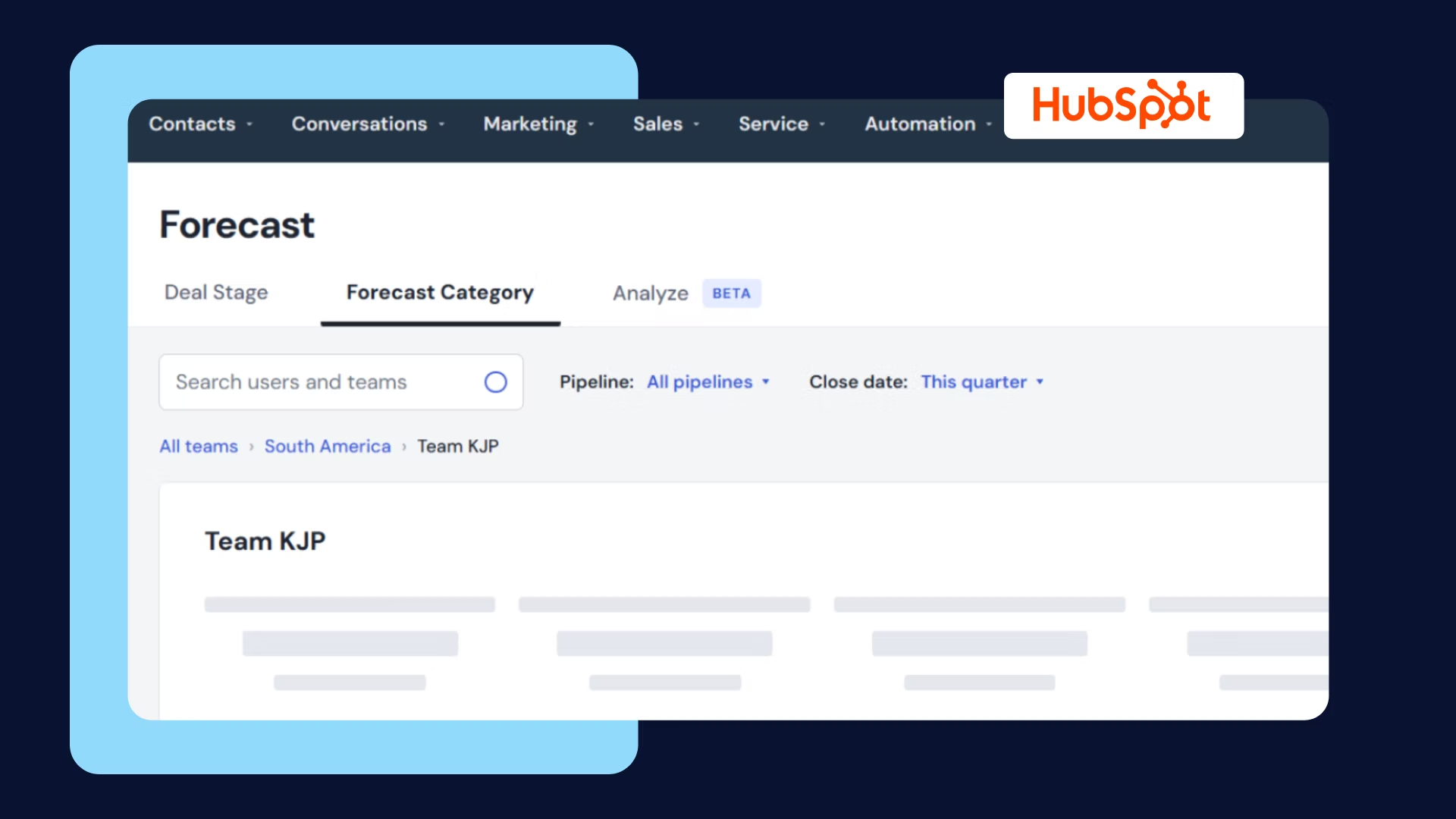
- Detailed mapping lets you sync extracted insights into specific CRM fields. Admins can choose outbound, inbound, or bidirectional sync and even map smart categories to multi-select fields. This reduces re-typing and keeps records review-ready.
- Fathom
- Native integrations can push summaries and tasks into Salesforce or HubSpot so account timelines stay useful, with clear guidelines on contact matching and calendar sources.
Trust test: revisit ten opportunities in a week; which timelines read like living documentation, which key fields filled without reminders, which records support a forecast review without leaving CRM.
6) Search and retrieval for later questions
- Avoma
- Library search across summaries and transcripts plus coaching scores to surface outliers quickly.
- Fathom
- Straightforward search and highlight retrieval, and team add-ons make it easy to share examples for onboarding or product feedback.
Retrieval experiment: ask each product to find where a security review was committed for a named account and list every mention of timeline risk in the last two weeks; time to answer and proof quality are the metrics.
7) Coaching, enablement, and call libraries
- Avoma
- AI Coaching Assistant auto-scores every interaction for 100 percent coverage, so managers can zero in on low-scoring calls and patterns without scrubbing hours of video.
- Fathom
- Clean summaries and shareable clips become quick coaching artifacts. Managers can assemble short playlists without heavy editing.
Coaching drill: ask both tools for a ten-minute reel of pricing pushback moments with responses that worked; share with a ramping rep; collect three takeaways next standup.
8) Integrations and extensibility
- Avoma
- Deep CRM alignment, collaboration handoffs, and viewer seats help you spread access without licensing everyone as a recorder.
- Fathom
- Native Zoom and Salesforce integrations are complemented by ecosystem partners that can query transcripts from Slack and update CRM fields, expanding beyond basic field updates.
Governance checklist: define three follow up templates, three CRM mappings, and three task patterns; configure both tools; score consistency after ten calls across five reps.
9) Mobile, offline, and edge cases
- Avoma
- Optimized for online meetings with consistent attendance and a clean library.
- Fathom
- Strongest when your motion lives in Zoom or Meet. For phone-only conversations, align on a simple capture habit or test a mobile-friendly flow paired with Fathom.
Edge case plan: run one onsite or phone-only conversation in each product; confirm how quickly outcomes hit the account timeline and how fast a follow up ships.
10) Security, privacy, and admin control
- Avoma
- Enterprise posture for recording, retention, and role-based access, plus clear guidance on who can edit which CRM fields and how sync direction works.
- Fathom
- Admin guides cover how recordings and summaries flow to Zoom apps or CRM, and what constraints exist on contact matching and calendar sources.
Security review prompts: where do transcripts live, who can download audio or text, how long assets persist, what happens during offboarding.
11) Pricing and total cost of ownership
- Avoma
- Flexible plans with a free trial and free viewer seats for stakeholders who only need to watch or comment; this can lower rollout costs for cross-functional teams.
- Fathom
- Free for unlimited recording, transcription, and summarization for individuals; paid plans add advanced AI templates, automated action items, and team features. Model by role to avoid surprises.
Total cost model: license fees by role, minutes saved per meeting, reduction in manager prep time, improvements in CRM completeness, and fewer tools or exports to juggle.
12) Limitations and trade offs
- Avoma
- To get full CRM value, RevOps should align field mappings and smart categories early. Very complex analytics may still live in your BI layer even as coaching and notes improve.
- Fathom
- Focus on simplicity means you will rely on templates and integrations for heavy governance; phone-only and onsite scenarios need a documented capture habit.
13) Who benefits most
- Choose Avoma if
- You want dependable capture, crisp notes, quick follow ups, and CRM updates you can trust.
- Managers need consistent coaching signals without watching hours of video.
- Choose Fathom if
- You want a polished notetaker with free individual coverage and paid team features.
- Your team values simple setup, fast summaries, and easy clip sharing.
A 60-minute evaluation plan
- Setup
Connect both products to the same calendar and CRM. Create three shared email templates, three CRM mappings, and three task patterns. - Two live customer calls per product
Measure transcript clarity and summary fidelity. Count edits before sending the follow up. Ask a manager to score tone and buyer language. - CRM hygiene drill
One week later, review timelines and structured fields. Count fields populated correctly without human intervention. - Manager questions
Answer five pipeline questions using each product only. Time to answer and proof quality are the metrics. - Coaching exercise
Produce a ten-minute objection playlist or a one-page pricing pushback summary. Share with a new hire and record three takeaways. - Edge cases
Run one onsite or phone-only call. Confirm how each tool captures and routes outcomes.
Why should you choose Sybill for your sales team?
If your goal is a reliable assistant that captures calls, writes clean notes, drafts follow ups, and keeps CRM tidy while managers get consistent coverage, choose Avoma. If your goal is a delightful notetaker that turns every meeting into a readable recap with action items and shareable highlights, choose Fathom.
When the goal is not just documentation but momentum, many teams choose Sybill. Sybill starts with capture and clarity, then goes further where deals are won every day:
- Magic Summaries: Capture intent, objections, stakeholder roles, decision criteria, and next steps in a sales-ready format.
- One-click follow ups: Mirror buyer language and your brand voice so excellent emails go out in minutes.
- CRM Autofill: Populate MEDDPICC or custom fields from calls and emails so managers filter by truth instead of skimming free text.
- Deal Workspace: Centralize risks, blockers, and multithreading status so reps know what to do next and managers coach faster.
- Ask Sybill: Answer plain-language questions across calls, email, CRM, and calendar with links to proof, so decisions happen faster and with more confidence.


%20(1).avif)