Find us at booth #83, join us for a harbor side happy hour, or catch Gorish’s talk.

Sept, 16-18 > Learn more

%20(1).avif)
Mamta Tainwala

January 23, 2026
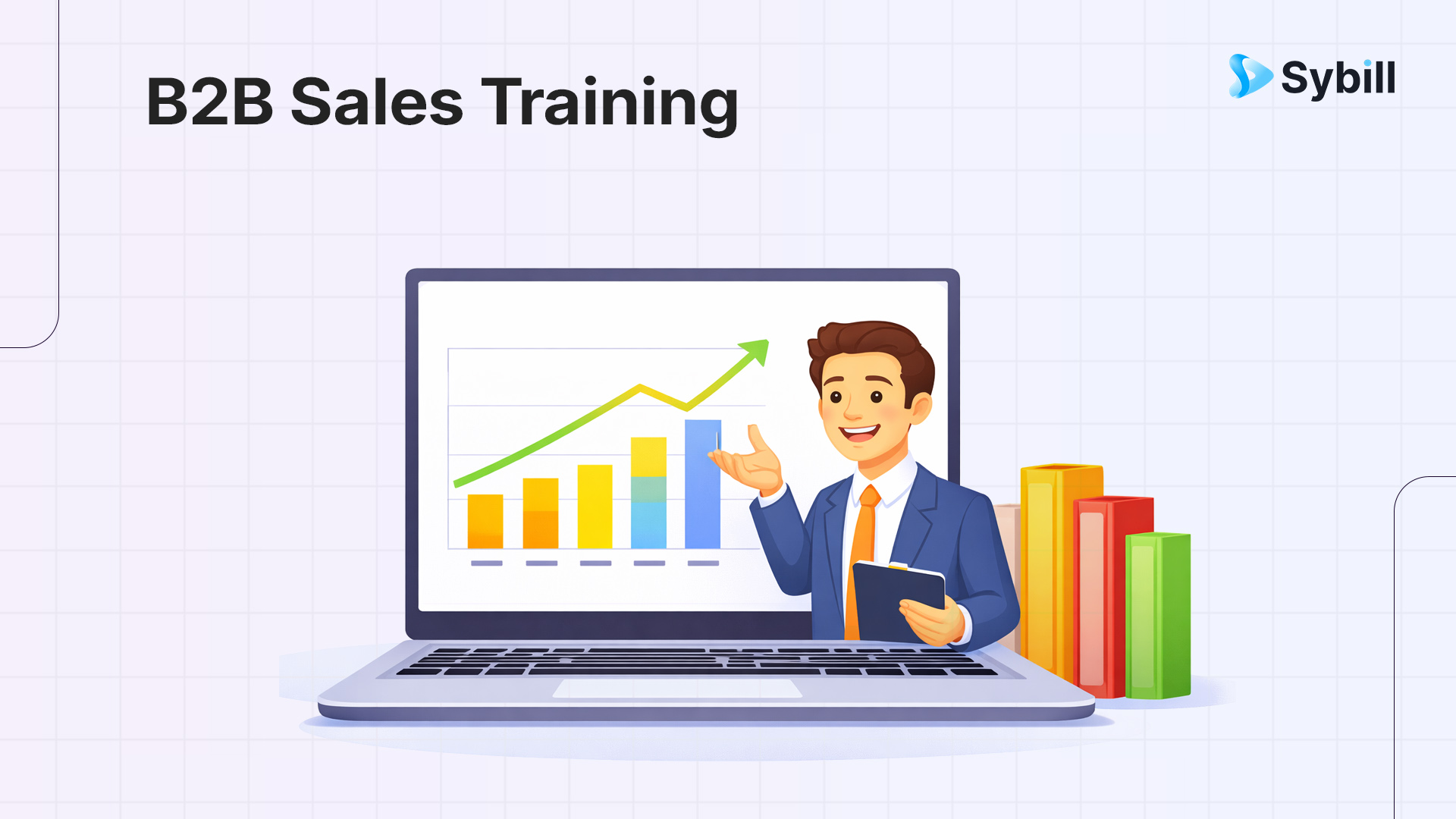
B2B sales training requires a fundamentally different approach than B2C or transactional sales training. The best B2B sales training programs combine proven methodologies (MEDDPICC, Sandler, Challenger, SPIN) with hands-on practice, continuous reinforcement, and AI-powered coaching that provides real-time feedback on actual customer conversations. This guide covers everything from free online sales courses for building foundational skills to enterprise training programs, the critical frameworks every B2B rep needs to master, and how modern teams are using conversation intelligence to turn training workshops into lasting behavior change that shows up in win rates and revenue.
Download consultative selling into your team's heads, press upload, and watch quota attainment soar. Sounds like a sales managers dream, doesn’t it?
Instead, you invest $75,000 in a comprehensive B2B sales training program. Your team learns MEDDPICC qualification, Challenger methodology, and advanced negotiation techniques. The workshop is engaging. The role-plays are intense. Everyone leaves fired up and ready to transform their approach.
Three weeks later, you're sitting in a pipeline review listening to a discovery call where your rep asks "So, what's your budget?" in the first five minutes (classic mistake), completely misses the Economic Buyer signal when the prospect mentions the CFO (MEDDPICC failure), and spends 70% of the call pitching features instead of uncovering pain (everything you just trained them NOT to do).
What happened? Did they forget everything? Were they not paying attention? Are they just bad at sales?
No. They're human. And B2B sales training fails when it treats complex interpersonal skills like information that can be transferred through PowerPoint slides and workbooks. You don't learn consultative selling by reading about it any more than you learn to play guitar by watching YouTube videos. You learn by doing it, getting feedback, adjusting, and repeating until the right behaviors become instinct.
This guide isn't another generic "importance of sales training" fluff piece. It's a strategic roadmap for building B2B sales capability that actually sticks and shows up in your numbers. We'll cover what makes B2B training fundamentally different from other sales training, the methodologies that actually work for complex deals, how to build a training program that doesn't evaporate after the workshop, and why AI-powered conversation intelligence is changing the entire game.
Before we dive into specific programs and methodologies, let's understand why you can't just grab any sales training program and expect it to work for B2B teams.
B2C sales training teaches you to close a single decision-maker in one or two conversations. The customer knows what they want, your job is to convince them your product is the best option, and the sale either happens or doesn't.
B2B sales? You're navigating 6-10 stakeholders across different departments, each with different priorities. The sales cycle stretches 3-9 months. There's no single decision-maker – there's a buying committee where the CFO cares about ROI, the end-user cares about usability, IT cares about security, and procurement cares about price. Your champion might love you but lack the political capital to push the deal through. The vendor they're already using is a known quantity, and you're asking them to take a risk on change.
This complexity means B2B sales training needs to cover skills that don't even exist in transactional selling:
Stakeholder mapping and multi-threading: How do you identify all the players, understand their individual motivations, and make sure you're talking to everyone who matters?
Qualification frameworks: MEDDPICC, BANT, SPICED – these exist because B2B deals are expensive to pursue, and you need rigorous qualification to avoid wasting months on opportunities that were never going to close.
Business acumen and value selling: You're not selling features. You're selling business outcomes. That requires understanding your buyer's business model, competitive landscape, and strategic priorities at a level most B2C reps never touch.
Consensus building: Even when everyone agrees your solution is better, you still need to align stakeholders, overcome political dynamics, and navigate procurement processes that can kill deals in final stages.
Long-cycle relationship management: Keeping deals alive over months, managing momentum, creating urgency when buyers go dark – these are B2B-specific skills.
Any training program that doesn't address this complexity will fail your team.
Most professional sales training programs include role-play sessions where reps practice discovery calls, handle objections, and run through scenarios. That's good. It's better than lecture-only training.
But here's the problem: role-play with your coworker who's pretending to be a prospect is fundamentally different from an actual call with a CFO who's skeptical, distracted, and testing whether you actually understand their business.
The pressure is different. The stakes are different. The dynamics are different.
This is where the best B2B sales training programs separate from mediocre ones. Elite programs include:
Recorded practice with external actors: Professional roleplayers who actually push back, give realistic objections, and force reps to think on their feet.
Call reviews of real conversations: Analyzing actual sales calls to see where the methodology was used well and where opportunities were missed.
Ongoing reinforcement through continuous coaching: Weekly or daily feedback on real calls, not just practice scenarios.
The gap between "I know what to do in theory" and "I can execute under pressure in real deals" is where most training programs die. B2B sales training must bridge this gap or it's just expensive information transfer.
B2B sales isn't one methodology fits all. Different frameworks excel in different situations, and the best training programs teach reps when to use which approach.
Here are the core methodologies every B2B sales training program should cover:
What it is: A comprehensive qualification framework covering Metrics, Economic Buyer, Decision Criteria, Decision Process, Paper Process, Identify Pain, Champion, and Competition.
When to use it: Complex, high-value deals with long sales cycles and multiple stakeholders. If you're selling six-figure or seven-figure solutions, MEDDPICC keeps you from wasting time on deals that look good but have fatal flaws buried in the decision process.
What training should cover:
Why it fails without reinforcement: MEDDPICC has eight distinct elements to track. Reps learn them in training, then forget to capture half of them in actual calls because they're focused on building rapport and pitching the solution. Without automatic tracking or continuous coaching reminders, deals slip through with incomplete qualification.
What it is: Budget, Authority, Need, Timeline – a simpler qualification framework for faster sales cycles.
When to use it: Mid-market deals, shorter sales cycles, or initial qualification to determine if an opportunity is worth pursuing before investing in deeper MEDDPICC analysis.
What training should cover:
Why it fails without reinforcement: BANT seems simple, so reps treat it like a checkbox exercise instead of a consultative conversation. They ask the four questions robotically, prospects feel interrogated, and the framework backfires. Training needs to teach the conversational approach, not just the framework.
What it is: A methodology built on teaching buyers something new about their business, tailoring the message to their specific situation, and taking control of the sale.
When to use it: When you need to create urgency for change, challenge the status quo, or differentiate yourself in crowded markets. Particularly effective when selling transformative solutions where buyers don't yet realize how big their problem is.
What training should cover:
Why it fails without reinforcement: Challenger requires confidence and business acumen. Junior reps trained in the methodology often default back to relationship-selling because challenging a CFO feels risky. Without ongoing coaching and encouragement, they abandon the approach.
What it is: A question framework (Situation, Problem, Implication, Need-Payoff) that uncovers pain and builds urgency through the buyer's own realization of their problem's magnitude.
When to use it: Discovery calls, early-stage conversations, and whenever you need to understand the full scope of a buyer's challenges before positioning your solution.
What training should cover:
Why it fails without reinforcement: Great SPIN selling requires listening more than talking, but most reps are conditioned to pitch. They ask one problem question, hear a pain point, and immediately jump to solution mode instead of continuing through implication and need-payoff. Training teaches the framework, but reps need real-time coaching to actually implement it consistently.
Let's address the elephant in the room: there are thousands of free online sales training courses out there. YouTube channels, LinkedIn Learning, HubSpot Academy, Salesforce Trailhead – all offering B2B sales training at no cost.
Should you even invest in paid professional sales training when so much is available free?
Here's the honest answer: free courses are excellent for foundational knowledge and methodology exposure. If you're new to B2B sales or want to learn about MEDDPICC without spending money, free resources are a great starting point.
But free training has critical limitations:
No personalization: Generic content for generic situations. Your specific industry, buyer personas, competitive landscape, and common objections aren't addressed.
No application: You watch videos, take quizzes, and maybe do some exercises. But there's no one analyzing your actual sales calls and coaching you on how to apply the methodology in real deals.
No reinforcement: You complete the course and get a certificate. Then what? There's no ongoing system to remind you to use what you learned or measure whether behavior actually changed.
No accountability: If you don't finish or don't apply the learning, nobody notices or cares.
The smart approach for B2B teams: Use free courses for baseline education and methodology awareness. Invest in paid professional training for customization, practice, and especially for ongoing reinforcement systems that ensure training actually changes behavior.
Want your team to actually apply the frameworks they learn in training? Get started with Sybill for free and see how AI coaching automatically reminds reps to use MEDDPICC, BANT, and other methodologies on every call.
If you're building foundational B2B sales skills or want to expose your team to different methodologies before committing to a paid program, these free sales courses deliver real value.
What it covers: Complete sales training from prospecting through closing, including inbound methodology, social selling, and sales enablement.
Why it's valuable: HubSpot's courses are professionally produced with real sales scenarios, not just theory. The Inbound Sales Certification is particularly strong for modern B2B selling where buyers do their own research before engaging sales.
Best for: Newer sales reps, teams transitioning from outbound-only to inbound models, or anyone who wants to understand how buying has changed.
Limitations: HubSpot-centric in many examples. Strong on methodology, light on advanced negotiation or complex stakeholder management.
Time investment: 2-3 hours per course; multiple courses available.
What it covers: Hundreds of sales courses covering everything from cold calling to account-based selling, taught by sales leaders and practitioners.
Why it's valuable: You can pick specific skills to develop rather than one comprehensive program. Want to get better at LinkedIn prospecting? There's a course. Need negotiation tactics? Covered. Strategic account planning? Also available.
Best for: Experienced reps who want to sharpen specific skills, managers building custom learning paths for their teams.
Limitations: Quality varies by instructor. Some courses are more motivational than tactical.
Cost note: While LinkedIn Learning requires a subscription (roughly $30/month), most companies already provide it, making it effectively free for employees.
What it covers: Sales methodology, CRM skills, sales processes, and customer communication strategies through interactive learning modules.
Why it's valuable: Gamified learning that makes training feel less like work. The Sales Representative Certification provides a recognized credential.
Best for: Teams using Salesforce, reps who want a certification on their resume, those who prefer interactive learning over videos.
Limitations: Very Salesforce-focused. If you're not in the Salesforce ecosystem, much of the content won't apply directly.
Time investment: Self-paced; certification exam is $200 but the learning is free.
What it covers: Introduction to the Sandler selling system, including pain-focused discovery, up-front contracts, and qualification techniques.
Why it's valuable: Sandler is one of the most proven B2B methodologies. Their free content gives you enough to understand the approach and decide if the full paid training is worth it.
Best for: Teams considering Sandler training, reps in consultative sales roles.
Limitations: The really good stuff is behind the paywall. Free resources are appetizers, not the main course.
What it covers: Data-driven insights on what actually works in B2B sales conversations, based on analysis of millions of calls.
Why it's valuable: Unlike opinion-based training, Gong's research shows what top performers actually do differently. You'll learn that the ideal talk-time ratio is 43:57 (not the 80:20 people claim), that successful reps ask 11-14 questions in discovery calls, and that mentioning pricing multiple times increases win rates.
Best for: Data-driven teams, managers who want to coach based on evidence rather than intuition.
Limitations: Research insights, not a complete training curriculum. You learn what works, but not necessarily how to do it.
Okay, you've chosen your methodology. You've maybe run some free courses to build baseline knowledge. Your team attended the two-day workshop and everyone's motivated.
Now comes the hard part: making sure training translates into behavior change that shows up in your pipeline, win rates, and revenue.
Here's how to build a B2B sales training program that drives lasting impact instead of becoming another binder on the shelf.
Most training programs start with "our team needs sales training" and then pick whatever methodology the sales leader likes. That's backwards.
Start by diagnosing where your team is actually struggling:
Are deals dying in discovery because qualification is weak? You need MEDDPICC or BANT training focused on uncovering economic buyers and decision processes.
Are reps great at discovery but struggle to create urgency? You need Challenger training on commercial teaching and constructive tension.
Are objections killing late-stage deals? You need focused objection-handling training and negotiation skills.
Are reps talking too much and not listening? You need SPIN training and coaching on talk-time ratios.
The best way to diagnose these gaps? Analyze actual sales conversations. With conversation intelligence, you can see that your team's average talk-time ratio is 65% (way too high), that objections are going unanswered in 40% of calls, that only 20% of discovery calls are multi-threading, and that MEDDPICC fields are only 30% complete in your CRM.
Now you know exactly what training to invest in and which specific skills to focus on.
Generic B2B sales training teaches generic techniques. You don't sell generic products to generic buyers.
The best professional sales training programs include customization:
Your actual buyer personas: What does a CFO care about versus a VP of Engineering? How do those conversations differ?
Your common objections: Every product has 3-5 objections that come up constantly. Training should include how to handle your specific objections, not theoretical ones.
Your sales process: If your sales cycle typically involves technical validation, a security review, and legal negotiation, training should cover how to navigate all three.
Your competitive landscape: How do you position against the incumbent? What do you say when prospects bring up Competitor X?
Your success stories: Use call recordings from your top performers to show what good looks like in your world, not in some consultant's generic examples.
This customization is why paid training often outperforms free courses. Free content can't know your specifics. Paid programs can and should tailor everything to your reality.
You wouldn't send a pilot into the air after one ground school session. You simulate, practice, get feedback, practice more, and only then fly solo with passengers.
Yet most sales training ends after the workshop, meaning the first time a rep tries to use MEDDPICC or Challenger methodology is on a real call with a real prospect where getting it wrong costs the deal.
Build practice into your training:
Role-play with external actors: Not your coworker who'll go easy on you, but professionals who create realistic scenarios with authentic objections and pushback.
Call shadowing and joint calls: New reps observe experienced reps using the methodology in actual conversations before doing it solo.
Low-stakes practice: Give reps opportunities to try new techniques on smaller deals or early-stage prospects before high-value opportunities.
Recorded practice with review: Record practice calls, review them with trainers or managers, get specific feedback on what worked and what to adjust.
The more reps practice in safe environments with feedback, the more confident and competent they'll be when real stakes are involved.
Here's the stat that should terrify anyone investing in sales training: without reinforcement, 80% of learned information is forgotten within 90 days.
That two-day MEDDPICC workshop you spent $50,000 on? Unless you're reinforcing it continuously, it's gone by next quarter.
Traditional reinforcement approaches:
Weekly coaching sessions: Managers review calls with reps and provide feedback. Effective but doesn't scale. A manager with 8 reps can maybe review 1-2 calls per rep per week.
Monthly refresher sessions: Bring the team together to revisit methodology. Better than nothing, but still infrequent.
Peer learning groups: Reps share wins and challenges, coach each other. Great for culture, limited for skill development.
Certification checkpoints: Quarterly or annual recertification to ensure skills haven't atrophied.
All of these help, but they're fundamentally limited by human bandwidth. Managers don't have time to review every call. Monthly refreshers can't respond to what happened on this afternoon's discovery call.
This is where AI-powered coaching fundamentally changes the reinforcement game:
Every call gets analyzed automatically: Talk-time ratio, question types, objection handling, MEDDPICC field coverage, competitive mentions – all captured and measured without manager time investment.
Personalized coaching delivered continuously: Instead of waiting for the weekly 1:1, reps get feedback after every call. "Great discovery questions on that call" or "You missed an opportunity to multi-thread when the prospect mentioned involving IT."
Methodology reminders in context: When the training taught you to ask implication questions after problem questions, the AI can remind you when it notices you jumped straight to pitch mode.
Team-wide patterns visible to managers: Instead of guessing which reps need help with what, managers see exactly who's struggling with objection handling, who's not multi-threading, who's talking too much.
Behavior change measured objectively: You can track whether training is actually working by seeing if talk-time ratios improved, if MEDDPICC completion rates went up, if objection handling effectiveness increased.
This isn't theoretical. Sales teams using conversation intelligence for ongoing coaching see 25-40% better retention of training concepts compared to workshop-only approaches. The framework taught in training gets reinforced every single day through analysis of actual calls.
Stop measuring training success by completion rates and satisfaction scores. Those metrics tell you nothing about whether training worked.
Measure these instead:
Leading indicators (behavior change):
Lagging indicators (business impact):
When you can see that reps who improved their discovery question depth from 5 questions per call to 12 questions per call saw their win rates jump 18%, you know exactly what to coach and why it matters.
With conversation intelligence platforms, all of these metrics are automatically tracked and trended. You don't need special measurement projects. The data shows up in dashboards that connect behavior to outcomes.
Turn your training investments into measurable behavior change. Try Sybill for free and track whether your team is actually using MEDDPICC, asking better questions, and handling objections effectively.
If you're ready to invest in comprehensive B2B sales training that goes beyond free courses, these are the programs that consistently deliver results for complex sales teams.
Methodology: Pain-focused discovery, upfront contracts, equal business relationships, and rigorous qualification.
What makes it B2B-specific: Sandler's approach to uncovering pain and qualifying hard is perfect for complex sales where you can't afford to waste months on bad-fit deals. The upfront contract technique (agreeing on next steps before every meeting) keeps long sales cycles moving.
Training format: Ongoing reinforcement model with weekly sessions rather than one-off workshops. Most Sandler engagements are annual programs, not two-day events.
Best for: Consultative B2B teams, complex sales cycles, organizations that want to build a common sales language.
Investment: $1,500-$3,000 per participant for core programs, with ongoing coaching programs structured annually.
Why it works: The reinforcement model matches how skills are actually built. Weekly training keeps methodology top of mind and provides opportunities to bring real deal challenges to discuss.
Methodology: Command of the Message (value-based selling), Command of the Sale (opportunity management), and Command of the Plan (strategic account planning).
What makes it B2B-specific: Built specifically for complex B2B sales with multiple stakeholders. Strong focus on business acumen, value quantification, and executive engagement.
Training format: Multi-day workshops followed by certification and ongoing reinforcement through manager-led coaching.
Best for: Enterprise sales teams, seven-figure deals, strategic account management.
Investment: Enterprise pricing (typically six figures for team-wide implementation).
Why it works: Focuses on the business conversation, not feature selling. Teaches reps to speak the language of executives and quantify value in terms that matter to economic buyers.
Methodology: Research-based selling frameworks focused on adaptive selling, buyer psychology, and consultative approaches.
What makes it B2B-specific: Heavy emphasis on understanding different buyer styles and adapting your approach. Their Selling Through Curiosity methodology is built for complex B2B discovery.
Training format: Blended learning with instructor-led sessions, digital reinforcement, practice scenarios, and coaching integration.
Best for: Mid-market and enterprise B2B teams that want methodology backed by behavioral science rather than anecdotal advice.
Investment: Contact for enterprise pricing; programs structured as annual engagements.
Why it works: Science-based approach means techniques are grounded in research about what actually influences buyer decisions, not just what worked for one guru.
Methodology: Teach for differentiation, tailor to stakeholders, take control of the sale.
What makes it B2B-specific: Based on study of 6,000 B2B reps. The methodology specifically addresses complex stakeholder environments and competitive differentiation.
Training format: Certification for in-house trainers plus consultant-led workshops. Focus on developing commercial insights specific to your industry.
Best for: Competitive markets where you need to create urgency and differentiate beyond product features.
Investment: Enterprise pricing; designed for larger organizations.
Why it works: Gives reps permission to challenge prospects' thinking and create urgency rather than just responding to RFPs.
Methodology: Insight Selling, comprehensive frameworks covering the entire B2B sales cycle from prospecting to negotiation.
What makes it B2B-specific: Covers executive engagement, complex deal navigation, and consensus building across stakeholder groups.
Training format: Mix of live virtual sessions, digital reinforcement, and practical application tools.
Best for: Teams that need comprehensive B2B training rather than one specialized methodology.
Investment: Varies by program; available in modular format so you can focus on specific skill areas.
Why it works: Practical and immediately applicable. Strong balance between methodology and tactical execution.
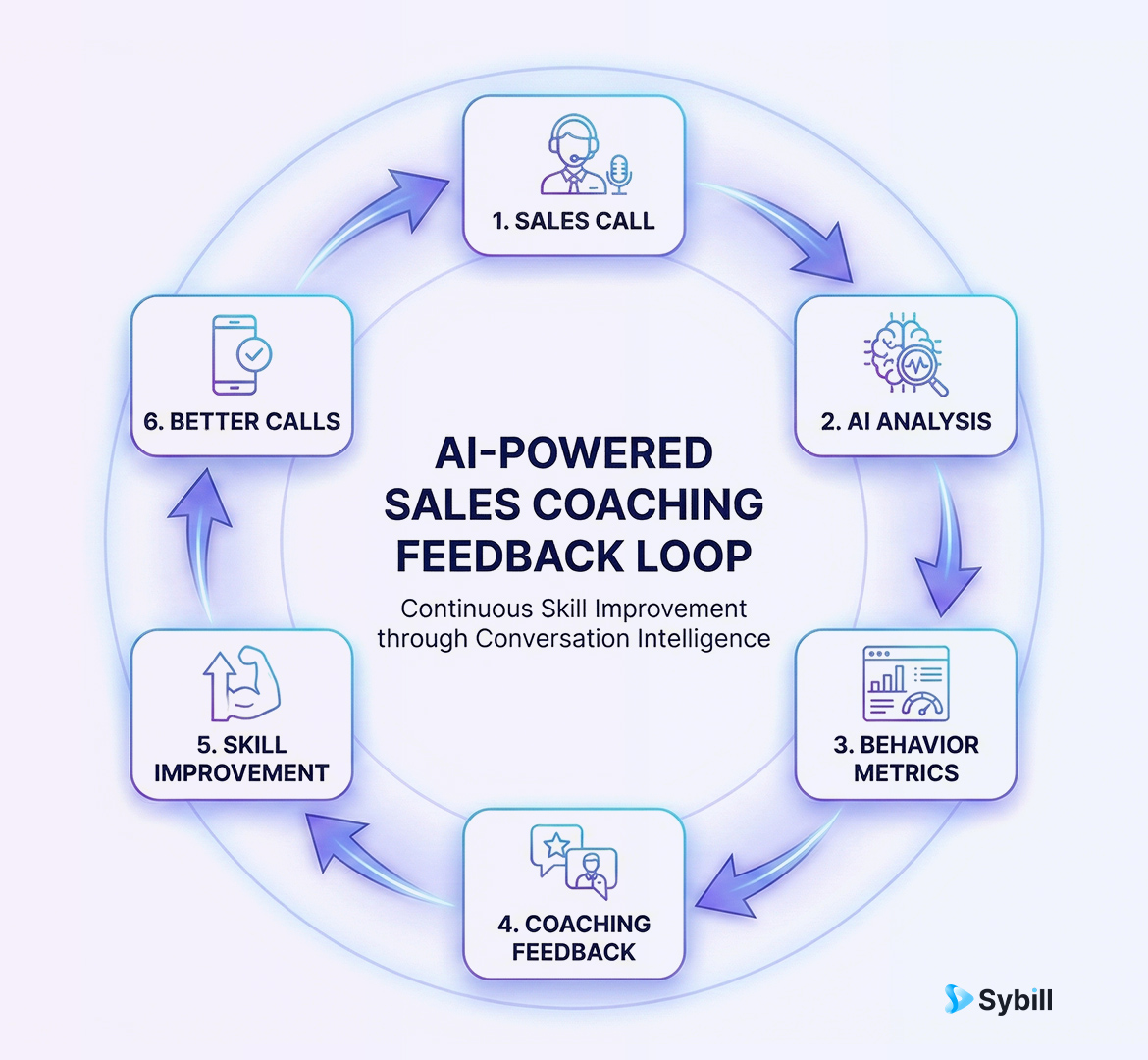
Let's talk about the future that's already here: AI-powered sales coaching that makes traditional training exponentially more effective.
Traditional B2B sales training follows an event-based model:
Between events, reps are on their own. Managers provide coaching when time allows, but most conversations are about deals and pipelines, not skill development.
Result: Training effect fades quickly between events. Skills atrophy. Behavior reverts to old patterns.
AI-powered coaching transforms training from periodic events to continuous skill development:
Daily skill feedback: After every call, reps get feedback on what they did well and what to improve. Not generic "be better," but specific "you talked 68% of that call and your best calls are under 45% – try asking more follow-up questions."
Methodology reinforcement: When training teaches MEDDPICC, the AI tracks whether reps are actually covering all eight elements in discovery calls and reminds them when something's missed.
Real-time learning moments: The system identifies coachable moments – great objection handling, missed multi-threading opportunity, effective implication question – and shares them with the rep and manager.
Personalized development paths: Instead of everyone getting the same training, each rep gets coaching focused on their specific gaps. Sarah needs objection handling work. Mike needs to improve his talk-time ratio. Jennifer is already great at both but needs help with executive positioning.
This isn't a replacement for methodology training. It's the reinforcement layer that makes methodology training actually stick.
Here's how it works in practice:
Every call is recorded and analyzed: The AI listens to what's said, how it's said, who's speaking, what topics come up, what objections arise, how the rep responds.
Key behaviors are automatically measured: Talk-time ratio, question frequency and type, MEDDPICC field coverage, objection handling, competitive mentions, sentiment signals – all captured without manual effort.
Coaching feedback is generated: The system identifies what the rep did well (positive reinforcement), what they could improve (development opportunities), and what specific actions to take (concrete next steps).
Trends are tracked over time: You can see whether a rep is getting better at discovery questions, whether their talk-time ratio is improving, whether MEDDPICC completion is increasing.
Managers get coaching insights: Instead of listening to hours of calls to find coaching moments, managers get highlights: "Here's a great objection handling example from Sarah's call," "Mike struggled with stakeholder mapping on three calls this week," "Team-wide pattern: we're not asking enough implication questions."
Scenario 1: MEDDPICC Reinforcement
Your team goes through MEDDPICC training. Two weeks later, the AI analysis shows:
Your manager doesn't guess which reps need help. The data shows exactly who's applying MEDDPICC well and who's not. Coaching becomes targeted: "Mike, on your last three discovery calls you identified pain and metrics but didn't uncover the decision process. Let's roleplay how to ask about that."
Result: MEDDPICC field completion in CRM jumps from 35% to 85% because reps are getting daily reminders to cover all elements.
Scenario 2: Talk-Time Ratio Improvement
Training teaches that top B2B reps have a talk-time ratio around 40-45% (they talk 40-45% of the time, buyer talks 55-60%).
AI analysis shows your team average is 62%. Reps are pitching too much, listening too little.
Instead of generic "listen more" coaching, the AI identifies the specific calls where each rep talked too much and why. Sarah jumps into solution mode after one pain point instead of continuing discovery. Mike gives 5-minute feature dumps. Jennifer asks good questions but then explains the answer herself instead of letting the buyer talk.
Each rep gets personalized coaching on their specific pattern. Over the next month, team average drops to 48%. Win rates improve 12% because buyers feel heard instead of pitched to.
Scenario 3: Objection Handling Mastery
Your team learns the Feel-Felt-Found objection handling framework in training. AI analysis shows:
The AI surfaces specific examples of both good and bad objection handling. Top performers' responses are shared with the team. Reps who struggle get targeted practice scenarios.
Within two months, objection handling effectiveness jumps from 40% to 75% as measured by deal progression after objection conversations.
You've made it through 4,000 words of B2B sales training strategy. Here's what to actually do next.
Week 1-2: Invest in free courses (HubSpot Academy, LinkedIn Learning, Salesforce Trailhead) to build baseline sales knowledge and methodology exposure.
Week 3-4: Choose one core methodology based on your sales motion:
Month 2: Run workshops or bring in training on your chosen methodology. Focus on practice and role-play, not just lectures.
Month 3+: Implement reinforcement through weekly coaching, call reviews, and ideally conversation intelligence for continuous feedback.
Month 1: Diagnose specific gaps with data:
Month 2: Choose training that addresses your specific gaps:
Month 3: Implement continuous reinforcement:
Month 4+: Measure behavior change and adjust:
Week 1: Implement conversation intelligence platform:
Week 2-4: Establish baseline metrics:
Month 2+: Use AI insights for targeted coaching:
Ongoing: Make continuous learning the culture:
B2B sales training focuses on complex, multi-stakeholder sales cycles where deals take months to close and require qualification frameworks, business acumen, and consensus-building skills. B2C training emphasizes high-volume transactional selling to individual consumers with shorter sales cycles. B2B reps need to master methodologies like MEDDPICC, BANT, and Challenger that don't exist in B2C because they address unique challenges like navigating buying committees, justifying ROI to CFOs, and managing 6-9 month sales cycles. B2B training also requires deeper product knowledge and industry expertise since reps are often selling complex solutions requiring technical understanding and strategic thinking.
The best free online sales training for B2B fundamentals includes HubSpot Academy (particularly the Inbound Sales Certification), LinkedIn Learning sales courses for specific skill development, Salesforce Trailhead for CRM and sales process training, and Gong Labs research for data-driven insights on what actually works in B2B conversations. While these free sales courses provide excellent foundational knowledge and methodology exposure, they lack the customization, hands-on practice, and ongoing reinforcement that paid professional sales training programs offer. The smart approach is using free courses for baseline education then investing in paid training for personalization, live coaching, and continuous AI-powered reinforcement that drives lasting behavior change.
B2B sales training typically shows leading indicators (improved talk-time ratios, better discovery questions, more complete MEDDPICC qualification) within 4-6 weeks of implementation if ongoing reinforcement is in place. Lagging indicators like win rate improvement and increased quota attainment usually become measurable within 90-120 days. However, without continuous reinforcement through coaching, role-play, or AI-powered feedback, most training effects fade within 30-60 days as reps revert to old habits. This is why the best sales training programs include weekly coaching sessions, monthly refreshers, and increasingly, conversation intelligence platforms that provide daily feedback on actual calls to ensure learned behaviors become permanent habits rather than temporary knowledge.