Find us at booth #83, join us for a harbor side happy hour, or catch Gorish’s talk.

Sept, 16-18 > Learn more

%20(1).avif)
Mamta Tainwala

March 31, 2026
If your promotion to sales manager felt like getting handed the keys to a plane mid-flight, welcome aboard. One minute you’re closing deals, the next you’re untangling pipeline math, hiring, enablement, comp plans, and a forecast that seems to change whenever someone looks at it. The good news: other people have flown this route and wrote the manuals. Some were operators who built quota-crushing teams. Others were coaches who turned good reps into consistent performers. A few are legendary managers who can make a one-on-one feel like a masterclass.
This is a tight stack of best sales management books, not 50 titles you’ll never finish, but fewer than ten you’ll actually use. Each summary explains who the author is, what the book is really about, and when it helps most. Whether you’re a first-time leader or inheriting a team mid-quarter, these are the top sales management books worth your calendar.
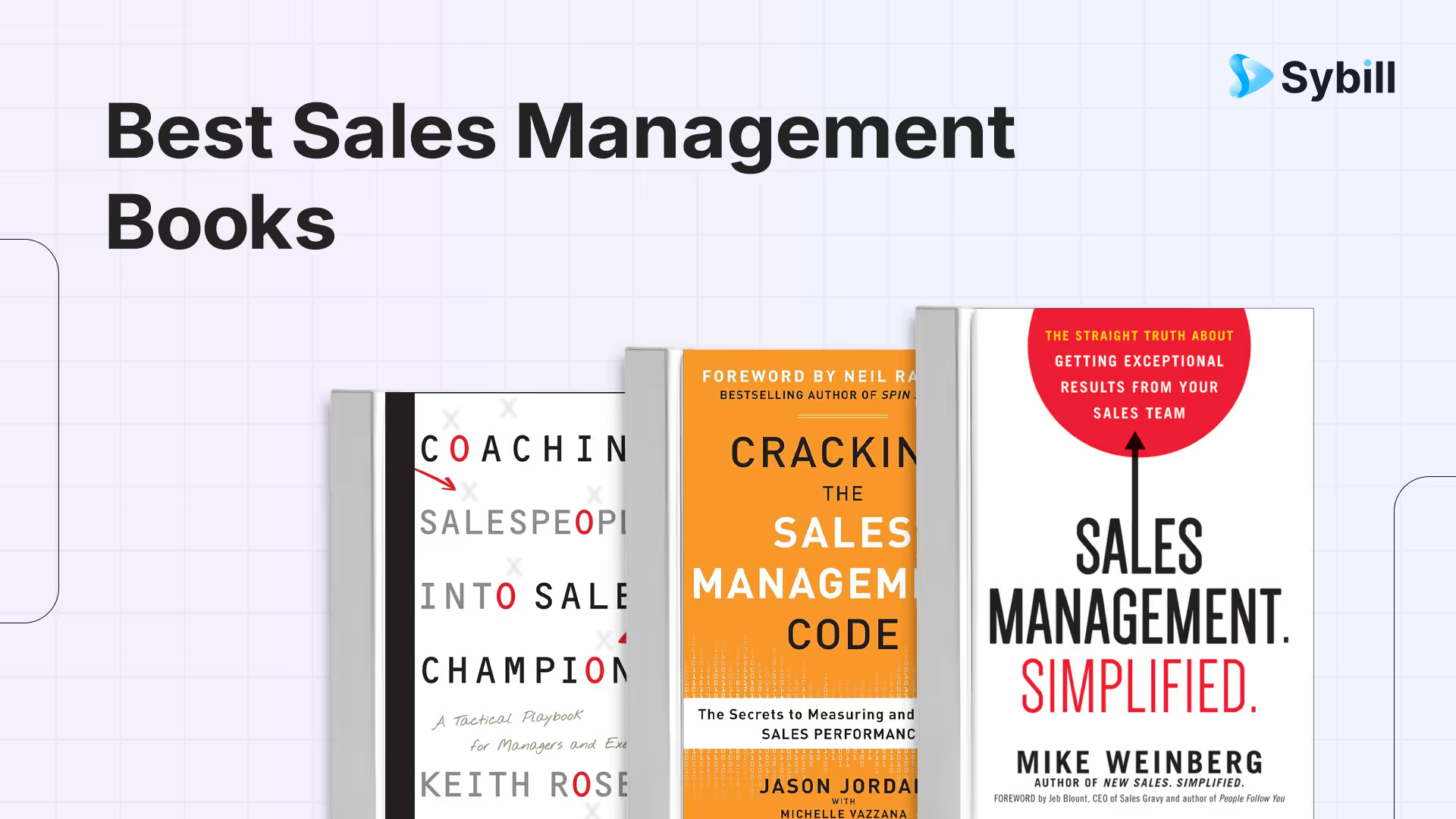
The best sales management books in 2025 are Sales Management Simplified by Mike Weinberg for weekly rhythm and coaching cadence, Cracking the Sales Management Code by Jason Jordan and Michelle Vazzana for linking metrics to coachable behaviors, Coaching Salespeople into Sales Champions by Keith Rosen for developing rep judgment through questioning, The Qualified Sales Leader by John McMahon for enterprise deal qualification and forecast discipline, The Sales Acceleration Formula by Mark Roberge for data-driven hiring and ramp plans, The Sales Development Playbook by Trish Bertuzzi for building top-of-funnel teams, High Output Management by Andrew Grove for scaling managers, and Amp It Up by Frank Slootman for raising operating tempo. Start with Sales Management Simplified for a clear operating playbook, then add the book that matches your biggest current leadership constraint.
About the author: Weinberg is a former top producer turned consultant who has rebuilt messy sales motions for dozens of companies. He writes like a field coach who has sat in the passenger seat on thousands of calls.
What it covers: Cadence, pipeline truth, and the manager’s real job: clarifying the sales story, creating focus, and coaching behavior instead of narrating dashboards.
Best for: New managers who need a clear weekly rhythm and veterans whose one-on-ones drift into status updates.
Keyword note woven naturally: If you searched for best books for sales managers, start here.
About the authors: Jordan and Vazzana are researchers and operators who studied what top teams actually measure and coach.
What it covers: The difference between activities, objectives, and outcomes, and how to link metrics to specific behaviors so your pipeline reviews stop feeling like weather reports.
Best for: Leaders implementing consistent inspection and forecasting standards across multiple teams.
About the author: Rosen is a long-time executive coach known for practical coaching frameworks that stick.
What it covers: How to run one-on-ones that develop judgment, not dependency. Question sets for call planning, deal strategy, and career growth. Guidance for tough conversations that keep trust intact.
Best for: Managers who want to spend less time fixing reps’ deals and more time building reps who fix their own.
About the author: McMahon helped scale five enterprise software companies to massive outcomes. He writes from the trenches of complex B2B.
What it covers: Creating verifiable evidence in deals, champion building, and using frameworks like MEDDICC without turning into a checklist robot. Also, what great forecast discipline actually looks like.
Best for: Sales leaders running multi-threaded, high-ACV motions where “maybe” is the biggest competitor.
About the author: Davis has spent decades training managers who needed structure yesterday.
What it covers: Time triage, field coaching templates, opportunity reviews that surface risk early, and simple ways to prevent pipeline bloat.
Best for: Busy managers juggling hiring, onboarding, and numbers who need an immediately usable playbook.
About the author: Roberge, HubSpot’s former CRO, scaled from seed to IPO with a data-driven approach to hiring and enablement.
What it covers: Competency-based hiring, ramp plans tied to leading indicators, and how to partner with marketing and product for compounding growth.
Best for: High-growth SaaS and any org that wants a repeatable hiring and onboarding machine.
About the author: Bertuzzi built and scaled SDR teams long before it was fashionable. Her advice has aged well.
What it covers: Designing SDR roles, territory and account models, messaging that earns first meetings, and handoff rules that keep AE calendars full and clean.
Best for: Managers standing up or repairing top-of-funnel while keeping quality high.
About the authors: Researchers behind one of the most cited B2B sales studies.
What it covers: The Challenger profile, how to teach for differentiation, tailor for resonance, and take control of the sales process. Includes coaching cues for moving reps away from pure relationship plays.
Best for: Teams selling change, not just tools, especially when consensus buyers stall.
About the author: Intel’s legendary CEO who practically invented modern management practices.
What it covers: One-on-ones as the manager’s highest-leverage tool, process design, and output-oriented thinking that translates neatly to capacity planning and forecast accuracy.
Best for: Directors and VPs who need to scale themselves and their managers.
About the author: The operator behind major enterprise turnarounds and hypergrowth stories.
What it covers: Raising standards, increasing operating tempo, and creating clarity so teams move faster. Not a sales manual, but a culture accelerant that helps revenue orgs stop tolerating low-leverage work.
Best for: Leaders who sense drift and want sharper focus, faster decisions, and higher bar execution.
How many of these should a busy manager read this quarter?
Depth beats volume. Choose one for coaching, one for operating system, and one for your team’s current constraint. Apply the ideas in pipeline reviews and you’ll see movement.
Management is a multiplier. The right habit in your one-on-ones, the right question in a forecast review, and the right hire at the right time can change a quarter. These sales management books won’t sell for you; they will help you build a team that sells better, faster, and more consistently. Pick the one that matches your biggest constraint, absorb it, and let your calendar reflect what you learned. That is how reading turns into revenue.
Sales Management. Simplified., The Sales Manager’s Guide to Greatness, and Coaching Salespeople into Sales Champions give you cadence, structure, and coaching skill quickly.
The Qualified Sales Leader, The Challenger Sale, and Cracking the Sales Management Code map well to multi-stakeholder deals and rigorous forecasting.
Begin with Coaching Salespeople into Sales Champions. It turns one-on-ones into development time rather than status readouts.