Find us at booth #83, join us for a harbor side happy hour, or catch Gorish’s talk.

Sept, 16-18 > Learn more

%20(1).avif)
Mamta Tainwala

July 29, 2026
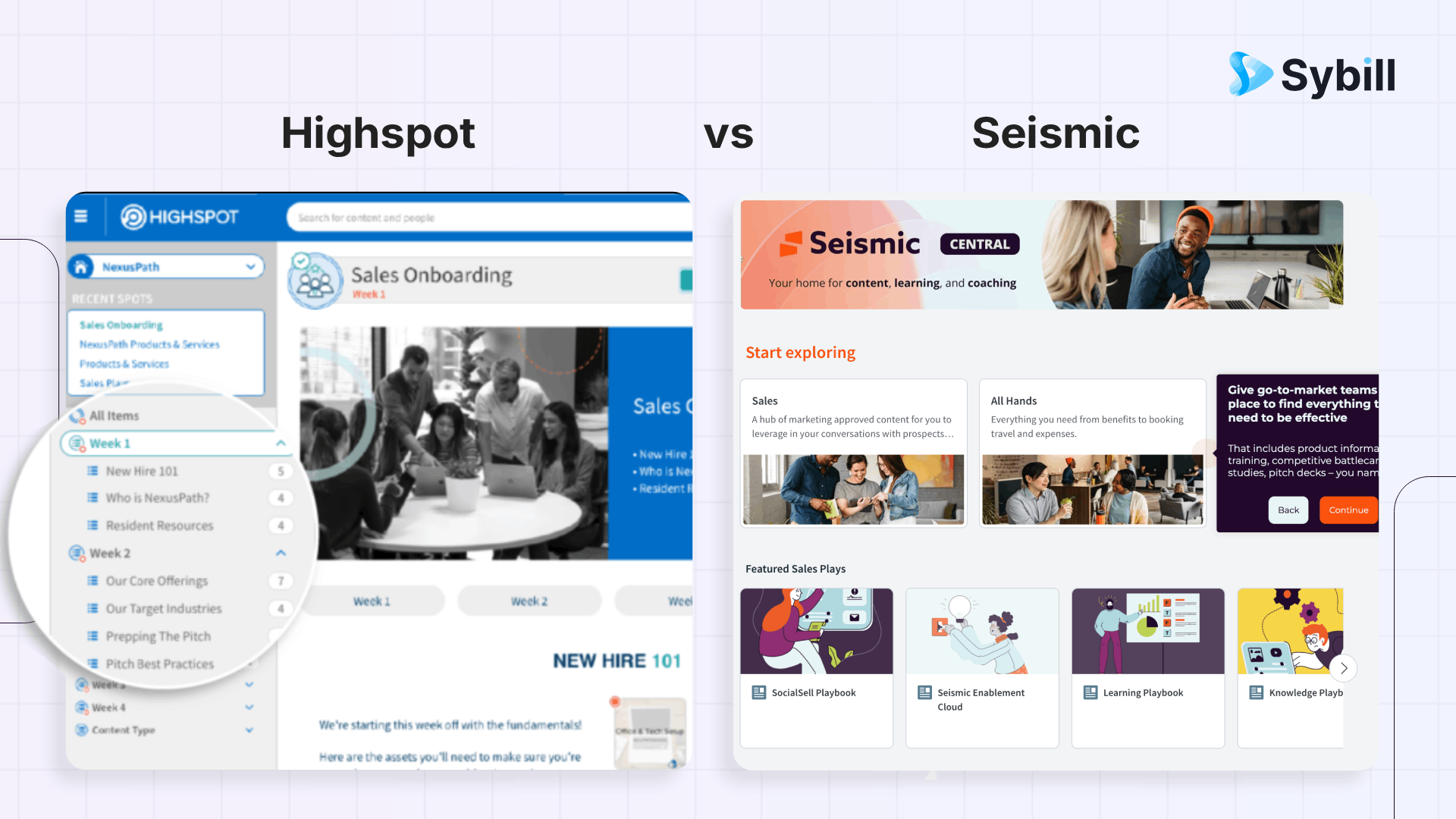
Choosing between Highspot and Seismic is like deciding between an iPhone and an Android. Both will get the job done. Both have passionate fans who'll swear their choice is superior. And both will make you wonder if you made the right decision six months after purchase.
But here's the thing: unlike your phone choice (which mostly comes down to whether you like blue bubbles or green ones), picking the wrong sales enablement platform can actually tank your team's productivity, waste serious budget, and leave your content scattered across multiple systems like a digital yard sale.
Highspot is a sales enablement platform built for ease of use with AI-powered content recommendations, native training and coaching, strong Salesforce integration, and a unified content-plus-learning experience, best for mid-market teams that want fast adoption and integrated readiness. Seismic is an enterprise-grade enablement platform with advanced content automation, deep analytics, robust compliance controls, and LiveSocial for social selling, best for large organizations with complex content workflows, regulated industries, and multi-geo deployments. Highspot wins on user experience, onboarding speed, and rep adoption; Seismic wins on content automation depth, analytics granularity, and enterprise governance. For sales teams that also need meeting intelligence, automated follow-ups, and CRM autofill from conversations, Sybill complements either platform by turning every sales call into actionable deal data.
We've watched dozens of sales teams wrestle with this decision. Some picked Highspot and loved it. Others chose Seismic and never looked back. And a surprising number switched from one to the other after realizing their first choice wasn't quite right.
This isn't another comparison article that just lists features and calls it a day. We're going deep on the real differences that actually matter, the hidden costs nobody talks about upfront, and the specific scenarios where one platform crushes the other.
Whether you're evaluating sales enablement platforms for the first time, considering a switch from your current system, or just trying to figure out if these enterprise tools are worth the investment, you're about to get the unvarnished truth about Highspot and Seismic in 2026.
Before we compare features and pricing, let's establish what these platforms actually do, because "sales enablement" is one of those terms that means different things to different people.

Both Highspot and Seismic are what industry folks call "sales enablement platforms," which is corporate speak for "centralized systems that help sales reps access content, learn how to sell, and engage with buyers more effectively."
At their core, both platforms do three main things:
Content management: They're basically super-powered Google Drives for sales content. Decks, one-pagers, case studies, competitive battle cards, all organized and searchable so reps aren't frantically Slacking "does anyone have that healthcare case study?" five minutes before a call.
Training and coaching: They provide learning management systems (LMS) where you can create courses, onboarding paths, and certification programs. Think of it as Udemy but specifically for teaching your team how to sell your product.
Analytics and tracking: They tell you which content is actually being used (spoiler: probably not the deck marketing spent three months perfecting), how prospects engage with what you send them, and where reps are struggling.
The promise is that by centralizing all of this in one platform, your sales team becomes more effective, consistent, and scalable. Instead of every rep doing their own thing with their own Frankenstein collection of resources, everyone's working from the same playbook with the same content.
This is where things get interesting. While both platforms solve similar problems, they come at sales enablement from different angles.
Highspot was built with a "seller-first" philosophy. The entire experience is designed around making it dead simple for reps to find what they need and use it. It's like Apple's approach to design: intuitive, clean, opinionated about what good looks like. The goal is high adoption with minimal training.
Seismic takes more of an "enterprise-first" approach. It's built for scale, customization, and control. If Highspot is like buying a pre-configured MacBook, Seismic is like building a custom PC. You can configure it exactly how you want, but you'll need someone who knows what they're doing.
Neither philosophy is inherently better. It depends entirely on your team, your processes, and what matters most to you. A 50-person startup will have very different needs than a 5,000-person enterprise with compliance requirements and multiple business units.
Let's get into the specifics. Here's how they stack up across the capabilities that actually matter.
This is the foundational use case. Your reps need to find the right content quickly without hunting through folders or bothering marketing.
Highspot's approach: Their AI-powered search is legitimately impressive. You can search by keywords, topics, buyer stage, industry, or even just describe what you're looking for in natural language. The system learns from usage patterns, so the most effective content naturally bubbles to the top.
The interface is visual and intuitive. Think Pinterest for sales content. Everything is organized into "Spots" (collections of related content), and reps can create custom boards for different buyer personas or deal types.
Governance is straightforward. You set permissions by role, mark content as approved or retired, and the system enforces your rules without creating admin headaches.
Seismic's approach: More powerful but more complex. Their content library uses hierarchical tagging and categorization, which gives you incredible control but requires more setup and ongoing maintenance.
The search is solid but not as intuitive as Highspot's. You need to understand how content is tagged to find things efficiently. This isn't necessarily bad (it encourages consistent taxonomy), but it means reps need more training.
Where Seismic shines is version control and approval workflows. If you're in a regulated industry or just paranoid about outdated content getting sent to prospects, Seismic's governance capabilities are stronger out of the box.
The verdict: Highspot wins on ease of use and adoption. Seismic wins on enterprise-grade control and governance. If your biggest problem is reps not using the content library, go with Highspot. If it's maintaining compliance and version control at scale, Seismic has the edge.
Finding content is one thing. Tailoring it for specific buyers is another.
Highspot: Their "SmartPages" feature lets reps quickly assemble custom microsites for prospects. You pick relevant slides from different decks, add case studies, include pricing, and it all lives at a unique URL you can share. Engagement tracking shows exactly what the prospect viewed and for how long.
The AI can suggest relevant content based on deal stage and buyer profile, but the personalization mostly happens at the "assembly" level rather than dynamically modifying the content itself.
Seismic: Their "LiveDoc" and "LiveSend" capabilities are more sophisticated. You can create dynamic documents that automatically populate with custom data (company name, industry-specific stats, relevant use cases) based on who you're sending to.
The content automation is genuinely impressive for teams that send a lot of personalized proposals or need to generate custom sales collateral at scale. It's like mail merge on steroids.
The verdict: Seismic has more powerful content automation for teams that need to generate truly customized documents. Highspot is better for quickly assembling the right mix of existing content. Think: Seismic for creating, Highspot for curating.
Great content doesn't matter if your team doesn't know how to use it.
Highspot: Training and coaching are native to the platform, built from the ground up to integrate with content and analytics. You can create learning paths, track completion, assess skills, and even tie content usage to specific training modules.
The coaching tools let managers review calls (with AI-generated highlights), provide feedback, and track improvement over time. It's tightly integrated, so coaching insights live right alongside content recommendations.
Seismic: They've acquired multiple companies to build out their learning and coaching capabilities (including Lessonly for training and Percolate for content operations). The functionality is robust, but because it came through acquisitions, the user experience can feel fragmented.
You're essentially using different products that talk to each other rather than one unified system. Some users love the flexibility this provides. Others find it clunky.
The verdict: Highspot's native, integrated approach creates a more seamless experience for both reps and managers. Seismic's acquired tools are powerful but feel more like a suite of connected products than a single platform. For coaching and training specifically, Highspot has the edge.
You can't improve what you don't measure. Both platforms provide analytics, but with different approaches.
Highspot: Analytics are embedded directly in the platform. You can see content performance, rep activity, buyer engagement, and pipeline impact without switching to a separate dashboard or exporting to another tool.
The insights are prescriptive. Instead of just showing you that content X has a 40% open rate, Highspot tells you what that means and what you should do about it. The analytics drive action rather than just providing information.
Their "Nexus" AI engine connects dots across content, conversations, and outcomes to surface patterns that would be impossible to spot manually.
Seismic: Their analytics are powered by an outsourced data warehouse that refreshes periodically (not real-time). The upside is you get incredibly deep, customizable reporting. The downside is there's more lag between activity and insights, and you can't take action directly from the analytics interface.
For teams with dedicated ops people who love building custom reports and dashboards, Seismic's approach provides more flexibility. For teams that just want actionable insights without becoming data scientists, it's overkill.
The verdict: Highspot's real-time, actionable analytics win for most teams. Seismic's approach appeals to larger orgs with dedicated ops resources who need custom reporting and don't mind the complexity.
Your sales enablement platform needs to play nice with your CRM (probably Salesforce or HubSpot) or it creates more problems than it solves.
Highspot: Bi-directional sync with Salesforce and Dynamics. Content shared, engagement data, and training completion all flow back to your CRM automatically. The integration is deep enough that reps can access Highspot directly from within Salesforce without switching tabs.
Setup is relatively straightforward, and the data quality is consistently good because it's not relying on email address matching or manual mapping.
Seismic: Also integrates with major CRMs, but the setup is more complex and often requires IT involvement. The integration primarily works through embedded components and email activity tracking, which can lead to data quality issues.
Users report that keeping the integration running smoothly requires more ongoing maintenance than Highspot.
The verdict: Highspot's CRM integration is cleaner, easier to set up, and more reliable. Unless you have complex, custom requirements that demand Seismic's flexibility, Highspot is the safer choice here.
In 2026, "AI-powered" is stamped on everything. But what does it actually mean for these platforms?
Highspot: Their Nexus AI engine is genuinely sophisticated, not just a chatbot slapped on top. It powers content recommendations, surfaces deal insights, predicts which content will resonate, and even suggests coaching opportunities for managers.
The AI is agentic, meaning it can take actions on your behalf (like archiving stale content or assigning training) rather than just making suggestions. It's working constantly in the background to make the platform smarter.
Seismic: Their AI focuses primarily on content analytics and basic recommendations. It's useful for surfacing which content performs best, but it's less proactive than Highspot's system.
The AI often stops at summaries rather than taking action. You get insights, but you still need to manually act on them.
The verdict: Highspot's AI is more advanced and more integrated across the platform. Seismic's AI capabilities are growing but currently lag behind.
Neither platform publicly shares pricing (because enterprise software vendors love making you jump through hoops), but here's what we've gathered from actual customers and market intel.
Highspot: Typically ranges from $50-100 per user per month depending on which features you enable and your total user count. Enterprise deals with custom requirements can run higher.
Most teams land around $70-80 per user per month for a full-featured implementation.
Seismic: Generally slightly more expensive at $60-120 per user per month. The wide range reflects how much you customize and which modules you activate.
Because Seismic's capabilities come from multiple acquired products, you're essentially paying for a suite. If you want everything, expect to be at the higher end of that range.
This is where hidden costs lurk. Software licensing is just the beginning.
Highspot: Most customers report 4-8 weeks to get fully up and running. Implementation costs typically run $10K-30K depending on complexity and whether you use Highspot's professional services or do it internally.
The platform is designed for relatively quick deployment. You can be productive within weeks, not months.
Seismic: Expect 8-16 weeks minimum for implementation. Costs range from $25K-75K+ because there's more configuration required, more integration work, and more training needed.
Multiple customers mentioned needing dedicated resources (either internal or consultants) to maintain and optimize Seismic ongoing, which Highspot users didn't mention as frequently.
Highspot: Lower admin burden means less ongoing cost. Most companies can manage Highspot with one enablement person spending maybe 25-40% of their time on platform administration.
Seismic: Higher ongoing admin requirements. Several customers mentioned needing dedicated Seismic admins (full-time or significant percentage of someone's role) to keep the system optimized.
For a 50-person sales team over 3 years:
Highspot:
Seismic:
The verdict: Highspot is generally 25-35% less expensive when you account for total cost of ownership, not just licensing. The gap widens at larger scales if Seismic requires dedicated admin resources.
Let's get real. Features and pricing matter, but if your team won't actually use the platform, none of it matters.
Highspot user feedback:
The most consistent praise is about ease of use. Reps report finding content quickly, the interface is intuitive, and adoption happens naturally without heavy-handed change management.
Complaints center around limited customization for edge cases. The opinionated design means if your workflow doesn't match Highspot's vision, you might hit walls.
Several users mentioned that the mobile experience, while functional, isn't as polished as the desktop version.
Seismic user feedback:
Power users and admins love the flexibility and depth. If you want to configure something in a specific way, Seismic can probably do it.
The main complaint is complexity. Multiple users used phrases like "steep learning curve," "requires significant training," and "hard to navigate" when describing the admin and rep experience.
Newer reps in particular struggle with Seismic's interface, which can slow adoption and require more enablement resources to get people productive.
G2 ratings (as of late 2024):
Both have strong ratings, but digging into specific categories reveals differences:
The verdict: Highspot wins on user experience for the average rep. Seismic wins on power and flexibility for teams with specific requirements and dedicated resources to configure it.
Highspot is the right choice if:
You prioritize adoption over customization. If your biggest concern is getting reps to actually use the platform rather than letting it collect dust, Highspot's intuitive interface and ease of use dramatically increase adoption rates.
You have a lean enablement team. If you don't have dedicated resources to configure, maintain, and optimize your platform, Highspot's lower admin burden makes it manageable for smaller teams.
You want faster time-to-value. If you need to see results within weeks rather than months, Highspot's quicker implementation and onboarding gets you productive faster.
Your team is mid-market or growth-stage. Companies with 50-500 people tend to get more value from Highspot's approach. You're big enough to need real sales enablement but not so large that you require enterprise-level customization.
Content discovery is your pain point. If reps complain they can't find what they need and you suspect great content is being underutilized, Highspot's AI-powered search and recommendations solve this better than alternatives.
You value integrated coaching. If improving rep performance through coaching is important, Highspot's native coaching tools integrated with content and analytics provide a better experience than Seismic's acquired solutions.
Real-world example: A 200-person SaaS company switched from scattered content in Google Drive to Highspot. They were fully implemented in 5 weeks, achieved 87% adoption within 60 days, and reported that reps were finding content 3x faster. Their enablement team of two people manages the platform without feeling overwhelmed.
Seismic is the right choice if:
You need enterprise-grade governance and compliance. If you're in financial services, healthcare, or any regulated industry where content control and approval workflows are critical, Seismic's robust governance capabilities are worth the added complexity.
You have complex, custom requirements. If your sales process doesn't fit standard patterns and you need deep customization, Seismic's flexibility lets you configure it exactly how you need it.
You're already huge and getting bigger. Companies with 1,000+ reps and multiple business units or geographies benefit from Seismic's enterprise-focused architecture and scalability.
Content automation is critical. If you're generating a lot of custom proposals, contracts, or sales collateral that needs to dynamically populate with deal-specific data, Seismic's LiveDoc capabilities are more powerful than Highspot's assembly-based approach.
You have dedicated enablement/ops resources. If you have a team that can own the platform configuration and maintenance, Seismic's power becomes an asset rather than a burden.
Custom reporting is essential. If your leadership team needs custom dashboards and reports that slice data in specific ways, Seismic's analytics give you more flexibility (though at the cost of real-time insights).
Real-world example: A Fortune 500 company with 3,000 reps across 15 countries needed tight control over content versioning, multilingual support, and complex approval workflows. They chose Seismic, invested in a 4-month implementation with dedicated consultants, and built a team of 3 full-time Seismic admins. The platform handles their complexity, but they acknowledge it requires significant resources to maintain.
Here's the thing nobody in sales enablement talks about: traditional platforms like Highspot and Seismic solve yesterday's problems really well. Content management. Training. Analytics. Check, check, check.
But modern sales has evolved. The biggest challenges teams face in 2026 aren't about storing content or building learning paths. They're about:
Deal intelligence: Understanding what's actually happening in your deals based on conversations, not just CRM fields and content downloads.
Real-time execution: Getting insights and taking action in the moment, not days later after reviewing dashboards.
AI that actually does things: Not just analyzing and recommending, but actually completing tasks and moving deals forward.
This is where platforms like Sybill are changing the game. Instead of focusing on content management and training (which honestly, Google Drive and a good LMS can handle for many teams), Sybill focuses on conversation intelligence and execution.
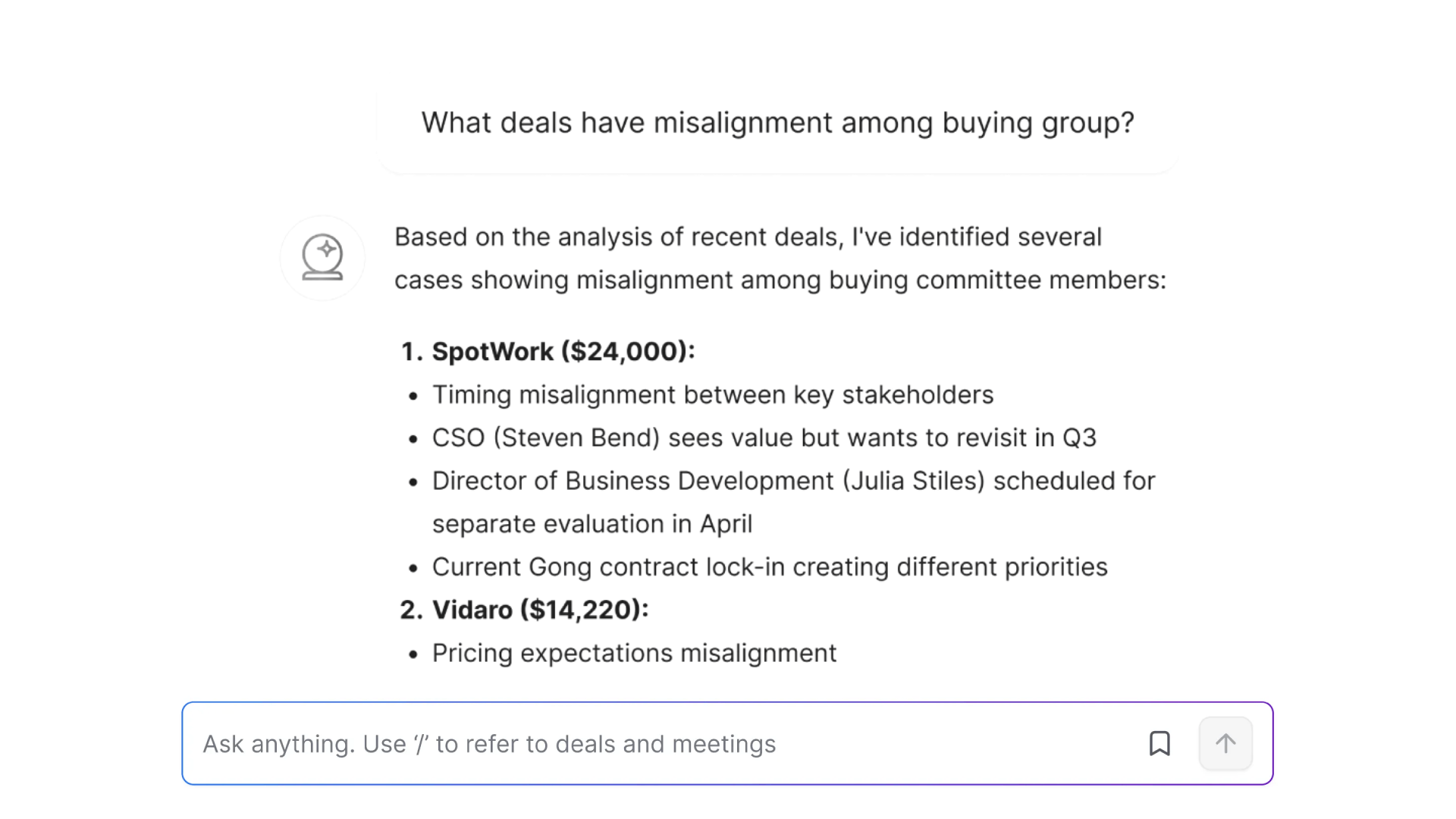
It analyzes every sales call to understand buyer engagement, automatically generates follow-ups that actually sound like you wrote them, keeps your CRM updated without manual data entry, and provides deal-level insights that help you know exactly what to do next.
For many modern sales teams, especially in tech and SaaS, this conversation-first, action-oriented approach delivers more value than traditional content-centric enablement platforms.
Think about it: your reps probably spend way more time on calls and writing follow-ups than they do searching for content. Tools like Sybill's conversation intelligence address where time is actually spent and where deals are actually won or lost.
This doesn't mean Highspot or Seismic are bad. They're good at what they do. But if your primary pain points are around deal execution, CRM hygiene, and scaling personalized outreach rather than content management, you might need a different kind of tool altogether.
Curious how AI-powered deal execution compares to traditional sales enablement? See how Sybill's AI assistant helps teams close more deals with less admin work.
Neither Highspot nor Seismic exists in a vacuum. They need to integrate with your existing stack or they create more silos.
We covered this earlier, but it bears repeating: both integrate with Salesforce, HubSpot, and Microsoft Dynamics. Highspot's integration is cleaner and requires less maintenance. Seismic's is more customizable but more complex.
Both integrate with common content creation tools (PowerPoint, Google Slides, Adobe Creative Cloud). Seismic has deeper integrations for content automation and dynamic document generation.
Both integrate with Slack, Teams, and email. Highspot's integrations feel more native. Seismic's notifications and workflows can feel more disjointed across tools.
This is where things get interesting. Traditional enablement platforms weren't built for the Zoom-first sales world.
Highspot has basic integrations with Zoom and other meeting platforms, but it's not their core focus. Seismic is similar.
For teams where most selling happens over video calls, consider whether you need conversation intelligence tools (like Sybill) in addition to or instead of traditional enablement platforms.
These tools record, transcribe, and analyze every call to provide insights that content management systems simply can't deliver.
Here's an uncomfortable truth: about 40% of sales enablement platform implementations are considered "failures" by the companies that invested in them. Not because the software is bad, but because adoption sucks.
You can pick the perfect platform, but if your team doesn't use it, you've just burned budget and wasted everyone's time.
Week 1-2: Setup and configuration. Load your content library, configure permissions, set up CRM integration. This is straightforward enough that most companies do it with minimal outside help.
Week 3-4: Power user training. Get your enablement team and a handful of sales leaders fully trained. They become your internal champions.
Week 5-6: Rollout to full team. Launch to all reps with structured onboarding. Highspot's ease of use means most reps are productive within days.
Week 7-8: Optimization. Gather feedback, adjust organization and tagging, refine search and recommendations based on usage patterns.
The key with Highspot is starting simple and expanding over time. Don't try to build the perfect content library before launching. Get something good enough live, then improve based on how reps actually use it.
Month 1: Discovery and planning. Work with Seismic's professional services (or consultants) to map your requirements, content taxonomy, approval workflows, and integration needs.
Month 2: Configuration and content migration. This is heavy lifting. You're not just uploading files; you're building the structure, tagging system, and governance rules that will determine whether Seismic is usable or a mess.
Month 3: Testing and training. Pilot with a small group, work out the kinks, build training materials, and prep your rollout plan.
Month 4: Launch and support. Full team rollout with heavy support and training. Expect to dedicate significant resources to helping reps navigate the system initially.
Ongoing: Optimization and maintenance. Unlike Highspot's relatively hands-off ongoing admin, Seismic requires continuous attention to keep taxonomy current, content organized, and workflows optimized.
The key with Seismic is investing upfront in proper structure and taxonomy. Skimp on this, and you'll regret it forever.
Regardless of which platform you choose:
Get executive sponsorship. If your CRO or VP of Sales isn't personally advocating for the platform, adoption will struggle.
Start with quick wins. Identify the 2-3 most common content requests ("Where's the security questionnaire?") and make sure those are incredibly easy to find on day one.
Measure and celebrate adoption. Track who's using the platform and publicly recognize early adopters. Create friendly competition.
Make it mandatory for specific workflows. Don't just encourage usage; require it for things like deal reviews or QBRs. Integration into existing processes drives adoption.
Provide ongoing support. Don't just train once and disappear. Office hours, Slack channels, and champions in each region help sustain momentum.
Software breaks. Users get confused. You need help. How responsive and helpful is support?
Highspot: Generally praised for responsive support. They offer 24/7 coverage, extensive documentation, and an active customer community. Response times are typically quick, and the support team actually seems to understand the product deeply.
Users report that Highspot proactively reaches out with optimization tips and best practices, not just reactively solving tickets.
Seismic: Also offers 24/7 support with multiple contact channels. Quality is generally good, though some users report that more complex issues (especially around customization and integrations) can take longer to resolve.
The support experience can vary depending on which Seismic product you're using, since different capabilities came from different acquired companies.
The verdict: Both offer solid support, but Highspot gets slightly higher marks for responsiveness and proactive help.
Sales enablement is evolving fast. What matters today might not matter tomorrow. Where are these platforms investing?
Highspot's focus areas:
Deeper AI integration: Expanding Nexus AI to provide even more predictive insights and autonomous actions. Think AI that doesn't just recommend content but automatically personalizes it based on deal context.
Buyer enablement: Moving beyond just enabling sellers to enabling buyers. Features that help prospects navigate the buying process, collaborate internally, and make decisions.
Revenue intelligence: Connecting enablement data with broader revenue signals to show not just content performance but business impact.
Seismic's focus areas:
Consolidating the platform: Working to unify the various acquired products into a more cohesive experience. This has been a work in progress for years.
Enhanced content automation: Making LiveDoc and content generation even more powerful for teams that need to create custom materials at scale.
AI-powered recommendations: Playing catch-up to Highspot on AI, particularly around predictive analytics and intelligent content suggestions.
The verdict: Highspot seems to be innovating faster, particularly around AI and buyer enablement. Seismic is focused on consolidation and polish, which they arguably need more than net new capabilities.
Beyond licensing and implementation, there are costs that don't appear on any quote but will absolutely impact your ROI.
Having a platform to store content is worthless if you don't have good content to put in it. Both platforms require significant investment in content creation, organization, and ongoing updates.
Budget for someone (or a team) to own content strategy, creation, and governance. For most companies, this means at least one full-time content person focused on sales enablement.
If you're using the LMS features, you need to actually build courses and learning paths. This isn't a one-time thing; it requires ongoing updates as products change and new best practices emerge.
Someone needs to actually look at the analytics, identify insights, and drive action. Neither platform just automatically makes your team better. They provide data; you need people to turn that data into improvements.
Especially with Seismic, integrations require ongoing attention. APIs change, CRM fields get updated, workflows break. Budget for tech resources to keep things running smoothly.
Neither Highspot nor Seismic is "better" in an absolute sense. They're better for different situations.
Choose Highspot if:
Choose Seismic if:
Consider alternatives if:
For many modern sales teams, especially in fast-moving tech and SaaS environments, traditional sales enablement platforms are solving yesterday's problems. The content management crisis is mostly solved (Google Drive + good organization + decent search gets you 80% there). The training problem has good alternatives (dedicated LMS platforms are cheaper and often better).
The actual challenges today are understanding what's happening in your deals based on conversations, executing quickly without drowning in admin work, and using AI to augment your team's capabilities at the point of sale.
That's why tools like Sybill are gaining traction. Instead of being another content repository or training platform, they focus on conversation intelligence, automated execution, and AI-powered assistance where it actually matters, in your deals.
Before you sign a six-figure enterprise contract for Highspot or Seismic, ask yourself: is content management really my problem? Or do I need better deal intelligence and execution tools?
The answer might not be a traditional sales enablement platform at all.
Ready to explore how AI-powered deal execution compares to traditional sales enablement? Try Sybill and see how conversation intelligence and automated follow-ups can transform your team's productivity without the enterprise platform complexity.
Easily download this blog here.
Technically yes, but why would you want to? The whole point of these platforms is consolidation. Running both creates duplicate costs and confused users. If you're considering this because neither fully meets your needs, it's probably a sign you should look at more specialized tools that solve your specific pain points rather than trying to force-fit general-purpose platforms. For example, if you need Highspot's content management but better conversation intelligence, pair Highspot with Sybill rather than adding Seismic.
With Highspot, most companies report seeing measurable impact within 3-4 months: faster content discovery, higher adoption of best practices, and improved rep ramp time. Full ROI (where benefits clearly exceed costs) typically hits around 9-12 months. With Seismic, the timeline is longer due to more complex implementation. Expect 6-9 months to see initial impact and 15-18 months to hit clear ROI, particularly if you're leveraging the more advanced automation features that require significant setup.
Both platforms will export your data if you leave, but it won't be fun. You'll get your content files back (though potentially not all metadata and organization), usage analytics (in various formats), and user data. The harder part is recreating the structure, taxonomy, workflows, and integrations you built. Expect a switch between platforms to take nearly as long as the initial implementation. This is why choosing carefully upfront matters. Switching costs are high enough that most companies stick with their initial choice even if they're not thrilled with it.