Find us at booth #83, join us for a harbor side happy hour, or catch Gorish’s talk.

Sept, 16-18 > Learn more


Richa Sharma

March 30, 2026
.avif)
"This quarter's numbers are going to be huge!"
How many times have you heard your top sales reps make this claim, only to miss their target by 30%? If you're like most sales leaders, you've built forecasts on a foundation of rep optimism, historical averages, and that spreadsheet you've been tweaking since 2015. The result?
An inaccurate sales forecast means missed targets, wasted resources, and deals slipping through the cracks. A data-driven sales forecast, on the other hand, helps teams allocate resources efficiently, close high-value deals faster, and stay ahead of market shifts.
Machine learning improves sales forecasting by replacing static spreadsheets and gut-feel estimates with dynamic, self-learning models that analyze historical sales data, market signals, and real-time customer behavior to predict revenue with 20–50% greater accuracy (per McKinsey). The most effective ML models for sales forecasting include linear regression for simple trend-based predictions, random forests for multi-variable analysis, neural networks for detecting hidden patterns in large datasets, and gradient boosting machines (XGBoost, LightGBM) for iterative accuracy improvements. Key ML techniques include time series analysis (ARIMA, Prophet) for seasonality, classification and regression trees for customer segmentation, clustering for behavioral grouping, and natural language processing for sentiment-based demand signals. To implement ML forecasting, teams should gather and clean 3–5 years of historical data, select the right model for their complexity level, train and validate using an 80/20 data split, and integrate AI-driven dashboards into their CRM workflow for real-time insights.
Using machine learning for sales forecasting shifts away from static, one-size-fits-all projections to analyzing patterns, market signals, and real-time customer behavior, thereby predicting revenue with greater accuracy. It makes your decision-making data-driven, rather than relying on guesswork.
In this guide, we’ll break down how machine learning models for sales forecasting work, explore machine learning techniques for sales forecasting, and reveal how AI sales forecasting is giving businesses an edge. Ready? Let’s dive in!
Sales forecasting is the process of estimating future sales revenue for a business based on historical data, market analysis, and trends. You can predict how much a product or service will sell in the upcoming period, allowing them to plan for production, inventory, marketing, staffing, and budgeting.
Sales forecasting enables businesses to make informed decisions and mitigate uncertainty by anticipating demand, managing cash flow effectively, and optimizing operations. Here’s how it’s done:
For sales forecasting, historical data isn't just a record of past transactions; it's the foundation of future predictions. While modern machine learning has revolutionized how we analyze this data, understanding your historical sales patterns remains the crucial first step in building accurate forecasts.
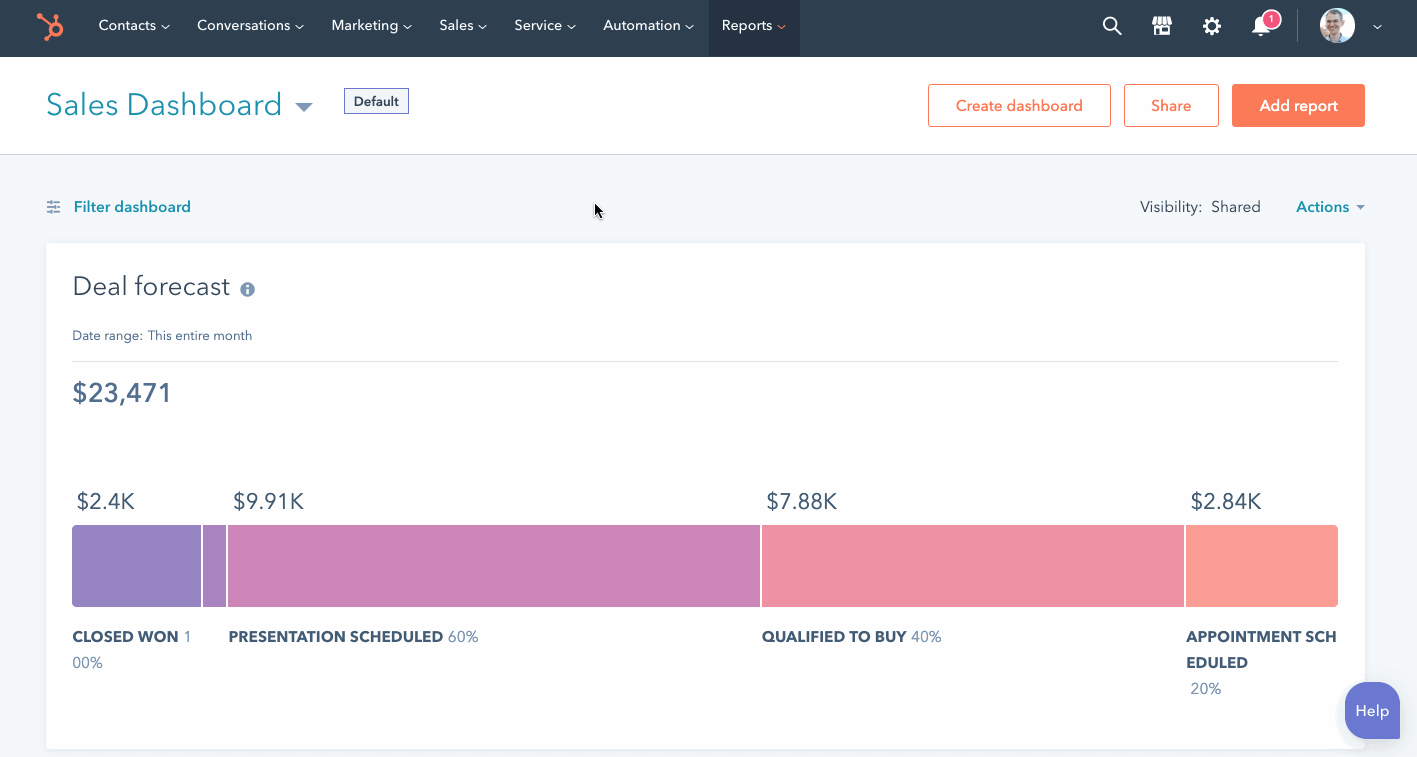
Traditional tools like Excel and Google Sheets have been used in the past, but specialized software like Salesforce or HubSpot makes analyzing historical data easier and generates more reliable projections.
Historical data tells you where you've been, but market research illuminates where you are heading. Understanding current market dynamics is crucial for accurate sales forecasting. Let's explore how to leverage market research effectively in your forecasting strategy.
1. Customer behavior analysis
2. Competitive landscape
3. Economic indicators
Remember: Effective market research isn't about gathering every available data but identifying and monitoring the factors that truly impact your sales performance. When combined with historical analysis and machine learning algorithms, market research becomes a powerful tool for creating more accurate and reliable sales forecasts.
Data and market research provide the numbers for sales forecasting. Your sales team adds real-world insights from their on-the-ground experience. They interact with customers, understand market nuances, and often spot emerging trends before they appear in the data.
While your sales team’s insights are invaluable, they need to be collected and analyzed to be useful for forecasting. When properly integrated with data analytics and market research, sales team input becomes a powerful component of accurate sales prediction.
For example, a salesperson might report that a new product feature is gaining traction, which can impact future sales. But they can get this information automatically through the intelligence of machine learning in sales forecasting.
Trend analysis is like using a telescope to peer into the distance and predict what lies ahead. By applying statistical methods, such as moving averages or regression analysis, businesses can spot patterns that help forecast future sales. This approach is particularly effective for companies with consistent data over a prolonged period.
A commonly used method is time series forecasting, where sales data over a specific period is analyzed to predict future sales.
Predictive analytics has become a powerful tool for sales forecasting. Think of it as upgrading your telescope to a state-of-the-art satellite system. Predictive analytics utilizes machine learning algorithms to analyze vast amounts of data, identifying trends and correlations that may not be immediately apparent.
By incorporating AI into forecasting models, businesses can make more precise predictions. For instance, Amazon’s use of predictive analytics in sales forecasting allows it to adjust its stock and distribution channels in real time, ensuring it meets demand without overstocking.
Like navigating the seas, sales forecasting must account for natural cycles, such as seasonal demand or market trends.
Accounting for these factors is essential to avoid overestimating or underestimating sales during specific periods. Seasonal adjustments allow businesses to forecast accurately even when demand fluctuates throughout the year.
No one can predict the future with absolute certainty. That’s why scenario planning is like preparing for different kinds of storms on your journey. Businesses can create best-case, worst-case, and most likely forecasts to understand potential risks and opportunities.
Scenario planning can help businesses make informed strategic decisions, even in volatile market conditions. For instance, if a competitor suddenly launches a disruptive new product, having prepared multiple sales forecasts can help a business respond quickly.
Lastly, sales forecasting is not a one-time process. Just as sailors must adjust their course as conditions change, businesses must constantly review their forecasts against actual sales results. This helps them fine-tune their forecasting models over time and improve accuracy.
Organizations with a structured forecasting process increased their win rates by 25% compared to those that do not. Sales forecasting is more than just predicting the next quarter’s numbers. It’s the backbone of strategic decision-making. Businesses that master forecasting gain a competitive edge by:
Accurate forecasting can help businesses avoid running out of stock, overestimating their production needs, or missing opportunities due to underestimating demand.
According to research by Gartner, sales forecasting is one of the top areas where sales professionals struggle and are least effective. Before we get to how ML is revolutionizing sales forecasting, let’s acknowledge why traditional sales forecasting methodology often leaves businesses scratching their heads:
Human error – Sales forecasting requires handling large amounts of data, and manual processes are prone to mistakes. Misinterpretations, incomplete datasets, and biases can all contribute to misleading forecasts.
.png)
Machine learning (ML) swoops in like a superhero, automating the process, minimizing errors, and adapting to new trends in real time. Instead of relying on outdated assumptions, machine learning (ML) continuously improves itself, making it an indispensable tool for modern sales teams. Here’s how ML is changing sales forecasting:
ML models make sales forecasting dynamic, adjusting to real-world changes. Here are a few that stand out:
According to McKinsey, companies that utilize advanced analytics, such as machine learning, can reduce forecast errors by 20–50%. Imagine the impact on your bottom line!
ML techniques go beyond standard math to make sense of chaotic sales data. Here’s how:
Think of ML as your ultimate sales forecaster. Instead of guessing when customer demand will surge, it analyzes usage patterns and tells you when to scale infrastructure, optimize pricing, or adjust your sales strategy.
A Salesforce study found that 62% of top-performing sales teams leverage AI to enhance the accuracy of their sales forecasts. Implementing AI-ML models for sales forecasting and integrating them within existing sales forecasting methodology requires precision and planning. Here’s how it can be done:
The accuracy of your forecast depends on the quality of your data. You need to collect and clean relevant datasets, including:
Data cleaning is crucial. Missing values, duplicate records, and inconsistent formats can significantly impact forecast accuracy. Use AI-powered data processing tools to clean and standardize your datasets.
Not all ML models are created equal. Your choice depends on:
Before integrating machine learning models for sales forecasting, it’s important to test them:
Here are some actionable ways you can integrate AI Sales Forecasting into your workflow:
Here are a few examples of companies that are successfully using AI for Sales Forecasting:
Amazon’s AI models predict which products will be in demand before customers consider buying them. This allows them to optimize inventory, reduce shipping costs, and increase sales efficiency.
Using ML-powered sales forecasting, Coca-Cola identifies the best-selling drinks for each region, ensuring shelves are never empty (or overstocked).
Walmart utilizes deep learning models to analyze a wide range of factors, from weather patterns to economic conditions, ensuring its supply chain operates efficiently.
The days of relying solely on gut feelings and basic spreadsheets are behind us. AI and machine learning techniques for sales forecasting are revolutionizing how you predict demand, optimize inventory, and drive revenue growth.
The good news? You don't have to revolutionize your entire forecasting process overnight. Start with small steps, focus on data quality, and gradually build your machine learning (ML) capabilities. The future of sales forecasting is here, and it's more accessible than you might think.
Ready to transform your sales forecasting? Assess your current processes to identify where machine learning can have the greatest impact. Your future self will thank you for starting today!