Find us at booth #83, join us for a harbor side happy hour, or catch Gorish’s talk.

Sept, 16-18 > Learn more

%20(1).avif)
Mamta Tainwala

February 19, 2026
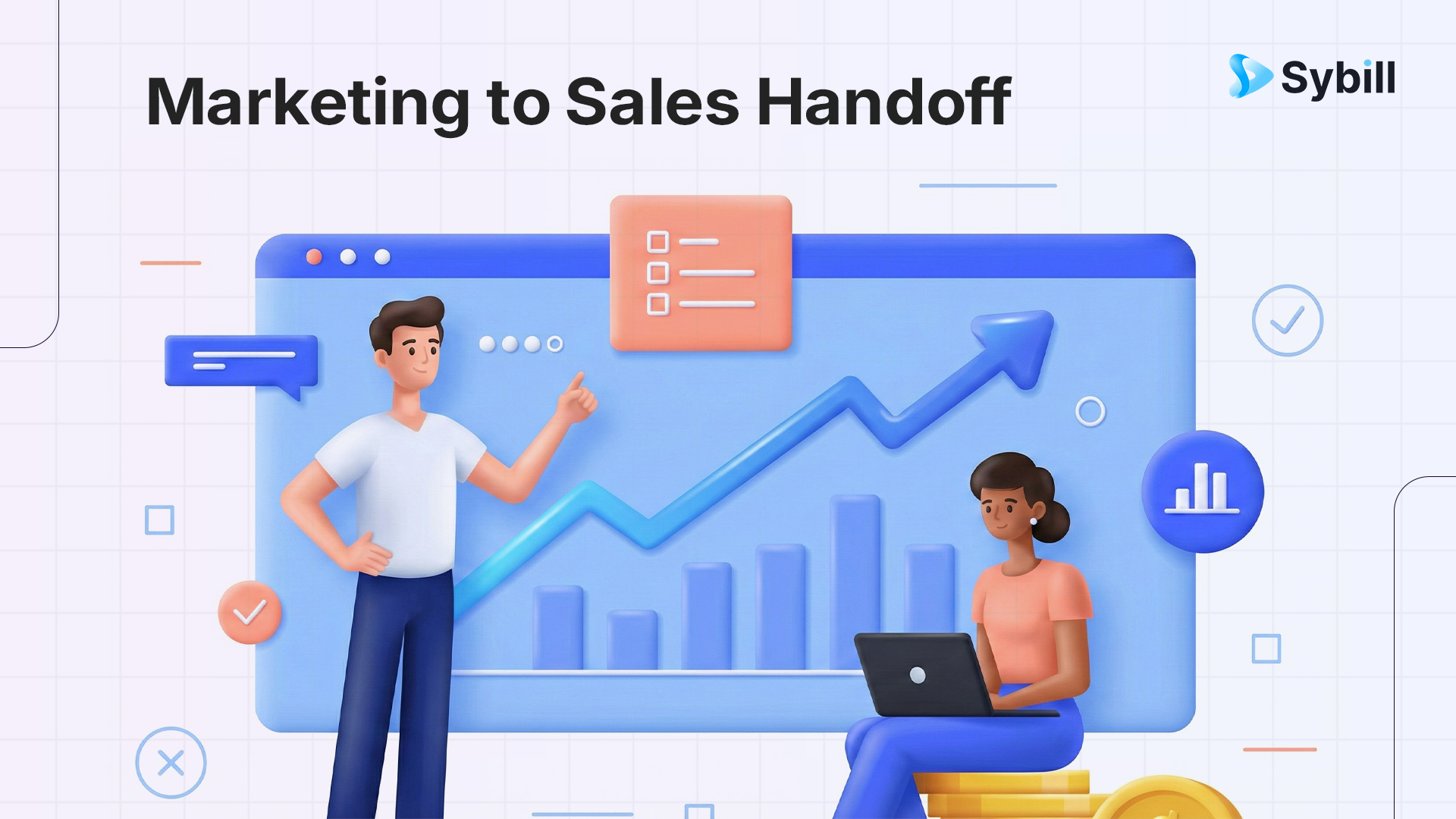
TL;DR: Your marketing team is generating leads. Your sales team says they're garbage. The truth is usually somewhere in the middle, and the handoff is where the story falls apart. This guide walks you through how to align on MQL and SQL definitions, what a proper handoff package actually includes, the speed and context requirements that separate closed deals from dead leads, how to build a feedback loop that gets both teams rowing in the same direction, and where AI eliminates the manual gaps that silently bleed your pipeline dry.
By some widely cited industry estimates, misalignment between sales and marketing costs B2B companies over a trillion dollars a year. HBR has written about it. LinkedIn's own research found that 90% of sales and marketing professionals report disconnects across strategy, process, and content. The data keeps piling up, and the number keeps getting repeated, because the problem keeps not getting fixed.
And most of that damage doesn't happen because of bad campaigns or weak closers. It happens in the space between the two teams. The handoff.
Marketing is doing its job. Campaigns are running. Leads are coming in. MQL numbers are hitting target. But somewhere between "this lead is ready" and "I'll take it from here," the context vanishes, the timing slips, and the lead goes cold. The AE opens a record in the CRM and finds a name, maybe a job title, possibly a lead score. What they don't find is the story. Which problem is this person trying to solve? What content did they engage with, and what does that tell us about where they are in their buying journey? Did they ask a specific question during a webinar? Did they visit the pricing page four times this week?
This is not a people problem. It's a process problem. And it's fixable.
The discovery insights that should inform the first sales conversation? They need to travel with the lead. The qualification signals that separate real buying intent from casual browsing? They need to be visible at the moment of handoff. The pipeline that marketing worked so hard to build? It needs a bridge, not a cliff.
Let's build that bridge.
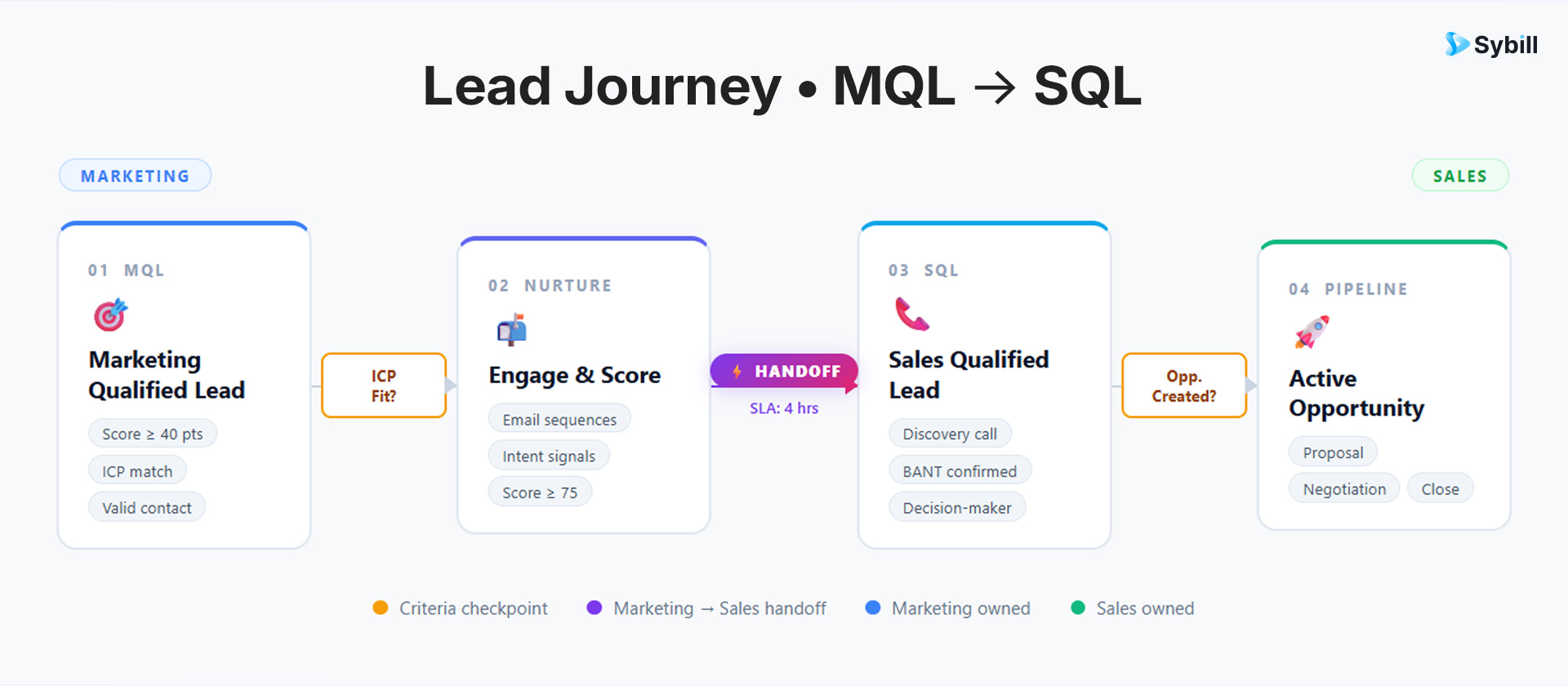
A marketing to sales handoff is the structured process through which a lead transitions from marketing's nurture environment into the sales team's active pipeline. It is the point where marketing says "this person is ready for a conversation" and sales says "I know enough to make that conversation count."
In theory, it sounds simple. In practice, it is one of the most broken workflows in B2B. The handoff involves three critical components: clear qualification criteria that both teams agree on, a mechanism for transferring context (not just contact info), and a defined timeline so leads don't sit in limbo. When done right, your CRM stays clean and complete and both teams operate from the same source of truth.
When this process works, leads move faster through the funnel, conversion rates climb, and both teams stop blaming each other in Monday stand-ups. When it doesn't work, you get pipeline leakage, wasted ad spend, and a marketing team that swears they're generating great leads while sales swears the opposite.
The marketing to sales handoff doesn't usually fail dramatically. It fails quietly. Leads trickle in, some get followed up on, some don't, and nobody realizes the extent of the damage until the end-of-quarter pipeline review looks like a crime scene.
Here are the most common failure points:
No shared definition of "ready." Marketing thinks a lead is sales-ready after downloading a whitepaper. Sales thinks a lead is ready when they've practically written a PO. Neither team has formally agreed on what qualifies a Marketing Qualified Lead (MQL) versus a Sales Qualified Lead (SQL), so the handoff threshold is a moving target.
Context evaporates at transfer. A lead who spent three weeks engaging with your content, attending a webinar, and revisiting your pricing page gets reduced to a row in a spreadsheet. The behavioral signals that made them worth pursuing vanish. Sales starts the conversation cold and the prospect wonders why they're being treated like a stranger.
Speed kills (or rather, the lack of it does). Research from InsideSales found that responding to a lead within five minutes makes you 100x more likely to connect. Yet the average B2B lead response time hovers around 42 hours. By then, your prospect has already talked to two of your competitors and moved on emotionally.
Finger-pointing replaces collaboration. Without shared metrics and mutual accountability, the handoff becomes a blame game. Marketing says "we sent you 500 leads!" Sales says "they were all garbage." Nobody wins, least of all the prospect.
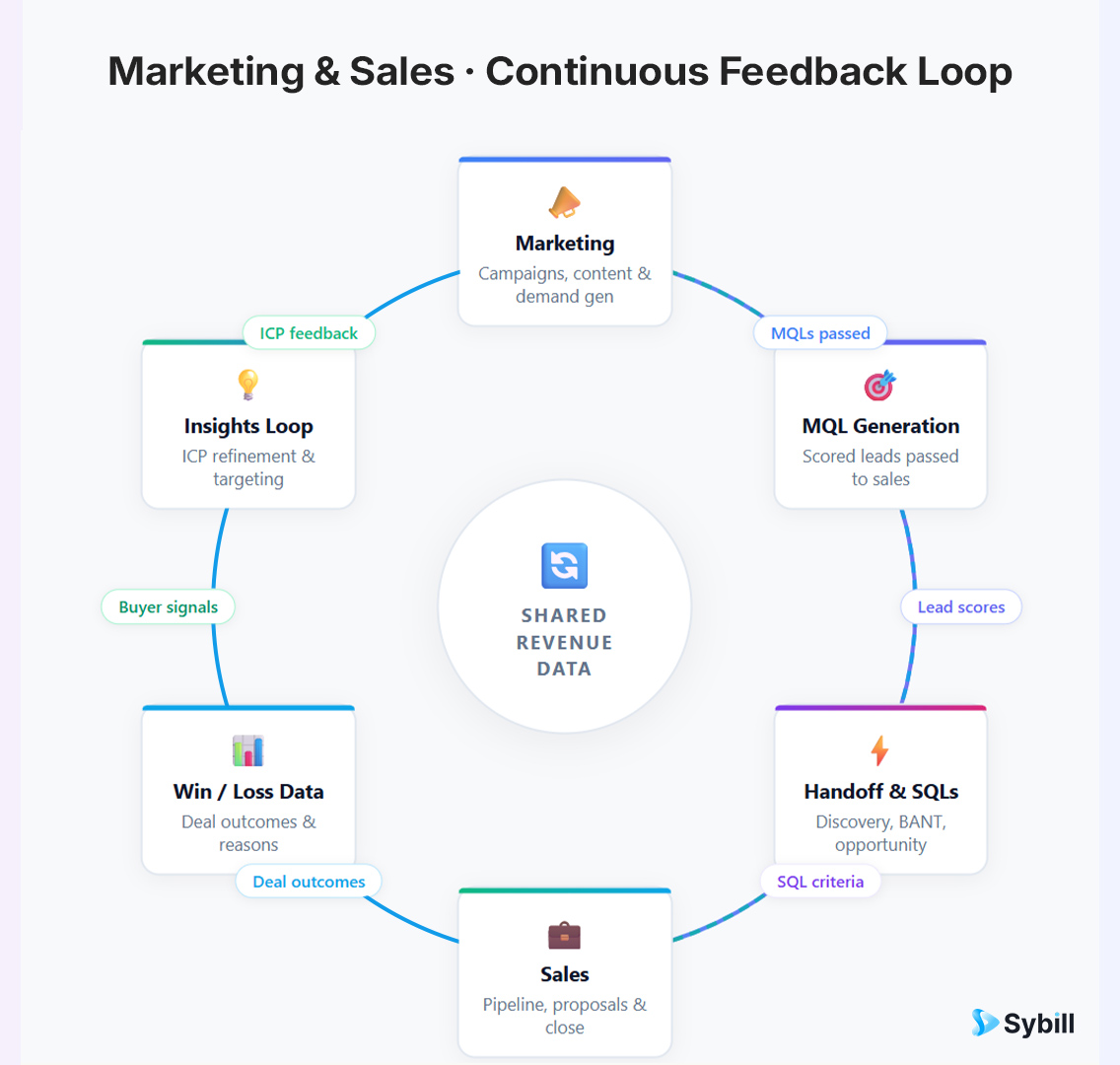
Before you build any process, you need alignment. And alignment doesn't come from a shared Google Doc. It comes from honest conversations about what each team needs.
Marketing needs to understand what makes a lead actually convertible for sales. Not in theory, but based on real closed-won data. Sales needs to understand what marketing can realistically deliver and what signals are available in the funnel.
The output of this conversation should be a documented Sales and Marketing Service Level Agreement (SLA) that covers lead definitions, response time commitments, feedback loops, and shared KPIs.
This is the single most important step in fixing your handoff. Both teams need to agree on a scoring model that incorporates two dimensions:
Fit scoring asks: Does this lead match our Ideal Customer Profile? This includes firmographic data like company size, industry, revenue, and the contact's job title or seniority.
Engagement scoring asks: Has this lead demonstrated enough buying intent? This includes actions like visiting the pricing page, attending a demo webinar, requesting a consultation, or engaging with bottom-of-funnel content.
A lead only becomes an MQL when they hit threshold scores on both dimensions. And an MQL only becomes an SQL when sales has accepted it and confirmed the opportunity through initial outreach.
Here is where most processes fall flat. They transfer the name and the score but not the story.
An effective handoff package should include the lead's engagement history (what content they consumed and when), the specific pain point or use case that triggered their interest, any demographic or firmographic notes that explain fit, and the recommended talk track based on their journey.
This is where AI-powered tools like Sybill come in. Instead of relying on reps to manually piece together context from scattered data, Sybill automatically captures and synthesizes insights from calls, emails, and CRM data to create a complete picture of every deal. When your SDR qualifies a lead and passes it to an AE, Sybill's Magic Summaries ensure that none of the discovery context gets lost in translation.
Get started for free with Sybill and see how AI can ensure zero context loss in every handoff.
Manual handoffs are slow handoffs. And slow handoffs are dead handoffs.
Use your CRM and marketing automation platform to trigger the handoff automatically when a lead hits MQL threshold. This trigger should simultaneously notify the assigned sales rep (via Slack, email, or CRM alert), create a task with a response time SLA, and populate the lead record with the context package described above.
Tools like Sybill integrate with your CRM, Slack, and email to automate deal updates and alerts so that reps are notified instantly with everything they need to act.
The handoff isn't a one-way street. Sales needs a structured way to report back on lead quality so marketing can calibrate their targeting and scoring.
This means regular (weekly or biweekly) pipeline review meetings where both teams examine which MQLs converted to SQLs, which SQLs became opportunities, where leads are stalling, and what feedback sales has on lead quality. Ask Sybill can even help surface these patterns by analyzing conversation data across your entire pipeline, answering questions like "What objections do reps need better marketing collateral to handle?"
Within the sales org itself, there is another handoff that deserves just as much attention: the SDR to AE transition.
An SDR qualifies a lead, books a meeting, and then... what? Too often, the AE walks into the first call blind. They re-ask discovery questions the SDR already covered. The prospect gets annoyed. Momentum dies.
The fix is the same principle as the marketing-to-sales handoff, but executed at the rep level. SDRs need to document the pain point identified, the stakeholders mentioned, the timeline discussed, and any objections or concerns raised.
Sybill handles this automatically. Because it captures and synthesizes every conversation, Sybill's pre-meeting briefs give AEs complete context before they ever dial in. No more "so tell me about your business" when the prospect already spent 20 minutes explaining it to the SDR.
You can't improve what you don't measure. Here are the metrics that reveal handoff health:
You can use Sybill's Deal Pipeline workspace to monitor deal progression and flag when leads stall post-handoff, giving both teams real-time visibility into where the process is breaking down.
The marketing to sales handoff has historically been a manual, error-prone process. AI is changing that in three fundamental ways.
First, AI improves lead scoring accuracy by analyzing behavioral patterns at scale, not just counting page views but interpreting intent signals that humans miss. Second, AI automates context transfer by synthesizing information from emails, calls, CRM fields, and marketing touchpoints into coherent handoff briefs. Third, AI enables continuous optimization by identifying patterns in which leads convert and feeding those insights back into the scoring model.
Sybill sits at the center of this shift for revenue teams. By capturing insights across all deal conversations, auto-populating CRM fields with MEDDPICC, BANT, or custom methodologies, and generating instant follow-up emails, Sybill ensures that every transition point in the revenue cycle retains full context.
Get started for free with Sybill and build handoffs that keep deals moving, not stalling.
A marketing to sales handoff is the process of transferring a qualified lead from marketing's nurture programs to the sales team for direct outreach and conversion. It includes shared qualification criteria, context transfer, and defined response timelines. The goal is to ensure that by the time sales picks up the phone or sends that first email, they have enough context about the lead's pain points, engagement history, and buying signals to have a meaningful conversation rather than a cold outreach. Companies that formalize this process see significantly higher conversion rates because leads feel like they're continuing a relationship, not starting one from scratch.
An MQL (Marketing Qualified Lead) meets marketing's criteria for fit and engagement. An SQL (Sales Qualified Lead) is an MQL that sales has accepted and validated as a genuine opportunity worth pursuing. The key distinction is that MQLs are scored based on demographic fit and behavioral signals (content downloads, webinar attendance, pricing page visits), while SQLs require human validation through an actual conversation or outreach attempt. Both teams need to agree on the threshold between the two, otherwise marketing will push leads over too early and sales will reject them, creating the blame cycle that derails so many go-to-market teams.
Best practice is within one hour for inbound leads. Research shows that lead contact rates drop dramatically after the first five minutes, so speed is critical. That said, speed without context is just fast failure. A rep who calls within five minutes but has no idea why the lead engaged will still fumble the conversation. The best approach combines automated alerts that notify reps instantly (via Slack, CRM, or email) with a context package that includes the lead's engagement history and recommended talk track. Tools like Sybill help by ensuring that all prior conversation context and deal intelligence travels with the lead automatically.
A complete handoff package includes the lead's engagement history (which content they consumed and when), pain points identified during nurture interactions, firmographic fit data (company size, industry, revenue), stakeholder information (job title, seniority, decision-making authority), recommended talk tracks based on their journey, and any objections or concerns raised. The biggest mistake companies make is reducing the handoff to a name, email, and a lead score number. That gives sales nothing actionable. The richer the context, the faster the discovery call moves and the more likely the lead converts.
Key metrics include MQL-to-SQL conversion rate (are the leads marketing sends actually accepted by sales?), lead response time (how fast does sales act?), SQL acceptance rate (what percentage of MQLs does sales validate?), pipeline velocity for marketing-sourced leads (how fast do they move through the funnel?), and ultimately the closed-won rate from marketing leads. You should also track qualitative feedback from sales on lead quality and run regular pipeline reviews where both teams examine what's converting and what's stalling. Sybill's Deal Pipeline workspace helps by giving both teams real-time visibility into where leads are progressing or getting stuck post-handoff.
Yes. AI tools like Sybill automate context transfer by capturing and synthesizing data from calls, emails, and CRM records. This eliminates manual note-taking, reduces information loss, and ensures sales reps have full context before their first conversation with a lead. AI also improves lead scoring accuracy by analyzing behavioral patterns at scale, not just counting page views but interpreting intent signals that humans miss. And AI creates continuous optimization loops by identifying which types of leads convert best, feeding those patterns back into the scoring model so it gets smarter over time. The result is a handoff process that improves itself rather than depending on perfect human execution every time.
The most common causes are misaligned lead definitions (marketing and sales disagree on what "qualified" means), lack of context transfer (the lead's story gets reduced to a name and a score), slow response times (leads go cold while sitting in a queue), no feedback loop between teams (sales can't report back on lead quality), and incentive structures that reward volume over quality (marketing is measured on MQL count rather than pipeline creation). Fixing these requires a formal alignment process with shared definitions, shared metrics, and regular reviews where both teams hold each other accountable.
Weekly or biweekly pipeline reviews are recommended to evaluate lead quality, identify sticking points, and recalibrate scoring criteria based on real conversion data. Beyond scheduled reviews, the best teams build always-on feedback mechanisms. For example, when a sales rep rejects an MQL, they should tag a reason that feeds back into marketing's scoring model. When a marketing-sourced lead closes, that win data should inform future targeting. The handoff process is never "done." It is a living system that improves with every data point, and AI tools like Ask Sybill can surface these patterns automatically by analyzing conversation data across your entire pipeline.
A marketing to sales handoff is the process of transferring a qualified lead from marketing's nurture programs to the sales team for direct outreach and conversion. It includes shared qualification criteria, context transfer, and defined response timelines. The goal is to ensure that by the time sales picks up the phone or sends that first email, they have enough context about the lead's pain points, engagement history, and buying signals to have a meaningful conversation rather than a cold outreach. Companies that formalize this process see significantly higher conversion rates because leads feel like they're continuing a relationship, not starting one from scratch.
An MQL (Marketing Qualified Lead) meets marketing's criteria for fit and engagement. An SQL (Sales Qualified Lead) is an MQL that sales has accepted and validated as a genuine opportunity worth pursuing. The key distinction is that MQLs are scored based on demographic fit and behavioral signals (content downloads, webinar attendance, pricing page visits), while SQLs require human validation through an actual conversation or outreach attempt. Both teams need to agree on the threshold between the two, otherwise marketing will push leads over too early and sales will reject them, creating the blame cycle that derails so many go-to-market teams.
Best practice is within one hour for inbound leads. Research shows that lead contact rates drop dramatically after the first five minutes, so speed is critical. That said, speed without context is just fast failure. A rep who calls within five minutes but has no idea why the lead engaged will still fumble the conversation. The best approach combines automated alerts that notify reps instantly (via Slack, CRM, or email) with a context package that includes the lead's engagement history and recommended talk track. Tools like Sybill help by ensuring that all prior conversation context and deal intelligence travels with the lead automatically.