Find us at booth #83, join us for a harbor side happy hour, or catch Gorish’s talk.

Sept, 16-18 > Learn more

%20(1).avif)
Mamta Tainwala

March 31, 2026
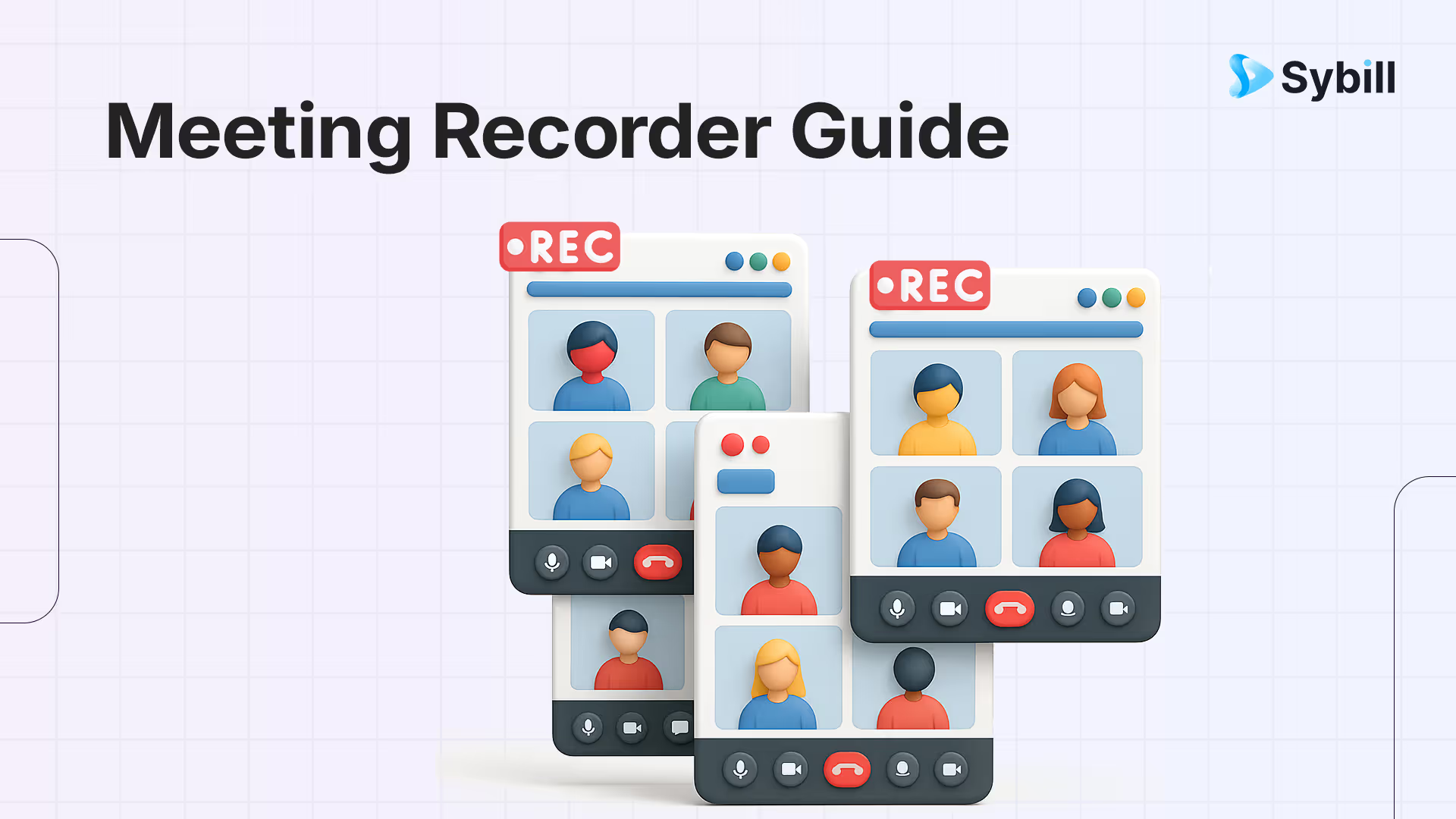
If your meetings multiply faster than your notes, you’re not alone. We have all stared at a blinking cursor after a one-hour call thinking, “What just happened and what do I send next?” The fix is a smart meeting recorder. Not the kind that leaves you with a wall of text. The kind that captures everything, transcribes meeting notes, and turns them into clean follow-ups and CRM-ready nuggets while you move on to your next call.
This guide shows you how to record on Zoom, Google Meet, and Microsoft Teams in plain steps, then explains how an AI recorder like Sybill upgrades “we recorded it” into “we advanced the deal.”
A meeting recorder captures audio and video from calls on Zoom, Google Meet, or Microsoft Teams, with AI-powered recorders adding transcription, structured summaries, follow-up drafting, and CRM integration on top of basic capture. The top AI meeting recorders in 2025 are Sybill for sales-focused recording with structured summaries, ready-to-send follow-ups, and CRM autofill; Otter for company-wide transcription with AI notes; Avoma for collaboration and coaching; Sembly for multi-platform consistency; and tl;dv for lightweight highlights and fast sharing. The simplest approach is to connect an AI recorder to your calendar once so it automatically captures, structures, and distributes meeting outcomes across your entire stack without manual intervention.
A meeting recorder captures the audio and video of a call, then stores it so you can replay, share, and transcribe. Native recorders in Zoom, Google Meet, and Teams do this well. An AI recorder layers on transcription, summaries, tasks, and integrations that remove manual admin. Sybill is built for revenue teams, so it records, summarizes, drafts follow-ups, and autofills your CRM after every meeting.
The simplest way to record a Zoom, Google Meet, or Teams call is to use an AI recorder like Sybill that sits across all three, captures the conversation with consent, and turns it into something useful. Instead of juggling platform-specific buttons and files, you connect your calendar once and the assistant either joins your calls or processes cloud recordings automatically. It creates a time-stamped transcript with speaker labels, summarizes goals, decisions, objections, and next steps, drafts a ready-to-send follow-up, and proposes CRM updates so the meeting doesn’t die in your notes. You stay focused on the conversation while the assistant handles capture, structure, and distribution in the background, with clear indicators when recording is active and admin controls for privacy.
Here are five AI recorders that work across Zoom, Google Meet, and Microsoft Teams; tight, skimmable, and useful:
1) Sybill — sales-focused recorder that turns calls into momentum
2) Otter — broad, company-wide transcription with AI notes
3) Avoma — recorder plus collaboration and coaching
4) Sembly — versatile notetaker with strong summaries
5) tl;dv — lightweight recorder with fast highlights
Tip for all five: Make sure recording consent is clear and that the plan level you choose includes the integrations and automations you need (auto-join, cloud-recording ingestion, exports). Platform support exists across Zoom/Meet/Teams for each tool above; depth and feature gates can differ by tier.
Native tools capture the meeting. AI recorders capture the meeting and do something useful with it.
Most AI recorders connect through your calendar and video tool permissions, then auto-join or process cloud recordings. For example, Otter documents cover pulling Zoom and Meet links for enterprise plans, while platform guides show how AI assistants plug in. Sybill integrates with major platforms and focuses on sales outcomes once the meeting ends.
Recording the meeting is easy. Getting value from it is the real goal. Use the native recorder when all you need is a file. Use an AI recorder when you want crisp notes, reliable follow-ups, and CRM updates that happen while you get back to selling. Your future self, staring at a crowded calendar, will be grateful that every call turns into momentum.
A tool that records and then turns the call into transcripts, summaries, tasks, and sometimes emails and CRM updates. Sybill is designed specifically for sales teams to do this end to end.
Often yes, after you connect your calendar and grant permissions. Behavior varies by product and plan; some attach to platform recordings, others send a notetaker to join. Check your vendor’s setup docs.
Consent laws vary. Announce that you are recording and follow your company’s legal guidance. News and legal actions occasionally highlight the importance of explicit consent and clear policies.