Find us at booth #83, join us for a harbor side happy hour, or catch Gorish’s talk.

Sept, 16-18 > Learn more

%20(1).avif)
Mamta Tainwala

May 15, 2026
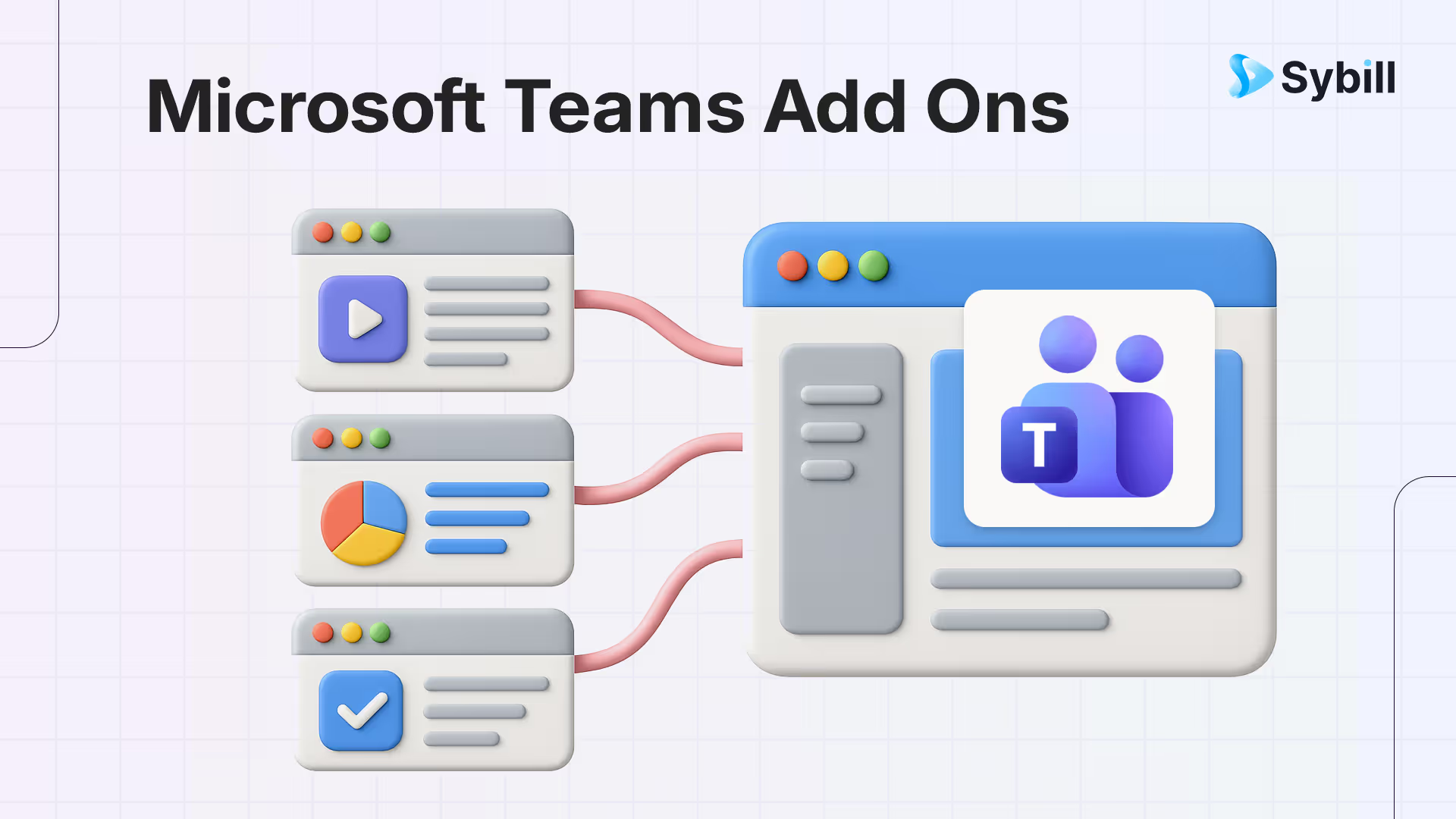
If Microsoft Teams were a person, it would be the dependable colleague who arrives early, stays late and color codes their lunch containers. Reliable, well intentioned and built for serious work. But even the best team players need a boost. That is where add ons come in. They transform Teams from a sturdy sedan into a surprisingly luxurious SUV that handles bumpy meetings, overloaded task lists and cross functional chaos like a dream.
The world of Teams add ons is huge. There are project management apps, AI meeting assistants, sales enablement integrations, creative collaboration boards, whiteboards, workflow automation tools and security layers. Some are brilliant, some are average and a few are downright confusing.
The best Microsoft Teams add-ons for 2026 include Sybill (AI meeting summaries, CRM autofill, and follow-up drafting for sales teams), Planner/Microsoft To Do (task management within Teams), Polly (quick polls and surveys in channels), Miro (collaborative whiteboarding), HubSpot for Teams (CRM notifications and deal updates), Asana for Teams (project management integration), Power Automate (workflow automation across Microsoft 365), Copilot (AI assistant for meeting recaps and content generation), OneNote (shared meeting notebooks), and Approvals (streamlined approval workflows). The most impactful Teams add-ons for revenue teams go beyond chat and collaboration to automate post-meeting workflows — capturing action items, updating CRM, and drafting follow-ups without leaving the Teams ecosystem.
This guide cuts through the noise and gives you the best Microsoft Teams add ons to use in 2025. Each section explores two of the strongest add ons in that category with real depth so you can understand what they do, why they matter and how they can work inside your organization.
There is no fluff here. Just practical, strategic help written in a warm, human tone designed for people who want to get more done with less frustration.
Let’s dig in.
Artificial intelligence went from futuristic fantasy to everyday workplace companion faster than anyone expected. Inside Teams, AI is no longer optional. It is how you save hours of manual work, how you improve communication and how you keep meetings from becoming an endless cycle of déjà vu.
Below are two essential AI focused add ons that transform meetings from a chore into a strategic asset.
Website: https://www.sybill.ai
Sybill is one of the most advanced AI meeting intelligence platforms available for Microsoft Teams. It excels at capturing the full nuance of conversations in ways that go far beyond note taking or transcription. If your organization relies heavily on video calls, whether in sales, customer success, recruiting or cross functional work, Sybill delivers insights that meaningfully improve outcomes.
Sybill automatically joins your Teams calls and captures the entire conversation. It then generates structured summaries that include the core topics, decisions made, key takeaways and action items. The summaries are clear, accurate and easy to scan which immediately cuts out hours that would normally be spent rewatching meetings or stitching together scattered notes.
But the real value of Sybill is its emotional intelligence layer. The AI identifies emotional cues, engagement signals and conversational dynamics in a way that gives you deeper visibility than a transcript ever could. You see when stakeholders show hesitancy, enthusiasm, confusion or alignment. For sales teams, this reveals buyer intent and helps prioritize follow ups. For internal teams, it clarifies consensus and highlights moments where messaging should be strengthened.
Sybill also serves as an ongoing communication coach. By analyzing patterns across calls, it highlights opportunities for improved phrasing, pacing and clarity. Over time, teams become more confident and effective on video calls.
If your organization relies on meetings to drive outcomes, Sybill makes each call more productive and reduces the amount of post meeting administrative work. It works quietly, integrates cleanly with Teams and gives leaders visibility into communication quality without requiring time consuming call reviews.
This is one of the best AI add ons available for Teams and easily one of the most impactful for modern hybrid teams.
Website: https://www.microsoft.com/en-us/microsoft-365/copilot
Microsoft Copilot is the built in AI assistant from Microsoft that integrates across Teams, Outlook, Excel and the broader Microsoft 365 suite. Within Teams, Copilot helps summarize meetings, generate follow up messages, draft documents and answer questions based on your organizational data.
Copilot is exceptional at context aware data retrieval. If you ask for meeting notes, project updates, decisions made or contract changes, it can surface that information quickly because it sits natively inside the Microsoft ecosystem.
Another strength is its real time Teams meeting assistance. Copilot can highlight main themes during a call, identify unanswered questions and extract potential action items. After the meeting, it can generate summaries and recommended next steps that fit directly into Teams channels or Outlook threads.
Copilot feels native and immediate. It integrates automatically and provides general purpose support across many types of work. While it is not as nuanced in emotional intelligence or sales intent analysis as Sybill, it provides a broad range of value that applies to nearly any knowledge worker.
Both Copilot and Sybill work well together. Copilot serves as the generalist AI, while Sybill delivers deep meeting intelligence and conversation insights.
Project management tools inside Teams help keep teams aligned, accountable and organized. Below are two of the strongest options for Teams users who want a clean and reliable structure for managing complex work.
Website: https://trello.com
Trello is known for its intuitive Kanban style boards that make task management visual, simple and easy to adopt. Inside Teams, Trello serves as a lightweight but powerful project management layer that works beautifully for marketing teams, product squads, cross functional initiatives and individual task tracking.
Trello integrates directly into Teams channels so teams can add boards as tabs and manage tasks without leaving the Teams environment. Cards can hold checklists, attachments, due dates, comments and assigned owners. Drag and drop updates make progress tracking effortless.
Because Trello is inherently flexible, it works well for structured workflows and loose brainstorming. Teams that find heavier tools exhausting or overly complex often prefer Trello because it is fast and easy to maintain. Managers appreciate how well Trello boards communicate project status during standups or sprint reviews.
Teams that want simple workflow visibility without heavy administrative overhead. Creative teams, content teams and product squads especially benefit from Trello’s clarity.
Website: https://asana.com
Asana is more robust than Trello and better suited for organizations that need structured workflows, dependencies, automation and detailed reporting. The Asana Teams integration is seamless and brings enterprise grade project coordination directly into the Teams UI.
When added to Teams channels, Asana embeds task lists, calendars and timelines directly into tabs so users can track project progress while staying in their existing communication flow. Asana tasks can be created from Teams chats or posts which reduces context switching and captures action items in real time.
Asana’s automation tools are especially valuable. Recurring tasks, approval flows, project templates and cross functional synchronization can be configured to reduce manual project tracking. For larger teams with multiple stakeholders, Asana provides the visibility and structure needed to move projects forward with clarity.
Multi team organizations, enterprise workflows, multi step processes and teams that need consistent accountability.
Collaboration tools help teams brainstorm, plan and design ideas visually. These tools are essential for distributed teams that need shared spaces for creative work.
Website: https://miro.com
Miro is one of the most popular visual collaboration boards used by product teams, designers and strategic planners. It integrates exceptionally well with Teams and acts as a shared canvas for workshops, ideation sessions, whiteboarding and planning.
When added to Teams, Miro boards appear as interactive canvases within channels or meetings. Teams can collaborate in real time by adding sticky notes, diagrams, comments, flowcharts or frameworks. Miro also includes an extensive library of templates for sprint planning, empathy maps, customer journey mapping and system design.
This makes Miro ideal for cross functional sessions where ideas need to be captured and organized visually. The tool handles synchronous and asynchronous collaboration equally well which is critical for hybrid teams across time zones.
Design teams, product teams, strategy groups, innovation workshops and remote brainstorming.
Website: https://www.mural.co
Mural is similar to Miro but has a slightly different focus on structured facilitation and guided workshops. It excels in workshops, retrospectives and interactive sessions where collaboration needs moderation and flow.
Mural integrates directly within Teams meetings, letting facilitators create breakout activities, interactive voting, timers and guided brainstorming steps. Each workspace can be prepared in advance so the meeting runs smoothly without chaotic switching between apps.
Organizations that rely on facilitated collaboration like design agencies, internal ops teams or organizational development leaders often prefer Mural for its guided frameworks.
Workshop facilitators, structured brainstorms, retrospectives and interactive team sessions.
Sales teams increasingly use Microsoft Teams for client calls, internal syncs and deal collaboration. The right add ons help revenue teams move deals faster and communicate more effectively.
Website: https://www.sybill.ai/platform
Sybill appears twice in this guide because it solves two completely different problems. For sales teams specifically, Sybill is one of the best conversation intelligence platforms available for Teams.
Sybill identifies buyer intent, objection patterns, decision making signals and moments of emotional engagement during Teams calls. These insights help sales reps determine which deals are healthy, which deals are stalling and what next steps will be most effective.
Sybill’s summaries create structured call notes that auto sync back into CRM systems like HubSpot or Salesforce. This removes hours of administrative work and ensures data accuracy. Managers get visibility into call quality and training needs without watching recordings.
Support for follow up messaging, deal insights and coaching recommendations makes Sybill a standout sales enablement add on.
Website: https://www.hubspot.com
HubSpot integrates with Teams to help sales teams stay organized, track customer interactions and work collaboratively from a single hub.
HubSpot sends real time deal notifications, task reminders and meeting prep details directly into Teams channels or chats. Reps can log emails, calls and notes without leaving Teams which reduces CRM friction.
HubSpot also syncs meeting links automatically, making it easier for reps to coordinate across marketing, sales and support teams. Lead status updates, pipeline movements and closed won alerts appear instantly which helps sales teams stay aligned.
Sales teams that need real time CRM visibility and consistent follow ups inside Teams.
Productivity add ons simplify communication, automate busywork and help teams operate more efficiently.
Website: https://www.polly.ai
Polly makes it easy to run quick polls, surveys and team sentiment checks inside Teams. It is a subtle add on that ends up becoming one of the most used tools in any organization.
Polly integrates into Teams chats and channels and allows you to create real time questions that gather immediate feedback. Polls can collect preferences, vote on decisions, run standup check ins or measure employee sentiment. The automation options allow daily, weekly or monthly recurring questions for ongoing visibility.
Because it is native to Teams, the engagement rate is far higher than traditional survey tools. It removes friction and helps teams make decisions faster.
People operations, product decisions, culture building and quick alignment moments.
Website: https://zapier.com
Zapier connects Microsoft Teams with thousands of other applications. It automates workflows, removes repetitive tasks and ensures information flows smoothly across systems.
Zapier can automatically create Teams messages when deals move in CRMs, when tasks change in project tools or when support tickets update. It can also push Teams data into other tools like spreadsheets, analytics dashboards or reporting software.
By automating communication and data syncing, Zapier saves hours of manual copy pasting and keeps teams informed without extra work.
Teams relying on multiple platforms that need consistent automation and integration.
Communication tools enhance visibility, engagement and company wide alignment.
Website: https://www.yammer.com
Yammer helps create social style communication spaces inside Teams. It is ideal for companies that want a sense of community across departments and locations.
Yammer allows teams to create interest groups, announcement channels, feedback spaces or internal communities. When integrated with Teams, Yammer posts appear directly inside Teams channels or tabs which keeps everyone aligned without needing additional apps.
It promotes collaboration outside strict project channels which is especially important for remote culture building.
Website: https://news.microsoft.com
This tool allows companies to broadcast announcements, company updates, press releases and internal news directly into Teams channels.
Organizations use News365 to automate news distribution and ensure every team sees the same messages at the same time. It helps executives, HR leaders and communications teams keep everyone informed in a structured format.
It also supports compliance workflows where certain updates need acknowledgment or documentation.
Teams add ons are most effective when chosen intentionally. Here is how to evaluate which tools your organization actually needs.
If sales calls lack clarity, prioritize Sybill.
If project management is chaotic, choose Asana or Trello.
If brainstorming is messy, add Miro or Mural.
Automation and AI matter. Tools that save time pay for themselves.
The fewer apps you need to switch between, the better.
If you have many teams and projects, Asana is better.
If you need simple boards, Trello wins.
If you need deep meeting insights, Sybill is essential.
Microsoft Teams is powerful on its own, but add ons shape it into a highly customized, efficient and collaborative workspace. Whether you need AI powered insights from Sybill, visual collaboration through Miro or structured project execution using Asana, the right add ons can transform the way your organization works.
Start by choosing tools that solve real problems. Begin with the add ons in this guide and let Teams become the productivity engine it was meant to be.
Many have free tiers, but premium features often require paid plans. Sybill, Miro, Asana and HubSpot all offer tiered pricing structures.
Yes. Sybill integrates seamlessly with Microsoft Teams to capture conversation insights, emotional cues and call summaries.
Most organizations benefit from 5 to 10 strategic add ons. Choosing tools intentionally matters more than the number of tools installed.