Find us at booth #83, join us for a harbor side happy hour, or catch Gorish’s talk.

Sept, 16-18 > Learn more

%20(1).avif)
Mamta Tainwala

May 15, 2026
If you have ever opened Outlook on a Monday morning and instantly felt like the main character in a disaster movie where the villain is your inbox, then congratulations, you are a sales professional.
You’re juggling demos, follow ups, inbound leads, outbound cadences, QBR prep, pipeline reviews, internal updates, last minute pricing refreshes, and the occasional “this customer is escalating” fire drill. Somewhere in that chaos, you also attempt to respond to email.
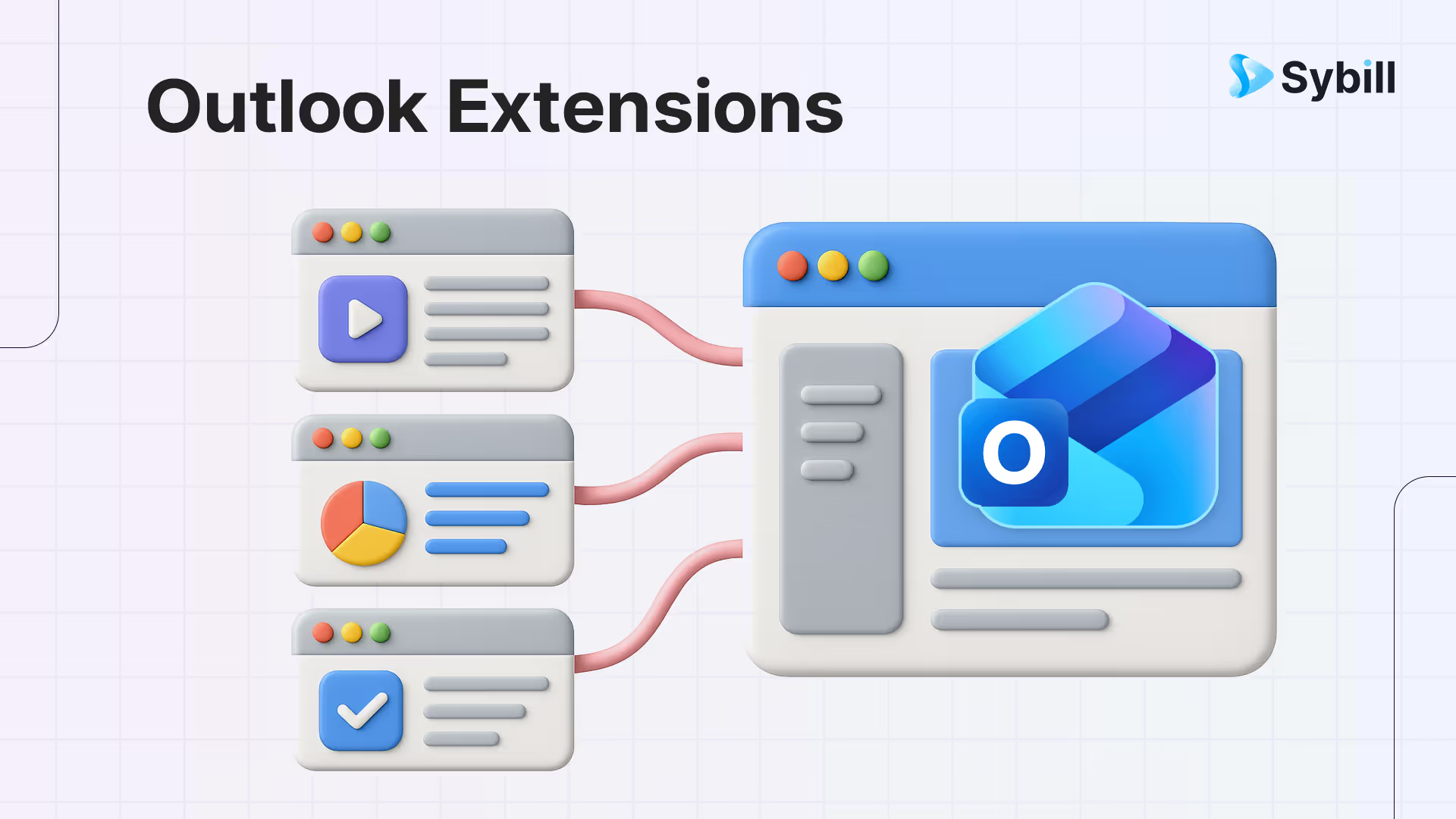
The 12 best Outlook extensions for sales professionals in 2026 are Sybill (AI-powered meeting summaries and follow-up drafting synced to Outlook), HubSpot Sales for Outlook (email tracking, templates, and CRM logging), Salesforce for Outlook (email-to-CRM sync and activity capture), Boomerang (send-later scheduling and follow-up reminders), Calendly (one-click meeting scheduling from email), DocuSign (e-signatures without leaving Outlook), LinkedIn Sales Navigator (prospect research inline), Grammarly (email quality and tone optimization), FindThatLead (email finding and verification), Evernote (note clipping and reference), Zoom for Outlook (meeting scheduling), and Clearbit Connect (lead enrichment in inbox). The most impactful Outlook extensions automate the post-email and post-meeting workflow so reps spend time selling rather than switching between tabs to log activities and draft responses.
Outlook is supposed to be your co pilot. Instead, it often feels like the airplane. And you’re building the wings as you fly. And the plane is also on Slack.
But Outlook does not have to be the bottleneck of your workflow. When you layer it with the right extensions, it turns from “email storage with a calendar problem” into a high functioning, revenue generating cockpit.
And when you give it an AI brain like Sybill, things get even wilder. Suddenly you’re working like an AE with a private support team, a built-in notetaker, a strategist whispering deal intel into your ear, and a follow up machine that never sleeps.
This is the guide for sales teams who live inside Outlook and want to stop working harder and start working smarter.
These are the 12 extensions that actually move the needle.
No fluff. No one-sentence filler.
Real impact. Real explanations. Real workflow upgrades.
Let’s get into it.
This is the big one.
The workflow transformer.
The AE superpower.
The extension that isn’t technically an extension but integrates deeply into your Outlook workflow.
Sybill is the AI assistant built for modern sales teams. It doesn’t just help with emails. It automates everything around your sales cycle.
Here’s what Sybill does to Outlook that no other tool can match:
After every call, Sybill drafts personalized follow ups based on what actually happened.
No templates.
No guessing.
No rereading transcripts.
Your post-meeting workflow becomes:
Finish call.
Open Outlook.
Your follow up is already waiting for you.
Sybill pushes meeting notes, action items, next steps and deal insights directly to Salesforce or HubSpot.
Your job becomes selling rather than documenting.
Explore this magic: Sybill Workspace.
Sybill highlights:
This turns Outlook into a sales intelligence dashboard instead of a graveyard of unread messages.
Every conversation becomes structured knowledge.
Everything becomes accessible.
Nothing gets lost.
Your prep time drops drastically.
Pairing Outlook with Sybill gives you the workflow stack elite sellers use.
You spend less time:
Typing.
Documenting.
Copying notes.
Building follow ups.
Looking for details.
And more time selling.
If you’ve ever sent a customer email before your morning coffee and then reread it later with the horror of someone discovering their old Facebook posts, Grammarly will save your life.
Grammarly does more than fix typos. It acts like the sales manager you wish sat on your shoulder, whispering things like “hey, maybe don’t say ‘per my previous email’ with this level of tonal violence" or “this sounds way more passive aggressive than you think.”
For sellers, clarity equals money. Miscommunication leads to slow deals, ghosting, mismatched expectations and the all-too-common “oh sorry we misunderstood” email that pushes the close date three weeks out.
Grammarly helps keep your outreach crisp, friendly, and readable. It ensures your messaging sounds like the best version of you, not the frazzled version racing between discovery calls and forecast updates. It also harmonizes tone, which is key when you’re balancing rapport building, authority, and consultative selling all within a handful of sentences.
If email is one of your primary selling tools, Grammarly is non-negotiable.
If you are still sending the sentence “does Tuesday at 3 pm work?” then I have news for you.
It is 2025.
We don’t have to live like this anymore.
The Calendly Outlook extension embeds your scheduling availability directly into your email so prospects can instantly book time with you without the dreaded “let me check with my team” spiral.
For sellers, booking meetings fast is everything. Speed to meeting equals speed to opportunity. And speed to opportunity equals more pipeline. I have seen deals lose momentum simply because scheduling dragged on long enough for enthusiasm to evaporate. Calendly eliminates that delay entirely.
What makes the Outlook integration especially useful is that it syncs directly with your Microsoft calendar, respects your working hours, hides private events, prevents double booking, and keeps your schedule sane without you doing mental gymnastics.
Outbound reps love it.
Inbound reps REALLY love it.
And AEs love it because it cuts out logistical friction and keeps deals moving.
Copying email threads into Salesforce manually is how joy dies.
Thankfully, the Salesforce Outlook extension syncs your emails, contacts, events, and tasks automatically. When a prospect emails you, Salesforce sees it. When you send notes, Salesforce logs them. When you schedule meetings, CRM updates itself.
It is the most important extension for keeping deal history accurate, preventing forecasting nightmares, and avoiding the dreaded “what happened on this account?” meeting.
Accurate CRM data is the backbone of any sales organization. It affects forecasting, pipeline prioritization, renewal strategies, handoffs, reporting to leadership, and compensation.
But here is the twist. Even with Outlook integration, Salesforce is still not fully automated. Reps still have to take notes, capture next steps, write summaries, and make sure deals are documented clearly.
Which is why this integration + AI is where the magic happens.
More on that when we hit Sybill’s role.
Every salesperson has performed the ritual:
Open Outlook.
See the prospect’s name.
Immediately open LinkedIn in another tab.
Try to remember if you’ve talked before.
Check where they work, what they do, who they know, who they used to work with, whether they engage with content, and whether they look like someone who responds better to short, crisp emails or slightly longer consultative ones.
Sales Navigator in Outlook removes all of that tab switching.
Inside your inbox, you get:
This is ridiculously useful for personalization at scale.
Sales is a human to human skill, and knowing who you're emailing shapes your messaging. Sales Nav gives you the context to do it right without cluttering your brain or browser.
If you’ve ever manually updated a prospect’s job title, phone number, or department, congratulations, you’ve done the form of admin work that turns salespeople into goblins.
Evercontact scans email signatures inside Outlook and automatically updates contact records for you.
For sellers, clean contact data is pure gold. It means:
This tool quietly does the work no rep wants to do but every rep needs done.
Pipeline hygiene improves.
CRM quality improves.
Speed to action improves.
And your brain doesn’t have to carry the burden of manually updating tiny fields that absolutely should not be your responsibility.
Closing deals should feel smooth. It should not feel like assembling IKEA furniture.
DocuSign inside Outlook allows you to send contracts, NDAs, pricing sheets and order forms directly without downloading, reuploading, renaming files seven times, or saying “sorry, attachment coming in a separate email.”
When your buyers are ready to sign, the extension makes it stupidly easy.
And in sales, reducing friction at the bottom of the funnel is everything. A slow contracting process can turn warm deals cold fast. Having the signature workflow inside Outlook removes extra steps at the exact stage where speed is most critical.
Fast signatures equal fast revenue.
Fast revenue makes everyone very happy.
Especially finance.
Every seller has two types of notes:
OneNote captures both.
The Outlook integration lets you click once from any email or meeting and open a corresponding note page. This prevents your thoughts from evaporating into the ether between calls.
OneNote becomes the central nervous system of your deal strategy.
Use it for:
It keeps your notetaking consistent, centralized, and alive instead of scattered across random Google Docs, sticky notes, Slack DMs, and brain cells that can no longer handle the load.
There comes a point in every rep’s career where they realize they’re handling too many deals to rely on memory. That point usually arrives after they forget to send a follow up that could have closed a deal.
Asana for Outlook lets you turn emails into tasks instantly.
This is incredibly helpful when:
Instead of starring the email and praying you remember it exists, you convert it directly into a structured task with a due date.
It also creates a personal accountability system that doesn’t rely on Outlook flags or your willpower.
Reveal enriches your contacts and company information from within your inbox.
This is especially helpful when researching accounts or building personalized outreach. It helps you:
Outbound works when relevance is high. Reveal gives you the context you need to make your messaging actually land instead of sounding like generic automation.
The Zoom Outlook extension lets you schedule, join, and manage meetings without leaving your inbox.
For sales teams who run:
This saves enormous time and eliminates the triple checking ritual of “did I add the right link to this calendar invite?”
Zoom’s Outlook extension also auto-populates meeting info so you never have to paste links manually. Your professionalism increases. Your calendar mistakes decrease. Everyone wins.
Some sales professionals don’t think in lists. They think in visual workflows.
Trello for Outlook allows you to turn emails into cards and track deal progress in columns.
Many sellers use Trello boards for:
Turning inbound emails directly into cards means nothing gets lost or buried inside Outlook.
It’s also a great tool for cross-functional collaboration during complex enterprise deals.
Here is your ideal setup:
These alone will upgrade your workflow massively.
For outbound heavy reps:
Sales Navigator
Reveal
For AE heavy roles:
DocuSign
Zoom
For multi-threaded enterprise deals:
OneNote
Trello
Asana
Mix and match until your workflow feels smooth rather than stressful.
Twelve is plenty. You do not need thirty-nine.
Choose one scheduling tool. One task tool. One CRM sync.
Extensions make Outlook easier.
AI makes Outlook powerful.
That time cost compounds quietly but massively.
Sybill eliminates that waste.
Your workflow should be proactive, not reactive.
Outlook is the heartbeat of your daily sales workflow.
It is where deals start, where updates live, where buyers respond, and where relationships grow.
With the right extensions, Outlook stops being a burden and becomes a strategic asset.
With Sybill layered on top, it becomes your silent co pilot.
The teammate who takes notes.
The analyst who finds insights.
The assistant who writes follow ups.
The operator who updates your CRM.
The strategist who surfaces risks.
You become more efficient.
Your deals move faster.
Your pipeline becomes healthier.
Your customers feel more attended to.
Your manager loves you.
Your weekends become less admin-heavy.
If you want to see your Outlook transform into a revenue engine, try Sybill here: Start with Sybill
Sales teams benefit most from Outlook extensions that streamline communication, automate follow ups and keep CRM data clean. Tools like Sybill enhance your workflow by writing follow ups, summarizing calls and updating your CRM for you. Grammarly helps polish sales emails, Calendly speeds up scheduling, Salesforce Outlook integration logs conversations automatically and LinkedIn Sales Navigator gives instant buyer insights.
Yes. Outlook extensions reduce manual tasks that slow sellers down, such as drafting emails, scheduling meetings, logging notes and updating CRM fields. Instead of jumping between five different tools, reps can work directly from their inbox. This cuts administrative time significantly and gives sellers more time to prospect, prepare for meetings and close deals. Workflow automation tools and AI create even bigger gains by removing repetitive busywork entirely.
Start by identifying your biggest bottlenecks. If you struggle with scheduling, use a tool like Calendly. If CRM hygiene is the challenge, connect Salesforce or HubSpot to Outlook. If writing follow ups or taking notes consumes your time, add an AI layer like Sybill to automate those steps. Choose extensions that cover core areas like email quality, meeting scheduling, contact enrichment and CRM sync. Aim for a clean stack of 8 to 12 tools that simplify your workflow instead of overwhelming it.