Find us at booth #83, join us for a harbor side happy hour, or catch Gorish’s talk.

Sept, 16-18 > Learn more


May 15, 2026
The best B2B sales courses combine practical methodology (MEDDPICC, SPIN, Challenger) with hands-on application and continuous reinforcement. While free sales courses online from HubSpot Academy, LinkedIn Learning, and Salesforce Trailhead provide excellent foundational knowledge, professional paid courses offer customization, live coaching, and accountability. The game-changer in 2026 is supplementing course-based learning with AI-powered conversation intelligence that provides daily coaching on actual sales calls, turning theoretical knowledge into practiced skills that show up in win rates and quota attainment.
The best sales courses for high-performing B2B sellers in 2026 combine proven methodology with practical application: Sandler Training (best for consultative selling mindset), Richardson Sales Performance (best for enterprise opportunity management), Challenger Sale Workshop (best for insight-led selling), MEDDPICC Masterclass (best for deal qualification rigor), and Force Management's Command of the Message (best for value-based messaging), with free courses from HubSpot Academy and Coursera providing solid fundamentals for earlier-career reps. The top-performing sellers supplement formal training with AI-powered reinforcement from tools like Sybill that analyze their actual sales conversations, measure methodology adoption call-by-call, and provide continuous coaching feedback that prevents skill decay between formal training sessions.
Remember that iconic scene in Kung Fu Panda where Po expects to unlock the legendary Dragon Scroll and find the ultimate secret to becoming a master warrior? He unrolls it with anticipation and finds... nothing. It's blank. Just his own reflection staring back.
The point, of course, is that there is no secret ingredient. Mastery doesn't come from a scroll. It comes from practice, dedication, and repetition until technique becomes instinct.
That's exactly how most B2B sales courses work.
You sign up for the highly-rated course promising to transform your sales game. You watch all the videos. You take the quizzes. You download the templates. You get the certificate and update your LinkedIn profile. And then... nothing changes. You're still handling objections the same way, still talking too much in discovery calls, still losing deals to competitors.
Why? Because you mistook information transfer for skill development.
Learning that MEDDPICC stands for Metrics, Economic Buyer, Decision Criteria, Decision Process, Paper Process, Identify Pain, Champion, and Competition is easy. Consistently identifying all eight elements in real conversations with CFOs who are skeptical, distracted, and testing whether you actually understand their business? That's the hard part. That's where most sales courses fail.
This guide isn't another list of "top 10 sales courses" copied from someone else's blog. It's a strategic breakdown of what actually works in sales education, which courses deliver real value versus expensive certificates, how to choose between free and paid options, and most importantly, how to make sure course knowledge translates into revenue-generating skills.
Whether you're a new rep building foundational skills, an experienced seller looking to master advanced techniques, or a sales leader trying to upskill your team, this is your complete roadmap.
Before we dive into specific courses, let's understand what separates genuinely valuable B2B sales education from glorified webinars with certificates.
Bad sales courses teach you what to do. Good sales courses teach you how to do it. Great sales courses make you practice until you can do it under pressure.
The difference?
Information-based course: "Here are the four elements of BANT: Budget, Authority, Need, Timeline. Now you know BANT!"
Skill-based course: "Here's how to uncover budget without asking 'what's your budget?' on the first call. Now roleplay this scenario where the prospect deflects. Here's feedback on what worked and what didn't. Try again with a different objection."
The first approach leaves you with knowledge you can't apply. The second builds muscle memory.
Look for B2B sales courses that include:
If it's all lectures and quizzes, you're buying information, not skills.
Some sales courses try to cover everything: prospecting, qualification, discovery, demos, objection handling, negotiation, closing, account expansion. That's 8+ distinct skill areas, each complex enough to justify its own course.
When a course tries to cover everything in 4 hours, you get shallow coverage of every topic and mastery of none.
Better approach: Choose courses that go deep on specific methodologies or skills:
You'll get more value from three deep-dive courses on specific skills than one "complete sales training" course that touches everything superficially.
Most generic sales training was built for B2C or transactional sales and then stretched to fit B2B. The frameworks don't translate well.
B2C sales course teaches: "Build rapport quickly, identify the decision-maker's pain point, position your solution's benefits, handle objections, ask for the sale."
B2B reality requires: "Navigate 8 stakeholders with competing priorities, qualify hard enough to avoid wasting 6 months on deals that won't close, build champions who sell for you internally, create business cases that justify budget reallocation, manage multi-quarter sales cycles without losing momentum."
Make sure any B2B sales course you're considering addresses:
If the course examples are all about selling to individual consumers or simple two-call closes, it won't help you navigate enterprise deals.
Here's a stat that should terrify anyone investing in sales training: the forgetting curve shows that without reinforcement, 70% of learned information disappears within 24 hours, and 90% within a week.
That expensive sales course you completed last month? Unless you're actively using the techniques daily and getting feedback, most of it's already gone.
The best courses include:
Even better: courses that include or can be supplemented with conversation intelligence tools that analyze your actual sales calls and coach you on applying the methodology in real conversations.
Want to make sure your course knowledge actually sticks? Get started with Sybill for free and turn theoretical frameworks into daily practice with AI coaching on every call.
Let's be honest about free sales courses: they're excellent for foundational knowledge and methodology exposure, but they have limitations (no personalization, minimal feedback, no accountability). That said, these free options deliver genuine value.
What it covers: Complete inbound sales methodology from identifying passive buyers to qualifying leads, connecting with prospects, exploring needs, and advising solutions.
Course structure: 22 video lessons (approximately 3 hours) plus exercises and quizzes. Certificate upon completion.
Why it's valuable for B2B: HubSpot's inbound approach matches modern B2B buying behavior where prospects research independently before engaging sales. The course teaches how to add value to buyers who are already educated rather than pitching to cold prospects.
Best for: New B2B reps, teams transitioning from outbound-only approaches, anyone selling to buyers who do extensive research.
What you'll actually learn:
Limitations: Very HubSpot-centric in examples. Lighter on advanced enterprise sales complexity. No live coaching or feedback on your application.
How to maximize value: Complete the course, then immediately apply the discovery framework on your next 3 calls. Record them (with permission), review what worked, adjust, and try again.
What it covers: Consultative B2B selling focused on solving business problems rather than pitching features.
Instructor: Jeff Bloomfield (credible sales trainer with real experience)
Course structure: 1.5 hours of video content, self-paced, quizzes throughout.
Why it's valuable for B2B: Focuses specifically on complex B2B sales where you need to understand business problems at a deep level and position solutions accordingly.
What you'll actually learn:
Limitations: Shorter format means less depth on each topic. No practice opportunities or feedback.
Cost note: LinkedIn Learning requires subscription ($30/month or $240/year), but most companies provide it to employees making it effectively free.
How to maximize value: Pause after each module and write down how you'll apply the technique in your specific sales context. Then actually do it.

What it covers: Foundational sales skills using Salesforce's framework: customer communication, research, discovery, collaborative selling, value-based selling, strategic account planning.
Course structure: Interactive learning modules (gamified), self-paced. Optional certification exam ($200).
Why it's valuable for B2B: Teaches CRM discipline alongside sales methodology. The interactive format makes dry topics more engaging.
What you'll actually learn:
Limitations: Very Salesforce-focused. If you're not in the Salesforce ecosystem, some content won't translate. Certification costs money even though learning is free.
Best for: Teams using Salesforce, reps who want recognized certification, people who learn better through interactive exercises than watching videos.
How to maximize value: Connect Trailhead lessons directly to your CRM. As you learn account planning concepts, build an actual plan for one of your strategic accounts.
What it covers: Introduction to Sandler methodology including pain-focused discovery, upfront contracts, and qualification techniques.
Course structure: Mix of articles, videos, webinars, and downloadable resources. No formal certification from free content.
Why it's valuable for B2B: Sandler is one of the most proven B2B methodologies. Free content gives you enough to understand the approach and decide if full paid training is worth investment.
What you'll actually learn:
Limitations: Free content is deliberately limited. The really valuable stuff (full methodology, practice, coaching) is behind the paid training paywall.
Best for: Teams considering Sandler training who want to preview the methodology, reps in consultative B2B roles.
How to maximize value: Pick one Sandler technique (like upfront contracts) and use it consistently for two weeks. Track what changes in your conversations and deal progression.
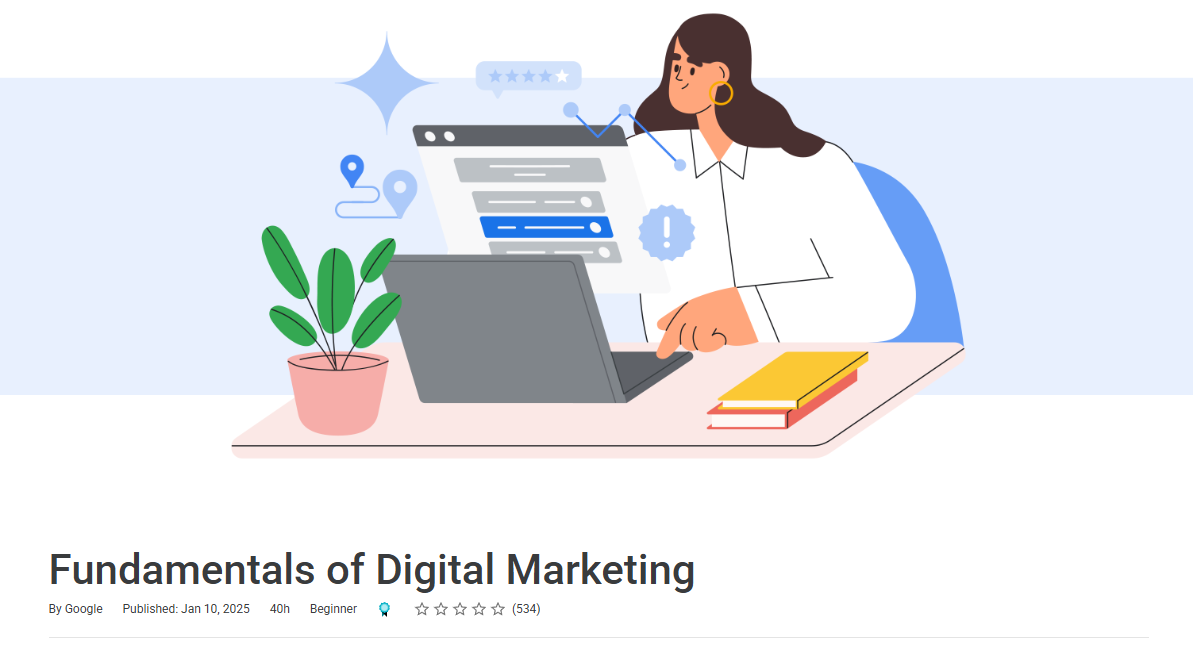
What it covers: Digital marketing fundamentals including online presence, content strategy, and reaching customers online.
Wait, this is a marketing course, not sales: True, but B2B sellers in 2026 need to understand digital buying behavior, content marketing, and how prospects research solutions. This course fills that gap.
Course structure: 26 modules, self-paced, certification upon completion.
Why it's valuable for B2B sellers:
Limitations: Not a sales course. You'll need to translate marketing concepts into sales application.
Best for: Sales reps who want to understand modern buyer behavior, teams doing account-based selling where content plays a role.
Free courses get you started, but when you need deep methodology mastery, personalized coaching, or recognized credentials, paid courses deliver ROI that justifies the investment.
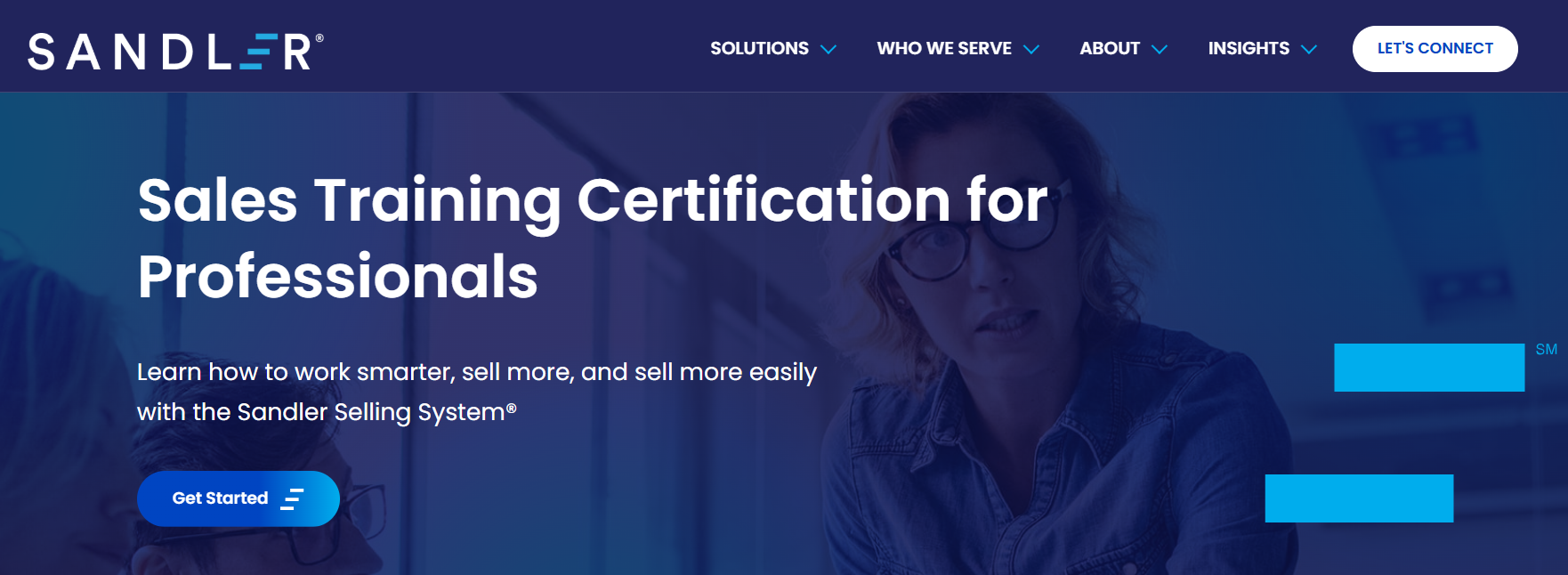
Investment: $1,500-$3,000 per participant for core programs, with ongoing coaching available at additional cost.
What you get: The complete Sandler selling system including pain funnel, upfront contracts, negative reverse selling, and qualification frameworks. Typically delivered through weekly reinforcement sessions over 6-12 months.
Why it's worth paying for: Weekly reinforcement model means learning sticks. The methodology is proven across thousands of B2B teams. Local trainers provide personalized coaching.
Course structure:
Best for: B2B teams selling consultative solutions, companies wanting a common sales language across the organization, sales cycles 3+ months.
Expected outcomes: Teams typically see 15-25% improvement in qualification quality, shorter sales cycles (reps qualify out bad fits faster), and higher win rates on well-qualified opportunities.
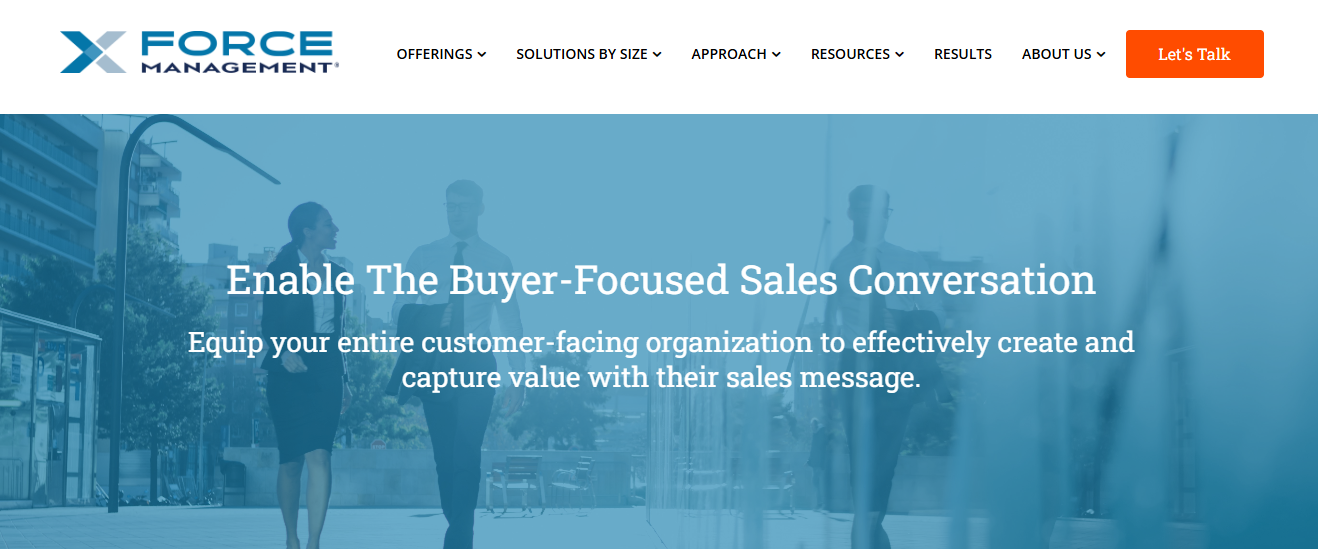
Investment: Enterprise pricing (typically $75,000-$150,000 for team-wide implementation).
What you get: Complete framework for value-based B2B selling including message positioning, opportunity qualification, and strategic account planning. Built specifically for complex enterprise sales.
Why it's worth paying for: Goes beyond sales methodology to teach business acumen. Reps learn to have CFO-level conversations about business value, not feature discussions.
Course structure:
Best for: Enterprise B2B teams, seven-figure average deal sizes, strategic account selling.
Expected outcomes: Companies typically report 20-30% increase in average deal size (better value articulation), improved executive access, and stronger competitive differentiation.
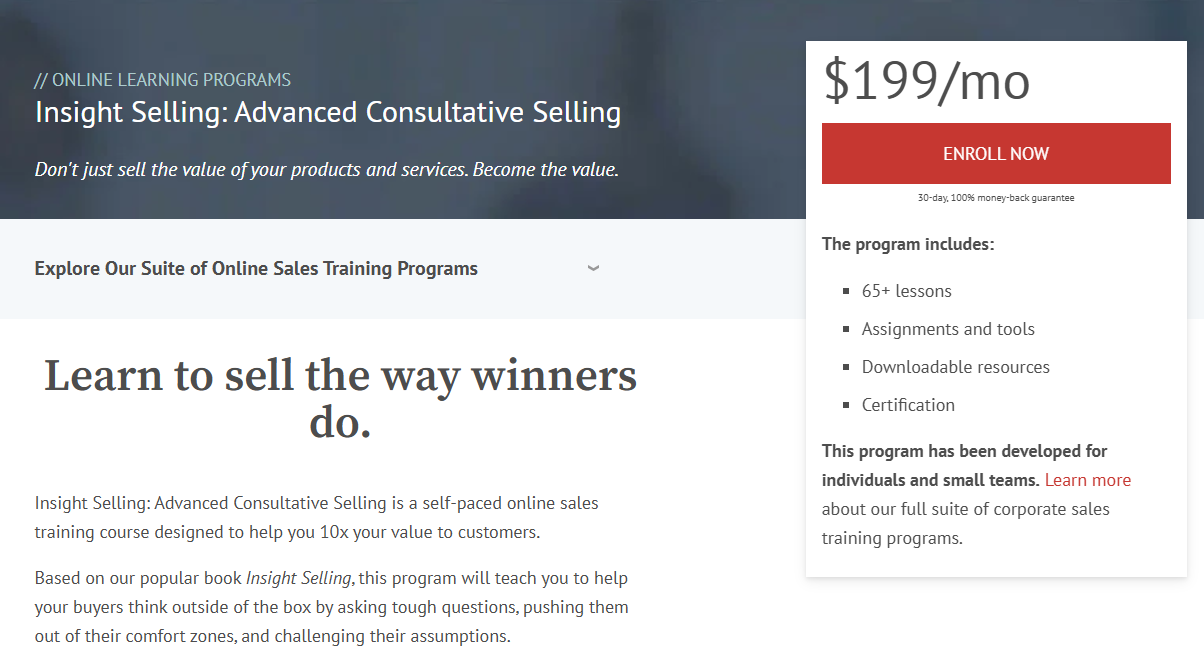
Investment: Varies by program; typically $2,000-$5,000 per participant.
What you get: Comprehensive B2B sales training covering prospecting, discovery, insight development, value creation, and negotiation. Strong focus on bringing insights that teach buyers something new.
Why it's worth paying for: Practical and immediately applicable. Mix of live instruction, digital reinforcement, and application tools.
Course structure:
Best for: Teams that need comprehensive B2B training rather than one specialized methodology, mid-market and enterprise sellers.
Expected outcomes: Teams typically see improved discovery quality (deeper pain identification), better differentiation (insight-based rather than feature-based), and higher conversion rates from proposal to close.
Investment: Enterprise pricing; designed for larger organizations.
What you get: Complete Challenger methodology teaching reps to teach buyers something new (commercial insights), tailor the message to stakeholders, and take control of the sale.
Why it's worth paying for: Based on research of 6,000+ B2B sellers. Proven framework for creating urgency when buyers are comfortable with status quo.
Course structure:
Best for: Competitive B2B markets, selling transformative solutions where status quo is a major competitor, teams that need to create urgency.
Expected outcomes: Companies typically report 15-20% improvement in win rates (especially in competitive situations), shortened sales cycles (less "thinking about it" limbo), and larger deal sizes (better urgency creation).
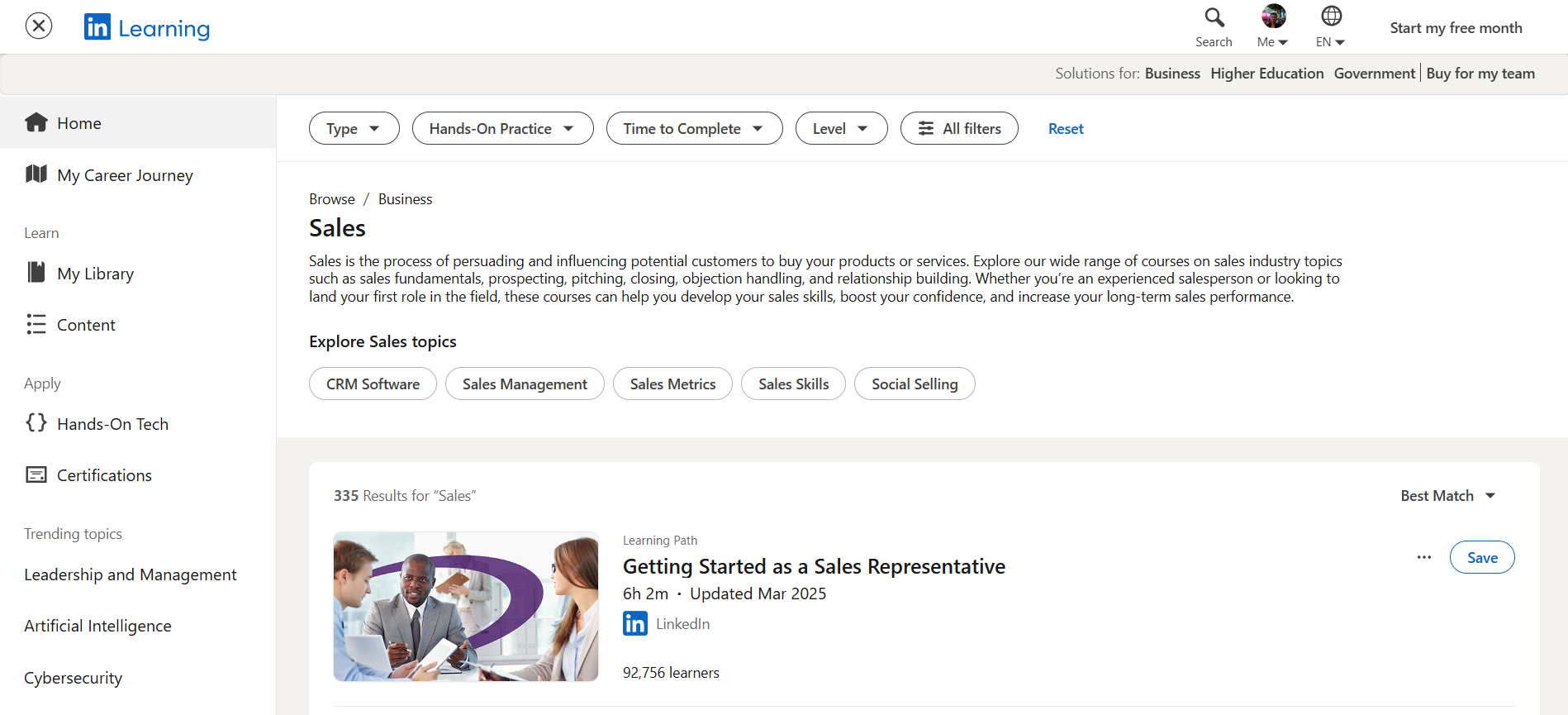
Investment: $30/month or $240/year for individual subscription. Enterprise licenses available.
What you get: Access to hundreds of sales courses covering every aspect of B2B selling, taught by industry practitioners.
Why it's worth paying for: Flexibility to learn exactly what you need when you need it. Want negotiation skills this month? Advanced account planning next month? LinkedIn Learning lets you customize your learning path.
Course structure:
Best for: Self-directed learners, teams that want to build custom learning paths, ongoing skill development rather than one-time training.
Expected outcomes: Value depends entirely on application. Reps who complete courses and immediately apply techniques see measurable improvement. Those who just collect certificates see none.
Not all sales certifications carry equal weight. Here are the credentials that hiring managers recognize and buyers respect.
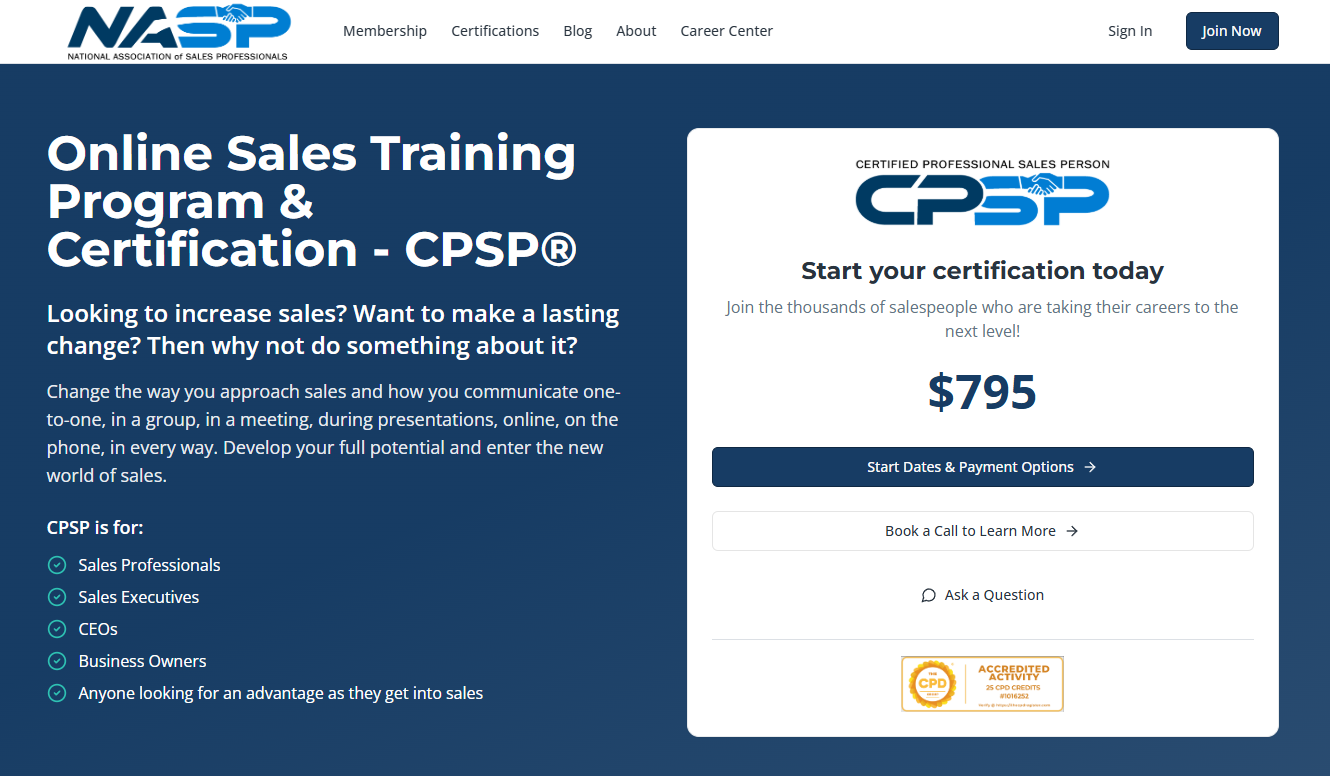
What it proves: Comprehensive knowledge of professional selling including prospecting, qualifying, presenting, negotiating, and closing.
Requirements:
Investment: Approximately $895 for 6-week course plus exam fees.
Career value: Recognized across industries. Demonstrates commitment to professional development. Particularly valuable for early-career sellers building credibility.
Best for: Sales professionals wanting industry-recognized credential, those pursuing leadership roles, anyone who needs to differentiate in competitive job markets.
What it proves: Mastery of customer-focused selling using Salesforce ecosystem.
Requirements:
Investment: Trailhead learning is free; exam is $200.
Career value: Valuable in Salesforce-heavy organizations. Shows technical proficiency alongside sales skills.
Best for: Reps in companies using Salesforce, those wanting to demonstrate CRM fluency, early-career professionals building resume.
What it proves: Mastery of SPIN questioning framework for consultative B2B selling.
Requirements:
Investment: Contact for pricing (typically $2,000-$3,000).
Career value: SPIN is one of the most respected sales methodologies. Certification shows you can conduct discovery at elite level.
Best for: Experienced B2B sellers, those in complex consultative sales, reps who want deep expertise in one proven methodology.
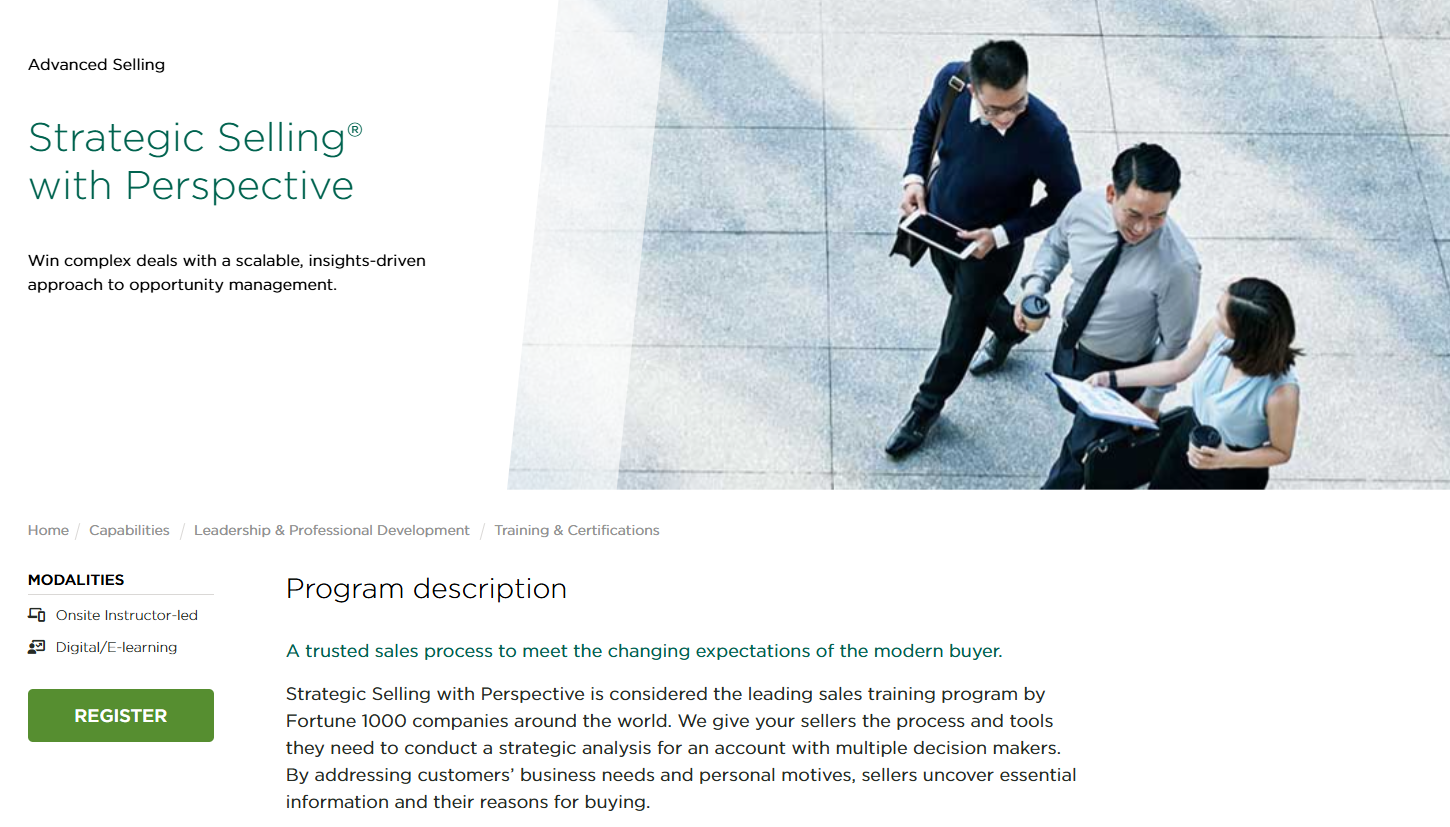
What it proves: Ability to navigate complex B2B sales with multiple stakeholders using strategic account planning.
Requirements:
Investment: Contact for enterprise pricing.
Career value: Well-known in B2B sales. Demonstrates ability to manage strategic accounts and complex sales processes.
Best for: Enterprise sellers, strategic account managers, sales leaders.
Make your certifications count by applying them in real conversations. Try Sybill for free and get AI coaching that ensures you're actually using SPIN, MEDDPICC, and other frameworks consistently.
With hundreds of sales courses available, here's how to pick the ones that will actually move your career or team performance forward.
Complete beginners (0-1 year in B2B sales):
Intermediate sellers (1-3 years):
Advanced sellers (3+ years):
Taking advanced courses too early wastes money because you lack context to apply the techniques. Taking beginner courses when you're experienced wastes time reviewing what you already know.
Don't just take courses because they're highly rated. Take courses that address your actual weaknesses.
How to diagnose gaps:
Then choose courses that target those specific gaps:
Targeted learning delivers much higher ROI than generic "complete sales training."
Video-based learners: LinkedIn Learning, HubSpot Academy, Udemy Interactive/gamified learners: Salesforce Trailhead, Mindtickle Live instruction preference: Sandler, Force Management, RAIN Group workshops Reading/self-paced: Books + workbooks (often overlooked but highly effective) Practice-based: Courses with extensive role-play and simulation components
If you've never completed a self-paced online course, don't buy expensive ones assuming you'll suddenly develop discipline. Start with free options to test whether the format works for you.
Be honest about how much time you'll actually dedicate:
5-10 hours total available: Short focused courses on specific skills (LinkedIn Learning modules, HubSpot individual courses)
20-40 hours available: Comprehensive methodology courses (SPIN Selling, Challenger, full HubSpot certifications)
50+ hours + ongoing commitment: Professional training programs with weekly reinforcement (Sandler, Force Management)
Career-long learning: Certification programs with continuing education requirements (CPSP, ongoing professional development)
Better to complete a shorter course and apply it than to start a comprehensive program and abandon it halfway through.
For paid courses, calculate expected return:
Cost of course: $2,000 Your average deal size: $50,000 Your current close rate: 20% (1 in 5 qualified deals)
If the course improves your close rate by just 5 percentage points (from 20% to 25%), that's 1 additional deal for every 20 opportunities. If you work 10 opportunities per quarter, that's 2 extra deals per year = $100,000 additional revenue.
ROI on that $2,000 course: 50x
Even a modest improvement (2-3% win rate increase, 10% shorter sales cycle, 5% larger average deal size) justifies significant course investment.
The risk isn't spending money on training. The risk is not improving fast enough and leaving hundreds of thousands in lost deals on the table.
Here's the uncomfortable truth about sales courses: they've always had a massive application gap. You learn techniques in the course, but applying them consistently in real conversations? That's where most people fail.
Until recently, this gap was unavoidable. Managers couldn't review every call to coach technique application. Reps had to self-assess whether they were using the methodology correctly (spoiler: most people overestimate their competence).
AI-powered conversation intelligence changes everything by turning every sales call into a coaching opportunity.
You complete a MEDDPICC course that teaches you to identify the Economic Buyer, uncover Decision Process, and build Champions. Great knowledge. But three weeks later on a discovery call, you're in conversation flow and forget to ask about the decision process.
With conversation intelligence:
This is continuous reinforcement that courses alone can't provide.
Generic sales courses teach everyone the same content. AI coaching identifies your individual gaps and provides personalized development focus.
Example: After completing a SPIN Selling course, conversation intelligence analyzes your calls and determines:
Your personalized coaching focus: "This week, practice asking 2-3 Implication questions after identifying a problem before moving to Need-Payoff. Example from your top performer..."
This level of personalization is impossible in traditional courses but automatic with AI analysis.
How do you know if that $3,000 sales course was worth it? Most companies never measure because it's too hard.
With conversation intelligence, measurement is automatic:
Before SPIN Selling course:
After course + AI reinforcement:
Business impact:
Now you have objective evidence that the course investment drove measurable improvement in both behavior and results.
The hardest part of any sales course is translating theoretical knowledge into actual technique application under pressure.
AI bridges this gap by:
It's like having a personal coach who listens to every call and provides immediate feedback, something that would cost hundreds of thousands in human coaching but happens automatically with AI.
For complete beginners, HubSpot Academy's Inbound Sales Certification is the best starting point because it's free, professionally produced, covers the complete modern B2B sales process, and provides a recognized certificate upon completion. The course teaches how to identify and connect with prospects, conduct discovery, present solutions, and manage the sales process in a way that aligns with how modern B2B buyers actually research and make decisions. After completing HubSpot, beginners should supplement with LinkedIn Learning courses on specific skills like objection handling or negotiation, then practice techniques on actual calls while getting manager feedback. The key is applying immediately rather than taking course after course without implementation.
Free sales courses online from HubSpot Academy, LinkedIn Learning, and Salesforce Trailhead provide excellent foundational knowledge, methodology exposure, and recognized certificates that are legitimately valuable for early-career sellers. However, paid professional sales training offers critical advantages that free courses can't match: personalization to your specific industry and challenges, live coaching and feedback on your technique application, accountability structures that ensure you actually complete and apply the learning, and ongoing reinforcement systems that prevent the forgetting curve from erasing everything you learned. The smart approach is using free courses for baseline education and methodology awareness, then investing in paid training when you need deep expertise, live coaching, or team-wide implementation with continuous reinforcement that drives measurable behavior change.
B2B sales course duration varies dramatically by program type. Short focused courses on platforms like LinkedIn Learning or HubSpot Academy typically take 2-5 hours and can be completed in a day or spread over a week. Comprehensive certification programs like Salesforce Sales Representative or SPIN Selling require 20-40 hours over several weeks. Professional training programs like Sandler or Force Management are structured as 6-12 month ongoing learning systems with weekly reinforcement rather than one-time completion. The more important question isn't how long the course takes, but how long until you see results from applying the techniques, which typically requires 30-60 days of deliberate practice after completing the course content, ideally with conversation intelligence providing daily coaching to ensure learned behaviors become permanent habits.