Find us at booth #83, join us for a harbor side happy hour, or catch Gorish’s talk.

Sept, 16-18 > Learn more


Richa Sharma

October 1, 2025
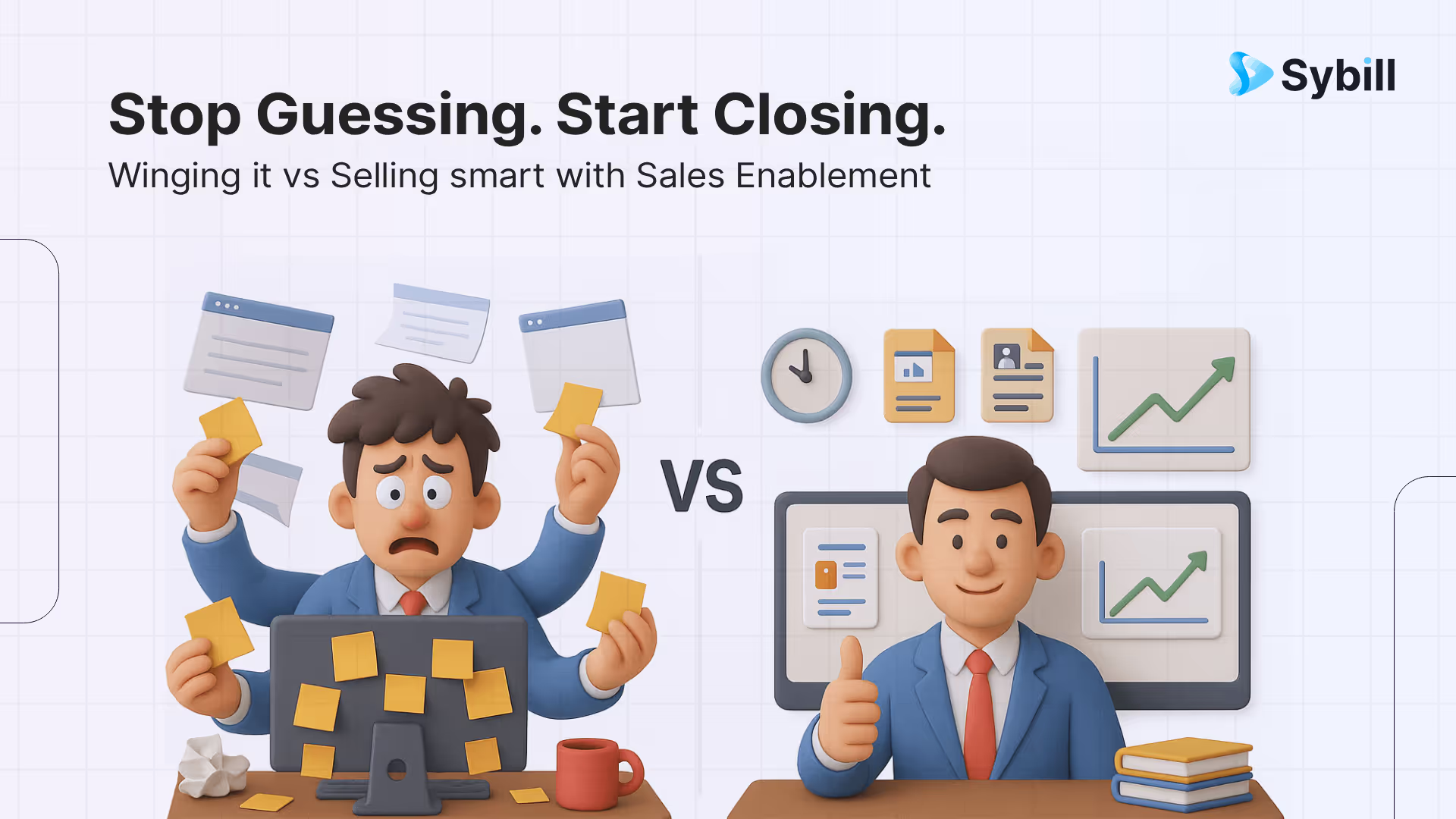
Some days, sales feel like running a marathon in Crocs. Especially when juggling 12 tabs, scrolling through email chains for that one case study, and trying to stay cool while your prospect asks for a pricing sheet you haven’t seen since onboarding. Meanwhile, your sales pipeline is ignored in the background.
It’s not that your team isn’t skilled; the whole system is probably messy. Content is scattered, processes are inconsistent, and sales reps are forced to improvise more than they’d like.
Sales enablement software changes that. It’s not a flashy tool that looks great in a demo but collects dust a week later. The real-deal system keeps your sales reps sharp, synced, and focused. What to say? Sorted. What to send? Ready. What’s working? You will know.
This blog explains why sales enablement software is no longer optional, how to evaluate the best ones, and what metrics matter once they’re live. If your team is constantly stuck in “where’s that deck again?” mode, this will help.
.avif)
Ever had a prospect ask for a case study mid-call, and you’re scrambling to find it while trying to sound confident? Or when you're unsure what pricing deck to send, you stall and say, “I’ll get back to you on that”? That’s exactly what sales enablement software fixes.
It’s a tool that gives your sales team instant access to everything they need, right when they need it. No more last-minute panics, no more second-guessing the next move. It keeps your team prepped, sharp, and focused on closing, not chasing files.
Sales enablement software equips your reps with the right content, real-time data, and actionable insights exactly when they need them. It tells them:
It turns guesswork into strategy. The core features you’ll find in top sales enablement software include:
In short, it’s the ultimate guide for your sales process. It keeps your team on course, avoids wasted opportunities, and helps them close deals faster.
At its core, sales enablement stands on three essentials every sales team needs to win. Here’s what they look like:
Content helps reps know what to send, when, and to whom. Effective sales enablement software provides reps with easy access to sales decks, case studies, and templates, all organized and tailored to specific buyer stages. No more detours. Just precise moves.
What if a buyer throws a tough objection? What if a rep’s call goes off-course? That’s where training and coaching come in. Sales enablement platforms provide roleplays, AI-generated feedback, and recordings.
You wouldn’t keep taking a longer route if you knew a shortcut existed. Analytics within top sales enablement software reveal which content is effective, which reps are performing well, and where deals tend to stall. It’s not just about tracking but also about continuously improving the course of action.
Buyers show up knowing what they want, competitors are everywhere, and your reps are expected to close faster than ever. Without the right system in place, they are left guessing. That’s where sales enablement software changes the game.
.avif)
Here’s how sales enablement software helps your team:
Sales calls don’t wait. One minute you’re walking through the product, the next your prospect asks for a specific case study, wants to compare pricing tiers, and throws in a curveball objection—all in one sentence.
Good reps don’t just wing it. They win because they’re ready. Sales enablement software makes that happen.
Every deal’s different. What worked last week for a SaaS buyer may not land the same with a retail lead today. That’s where most reps lose time while guessing what to send, testing random content, or defaulting to that one deck that “usually works.”
Sales enablement software cuts that noise. It reads the room for you.
Sales enablement software gives new hires a clear path from day one. All the pitch materials, playbooks, objection-handling guides, and call recordings are in one place and easy to access.
Instead of spending weeks shadowing or asking around, new hires can start learning on the job with actual deal context. They ramp faster, feel confident sooner, and contribute to the pipeline without dragging their feet through a messy onboarding process.
It’s like giving them a cheat sheet on how your best reps work, right from the start.
Most sales managers spend half their day answering the same questions on repeat. Where’s the latest deck? What should I send next? How do I handle this objection?
Sales enablement software cuts out the noise. It handles the repetitive stuff by giving reps on-demand access to the necessary tools and answers. That means managers should stop being at the help desk and start being actual coaches.
Sales shouldn’t feel like putting out fires all day. But without a clear system, reps chase files, second-guess their next move, and wing half the conversation.
Sales enablement software brings order to the mess. Reps know exactly what stage the deal is in, what content to use, and what action to take next. Everything they need is in one place, ready when they are.
Instead of reacting to problems, they follow a clear path. There is no mental clutter, no digging through old email threads, just a clean workflow that lets them focus on what moves deals forward.
It turns the daily grind into a repeatable system that works.
Not every sales enablement tool is built the same. Some look great in the demo but end up collecting dust because no one wants to use them.
If you're choosing a platform, here’s what matters:
It should connect seamlessly with your existing CRM. There will be no double data entry or syncing issues; everything will be automatically in one place.
Your team won't use it if it’s not simple and intuitive. The best tools feel like they’re built for busy reps, not just for managers and dashboards.
Your sales process isn’t one-size-fits-all, and your software shouldn’t be, either. Look for flexible workflows, content libraries, and reports you can customize to your style.
Onboarding should be quick, easy, and available when needed. It's a bonus if the platform offers in-app tips, video tutorials, and fast human support.
Choose a tool that gives you practical, actionable insights, not vanity metrics. You should know what content works, how fast reps ramp up, and where deals get stuck.
You wouldn’t stick with a tool that slows you down or leaves your team guessing. The same is true with sales enablement. If it’s not helping your reps close faster, stay organized, and win more deals, something’s off. The real question is: How do you know it’s working?

That’s why evaluating sales enablement software isn’t a one-time task but something you should review regularly. Here’s how to measure its performance in a way that’s useful for your team:
Uploading a lot of content to your platform is not enough. You must also verify whether representatives actively utilize the materials and whether buyers interact with them.
If certain content isn’t getting touched, it’s either hard to find, irrelevant, or useless. Tweak accordingly.
A practical sales enablement software evaluation should track how quickly new representatives progress from onboarding to achieving their quota. The faster they are confident and closing, the better your system’s working.
If ramp-up times are dragging, check for confusing content, outdated training, or scattered workflows.
One of the clearest signs of effective sales enablement software is smoother deal progression. Track your win rates overall and by stage to see where enablement tools are making a difference.
Use this to spot friction points and adjust enablement strategies.
If your reps are wasting hours hunting for resources or building decks from scratch, your enablement system isn’t doing its job.
When reps can focus more on actual selling, you’ll feel it in your pipeline velocity.
Good sales enablement software helps your top reps and lifts the entire team. Track how your mid-level and struggling reps improve after using the system’s training, coaching, and content resources.
Look for patterns. If performance gaps are closing, you’re on the right track.
Think of this as checking your progress after every deal. Did you handle objections effectively? Did you make better time? Did you provide a smooth sales cycle experience to your prospect? Evaluating sales enablement software should give you those same answers about your sales process.
A regular check-in on these metrics ensures your system is helping your reps sell smarter, not just adding noise.
There’s no one-size-fits-all when it comes to sales enablement software. The best sales enablement platform depends on your team size, sales process, and how it improves the UX for your reps and buyers. That said, here are some of the top sales enablement software options worth checking out:
It is perfect for organizing, delivering, and tracking content while offering training and real-time buyer engagement insights. It is for sales teams that want everything in one clean, modern interface.
Showpad makes it easy for your sales and marketing teams to stay in sync. The interface is clean, the content is easy to manage, and representatives can quickly find what they need without having to dig through folders.
It’s built for teams that want a strong alignment between what marketing creates and what sales uses. If you’ve ever had a rep say, “I didn’t know we had that deck,” this tool helps fix that.
Bonus points for its training features, which help new reps get up to speed while staying on the same platform.
Seismic is built for scale. This platform is for you if you're running a large sales organization and need everything from content automation to deep analytics.
It’s powerful without being overwhelming. Reps get personalized content suggestions based on deal context, while managers can track what’s working across the team in real time.
Mindtickle is all about sales readiness. This platform delivers if your team needs serious onboarding, coaching, and consistent rep performance support.
It focuses less on flashy content libraries and more on ensuring your reps know what to do and how to do it. Think structured training paths, skill assessments, and honest feedback based on real calls.
It’s especially useful for teams that want to ask more than “Did they watch the training?” and instead ask, “Did they get better because of it?”
Pro tip: Platforms like Sybill.ai offer the best results when combined with sales enablement software. They help enhance sales reps' performance by providing AI-driven meeting summaries, personalized follow-up emails, and automated CRM updates.
Your sales team is already chasing targets, handling objections, dealing with ghosted prospects, and trying to close deals faster than ever. They don’t need another tool that slows them down or adds more chaos.
Sales enablement software isn’t just a nice-to-have. It gives your team structure, speed, and clarity. It ensures that sales reps know what to say, what to send, and when to take action. It helps new hires hit the ground running and frees up managers to focus on coaching instead of putting out fires.
It’s not about adding more software. It’s about choosing the right system that fits your workflow, gets used every day, and helps your team close smarter.
If selling feels messy and reactive right now, it’s probably because the system is broken. Sales enablement software fixes that. It’s the cheat code your team has been missing.