Find us at booth #83, join us for a harbor side happy hour, or catch Gorish’s talk.

Sept, 16-18 > Learn more

%20(1).avif)
Mamta Tainwala

March 31, 2026
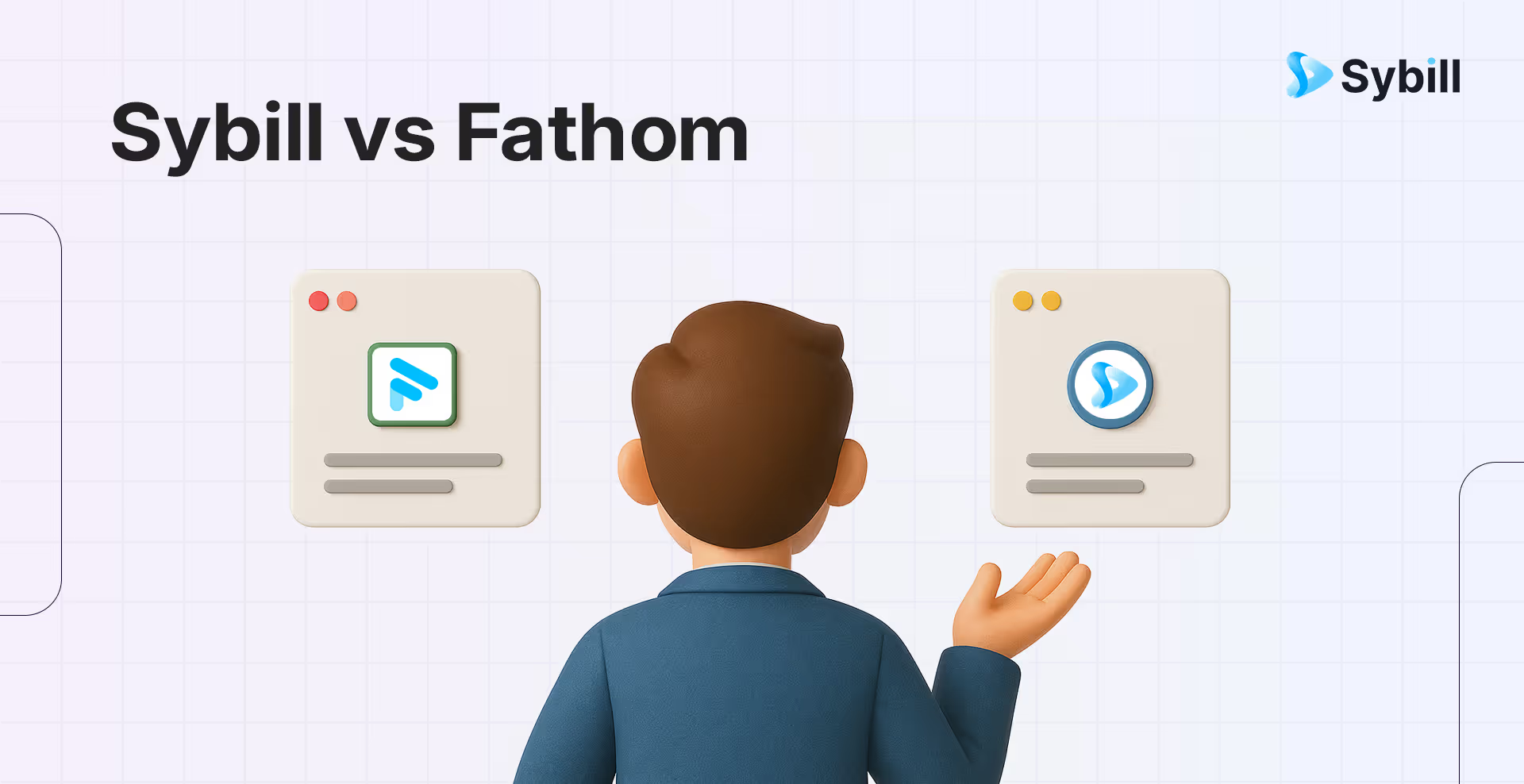
Most sellers do not lose hours in meetings. They lose hours after meetings. Picture a Tuesday discovery that ends at 10:27 a.m. The rep has a clean recording, a neat summary, and a blinking cursor in Gmail. Now the real work starts: drafting a follow up that sounds human, updating custom fields, wrangling a mutual action plan, and logging tasks where managers will actually see them. Fathom shines at the first part. It records, highlights, and organizes what happened. Sybill takes a more opinionated view of what sales needs: capture is table stakes, execution wins the quarter. So it prepares reps, writes the first draft of the follow up, updates the CRM, and assembles the collateral buyers asked for, all with minimal toggling. That feels small in the moment and very large by Friday afternoon.
Sybill is an AI sales assistant that prepares reps with pre-meeting briefs, captures call context, drafts personalized follow-up emails, autofills CRM fields including custom properties, and assembles buyer-ready assets like mutual action plans, designed to advance deals with minimal manual effort after every call. Fathom is a polished AI notetaker that records meetings, generates searchable notes and highlight reels, and helps teams stay aligned through clean summaries and shareable clips across the organization. Choose Fathom if your primary need is accurate recordings and searchable notes for general meetings; choose Sybill if your goal is helping account executives advance deals with automated follow-ups, clean CRM data, and evidence-backed pipeline intelligence.
If your primary need is accurate recordings and searchable notes for general meetings, Fathom is a solid fit. If your goal is to help account executives advance deals with less manual effort, Sybill behaves like an AI sales assistant that preps, follows through, and keeps data clean without the Friday ping.
Sellers get a rhythm that nudges the good behaviors into default behaviors.
A small anecdote from a mid-market team: two weeks after turning on CRM autofill, pipeline reviews started referencing fields that used to be dusty, like decision process and next step dates. Nothing changed about comp or coaching. The only change was that the system wrote the first draft of the truth and reps edited instead of inventing it at 6:40 p.m. That is what “assistant” looks like in real life.
Fathom is excellent when the job is to remember what happened. You get crisp recordings, searchable notes, and highlight reels that help teams stay aligned. If your org is cross-functional with lots of internal meetings, that is a win. For revenue teams, the gap appears between “we said X” and “we did X.” Recordings do not book next steps, update fields, or assemble buyer-ready assets on their own. That is the handoff where Sybill keeps going.
Run this as a bake off. Pick one early-stage and one late-stage opportunity. Turn on pre-meeting briefs, let AI follow ups handle the first draft of your emails, and watch CRM autofill keep the pipeline current without a Slack nudge. On Friday, do not count transcripts. Count time to next step, number of clean fields, and how many reps closed their laptop before 6 p.m. The deltas will be obvious.
Leaders always ask, “What will this cost and how fast will it matter?” Sybill’s pricing is public and starts at a lower entry point than most revenue platforms, with an Essentials tier and a Business tier that adds CRM autofill and advanced deal intelligence. Teams usually start small, validate the time savings, then scale. If you only need notes across the company, a note taker can be cheaper. If sales velocity is the metric, the hours returned by automation tend to repay the line item quickly.
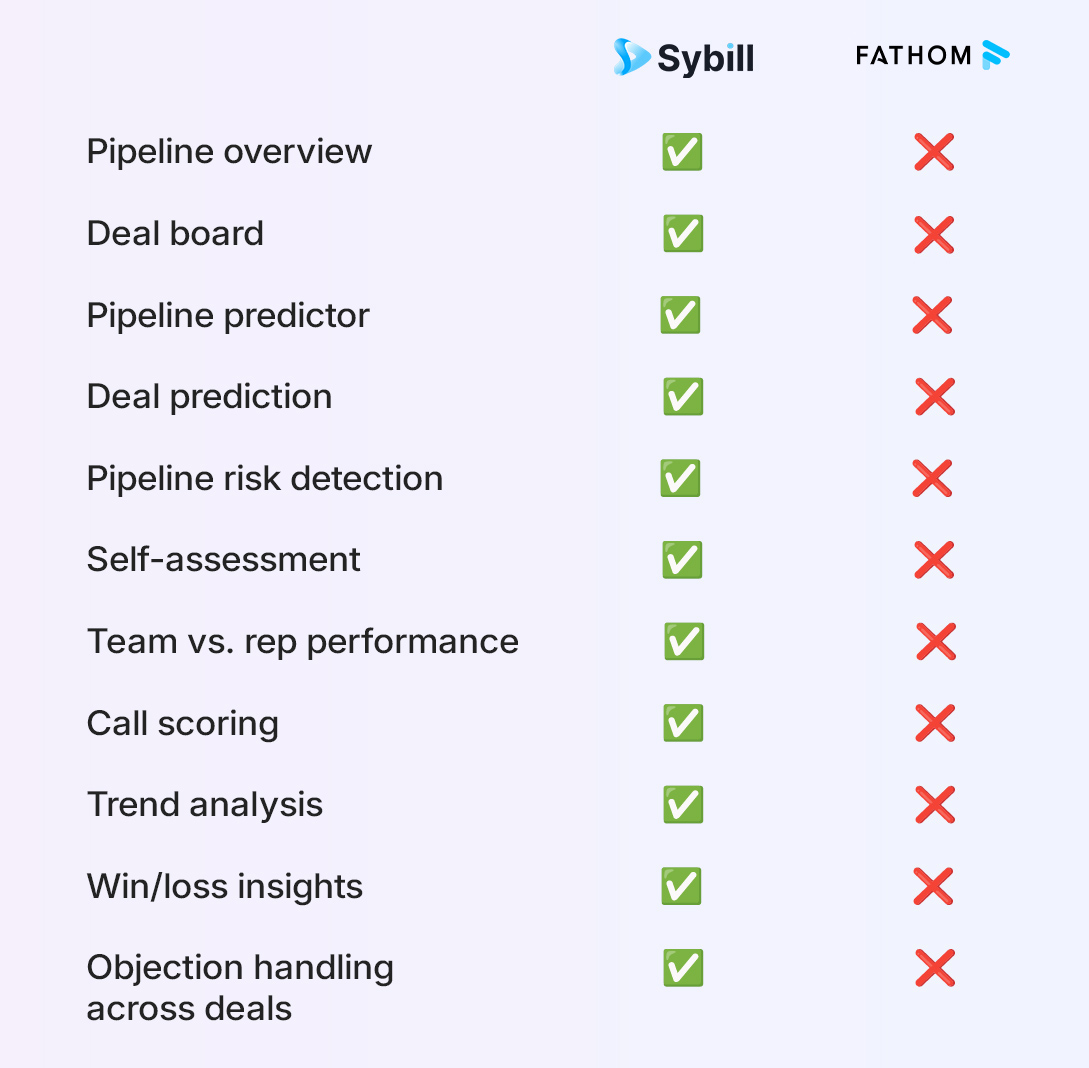
For most sales teams, yes. Both record and summarize calls, but Sybill continues into the work that moves deals: drafting emails, updating CRM fields, qualification, and creating buyer-ready assets. Fathom focuses on capture and notes.
It can. CRM autofill is designed to populate custom properties and common frameworks, and recent updates focused on accuracy and setup speed so entries read like a human wrote them.
Most teams feel it in the first week because the product removes manual steps immediately. Try briefs before calls, let the follow up draft itself, and watch your CRM stay current without nags. The difference shows up as faster next steps and cleaner reviews.