Find us at booth #83, join us for a harbor side happy hour, or catch Gorish’s talk.

Sept, 16-18 > Learn more

%20(1).avif)
Mamta Tainwala

March 30, 2026
.avif)
Welcome to the Sales Club.
The first rule of conversation intelligence? You don’t talk about admin tasks - you automate them.
Gong might be the heavyweight champ, the legacy name that’s spent years in the ring. But in 2025, sales teams don’t need a data colossus in the corner; they need speed, precision, and AI that actually does the work.
That’s where the new contenders step in: Sybill, Granola, Lindy, Outdoo, and Outreach. Each is lighter, faster, and built for today’s sales game, where deals move in Slack threads, follow-ups write themselves, and coaching happens in real time, not a week later. I KNOW!
The top 5 Gong alternatives for modern sellers in 2025 are: Sybill (best for AEs who want AI that moves deals forward — automated follow-ups, CRM autofill, and a deal workspace; from $19/user/month), Granola (bot-free AI notepad for Mac/iPhone teams that value privacy and zero-friction adoption), Lindy (programmable AI agent platform for building custom sales automations across your full stack), Outdoo (formerly MeetRecord — combines AI roleplay and coaching with conversation intelligence for enablement-focused teams), and Outreach/Kaia (best for enterprise orgs already on Outreach who want CI embedded in their engagement and forecasting suite). Each alternative addresses a different gap: Sybill replaces post-call admin work, Granola eliminates meeting bot friction, Lindy enables no-code workflow automation, Outdoo adds practice-based coaching, and Outreach/Kaia consolidates CI into an existing engagement platform.
These aren’t knock-offs; they’re the next generation of CI. Tools that win deal fights before they go to round two.
Below is the definitive buyer’s guide to the five you asked for, with who they’re for, why they’re different, and how to run a clean 30-day bake-off.
What it is: Sybill positions itself as an AI sales assistant that converts conversations into actual work done. Talk about drafting follow-up emails, autofilling CRM fields, and surfacing deal insights so reps sell instead of administrate. The newer sales workspace pattern collapses notes, recaps, tasks, and deal context so you are prepared for the next call in seconds, all into one place.

Reps have also found it to be very useful in self-coaching after every interaction with a prospect.
Why it’s different:
When it wins vs. Gong:
If you want to use AI to get ahead of your peers & achieve more without having to go through the grind or inaccurate insights, then Sybill’s AI it is. Legacy tools are probably still working on their R&D while the speed and accuracy of Sybill’s AI & insights are unmatched.
And if your pain is post-call time sink and CRM hygiene, not “more analytics”. Sybill’s value is measured in minutes saved per call and cleaner pipeline, aka frontline first.
Fit: Every team (even Enterprises) that want to empower their seller to close more by doing less. That said, SMBs might find the pricing a little on the expensive side.
Trade-offs: Leadership that wants a heavy “all-under-one data lake” may need a little something extra.
Try this first: Connect Zoom + CRM, run 10 calls, compare time-to-follow-up and number of CRM fields auto-updated versus baseline.
What it is: A Mac & iPhone AI notepad that turns your notes/transcript into structured, shareable summaries, without a meeting bot joining. It’s designed for teams that value privacy, adoption, and speed over heavy recording.
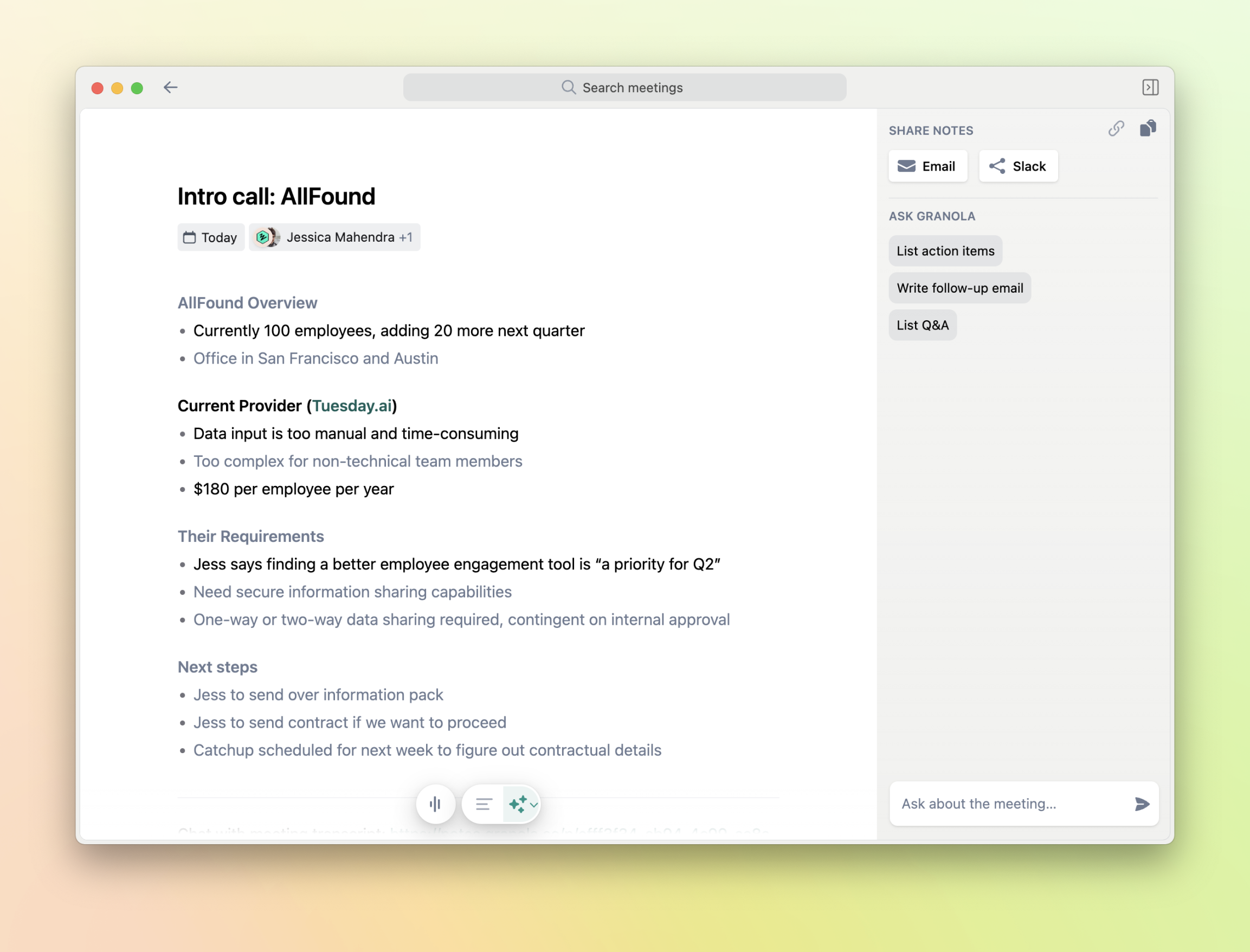
What’s genuinely new-age:
Fit: Perfect for SMB/exec teams that want a zero-friction path to consistent notes and to-dos, especially in Apple-native orgs.
Trade-offs: You won’t get speaker-level analytics and tracker dashboards associated with full CI stacks.
Try this first: Roll to a leadership pod for two weeks; measure meeting recap adoption and action-item completion versus your current capture method.
What it is: Lindy is a no-code AI agent platform for sales that can build lead lists from 200+ sources, run personalized outreach, coach, and keep CRM up to date.

Why it works:
Fit: Mid-market teams that need scale without more headcount and are ready to wire processes (MEDDICC, handoffs, SLAs) into agents.
Trade-offs: It’s broader than CI; the payoff appears when you embrace automation as the product, not just meeting notes.
Try this first: Stand up a narrow flow (e.g., “inbound demo → meeting → follow-up → opp fields”) and audit lead time to first email + CRM completeness.
What it is: A Revenue AI platform focused on AI sales roleplays, automated coaching, and deal guidance with CI still in the stack.

What’s special:
Fit: Teams that take enablement seriously and want a practice loop built into CI. Great for onboarding or when moving upmarket with new talk tracks.
Trade-offs: Fresh brand (you’ll have to educate stakeholders) and pricing via sales.
Try this first: Run three objection roleplays per rep, then inspect the next five live calls for improvement in questions asked and next-step clarity.
What it is: If you’re already on Outreach for sequences, Kaia embeds CI in the same platform: real-time transcription, content cards (battlecards/FAQs), and auto-captured action items along with forecasting & pipeline management (Commit) a click away.
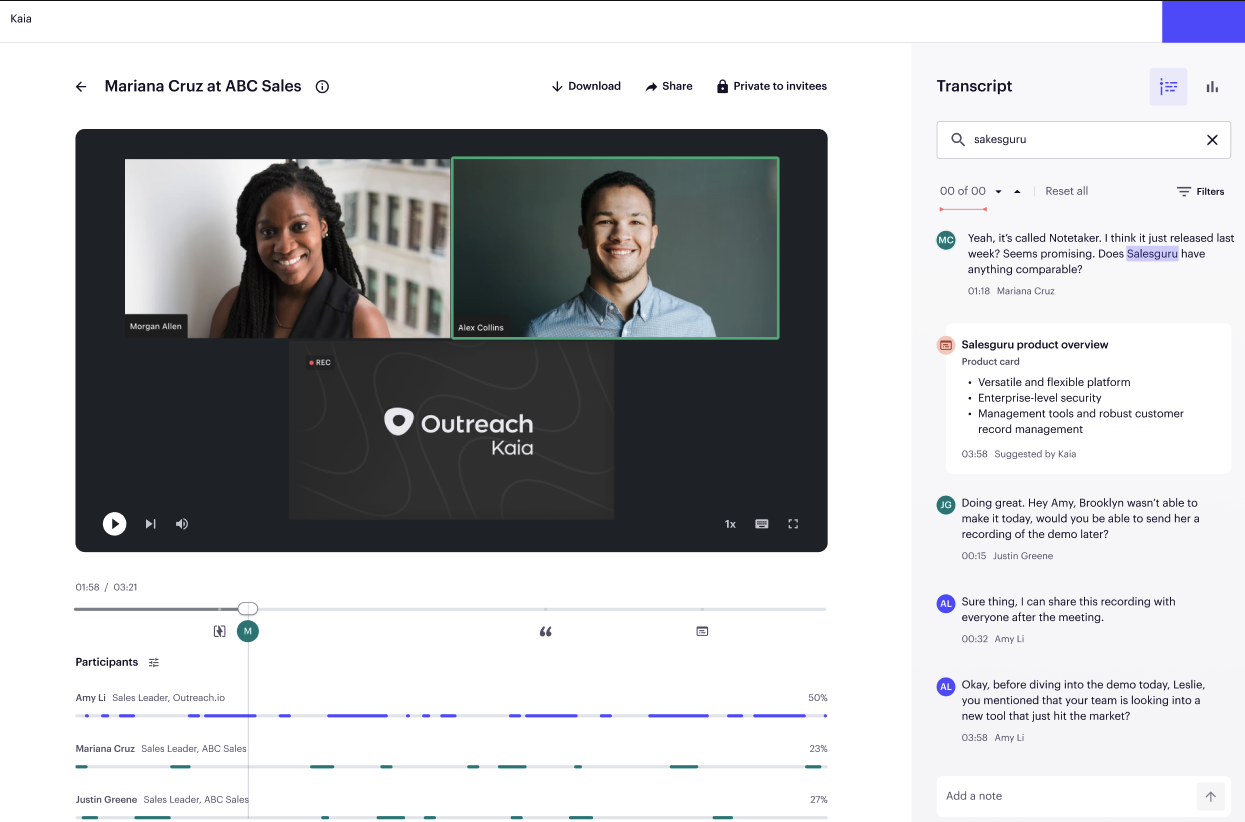
Why leaders pick it:
Fit: Enterprise orgs standardized on Outreach; you want CI where reps already prospect, meet, and update pipeline.
Trade-offs: Not CI-only, pricing isn’t public; budget work starts with sales.
Try this first: Enable Kaia + Commit for one region; track action items captured per call and forecast deltas before/after.
Real CI, YES! Sybill’s word of mouth is so strong because sellers have found insights like when did the prospect frown or pause or smile to be great signals for conversion probability. So, if you rely on verbatim quotes or deep topic analytics, you’ll want recorders like Sybill.
Sybill for automatic follow-ups + CRM autofill; Lindy if you want automation stretching from lead gen through post-meeting.
For many enterprises, yes. Because content cards + action items live exactly where reps are, and Commit ties it to forecast. If you want a seller-first workspace experience, evaluate Sybill in parallel.