Find us at booth #83, join us for a harbor side happy hour, or catch Gorish’s talk.

Sept, 16-18 > Learn more

%20(1).avif)
Mamta Tainwala

March 9, 2026
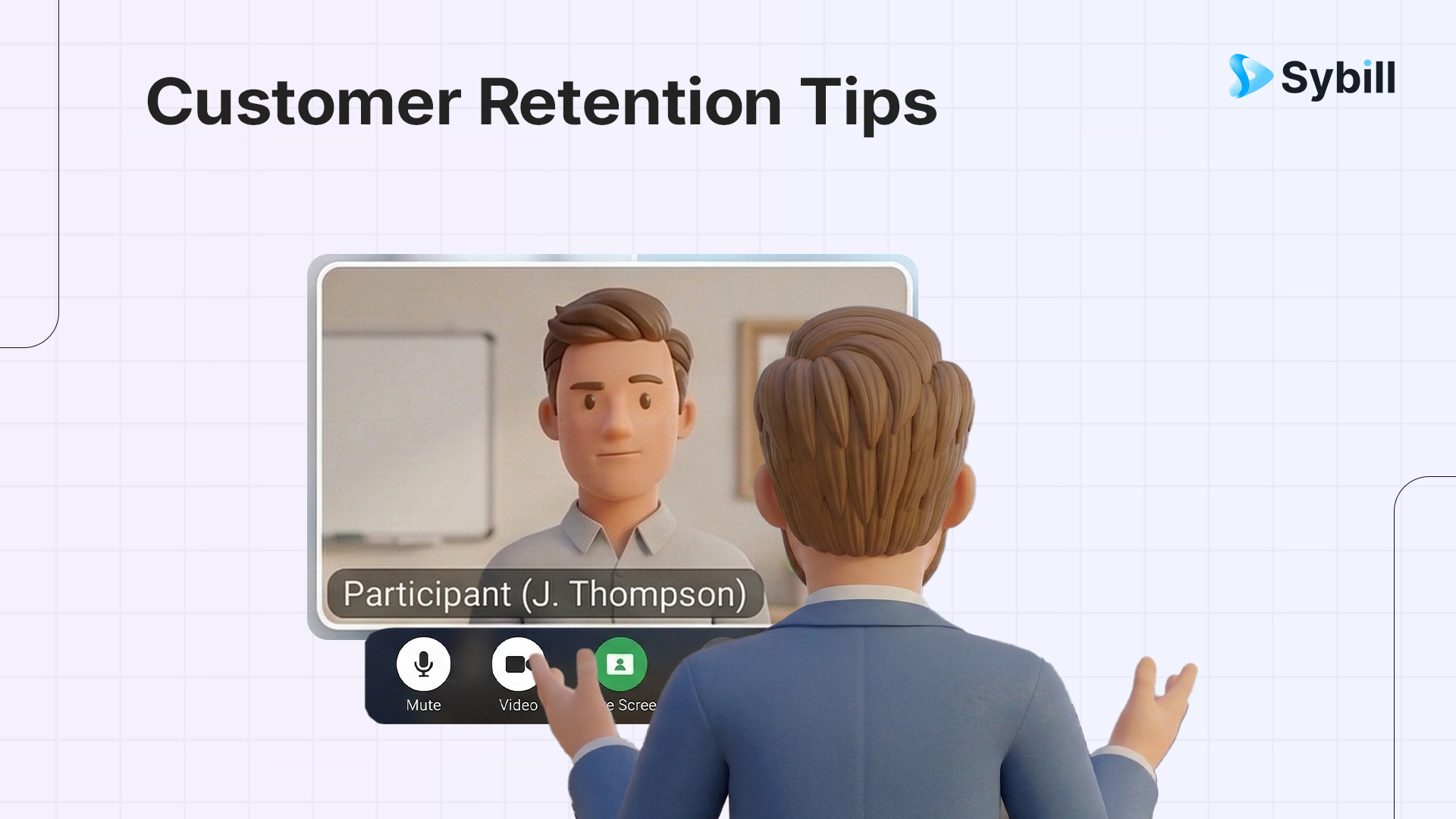
Here is a number that should stop any sales leader mid-sip of their morning coffee: acquiring a new customer can cost anywhere from 5 to 25 times more than keeping one you already have. And yet, most sales orgs pour the bulk of their energy, headcount, and budget into chasing net new logos while their existing accounts quietly drift toward the door.
Retention is not just a customer success problem. It is a revenue problem. And in B2B SaaS, it is increasingly a sales problem too.
If your customer acquisition vs. customer retention balance is tilted almost entirely toward acquisition, this guide is for you.
In this guide, we'll cover:
Let's start with the basics before getting into the tactics.
Customer retention is the ability to keep customers engaged, satisfied, and renewing over time. It is tracked through your customer retention rate, which tells you the percentage of customers who stuck around over a given period.
But retention is not just a number. It is a signal. It tells you whether customers are finding genuine value, whether your onboarding is setting them up for success, whether your support is responsive, and whether your sales team set realistic expectations during the deal cycle.
Here is the ownership question that trips most companies up: retention belongs to everyone. Customer success owns the post-sale relationship. Sales owns the expectations set before the deal closes. Marketing owns the brand story that attracted the customer. Product owns whether the tool actually does what it promised.
When a customer churns, pointing fingers is easy. Preventing churn requires all of those teams operating like a single unit.
Now, here are the 10 retention tips that actually move the needle.
First impressions in B2B are not made at the contract signing. They are made in the first 30 days of using your product.
If a customer cannot figure out your tool quickly, or if their first check-in reveals they have barely touched the features they paid for, you are already staring down a churn risk. Customers who do not achieve an early win almost never stick around long enough to become loyal ones.
In practice, this means a structured onboarding sequence with clear milestones, a dedicated point of contact, and proactive check-ins timed around the customer's pace, not yours.
Sales teams directly influence this by delivering a detailed context handoff at close. The more your CS team knows about what was promised, what the buyer's specific pain points are, and who the decision-makers are, the better equipped they are to deliver a great first experience. AI call summaries that capture every nuance from discovery and demo calls make that handoff seamless rather than chaotic.
By the time a customer sends the "we are going in a different direction" email, you have almost certainly missed three or four earlier warning signs.
Disengagement rarely happens overnight. It usually looks like login frequency dropping, fewer users active on the account, support tickets stacking up without resolution, or a key champion going quiet. These are not mysteries. They are data points, and the best retention teams track them obsessively.
Churn analysis is not a quarterly activity for a data analyst. It is an ongoing process that should surface at-risk accounts to AMs and CS reps in real time. If you wait for renewal season to notice a customer is unhappy, you are already too late.
Tools that surface engagement signals, flag stalled activity, and alert your team when an account goes cold give you the runway to actually do something about it.
One of the most underrated retention habits is also the simplest: show up consistently.
Not "I'll reach out when there is a reason to." Consistent follow-up means scheduled touchpoints that happen regardless of whether there is an upsell opportunity on the table or a renewal coming up. The goal is to be present before you need to be.
Most sales and CS teams fall into the same trap: they are reactive. They reach out when a renewal is approaching, when a customer opens a support ticket, or when a QBR is overdue. What customers actually remember is who reached out when nothing was wrong.
A practical cadence might look like monthly quick check-ins, quarterly business reviews, and an annual strategic planning call. Each has a distinct purpose, and none of them should feel like a sales pitch dressed up as a relationship call.
Building follow-up email templates that are warm and context-aware, not generic copy-paste jobs, makes it far easier for reps to maintain this rhythm without the prep eating into their day.
Customers notice when you treat them like a segment rather than a person. The generic "Hi [First Name], just checking in!" email is not fooling anyone. It signals that you either did not do your homework or simply do not care enough to.
True personalization in B2B retention means referencing previous conversations, acknowledging the customer's specific goals, and tailoring communication to their stage of the journey. Did they just hire a new VP of Sales? That is your opening to re-engage on how your product fits the new leadership team's priorities. Did they hit a major business milestone? Acknowledge it.
This level of detail is only possible if your team captures and organizes customer information consistently. CRM notes are not just an administrative obligation: they are the memory bank that makes personalization possible at scale. When notes are patchy or outdated, personalization becomes guesswork, and customers can feel the difference.
Quarterly business reviews get a bad reputation because most of them are either skipped entirely or quietly transformed into a product demo nobody asked for.
Done well, a QBR is one of the most powerful retention tools in your kit. It is a structured opportunity to review the value delivered, align on the customer's evolving goals, surface any friction points before they become deal-breakers, and discuss what the next quarter should look like together.
The key word is "structured." A great QBR has an agenda shared in advance, an honest assessment of how the product performed against the customer's goals, and a forward-looking conversation. It is not a one-sided pitch. It is a partnership conversation.
Strategic account management frameworks treat QBRs as a core practice for good reason: customers who feel strategically supported are significantly less likely to churn than those who only hear from their rep when the renewal invoice is approaching.
Loyalty programs are not just for B2C brands with punch cards and point systems. In B2B, loyalty looks different but it is just as powerful.
Think exclusive early access to new features, invitations to private user communities, dedicated account manager availability, preferred pricing on expansion seats, or co-marketing opportunities. These are all ways to signal that your most valuable customers have a relationship with you that a brand new prospect does not.
Customer loyalty programs work because they shift the customer's mental model from "I am a user of this tool" to "I am a partner with this company." That psychological shift makes switching costs feel meaningfully higher, even when a competitor shows up with a shiny new pitch deck and a lower price point.
Start by identifying your top accounts by revenue, engagement depth, or advocacy potential, and build recognition around them. The investment is small. The retention impact is not.
Asking for feedback is table stakes. Acting on it, and then telling customers you acted on it, is where most companies fall short.
Send NPS surveys. Run win-loss interviews. Ask customers directly during QBRs: "What is the one thing we could do better?" Then document that feedback, route it to the right team, and follow up with the customer when something changes. That loop from "we heard you" to "here is what we did about it" is what builds genuine trust.
Customers who feel heard are not just more likely to renew. They are more likely to refer you, participate in case studies, and advocate for your product internally when budget decisions are being made. That is the difference between true brand loyalty and brand hopping, and it is a gap that no discount or feature release can reliably close.
Here is the nuance that separates great retention teams from average ones: upselling and cross-selling, done right, are retention strategies. Done wrong, they are churn accelerants.
The difference is timing and relevance. An upsell introduced before a customer has realized the full value of what they already have feels like a cash grab. An upsell introduced at the exact moment a customer's needs have clearly outgrown their current plan feels like you were paying attention all along.
To get the timing right, your team needs clean data on product usage, expansion signals, and account health. Nurturing high-value accounts is not about hunting for upsell moments. It is about understanding your customer's trajectory well enough to introduce the right conversation before they start looking elsewhere for a solution that fits.
Every retention tip on this list depends on one thing: that your team has accurate, up-to-date context about each customer.
And yet, CRM hygiene is one of the most consistently neglected practices in sales and CS. Notes are missing. Key contacts are outdated. The action items from the last QBR are buried in a call recording that nobody has listened to since September.
This is not just an inconvenience. It is a retention risk. When a new rep picks up an account, or when a CS manager needs to prep for a renewal call, incomplete CRM data means they are walking in blind. Customers notice when the person on the other end does not remember their context, and it erodes the trust your team has spent months building.
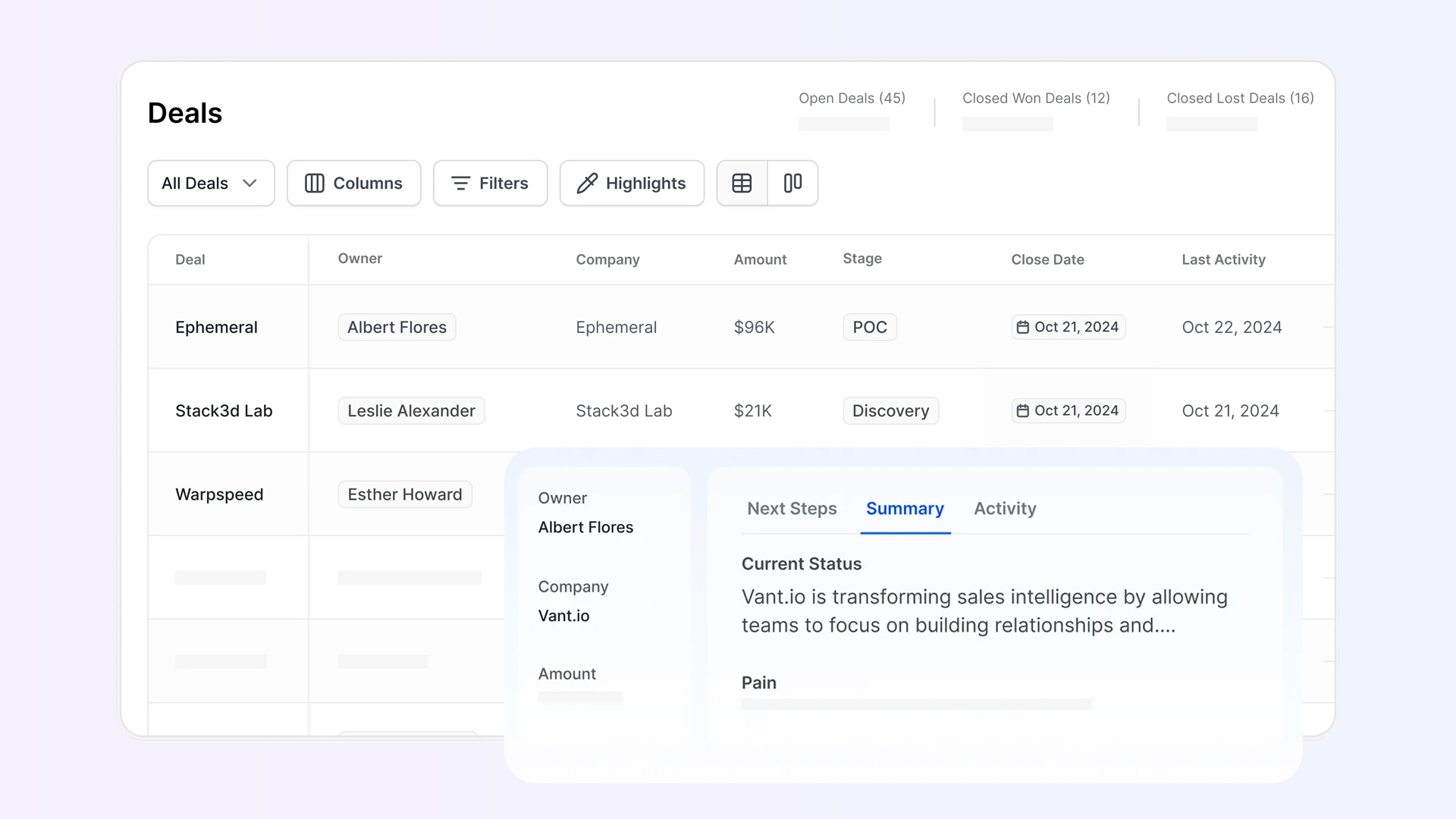
Deal summaries that auto-populate your CRM after every call and email, capturing buyer signals, pain points, and next steps without requiring the rep to type a single word, solve this problem at the source. The data is there because the system put it there, not because a rep remembered to log it at the end of a Friday afternoon.
You cannot improve what you do not measure, and you cannot measure retention with just one number.
Customer Retention Rate tells you whether customers are staying. Net Revenue Retention tells you whether the accounts that are staying are also growing. Customer Lifetime Value tells you the economic payoff of retention over time. Churn rate tracks the rate of loss. Product engagement scores tell you which accounts are at risk before the renewal conversation ever starts.
Tracking customer retention and SaaS growth metrics in combination gives you a far more accurate picture than any single number alone. A high retention rate with flat NRR, for example, might mean customers are staying but not expanding. That is a different problem than pure churn, but it is still a problem worth solving before it becomes an acquisition treadmill.
Build a dashboard that surfaces these numbers weekly, not quarterly, so your team has the runway to act on trends before they become crises.
Most retention problems are information problems. Customers churn because their account team missed a signal. Because the handoff from sales to CS was incomplete. Because nobody noticed the key champion went quiet for six weeks.
Sybill is built to close exactly those gaps.
Sybill's Magic Summaries capture every meaningful moment from customer calls, including what was said, what was promised, what concerns were raised, and what the next step should be, then push all of that automatically into your CRM. No manual note-taking. No important details disappearing at the end of a packed day.
With AI-generated follow-up emails written in your voice, your team stays consistent across every customer touchpoint without spending 20 minutes composing each message from scratch.
And with deal summaries that track the full arc of a relationship across every call and email, your account managers and CS reps always walk into conversations prepared, relevant, and genuinely helpful rather than scrambling for context.
Ready to stop losing customers to information gaps? Get started for free with Sybill and let AI handle the busywork while your team builds the relationships that actually make customers stay.
There is no single tactic that works universally, but the most consistently effective approach combines proactive communication with personalized touchpoints and early detection of churn signals. Teams that track engagement data, run structured business reviews, and maintain complete CRM records tend to retain significantly more customers than those relying on reactive outreach.
The standard formula is: ((Customers at end of period minus new customers acquired during the period) divided by customers at the start of the period) times 100. A healthy retention rate for SaaS typically falls between 85 and 95 percent. Beyond raw retention rate, tracking Net Revenue Retention and Customer Lifetime Value gives you a far more complete picture of retention health over time.
The most common reasons are poor onboarding, failure to achieve early product wins, lack of proactive communication from the account team, a champion leaving the company, and competitive pressure from a cheaper or newer alternative. Most of these are preventable with the right systems and habits in place.
Renewal is a transactional event. Retention is an ongoing outcome. You can win a renewal from a customer who is barely engaged and ready to leave the moment a better option surfaces. True retention means a customer is deeply embedded, regularly finding value, and actively advocating for your product internally when budget conversations happen.
AI tools can surface early churn signals from usage and engagement data, automate follow-up communications so no touchpoint falls through the cracks, generate clean and detailed call summaries that keep your CRM complete and current, and help account managers identify upsell signals at the right moment. The best use of AI in retention is eliminating the information gaps that cause good relationships to quietly go cold.
The essential set includes Customer Retention Rate, Net Revenue Retention, Monthly and Annual Churn Rate, Customer Lifetime Value, and Net Promoter Score. Product usage and login frequency are leading indicators worth monitoring continuously, as they often predict churn weeks before a customer raises a concern.
Retention is not a passive outcome. It is something you build, deliberately, through every call, every follow-up, every business review, and every moment a customer feels genuinely seen and supported.
The 10 tips above are not magic bullets. They are habits. The sales and CS teams that treat retention as an active discipline, backed by clean data and consistent communication, are the ones who build the kind of customer base where growth compounds on itself over time.
Sales efficiency and customer retention are two sides of the same coin. When your team spends less time on admin and more time building genuine relationships, both improve together.
Stop letting information gaps cost you customers you worked hard to win.
Get started for free with Sybill and give your team the context they need to retain every account worth keeping.
There is no single tactic that works universally, but the most consistently effective approach combines proactive communication with personalized touchpoints and early detection of churn signals. Teams that track engagement data, run structured business reviews, and maintain complete CRM records tend to retain significantly more customers than those relying on reactive outreach.
The standard formula is: ((Customers at end of period minus new customers acquired during the period) divided by customers at the start of the period) times 100. A healthy retention rate for SaaS typically falls between 85 and 95 percent. Beyond raw retention rate, tracking Net Revenue Retention and Customer Lifetime Value gives you a far more complete picture of retention health over time.
The most common reasons are poor onboarding, failure to achieve early product wins, lack of proactive communication from the account team, a champion leaving the company, and competitive pressure from a cheaper or newer alternative. Most of these are preventable with the right systems and habits in place.