Find us at booth #83, join us for a harbor side happy hour, or catch Gorish’s talk.

Sept, 16-18 > Learn more


Tamanna Mishra

March 31, 2026
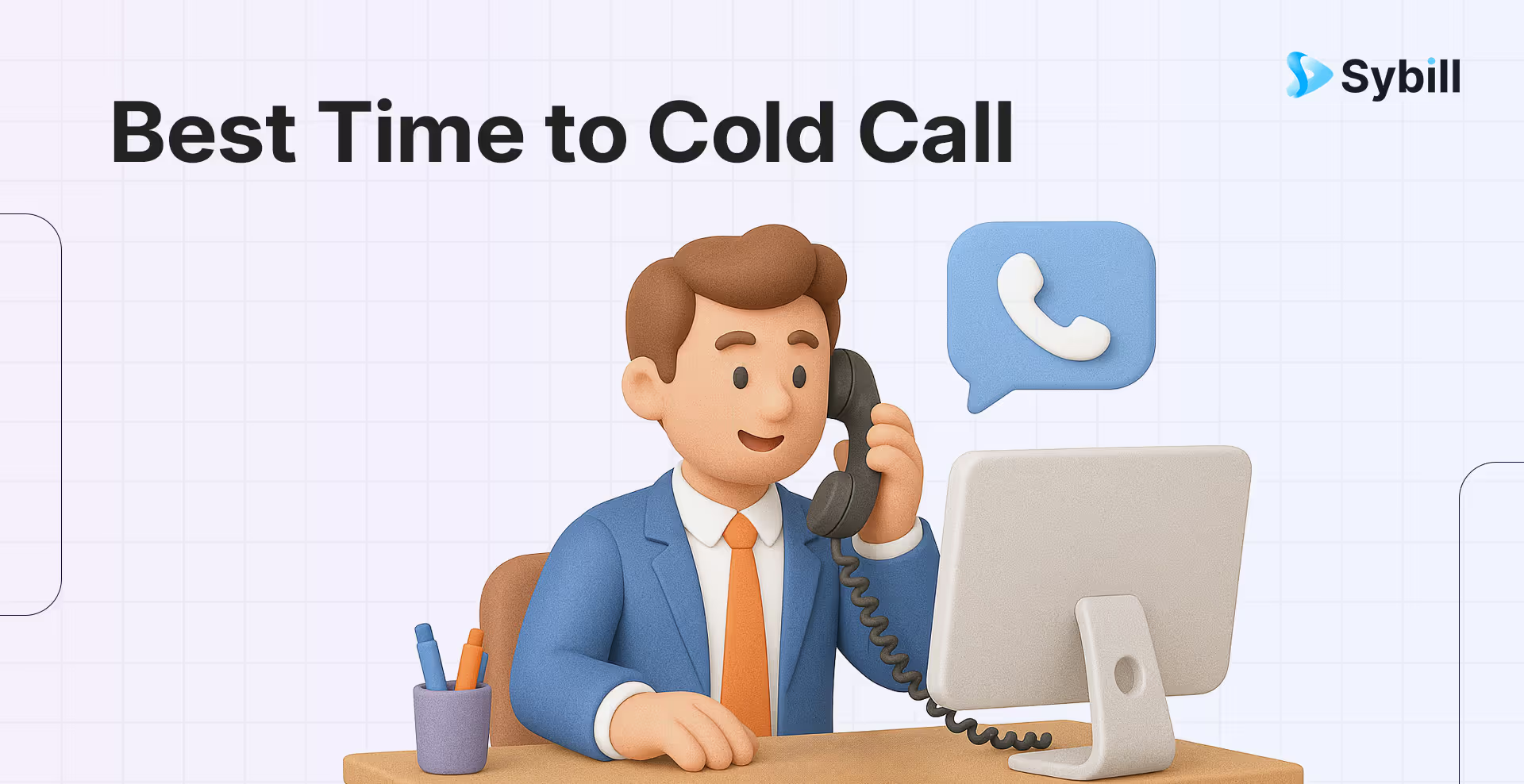
If you’ve been in sales long enough, you’ve probably heard it. “The best time to cold call is Thursday at 4 PM.”
That line gets tossed around in sales circles more often than “Winter is Coming” in Game of Thrones. And just like that prophecy, it’s been repeated so many times that people stopped questioning if it’s actually true. Spoiler: it’s not.
That advice hasn’t evolved since we loved our flip-phones. Back then, your biggest competitor was voicemail. But today’s buyers are global, multitasking, and allergic to unprepared pitches. They’re performing the sales version of Everything Everywhere All At Once, jumping between Slack, Zoom, and email.
The traditional best times to cold call are 10 AM to noon and 4 to 5 PM local time on Wednesdays and Thursdays, with executive decision-makers often more reachable at 8 to 9 AM, but connection rates alone do not close deals in 2025. The real competitive edge comes from showing up prepared with context about the buyer, their company, and prior interactions rather than optimizing for time slots from decade-old studies. Top-performing reps combine timing data with AI-powered pre-call intelligence that scans CRM, call history, email, and the web to deliver a complete prospect snapshot, turning every cold call into an informed, personalized conversation that earns attention regardless of when the phone rings.
Given that context, when is the best time to cold call? The real answer: whenever you’re informed, contextual, and confident. Not when a decades-old study says so, but when you actually understand who you’re calling, what matters to them, and where the conversation left off.
That’s where sales productivity tools like Sybill’s Pre-Meeting Briefs flip the script. They help reps prep like they had all day, even when they don’t. Modern tools, that we cover further in this blog, help reps ditch the guesswork and grind and show up like it matters to their prospects.
Read on.
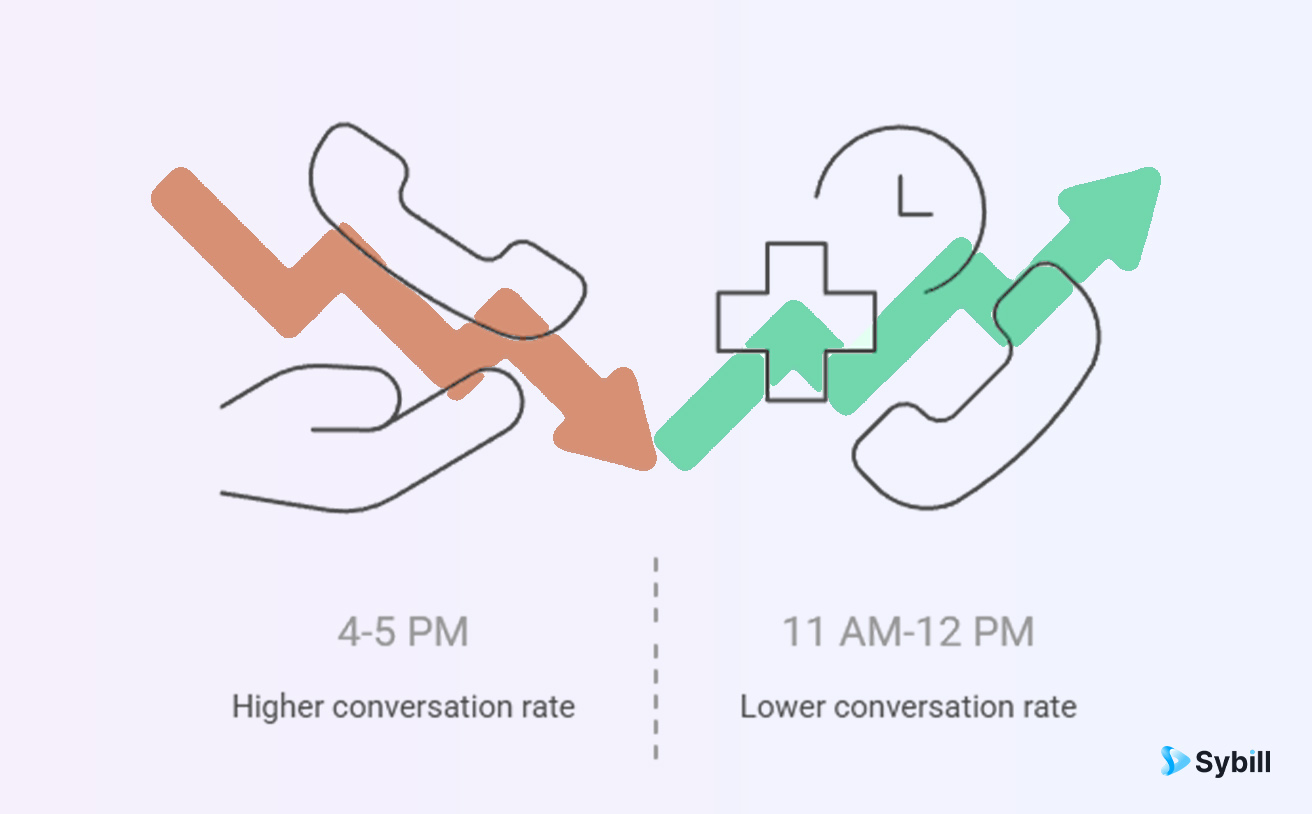
Data backs up the idea that there are windows where cold calls tend to connect more often. According to CallHippo, calling between 4:00 PM and 5:00 PM (local time) yields the highest connection rates, with a second sweet spot being 11:00 AM to 12:00 PM. Studies even showed that the difference in conversations between 4–5 PM and 11–12 PM was a staggering 71%.
Other research agrees. HubSpot cites that 10 AM to 12 noon and 4–5 PM are ideal calling windows, especially midweek. Gong points out that Wednesdays and Thursdays outperform Mondays or Fridays for cold-call success.
But some nuance: executive decision-makers often pick up earlier in the day (8–9 AM), while small business owners may be more receptive late afternoon.
But there’s a catch. A connection doesn’t equal a closed deal. You could dial in the “perfect window” and still flounder if you’re calling blind. Context, rapport, relevance - those matter far more in that split second when the prospect says “Hello.”
You could hit the perfect 4 PM Thursday window and still hear the dreaded “Not interested.” Because timing alone doesn’t close deals anymore. Context does.
Modern buyers aren’t impressed by persistence; they expect personalization. In fact, over half of buyers say they’ve purchased from cold outreach only when reps show they understand the buyer’s world. That’s the difference between a cold call that feels intrusive and one that feels intentional.
So if you’re wondering how to improve cold calling, the secret lies in how you show up, not just when.
Before you ever dial, know who you’re talking to. Research their company, latest wins or pain points, and the role they play in the decision process. If you’re spending half your call asking, “So what do you do exactly?” - you’ve already lost the room.
Start strong by referencing something specific: a recent company milestone, a quote from a LinkedIn post, or a challenge common to their industry. Buyers smell generic intros from a mile away.
Don’t open with your product. Open with their problem. Share a sharp insight (“We’ve seen teams like yours struggle to track buyer engagement after the first demo”) that earns curiosity instead of resistance.
Buyers decide within seconds if you’re worth listening to. Mirror their tone, respect their time, and skip the script. A natural, confident tone turns a cold call into a human conversation.
Click here to learn more about building trust with prospects.
Even the best call won’t land if you follow up at the wrong time. Check CRM data and engagement cues to know when and how your prospect re-engages.
In 2025, cold calling today isn’t about catching someone off-guard. You’ve got to show up ready.
The cold calling stack has evolved from simple dialers and CRMs into a mix of AI, automation, and intelligence layers that help reps call at the right time, with the right message, and the right context.
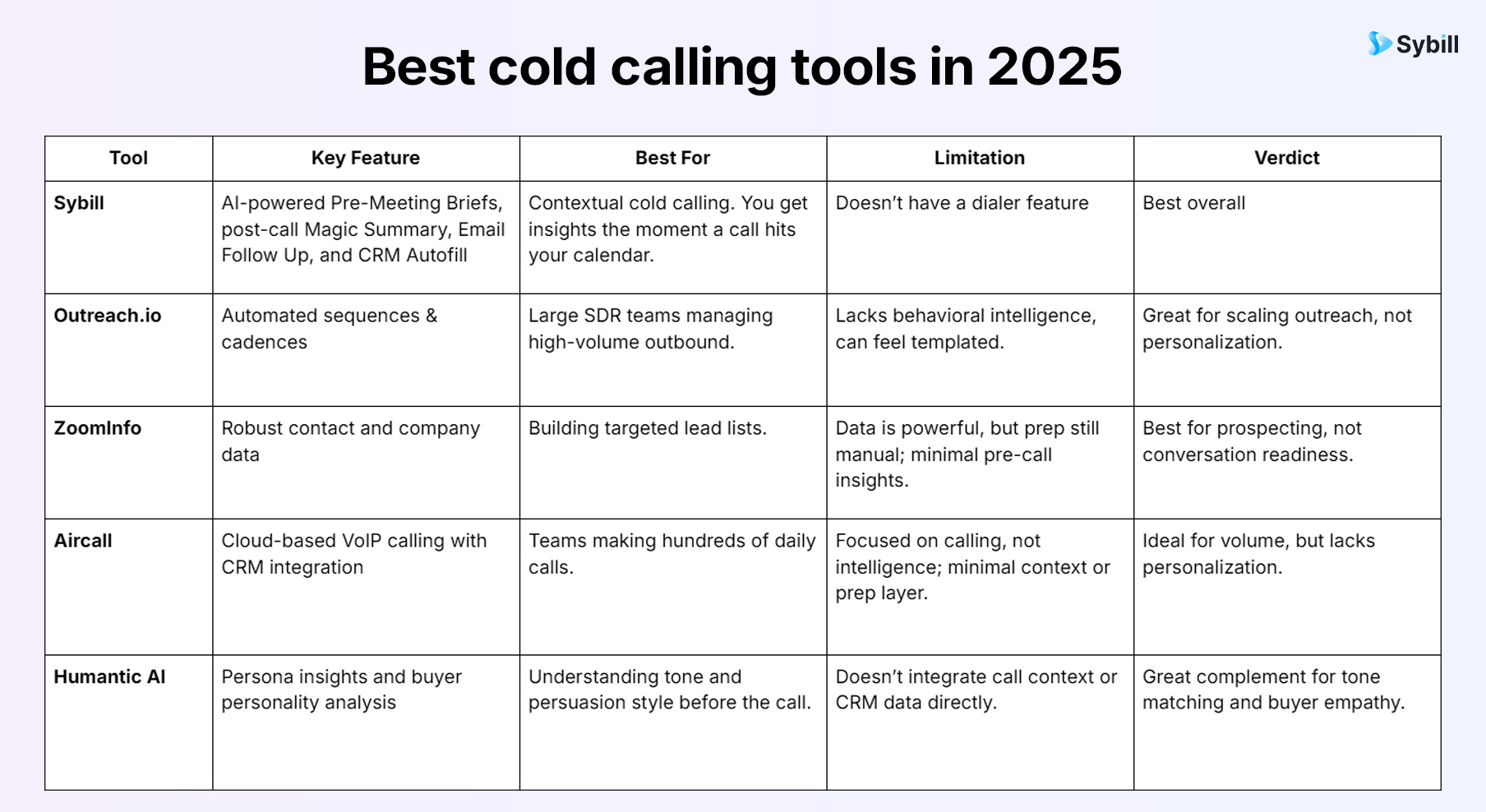
If you’re evaluating the best tools to cold call, here’s a breakdown of five platforms leading the pack and how they differ in what they help you achieve.
Think of Sybill as your personal sales researcher, meeting prepper, and call strategist rolled into one. It’s not just another dialer or data tool. It’s your second brain that connects them all.
The result is that every call feels less “cold” and more like a continuation of a warm, informed conversation. Reps aren’t left guessing or scrambling for notes.
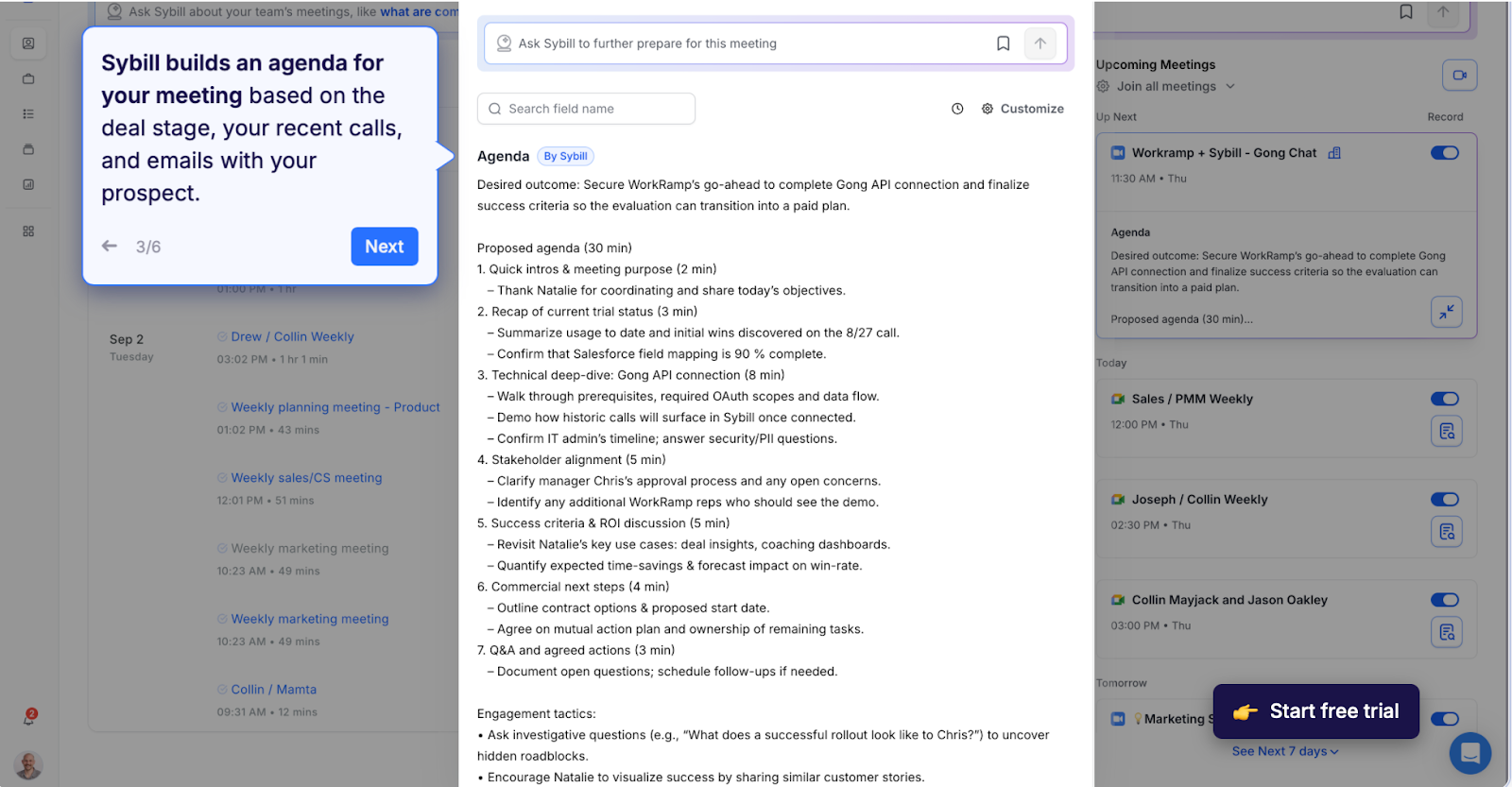
Why it stands out: Sybill gives you speed and signal. You can still use your favorite dialer (Aircall, Outreach, RingCentral), but Sybill ensures you show up prepared, relevant, and confident.
Outreach.io remains a go-to for teams that thrive on process. Its strength lies in automation. You can build sophisticated sequences, trigger multi-channel follow-ups, and manage hundreds of touches across SDRs.
However, it stops short at conversation readiness. You’ll know when to call, but not why now or what to say. Personalization often gets lost in the automation loop.
ZoomInfo is still the gold standard for contact data. It’s unbeatable for identifying who to call - job titles, direct lines, org charts - the works. But once that list is built, you’re on your own. There’s no context about what’s been said in prior interactions or how to open the conversation intelligently.
Aircall shines for teams that need speed. It’s intuitive, integrates easily with CRMs, and helps managers monitor performance in real time. But it’s still a dialer, not a strategist. Aircall will get you connected fast, but not necessarily ready. It doesn’t surface deal insights or help you personalize your opener.
Pairing Aircall with Sybill bridges that gap. Aircall handles the call, Sybill handles the context.
Humantic is a rising star for sales reps who believe in psychology as much as process. It analyzes buyer profiles and communication styles so you can tailor your tone and approach, whether your prospect prefers data, empathy, or brevity.
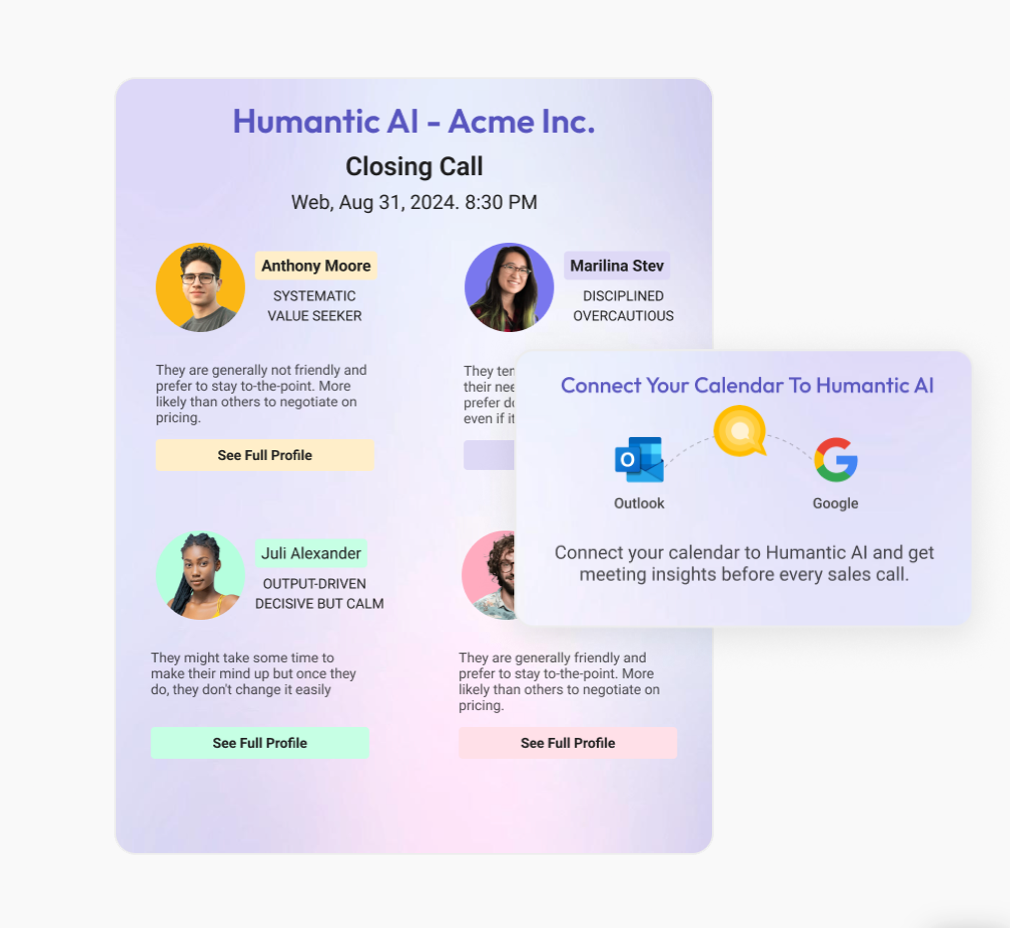
It’s good for understanding how to talk to someone, but not what to say. That’s why Humantic works best as an add-on to contextual tools like Sybill - which already knows what’s been said, what needs to happen next, and deep buying intent signals. Sybill helps you put buyer psychology into practice.
All these platforms bring something valuable to the table. Outreach gives you process, ZoomInfo gives you people, Aircall gives you speed, and Humantic gives you empathy.
But Sybill gives you readiness.
Because in 2025, the winners are who dial informed.
Most tools help you dial faster. Sybill helps you build rapport smarter.
Combine Sybill’s pre-call intelligence with your favorite dialer and never make another cold call unprepared. Click here to try for free.
Prep like you had all day, even if you only have 30 seconds. That’s the promise of Sybill’s Pre-Meeting Briefs, your AI-powered prep assistant.
It automatically pulls attendee and company insights (no LinkedIn stalking required), recalls everything said in past calls and emails, and surfaces what’s next - from open tasks to MEDDPICC checkpoints. Each brief adjusts to your meeting type, whether it’s an intro, discovery, demo, or proposal.
You’re always calling warm, never blind. Even if the invite lands two minutes before, you sound like you’ve prepped for hours.
Ready to see what a 30-second prep feels like? Try Pre-Meeting Briefs free.
Every “best time” rule has an expiration date. What hasn’t changed is the psychology behind successful cold calling: respect your buyer’s time, show up prepared, and personalize your pitch.
Because you can’t control the clock. What you can control is your context.
With Sybill’s Pre-Meeting Briefs, every cold call turns into a confident, personalized conversation. Whether it’s 8 AM or 8 PM, you’ll know who you’re speaking to, what’s been said, and what matters most right now.
Try for free and see how top reps prep in seconds.
The 80/20 rule, also known as the Pareto Principle, suggests that 80% of your results come from 20% of your efforts. In cold calling, that means a small portion of your calls - usually those made with the right timing, preparation, and personalization - generate the bulk of your pipeline. Instead of blindly making 100 calls a day, the top reps invest in quality over quantity. They research their prospects, tailor their intros, and time their outreach based on intent signals. Pro tip: Analyze your call logs weekly. Identify which hours, days, and prospect types convert best, then double down on that 20%.
Timing is critical, but so is etiquette. Generally, anything after 6:30 PM local time for B2B prospects is too late. You’re more likely to reach voicemail - or worse, irritate a potential buyer. For decision-makers who start early (think C-suite, operations heads), early morning calls (8–9 AM) work better than late evenings. For SMBs, 4–6 PM tends to be the sweet spot, when the day’s chaos is winding down. But the real “too late” is when you call without context. No one wants to hear a rep stumble through a script at any hour. If your message is relevant and your timing is informed by data - say, a follow-up after an opened proposal or recent engagement - even a late-afternoon call can land perfectly.
The 3 C’s of cold calling are Clarity, Confidence, and Context - the holy trinity of modern sales outreach. Clarity: Know your purpose. Every call should have a specific goal - whether it’s to schedule a demo, confirm a next step, or uncover a pain point. Confidence: Your tone sells before your words do. Reps who sound uncertain trigger instant skepticism. Confidence comes from preparation. Context: This is where most reps fail. Context means understanding the buyer’s world - what’s been said in past conversations, what matters to their business, and what’s next in their buying journey.