If you’ve ever left a sales call thinking “that went great” and later realized you remember the vibe but not the words, this guide is your memory foam. A call voice recorder is like having a super attentive friend who never interrupts, takes perfect notes, and then hands you a highlight reel with timestamps. Mine also doesn’t judge my “let me circle back” habit. Progress.
Below we’ll cover what call voice recorders are, the different types, how to pick the right one, and why uploading your calls to Sybill turns raw audio into summaries, next steps, and real deal movement. Along the way I’ll recommend a few reliable tools. Nothing spammy. Just practical options that work.
The best call voice recorders in 2026 include Sybill (best for sales teams, with AI summaries, CRM autofill, and automated follow-ups), Otter AI (best for real-time transcription and collaboration), Rev (best for human-verified accuracy), Fireflies (best for searchable meeting archives), and native phone recording apps for basic capture. Call voice recorders fall into four types: built-in phone recorders, dedicated hardware devices, VoIP and cloud recorders, and AI-powered meeting recorders that go beyond recording to generate summaries, extract action items, and push structured data to CRMs — the last category being where the real revenue impact happens for sales teams.
What is a call voice recorder
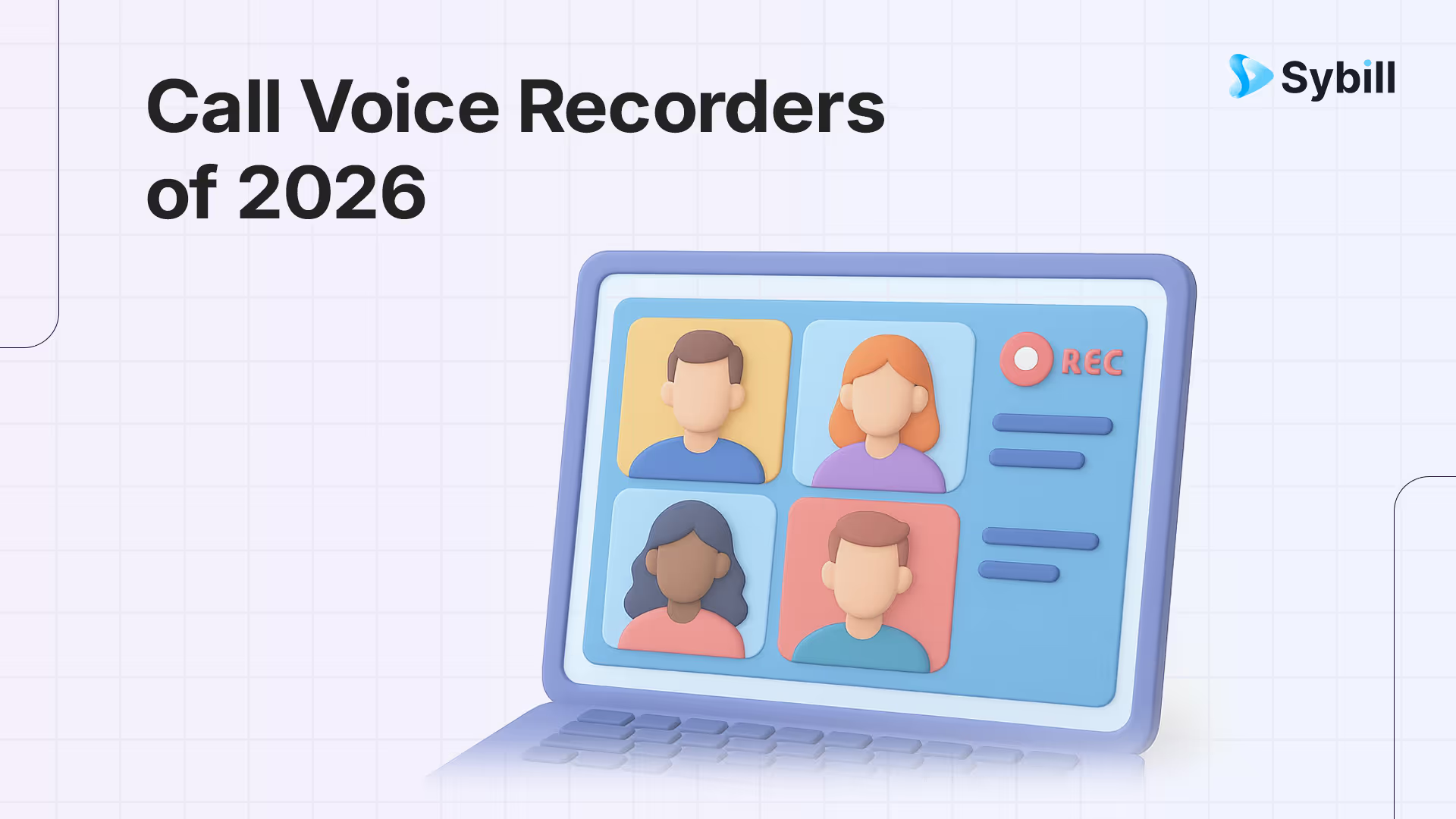
A call voice recorder captures the audio from a phone or web call and saves it as a file you can replay, share, and analyze. At its simplest, it is a microphone plus storage. In practice, a modern recorder can be software on your phone or laptop, a built-in feature in your VoIP or meeting platform, or a small hardware device you attach to your phone.
Why sales teams care:
- You get an exact record of what the buyer said, not a fuzzy recollection.
- You can coach with real examples, not lore.
- You can automate follow ups, CRM updates, and action items once the call is analyzed.
Types of call voice recorders
You have more options than you think. Here’s a clear menu.
1) Built-in phone recorders
- iOS and Android voice recording apps: Great for in-person interviews or speakerphone calls where your phone’s mic picks up both sides. Quality depends on room noise and mic placement.
- Pros: Always with you. Dead simple.
- Cons: Mixed call quality. Not ideal for multi-speaker or noisy environments.
2) Carrier or network side call recording
- Mobile carrier or PBX features: Some carriers and business phone systems offer native call recording that captures both sides cleanly on the network.
- Pros: High fidelity. No fiddling with mics.
- Cons: Usually a business plan feature. May need admin enablement.
3) VoIP and cloud telephony platforms
- Examples: RingCentral, Zoom Phone, Aircall, Twilio powered dialers.
- Pros: One click recording, stereo tracks, automatic cloud storage, easy export.
- Cons: Tied to that platform. Check storage limits and export formats.
4) Sales dialers and engagement platforms
- Examples: Salesloft, Outreach, Apollo dialers that include call recording.
- Pros: Recording sits next to contact and sequence data. Easy for managers to review.
- Cons: Portability varies. Make sure you can export MP3 or WAV without friction.
5) Meeting platforms with recording
- Examples: Zoom, Google Meet, Microsoft Teams, Webex.
- Pros: Ideal for discovery and demos. Captures multiple speakers cleanly. Often provides separate audio tracks per participant.
- Cons: You need host permissions and enough cloud storage. File formats can be large.
6) Browser based recorders
- Examples: Lightweight web apps that record microphone and system audio with permission.
- Pros: Fast to start. No heavy client install.
- Cons: Quality depends on browser and OS settings. Less reliable on locked down corporate machines.
7) Hardware call recorders
- Examples: 3.5 mm phone adapters, Bluetooth call recorders, or small handheld recorders that take line in from your device.
- Pros: Rock solid. Works even when apps fail. Great for field sales or areas with strict software policies.
- Cons: Another gadget to charge and carry. File transfer required.
8) Contact center suites and compliance recorders
- Examples: Enterprise call centers that record every agent call with encryption, retention controls, and audit trails.
- Pros: Governance, redaction, role based access.
- Cons: Overkill for small teams. Complex to manage.
Picking the right option for your team
Use this quick decision tree.
- Where do most calls happen
- Phone only with reps on the go → carrier side or telephony app with native recording
- Zoom or Meet heavy discovery and demos → meeting platform recording
- Power dialing in outbound sprints → sales dialer recording
- Field visits or events → hardware recorder or phone mic with a decent lavalier
- What output do you need
- Fast sharing and AI analysis → MP3 or WAV with easy export
- Coaching on who said what → multi track or speaker separated audio helps
- Legal hold or audit needs → platform with retention policies and access controls
- How will you analyze and act
- If your plan is to upload into a system for transcription, summarization, and CRM updates, pick whatever recorder gets you clean audio plus easy export. Because the magic happens in the analysis layer.
Good tools worth considering
I promised practical suggestions. Here are categories and representative picks.
- For Zoom heavy teams: Use Zoom’s native recording with separate audio tracks per participant. Exports are reliable and easy to pipe into analysis.
- For Google Meet or Teams: Use built-in recording with host permissions. Works well and keeps governance in your domain.
- For sales dialers: Pick an option that exports clean MP3 and attaches to contact records. Make sure you can bulk export for analysis.
- For mobile calls: If your business line is on a VoIP app like Zoom Phone or RingCentral, turn on network side recording. It is cleaner than trying to use the phone mic near the speaker.
- For field or backup: A simple handheld recorder with a TRRS adapter gets you out of tight spots when software recording is blocked.
No drama. Just pick the one that fits your primary call surface and gets the audio out cleanly.
Why uploading your recordings to Sybill multiplies the value
A recording is nice. A recording plus structured insight is revenue fuel. When you upload calls to Sybill, you shift from “we have the audio somewhere” to “we have a searchable, shareable source of truth that drives next steps.” Here is what that looks like.
1) Instant summaries and action items
Sybill turns your audio into clean, accurate summaries with owner ready next steps. No typing marathons after a long day. See how teams structure great conversations in our guide to discovery call structure.
2) Qualification that isn’t guesswork
Instead of “good vibes,” you get captured metrics, owners, timelines, and success criteria. If you are standardizing qualification, start with the playbook in AI powered sales qualification.
3) Conversational intelligence for coaching and consistency
Track talk time, topic coverage, objections raised, and the moments that correlate with booked meetings. You can deep dive on the discipline in our primer on conversational intelligence.
4) Templates that make follow ups fast and precise
Turn insights into crisp emails and docs using the templates library. The best follow ups echo the buyer’s exact words and success criteria.
5) No more CRM double entry
Insights can push to your CRM so fields stay accurate without manual copy paste. If you work in Salesforce, this explainer on the Sybill Salesforce integration shows what zero friction hygiene looks like.
6) One workspace for calls, tasks, and deal signals
Stop chasing files across drives. Manage recorded calls, notes, tasks, and pipeline signals in the Sybill sales workspace.
7) Plans that scale with your team
From small teams to larger orgs, you can align features and costs without surprise sprawl. Check the tiers on the Sybill pricing page.
Audio quality tips that make analysis better
- Use a consistent mic. Even a basic USB headset beats a laptop mic.
- Record separate tracks when possible. Easier to attribute speakers and reduce crosstalk.
- Mind the room. Soft surfaces reduce echo. Hard rooms make you sound like a small cave.
- Close the loop. If the buyer mentions a number or timeline, repeat it back out loud so it is captured clearly.
- Name files with intent. Include account, contact, date, and meeting type. Your future self will thank you.
Privacy and consent basics
I am not your lawyer, so treat this as friendly guidance. Inform participants that you are recording, collect consent where required, and follow your company’s retention policy. If you discuss sensitive information, define who has access. When you analyze in Sybill, use role based access and redaction features to keep sensitive details tidy.
Sample workflows
Zoom demo to next steps
- Record the demo in Zoom with separate audio tracks.
- Export the audio file. Upload to Sybill.
- Review Magic Summary, confirm action items, and push next steps to CRM.
- Send a follow up using a template personalized with the buyer’s own phrases.
Outbound sequence call to coaching
- Record calls in your dialer.
- Bulk upload weekly to Sybill.
- Tag moments where the objection was handled well.
- Build a short reel for enablement so the whole team levels up.
Field discovery to clean notes
- Capture with a handheld recorder or mobile VoIP recorder.
- Upload at the end of the day.
- Use the discovery checklist to fill in metric, owner, decision criteria, and timeline.
- Share the summary with your champion to confirm accuracy.
Record for bigger wins!
A call voice recorder by itself is like filming a game without a scoreboard. It is nice to rewatch, but you still need stats, highlights, and coaching. Record with whatever is handy and reliable. Then upload to Sybill so the real work happens while you grab coffee. You will come back to summaries that make sense, follow ups that sound human, and a CRM that finally looks like someone owns it. Your future self will high five you. Your manager will, too.


%20(1).avif)