Find us at booth #83, join us for a harbor side happy hour, or catch Gorish’s talk.

Sept, 16-18 > Learn more


Tamanna Mishra

May 27, 2026
.png)
Chorus was a big deal when sales teams needed one thing: a reliable way to record calls, inspect conversations, and coach reps after the fact.
Very useful. Very respectable. Very “let’s watch the tape on Monday.”
But also, very 2019.
Sales in 2026 is not Monday-morning tape review. It is six deals moving at once, a CFO entering the chat without warning, a champion going quiet, three follow-ups waiting, and Salesforce quietly turning into a haunted house because nobody updated the next step.
That is why teams are looking for Chorus alternatives.
Call recording is table stakes. The real question is sharper now: Can your conversation intelligence software understand the deal, surface risks, automate CRM, draft follow-ups, coach reps, and help the team act faster?
That is the difference between legacy conversation intelligence and modern revenue AI.
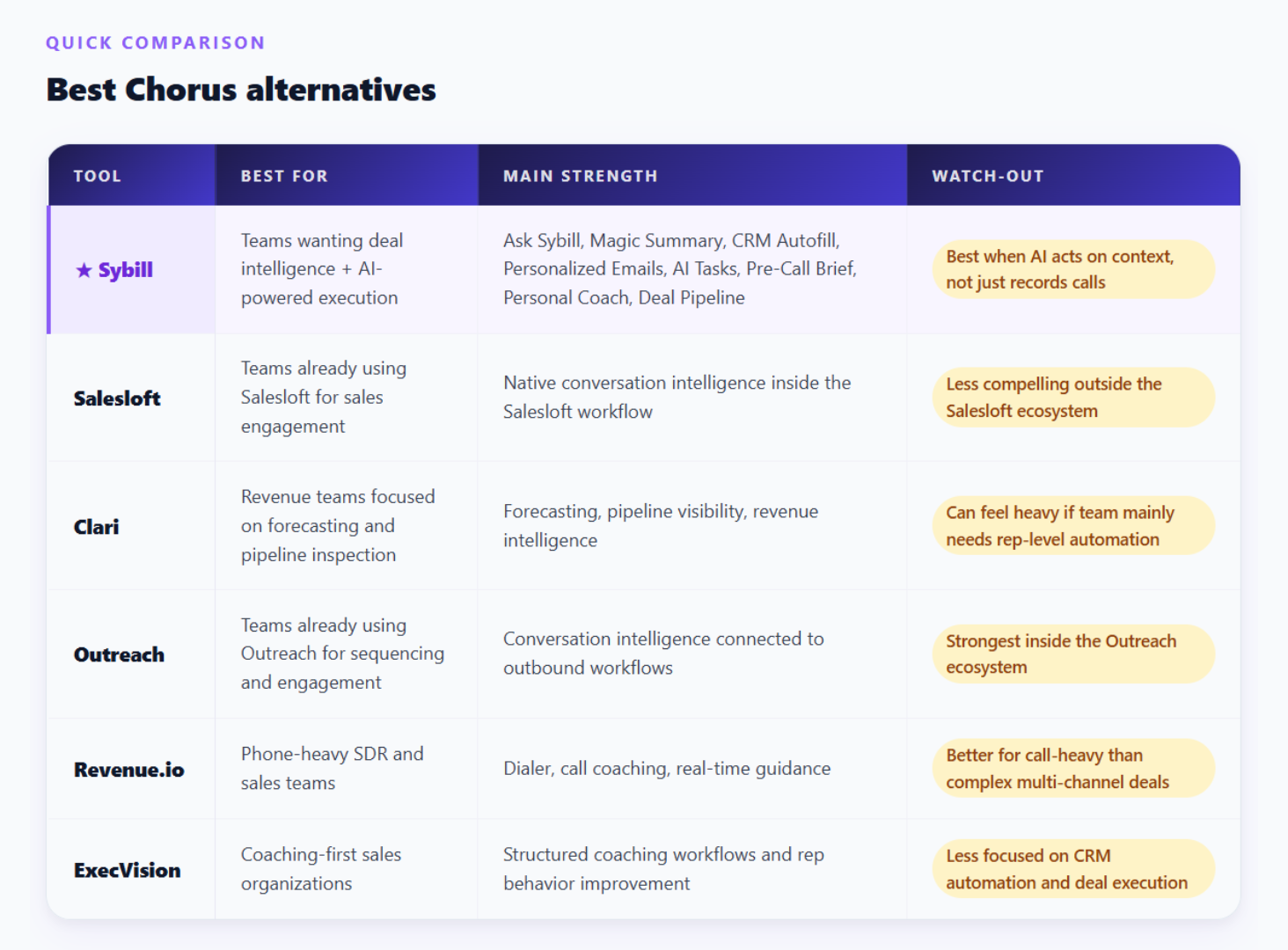
In this guide, we compare six of the best Chorus alternatives for sales and revenue teams:
And yes, we are starting with Sybill because if Chorus gave sales teams call visibility, Sybill gives them deal intelligence plus execution. It helps reps prepare better, summarize faster, update CRM automatically, send personalized follow-ups, ask questions across deals, and spot what needs attention before the pipeline gets weird.
For a broader view of the category, you can also read Sybill’s guide to the best revenue intelligence platforms.
Most teams do not wake up one morning and say, “You know what sounds fun? Evaluating software.”
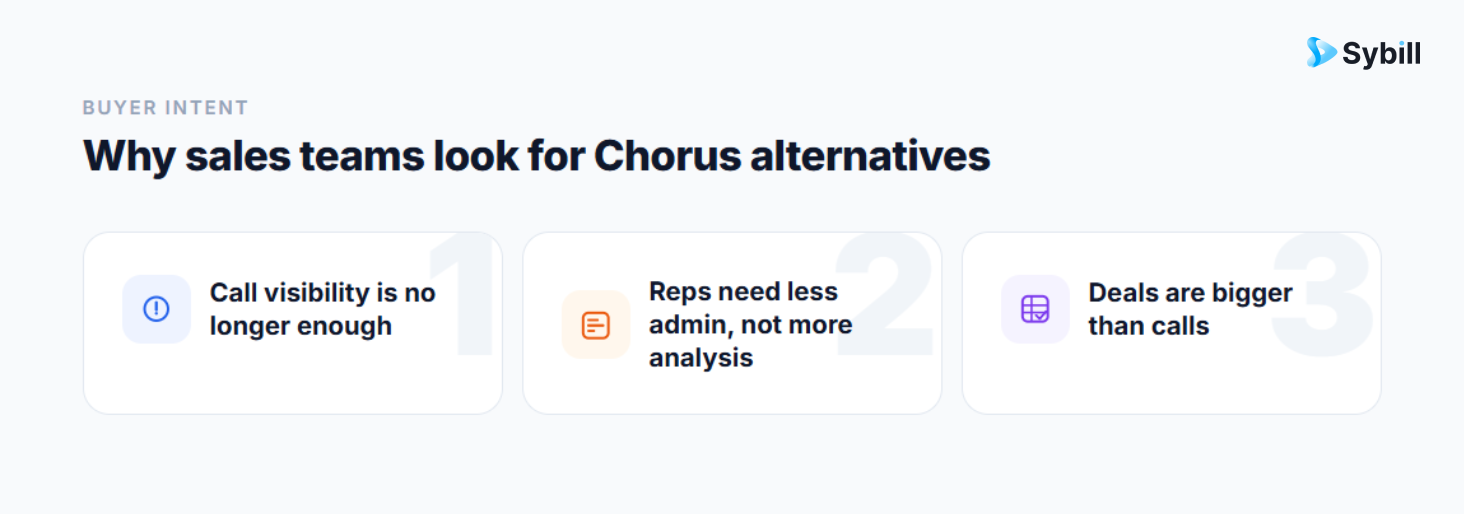
They start looking for Chorus competitors because something is not working anymore.
Maybe the tool is too expensive. Maybe reps are not using it. Maybe managers love the dashboards but sellers still spend Sunday night fixing CRM. Maybe the summaries are fine, but not useful enough to move deals forward.
Here is the real issue: a transcript is not a workflow.
A call recording tells you what happened. A modern sales AI tool should help you decide what to do next.
Chorus helped teams capture and review sales conversations. That was valuable, especially when sales coaching depended on memory, anecdotes, and whatever the rep remembered after four back-to-back demos.
But modern sales teams need more.
They need AI that can answer questions like:
This is where many legacy conversation intelligence tools start to feel limited. They can show the movie. But they cannot always help rewrite the ending.
Here is the dirty little secret of sales tech: a lot of tools make leaders smarter and reps busier.
That is not a win.
If a Chorus alternative gives managers better visibility but still leaves reps writing follow-up emails, updating CRM, creating tasks, preparing manually, and hunting through transcripts, the tool has only solved half the problem.
The best AI sales tools do not just analyze conversations. They remove work from the seller’s day. Sybill’s guide to the best AI sales tools makes this point well: the strongest sales AI tools turn raw meeting context into CRM updates, follow-ups, coaching insights, and deal actions.
One call is not the deal.
The deal is the call, the email thread, the economic buyer’s concern, the champion’s internal politics, the competitor mention, the ghosted next step, the procurement delay, and the tiny moment where the buyer said, “We need to prove ROI before this goes to finance.”
That context matters.
A great conversation intelligence tool should not treat each meeting like an isolated artifact. It should understand the full deal story and help the team move from scattered conversation data to usable revenue intelligence.
That is exactly where the market is heading in 2026.
Before comparing Chorus alternatives, get brutally honest about what you actually need.
If all you want is call recording, plenty of tools can do that. If all you want is meeting notes, even more tools can do that. But if you want better pipeline execution, cleaner CRM, faster follow-up, better coaching, and more accurate deal inspection, the evaluation bar needs to be higher.
Here is the checklist.
A good summary should not sound like a generic robot read the transcript and panicked.
Look for summaries that capture:
For sales teams, “good meeting notes” are not enough. The summary has to help the rep sell.
This is where many Chorus.ai alternatives separate themselves.
Can the platform understand deal health? Can it connect buyer signals across meetings? Can it identify whether a deal is real, stuck, risky, or moving?
Modern revenue intelligence platforms should help teams understand what is happening across the pipeline, not just inside one recording.
If you want to go deeper on this shift, read Sybill’s guide to AI sales intelligence tools.
This one is non-negotiable.
If the AI heard the call and understood the next step, why is the rep still typing it into CRM like it is 2014?
A strong Chorus alternative should update CRM fields automatically, including:
This is not just about saving time. It is about pipeline hygiene. Bad CRM data does not just annoy RevOps. It poisons forecasting.
The follow-up is where deals often get momentum or lose it.
A good AI tool should draft follow-up emails based on the actual conversation, not a bland template that sounds like it escaped from a sales enablement PDF.
The strongest tools pull in buyer language, discussed priorities, objections, promised resources, and next steps. Sybill does this especially well with Personalized Emails. For more context, see Sybill’s blog on AI tools that write personalized follow-up emails after sales calls.
Sales coaching should not depend on random call reviews and vibes.
Look for tools that help managers identify:
The best sales coaching software makes coaching repeatable without turning managers into full-time call detectives.
This is one of the biggest upgrades from traditional conversation intelligence to 2026-ready sales AI.
The question is not just, “What happened on this call?”
It is:
That is where tools like Ask Sybill become powerful. Instead of digging through recordings and CRM fields manually, teams can ask questions across deal data and get answers grounded in real sales conversations.
The best tool is not the one with the longest feature list.
It is the one reps actually use.
If a platform creates more clicks, more tabs, and more admin, adoption will die quietly. If it gives reps better prep, faster summaries, cleaner CRM, stronger follow-ups, and less busywork, adoption becomes much easier.
Reps do not resist AI. They resist AI that gives them homework.
Best for: Revenue teams that want deal intelligence plus AI-powered execution
Category: AI sales assistant and revenue intelligence platform
Best-fit teams: B2B sales teams that want to replace call recording with contextual deal intelligence, CRM automation, follow-up execution, coaching, and pipeline visibility
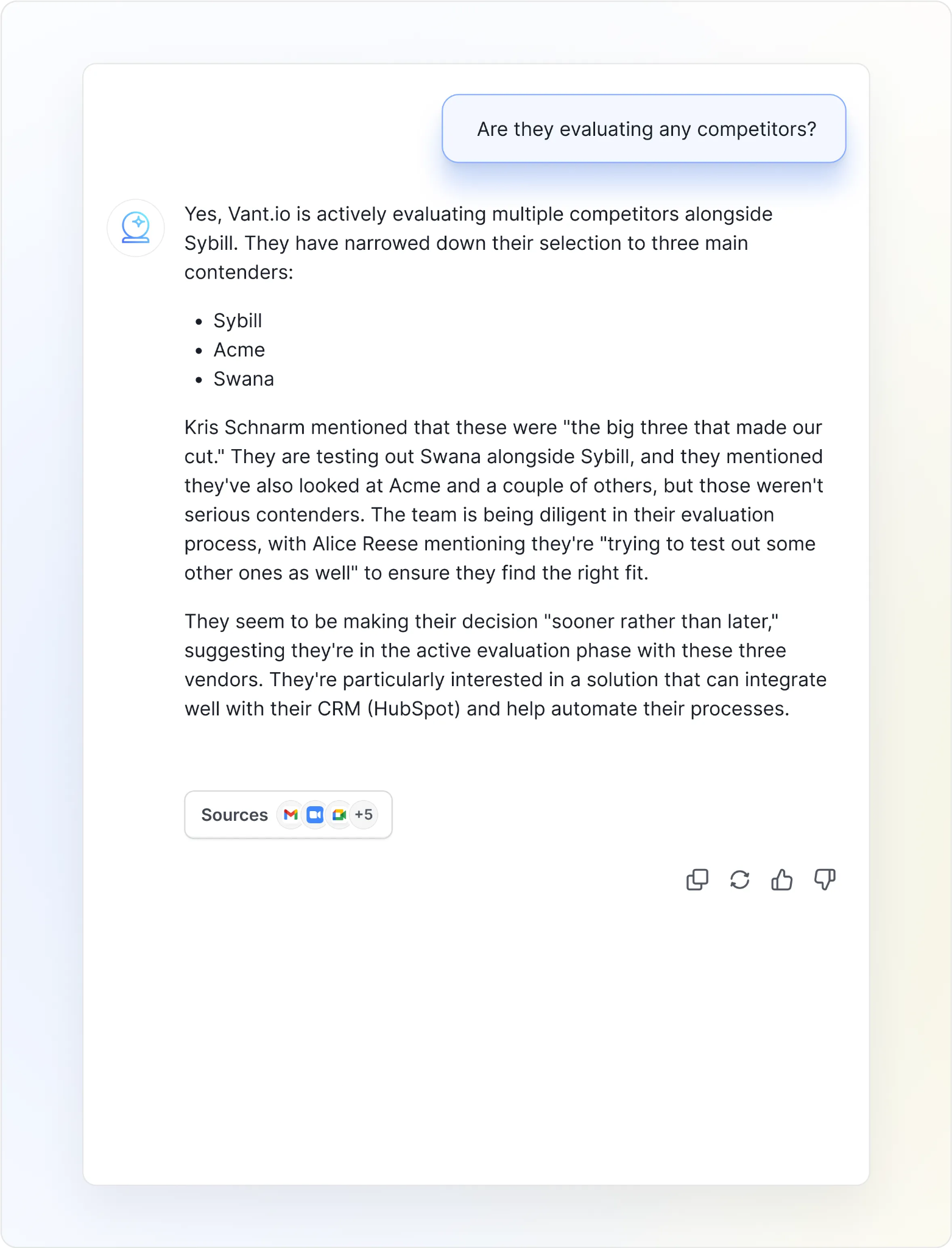
Sybill is the best Chorus alternative for teams that want to move beyond “what happened on the call?” and answer the much more useful question:
“What should we do next?”
Chorus helped sales teams capture calls. Sybill helps teams understand deals and execute faster.
That distinction matters.
Because the best revenue teams in 2026 are not winning because they have more recordings. They are winning because they have cleaner context, faster follow-up, better coaching, stronger CRM hygiene, and sharper deal inspection.
Sybill brings all of that into one AI sales assistant.
Sybill combines conversation intelligence, deal intelligence, and execution workflows.
Here is what that looks like in practice.
Magic Summary turns sales calls into structured summaries that capture buyer needs, pain points, objections, action items, stakeholders, next steps, and deal context.
CRM Autofill updates CRM fields automatically, so reps do not have to reconstruct the conversation after the call. This is where Sybill directly attacks one of the biggest productivity drains in sales: manual CRM work.
Personalized Emails drafts follow-ups using the actual call context. The email references what the buyer said, what the team discussed, and what needs to happen next. No “just checking in” nonsense. No generic recap pretending to be personalization.
Ask Sybill lets reps, managers, and RevOps ask questions across calls, emails, CRM, and deals. For example:
AI Tasks helps convert conversation commitments into next actions, so follow-through does not depend on a rep remembering everything while sprinting into the next demo.
Pre-Call Brief helps reps walk into calls prepared with deal context, prior conversations, and account details.
Personal Coach supports rep improvement by surfacing coaching moments from real conversations.
Deal Pipeline and Deal Workspace help teams inspect pipeline, collaborate on deals, and move from call-level visibility to revenue-level intelligence.
Sybill helps teams understand what is happening, why it is happening, what is at risk, and what needs to happen next. That is the full loop.
Chorus is useful for recording, reviewing, and analyzing calls. Sybill is built for teams that want the intelligence from those calls to move directly into sales workflows.
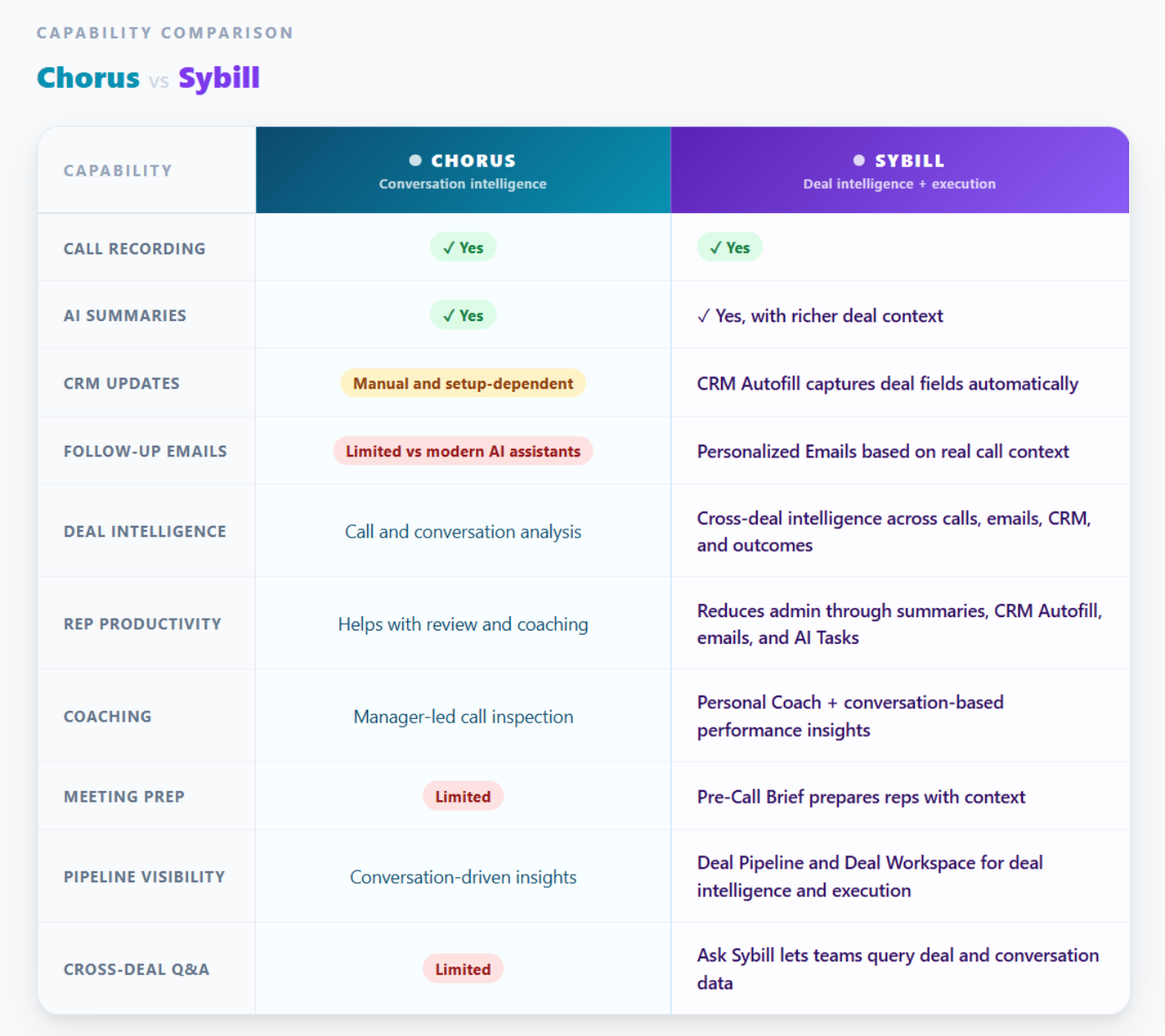
Sybill compounds intelligence, institutional memory, CRM Autofill, follow-ups, meeting prep, forecasting, and cross-deal insights. It supports 850+ revenue teams, saving 10+ hours per rep per week, 50% faster ramp time, and 3 to 5x more pipeline managed per rep.
Sybill is not for teams that only want a basic meeting recorder.
If your only requirement is “record the call and give me a transcript,” a lightweight AI meeting assistant may be enough.
But if your team wants a Chorus alternative that helps reps prepare, summarize, follow up, update CRM, inspect deals, improve coaching, and surface pipeline risk, Sybill belongs at the top of the shortlist.
If Chorus helped your team listen to calls, Sybill helps your team act on them.
Book a Sybill demo to see how AI can turn sales conversations into deal intelligence, CRM updates, personalized follow-ups, coaching insights, and cleaner pipeline execution.

Best for: Teams already using Salesloft
Category: Sales engagement platform with conversation intelligence
Best-fit teams: Sales teams that want conversation intelligence inside their existing Salesloft workflow
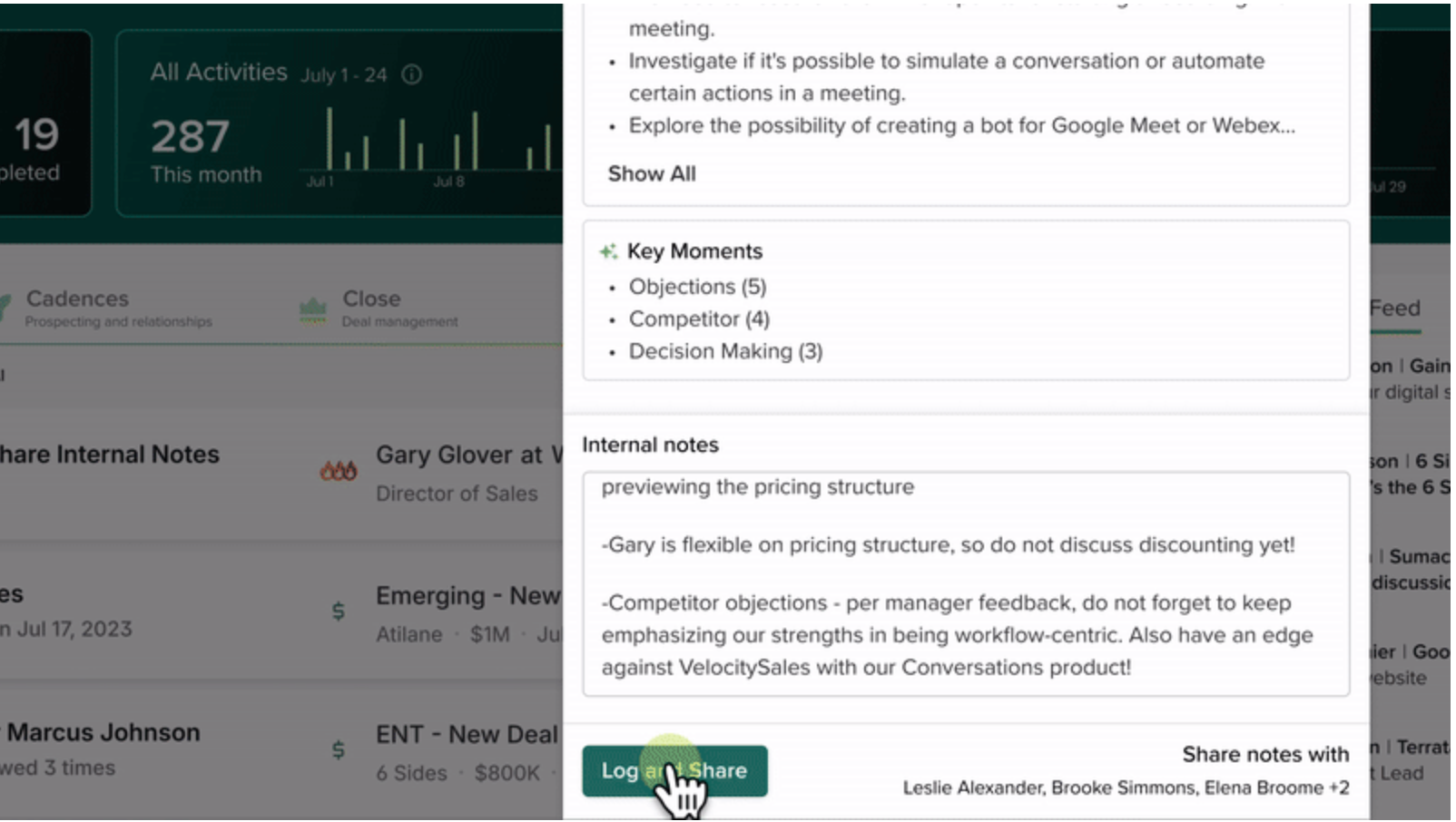
Salesloft Conversations is one of the more natural Chorus alternatives for teams already using Salesloft as their sales engagement platform.
Its conversation intelligence capabilities sit inside the broader Salesloft workflow, which means reps and managers can connect call insights to sequences, cadences, activity, and pipeline movement without jumping between too many systems.
That is the main advantage: workflow convenience.
Salesloft Conversations can help teams record calls, review transcripts, analyze conversations, identify coaching moments, and connect those insights to sales engagement activity. For managers, it can support coaching conversations and help identify what top performers do differently.
Salesloft is useful when your team already runs outbound engagement inside Salesloft. You get:
For teams that already have high Salesloft adoption, adding its conversation intelligence layer can reduce tool sprawl. That matters because sales stacks are already crowded enough to deserve their own disaster documentary.
Salesloft is strongest when it is part of the Salesloft ecosystem. If your team does not already use Salesloft, the conversation intelligence module may not be compelling enough on its own.
It is also not necessarily the best fit if your primary need is AI-powered deal intelligence plus execution across CRM, emails, calls, tasks, coaching, and pipeline inspection.
That is where Sybill has the advantage. Salesloft connects conversation intelligence to sales engagement. Sybill connects conversation context to the broader deal workflow.
Choose Salesloft if your team already lives in Salesloft and wants call insights connected to cadence activity.
Choose Sybill if your team wants a dedicated AI sales assistant that helps with meeting prep, summaries, CRM Autofill, follow-up emails, coaching, deal intelligence, and pipeline visibility across the sales process.
Best for: Forecasting and pipeline-focused revenue teams
Category: Revenue intelligence and forecasting platform
Best-fit teams: Revenue organizations that already use Clari or prioritize forecasting rigor
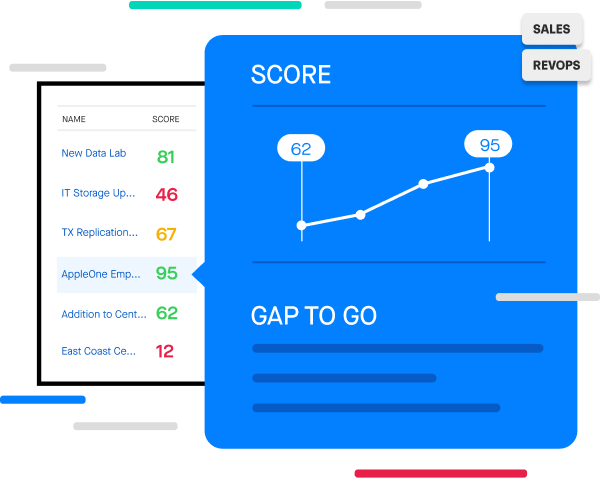
Clari is a strong Chorus alternative for teams focused on forecasting, pipeline visibility, and revenue process discipline.
While Chorus is associated with conversation intelligence, Clari is more strongly associated with revenue intelligence and forecast management. Its value is clearest for sales leaders, RevOps teams, and revenue organizations that want to inspect pipeline health, identify deal risk, and improve forecast accuracy.
Clari Copilot, formerly Wingman, brings conversation intelligence into that broader revenue platform.
Clari is useful for teams that want to connect sales conversations with pipeline and forecasting workflows.
Strengths include:
For organizations already using Clari, adding Copilot can make sense. It helps connect what reps say on calls to what leaders see in the forecast.
Clari can be more platform than some teams need.
If your sales team mainly needs better call summaries, automated CRM updates, personalized follow-ups, meeting prep, and rep-level AI assistance, Clari may feel heavy.
It is built for revenue inspection and forecasting discipline. That is powerful, but it may not solve the rep’s daily pain as directly as a tool like Sybill.
And let’s be honest: if the rep still has to manually update everything after the call, the AI has left the most annoying part untouched.
Choose Clari if forecasting and pipeline governance are your top priorities, especially if your organization already runs on Clari.
Choose Sybill if you want deal intelligence and execution closer to the rep workflow. Sybill helps sellers prepare, summarize, follow up, update CRM, inspect deals, and ask questions across deal context.
For teams comparing modern revenue tools, Sybill’s breakdown of revenue operations and AI is a useful companion read.
Best for: Teams already using Outreach
Category: Sales execution and engagement platform
Best-fit teams: Outbound-heavy sales teams that want conversation intelligence inside Outreach
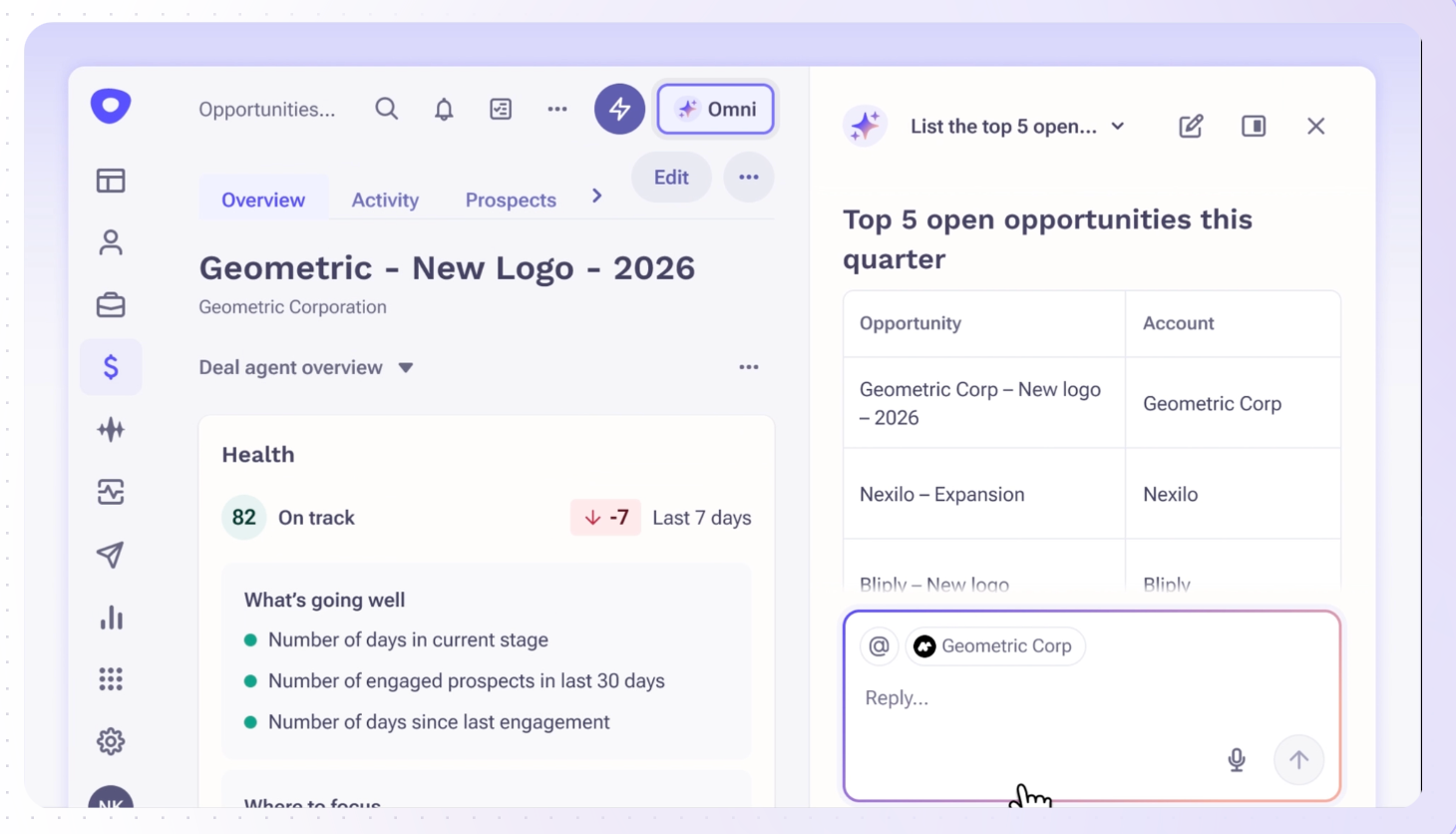
Outreach is another strong option for teams that want conversation intelligence connected to sales engagement.
Like Salesloft, Outreach makes the most sense when it is already central to your outbound motion. If reps use Outreach for sequences, prospecting workflows, and activity management, its conversation intelligence capabilities can help keep call insights tied to the execution layer.
Outreach is built around sales execution, especially outbound engagement.
Teams may use it for:
Outreach Kaia can support reps during calls and help capture relevant conversation moments. For teams already committed to Outreach, this can be convenient and operationally efficient.
Outreach is strongest inside its own ecosystem.
If your team is not already using Outreach, adopting it primarily as a Chorus alternative may be too much. You would be buying into a broader sales engagement platform, not just a conversation intelligence tool.
Also, while Outreach can help with sales engagement execution, teams evaluating Chorus alternatives specifically for deal intelligence, CRM automation, and cross-deal AI should compare it closely against Sybill.
Choose Outreach if your team already runs outbound engagement through Outreach and wants conversation intelligence connected to those workflows.
Choose Sybill if your priority is using AI to understand deals, automate CRM, draft follow-ups, prepare reps, coach sellers, and surface pipeline risk across sales conversations.
Best for: Phone-heavy sales teams
Category: Sales engagement, dialer, and conversation intelligence
Best-fit teams: SDR teams, inside sales teams, and call-heavy revenue organizations
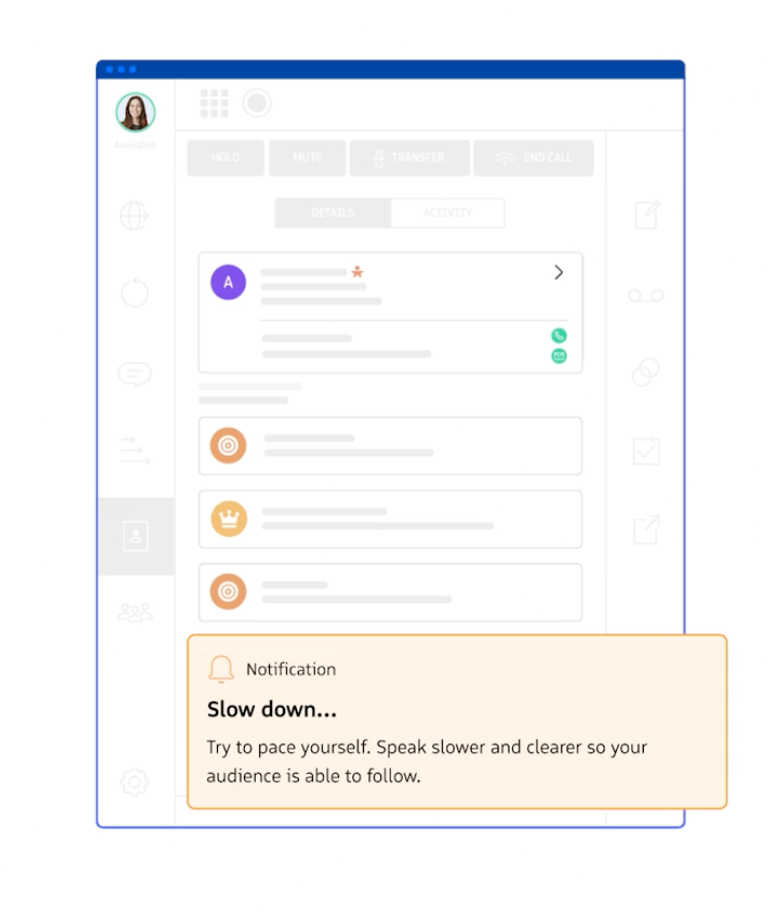
Revenue.io is a practical Chorus alternative for teams where the phone is still the center of the sales motion.
It combines conversation intelligence with telephony, real-time coaching, and sales engagement workflows. That makes it especially useful for SDR teams, call centers, and sales teams running high-volume outbound or inbound calls.
Revenue.io’s biggest advantage is that it connects conversation intelligence to calling workflows.
Key strengths include:
If your team makes a high volume of calls every day, Revenue.io can be more operationally relevant than a standalone call analysis tool.
Revenue.io is best suited for phone-centric teams.
If your deals happen across Zoom calls, Google Meet, Teams, emails, CRM notes, buying committees, internal handoffs, and multi-threaded sales cycles, you may need broader deal intelligence.
That is where Sybill’s value becomes clearer. Sybill is not just listening to calls. It is helping teams understand the deal and act across the workflow.
Choose Revenue.io if your revenue motion is heavily phone-based and you want dialer plus call coaching.
Choose Sybill if you want conversation intelligence connected to deal intelligence, CRM automation, follow-up emails, AI tasks, meeting prep, coaching, and pipeline execution.
Best for: Coaching-first sales organizations
Category: Sales coaching and conversation intelligence
Best-fit teams: Enablement-led teams focused on behavior change and manager coaching
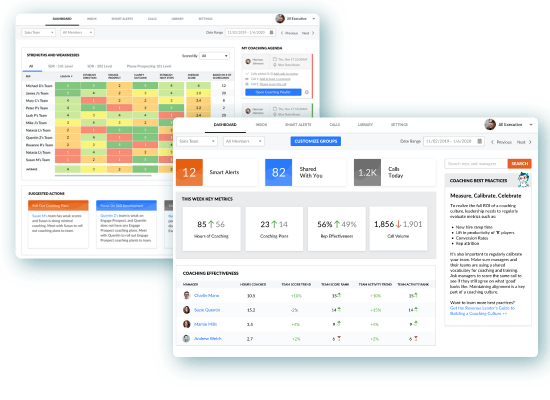
ExecVision is a good Chorus alternative for organizations that care deeply about structured coaching.
It is designed to help managers and enablement teams review calls, identify coachable moments, create feedback loops, and improve rep performance over time.
If your biggest problem is inconsistent coaching, ExecVision deserves a look.
ExecVision works well for sales teams that want to build repeatable coaching programs.
Strengths include:
It is less about replacing the rep’s daily admin work and more about making coaching systematic.
That can be valuable, especially for teams with new reps, inconsistent messaging, or managers who need better structure.
ExecVision is not primarily built as an AI deal execution platform.
If your team needs CRM Autofill, follow-up drafting, deal intelligence, pipeline inspection, meeting prep, and cross-deal AI, ExecVision may be too coaching-specific.
A coaching tool can improve rep behavior. But it may not solve the bigger workflow problem: turning every sales conversation into clean data, clear action, and better pipeline movement.
Choose ExecVision if your top priority is structured coaching and rep behavior improvement.
Choose Sybill if you want coaching plus deal intelligence and AI-powered execution. Sybill supports rep improvement, but it also helps sellers move faster through summaries, CRM updates, follow-ups, prep, and deal insights.
Chorus was built for call intelligence. Sybill is built for deal intelligence plus execution.
That is not a small difference. That is the category shift.
A sales call is only one piece of the puzzle.
Sybill looks at the broader context: calls, emails, CRM data, buyer signals, stakeholder movement, objections, and outcomes. That gives teams a better view of the actual deal, not just one conversation.
Because deals rarely die from one bad call. They die from missing context, weak follow-up, unclear ownership, poor multi-threading, and risks that nobody noticed until the forecast meeting got tense.
Traditional conversation intelligence often creates value for managers first.
Managers get visibility. Managers inspect calls. Managers coach reps. Useful, yes.
But reps need help too. Sybill helps sellers with:
That matters because rep adoption improves when the tool gives reps time back.
The best Chorus alternative should not make managers nosier. It should make reps faster.
This is the big one.
With Ask Sybill, reps and leaders can ask questions across deal context instead of digging through recordings, notes, CRM fields, and Slack threads.
That changes how teams inspect deals.
Instead of asking the rep, “What is going on with this opportunity?” the manager can ask the system:
That is not just conversation intelligence. That is deal intelligence.
Insight without execution is expensive trivia.
Sybill closes the loop by helping reps act on what was discussed. It drafts the follow-up, fills CRM, creates tasks, supports coaching, and keeps the deal workspace updated.
This is what modern sales teams need: fewer dead recordings, more living context.
The easiest way to choose among Chorus alternatives is to stop asking, “Which tool has the most features?”
Ask this instead:
What should happen automatically after a sales conversation? Your answer will tell you what kind of tool you need.
Sybill is the best fit if you want AI to help with:
Sybill is especially strong for teams that want revenue intelligence to be useful to both managers and reps.
Switching from Chorus to another conversation intelligence platform is not just a software swap. It is a workflow decision.
Use this checklist before making the move.
Do not assume every feature matters.
Look at what reps and managers actually use today:
Then separate “used weekly” from “looked good in the demo.”
Be specific.
Common gaps include:
This becomes your buying criteria.
Do not test your Chorus alternative on one friendly demo call.
Use a mix of:
Then compare outputs.
Which tool gives the best summary? Which one fills CRM best? Which drafts the strongest follow-up? Which one helps managers coach? Which one helps reps actually move faster?
Manager dashboards are nice. Rep adoption is survival.
Track:
If reps do not use the tool, it becomes shelfware with a nicer UI.
AEs, SDRs, RevOps, managers, and sales leaders do not need the same onboarding.
For example:
Your rollout should reflect that.
If you want a sales engagement-native option, consider Salesloft or Outreach.
If forecasting is your biggest pain, Clari is a strong contender.
If your team runs heavily on phone calls, Revenue.io makes sense.
If coaching is the main priority, ExecVision is worth evaluating.
But if you want the best Chorus alternative for 2026 sales teams, the bar should be higher than call recording and post-call analysis.
The best tool should help your team understand deals, update CRM, draft follow-ups, prepare for meetings, coach reps, inspect pipeline, and act on buyer context.
That is where Sybill stands out.
Sybill combines deal intelligence and execution in one AI sales assistant. It does not just tell you what happened. It helps your team decide what matters, what is at risk, what needs to be done, and how to move the deal forward.
Because in 2026, sales teams do not need more recordings.
They need fewer dropped balls, cleaner CRM, sharper follow-ups, better coaching, and pipeline intelligence that actually changes behavior.
That is the real upgrade.
Ready to move from call recording to AI-powered deal intelligence and execution? Try Sybill and see how your sales team can turn every conversation into cleaner data, faster action, and stronger pipeline momentum.
Sybill is the best Chorus alternative for sales teams that want deal intelligence plus AI-powered execution. It helps with Magic Summary, CRM Autofill, Personalized Emails, AI Tasks, Ask Sybill, Pre-Call Brief, Personal Coach, Deal Pipeline, and Deal Workspace. Salesloft, Clari, Outreach, Revenue.io, and ExecVision are also strong options depending on your sales workflow.
Sales teams look for Chorus alternatives when they need more than call recording and post-call analysis. Common reasons include the need for better CRM automation, stronger follow-up workflows, richer deal intelligence, easier adoption, coaching support, and improved pipeline visibility.
Look for accurate meeting summaries, reliable call recording, CRM automation, personalized follow-up emails, coaching workflows, pipeline visibility, cross-deal intelligence, and ease of adoption. The best Chorus alternative should help reps sell faster, not create more admin work.
Sybill is a stronger fit for teams that want modern AI sales assistance across deal intelligence and execution. Chorus focuses heavily on call recording and conversation analysis, while Sybill helps sales teams summarize calls, autofill CRM, draft follow-ups, prepare for meetings, ask questions across deals, coach reps, and inspect pipeline.
Clari is a good Chorus alternative for revenue teams focused on forecasting, pipeline inspection, and revenue governance. It is especially useful for teams already using Clari. However, teams that want more rep-level automation, follow-up support, CRM Autofill, and deal-context AI should evaluate Sybill as well.
Salesloft is a good Chorus alternative for teams already using Salesloft as their sales engagement platform. Its conversation intelligence capabilities work well inside the broader Salesloft workflow. If your team wants a dedicated AI sales assistant for deal intelligence, CRM automation, coaching, and follow-up execution, Sybill may be a stronger choice.
Sybill is the best Chorus alternative for sales teams that want deal intelligence plus AI-powered execution. It helps with Magic Summary, CRM Autofill, Personalized Emails, AI Tasks, Ask Sybill, Pre-Call Brief, Personal Coach, Deal Pipeline, and Deal Workspace. Salesloft, Clari, Outreach, Revenue.io, and ExecVision are also strong options depending on your sales workflow.
Sales teams look for Chorus alternatives when they need more than call recording and post-call analysis. Common reasons include the need for better CRM automation, stronger follow-up workflows, richer deal intelligence, easier adoption, coaching support, and improved pipeline visibility.
Look for accurate meeting summaries, reliable call recording, CRM automation, personalized follow-up emails, coaching workflows, pipeline visibility, cross-deal intelligence, and ease of adoption. The best Chorus alternative should help reps sell faster, not create more admin work.