Find us at booth #83, join us for a harbor side happy hour, or catch Gorish’s talk.

Sept, 16-18 > Learn more

%20(1).avif)
Mamta Tainwala

January 28, 2026
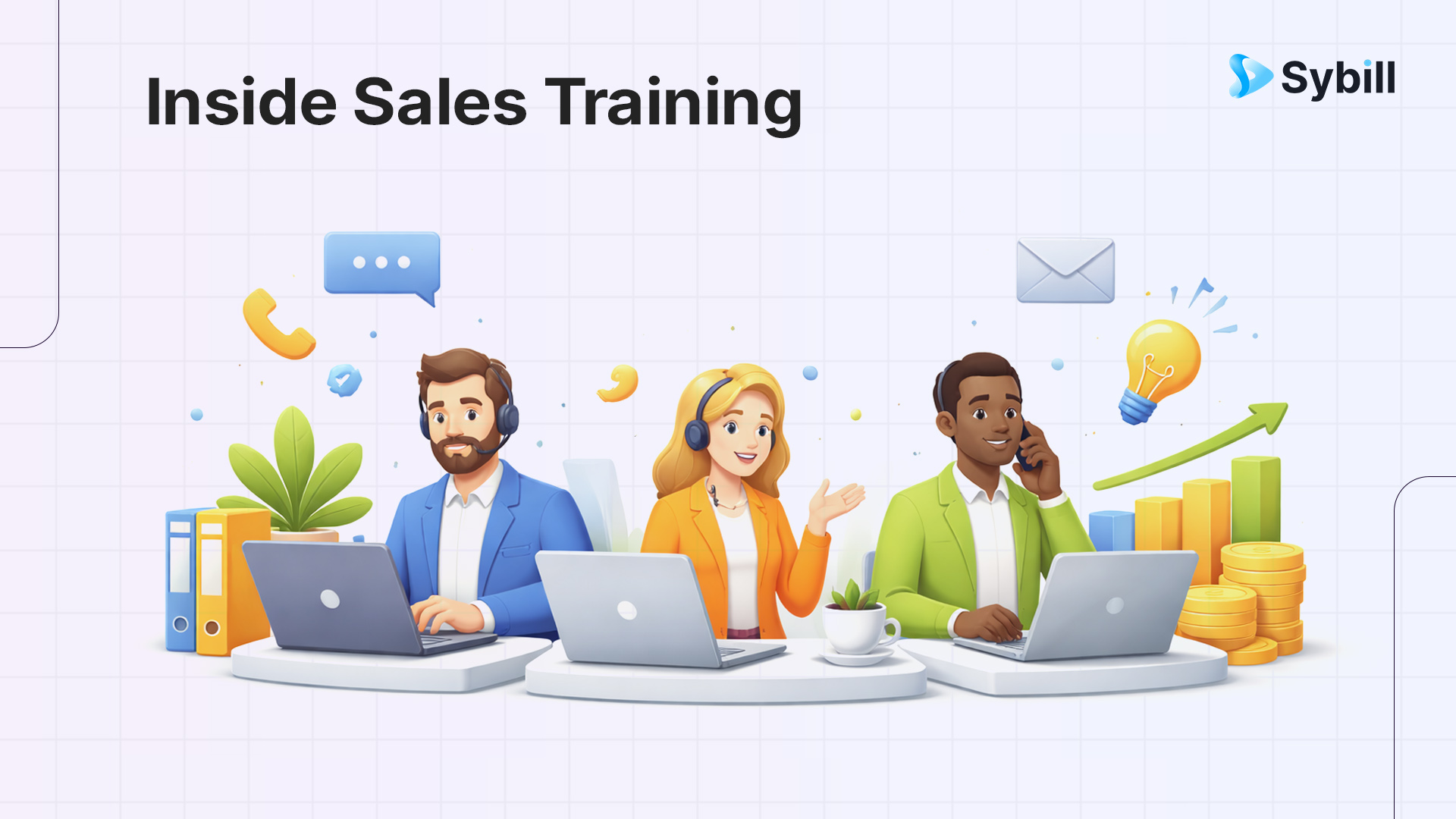
Inside sales training is fundamentally about mastering the art of selling remotely while building genuine relationships through digital channels. What is inside sales? It's the practice of closing deals via phone, email, and video without face-to-face meetings. Successful inside sales requires a specific skill set: exceptional communication over digital channels, active listening without visual cues, time management at scale, mastery of technology stacks, and the ability to build trust through screens. The best inside sales training courses combine core selling methodologies with digital-first tactics, CRM proficiency, conversation intelligence tools, and continuous coaching. This guide covers everything: what inside sales actually is, essential inside sales skills and strategies, how inside sales management differs from field sales leadership, proven training techniques, top inside sales training courses, and how AI is transforming remote sales coaching. Whether you're building an inside sales team from scratch or optimizing existing reps, you'll walk away with actionable strategies to drive consistent, scalable revenue.
Inside sales used to be the scrappy younger sibling of "real" field sales. Not anymore. Today, inside sales teams generate more revenue than outside teams at many B2B companies, close deals just as large (sometimes larger), and scale way faster. But here's the catch: most sales training still treats inside sales like diet field sales, when it's actually a completely different discipline.
You can't just take a field sales playbook, remove the travel, and call it inside sales training. Remote selling requires mastery of digital communication, the ability to build relationships through screens, technical fluency across multiple platforms, and strategies for managing high-volume pipelines without burning out.
This guide gives you the complete framework for training elite inside sales teams that consistently hit quota, ramp faster, and close deals that matter.
Inside sales is selling products or services remotely through phone, email, video conferencing, and digital channels, without requiring in-person meetings to close deals. Reps work from centralized locations managing higher prospect volumes with typically shorter sales cycles than field teams.
Scalability, efficiency, cost-effectiveness, buyer preference for virtual meetings, and data generation enabling AI-powered coaching make inside sales the dominant B2B model.
Generic sales skills aren't enough. Inside sales requires specific competencies that field reps never develop.
Inside reps live and die by how well they communicate through digital channels.
Inside reps manage way more prospects simultaneously than field reps. Without solid time management, they drown.
Inside sales reps are only as good as their tools, and their ability to use them.
The hardest inside sales skill: making digital interactions feel personal and building trust without handshakes.
Skills are what you can do. Strategies are what you should do. Here are the tactics that separate great inside sales teams from mediocre ones.
Inside sales lives or dies on pipeline health. No pipeline, no revenue.
Ideal Customer Profile (ICP) clarity: Know exactly who you're targeting. Industry, company size, role, tech stack, pain points. Spray-and-pray prospecting wastes time.
Balanced approach: Combine inbound leads (marketing-generated, higher intent) with strategic outbound (targeted accounts you want to win).
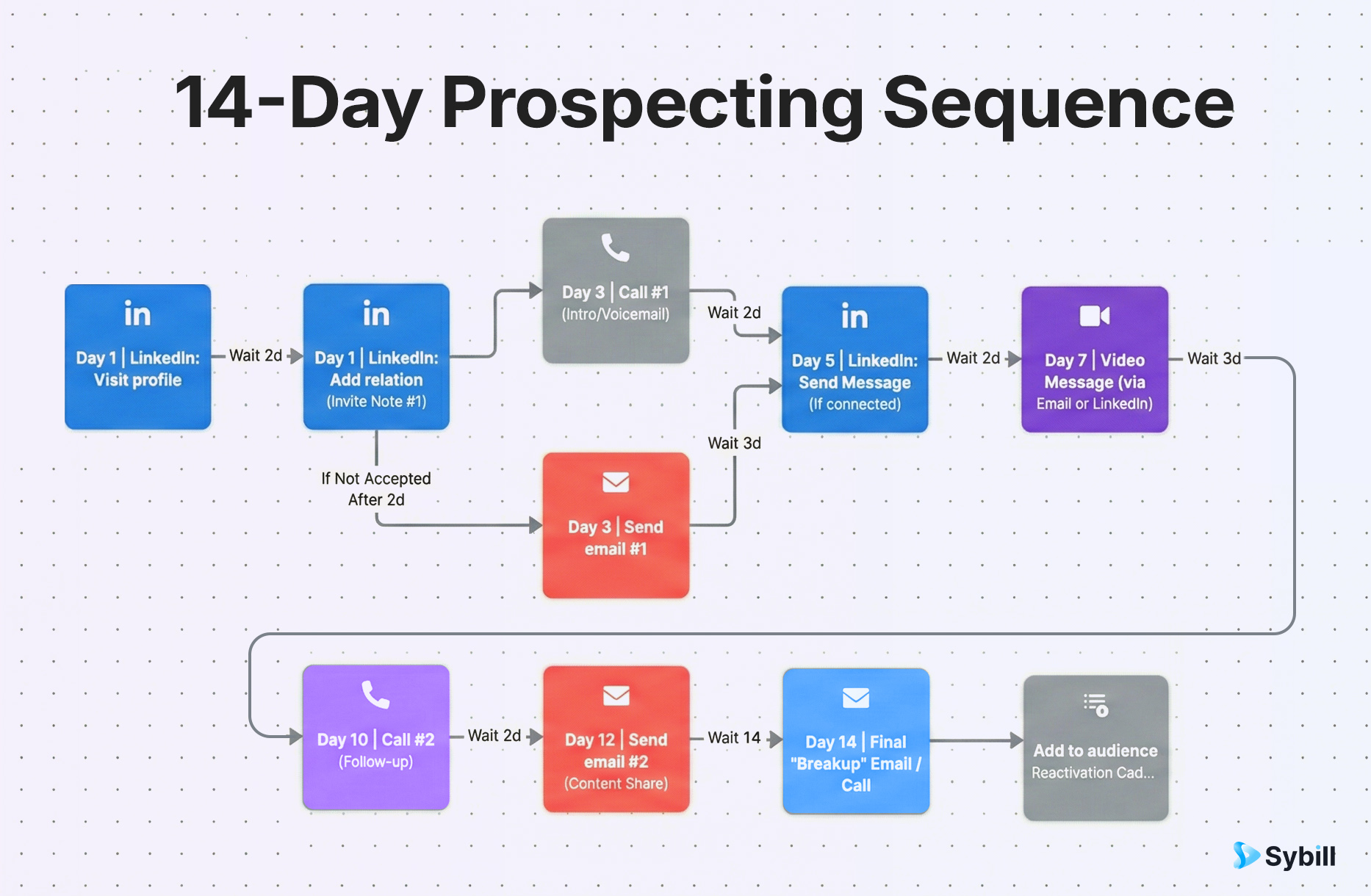
Multi-channel sequences: Email alone doesn't work. Phone alone doesn't work. LinkedIn alone doesn't work. The combination works. Design sequences that touch prospects across channels.
Persistence with value: Follow-up isn't nagging if you're providing value. Share relevant content, industry insights, or helpful introductions between "checking in."
Discovery is where inside sales reps earn their keep or blow deals.
Preparation: Research the prospect and company before dialing. Know their challenges, competitors, and recent news. Walking in blind is amateur hour.
SPIN questioning: Situation (understand context), Problem (identify pain), Implication (quantify cost of inaction), Need-payoff (get them to articulate why they need your solution).
Talk ratio discipline: Aim for 40/60 (you talk 40%, they talk 60%). If you're talking more than that, you're pitching, not discovering.
Note-taking that doesn't distract: Use conversation intelligence tools that automatically capture key points so you can stay focused on the conversation, not frantically typing.
Qualifying hard: Not every prospect is a good fit. Disqualifying bad fits fast saves time for real opportunities.
Virtual demos are make-or-break moments for inside sales.
Interactive, not broadcast: Don't present AT prospects. Engage them. Ask questions throughout, get them to click, share screen control when possible.
Tell stories, not features: "Here's a feature" puts people to sleep. "Here's how a similar company solved X problem using this" keeps them engaged.
Handle technical issues gracefully: WiFi drops. Screen share fails. Prospects can't hear you. Have backup plans and stay calm.
Use the 10-minute rule: Attention spans are short on video. Shift gears every 10 minutes. Demo, discussion, demo, Q&A, next steps.
Record and review: Record demos (with permission), watch yourself, identify weaknesses, improve systematically.
Objections hit different over phone and email than face-to-face.
Common objection playbook: Budget, timing, competition, "send me more information." Train reps on tested responses to each.
Clarifying questions: "Not interested" could mean anything. Ask "Just to understand, is it that the timing's not right, or is this not a priority at all?" Dig deeper.
Reframing: Turn objections into opportunities. "Too expensive" becomes a value conversation. "Bad timing" becomes a future pipeline opportunity.
Using silence strategically: On video calls, silence feels awkward. Use it. After addressing an objection, stop talking. Let the prospect process and respond.
You don't get to look someone in the eye and ask for the deal. You have to close digitally.
Assumptive close: "Let's get the contract sent over. What email should I use?" Act like the decision is made.
Option close: "Does Thursday or Friday work better for onboarding kickoff?" Give them choices, both of which move forward.
Summary close: "So we've agreed this solves X, Y, and Z problems. What's left to address before we move forward?"
Direct ask: Sometimes just ask. "Are you ready to move forward?"
Digital signature streamlining: Use DocuSign, PandaDoc, or similar. Make signing frictionless. The harder the process, the more deals stall.
Ready to transform your inside sales training? Get started for free with Sybill and give your reps AI-powered coaching on every call, automated CRM updates, and follow-up emails that write themselves.
Managing inside sales teams requires different skills than managing field reps. Here's what works.
Inside sales managers need to see performance without hovering over reps.
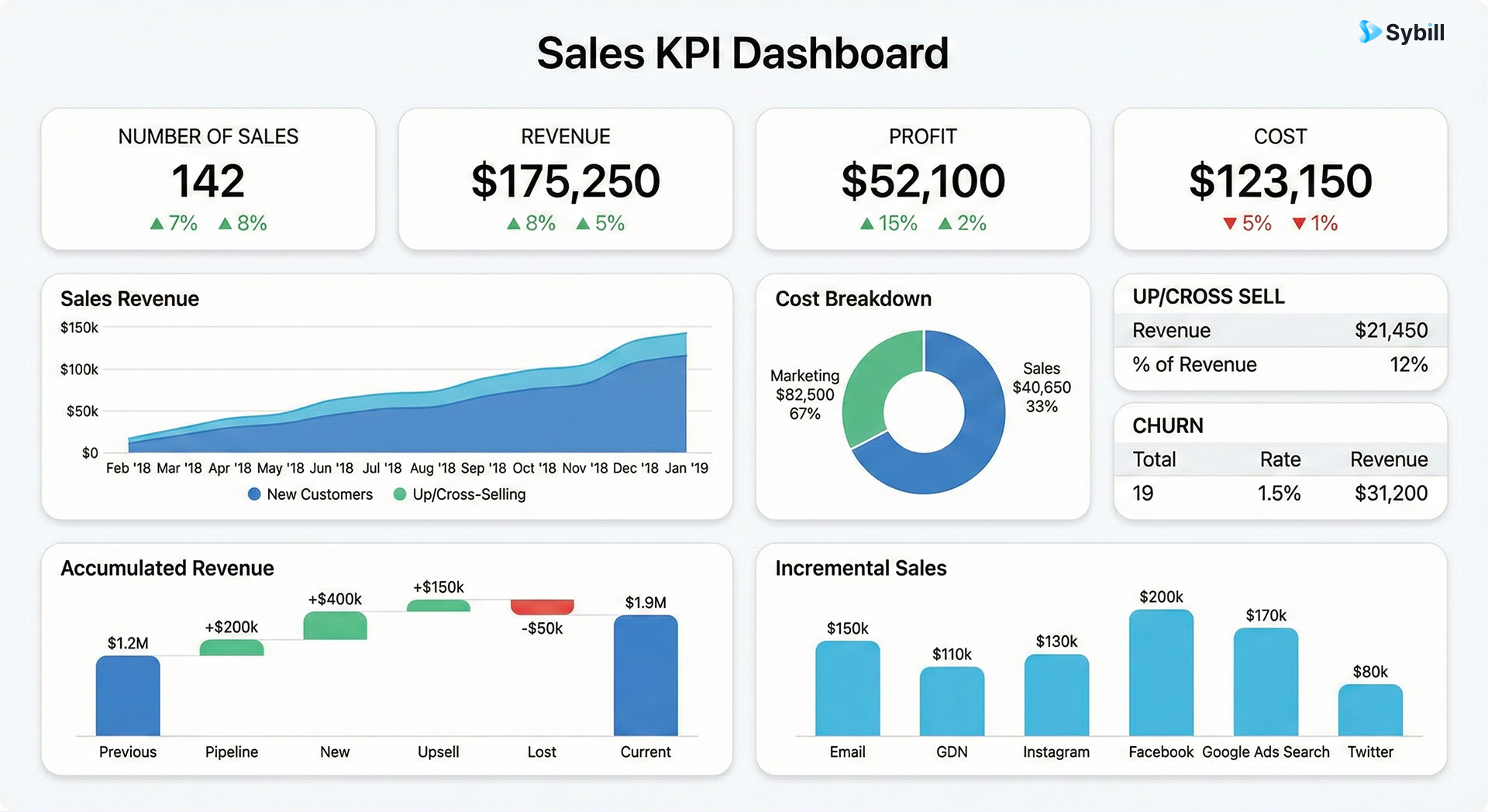
Leverage dashboards: Real-time visibility into calls made, emails sent, meetings booked, deals moved. But don't just count activities, measure outcomes.
Call monitoring and coaching: Use conversation intelligence to review calls systematically, not randomly. Identify patterns across the team, not just individual mistakes.
Pipeline reviews: Weekly or bi-weekly deep dives into each rep's pipeline. Which deals are real? Which are stalled? What help do they need?
Leading indicators focus: Track behaviors that drive results (discovery calls conducted, proposals sent, follow-up response rates) not just lagging outcomes.
Generic "good job" feedback doesn't develop reps. Specific, data-driven coaching does.
Call reviews with specificity: Instead of "that call went well," try "You asked great discovery questions in minutes 4-7, but when they brought up budget concerns at minute 12, you pivoted too quickly. Let's work on digging deeper there."
Role-playing: Regular practice sessions where reps handle objections, practice discovery, and refine their pitches in safe environments before using them with prospects.
Peer learning: Have top performers share what's working. Record their best calls. Turn individual excellence into team capability.
AI-assisted coaching: Let AI analyze every call and flag coaching moments so managers can focus on high-impact interventions, not listening to 100% of calls.
Inside sales can feel isolating. Remote teams need intentional culture.
Celebrate wins publicly: Ring the bell (virtual or real) when deals close. Make success visible.
Gamification: Leaderboards, competitions, achievement badges. Sales reps are competitive; use it.
Team connection: Regular video team meetings, virtual happy hours, Slack channels for non-work chat. Build relationships beyond sales.
Career pathing: Show reps the progression path. Inside SDR → Inside AE → Senior AE → Sales Management. Give them something to work toward.
Bad quota setting demotivates teams and creates turnover.
Data-driven targets: Base quotas on historical performance, market opportunity, and deal size. Don't just pull numbers from thin air.
Ramp time consideration: New reps need 3-6 months to hit full quota. Structure ramp targets accordingly.
Balanced comp: Typical inside sales comp is 60/40 or 70/30 (base/commission). Too heavy on base removes motivation. Too heavy on commission creates instability.
Accelerators and bonuses: Reward top performers with accelerators (higher commission rates after hitting 100% of quota) to keep them hungry.
If you're looking for structured training, here are programs worth considering.
Funnel Clarity Inside Sales Training
Richardson Sales Performance - Inside Sales Programs
Sandler Training for Inside Sales
RAIN Group Inside Sales Training
LinkedIn Sales Navigator Certification
Sales Coaching and Enablement Programs
Conversation Intelligence Training
Can't afford external programs? Build internally:
Module 1: Inside Sales Fundamentals (Week 1)
Module 2: Prospecting and Outreach (Week 2)
Module 3: Discovery and Qualification (Week 3)
Module 4: Demos and Presentations (Week 4)
Module 5: Objection Handling and Negotiation (Week 5)
Module 6: Closing and Next Steps (Week 6)
Ongoing: Tools, CRM, and Technology
Content matters, but delivery determines retention. Use these techniques:
Most reps hate role-plays because they're awkward and fake. Fix that.
Use real scenarios: Pull from actual deals, recent losses, or current pipeline situations. Relevance drives engagement.
Record everything: Video record role-plays so reps can watch themselves. Self-awareness accelerates improvement.
Make it challenging: Don't let reps practice easy situations. Put them in uncomfortable scenarios where they must adapt.
Rotate roles: Have reps play the prospect sometimes. Understanding the buyer's perspective makes them better sellers.
Manager participation: Managers should role-play too. Seeing leaders practice vulnerability builds team trust.
The single highest-impact training technique for inside sales.
Use conversation intelligence: Platforms like Sybill analyze every call, identify what's working, and surface coaching opportunities automatically.
Review as a team: Weekly team call review sessions where everyone learns from one great call and one that could've gone better.
Focus on specifics: Don't say "good call." Say "Minute 3:45, you asked 'help me understand the impact of that delay' which got them to quantify their pain. Do that more."
Track improvement: Compare a rep's calls from month to month. Are questions getting better? Is talk time ratio improving? Measure progress.
Long training sessions don't fit inside sales workflows. Go bite-sized.
5-minute videos: Quick lessons reps can consume between calls. One topic, one takeaway, immediately applicable.
Sales playbooks: Searchable repositories of objection handling scripts, competitive battle cards, discovery question banks.
Slack bot training: Send daily sales tips, quiz questions, or quick challenges via Slack to reinforce learning.
Pre-call prep: AI tools that brief reps on account history, suggest questions, and surface relevant collateral before calls.
Inside sales reps are competitive. Harness that energy.
Activity contests: "Most qualified meetings booked this week wins lunch on the company."
Skill challenges: "Best demo of the week (as voted by peers) gets featured in our newsletter."
Leaderboards: Public dashboards showing top performers in categories like response rates, demo-to-close ratios, or pipeline coverage.
Team goals: Collective targets that require collaboration, not just individual heroics.
Make learning visible and rewarded.
Tier-based certification: Bronze (foundational skills), Silver (intermediate), Gold (advanced), Platinum (expert). Reps progress by demonstrating competency.
Skill assessments: Regular testing on product knowledge, objection handling, discovery questioning. Maintain certification through ongoing performance.
Public recognition: Announce certifications in team meetings, Slack channels, company all-hands. Make achievement meaningful.
AI isn't coming to inside sales training. It's already here, and teams using it are pulling ahead.
I would say at this point, apart from the selling, AI can do everything for a rep.
Analyze 100% of conversations: Instead of managers sampling a few calls per month, AI reviews every single interaction and provides insights at scale.
Personalized coaching paths: AI identifies each rep's specific weaknesses (struggles with pricing conversations, asks too few questions, talks too much) and delivers targeted coaching.
Real-time feedback: Mid-call or immediately post-call, AI can flag issues. "You've been talking for 3 straight minutes" or "You haven't asked a discovery question yet."
Automate admin work: AI generates call summaries, drafts follow-up emails, and auto-populates CRM fields based on conversations, freeing reps to focus on selling.
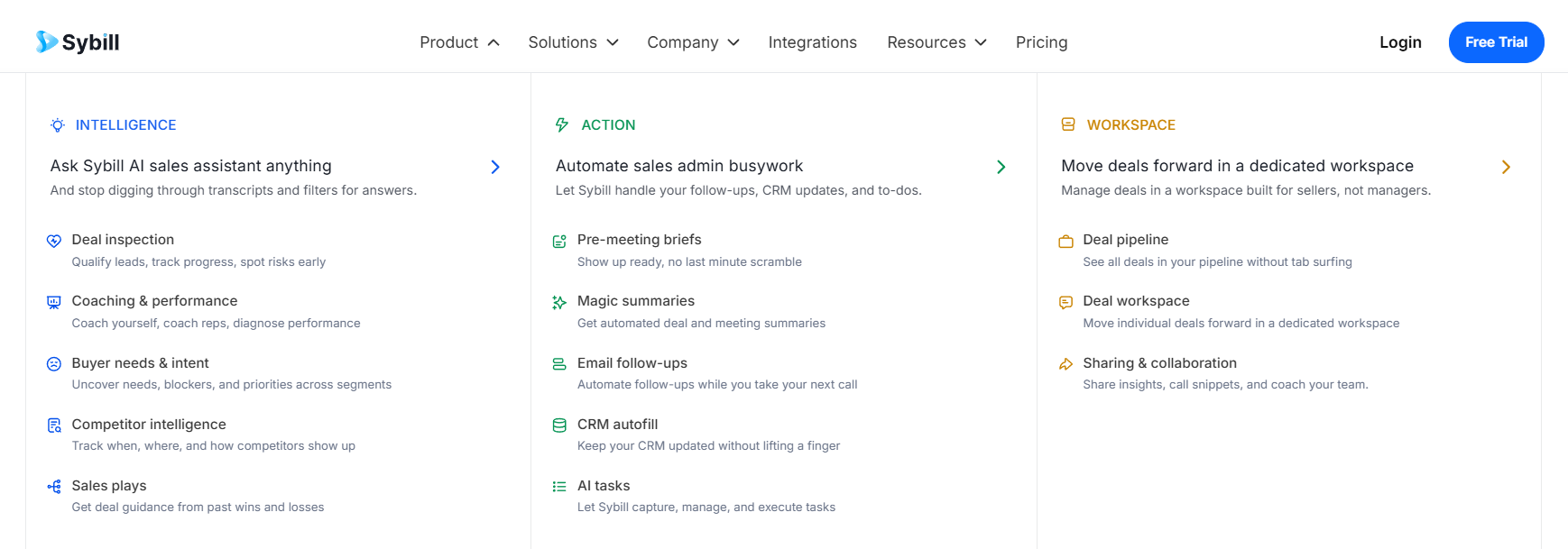
Predict deal outcomes: AI can analyze conversation patterns and predict which deals are likely to close, helping managers prioritize coaching interventions.
Scale onboarding: New reps can learn from thousands of archived successful calls instead of just shadowing one or two people.
AI is a tool, not a replacement for sales managers. The winning approach:
AI handles: Pattern recognition across thousands of calls, objective performance metrics, routine feedback, administrative tasks, consistency at scale.
Humans handle: Strategic deal guidance, motivation and culture building, complex problem-solving, relationship building, judgment calls on nuanced situations.
When combined properly, AI enables managers to coach better by surfacing the moments that matter most and freeing them from routine analysis.
Sybill: Conversation intelligence specifically built for B2B teams. Analyzes what's said and how buyers react, generates summaries and follow-ups, provides coaching insights, and automates CRM updates.
Chorus (ZoomInfo): Captures and analyzes calls and video meetings with strong team performance benchmarking.
Second Nature: AI role-play platform where reps practice against virtual prospects that adapt to their responses.
Mindtickle: Combines training content with AI-driven coaching and readiness assessment.
Even smart teams make these errors.
The problem: Using outside sales training materials for inside teams. The skills don't transfer cleanly.
The fix: Use training specifically designed for remote selling. Inside sales requires mastery of digital communication that field sales training ignores.
The problem: Big onboarding event, then nothing. Knowledge decays rapidly without reinforcement.
The fix: Continuous learning approach. Weekly training sessions, monthly skill assessments, quarterly certifications. Make development ongoing.
The problem: Assuming reps will "figure out" the CRM, sales engagement platform, and other tools on their own.
The fix: Invest serious time in technology training. Inside sales productivity is directly tied to tool proficiency. Poor CRM skills cost you deals.
The problem: Managers say they'll coach but never make time for it. Reps are left to self-discover what works.
The fix: Block coaching time on managers' calendars. Make call reviews non-negotiable. Use AI to make coaching more efficient so it actually happens.
The problem: Tracking only revenue and deals closed, not the activities and behaviors that drive those outcomes.
The fix: Monitor leading indicators: calls per day, connect rates, discovery calls conducted, demos delivered, proposal follow-up rates. Coach to behaviors, outcomes follow.
The problem: Focusing entirely on process and tools while ignoring that inside sales requires exceptional communication, emotional intelligence, and relationship skills.
The fix: Dedicate meaningful training time to active listening, empathy, tone modulation, written communication, and digital rapport building.
The problem: Everyone gets the same training regardless of skill level, experience, or specific gaps.
The fix: Use AI and manager insights to identify individual development needs. Customize learning paths. Veterans need different training than new hires.
Training is an investment. Measure whether it's paying off.
Formula: (Revenue Gain from Training - Cost of Training) / Cost of Training × 100
Example: Invest $25K training 15 inside reps. Post-training, average quarterly revenue per rep increases from $150K to $175K. That's $375K additional annual revenue from $25K investment. ROI: 1,400%.
Good inside sales training should deliver:
If you're not seeing improvement within 90 days, either the training wasn't good or the reinforcement didn't happen.
Stop guessing what's working in your sales conversations. Try Sybill for free and get AI-powered insights on every inside sales call, plus automated summaries and CRM updates that save your reps 5+ hours per week.
Here's what most companies get wrong: they think hiring "natural salespeople" solves the inside sales challenge. It doesn't. Inside sales excellence is systematically built through training, coaching, technology, and continuous improvement.
The best inside sales teams share common characteristics:
Your inside sales team is capable of extraordinary performance. But they need the right training, tools, and support to get there. One-time training events won't cut it. Generic programs built for field sales won't transfer. The winning approach combines proven selling methodologies adapted for remote environments, with modern technology that scales coaching, and a culture that celebrates learning.
Start with clarity on what inside sales actually is (not diet field sales, but a distinct discipline). Identify the specific skills your team needs to master. Choose training that addresses real gaps. Measure rigorously. Reinforce continuously. Leverage AI to scale what works. And never stop investing in your people.
Because at the end of the day, inside sales teams that consistently hit quota aren't lucky. They're trained. Let's get your team there.
Inside sales training focuses specifically on mastering remote selling through digital channels, while outside sales training emphasizes face-to-face presentation skills and territory management. Inside sales reps need deep competency in phone presence, video selling, written communication, high-volume pipeline management, and technology stack fluency. Outside sales training prioritizes in-person presentation skills, executive presence, relationship building through face-to-face interaction, and managing longer, more complex sales cycles with fewer deals. The fundamental selling principles overlap (discovery, qualification, objection handling), but the tactical execution differs dramatically. Inside reps must build relationships through screens, manage higher activity volumes, leverage digital tools more heavily, and close deals without ever meeting prospects in person. The best sales training programs recognize these distinctions and teach accordingly rather than offering generic "sales training" that doesn't account for the inside vs outside difference.
Typical inside sales ramp time ranges from 3-6 months depending on product complexity, deal size, and prior sales experience. Here's a realistic timeline: Month 1 focuses on onboarding (product knowledge, tools training, shadowing calls, understanding ICP and processes). Month 2 involves conducting first calls under supervision, booking meetings, practicing discovery with coaching. Month 3 sees reps handling full sales cycles with manager support, starting to close smaller deals. Month 4-6 is when reps reach full productivity and quota-carrying status. Variables affecting ramp time include product complexity (enterprise software takes longer than simple SaaS), rep's prior sales experience (experienced reps ramp faster), quality of training and onboarding program, manager coaching effectiveness, and technology enablement.
The most critical skills include data-driven coaching (using CRM and conversation intelligence data to identify performance gaps and provide specific, actionable feedback), pipeline management expertise (understanding inside sales metrics, identifying at-risk deals, and coaching reps on moving stalled opportunities), technology proficiency (fluency with CRM, sales engagement platforms, conversation intelligence, and collaboration tools), hiring and onboarding mastery (identifying traits that predict inside sales success, structured onboarding programs, and fast ramp strategies), and quota and comp plan design (setting realistic targets based on data, creating motivating compensation structures).