Find us at booth #83, join us for a harbor side happy hour, or catch Gorish’s talk.

Sept, 16-18 > Learn more

%20(1).avif)
Mamta Tainwala

April 17, 2026
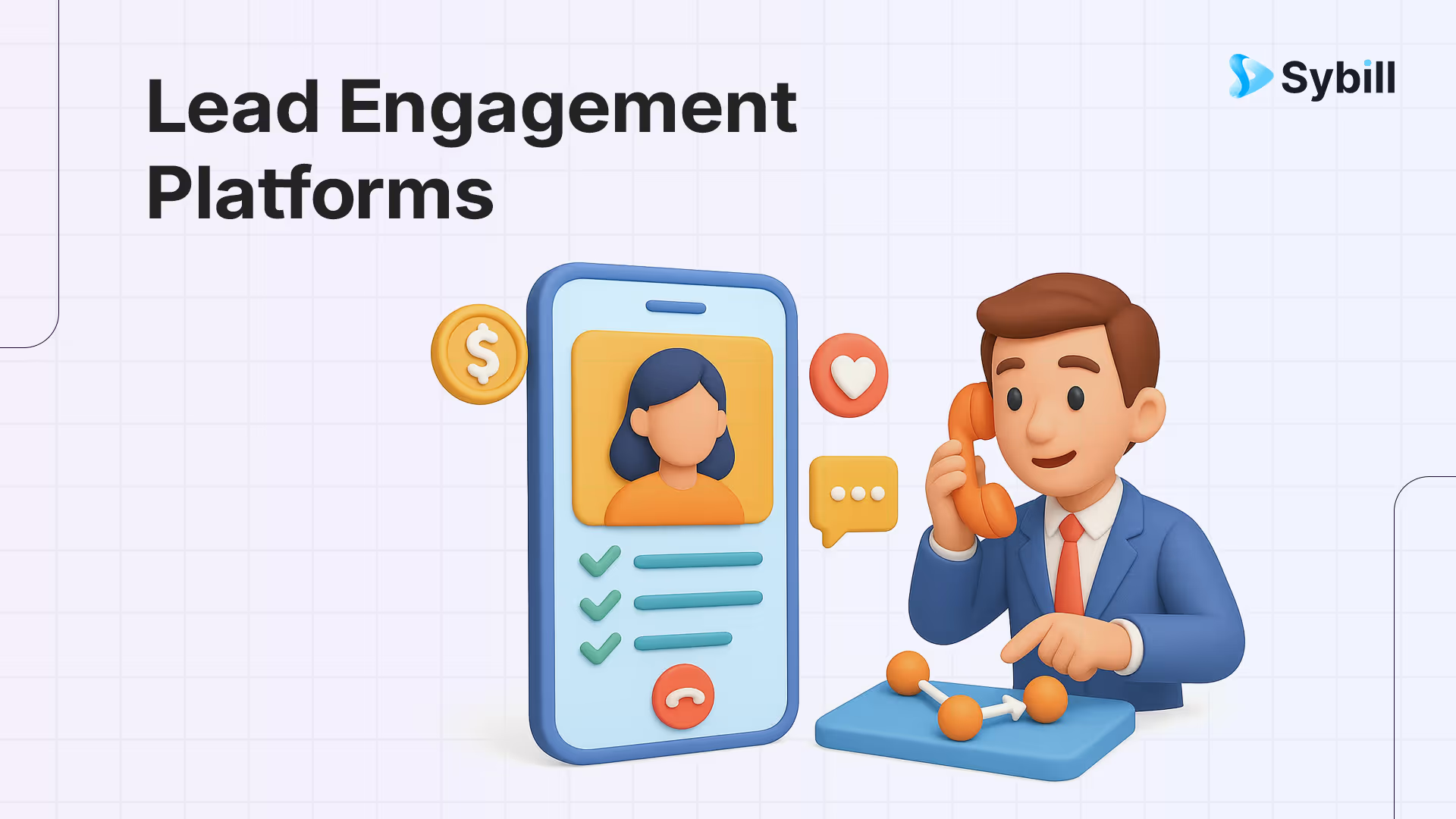
Imagine if your favorite heist movie crew tried to rob the vault by sending the same “just checking in” text to the guard every hour. That is how a lot of teams do lead engagement. Spray. Pray. Hope the door opens.
A real lead engagement platform is not a megaphone. It is a conductor. It listens for buyer signals, scores them, decides the next best action, coordinates the instruments, and learns which moves turn interest into calendar invites. This guide mixes the best of both worlds. You will get the quick-hit practicality of a vendor roundup and the deeper operating model that actually scales. Along the way, I will point to Sybill resources that turn calls and meetings into consistent follow through.
A lead engagement platform is a system that listens for buyer signals across email, calls, website visits, and ads, scores and routes leads based on intent and fit, orchestrates multi-channel outreach sequences, and measures what converts — replacing spray-and-pray outreach with signal-driven selling. The top lead engagement platforms in 2026 include HubSpot (best all-in-one CRM plus engagement), Outreach (best for enterprise sales sequences), Salesloft (best for mid-market cadence management), Apollo.io (best for prospecting plus engagement), and Sybill (best for turning meeting signals into automated follow-through with AI-drafted follow-ups, CRM autofill, and deal intelligence that keeps every lead moving forward).
A lead engagement platform centralizes buyer signals from your website, inbox, product, and meetings, then orchestrates outreach across channels while learning from outcomes. It is not just an email tool or a dialer. It is the connective layer that says who to contact, when to contact them, what to say, and what happened afterward. The strongest setups treat it like a command center that sits between your data sources and your CRM, with conversation intelligence built in. For a view of that kind of workspace, start with the tour of the Sybill sales workspace.
This is the mashup. Five strengths from a quick vendor style approach plus five strengths from a strategy playbook. Use them together for speed and longevity.
Signal capture and identity resolution
Collect events from web, email, chat, product, and meetings. Resolve identities across forms and devices. Build person and account profiles with clear sources and timestamps.
Behavioral scoring that explains itself
Blend explicit data like title and industry with implicit data like recency, frequency, and depth of engagement. Show the weights and why a score moved. Tie high scores to recommended next actions, not just a number.
Orchestration across channels
Send email, phone, LinkedIn, chat, and in-app nudges from a single playbook. Throttle intelligently, respect quiet hours, and prevent over-touching people inside the same account.
Conversation capture and intelligence
Record discovery and demo calls, generate summaries, tag objections and proof moments, extract owners and deadlines, and make it searchable. If your team is still guessing what to say on calls, ground them with the playbook for conversational intelligence.
Tasking, follow through, and CRM sync
Convert next steps into tasks with owners and due dates. Sync automatically to your CRM so reliability is visible without extra typing. If your CRM is Salesforce, confirm your flows with the integration explainer.
Attribution and insights
Connect touchpoints to meetings and opportunities. Show which cadences and talk tracks work by persona and segment. Highlight the content and proof that shorten cycles.
Governance and security
Role based access, field level permissions, PII redaction in transcripts, audit logs, retention policies. Real teams need real guardrails.
Speed to first touch
Minutes from signal to human response. Faster responses correlate with higher meeting conversion, especially for inbound.
Coverage of quality touches
Percent of new leads that receive at least three high quality touches within seven days. Quality means context rich, not spammy.
Meeting conversion by persona and source
Track by role and origin. Patterns here inform scoring and messaging.
Show rate and reschedule rate
Indicator of calendar friction or misaligned value proposition.
Stage velocity and win rate
Measure time from first meeting to qualified pipeline and to close. Watch for segments where velocity stalls.
Attribution depth
How many touches influence meetings and which ones matter most. Include conversational proof, not only emails and calls.
Rep adoption
Percent of touches and follow ups executed through the platform. If reps go manual, the data breaks.
Sybill is the conversation and follow through engine that sits inside your engagement workflow. Calls become structured summaries. Next steps get owners and dates. Follow ups are drafted with the buyer’s own words. CRM fields update without copy paste. Your team moves faster because the system does the typing while you do the selling.
If you want to see how that looks in practice, start with the Sybill sales workspace, then grab ready to send follow ups and agendas from the Templates library.
For standardizing qualification and improving call quality, send teammates the playbooks on AI powered sales qualification, conversational intelligence, and the tried and true discovery call structure.
If you live in Salesforce, the details on syncing outcomes back to your records are in the Salesforce integration explainer.
Lead engagement is not a louder megaphone. It is a smarter orchestra. You capture the right signals, score them transparently, play the right notes through the right channel, then listen for what worked so you can play even better tomorrow. Do the quick vendor checks early so you do not stall procurement, but anchor your plan in a simple operating model you can repeat. Let your conversations power the system. Record the truth, summarize the truth, act on the truth, and log the truth where your team works.
Sybill makes that loop easy. It turns meetings into follow through without extra typing, it keeps your tasks honest, and it updates the CRM so wins are visible. Your reps will sound more relevant. Your managers will coach with receipts. Your pipeline will move because the orchestra is following a score, not a hunch. When every signal counts, a real lead engagement platform turns them into music people want to hear.
Marketing automation sends campaigns to segments. A lead engagement platform reacts to individual behavior and meeting outcomes at the person and account level. It decides the next best action, not only the next scheduled email.
You can explain the weights, you can trace why a score changed, and your highest scored leads convert to meetings at a higher rate. If those three are not true, adjust the inputs or the thresholds and keep testing.
Because the buyer tells you what to say. Calls reveal pain, metrics, owners, and success criteria. When your follow ups echo that language, replies go up and cycles shorten. Conversation intelligence turns those moments into reusable proof and tasks.