Find us at booth #83, join us for a harbor side happy hour, or catch Gorish’s talk.

Sept, 16-18 > Learn more

%20(1).avif)
Mamta Tainwala

July 8, 2026
%20(29).png)
Your marketing team delivered 200 MQLs last month. Sales worked them, and maybe 20 turned into real conversations. The other 180? Wrong title, wrong company size, or someone who downloaded a whitepaper and never thought about you again.
That is not a lead generation problem. It is a scoring problem. And it does not stop at the top of the funnel. Plenty of leads that score beautifully on paper fall apart the moment they get on a call, which is why the best teams in 2026 score leads twice: once before the conversation, and once based on what actually happens in it.
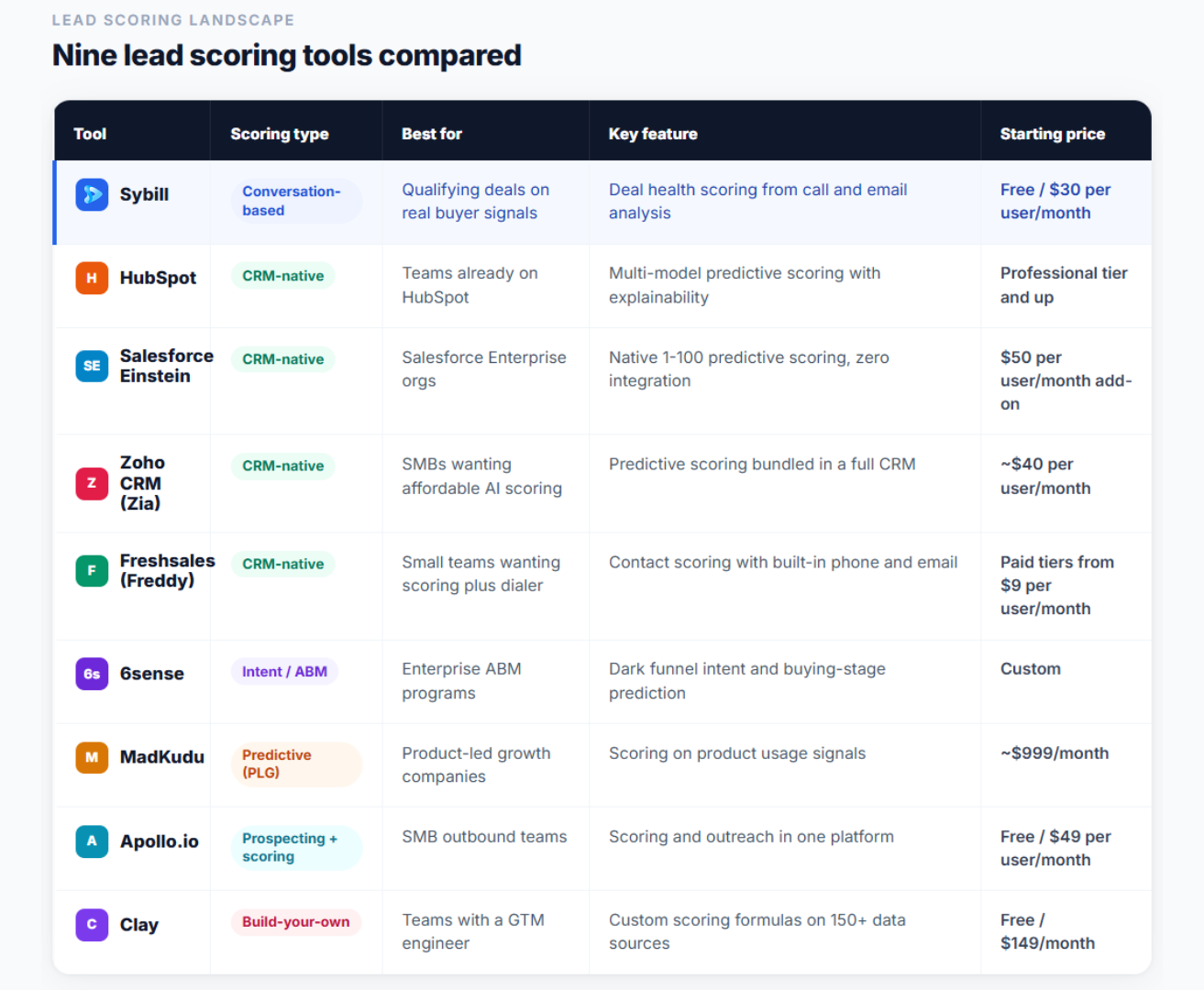
This guide covers both. Here are the nine lead scoring tools worth your evaluation time, organized by how they score.
The best lead scoring tool depends on where your qualification breaks down. CRM-native tools score leads inside the system you already use. Standalone predictive platforms build custom models. ABM tools score accounts on intent. And conversation-based scoring qualifies deals on what buyers actually say.
Lead scoring is the practice of ranking prospects by their likelihood to convert, using demographic fit, behavioral signals, and engagement data. Two approaches dominate: rules-based scoring, where you assign points manually, and predictive scoring, where machine learning finds conversion patterns in your historical data.
Here is the uncomfortable part. Most scoring models fail not because the algorithm is weak, but because the data feeding it is stale and the score stops updating the moment a rep gets on a call. Based on analyzing a lot of sales conversations on the Sybill platform, we see a consistent pattern: a meaningful share of deals marked "qualified" in the CRM surface disqualifying signals, wrong economic buyer, no budget, no timeline, within the first two calls. The score said go. The conversation said stop. Nobody updated the score.
That is why this guide splits tools into two jobs: scoring leads before the conversation (who should we talk to?) and scoring deals during the conversation (should we keep talking?). You likely need one tool for each.
CRM-native scoring tools rank leads inside the system your team already lives in, with no integration work. They are the right starting point for most teams, because a score nobody sees is a score nobody acts on.
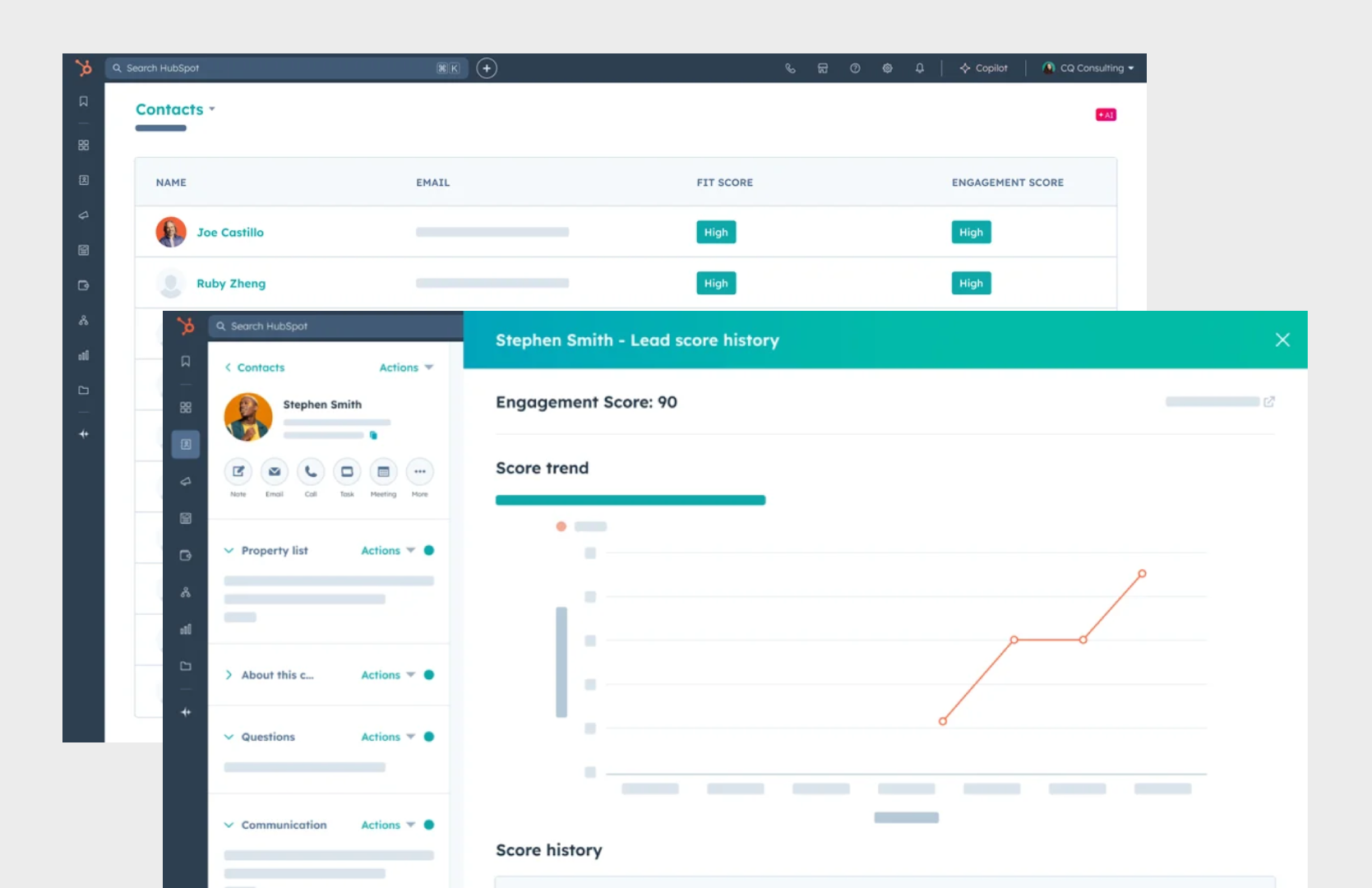
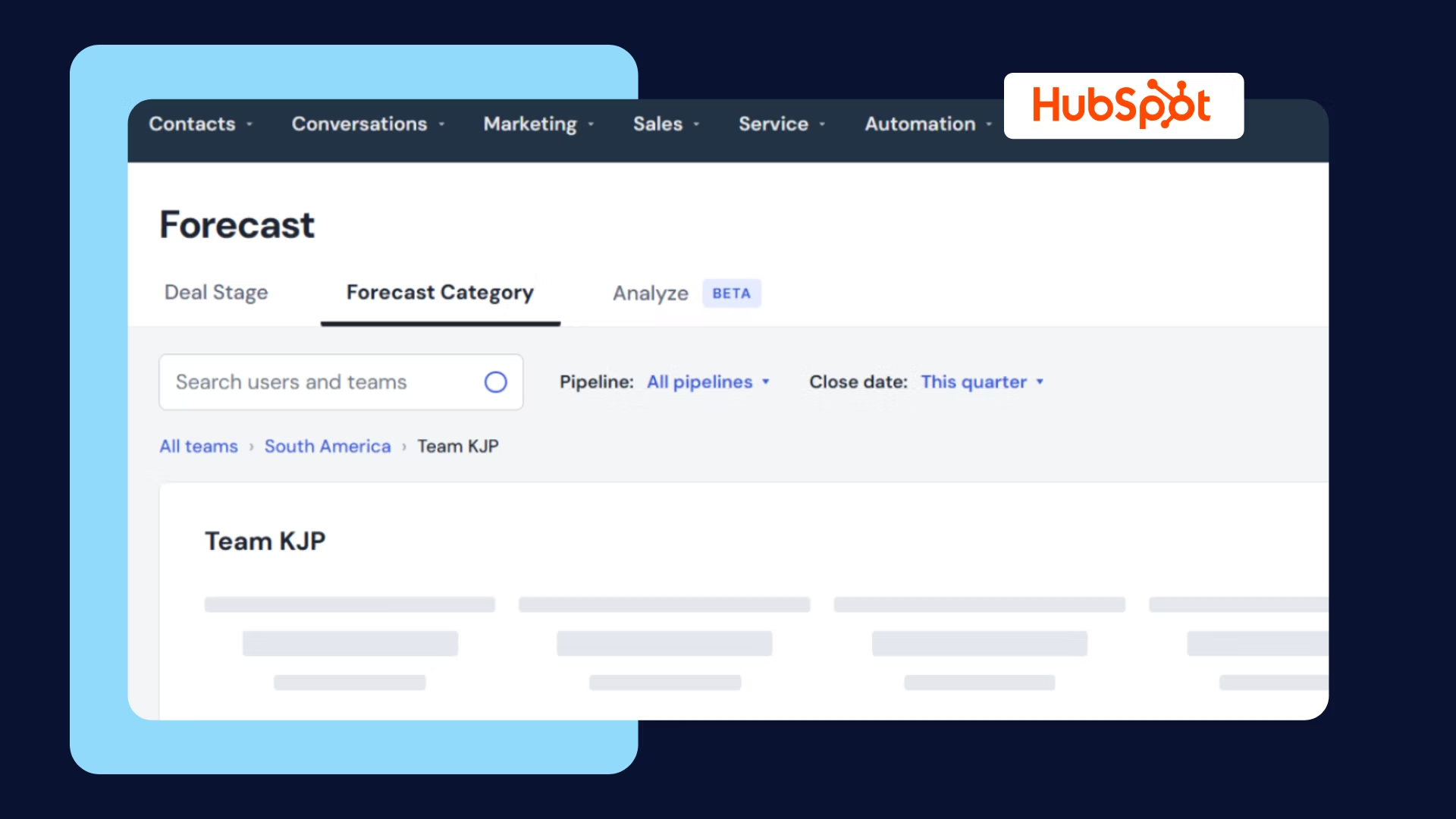
What does it do? HubSpot offers rules-based scoring on Professional plans and AI predictive scoring on Enterprise, with multi-model support and explainability that shows which signals contributed most to each score.
Who is it for? Teams already running HubSpot as their CRM or marketing hub who want scoring without another integration.
HubSpot overhauled its scoring infrastructure in 2025, and the current version is genuinely strong: multiple scoring models for different products or regions, advanced logic, and score explanations reps can actually read. The catch is the tier gap. Predictive scoring requires Enterprise, and many teams find themselves buying the whole tier primarily for this one feature. If you are on HubSpot Professional, start with rules-based scoring and prove the workflow before upgrading.
Pricing: Rules-based scoring on Professional plans. Predictive scoring requires Enterprise.
What does it do? Einstein Lead Scoring analyzes your historical Salesforce data to build a predictive model, then scores every new lead on a 1-100 scale with insight into why each lead received its score.
Who is it for? Teams already on Sales Cloud Enterprise or higher who want native scoring with zero integration work.
Einstein's advantage is that it lives where your reps live: scores flow into reports, dashboards, and Flow automations, so high-scoring leads can route instantly. The 2026 releases expanded Opportunity Scoring to all Sales Cloud users at no extra cost, though Lead Scoring still requires Enterprise Edition. The honest caveat: reviewers consistently flag the learning curve and the gap between the demo and out-of-the-box reality. Budget for configuration time, not just licenses.
Pricing: Requires Sales Cloud Enterprise ($165 per user/month) or higher. Einstein AI add-on from $50 per user/month.
What does it do? Zia generates predictive scores for leads and deals based on historical CRM activity, factoring in email opens, calls, meetings, and recorded interactions.
Who is it for? Small and mid-sized teams, especially those already in the Zoho ecosystem, who want AI scoring without enterprise pricing.
Zia's scoring punches above its price point. You get predictive scores bundled inside a full CRM at a fraction of what Salesforce or HubSpot charge for the equivalent, and if your stack already includes Zoho, Sybill integrates directly with Zoho CRM to keep those records current after every call.
Pricing: Zia AI scoring is available on Zoho CRM Enterprise at around $40 per user/month.
What does it do? Freddy AI scores contacts on conversion likelihood while built-in phone and email let reps act on scores without switching tools.
Who is it for? Small sales teams that want scoring, dialer, and email in one affordable platform.
Freshsales eliminates the tool-switching that slows small teams down. Freddy scores contacts, workflow automation triggers actions at score thresholds, and the rep never leaves the platform. The ML is less sophisticated than HubSpot or Einstein, and there is no intent data integration, but for the price, it is a strong entry point.
Pricing: Paid tiers from $9 per user/month; Freddy AI scoring on higher tiers. [Verify current tier placement before publish.]
Standalone predictive platforms and ABM tools go deeper than CRM-native scoring: custom models, third-party intent data, and account-level signals. They make sense once you have the data volume and the team to act on what they surface.
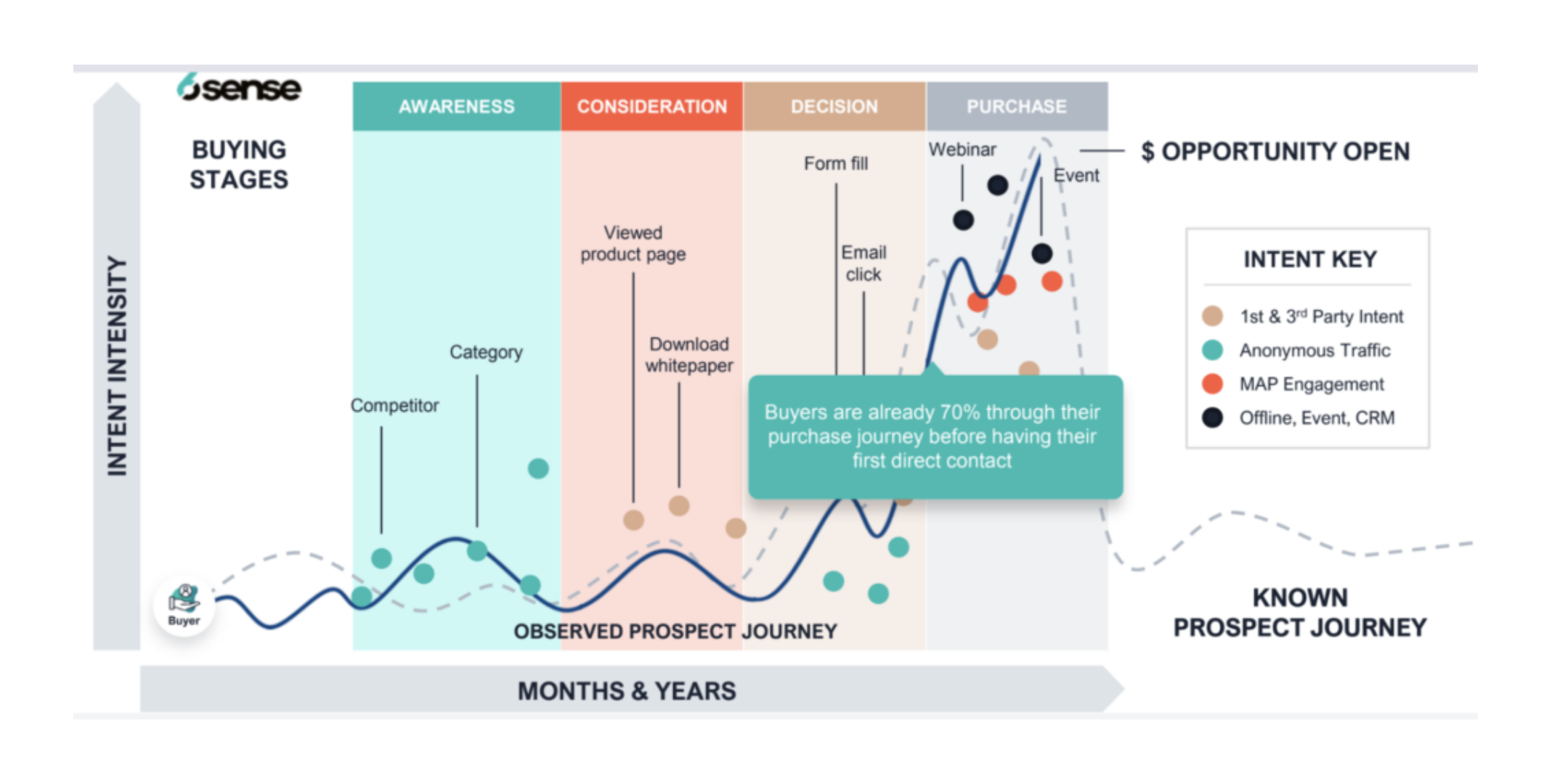
What does it do? 6sense identifies anonymous buying signals from target accounts across the web, the "dark funnel," and uses AI to score accounts on fit and buying-journey stage.
Who is it for? B2B enterprises running account-based programs that prioritize accounts over individual inbound leads.
If your motion is account-based, individual lead scores miss the point. 6sense scores the whole buying committee, predicts where an account sits in its journey, and tells your team when to engage, often before the account ever fills out a form. It is powerful, expensive, and requires a real ABM operation to pay off.
Pricing: Custom. Enterprise-level investment.
What does it do? MadKudu scores leads and accounts on product usage signals, feature adoption, activation milestones, usage frequency, blended with firmographic fit.
Who is it for? PLG SaaS companies that need to know which free users are ready for a sales conversation.
For product-led motions, the question is not "did they download a whitepaper" but "did they hit a meaningful usage threshold." MadKudu is built for exactly those signals and typically outperforms general-purpose scoring tools in PLG contexts. It is a focused specialist, priced for mid-market and up.
Pricing: Custom quotes; estimated starting around $999/month based on review sites.
What does it do? Apollo combines lead scoring with its 275M+ contact database and built-in sequencing, so scoring and outreach happen in one platform.
Who is it for? SMB outbound teams that want to prioritize and engage leads without stitching tools together.
Apollo's scoring is not the deepest on this list, but it wins on speed to value: score, prioritize, and sequence in the same tab. For teams already using Apollo for prospecting, turning on scoring is a no-brainer before buying anything standalone.
Pricing: Free plan available. Paid plans from $49 per user/month.
What does it do? Clay lets you build custom scoring models by chaining 150+ enrichment sources, AI prompts, and conditional logic into formula-driven scores.
Who is it for? Teams with a GTM engineer who want full control over scoring logic.
Clay is not a scoring tool in the traditional sense. It is a workflow builder where, if you can describe the scoring logic, you can build it: employee count weights, funding multipliers, tech stack bonuses, title seniority. That flexibility is the strength and the limitation. Without someone who enjoys building, it is overkill.
Pricing: Free tier with 100 credits/month. Starter at $149/month.
Every tool above scores leads before the conversation. None of them updates the score based on what the buyer actually says. That gap is where good-on-paper leads quietly waste your team's quarter, and it is the gap conversation-based scoring closes.
What does it do? Sybill analyzes every call and email in a deal to score deal health, surface qualification gaps, and flag risks, turning what buyers actually say and do into a living score that updates after every interaction.
Who is it for? Account executives, sales leaders, and RevOps teams who want qualification grounded in conversation evidence, not form fills.
A lead score built on page visits tells you who to call. It tells you nothing about what happened when you did. Sybill picks up where top-of-funnel scoring stops:
The result: your predictive tool decides who gets the first call, and Sybill decides, on evidence, whether the deal deserves a second one. Winning patterns feed back into sales plays so the whole team learns what a truly qualified deal looks like.
Get started for free with Sybill and stop forecasting from scores that stopped updating after the first click.
Choose based on three questions: where your qualification actually breaks, how much historical data you have, and whether anyone will act on the score.
Where does qualification break? If reps are chasing the wrong leads, fix top-of-funnel scoring first (HubSpot, Einstein, or Zia, depending on your CRM). If reps are chasing the right leads but the wrong deals, the problem is downstream, and conversation-based scoring with Sybill fixes it faster than any MQL model. If you cannot tell, audit ten recent closed-lost deals and note where the disqualifying signal first appeared. Our guide to AI sales qualification walks through this in detail.
How much data do you have? Predictive models typically need at least six months of conversion outcomes to learn meaningful patterns. Thin dataset? Start with rules-based scoring, or with conversation signals, which are rich from the very first call.
Will anyone act on the score? A score in a dashboard nobody opens changes nothing. Favor tools that live inside existing workflows, your CRM, your meeting stack, your inbox, and that trigger action: routing, pre-meeting briefs, follow-ups, or alerts. Our framework for choosing AI sales tools covers the full evaluation checklist, from accuracy to security.
Most teams end up with a simple two-layer stack: one scoring tool at the top of the funnel matched to their CRM, and Sybill scoring every deal that makes it to a conversation.
Get started for free with Sybill and see what your pipeline looks like when scores are based on what buyers actually said.
What is the best lead scoring tool in 2026? The best lead scoring tool depends on your stack and motion. HubSpot and Salesforce Einstein lead for CRM-native predictive scoring, 6sense leads for account-based intent scoring, MadKudu leads for product-led growth, and Sybill leads for conversation-based deal scoring after leads become opportunities.
What is the difference between rules-based and predictive lead scoring? Rules-based scoring assigns points manually, such as +10 for a pricing page visit. Predictive scoring uses machine learning to find patterns in your historical conversion data and score new leads against them. Predictive scoring is more accurate at volume but needs at least six months of conversion history to train well.
What is conversation-based lead scoring? Conversation-based scoring qualifies leads and deals using what buyers actually say and do in calls and emails: confirmed budget, identified decision makers, stated timelines, objections, and engagement signals. Tools like Sybill extract these signals automatically and update deal health scores after every interaction, catching disqualifying signals that static top-of-funnel scores miss.
Do lead scoring tools work for small businesses? Yes. Zoho CRM with Zia (around $40 per user/month) and Freshsales with Freddy AI offer genuine AI scoring at SMB prices, while Apollo bundles scoring with prospecting from $49 per user/month. Small teams with limited historical data should start with rules-based scoring and move to predictive models as conversion history builds.
How much data do you need for predictive lead scoring? Most predictive platforms need at least six months of conversion outcomes to learn meaningful patterns, and more data produces better models. Teams with thin datasets should start with rules-based scoring or conversation-based signals, which are informative from the first call.
Can lead scoring tools update scores after a sales call? Most cannot. Traditional lead scoring tools rank leads on pre-conversation signals like page visits and email opens, then stop. Conversation intelligence platforms like Sybill close that gap by analyzing calls and emails, then updating deal health and qualification fields in the CRM automatically after every interaction.
What is a good lead score threshold for routing to sales? There is no universal threshold. Set yours by back-testing: find the score at which historical leads converted at two to three times your baseline rate, route at that level, and revisit quarterly. Explainable scoring tools make this easier because you can see which signals drive conversions.
How do lead scoring and lead qualification differ? Lead scoring ranks prospects numerically on fit and engagement before or during early contact. Lead qualification verifies whether a specific opportunity meets your criteria, such as budget, authority, need, and timeline, usually through conversations. Scoring tells you who to call first. Qualification tells you whether to keep investing after the call.
The best lead scoring tool depends on your stack and motion. HubSpot and Salesforce Einstein lead for CRM-native predictive scoring, 6sense leads for account-based intent scoring, MadKudu leads for product-led growth, and Sybill leads for conversation-based deal scoring after leads become opportunities.
Rules-based scoring assigns points manually, such as +10 for a pricing page visit. Predictive scoring uses machine learning to find patterns in your historical conversion data and score new leads against them. Predictive scoring is more accurate at volume but needs at least six months of conversion history to train well.
Conversation-based scoring qualifies leads and deals using what buyers actually say and do in calls and emails: confirmed budget, identified decision makers, stated timelines, objections, and engagement signals. Tools like Sybill extract these signals automatically and update deal health scores after every interaction, catching disqualifying signals that static top-of-funnel scores miss.