Find us at booth #83, join us for a harbor side happy hour, or catch Gorish’s talk.

Sept, 16-18 > Learn more

%20(1).avif)
Mamta Tainwala

February 10, 2026
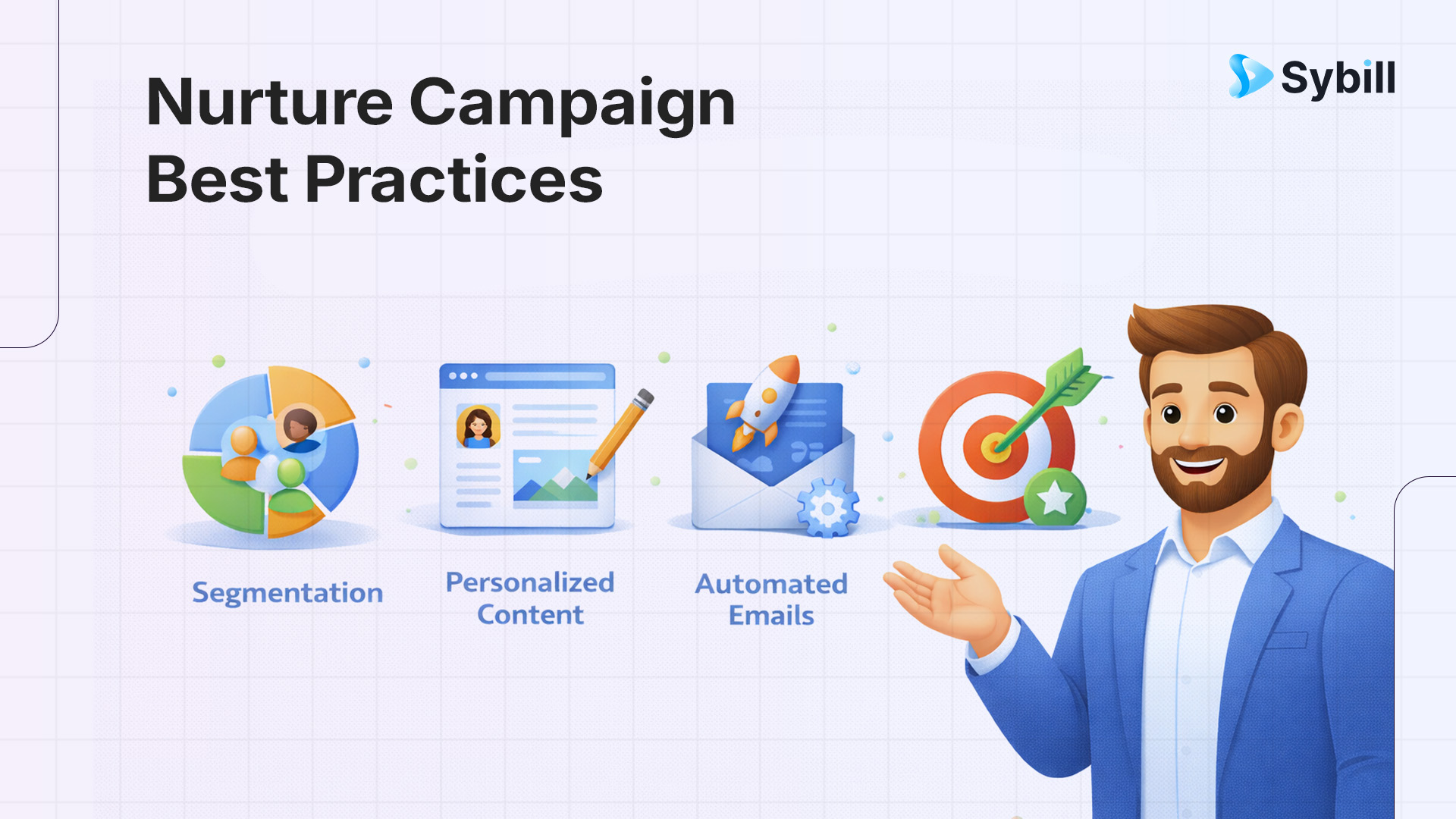
TL;DR: Most nurture campaigns fail because they treat every lead like the same person, blast generic content, and call it "strategy." This guide covers 15 battle-tested nurture campaign best practices, from audience segmentation and multi-channel outreach to AI-driven personalization and smarter CTAs, that help sales teams build real relationships, shorten deal cycles, and convert leads who actually want to hear from you.
Think about the last nurture email you got from a vendor. Was it that targeted? Or was it a "Hey [FIRST_NAME], just checking in..." email that felt about as personal as a fortune cookie? Yeah, that's the problem.
Most nurture campaigns are basically a slow drip of mediocrity. They exist. They technically run. But they don't actually nurture anything. According to industry data, 79% of marketing leads never convert to sales, and a big chunk of that failure comes down to poor lead nurturing. Not because the leads were bad, but because the campaigns treating them were lazy, generic, or poorly timed.
The gap between a nurture campaign that "runs" and one that converts isn't some massive marketing overhaul. It's a series of intentional, well-executed practices that treat your prospects like humans with real problems, not just email addresses in a database.
Whether you're an SDR trying to warm up cold pipeline or a sales manager wondering why your team's email sequences get ghosted, this guide is built for you. Let's break down 15 nurture campaign best practices that separate the revenue-generating machines from the digital junk mail.
A nurture campaign is a sequence of targeted, automated communications designed to build relationships with leads who aren't ready to buy yet. Think of it as the long game of sales: instead of going for the close on day one, you're earning trust over time through relevant content, timely check-ins, and genuine value.
The mechanics are straightforward. Leads enter the campaign through a trigger (downloading a whitepaper, attending a webinar, visiting your pricing page), and then they receive a series of messages across email, social, or other channels based on their behavior and profile.
So why do so many nurture campaigns fall flat? A few recurring culprits:
One-size-fits-all messaging. Sending the same drip sequence to a VP of Engineering and an SDR at a 10-person startup isn't personalization. It's spam with extra steps.
No behavioral triggers. If your campaign doesn't adapt based on what a lead actually does (opens an email, visits a pricing page, ghosts you for two weeks), you're just talking at people on a schedule.
Set-it-and-forget-it syndrome. Building a nurture sequence once and letting it run unchanged for 18 months is like leaving the same voicemail for every prospect. Eventually, the market moves on and your content doesn't.
No connection to actual sales conversations. This is a big one. Your marketing team builds nurture sequences in a vacuum, completely disconnected from what prospects are actually saying on sales calls. The result? Campaigns that address pain points nobody mentioned and ignore the objections that come up every single day.
That last point is where most nurture campaigns silently die. The fix isn't more emails or fancier templates. It's closing the loop between what your prospects tell you in real conversations and what your campaigns say back to them.
Segmentation is the foundation of everything that follows. Without it, you're essentially standing in Times Square yelling your pitch at everyone who walks by. Some people might listen. Most will cross the street.
Effective segmentation goes beyond basic demographics. You want to slice your audience by industry, company size, role (decision-maker vs. influencer vs. end user), funnel stage, engagement behavior, and the specific problems they've expressed.
The more granular your segments, the more relevant your messaging becomes, and relevance is the single biggest predictor of whether someone opens your email or sends it to digital oblivion.
Here's where it gets practical: if your CRM data is messy (and let's be honest, when isn't it?), your segmentation will be too. Tools that automatically update CRM fields after every sales interaction make this dramatically easier. When deal data stays current without manual entry, your segments actually reflect reality instead of last quarter's guesses.
Start with three to five core segments. You can always get more specific as you collect data. Just don't fall into the trap of creating 47 micro-segments that nobody has time to write unique content for.
Let's get something straight: sticking someone's first name in the subject line is not personalization. It was clever in 2014. Now it's table stakes that don't even register.
Real personalization means your messaging reflects what a prospect actually cares about, the challenges they've mentioned, the solutions they've evaluated, and the outcomes they're chasing. It means a follow-up email that references the specific pain point they raised last Tuesday, not a generic "thought you might find this interesting" with a link to your latest blog post.
This is where the gap between marketing automation and sales intelligence becomes painfully obvious. Your marketing platform knows which emails someone opened. But it doesn't know that the prospect told your AE they're losing deals because onboarding takes too long.
Bridging this gap requires getting conversation data into your nurture workflows. When you can pull actual language and objections from sales calls into your email sequences, your nurture campaigns stop sounding like marketing and start sounding like a trusted advisor. Tools like Sybill that capture what buyers actually say in meetings and auto-draft follow-up emails based on real conversation context make this kind of personalization possible at scale.
Automation is what makes nurture campaigns scalable. Without it, you'd need an army of SDRs manually sending emails, which sounds like a terrible use of everyone's time.
But here's the paradox: the more you automate, the more robotic your campaigns can feel. The goal is to automate the logistics (timing, triggers, sequencing) while keeping the content feeling human.
A few guidelines to keep your automated campaigns from sounding like they were written by a committee of chatbots:
The best automated campaigns feel like they were written by a colleague who happened to send you exactly what you needed at exactly the right time. That's the bar.
Every marketer says "provide value." Few actually do it. Providing value doesn't mean sending your latest press release or a product update nobody asked for. It means giving your prospect something that helps them do their job better, whether or not they ever buy from you.
The litmus test is simple: would your prospect thank you for sending this? If the answer is "probably not," it doesn't belong in your nurture sequence.
Content that actually moves the needle in nurture campaigns:
The key word in all of this is relevant. A VP of Sales at a mid-market SaaS company doesn't need a beginner's guide to what a CRM is. They need to know how to fix their pipeline accuracy problem before the next board meeting. Understand where each segment is in their journey and match the content accordingly. This ties directly back to the pipeline generation strategies your team is already running.
Here's a counterintuitive move: teach your prospects how to use your product before they've bought it. This works especially well in SaaS sales where the product is complex enough that prospects need to see the value before they commit.
Step-by-step guides, short video walkthroughs, and "how to solve [specific problem] using [your product]" content serve double duty. They educate the lead and build familiarity with your solution.
The timing matters here. Don't send a deep product tutorial to someone who just downloaded a top-of-funnel ebook. But if a lead has attended a demo, visited your features page, and engaged with comparison content? That's your cue to send a targeted tutorial that shows exactly how your product addresses their use case.
Pro tip: if your sales team records product demos (and they should), those recordings are a goldmine for nurture content. Clip the most impactful 2-3 minutes and include them in your campaigns.
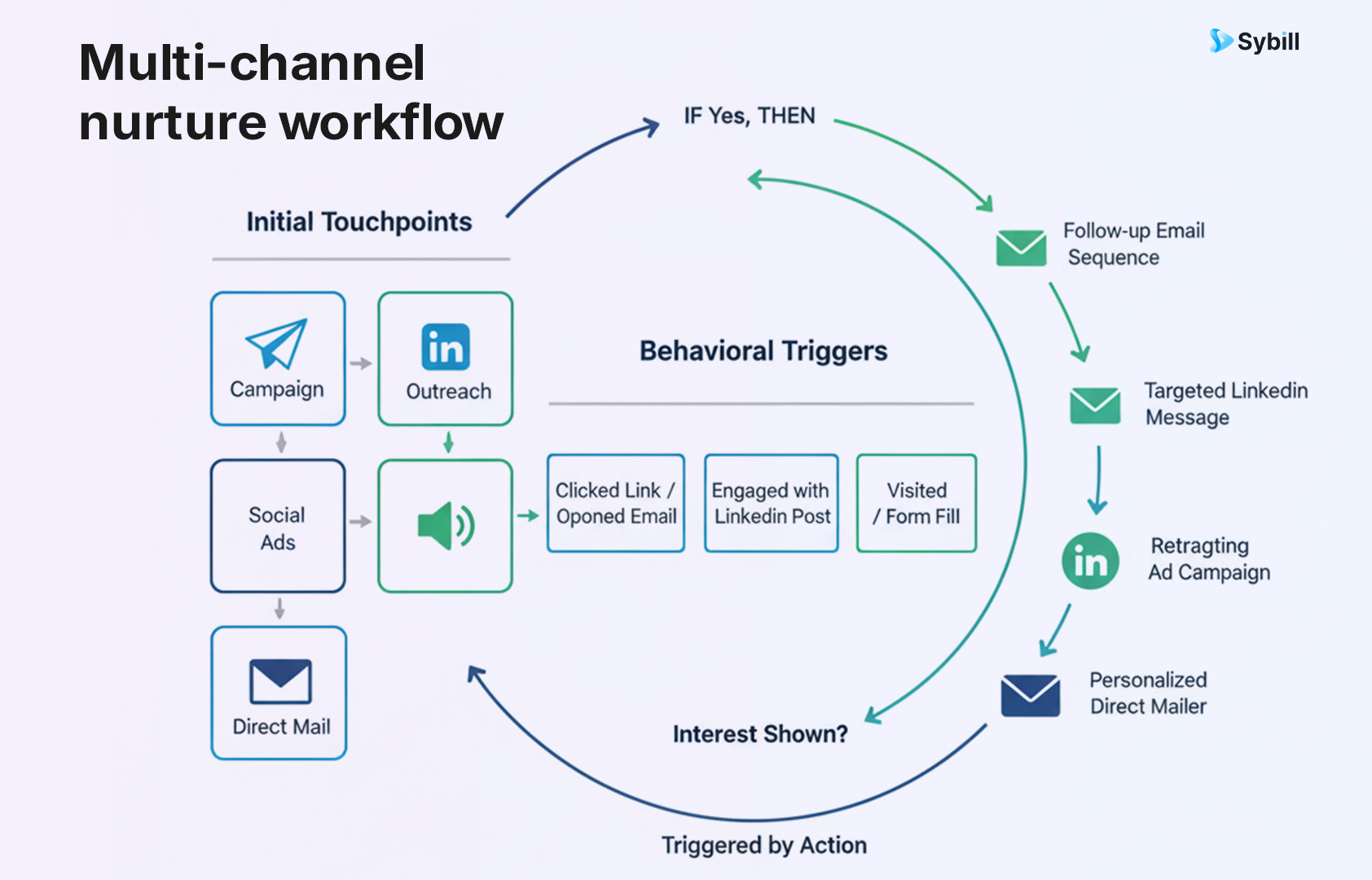
Email is the backbone of most nurture campaigns, and for good reason. But if email is the only channel you're using, you're leaving a lot of engagement on the table.
Your prospects are on LinkedIn. They're in Slack communities. They're attending virtual events. They're scrolling social media between calls. A multi-channel nurture strategy meets them where they are instead of hoping they check their inbox.
Here's what a multi-channel nurture mix might look like:
The critical piece is consistency across channels. If your email says one thing and your LinkedIn outreach says something completely different, you're confusing your prospect, not nurturing them. Align your messaging across every touchpoint so the experience feels cohesive.
You can craft the most brilliant nurture email ever written. If the subject line is boring, nobody will see it. Your subject line is competing against 121 other emails in the average professional's inbox every day. It needs to earn attention in about two seconds.
What works:
What doesn't work: ALL CAPS, excessive emojis, clickbait that your email body can't deliver on, or anything that sounds like it was A/B tested to death and lost its soul in the process.
Static content has its place, but interactive content turns passive readers into active participants. And active participants are far more likely to move down your funnel.
Interactive content ideas for nurture campaigns:
The beauty of interactive content is that it generates engagement data you can use to further personalize your nurture campaigns. If someone uses your ROI calculator and inputs that they have 15 sales reps spending 8 hours a week on admin, that's incredibly valuable intelligence for your next outreach.
Get started for free with Sybill and see how AI-powered conversation insights can fuel the kind of personalization that turns these interactions into actual pipeline.
A nurture email without a clear CTA is like a sales call without a next step. You've done the work to earn their attention, and then you just... let them wander off.
Every email in your nurture sequence should have one primary CTA. Not three. Not "also check out this and this and this." One. And it should be crystal clear what happens when they click.
CTA best practices that actually work:
One pattern that works particularly well in sales nurture: instead of always pushing toward a demo or meeting, offer value-first CTAs earlier in the sequence. "Get the template" or "See the benchmark data" builds goodwill before you ask for their time.
This one's for the sales managers. Your nurture campaign should mirror how you'd coach a rep to run a deal: every interaction should move the prospect closer to a decision, even if that decision is just "I want to learn more."
Map out the buyer journey for each segment and assign a specific purpose to each touchpoint:
The mistake most teams make is cramming too many messages into awareness and not enough into the decision stage. By the time a lead is warm, the campaign runs out of steam. Design your sequences with a clear destination in mind and engineer every email to move closer to it.
Your sales qualification process should inform where leads enter and exit your nurture campaigns. A lead that scores high on engagement but hasn't been qualified yet needs a different path than one who's already had a discovery call.
Not all content belongs everywhere. Sending a pricing comparison to a lead who just learned your company exists is like proposing marriage on a first date.
Map your content to funnel stages:
Awareness stage: Educational blog posts, industry reports, thought leadership pieces. The goal is to demonstrate expertise without selling.
Consideration stage: Case studies, product comparisons, ROI frameworks, customer success stories. Now they know they have a problem. Show them why your approach works.
Decision stage: Free trials, demos, implementation guides, testimonials from companies like theirs. Remove friction and make it easy to say yes.
This sounds basic, but execution is where most teams stumble. The content exists in different places, created by different people, and nobody's mapped it to the buyer journey. Spend an afternoon with your marketing team mapping every piece of content you have to a funnel stage and an audience segment. You'll find gaps you didn't know existed and redundancies that are clogging your sequences.
Here's a massively underused nurture tactic: use the exact words your buyers use back to them.
Every sales call is a goldmine of language, objections, desires, and decision criteria. When you capture those insights and feed them into your nurture campaigns, your messaging resonates on a completely different level. It's the difference between saying "our product improves efficiency" and "you mentioned your reps spend 8 hours a week on CRM updates instead of selling."
The challenge has always been getting that conversation intelligence out of individual rep's heads and into a usable format. Most sales notes are incomplete, inconsistent, or buried in a CRM field nobody reads.
This is where AI changes the game. Platforms that automatically capture and summarize what buyers say in meetings, including pain points, objections, and competitive mentions, create a feedback loop between your sales floor and your marketing campaigns. Sybill, for example, listens to sales calls and surfaces patterns across all your conversations. When you notice that 60% of prospects mention the same objection, that's not just a sales enablement insight. That's your next nurture email.
For a deeper look at how this feedback loop works in practice, check out how customer feedback drives product and messaging improvements.
Nobody gets excited about compliance. But GDPR violations, CAN-SPAM penalties, and getting blacklisted by email providers will un-excite you very quickly.
Compliance basics every nurture campaign needs:
Build compliance into your campaign architecture from day one. Retroactively fixing a non-compliant campaign is infinitely more painful (and expensive) than building it right the first time.
Here's the reality: your sales team doesn't have enough hours to personally nurture every lead in your pipeline. That math just doesn't work. But AI can bridge the gap between "we should follow up with everyone" and "we physically can't."
AI-powered tools can automate the parts of nurture that used to require human effort, without sacrificing the quality that makes nurture campaigns effective:
The key distinction is between dumb automation and intelligent automation. Dumb automation sends email #4 on day 14 regardless of what's happening. Intelligent automation recognizes that a lead just had a discovery call where they expressed urgency around Q2 implementation and adjusts the follow-up accordingly.
Sybill sits at this intersection. It captures every detail from your sales meetings and emails, auto-fills your CRM, and generates follow-ups that sound like they came from the rep, not a marketing template. That means your nurture campaigns can be informed by real conversation data, and your reps can focus on actual selling instead of admin.
The research is clear: response time has a massive impact on conversion. Leads who get a response within five minutes are dramatically more likely to convert than those who wait even 30 minutes. Yet the average B2B response time? Measured in hours, sometimes days.
Your nurture campaigns should include mechanisms for instant, relevant engagement:
Speed without relevance is just fast spam. The goal is to be both quick and contextual. When a lead fills out a form at 9 PM on a Tuesday, they should get an immediate, intelligent response that acknowledges what they asked about, not a generic "thanks for reaching out, someone will get back to you."
For sales teams juggling back-to-back calls, tools like Sybill that auto-draft follow-up emails immediately after meetings ensure that the follow-up goes out while the conversation is still fresh, not three days later when the prospect has already moved on.
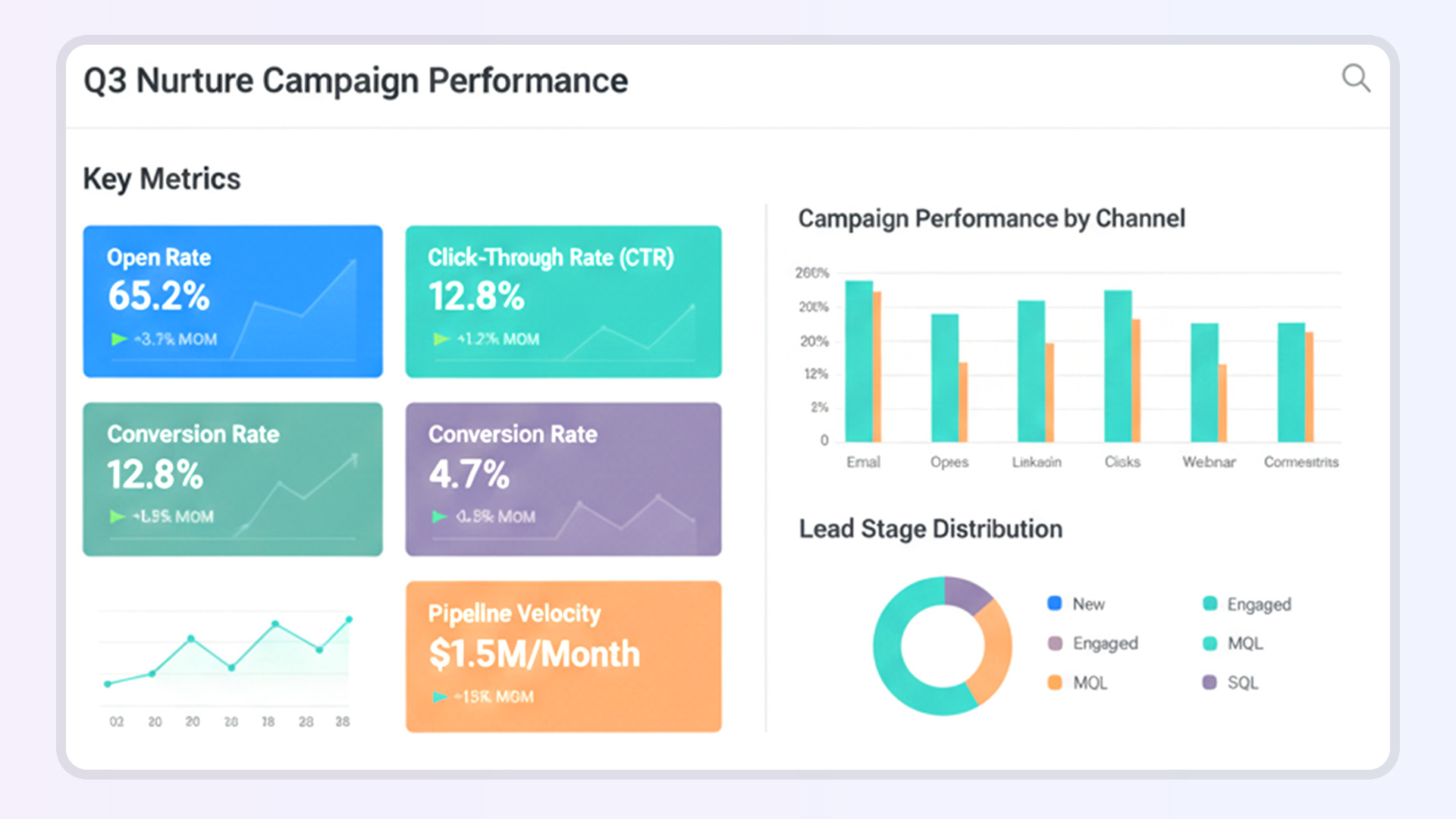
Running nurture campaigns without tracking performance is like running sales calls without noting next steps. You'll stay busy, but you won't know if you're making progress.
Key metrics to watch:
Open rates tell you if your subject lines are working. Benchmark: 20-25% for B2B is solid. Below 15%? Your subject lines need surgery.
Click-through rates reveal whether your content is compelling enough to drive action. Benchmark: 2-5% for B2B nurture emails.
Conversion rates are the real scorecard. How many nurtured leads become qualified opportunities? How many become closed deals?
Velocity measures how quickly leads move through your nurture sequence. If leads are stalling at a particular stage, you've found a content gap or messaging problem.
Unsubscribe rates are your canary in the coal mine. A spike means you're either sending too often, sending irrelevant content, or both.
Don't just track these numbers in isolation. Compare performance across segments. You might find that your nurture campaigns crush it with mid-market accounts but fall flat with enterprise, which tells you exactly where to focus your optimization efforts.
Good nurture campaigns check the boxes: they segment, they personalize (sort of), they automate, they have CTAs. Great nurture campaigns do something fundamentally different: they connect the dots between what your prospects actually say and what your campaigns say back.
The teams that win at nurturing are the ones that break down the wall between sales conversations and marketing automation. They use real-time deal intelligence to inform their messaging. They capture buyer language and objections from every call and weave those insights into their sequences. They treat nurture not as a marketing function, but as a revenue function that sits at the intersection of sales and marketing.
That's hard to do manually. It's increasingly easy to do with AI that actually listens to what your buyers are telling you.
Get started for free with Sybill and turn every sales conversation into fuel for nurture campaigns that convert.
There's no universal magic number, but most effective B2B nurture campaigns run between 5 and 12 touchpoints spread over 4 to 12 weeks. The length should match your typical sales cycle. If your average deal closes in 30 days, a 6-month nurture sequence is overkill. If you're selling enterprise deals with 9-month cycles, a 3-email sequence won't cut it. The better question is: does every email in your sequence earn its spot? If you can't articulate why a specific email exists and what action it drives, cut it.
Treating nurture as a "set it and forget it" marketing project that runs independently of what's happening in actual sales conversations. The most common failure mode is nurture campaigns built entirely on assumptions about what prospects care about, without any input from the real objections, questions, and pain points that surface in discovery calls and demos. Close the loop between your sales floor and your email sequences, and your campaigns will outperform by a wide margin.
AI improves nurture campaigns in three key ways. First, it captures insights from sales conversations (pain points, objections, timelines) and makes them available for campaign personalization. Second, it automates the tedious parts, like follow-up emails, CRM updates, and lead scoring, without sacrificing quality. Third, it identifies patterns across hundreds of conversations that no human could spot manually, like which objections correlate with closed-won deals or which content topics drive the most engagement. The result is campaigns that are more relevant, more timely, and more connected to what your buyers actually want.