Find us at booth #83, join us for a harbor side happy hour, or catch Gorish’s talk.

Sept, 16-18 > Learn more


Richa Sharma

October 1, 2025
.avif)
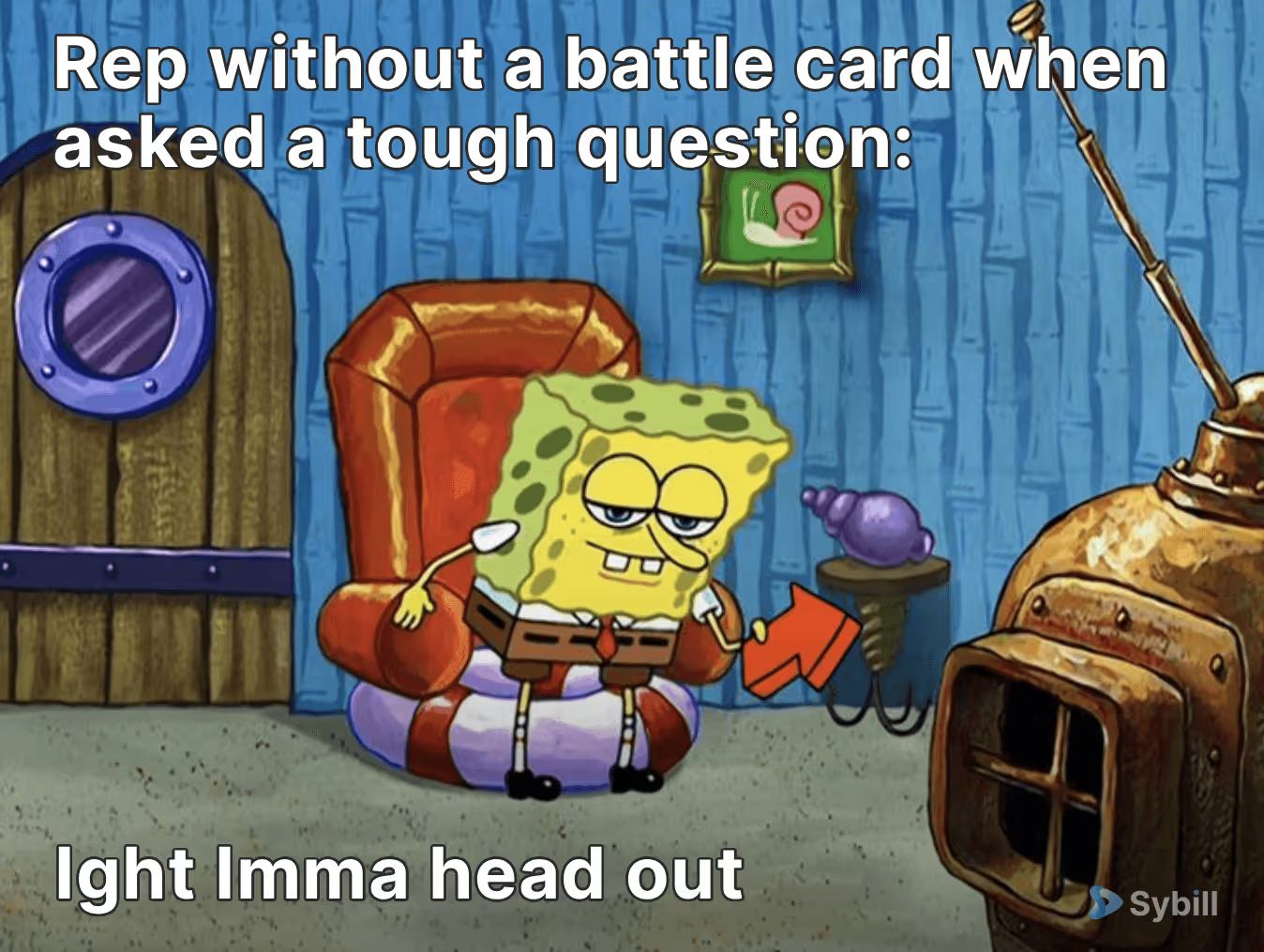
Getting into a sales call without a battle card feels a lot like getting handed a surprise final exam on a subject you barely skimmed. At first, you bluff your way through. Then the real questions start. Suddenly, you are scrambling for answers, and the prospect can tell.
Sales battle cards are the cheat codes that smarter sales teams rely on. They are built to keep the conversation moving, tackle objections head-on, and flip tricky moments into closing moments.
Sales enablement battle cards help your team handle tough questions, nullify competitor claims, and keep the deal moving forward. They work like a behind-the-scenes coach, ensuring your reps are prepared for whatever the buyer throws at them.
This guide will show you how to create sales enablement battle cards that actually work when the pressure is real.
A sales battle card is a cheat sheet that your reps can actually use during a live call or meeting. It is not a script. It is not a five-page PDF nobody reads. A good battle card in sales provides quick, clear answers to the real issues that arise during prospect meetings.
Think about objections, competitor comparisons, product positioning, value props, and key messaging points. All organized in a way that reps can find fast without killing the flow of the conversation.
Battle cards are designed to feel natural, not robotic. They provide reps with the correct information at the right time, so they can sound confident without needing to memorize a script.
In a sales call, you don't have time to flip through a training document or Slack a manager for help. You either know what to say or you lose momentum. And once you lose it, getting it back is almost impossible.
Battle cards for sales are designed to give reps the correct information at the exact moment they need it. Fast, simple, and real-world useful. Here is why your team cannot afford to skip them:
Your potential prospects are more prepared than ever. They already know your competitors. They already have objections lined up. If your representatives are not ready with sharp, confident answers, the deal is over before it even begins. Battle cards make sure your team always shows up ready to win, not just survive.
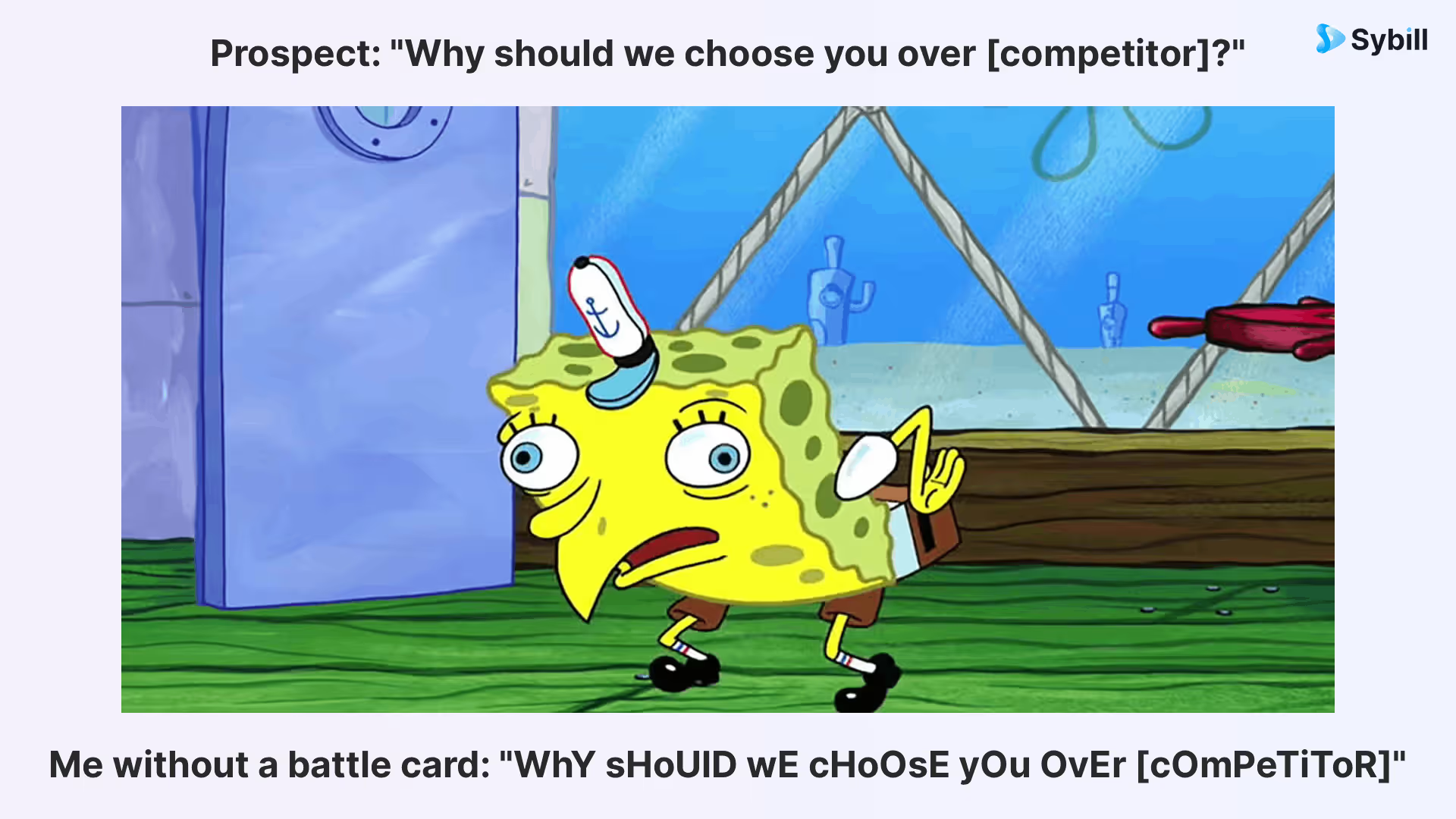
When a prospect says, "Why should I pick you over Company X?" you cannot afford to fumble. Battle cards provide your reps with clear, concise responses that directly address competitive threats without sounding defensive or scripted.
New hires should not have to spend six months memorizing every objection and competitor move. Battle cards give them a fast track. With the right card in hand, even a rookie can sound like a seasoned closer on their very first live call.
Without a battle card, you will have five different reps giving five different answers about the same product feature. That kills trust with buyers. Battle cards ensure the correct positioning, so every rep tells the same clear, powerful story.
Reps who know they are ready for anything sell differently. They lead the conversation. They ask better questions. They close faster. Battle cards not only make your team smarter but also make them significantly more confident on every call.
But how do you create a sales battle card? What makes for effective battle cards for sales? Let’s break it down.
Creating effective sales enablement battle cards takes more than just dumping information onto a sheet. It requires focus, research, and innovative organization.
A sales battle card is only valuable if reps can actually use it on real calls. It should be concise, clear, and grounded in real-world conversations, rather than relying on marketing jargon.
Here is how to build one the right way:
Do not waste time trying to cover every competitor you have ever heard of. Focus on the three to five companies you most often run into in deals. Pull win-loss data if you have it. For each competitor, define exactly where you win and where they are stronger. Be honest. Good battle cards do not sugarcoat reality but show reps how to pivot conversations toward their strengths.
The best messaging is based on what customers actually care about, not what you wish they cared about.
Interview customers, read churn surveys, and scan reviews. Get specific about the pains and frustrations that led them to seek a new solution. Then connect the dots between those pain points and how your product uniquely solves them.
Talk to your best-performing sales reps. Ask them:
Use their real language, not sanitized marketing jargon. Battle cards are for reps, not for marketing awards.
.avif)
In a live call, no one has time to read an essay. Design your battle cards with:
One glance, one answer. That’s the standard.
Every sales battle card should include:
Use clear sections, color coding, icons, and minimal text. Think like a UX designer:
Set a regular schedule (every quarter or every major product release) to review and refresh all battle cards. Assign ownership to someone in sales enablement, marketing, or sales ops.
Outdated battle cards not only hurt, but they can also cause representatives to sound disconnected, lose trust, and miss deals.
.avif)
Building sales battle cards is essential, but if your team doesn't actually use them, you are wasting time. Rolling them out the right way is just as critical as creating them.
Here is how to implement battle cards so they actually make an impact:
Do not just email battle cards out and hope for the best. Host a live training session. Walk reps through actual sales situations where the battle cards come into play. These situations could be handling a competitive objection or positioning against a specific rival. Practice using them in mock calls so reps feel confident pulling them up in real conversations.
If battle cards are hidden inside some random folder or separate tool, your reps will never use them. Integrate them directly where reps already work:
The easier they are to find, the more they get used.
The best updates to your battle cards will not come from marketing or management. They will come from representatives who are on live calls every day. Create a simple system, like a Slack channel or regular check-ins. This is where reps can suggest new objections, competitor moves, or talk tracks they are hearing. Battle cards should evolve constantly based on what is happening in the real world.
To secure leadership buy-in for ongoing updates to battle cards, you must demonstrate their impact. Use your CRM or enablement platform to track:
Then connect the dots to outcomes like higher win rates, faster deal cycles, or fewer lost deals to competitors.
Creating sales battle cards is only the first step. To really boost win rates and rep performance, you need to train them. Integrate them into daily workflows, collect field feedback, and prove their impact.
Sales battle cards are no longer a nice-to-have. They are a core part of staying competitive. The right card does not just help a rep answer questions. It keeps the deal alive, positions the product clearly, and makes every conversation feel like it is moving forward with purpose.
Building strong battle cards is about focus, not information overload. It's about providing your team with quick, skimmable, real-world answers they can rely on when the stakes are high.
When the pressure hits, teams that are ready do not scramble. They win.
Start creating battle cards your reps can trust. Your next closed deal will thank you for it.