Find us at booth #83, join us for a harbor side happy hour, or catch Gorish’s talk.

Sept, 16-18 > Learn more


Richa Sharma

March 30, 2026
.avif)
“Even the smallest person can change the course of the future.” — Galadriel (and probably your sales manager at QBR).
Because let’s be honest. Sales today isn’t just about having the gift of the gab. It’s managing messy CRMs, jumping between 10 tools, personalizing outreach at scale, and still finding time to prep for every single call.
Sales is chaotic and unpredictable. Most days, it feels like a long, uphill journey to quota.
Sales enablement is the strategy side of selling — it equips reps with the training, content, playbooks, and tools they need to have productive buyer conversations. Sales engagement is the execution side — the actual touchpoints (emails, calls, LinkedIn messages, follow-ups) that move deals forward. The key difference: enablement prepares reps to sell effectively, while engagement puts that preparation into action. High-performing sales teams need both working together — enablement builds the foundation of product knowledge, objection handling, and competitive positioning, while engagement provides the structure, automation, and analytics to reach buyers consistently across channels. Without enablement, reps are undertrained and unprepared; without engagement, nothing actually moves forward. Together, they create a flywheel where coaching improves outreach quality and engagement data refines enablement content.
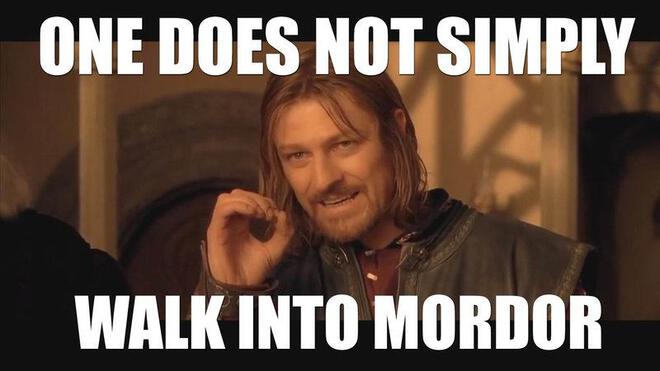
If that sounds familiar, think of your sales process like Frodo’s journey to Mordor. Closing the deal? That’s Mount Doom. Your quota? That’s the Ring. And you’re not making it without backup.
Sales enablement is your Gandalf. The one that trains you, equips you with playbooks, and ensures you don’t walk into calls unarmed.
Sales engagement is your Sam. The consistent support that keeps you moving forward, the follow-ups, touchpoints, and the day-to-day grind keep deals alive when everything feels stuck.
Both are essential. But too often, teams treat them like they’re the same thing. They’re not. Confusing them leads to bad strategies, missed targets, and reps who are either underprepared or overwhelmed.
Let’s break down what sales enablement and engagement actually mean, how they work together, and why getting them right can be the difference between crushing your quota or just surviving another month.

Sales enablement is like Gandalf handing you a sword and teaching you how to fight before you face an orc. It’s the behind-the-scenes magic that empowers sellers to engage buyers effectively.
According to Gartner, sales enablement provides sales teams with the right resources, content, tools, and training.
This includes:
Sales enablement has three key elements that power up your sales game. Here’s how to keep your selling skills legendary:
You need more than just product facts. Great sales reps understand how buyers think, feel, and decide. That’s where training comes in. Think regular learning sessions, bite-sized videos, and real talk on how to handle tricky convos. This is where you level up.
Every sales funnel stage needs the right stuff: slides, one-pagers, email templates, and scripts for tough objections. Sales enablement software makes it easy to find what you need when you need it; no more digging through random folders.
From CRM to automation to dashboards, smart tools = smart selling. Having the right tools and tech can ensure you have what you need handy, helping you stay sharp and strategic.
Sales enablement software is the digital hub for training, content, and strategy.
Think of it as Rivendell, a central place where knowledge, tools, and resources empower your sales fellowship.
Top sales enablement software includes:
These tools allow marketing and sales to align, measure content performance, and boost productivity.
You wouldn’t walk into a pitch without a plan and try to close without knowing what problem your product solves. That’s where sales enablement becomes your secret weapon. Here’s how it helps you succeed:
Sales enablement helps you show up prepared.
Sales engagement happens after you're trained and ready; it's the interaction between you and your buyer.
Think of Frodo. Sales engagement is how he talks to allies, negotiates with Gollum, and reacts when things go off track.
Sales engagement is the series of touchpoints, emails, calls, LinkedIn messages, and follow-ups that move a deal forward.
A strong sales engagement strategy aligns messaging and timing with buyer behavior. That means reaching out with the right message on the right platform when it matters.
Here’s what’s involved:
Imagine having a crystal ball that tells you who to talk to, what to say, and when to say it. That’s what a sales engagement platform does, minus the magic, plus data and automation. Here’s the deal:
No more sticky notes or messy spreadsheets. These platforms let you build emails, calls, and LinkedIn message sequences. These are then sent out on autopilot while still keeping things personalized.
You’ll know when someone opens your email, clicks a link, or ghosts you. That way, you can follow up at the right time, not just hope for the best.
Whether you are new to the team or a senior rep, these tools help you follow proven outreach playbooks. No one’s just guessing or winging it.
You get real data on what’s working (and what’s not). So you can tweak your messaging, test new subject lines, and constantly level up your outreach game.
Some popular sales engagement platforms include:
Each one has its way, but the goal is the same: They help you connect with more buyers in smarter ways without burning out.
Bonus: When you combine your sales engagement platform with Sybill.ai, it auto-captures the Next Steps from your customer interactions, automatically updates your CRM, and handles admin tasks. It gives your sales reps extra sets of hands, allowing them to focus on closing deals instead of getting stuck in paperwork.
Say you have all the world's product knowledge and sales training. But you will struggle if you don’t know how to reach out, when to follow up, or what to say next. That’s where sales engagement comes in. Here’s how a solid sales engagement strategy helps you win:
In short, sales engagement gives you structure, speed, and control, which is everything a sales rep needs to perform in real time.
Now that you know how sales engagement and sales enablement work, let’s explore how they differ.
Sales enablement and sales engagement often get lumped together, but they solve very different problems.
Sales enablement is all about preparation. It gives sales teams the training, content, tools, and insights they need for productive conversations with buyers. It covers onboarding, sales playbooks, competitive battle cards, and content libraries that help reps appear sharp and confident.
Sales engagement is the execution. It is everything that happens once a rep starts interacting with a lead. From personalized email sequences to follow-up calls and LinkedIn messages, sales engagement is how reps connect, build trust, and push deals forward.
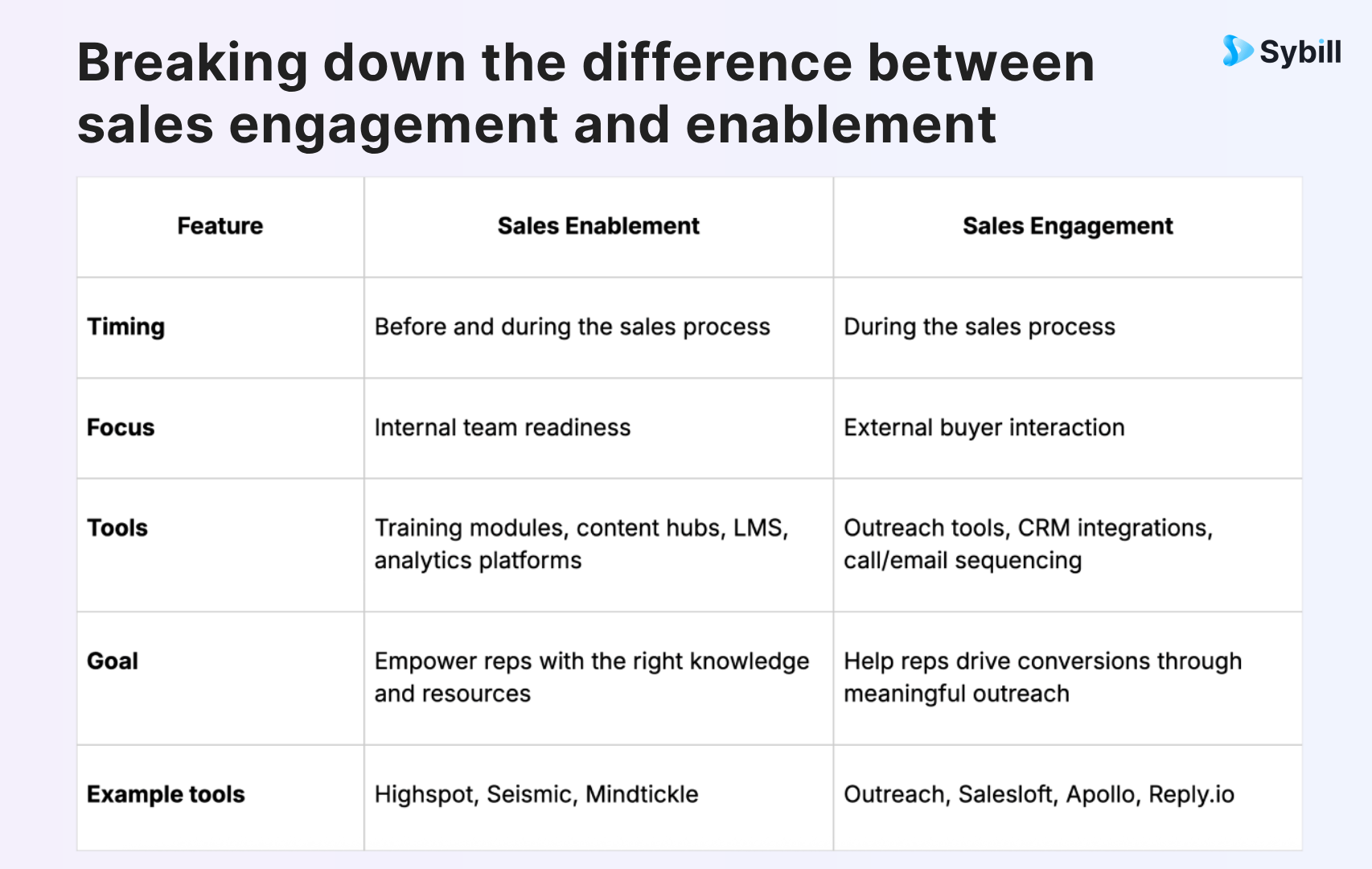
Sales enablement sets the stage. It gives reps everything they need to be confident in a conversation:
Enablement covers things like:
Then comes sales engagement, the actual performance. This is where reps put all that prep into action. From cold emails to discovery calls and follow-ups, engagement is how you interact with leads, build relationships, and close deals.
It’s not just about outreach. It’s about intentional, data-backed conversations.
It’s like asking who’s more important, Gandalf or Sam?
For example, let’s say you just joined a new sales team. On Day 1, you’re onboarded through a platform like Mindtickle. You learn about your ICPs, get objection-handling scripts, and walk through product positioning decks; that’s enablement.
Next, you use Outreach to launch a personalized email campaign, track opens, follow up, and close the deal, which is engagement.
See how they work together?
Let’s bring this back to Middle-earth. You wouldn’t send Frodo into Mordor with just a motivational speech. And you wouldn’t expect Sam to carry the ring without a plan.
If sales enablement gives you the tools and teaches you to use them, engagement puts those tools to the test in battle. Without enablement, sales reps are undertrained, confused, and unprepared. Without engagement, nothing actually moves forward.
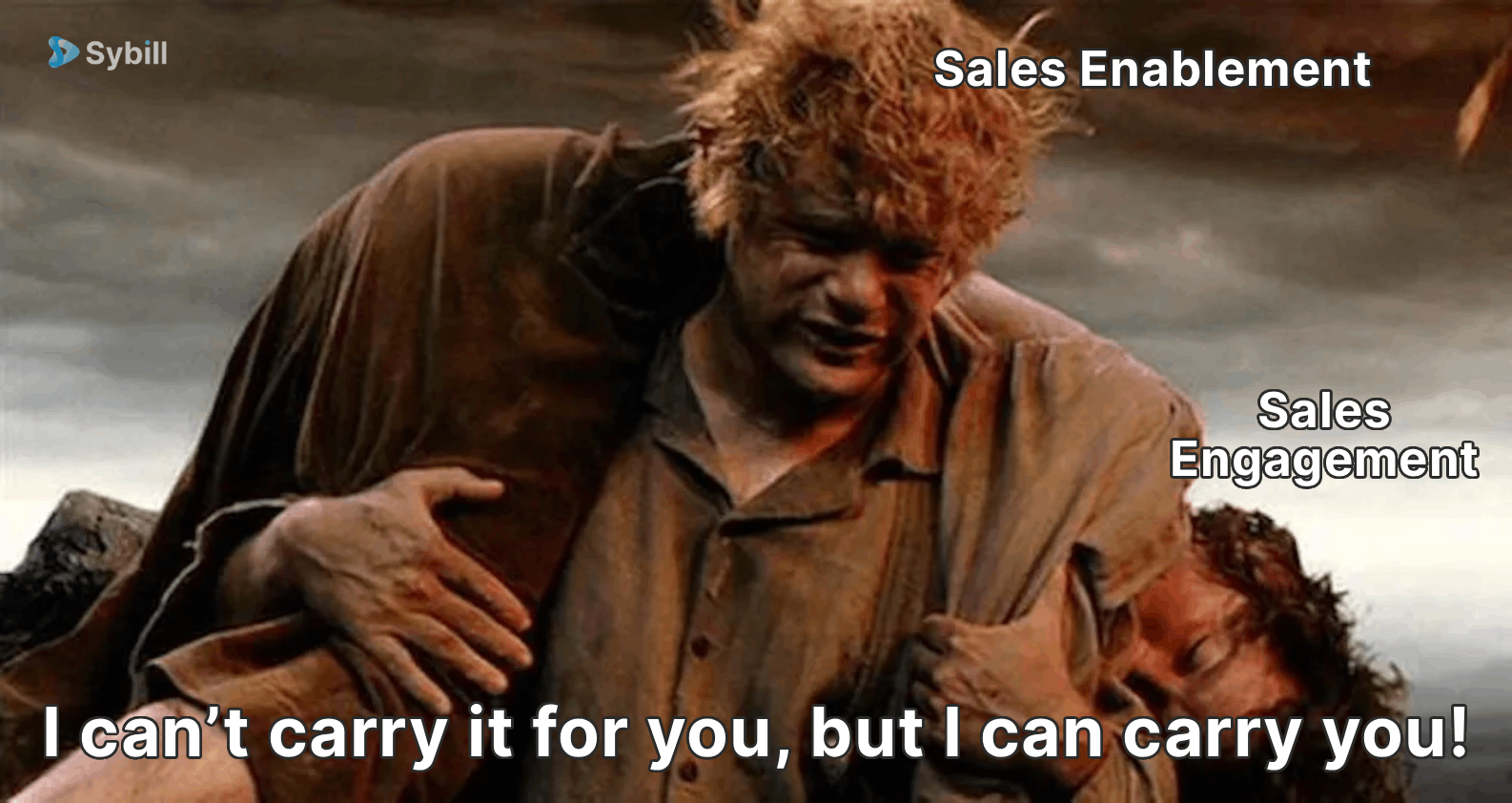
Think of enablement as strategy and engagement as execution. Together, they build a flywheel:
Enablement gives reps the foundation to sell effectively. Engagement puts that foundation to work.
When sales enablement and sales engagement are aligned, you get educated and effective teams. One without the other leads to well-trained reps who never get meetings or busy reps who lack the tools and knowledge to close.
Invest in both. That is how high-performing sales teams win.
Every sales journey is a little like Frodo’s. The goal is clear, but the path is long, unpredictable, and full of unexpected turns. No one makes it to the end alone. Not in Middle-earth, and definitely not in modern B2B sales.
Sales enablement is the preparation before the journey. It gives your reps the tools, knowledge, and strategy to face whatever lies ahead. Sales engagement keeps them going when things get tough. The follow-ups, timing, and human touch move deals forward one step at a time.
You can’t expect Frodo to make it to Mordor without the Fellowship. And you can’t expect your reps to hit targets without a strong mix of enablement and engagement behind them.
The most successful teams don’t leave their people guessing. They build a transparent system where reps are trained, supported, and empowered to act. That is how you close more deals, shorten cycles, and create a team that performs consistently.
Sales is not about heroic solo acts but about having the right players, tools, and a shared mission. Just like the Fellowship, every role matters.