AI & Automation

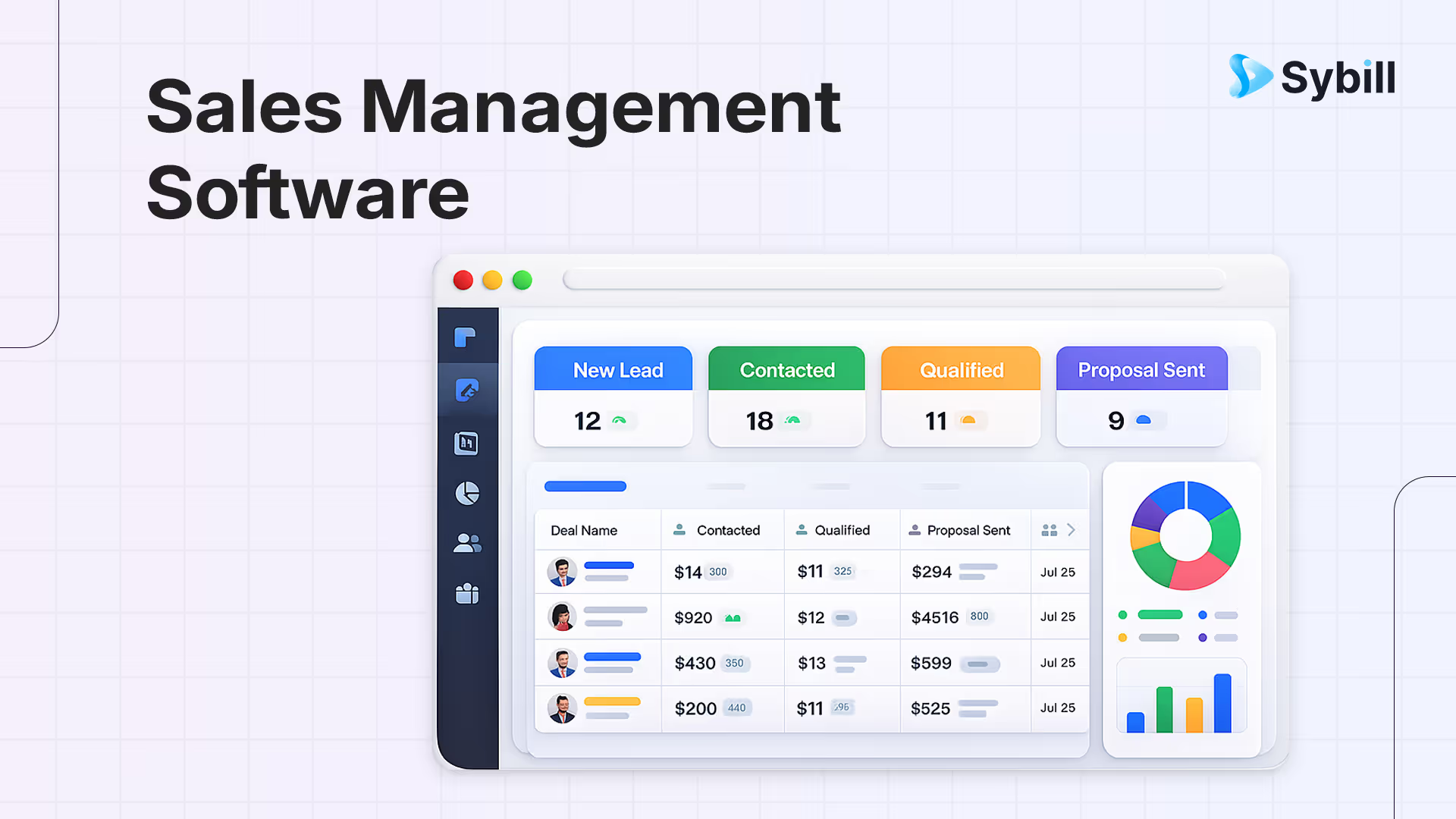
Sales Management Software

Imagine you are a sales manager in a sports movie.

You have:

  • Reps playing different positions

  • A scoreboard that keeps changing

  • A coach (hi, that is you) who is supposed to know exactly what is going on

Now imagine trying to win that championship with:

The 11 best sales management software tools in 2026 are Salesforce Sales Cloud (best enterprise CRM), HubSpot Sales Hub (best free-to-paid growth path), Sybill (best AI-powered meeting intelligence and CRM automation), Pipedrive (best visual pipeline management), Gong (best conversation intelligence for coaching), Clari (best revenue forecasting), Outreach (best sales engagement and sequencing), Salesloft (best cadence management), Close CRM (best for inside sales velocity), Monday Sales CRM (best for cross-functional visibility), and Freshsales (best built-in communication channels). Effective sales management software in 2026 goes beyond pipeline tracking to include AI-powered coaching insights, automated CRM hygiene, and real-time deal intelligence — which is why tools like Sybill that auto-fill CRM from conversations and surface deal risks have become essential complements to traditional CRM platforms.

  • Four spreadsheets

  • Two dashboards that no one trusts

  • And everyone Slacking you “quick question about this deal” every 7 minutes

That, unfortunately, is how a lot of sales teams are still running 2025 revenue.

Sales management software exists so your life is not just “herding cats with a quarterly quota attached.”

In this guide, we are going to cover:

  • What sales management software actually is

  • The difference between CRM, pipeline tools, and sales management platforms

  • The non negotiable features to look for

  • Deep dives into 11 tools that consistently show up in high performing teams

  • How an AI assistant like Sybill fits in as the “operating brain” on top of your stack

  • A quick FAQ that reads like something you would actually Google

Tone: human, slightly meme flavored, zero fluff. Let’s go.

What is sales management software, really?

Here is the simple version:

Sales management software is software that helps managers plan, track, coach, and improve sales performance across a team.

Not just “store contacts.”

Not just “log activities.”

Proper sales management platforms usually combine:

  • Centralized data
    One place for deals, accounts, activities, notes, and call outcomes.

  • Pipeline visibility
    Clear stages, weighted forecasts, and coverage metrics, not random gut feel.

  • Activity and performance tracking
    Calls, emails, meetings, tasks, and how they relate to actual revenue.

  • Coaching and enablement
    Call recordings, conversation intelligence, scorecards, coaching workflows.

  • Automation
    Fewer manual follow ups, fewer “hey did you log that?” pings.

Salesforce sums it up nicely as tools that streamline and organize sales processes, track activities and performance, and help teams stay on top of goals. (Salesforce)

UpLead and EngageBay add that good sales management tools cut admin work, centralize customer history, improve forecasting, and give managers the data they need to coach instead of guess. (UpLead)

Short version: It is the difference between “I hope we hit” and “I know exactly why we will or will not, and what to do about it.”

Sales management software vs CRM vs “another tool that wants budget”

Quick reality check before we start powering up the credit card.

CRM vs sales management software

  • CRM


    • Stores contact, account, and deal data

    • Tracks touchpoints

    • Often the system of record

  • Sales management software


    • May be a CRM, or sit on top of one

    • Focuses on performance, forecasting, coaching, and process

    • Gives managers tools to run the sales machine, not just park data in it

In practice, many modern CRMs also market themselves as sales management platforms. Salesforce and HubSpot both position their sales clouds / hubs this way. (Salesforce)

Sales management vs sales performance software

Sales performance management tools lean especially hard into:

  • Territory and quota planning

  • Compensation and incentive design

  • Advanced forecasting and scenario modeling (G2 Learn Hub)

You can think of it like this:

  • CRM = where data lives

  • Sales management = how the team operates daily

  • Sales performance = how you plan, motivate, and pay

Where does AI fit?

Increasingly, sales management means:

  • AI assisted forecasting

  • AI assisted coaching

  • AI assisted note taking and follow ups

Platforms like Salesloft frame themselves as “revenue orchestration” with engagement, conversation intelligence, deal management, and forecasting in a single AI powered layer. (Salesloft)

Sybill plays a similar game, focused on:

  • Multimodal call intelligence

  • Instant follow up emails

  • Automatic CRM updates

  • Deal and pipeline insights for managers and reps (sybill.ai)

More on that in a bit.

Signs you are ready for proper sales management software

If any of these feel too familiar, this blog is your intervention.

  • Forecast calls feel like live fiction writing

  • Managers cannot answer “what changed since last week?” without manual digging

  • Coaching sessions are just status updates

  • Reps complain about “busywork” and “too many tools”, but your data is still messy

  • No one can agree on whether the pipeline is healthy

Sybill’s guides on sales pipeline management and pipeline reporting describe this exact situation as “scrambling to plug leaks instead of running a system.” (sybill.ai)

If that is your life, you do not just need more dashboards. You need a real platform and an operating cadence around it.

Non negotiable features in sales management software

There are a million feature grids out there. Let’s keep it to what actually moves the needle.

1. Pipeline and forecast visibility that does not give you trust issues

Look for:

  • Customizable stages and exit criteria

  • Win probabilities and weighted forecasts

  • Coverage metrics by rep, team, and segment

  • Snapshot or trend reporting over time

Zoho CRM’s forecasting tools and similar features in other CRMs exist for exactly this: using pipeline data to predict revenue and plan resources, not just report on history. (Zoho Corporation)

2. Activity and performance tracking that is actually used

You want:

  • Calls, emails, meetings, and tasks automatically captured

  • Targets and goals that roll up from rep to manager to org

  • Activity dashboards that correlate effort with outcomes

Salesloft’s analytics suite is a good example of this: it builds dashboards across engagement, process adherence, and pipeline health so managers can see which behaviors drive wins. (Salesloft Help Center)

3. Coaching and conversation intelligence

Managers can not coach what they cannot see.

Modern sales management stacks increasingly include:

  • Call recording and transcription

  • AI summarized key moments and objections

  • Scorecards and playlists for coaching

  • Dashboards to compare rep performance

Salesloft Coaching, for example, lets managers track goals, compare rep activity, and deliver targeted coaching plans based on call analytics. (Salesloft)

Sybill leans in even harder here with multimodal AI that analyzes both what was said and how it was said, then turns each call into notes, follow ups, and coaching insights. (Geekflare)

4. Automation in all the boring places

Your future stack should handle things like:

  • Logging activities

  • Triggering follow ups

  • Updating stages and fields based on rules

  • Routing leads and tasks

Close, monday sales CRM, and similar tools all make a big deal about cutting out tool switching and busywork so reps can focus on selling. (Close)

5. Reporting your CRO can actually bring to the board

You want:

  • Standard reports on pipeline, forecast, and rep performance

  • Custom reports by segment, source, and motion

  • Easy export or sharing for stakeholders who do not live in the CRM

Sybill’s content on pipeline reporting and pipeline tools hits this from the “what to measure” side, while your sales management software handles the “how to measure it every week” part. (sybill.ai)

The 11 best sales management software tools to know in 2025

Here is the fun part. Tools.

We will look at:

  • What each one is actually good at

  • How it supports sales management, not just “sales”

  • Who it is best for

No 40 tool list. Just the ones that come up again and again for serious teams.

1. Sybill

Best for: Sales managers who want AI to handle the grunt work and surface real coaching and deal insights

Sybill is not a traditional CRM. It is an AI sales assistant built from the ground up for sales teams.

What it actually is

Sybill connects to:

  • Your calendar and meeting tools

  • Your CRM

  • Your email and templates

Then it:

  • Automatically records and transcribes calls

  • Uses multimodal AI to capture both what was said and how engaged buyers were

  • Generates human sounding call summaries

  • Drafts follow up emails in each rep’s tone

  • Updates CRM fields and deal records

  • Answers deal questions like “what changed since last week?” (sybill.ai)

You can get a feel for this in Sybill’s content on conversational intelligence and AI for sales productivity. (sybill.ai)

Why sales managers love it

  • Every call becomes a coaching asset

  • Follow ups stop slipping through the cracks

  • Pipeline and deal reviews are grounded in real conversations, not vague summaries

Sybill’s blog on essential sales management skills makes the point that great managers lead, coach, and strategize. They should not be full time note checkers. (sybill.ai)

Sybill handles the admin so managers can do the human work.

 Salesforce Sales Cloud

Best for: Complex, multi team, multi region B2B motions

Salesforce is the enterprise classic for a reason.

What it actually is

A deeply customizable CRM and sales platform that covers:

  • Account, contact, and opportunity management

  • Forecasting and pipeline reports

  • Territory and quota management

  • Automation and workflows

  • AI based insights and lead scoring in newer editions (Salesforce)

Why sales managers like it

  • Robust reporting and dashboards for pipeline, forecast, and performance

  • Strong role hierarchies and sharing rules

  • Built in tools for activity tracking and performance management

Where it shines for management

  • Standardizing sales processes across teams

  • Building accurate roll up forecasts

  • Aligning SDR, AE, and CS motions in one system

When it might be too much

  • Small teams with simple motions

  • Orgs without RevOps capacity to maintain and evolve it

If you are already a Salesforce shop, your sales management strategy is less about “do we get Salesforce” and more about “what do we layer on top.” That is where conversation intelligence and AI assistants like Sybill can take over the call, follow up, and coaching layer without replacing your existing CRM. (sybill.ai)

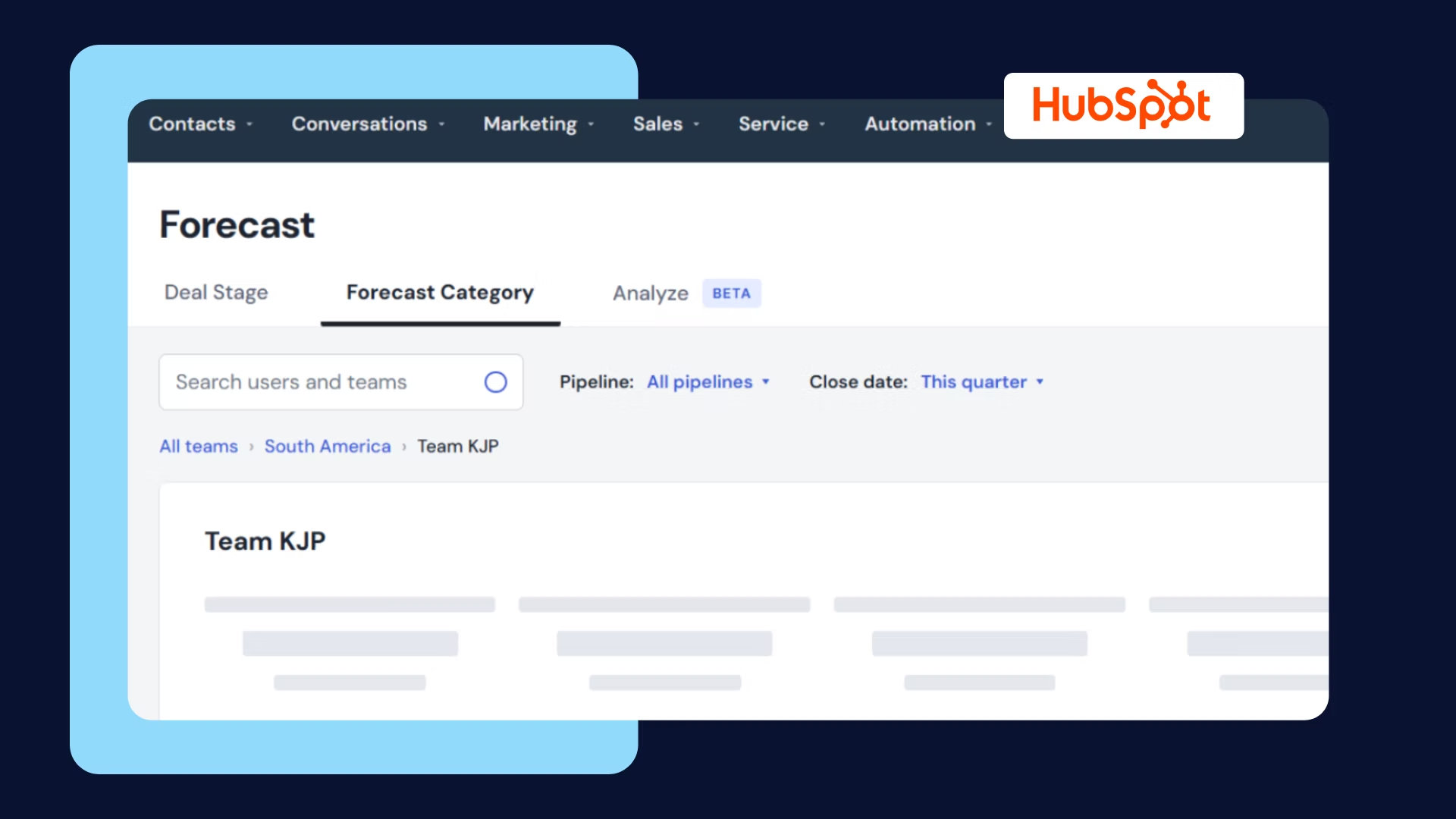
2. HubSpot Sales Hub

Best for: Growing B2B companies that want friendly UX plus strong reporting

HubSpot gives you CRM, marketing, and sales management in one ecosystem.

What it actually is

  • Contact and company management

  • Deal pipelines

  • Sequences and email templates

  • Task queues and workflows

  • Reporting and dashboards built for humans, not just data people (outdoo.ai)

Why sales managers like it

  • Clear pipeline views and deal boards

  • Easy to roll out to reps who are not tool nerds

  • Ties marketing and sales data together for better funnel analysis

Where it shines for management

  • Mid market teams that need structured yet flexible processes

  • Companies that want one vendor for marketing and sales

  • Managers who want forecasting without needing heavy admin scripting

Pairing HubSpot with Sybill gives managers an extra layer:

  • Pre call briefs

  • Auto follow ups in the rep’s tone

  • Clean notes and fields in the CRM for every call (sybill.ai)

So forecast views become less about “what did the rep remember to log” and more about “what do we actually know from conversations.”

3. Close

Best for: Inside sales teams that live on the phone and in email

Close pitches itself as a sales first CRM built around communication.

What it actually is

  • Lead and pipeline management

  • Built in calling, SMS, and email

  • Power dialers and call workflows

  • Automation for follow ups and tasks (Close)

Why sales managers like it

  • Everything happens in one place

  • Easy to see which reps are doing what

  • Activity reporting sits right next to pipeline reporting

Reviews highlight that Close cuts down tool switching and makes it easier to coach based on actual call and email activity. (Close)

Where it shines for management

  • High velocity teams

  • Phone heavy motions

  • Managers who spend a lot of time listening to calls and checking sequences

If you layer something like Sybill on top, you essentially get:

  • Automatic call summaries

  • Follow up drafts

  • CRM fields filled in for you

Which turns Close into a true sales management cockpit instead of a glorified communications app. (Geekflare)

4. monday sales CRM

Best for: Teams that want pipeline, projects, and collaboration in the same place

monday sales CRM sits on top of monday.com’s Work OS, which means:

  • CRM style boards for deals

  • Project management style boards for post sale work

  • Automations and integrations across both worlds (monday.com)

Why sales managers like it

  • Highly customizable boards and views

  • Actions, owners, and timelines in one interface

  • Good fit when sales and ops are tightly coupled

Where it shines for management

  • Visibility across the full customer lifecycle

  • Flexible dashboards for pipeline, activities, and handoffs

  • Omnichannel communication synced into the board

Because it is so flexible, monday can become the central nervous system for revenue. Adding Sybill gives you AI driven insight into the actual conversations behind each item, plus automated follow ups and CRM style notes without extra clicks. (sybill.ai)

5. Zoho CRM

Best for: Price sensitive teams that want serious features without enterprise pricing

Zoho CRM has grown into a surprisingly powerful sales management platform.

What it actually is

  • Core CRM with leads, contacts, accounts, and deals

  • Pipeline management and stage based probabilities

  • Sales forecasting with role based roll ups

  • Automation, scoring, and reporting (Zoho)

Why sales managers like it

  • Good balance of cost and capability

  • Solid pipeline and forecasting tools

  • Reasonable automation for routine work

Where it shines for management

  • Teams upgrading from spreadsheets

  • Regions or brands that need a separate, lighter instance

  • Managers who want pipeline and forecast structure without Salesforce complexity

Sybill’s content on sales pipeline basics and pipeline management tips pairs nicely with Zoho’s feature set if you want to build a mature operating cadence around a budget friendly stack. (sybill.ai)

6. Pipedrive

Best for: Visual thinkers and smaller teams who want “simple but grown up”

Pipedrive is that tool you open and your brain immediately goes “ok, I get it.”

What it actually is

  • Deal centric CRM with kanban style pipelines

  • Activity tracking and reminders

  • Reporting on deals and conversion by stage

  • Light automation and integrations (sybill.ai)

Why sales managers like it

  • Very low friction setup

  • Reps tend to actually use it

  • Visual pipeline views make 1:1s and forecast reviews easier

Where it shines for management

  • Early stage startups and SMBs

  • Founder led sales teams that are just formalizing their process

  • Teams who want to graduate from “spreadsheet as pipeline”

Pairing Pipedrive with an AI layer like Sybill instantly upgrades your sales management stack:

  • Calls automatically turned into structured notes

  • Follow ups tailored to each conversation

  • CRM data kept fresh without nagging reps (Top3.software)

7. Salesloft

Best for: Sales engagement plus deep management analytics

Salesloft describes itself as a revenue orchestration platform, with:

  • Cadences and sales engagement

  • Conversation intelligence and coaching

  • Deal management and forecasting

  • Analytics across activities, pipeline, and performance (Salesloft)

Why sales managers like it

  • End to end view of outreach, engagement, and outcomes

  • Coaching tooling built directly into workflows

  • Strong analytics for spotting gaps and high performers

Where it shines for management

  • Outbound heavy teams

  • Motions that depend on strict sequences and touch patterns

  • Managers who want clear lines from activity to revenue

You can absolutely run with just Salesloft’s native intelligence. Or you can plug in Sybill if you want multimodal call analysis and AI follow ups that are synced back into your cadences and CRM, especially for more complex deals. (Geekflare)

8. Gong (or similar conversation intelligence platforms)

Best for: Coaching obsessed teams that want the truth about what is said on calls

Gong is one of the best known conversation intelligence tools. Others exist, but the idea is similar:

  • Record sales calls

  • Transcribe and analyze them

  • Surface insights by deal, rep, and topic

  • Provide coaching tools and scorecards (revcast.com)

Why sales managers like it

  • Reality instead of hearsay in deal reviews

  • Clear examples for coaching and training

  • Patterns across wins and losses

Where it shines for management

  • Scaling teams that need standardized coaching at scale

  • Complex deals with multiple stakeholders

  • Orgs that want to treat calls as a data asset

Sybill lives in a similar category but with a different emphasis:

  • Multimodal analysis of both voice and behavior

  • Meetings converted into summaries, follow ups, and CRM updates

  • A sales assistant experience that reps and managers use every day (Geekflare)

You can consider whether you want a “big analytics hub” approach, a “hands on assistant” approach, or both.

9. EngageBay

Best for: Smaller teams that want CRM plus basic sales management in one affordable tool

EngageBay is an all in one CRM, marketing, and service platform that also plays nicely in sales management.

What it actually is

  • Lead and contact management

  • Deal pipelines

  • Marketing automation and email

  • Basic reporting and analytics (EngageBay)

EngageBay’s definition of sales management software mirrors ours: centralizing sales activities, tracking key metrics, automating follow ups, and integrating with CRM so teams can nurture leads and close deals more efficiently. (EngageBay)

Where it shines for management

  • Very cost conscious teams

  • Simple funnels where one tool is preferable to five

  • Founders and managers who want just enough structure and automation

It is not going to replace Salesforce in a global enterprise, but it can be a smart starting point that you later augment with AI tools like Sybill as your team grows and call volume increases. (sybill.ai)

10. UpLead style sales management & intelligence stack

Best for: Teams that want data + management tools with clear ICP focus

UpLead’s guides on sales management tools highlight platforms that combine:

  • Lead and account data

  • Pipeline and forecast management

  • Activity and performance tracking

  • Coaching and analytics (UpLead)

While UpLead itself is more of a data provider than a pure management platform, the stack it describes typically includes:

  • A strong CRM

  • A sales engagement tool

  • Conversation intelligence

  • Reporting and forecasting

If you model your stack on that structure and then plug Sybill in as your AI assistant across calls, email, and CRM, you essentially have:

  • Predictable pipeline visibility

  • High quality call data

  • AI drafting your follow ups and updating the system of record for you (sybill.ai)

How to choose sales management software without wrecking your stack

Before you spin up 14 new trials, walk through this sequence.

Step 1: Map your core motion

  • Mostly inbound or heavily outbound

  • Transactional or long cycle

  • Product led or sales led

Your motion drives your tool choices. For example:

  • Inside sales teams might prefer Close plus Sybill.

  • Enterprise teams might go Salesforce plus Salesloft plus Sybill.

Sybill’s pipeline generation guide is a good lens for understanding how your motion actually creates pipeline, which should then be mirrored in your sales management software. (sybill.ai)

Step 2: Decide what is your “system of record”

Pick one primary CRM layer:

  • Salesforce

  • HubSpot

  • Close

  • monday sales CRM

  • Zoho CRM

  • Pipedrive

Everything else needs to integrate with that. No rogue pipelines.

Step 3: Decide where coaching lives

You have three main options:

  1. Keep coaching light and live on call recordings plus spreadsheets

  2. Invest in a conversation intelligence platform like Gong or Salesloft

  3. Use an AI assistant like Sybill that bakes call understanding into daily workflows

If you are serious about sales management as a discipline, options 2 and 3 are where you eventually land. (sybill.ai)

Step 4: Layer on automation and AI

Ask:

  • What admin work do reps hate the most?

  • Where is data quality suffering?

  • Where do managers spend time manually digging for insight?

Then target those with:

  • CRM workflows and automations

  • Sales engagement sequences

  • AI tools like Sybill that handle note taking, follow ups, and CRM updates automatically (sybill.ai)

Example stacks that keep sales managers sane

You do not need every tool. Here are some realistic combos.

Stack 1: Early stage startup, founder led sales

  • Pipedrive for pipeline and deals

  • Lead or contact data tool of your choice

  • Sybill for call summaries, follow ups, and light coaching

You get:

  • Clean pipelines

  • Forecasts that are not entirely vibes

  • No more rewriting the same follow up 50 times a month

Stack 2: Growing B2B SaaS, 5 to 20 reps

  • HubSpot Sales Hub as CRM and funnel engine

  • Salesloft for outbound engagement and analytics

  • Sybill as the AI assistant across calls and follow ups

You get:

  • Clear view from lead to closed won

  • Coaching driven by actual calls

  • Automation taking care of grunt work in CRM and email

Stack 3: Enterprise team with multiple regions

  • Salesforce Sales Cloud as system of record

  • Territory and incentive tools in the sales performance category

  • Gong or Salesloft for conversation intelligence

  • Sybill to turn calls into summaries, follow ups, and deal insights

You get:

  • Top down visibility for leadership

  • Bottom up clarity for managers

  • Reps who are not drowning in admin

Stack 4: Service or agency business

  • monday sales CRM to tie sales and delivery together

  • EngageBay or similar for marketing automation if needed

  • Sybill for better discovery, proposals, and upsell conversations

You get:

  • One place to see clients from first call through delivery

  • Clear handoff and expectation management

  • AI supporting every high stakes client call

Wrapping thoughts

Sales management is not supposed to be:

  • Checking if reps updated their close date
  • Copy pasting notes into five places
  • Doing forecast math on the fly

With the right sales management software and an AI assistant like Sybill on top, your job starts to look more like:

  • Designing a system that makes success repeatable
  • Coaching humans based on real conversations
  • Making data backed choices about where to invest effort

Pick one core CRM, one engagement or analytics layer, and then let Sybill handle the annoying parts of calls, follow ups, and CRM hygiene.

Your reps get time back.
Your forecast gets less shaky.
Your role starts to feel a lot more like leading a high performing team and a lot less like babysitting a spreadsheet.

‍

Get started with Sybill

Accelerate your sales with your personal assistant

Get Started Free

Frequently Asked Questions

What is the main purpose of sales management software?

In practicality the main purposes are to centralize data, structure pipeline and forecasting along with performance tracking. Which is largely to help sales leaders see what is really happening, decide what to do about it and coach reps and improve the process.

Do I need separate sales management software if I already have a CRM?

Sometimes yes, sometimes no. If your CRM gives you solid pipeline and forecast views, tracks activities and performance clearly and integrates with conversation intelligence and engagement tools, then you might already have the basics covered.

What metrics should I track inside my sales management platform?

At bare minimum, you should be tracking pipeline value and count by stage, stage to stage conversion rates, win rate by segment and source, average sales cycle length and activity metrics correlated with outcomes.

Get started with Sybill

Once you try it, you’ll never go back.