Find us at booth #83, join us for a harbor side happy hour, or catch Gorish’s talk.

Sept, 16-18 > Learn more

%20(1).avif)
Mamta Tainwala

February 3, 2026
TL;DR:
The gap between your top performers and everyone else isn't talent. It's coaching frequency. Top sales orgs coach 20% more than average teams, and that compounds fast. If you're buying individual coaching, Jill Konrath (SNAP Selling) owns enterprise, Mike Weinberg (New Sales Driver) owns new business development, and Mark Hunter owns value selling without discounting. If you're buying a company-wide program, Sandler gets you 50% better quota attainment through their 7-step system, RAIN Group wins on consultative selling, and Challenger works if your reps need to disrupt buyer thinking. But the real unlock is AI coaching that gives feedback after every call instead of every quarter. That's how you get coaching frequency at scale without burning out your managers.
Picture this: you're a sales manager. You've got a solid team. Some of them hit quota. Some of them crush it. A few of them... well, they're trying. You do your 1:1s, you run your pipeline reviews, you maybe throw in a quarterly offsite with a guest speaker. And yet, the gap between your top performers and the rest of the team feels like the Grand Canyon.
Sound familiar? You're not alone.
Studies consistently show that 65% of the highest-performing sales organizations spend at least 20% more time coaching their reps than lower-performing teams. That's not a rounding error. That's a strategic choice that compounds over time.
But coaching is one of those words that means everything and nothing at the same time. For some managers, it's a 10-minute chat before the rep hops on a call. For others, it's a structured, data-driven program that tracks behavior, identifies gaps, and delivers personalized feedback after every single interaction. The difference in outcomes between these two approaches is staggering.
So who's actually doing it right? Who are the coaches and companies that have figured out how to turn coaching from a buzzword into a revenue driver? That's exactly what this post is about.
We've put together a deep dive into the top individual sales coaches who are reshaping how the industry thinks about selling, the best sales coaching companies worth investing in, and how the latest AI-driven tools are making elite coaching accessible to teams of every size. Let's get into it.
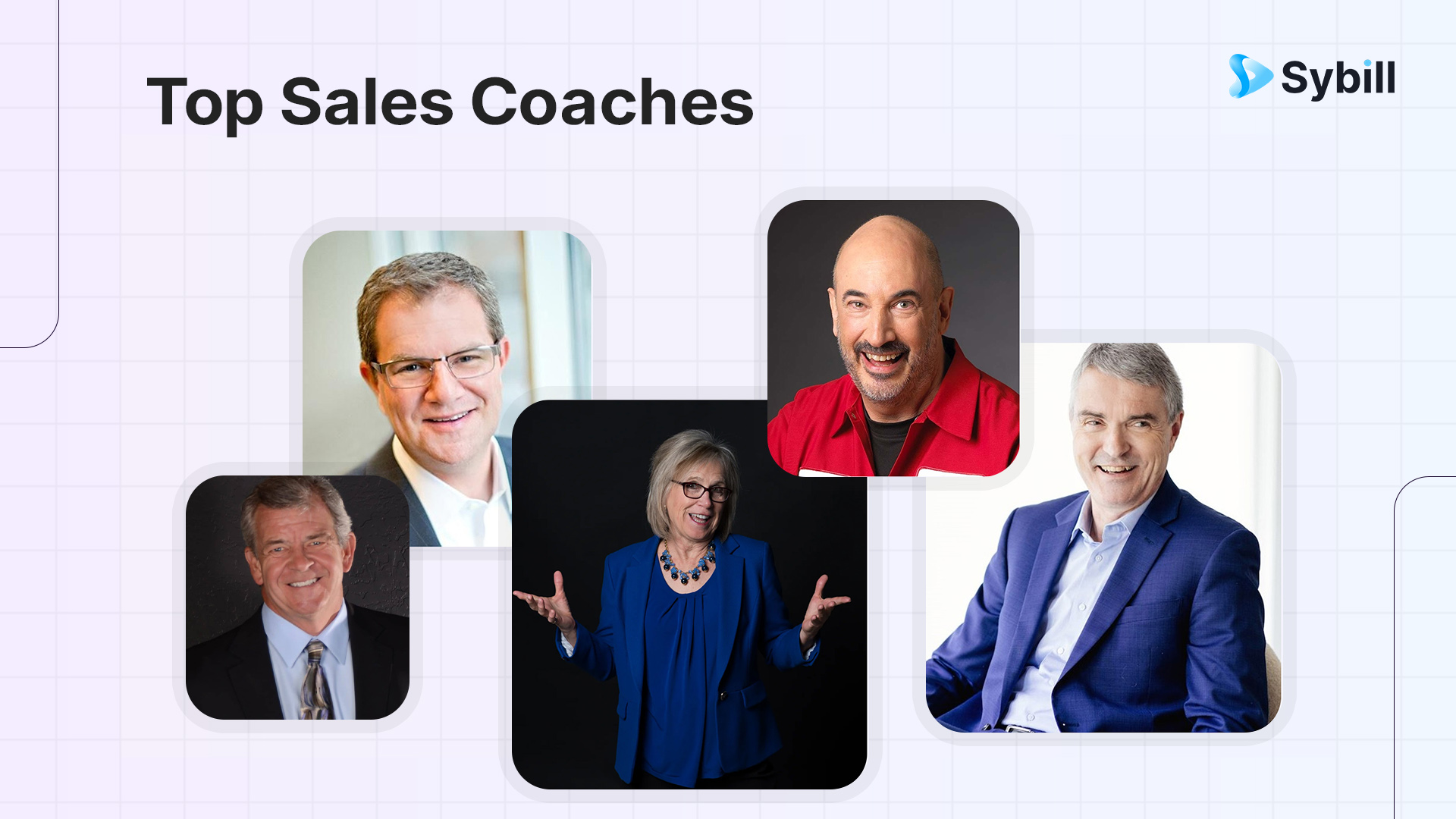
Not every sales coach is created equal. Some are theorists. Some are entertainers. A select few are the real deal: battle-tested professionals who built their reputations in the trenches and turned their hard-won lessons into frameworks that thousands of sales teams actually use. Here are the coaches who consistently show up on every "best of" list for a reason.
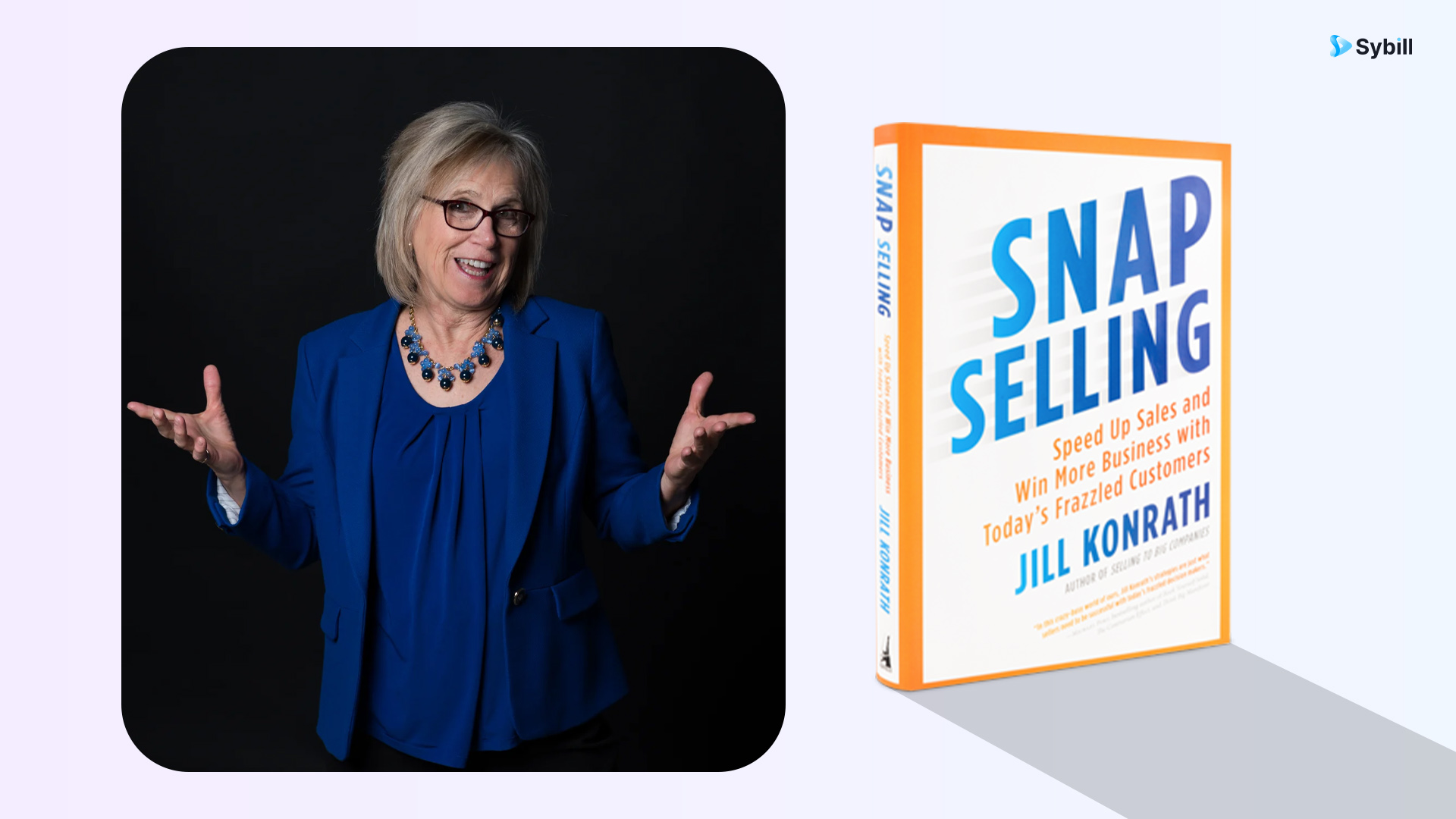
If you've spent any real time in B2B sales, you've come across Jill Konrath's name. And if you haven't, consider this your introduction.
Jill is a sales strategist, keynote speaker, and author whose client roster reads like a who's who of corporate America: IBM, GE, Hilton. She started her career as a high school teacher, made the jump to sales at Xerox, and eventually founded her own consulting firm, Leapfrog Strategies. Along the way, she built one of the most respected personal brands in the sales world, amassing over 250,000 LinkedIn followers and 140,000+ blog readers.
Her flagship framework is SNAP Selling, which stands for Simple, iNvaluable, Aligned, and Priority. The idea is deceptively straightforward: today's decision-makers are overwhelmed, overloaded, and deeply skeptical of anything that feels like a pitch. SNAP teaches reps to flip the script entirely by making things easy for the buyer, positioning themselves as indispensable, staying locked in on the buyer's objectives, and keeping the most critical decisions front and center.
What makes Jill stand out isn't just the framework. It's how she packages it. Her writing style is personal, conversational, and refreshingly free of corporate jargon. She writes like someone who's been in the trenches and has the scars to prove it. SNAP Selling hit #1 on Amazon's sales book list within hours of its release, and Selling to Big Companies has been on Amazon's Top 20 Sales Book list continuously since 2006. Fortune called it a must-read for sellers.
Why she matters for your team: If your reps are selling into enterprise accounts or trying to land meetings with C-suite executives, Jill's work is foundational. Her approach trains sellers to stop thinking about what they want to say and start thinking about what the buyer needs to hear.
Key books: Selling to Big Companies, SNAP Selling, Agile Selling, More Sales, Less Time
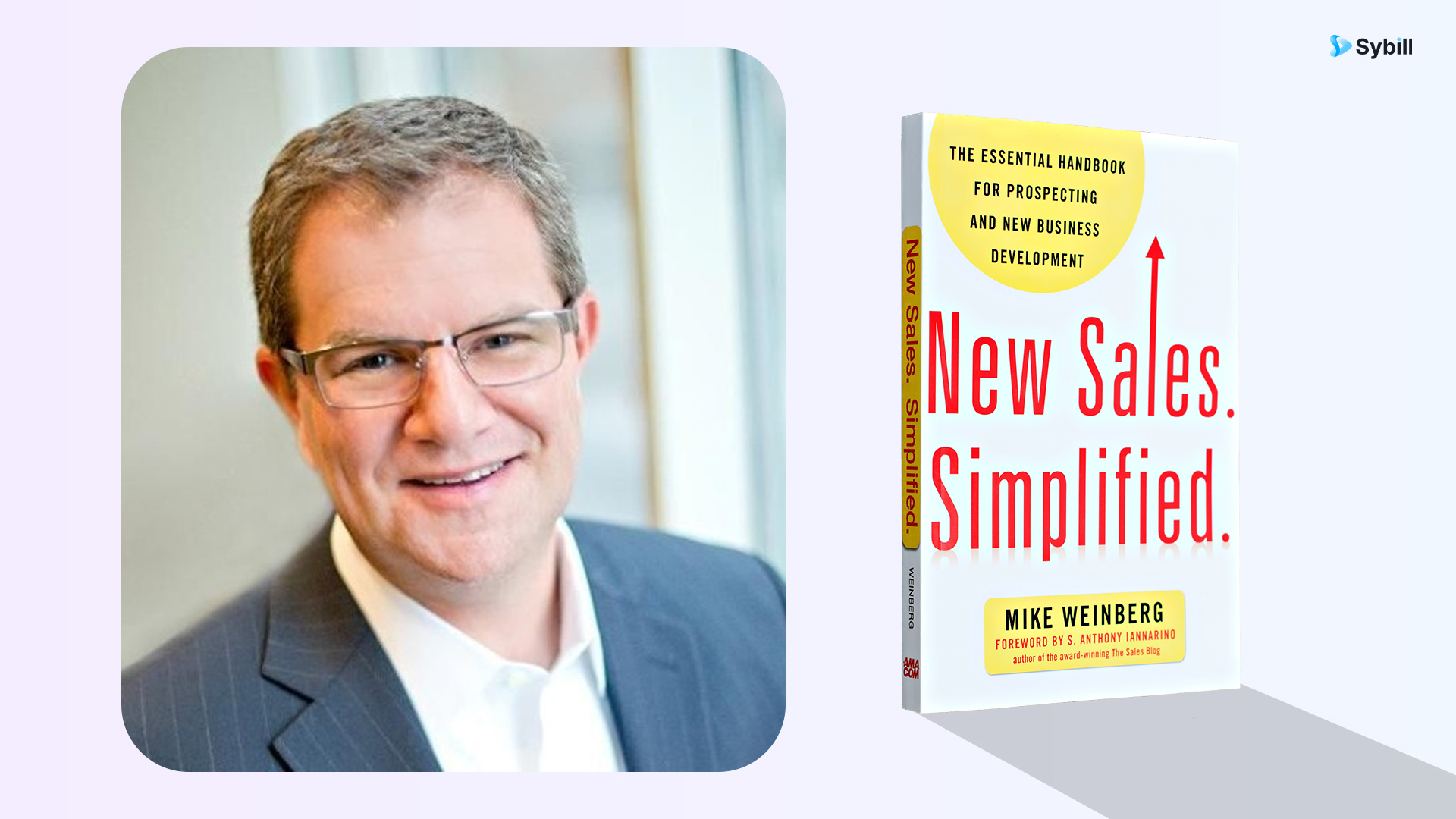
If Jill Konrath is the queen of enterprise selling, Mike Weinberg is the king of new business development. And he'll be the first to tell you that most sales teams are absolutely terrible at it.
Mike is a consultant, coach, speaker, and author of four Amazon #1 bestsellers. His mission, stated plainly, is to simplify sales. He has a reputation for being blunt, practical, and refreshingly honest about the mistakes companies and their sales leaders make. Forbes and OpenView Labs have both recognized him as a top sales influencer, and his work has been described as one of the best books ever written on sales management.
His signature framework is the New Sales Driver, a three-stage model built around targeting, developing your sales weapons, and planning and executing. The core argument is simple but powerful: generating new business isn't complicated. It's just uncomfortable. Most reps avoid prospecting because it's hard, not because it's impossible. Mike's job is to make it feel less impossible.
What sets Mike apart is his willingness to call out the real culprits for stalled pipelines. It's not always the reps. Sometimes it's the leadership. Sometimes it's the comp structure. Sometimes it's the fact that nobody on the team has a compelling sales story that actually connects with the prospect's world. Mike doesn't sugarcoat any of it.
Why he matters for your team: If your pipeline is thin, your reps aren't prospecting, or your team keeps saying "we just need more leads," Mike's work is the antidote. He'll help you build a repeatable system for hunting new business without burning out your team in the process.
Key books: New Sales. Simplified., Sales Management. Simplified., The First-Time Manager: Sales, Sales Truth
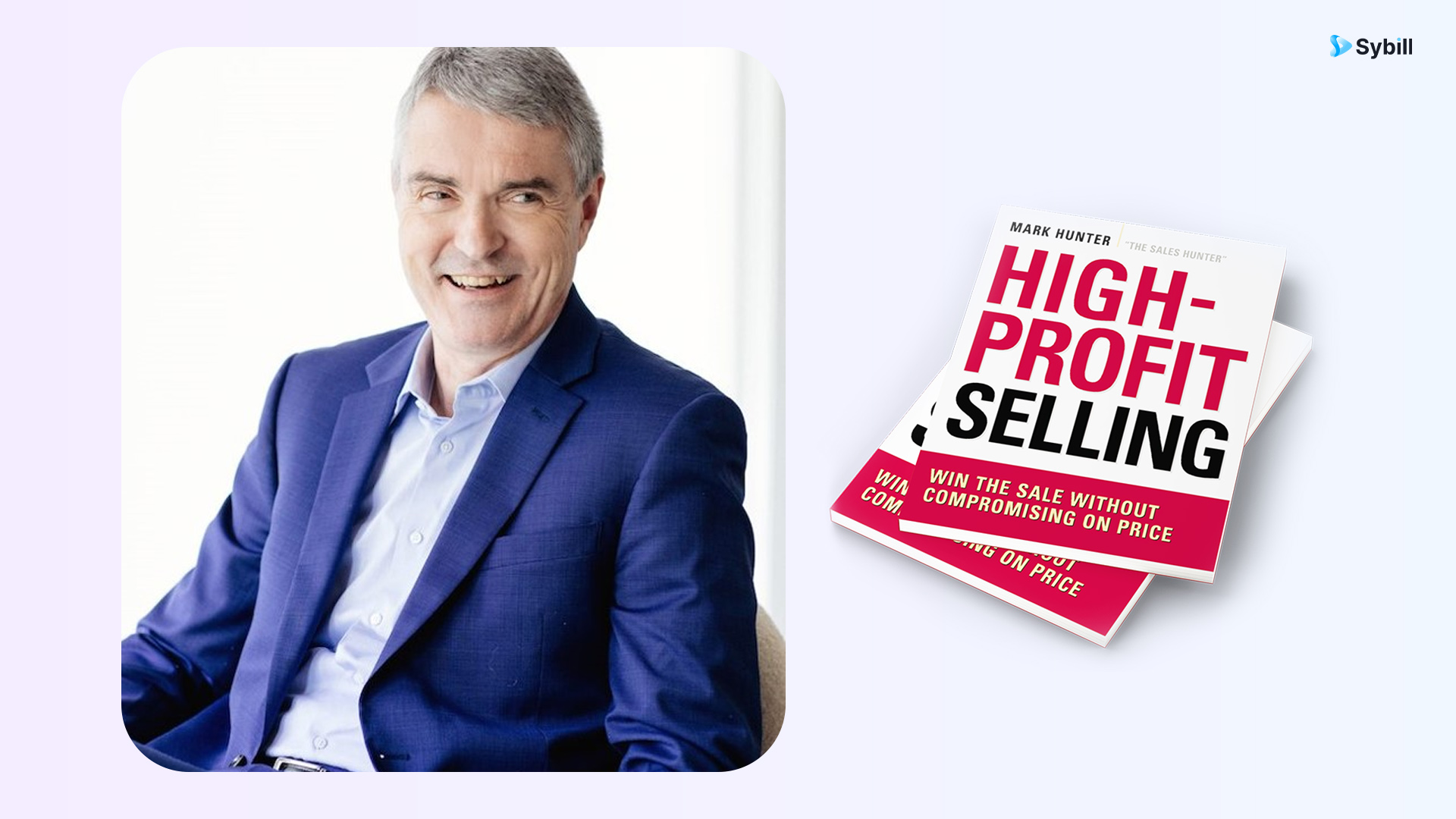
Mark Hunter has earned the nickname "The Sales Hunter" for good reason. He's globally recognized for his expertise in sales leadership, and he's taken his message to more than 25 countries across 5 continents. His client base spans everything from small startups to global giants, and his specialty is teaching sales teams how to find and retain high-quality prospects without resorting to discounting.
That last part is the key. In a world where so many sales orgs default to "just lower the price" when a deal stalls, Mark Hunter flips the narrative entirely. His philosophy is built around creating value so compelling that price becomes almost irrelevant. He's authored multiple books on sales leadership and is one of the most sought-after keynote speakers in the industry.
What makes Mark particularly relevant right now is his focus on sales culture. He doesn't just teach tactics. He helps organizations build self-motivating, integrity-driven sales cultures that produce consistent results over time. That's the kind of coaching that actually sticks.
Why he matters for your team: If your team is stuck in a discount spiral or struggling to position value effectively against competitors, Mark Hunter's frameworks will force a mindset shift that goes well beyond surface-level tactics.
Key books: The Sales Hunter, High-Profit Selling, High-Profit Prospecting
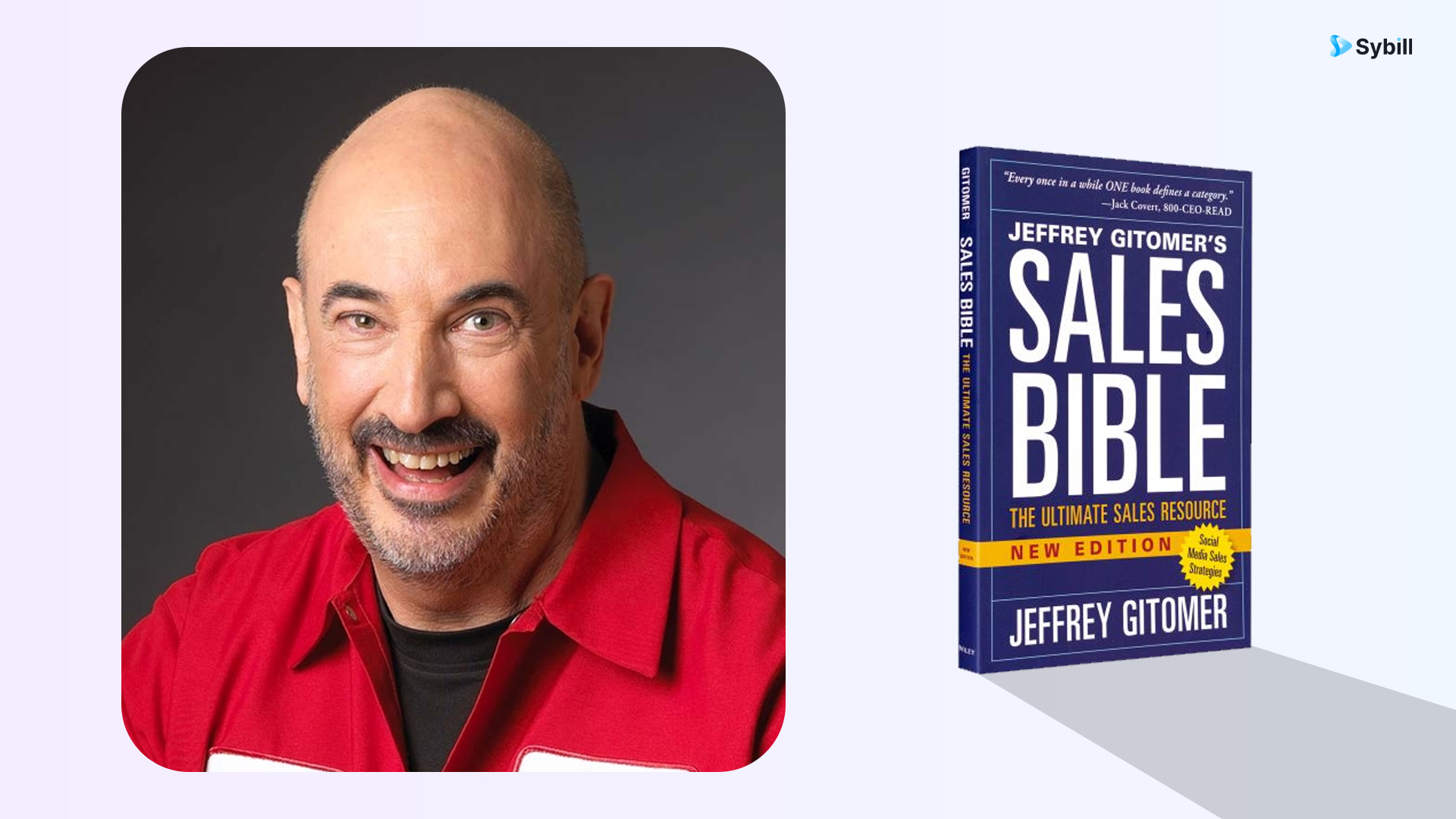
Jeffrey Gitomer is not subtle about his confidence, and honestly, at this point in his career, he's earned it. He's authored 13 bestselling books on sales, has spoken at over 2,500 corporate events in his 25+ year career, and has built one of the most recognizable personal brands in the industry. He calls himself the King of Sales, and nobody really argues.
What makes Jeffrey's approach distinctive is his insistence on leading with value. He's a vocal advocate for what he calls "new sales," which means showing up with insight, relevance, and genuine helpfulness rather than a brochure and a pitch deck. His philosophy boils down to this: if you can make the buyer's life better, the sale takes care of itself.
His podcast, blog, and extensive content library cover everything from cold calling psychology to social selling strategy, and his ability to make complex sales concepts feel accessible and even entertaining is part of what's made him such a dominant figure.
Why he matters for your team: If your reps are still leading with product features instead of buyer outcomes, Jeffrey's work will be a wake-up call. His value-first philosophy is especially relevant for teams selling in crowded markets where differentiation through insight is the only real edge.
Key books: The Sales Bible, Yes! Attitude, 21.5 Reasons Why People Buy, How to Sell When Nobody Wants to Buy
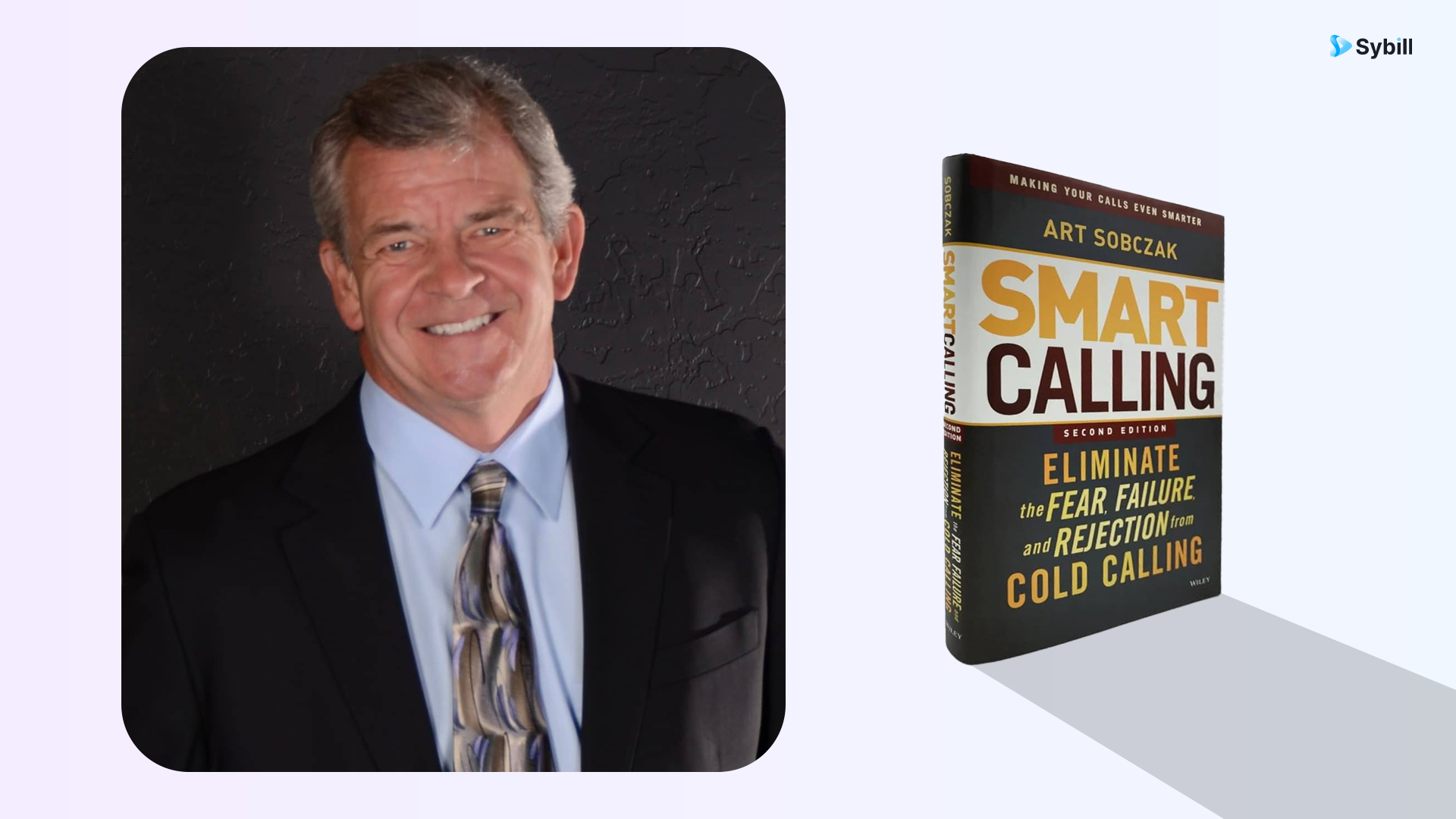
Art Sobczak has been in the sales training game for over 40 years, which in an industry that reinvents itself every 18 months, is practically a geological era. He's built his reputation almost entirely around one idea: cold calling doesn't have to be cold.
His signature concept is Smart Calling, which flips the traditional cold calling playbook on its head. Instead of dialing strangers at random and hoping someone picks up, Smart Calling teaches reps to do their homework first. Research the prospect. Understand their world. Then reach out with a message that's relevant, personalized, and actually worth their time.
Art's YouTube channel is packed with practical examples and real call recordings that show exactly how this approach works in practice. His content is remarkably grounded, which makes it easy for reps to internalize and apply immediately.
Why he matters for your team: If your inside sales team is struggling with outbound prospecting or your reps have developed a genuine phobia of the phone, Art's Smart Calling framework gives them a structured, confidence-building approach that actually gets responses.
Key books: Smart Calling, Cold Calling Techniques
Individual coaches are incredible for mindset shifts and foundational frameworks. But when you need to scale coaching across an entire sales organization, you need a company with the infrastructure, methodology, and track record to back it up. Here are the coaching companies that consistently show up at the top of industry rankings.
Sandler Training is one of the longest-established sales development organizations in the world, founded in 1966 out of Owings Mills, Maryland. If you've been in B2B sales for more than a few years, you've almost certainly encountered someone who's been through Sandler training. That's not an accident.
Their core offering is the Sandler Selling System, a seven-step methodology that emphasizes qualification, budget clarity, and decision mapping. The philosophy is built around mutual respect and a non-traditional reversal of the buyer-seller dynamic. Instead of chasing prospects, Sandler-trained reps learn to let prospects come to them by making the process feel collaborative and low-pressure.
The numbers speak for themselves: reps trained in Sandler hit quota roughly 50% more often than their peers. That's a significant lift, and it's the kind of ROI that makes sales leaders sit up and pay attention. Sandler operates through a franchise network of 230+ offices across 30 countries, which means you can get locally customized training with global consistency.
Their program structure includes foundational Sales Mastery courses that run 6 to 12 months, advanced techniques around negotiation and enterprise pursuit, and a dedicated Managerial Coaching System that teaches pipeline inspection and accountability. They also offer tailored content for inside sales and hybrid teams.
Best for: Organizations that want a structured, long-term sales development program with a strong emphasis on psychology, qualification, and repeatable process.
RAIN Group is an award-winning global sales training organization with operations in over 75 countries. What sets them apart from the pack is their commitment to research. Everything RAIN teaches is grounded in data about what actually works in modern sales conversations, not just what sounds good in a workshop.
Their specialty is consultative selling and sales negotiation. Their flagship methodology, RAIN Selling, teaches reps to lead masterful conversations that connect with buyers by understanding needs, presenting solutions tied to value, and influencing the buyer's decision-making process. The "A" and "I" in RAIN also stand for advocacy and inquiry, which is a subtle but important distinction. RAIN trains sellers to ask better questions and genuinely listen, not just pitch harder.
RAIN Group has been recognized on both Selling Power and Training Industries' lists as one of the top 20 sales training companies, and they've won numerous industry awards. Their programs are modular, meaning you can customize the depth and focus based on your team's specific challenges.
Best for: Teams selling complex B2B solutions where consultative skill and negotiation are the difference between winning and losing.
Challenger is perhaps the most philosophically provocative sales training company on this list, and that's by design. Their entire methodology is built around a counterintuitive premise: the best salespeople don't just build relationships. They challenge their buyers' thinking.
The Challenger Sale methodology, popularized by their bestselling book of the same name, identifies five seller profiles and develops role-specific capabilities. Challengers are trained to teach customers new insights about their own business problems, tailor their messaging to resonate with individual stakeholders, and assertively take control of the sales conversation. It's not about being pushy. It's about being so informed and so relevant that the buyer genuinely values your perspective.
Challenger is widely used by Fortune 500 companies and is particularly well-suited for high-stakes B2B environments where the buyer needs to be moved from the status quo. Their training programs include reinforcement labs built around real client narratives, which helps reps internalize the methodology in a way that sticks beyond the workshop.
Best for: Enterprise sales teams closing multi-stakeholder deals where challenging customer assumptions is the key to winning competitive situations.
Force Management has built a strong reputation in the enterprise B2B space, particularly among SaaS and technology companies. Their flagship program, Command Center, is designed to align an entire sales organization around a common language, methodology, and set of priorities.
What makes Force Management stand out is their focus on connecting sales behavior directly to business outcomes. They don't just teach reps how to sell. They teach teams how to consistently articulate value in a way that maps to the buyer's strategic priorities. Their training is particularly effective for organizations that need to sell across multiple stakeholders and navigate complex procurement processes.
Force Management has worked with some of the biggest names in tech, and their methodology has become a reference point in the enterprise sales training conversation.
Best for: SaaS and tech companies that need to align their entire go-to-market motion around a single, repeatable selling framework.
The Sales Collective takes a different approach than the methodology-heavy companies above. Instead of teaching one framework and hoping it fits, they lead with a competency-based model that starts by assessing what your reps actually need to improve, then builds personalized learning paths around those gaps.
They publish one of the most respected annual lists in the industry, the Top 100 Sales Coaches, and their platform connects organizations with elite coaches who specialize in everything from outbound prospecting to enterprise deal strategy. Their philosophy is that no single methodology works for every team, and the smartest approach is to layer the right elements from multiple frameworks into a customized program.
Best for: Organizations that want a more adaptive, assessment-driven coaching approach rather than a one-size-fits-all methodology rollout.
Here's where it gets interesting. All of the coaches and companies above are exceptional. Their methodologies are battle-tested. Their frameworks work. But there's a fundamental limitation to traditional sales coaching that no amount of expertise can fully solve: scale.
A great coach can work with 5 reps, maybe 10. Beyond that, coaching quality starts to degrade. Managers spend most of their time chasing CRM updates and running pipeline reviews instead of actually coaching. Reps go days or weeks without meaningful feedback. And by the time someone spots a pattern in a rep's performance, three deals have already slipped.
This is exactly where AI-powered coaching tools are changing the equation entirely.
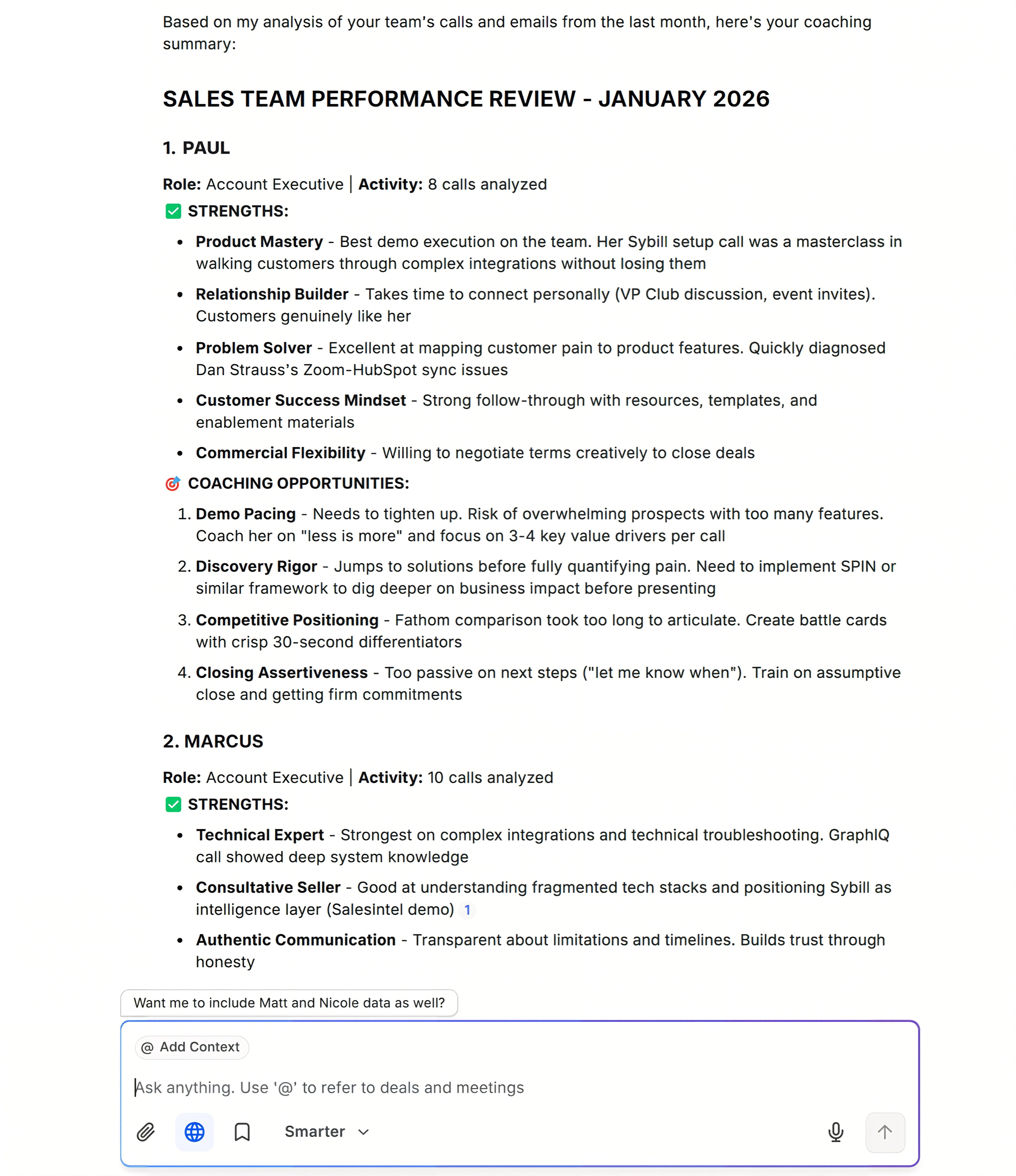
Modern AI sales coaching tools don't replace human coaches. They amplify them. Here's how the best ones work in practice:
Real-time call analysis picks up on talk-to-listen ratios, missed discovery questions, weak objection handling, and buyer engagement signals right after every call. No waiting for the next 1:1. No hoping your manager noticed something.
Personalized coaching briefs are generated automatically for each rep based on their actual performance data, not a generic playbook. If one rep struggles with qualification and another needs help with objection handling, the coaching each one receives is tailored accordingly.
Deal-level intelligence surfaces risks and opportunities across your pipeline before they become problems. A silent stakeholder, a stalled negotiation, a deal that hasn't moved in two weeks. AI flags these patterns so managers can coach to the right deals at the right time.
Skill development tracking creates a feedback loop that connects coaching to outcomes. You can see which reps are improving, which coaching interventions are working, and where the persistent gaps are across the team.
The result is what we'd call "always-on" coaching. It doesn't depend on a calendar or a manager's bandwidth. It happens after every call, every email, every interaction. And when every rep on your team gets a little bit better every single day, the compounding effect on revenue is massive.
If you want to see what this looks like in action, Sybill's AI coaching capabilities are worth a serious look. Sybill's Ask Sybill lets managers ask questions like "Which deals are stuck in negotiation?" or "Which rep needs help with objection handling?" and get instant, data-backed answers. No dashboards. No reports. Just conversational intelligence that actually moves the needle.
Ready to see what AI-powered coaching looks like for your team? Get started for free with Sybill and experience the difference real-time coaching intelligence makes.
Choosing a sales coach or coaching company is one of those decisions that feels urgent but often gets rushed. Here's a quick framework to help you evaluate your options without spinning your wheels:
Start with your biggest pain point. Is it prospecting? Qualification? Deal progression? Closing? Different coaches and methodologies excel in different areas. Matching the coach to the problem is more important than matching the coach to the hype.
Look for methodology fit, not just reputation. A coaching company with a stellar track record means nothing if their framework doesn't align with how your team actually sells. If you're in a high-velocity SaaS motion, a methodology designed for 6-month enterprise cycles is going to feel like wearing a tuxedo to a sprints race.
Think about reinforcement, not just training. A two-day workshop is almost useless without a plan to reinforce what was learned. The best coaching programs and tools build reinforcement into the process itself, whether through ongoing coaching cadences, AI-powered feedback loops, or structured practice environments.
Measure what matters. Before you invest, define what success looks like. Quota attainment rate? Win rate? Time to ramp for new hires? Deal cycle length? If the coaching company can't show you how their program connects to these metrics, keep looking.
Don't ignore the human element. AI coaching is powerful, but it works best when it complements human coaching, not when it replaces it entirely. The best teams use AI to handle the data-heavy lifting and save their human coaching energy for the high-impact, high-context conversations that only a person can navigate.
For a deeper look at how to build a coaching program that actually sticks, check out our guide on sales coaching techniques that drive real results. And if you're looking for structured training programs to layer on top of your coaching, our roundup of B2B sales training courses is a solid starting point.
The sales coaching landscape in 2026 is not what it was five years ago, and it's not going to look anything like it does five years from now. A few trends are worth paying attention to:
AI coaching is moving from "nice to have" to "non-negotiable." As AI tools get better at analyzing sales conversations, detecting buyer intent, and delivering personalized feedback, the gap between teams that use them and teams that don't is going to widen dramatically. This isn't a future prediction. It's already happening.
Coaching is becoming more granular and continuous. The era of quarterly coaching sessions and annual training days is fading. The best teams are moving toward micro-coaching: small, frequent, targeted feedback loops that keep reps improving in real time. AI makes this possible at scale.
Emotional intelligence is becoming a core coaching priority. As buyers get more sophisticated and sales cycles get more complex, the ability to read a room, pick up on subtle cues, and build genuine trust is becoming just as important as knowing your product inside and out. Emotional intelligence coaching is no longer an afterthought. It's a strategic advantage.
The best coaches are learning to work with AI, not against it. The coaches and companies that will thrive in the next few years are the ones that embrace AI as a force multiplier rather than viewing it as a threat. The human coach brings empathy, judgment, and creative problem-solving. AI brings the data, the consistency, and the scale. Together, they're unstoppable.
A sales trainer teaches skills and knowledge, often in a structured classroom or workshop format. A sales coach works more closely with individuals or small groups to apply those skills to their specific situations, identify personal gaps, and build accountability over time. The best sales development programs include both: training to build the foundation and coaching to turn that foundation into real-world results. For a deeper breakdown, check out our post on sales coaching techniques.
It varies enormously depending on the type of coaching and the provider. Individual one-on-one coaching from an experienced coach can range from a few hundred to several thousand dollars per month. Corporate training programs from companies like Sandler or RAIN Group can cost anywhere from $1,000 to $5,000+ per cohort, depending on scope and duration. AI-powered coaching tools like Sybill offer a more scalable, cost-effective option for teams that want continuous coaching without the per-rep price tag of traditional programs. The ROI question is more important than the sticker price. A program that helps even one rep close one additional deal typically pays for itself many times over.
Not yet, and probably not ever in a meaningful sense. AI is exceptional at pattern recognition, data analysis, and delivering consistent feedback at scale. But the best coaching moments are deeply human: helping a rep work through a confidence issue, navigating a politically complex deal, or helping someone find their authentic selling style. AI is best understood as a force multiplier for human coaches, not a replacement. The teams winning right now are the ones using both. If you want to see how AI and human coaching work together in practice, our blog on AI in sales coaching breaks it down.