Find us at booth #83, join us for a harbor side happy hour, or catch Gorish’s talk.

Sept, 16-18 > Learn more

%20(1).avif)
Mamta Tainwala

April 17, 2026
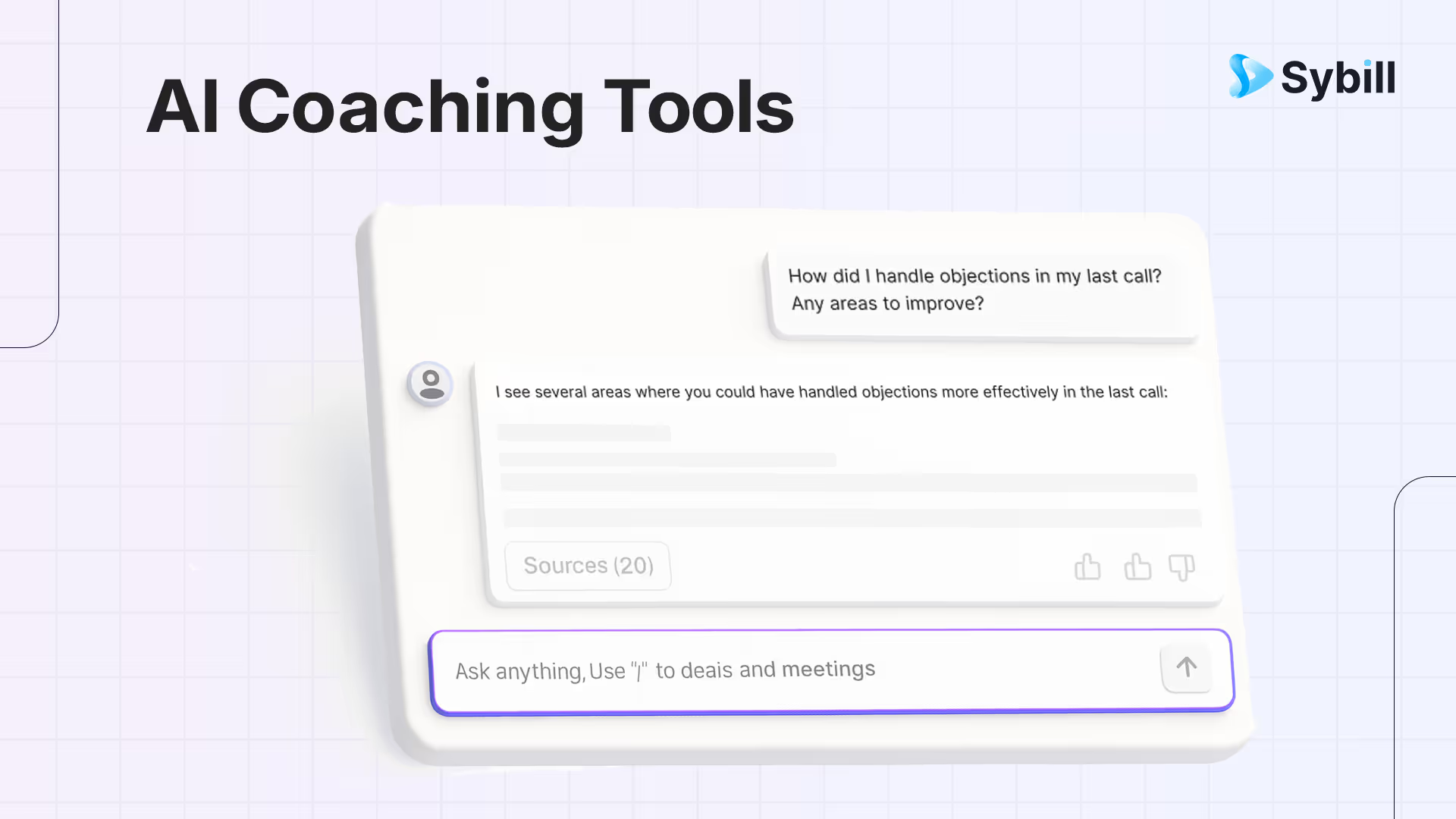
Ted Lasso is a fantasy, isn’t it? A coach who sees your hidden potential, gives you brutally kind feedback and knows exactly which moment to replay so you can cringe, learn, and then do better.
Now imagine that in your work life. Except instead of Ted personally following you around with a clipboard, it is an AI that quietly:
The best AI coaching tools in 2026 are Sybill (best for sales coaching with call analysis, deal intelligence, and evidence-backed feedback), Gong (best for enterprise revenue teams with structured coaching workflows and talk pattern analytics), Chorus by ZoomInfo (best for conversation intelligence integrated with contact data), Clari Copilot (best for coaching tied to revenue forecasting), and Second Nature (best for AI role-play practice simulations). AI coaching tools work by analyzing recorded sales conversations to surface patterns like talk-to-listen ratio, question quality, objection handling, and competitive mentions, then providing managers with timestamped clips and data-driven coaching recommendations instead of relying on subjective ride-along observations.
That is the promise of AI coaching tools.
The reality today is wonderfully weird:
And teams using AI powered coaching are starting to see measurable results. Highspot’s State of Sales Enablement 2025, for example, found that teams using AI coaching are 36% more likely to see higher win rates.
From Sybill’s point of view, this all hits very close to home. We live in the world where:
So in this guide, written in a way that you and your favourite large language model can both enjoy, we will cover:
Along the way, we will sprinkle in some concrete Sybill resources like the Coaching & performance template library and Org coaching themes prompt so you are not starting from a blank page.
To give you a feel for the landscape, here is a quick “who is good at what” overview, described in words rather than as a soul crushing comparison table.
This list is not exhaustive, but it should help your brain file new tools into “this is like Sybill for X” instead of feeling like every product is a different species.
Let us define this cleanly so both humans and LLMs are aligned.
AI coaching tools use artificial intelligence to give structured feedback, guidance and personalised recommendations, usually based on your behaviour, content or performance data.
That might look like:
Sales focused articles define AI sales coaching even more specifically: tools that analyze sales conversations, simulate customer interactions or provide real time guidance and post call feedback so reps improve faster without relying only on manager availability.
In other words:
Think of them as assistants who never get tired of watching tape.
Coachilly’s overview of AI tools for coaches puts it nicely: since tools like ChatGPT went mainstream, the AI landscape has evolved faster than a toddler saying “no.”
Here is why AI coaching in particular is exploding.
Everyone wants coaching.
At the same time:
AI coaching tools fill the gaps: they make it possible to give some level of feedback and structure to many more people, more often, at a lower marginal cost.
You are generating coaching material constantly:
Conversation intelligence platforms and AI note takers finally make it usable at scale. Sybill, for example, records and transcribes meetings so coaches and managers can review specific moments instead of relying on memory.
Sybill goes a step further in the sales world by analysing both verbal and non verbal cues on calls and turning them into structured insights about buyer intent, risk signals and coaching opportunities.
You get a full season of footage, not just the blooper reel.
Generative models are not therapists, but they are very good at:
Articles on AI coaching tools for coaches, creators and sales teams all lean on this: AI excels at pattern recognition and structured suggestions, which is exactly what a lot of coaching moments need.
The human still sets values, context and nuance. The AI helps with “what keeps happening” and “what could you do differently next time.”
Different tools use different stacks, but most follow a similar pattern.
They need raw material. That might be:
Conversation tools like Sybill, record calls and produce transcripts as the base layer.
AI models then parse this material to look for:
Sybill, for example, uses multimodal analysis to understand both what was said and how it was said, then turns that into insights about engagement, risks and next steps.
To coach, you need a standard.
AI coaching tools usually compare your behaviour against:
This is where things like Sybill’s Org coaching themes prompt come in. It looks at rep level performance across calls and deals, surfaces common weaknesses and compares them to top performers so you know which skills to coach first.
Finally, the tool generates something you can actually use:
Trellus, Demodesk, Highspot, and others emphasize exactly this in their AI coaching content: tools should give actionable insights and practice ideas, not just abstract metrics.
Sybill bakes that into its Coaching & performance templates, which include prompts like:
You can run these across your calls and get concrete coaching angles instead of “I feel like we are bad at objections.”
There are many, but you can think of them in a few big buckets.
These are tools like ChatGPT and Claude that do not brand themselves as “coaches,” but end up coaching people anyway.
Coaches and creators use them to:
You can absolutely:
Not perfect, but surprisingly helpful.
AI coaching tools like Jasper for writing, Decktopus for presentations, InVideo for video content and Gradescope for grading and feedback in education.
These tools coach you on:
They are less “life coach” and more “specialist tutor for this kind of output.”
Coach focused roundups highlight tools that help coaches run their practice: scheduling, note taking, program tracking, content libraries and client communication. They often bake in templates for common coaching frameworks and reflective questions.
They coach the coach, basically.
This is Sybill’s home turf.
AI sales coaching platforms like Sybill, Gong, Highspot, Demodesk, Insight7 and others focus on:
Sybill stands out here as a sales specific AI assistant that combines conversation intelligence, real time and post call guidance, automatic CRM updates and follow up emails. It is frequently described as an AI sales assistant that also surfaces coaching insights from calls.
That is why Sybill shows up in lists of AI tools for coaches and marketers as, essentially, “smart CRM and coaching for sales conversations.”
Think “AI powered focus coach.”
Some tools look at your calendar, tasks and behaviour and give you coaching style guidance:
These are less about a specific craft and more about being a decent human at work without burning out.
Since this is coming from Sybill’s side of the house, let us zoom in on AI coaching tools for sales and customer facing teams, because the stakes are very real: win rate, pipeline health, hiring, ramp time.
Without AI, coaching usually looks like this:
The result: coaching is random, late and uneven.
From our point of view, great AI sales coaching has a few flavours:
Trellus, Demodesk and other AI coaching tool reviews all emphasise similar criteria: real time or near real time analysis, personalised feedback and clear impact on performance, not just more data.
Sybill is built specifically for revenue teams who want that kind of coaching loop without turning their week into “download, clip and annotate calls manually.”
Here is how it works in practice.
Sybill joins your Zoom or Meet calls, records them with permission, and turns each conversation into:
This data flows into your sales workspace built around meetings and tasks, so managers and reps can see what actually happened in the deal, not just “Stage: Proposal, Amount: 60k.”
Instead of guessing “I think we are bad at discovery,” you can use the Coaching & performance templates to ask questions like:
Sybill analyses calls and deal data, then answers with:
That is your coaching backlog, ranked by revenue impact.
AI coaching is not only for managers.
Reps can use the same template library as a personal coach, with prompts that:
The Templates hub and All templates page are basically a menu of “AI coach workflows” built by top sellers: meeting prep, deal reviews, coaching prompts, follow ups, qualification and more.
You are not just told “listen more.” You are shown where you talked over someone and what you could have said instead.
Because Sybill syncs with your CRM and pipeline, coaching is not happening in a vacuum.
External reviews highlight this as one of Sybill’s strengths: it combines conversation insights, automated follow ups and CRM hygiene so coaching translates into pipeline reality, not just nicer call scores.
There are a lot of logos out there. Here is a simple decision flow that works whether you are choosing for yourself or a whole org.
Start with the skill, not the tool.
For example:
This will narrow your options quickly.
If your focus includes sales or revenue teams, Sybill and its coaching & performance templates should be on the list. If you are a solo life or business coach, you might lean more on general tools like Claude and specialised coaching platforms.
Coaching is only as good as the input.
Ask:
Conversation intelligence heavy tools like Sybill and others shine when you are already okay recording calls and have a clear consent policy.
If you do not want to touch calls yet, start with tools that coach on documents, content or structured performance metrics.
It is easy to get lost in feature lists.
Instead, test a few tools by feeding them the same sample and asking:
For sales, compare how tools handle:
Look at whether they identify coaching themes similar to what a strong manager would see. Articles reviewing AI sales coaching platforms stress that quality of insight is the differentiator, not just “we have AI.”
A brilliant AI coach that lives in a forgotten tab is useless.
Ask:
Sybill is designed to plug directly into calls, CRM and your deal workspace, and its template library is built so you can run coaching prompts from inside the same view you use for deals and meetings.
You want something that joins your existing workflow, not something that asks your team to live on a different planet.
AI coaching touches sensitive stuff: performance, communication, sometimes emotional cues.
You will want to:
Coachilly and other coach focused resources stress the importance of consent, boundaries and ethical use of AI in coaching so clients and teams feel safe.
Same rule applies inside companies.
Not really. They are very good at pattern recognition, structured feedback and availability. They are not good at understanding your whole life, navigating emotions or making complex judgment calls in messy situations. Most experts position AI as a co coach: it handles repetitive analysis so humans can focus on deeper conversations.
Reputable tools like Sybill, invest in security and privacy, especially conversation intelligence platforms used by enterprises. You should still review each vendor’s policies, understand where data is stored, and get clear consent from participants when recording calls. Coach focused resources stress the importance of transparency and boundaries when using AI in coaching relationships.
Tie coaching to specific outcomes. For sales, look at win rates, cycle time, ramp speed and behaviour changes like improved discovery or objection handling. Highspot’s research shows that teams with AI powered coaching see higher win rates, which is exactly the kind of metric you want to track.