Find us at booth #83, join us for a harbor side happy hour, or catch Gorish’s talk.

Sept, 16-18 > Learn more


Tamanna Mishra

July 9, 2026
%20(31).png)
Most revenue teams do not have a RevOps platform. They have a CRM nobody trusts, a forecasting tool leadership squints at every Friday, a call recorder full of “insights,” and a Slack channel where deals go to become folklore.
That is not RevOps. That is a group project with enterprise pricing.
The best RevOps platforms do something sharper. They connect revenue data, buyer conversations, workflows, and execution so sales, marketing, customer success, and leadership stop arguing over whose spreadsheet is lying. Gartner expects 75% of the highest-growth companies to adopt a RevOps model by 2026, up from less than 30%, which tells you where the market is going. But adoption alone is not the prize. Execution is.
Because for most B2B sales teams, the biggest revenue leak is not the absence of dashboards. It is what happens after the buyer conversation: late follow-ups, half-filled CRM fields, missed competitor mentions, vague next steps, stakeholder context buried in notes, and forecast calls powered by “I feel good about this one.”
This is why Sybill belongs at the top of the RevOps shortlist. Sybill turns sales meetings, emails, CRM data, and deal context into action: Magic Summaries, CRM Autofill, AI follow-ups, tasks, pre-meeting briefs, competitor intelligence, deal inspection, and Ask Sybill. It also supports mobile and in-person meeting capture, because not every deal happens on Zoom while everyone politely says “hard stop.”
A RevOps platform is software that helps revenue teams align sales, marketing, customer success, and leadership around shared data, workflows, metrics, and revenue goals.
A CRM stores records. A RevOps platform should help teams act on those records.
That distinction matters. A CRM can show you the opportunity stage, close date, owner, and amount. A RevOps platform should help answer: What changed in the deal? Who is missing from the buying committee? Did the rep follow up? Was the competitor mentioned? Is the forecast real, or is everyone holding hands and walking into QBR doom?
Modern B2B buying also makes RevOps harder. Forrester’s 2026 business buying research found that the typical buying decision now involves 13 internal stakeholders and nine external influencers. So if your RevOps stack depends on one rep remembering everything after every call, good luck.
Read more: Sybill’s guide on researching multiple stakeholders before a demo.
The easiest way to buy badly is to ask, “Which platform has the most features?” The better question is, “Where is revenue leaking?”
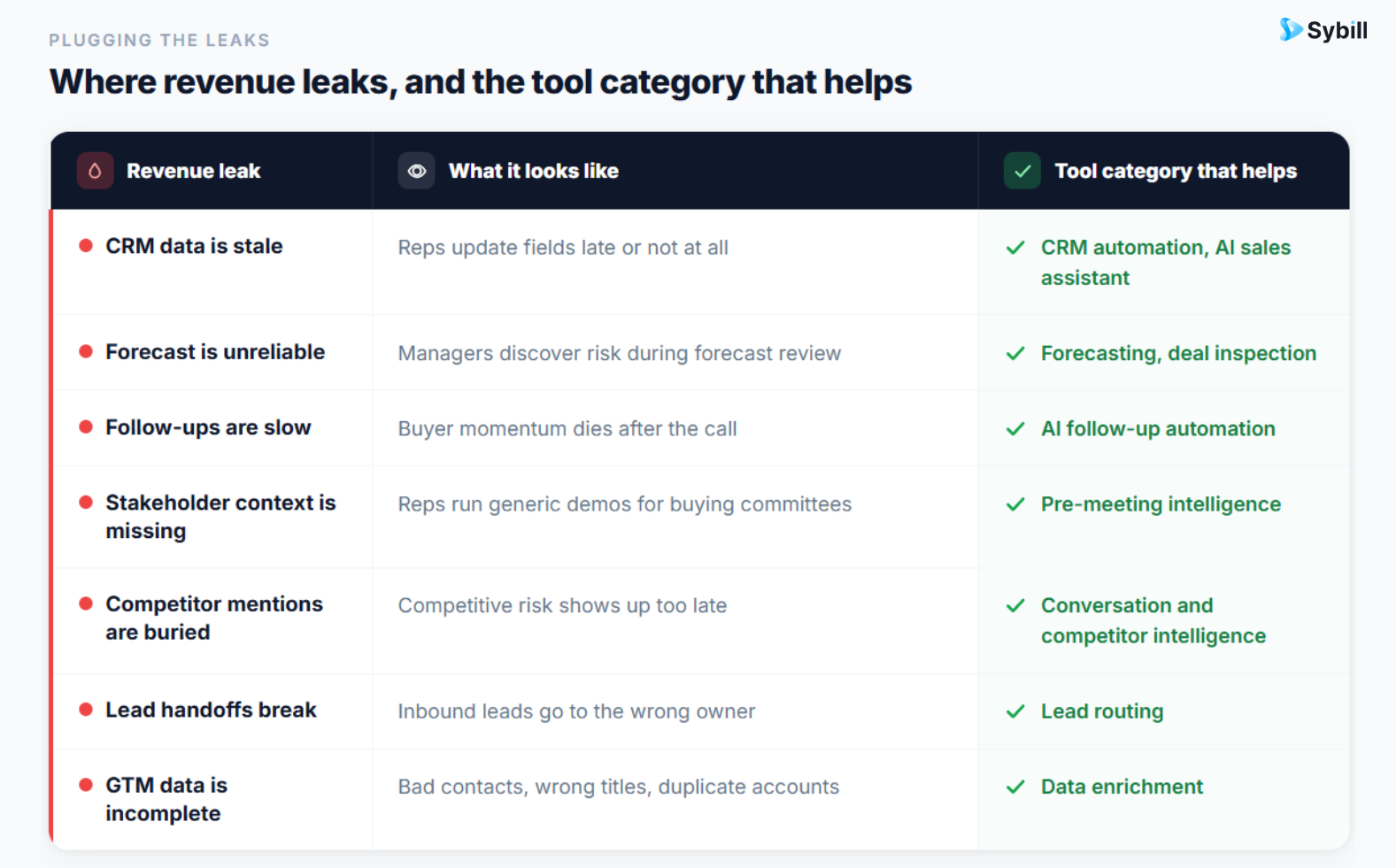
Poor data is not just annoying. Gartner says poor data quality costs organizations at least $12.9 million a year on average. That is why CRM hygiene is not a “RevOps housekeeping” issue. It is a revenue issue wearing a boring sweater.
Sybill attacks one of the most painful parts of that problem: what happens after actual buyer interactions. CRM Autofill captures deal details from calls and emails, then updates CRM fields within minutes after configuration. It integrates with HubSpot, Salesforce, Zoho, and Dynamics 365.
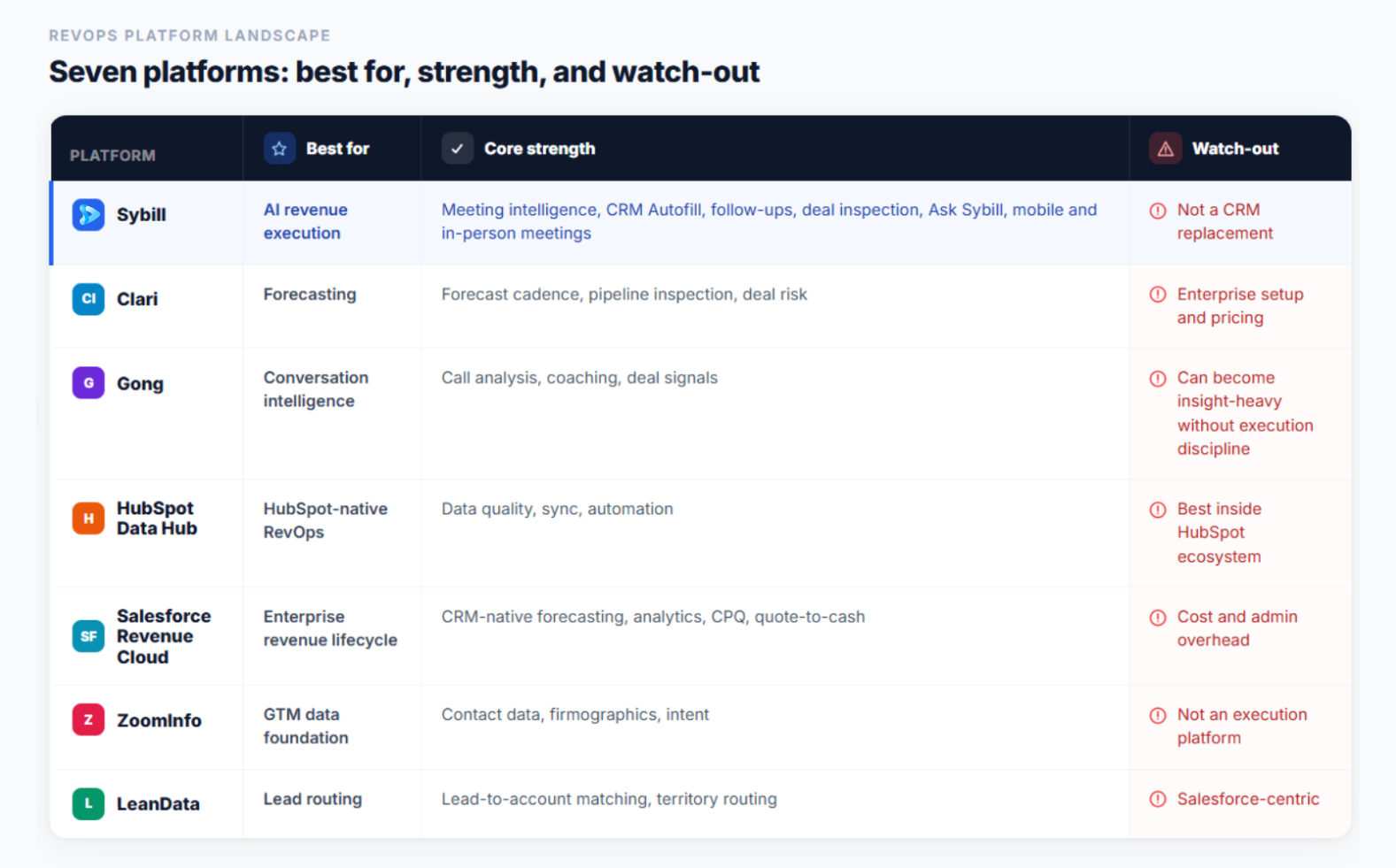
We asked eight practical questions.
Does the RevOps software solve a real revenue leak?
Does it improve execution, or just add reporting?
Does it make CRM more complete and current?
Will reps actually use it? Does it help managers inspect deals before forecast review?
Does it support sales, RevOps, marketing, CS, or leadership?
Does it integrate with the stack teams already use?
Can it show value before the next fiscal year becomes a historical documentary?
Salesforce reports that non-selling tasks consume 70% of reps’ time, including admin work and meeting prep. So any RevOps platform that adds more seller admin should be immediately escorted out of the building.
Sybill is the best RevOps platform for teams that want revenue intelligence along with sales execution done well.
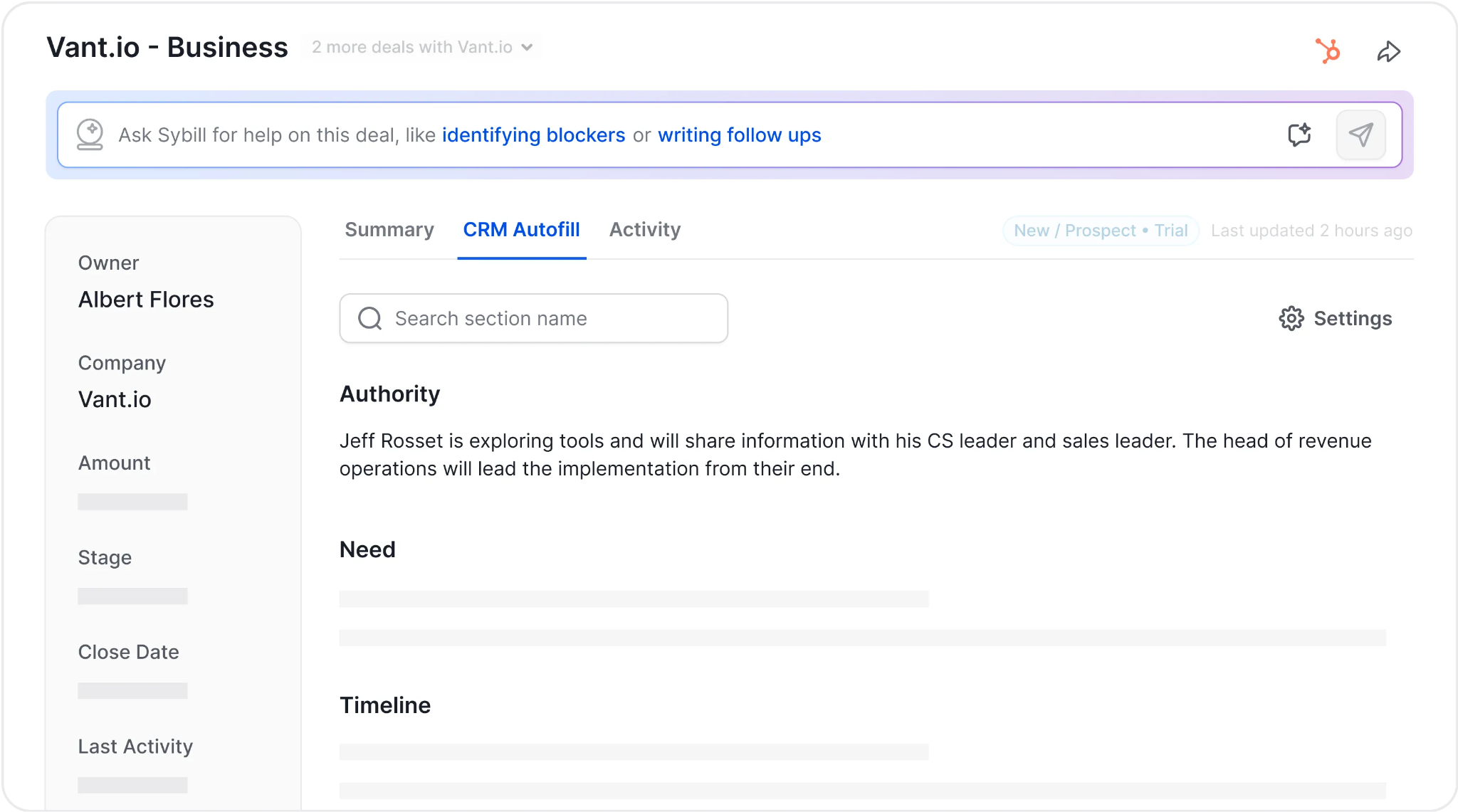
It captures buyer conversations, creates Magic Summaries, drafts personalized follow-ups, updates CRM fields, creates tasks, helps with pre-meeting prep, surfaces buyer intent, identifies competitor mentions, and lets teams ask deal questions through Ask Sybill. Sybill’s Pre-Meeting Briefs scan calendar, calls, email, CRM, and more so reps can walk into meetings with actual context instead of vibes and a tab explosion.
Sybill also matters for field sales and in-person meetings. Its mobile app can record in-person sales conversations and deliver structured summaries, CRM updates, follow-up emails, and action items within minutes. That is huge for customer visits, conferences, trade shows, partner meetings, and enterprise relationship selling.
Best for: Sales teams, RevOps teams, sales managers, and revenue leaders who want cleaner CRM data, faster follow-ups, better deal inspection, and less rep admin.
Where it falls short: Sybill is not trying to replace Salesforce, HubSpot, or your data provider. It makes those systems cleaner, smarter, and more usable.
Clari is built for revenue teams that need stronger forecasting discipline.
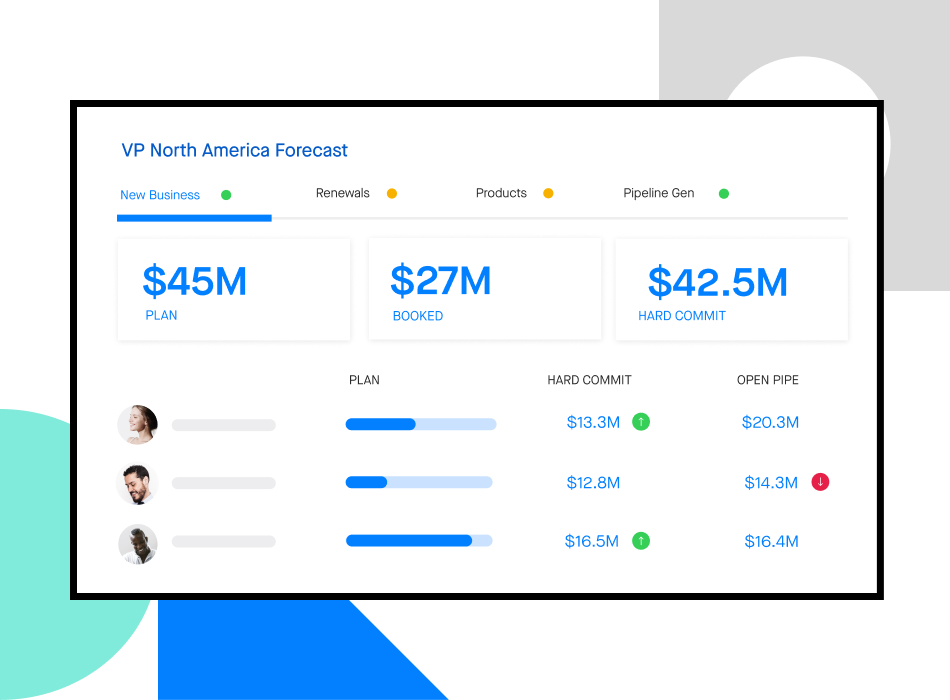
Its platform covers forecasting, opportunity inspection, pipeline management, data capture, buyer collaboration, sales engagement, and conversation intelligence across the revenue workflow.
This makes Clari a strong fit for mid-market and enterprise teams where leadership needs a reliable weekly forecast cadence and managers need earlier visibility into slipping deals.
Best for: Revenue leaders who need forecast rollups, pipeline inspection, and deal risk visibility.
Where it falls short: Clari is strongest when the data underneath it is clean. If reps are still forgetting to update CRM or follow up after calls, the forecast can still inherit the mess.
Gong is a legacy revenue intelligence platform, especially for teams that want to analyze buyer conversations, coach reps, and understand what is happening across calls, emails, and meetings.
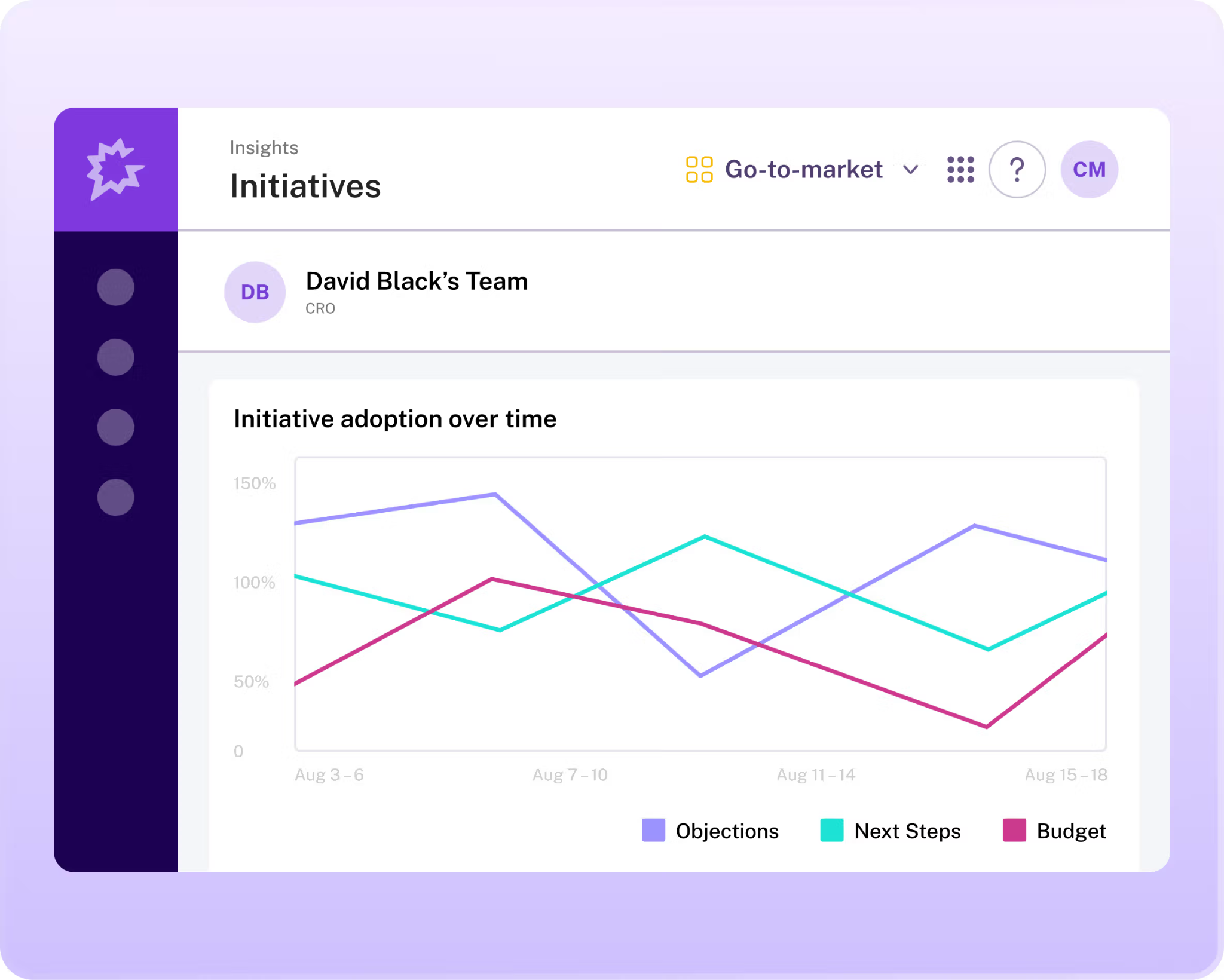
Gong describes its platform as built to capture every interaction, analyze what is working, predict pipeline risk, automate handoffs, and support revenue teams.
Best for: Sales coaching, call analysis, conversation intelligence..
Where it falls short: Conversation intelligence is not the same as execution. Teams still need to make sure insights become CRM updates, follow-ups, next steps, tasks, and deal actions.
Read more: What is conversation intelligence?
HubSpot Data Hub, formerly associated with the Operations Hub category, is useful for teams already working inside HubSpot.
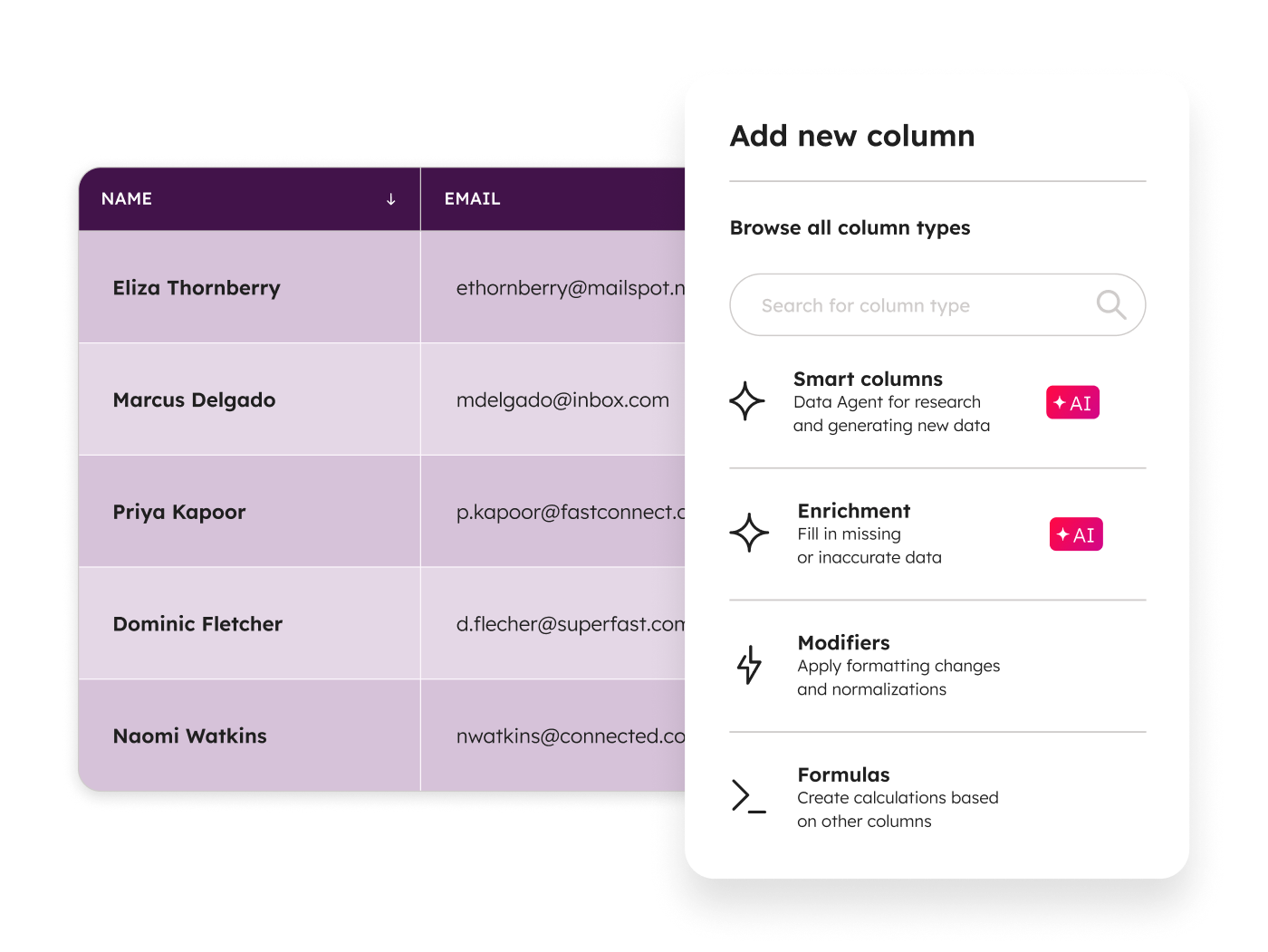
It helps combine scattered data, improve data quality, automate cleanup, and activate customer intelligence across the HubSpot platform.
For SMB and mid-market teams, HubSpot’s biggest strength is usability. It is often easier to run than an enterprise Frankenstein stack with six admins, three consultants, and one person named Kyle who understands the routing logic.
Best for: HubSpot-native teams that want data sync, data quality automation, workflows, and reporting.
Where it falls short: Advanced revenue intelligence, conversation-based deal execution, and deep forecasting may require additional tools.
Salesforce is the system of record for many enterprise revenue teams.
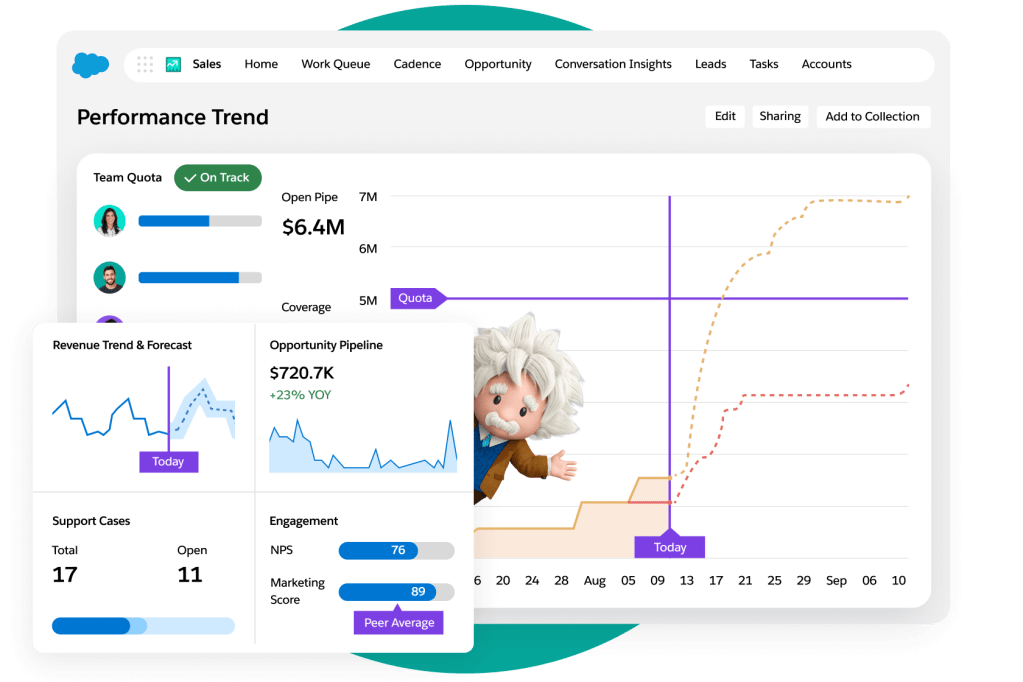
Salesforce Revenue Intelligence gives teams visibility into pipeline, forecasting, and rep performance inside Sales Cloud. Salesforce Revenue Cloud, now Agentforce Revenue Management, is built to manage the revenue lifecycle from CPQ to billing and invoicing.
This makes Salesforce strong for complex sales organizations with quote-to-cash needs, multiple products, approvals, pricing logic, and enterprise reporting requirements.
Best for: Enterprise teams already deeply invested in Salesforce.
Where it falls short: Salesforce is powerful, but it is only as useful as the data inside it. If reps avoid CRM like it owes them money, you need an execution layer on top.
ZoomInfo is a strong data foundation for B2B revenue teams.
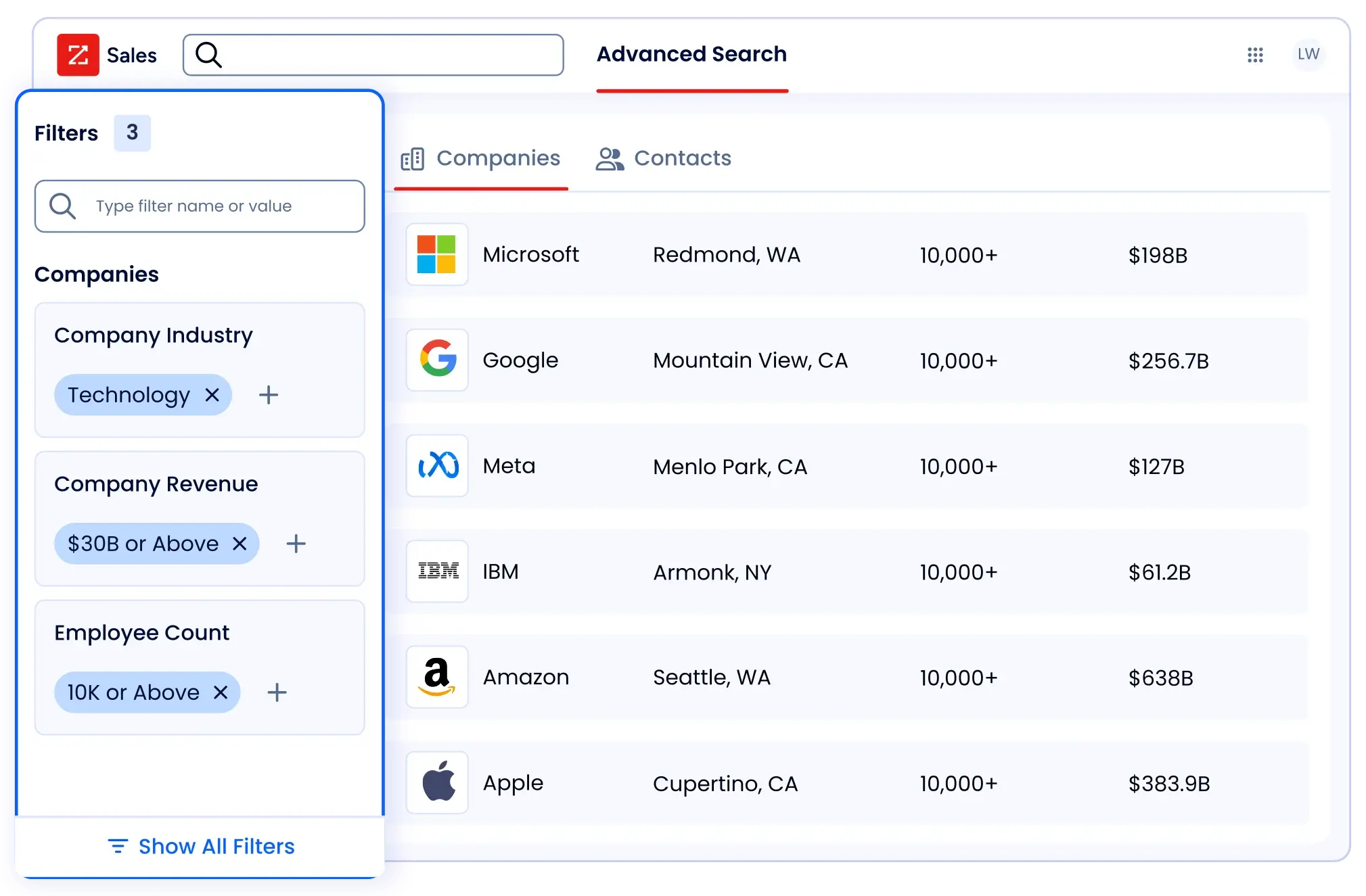
It helps companies identify, connect with, and close ideal customers using business contact data, intent signals, and sales automation tools.
ZoomInfo is valuable when your biggest RevOps problem starts at the top of the funnel: wrong contacts, missing titles, incomplete accounts, weak enrichment, or poor targeting.
Best for: GTM data, contact discovery, enrichment, intent, and account intelligence.
Where it falls short: Data is not execution. A perfect contact record does not write the follow-up, update the CRM, or rescue a stalled deal.
LeanData is built for one of the most underrated RevOps problems: getting the right lead to the right owner quickly. Its lead-to-account matching uses Salesforce data and routing logic to connect new leads with the right account records and downstream workflows.
This is especially useful for inbound-heavy teams, account-based sales motions, and organizations with complex territory rules.
Best for: Salesforce teams with high inbound volume, territory rules, and lead ownership complexity.
Where it falls short: LeanData solves routing. It does not solve forecasting, meeting intelligence, follow-ups, coaching, or post-call execution.
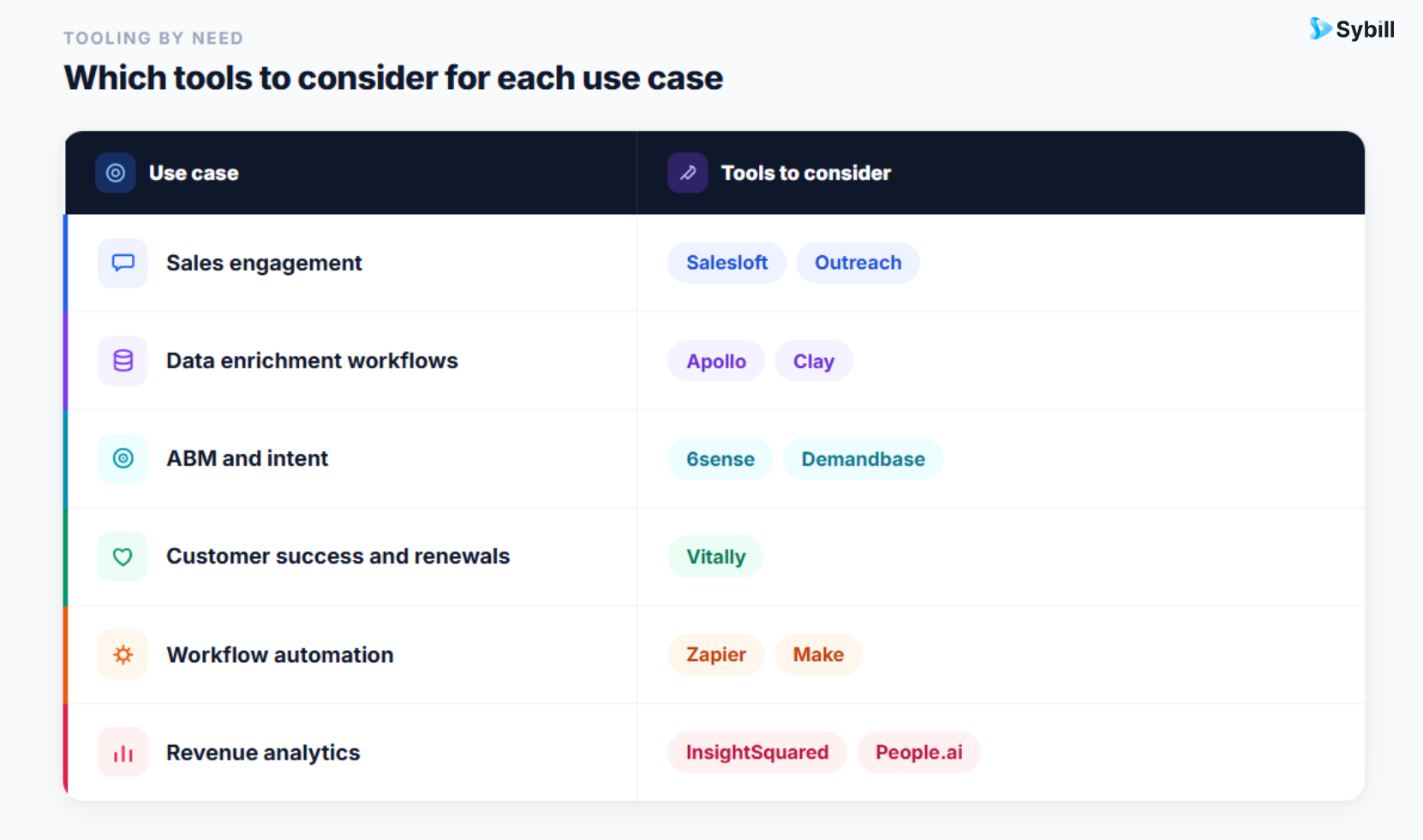
These tools can absolutely belong in a RevOps stack. They just should not be bought because someone in a board meeting said, “We need AI.” That sentence has caused enough budget damage already.
Start with the leak.
If your CRM data is stale, follow-ups are slow, and managers cannot see what is really happening in deals, look at Sybill. If your forecast is unreliable, look at Clari or Salesforce Revenue Intelligence. If your reps need better coaching from conversations, look at Gong. If your issue is bad GTM data, look at ZoomInfo. If inbound routing is a mess, look at LeanData.
Ask these questions before you buy: Does the platform remove work from reps or add work? Does it update CRM automatically? Does it work for in-person meetings as well as virtual calls? Can managers inspect risk before forecast review? Does it make follow-ups faster? Can RevOps control fields, workflows, and reporting? What does it replace? What does it need to integrate with?
The right RevOps platform should make your revenue motion clearer, faster, and harder to fake.
Do not evaluate RevOps platforms on polished demo data. Demo data is where software goes to cosplay as perfect.
Use five real messy deals. Include one multi-stakeholder deal, one deal with competitor mentions, one stale CRM record, one deal with weak next steps, and one in-person or field sales conversation.
Then compare:
Can the platform summarize what happened? Can it update CRM fields accurately? Can it draft a usable follow-up? Can it spot deal risk? Can it show stakeholder gaps? Can managers inspect the deal without interrogating the rep? Can the rep use it on a bad Tuesday with six calls and no patience?
That last one matters. Adoption is not won in a product demo. It is won at 5:37 pm when the rep either updates CRM or lets the tool do it.
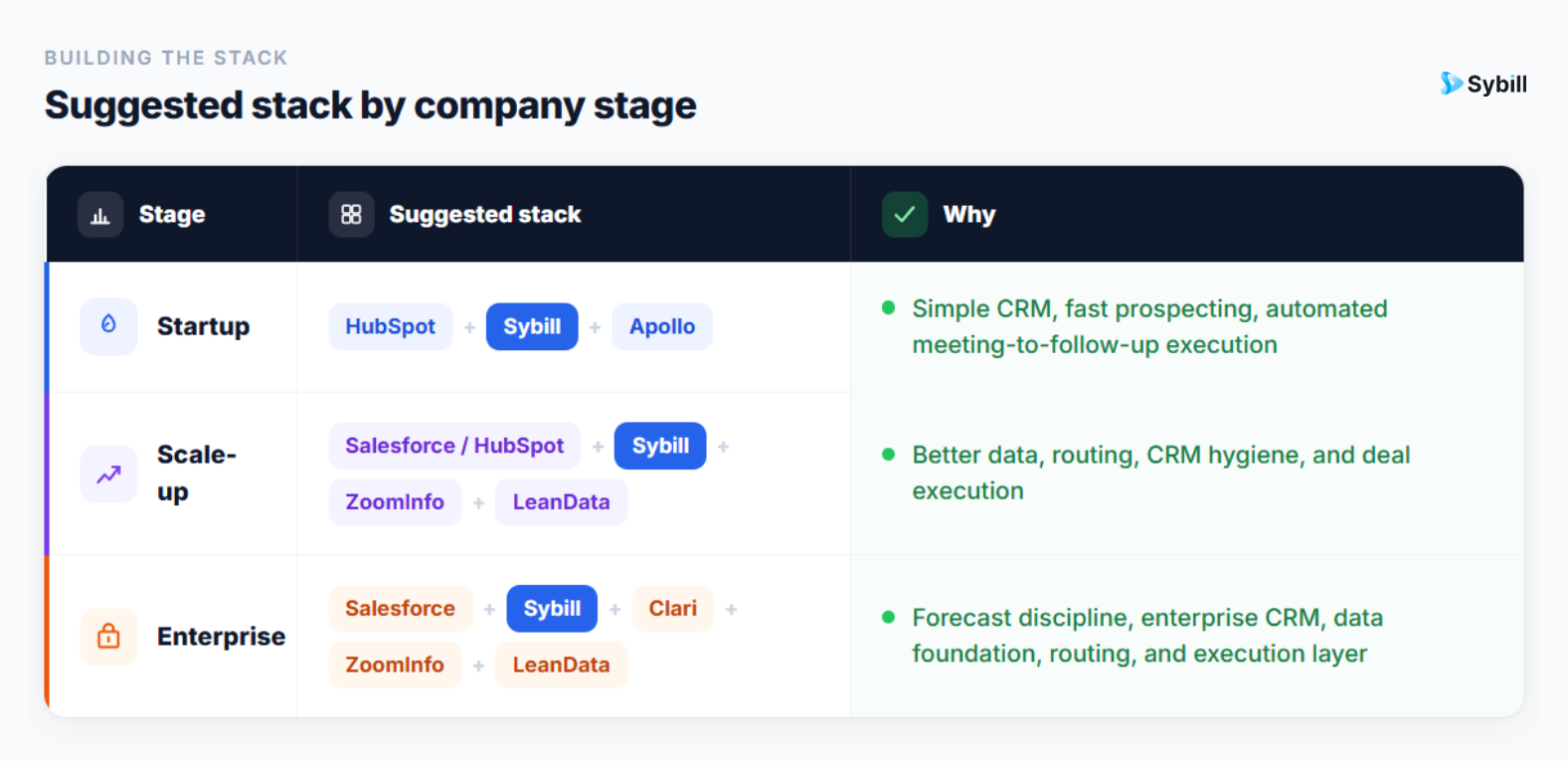
RevOps is not supposed to be a prettier way to stare at pipeline anxiety. It should help teams act faster, follow through better, and make revenue more predictable.
That means the best RevOps platform is not always the biggest platform. It is the one that fixes the leak closest to the money.
For many sales-led teams, that leak happens after the meeting. The buyer shares pain points. Someone mentions a competitor. A stakeholder concern slips out. The rep promises a follow-up. The CRM needs updating. The manager needs visibility. The next step needs to happen before the deal cools down.
Sybill handles that execution layer: summaries, CRM updates, follow-ups, deal risks, competitor signals, pre-meeting context, Ask Sybill, and mobile capture for in-person meetings.
Your RevOps stack should not need reps to remember everything, update everything, and follow up perfectly after every call.
Let Sybill do the busywork. Let reps sell.

A RevOps platform connects the data, workflows, tools, and processes that sales, marketing, customer success, and leadership use to manage revenue. A CRM stores records. A RevOps platform helps teams turn those records into coordinated revenue action.
A CRM tracks accounts, contacts, opportunities, and activities. A RevOps platform connects the CRM with other revenue systems, automates workflows, improves data quality, and helps teams forecast, inspect, and execute revenue more effectively.
Common RevOps tools include CRMs, AI sales assistants, revenue intelligence platforms, conversation intelligence tools, forecasting software, data enrichment platforms, lead routing tools, sales engagement tools, customer success platforms, and workflow automation tools.
Gong is usually best understood as a conversation intelligence and revenue intelligence platform. It supports RevOps by analyzing buyer conversations and deal signals, but teams may still need other tools for CRM automation, routing, forecasting, and execution.
Salesforce can be part of a RevOps platform, especially for enterprise teams using Salesforce Revenue Intelligence or Revenue Cloud. But Salesforce is primarily the CRM and revenue system of record. Most teams still add tools for data enrichment, conversation intelligence, forecasting, routing, or sales execution.
For sales-led teams that need AI meeting intelligence, CRM updates, follow-ups, deal inspection, buyer context, competitor intelligence, and mobile support for in-person meetings, Sybill is the strongest RevOps execution platform.
Start with the revenue leak. If the issue is forecasting, look at Clari. If it is conversation analysis, look at Gong. If it is CRM hygiene, follow-ups, deal context, and post-meeting execution, look at Sybill. If it is data quality at the top of the funnel, look at ZoomInfo. If it is routing, look at LeanData.
A RevOps platform connects the data, workflows, tools, and processes that sales, marketing, customer success, and leadership use to manage revenue. A CRM stores records. A RevOps platform helps teams turn those records into coordinated revenue action.
A CRM tracks accounts, contacts, opportunities, and activities. A RevOps platform connects the CRM with other revenue systems, automates workflows, improves data quality, and helps teams forecast, inspect, and execute revenue more effectively.
Common RevOps tools include CRMs, AI sales assistants, revenue intelligence platforms, conversation intelligence tools, forecasting software, data enrichment platforms, lead routing tools, sales engagement tools, customer success platforms, and workflow automation tools.