Find us at booth #83, join us for a harbor side happy hour, or catch Gorish’s talk.

Sept, 16-18 > Learn more

%20(1).avif)
Mamta Tainwala

February 17, 2026
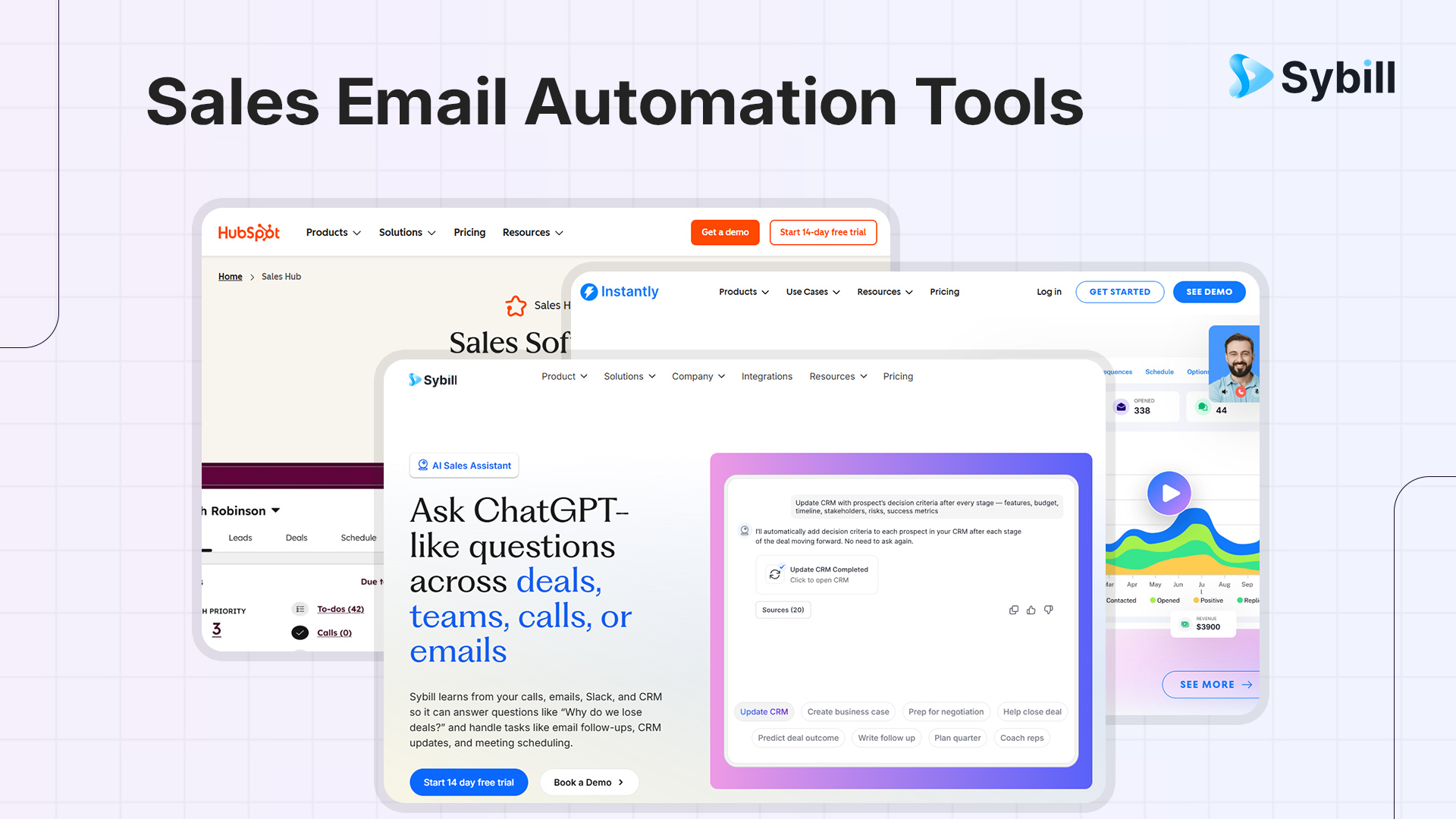
TL;DR: Quick picks based on what you actually need
Full breakdown of all 12 tools below, including who each one is best for (and who should skip it).
Remember that scene in Groundhog Day where Bill Murray keeps reliving the same day over and over? That's what manual sales email feels like. Write the follow-up. Update the CRM. Copy the template. Swap the first name. Send. Repeat. Forever.
The data backs up the exhaustion. Sales reps spend less than a third of their time actually selling. The rest? Administrative tasks, with email leading the charge. And the cruel irony is that the emails most likely to close deals, the ones sent within an hour of a call, personalized with details from the conversation, are exactly the ones that get deprioritized when a rep is buried in admin work.
Sales email automation tools exist to break that cycle. But here's where most teams go wrong: they pick a tool designed for mass marketing campaigns and try to shoehorn it into a B2B sales workflow. Or they grab the shiniest enterprise platform and end up paying for features their five-person SDR team will never touch.
The right tool depends on what you're actually trying to automate. Cold outreach sequences? Post-call follow-ups? CRM hygiene? Multichannel cadences? Each of these needs something different.
We tested, researched, and compared 12 sales email automation tools to help you find the right fit. For each one, you'll get the standout features, pricing, who it's best for, and an honest take on the trade-offs.
We looked at each tool through the lens of what actually matters to a B2B sales team in 2026:
1. Sybill
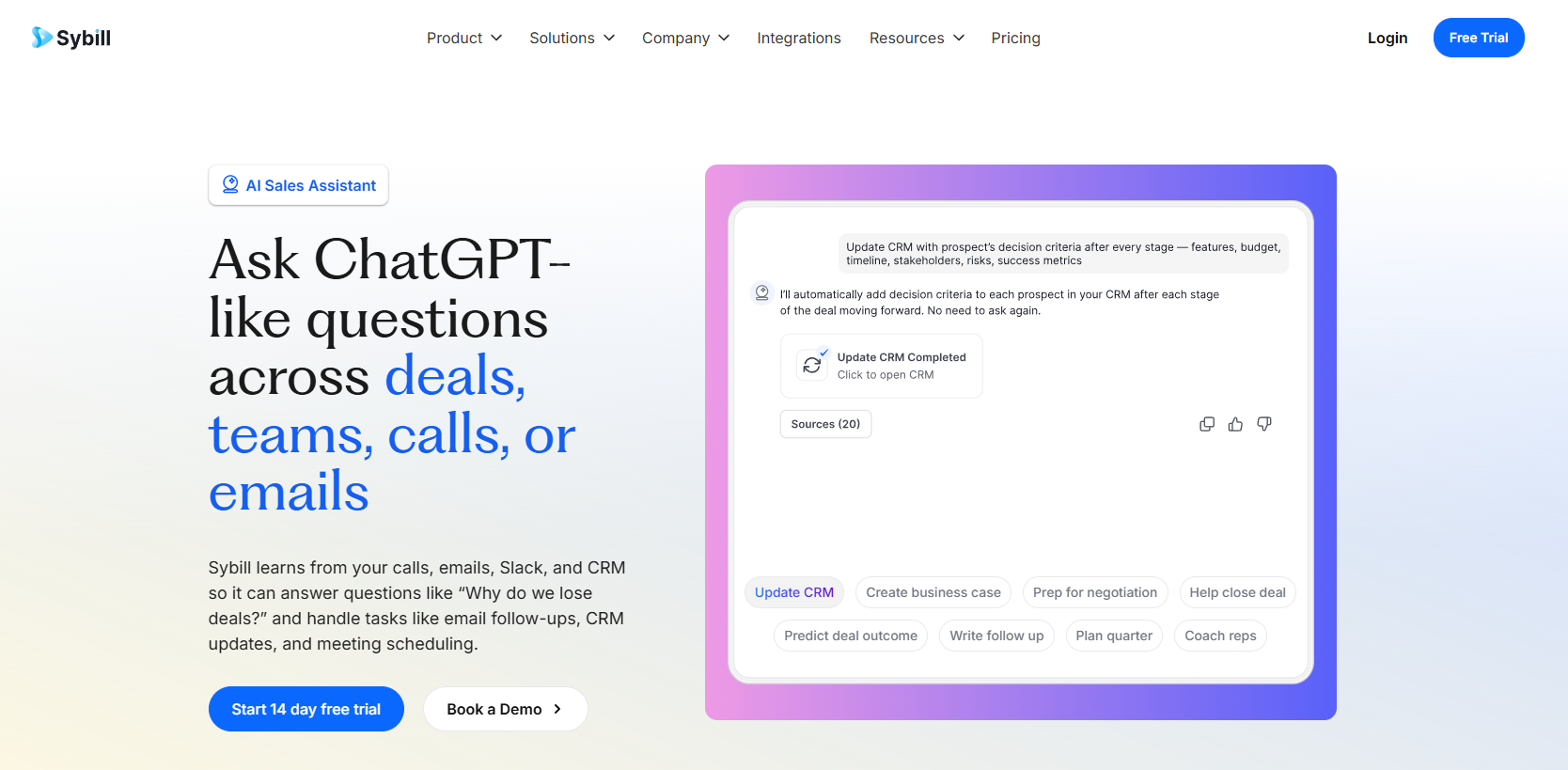
Best for: Sales teams that need automated post-call follow-ups, CRM updates, and meeting prep, not just outbound sequences.
Sybill isn't a traditional email sequencing tool. It's an AI sales assistant that automates the work that happens around your sales conversations: the follow-up email after the call, the CRM update with deal details, the pre-meeting brief before the next one.
What makes it different from every other tool on this list is context. Sybill sits on your calls, understands what was discussed (including pain points, objections, next steps, and stakeholder dynamics), and uses that context to draft personalized follow-up emails in your writing style. Not a template with swapped variables. An actual email that references the specific things your prospect said.
Standout features:
Pricing: Essentials starts at $29/user/month. Business plan (with CRM autofill and advanced features) starts at $79/user/month. Free plan available with 500 credits per week.
The honest take: Sybill shines brightest for teams that live and die by their calls. If your sales motion is meeting-heavy and your biggest bottleneck is post-call admin, nothing else on this list comes close. It's less suited for teams that only do cold outbound with no call component, since the AI's superpower is turning conversation context into action.
Integrations: Salesforce, HubSpot, Zoho, Dynamics 365, Slack, Gmail, Outlook, and 100+ more.
Best for: SDR teams that need prospecting data and cold email automation in one platform.
Apollo combines a massive B2B contact database (210M+ contacts) with built-in email sequencing, a dialer, and CRM sync. The pitch is simple: find leads and email them without switching tools.
Standout features:
Pricing: Free plan available (limited credits). Basic: $49/user/month. Professional: $79/user/month. Organization: $119/user/month (all billed annually).
The honest take: Apollo is excellent for top-of-funnel prospecting where you need both data and outreach in one place. The credit system can get expensive fast if your team does high-volume outreach, and the data accuracy for phone numbers isn't always reliable. It's a prospecting engine, not a deal management tool, so you'll still need something else for post-call workflows and CRM hygiene.
Best for: Enterprise sales teams with large SDR/AE organizations that need advanced automation, analytics, and forecasting.
Outreach is the heavyweight of sales engagement. It handles email sequences, call workflows, meeting scheduling, conversation intelligence, deal management, and forecasting. It's built for scale and complexity.
Standout features:
Pricing: Not publicly listed. Industry estimates put it at $100 to $160/user/month, with potential implementation fees of $1,000 to $8,000.
The honest take: Outreach is powerful, but it's built for big teams with big budgets and dedicated RevOps support. If you're a 5-person sales team, it's overkill (and overpriced). The lack of transparent pricing is frustrating, and smaller teams often report that the complexity adds more overhead than it removes.
Best for: Mid-market sales teams that want structured cadences with solid CRM integration and coaching tools.
Salesloft is Outreach's closest competitor, offering email sequences, a dialer, conversation intelligence, and deal management. Many teams find the UI more intuitive than Outreach's.
Standout features:
Pricing: Two tiers (Advanced and Premier). Pricing isn't public, but estimates range from $75 to $125/user/month with annual contracts. Some users report mandatory onboarding fees.
The honest take: Salesloft is a strong mid-market option with better UX than Outreach for most teams. The trade-off is that the dialer is a paid add-on (not included in base pricing), and reporting depth doesn't quite match Outreach. Like Outreach, the lack of transparent pricing makes budgeting tricky.
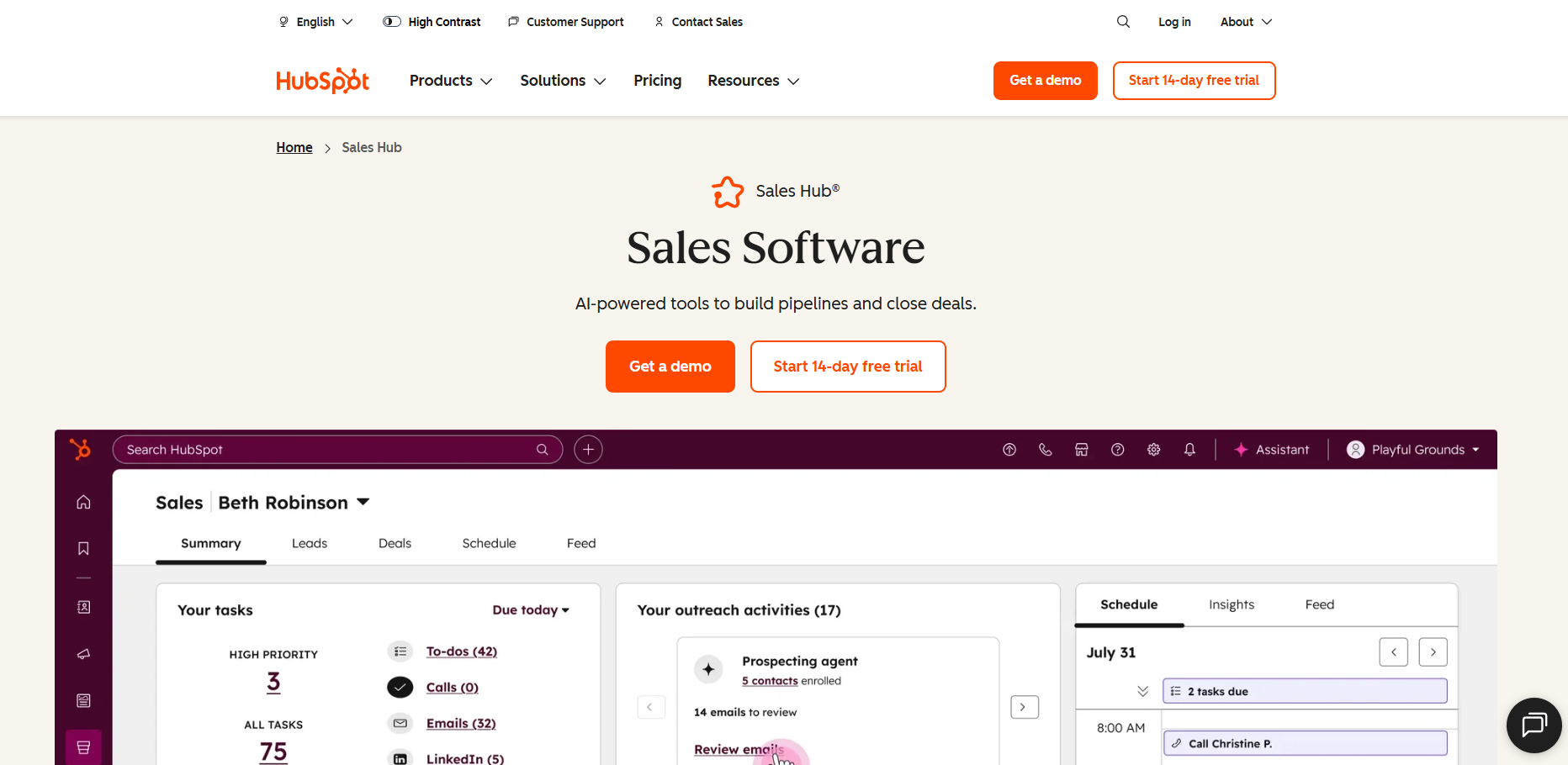
Best for: Growing sales teams that want CRM, email automation, and marketing alignment in one ecosystem.
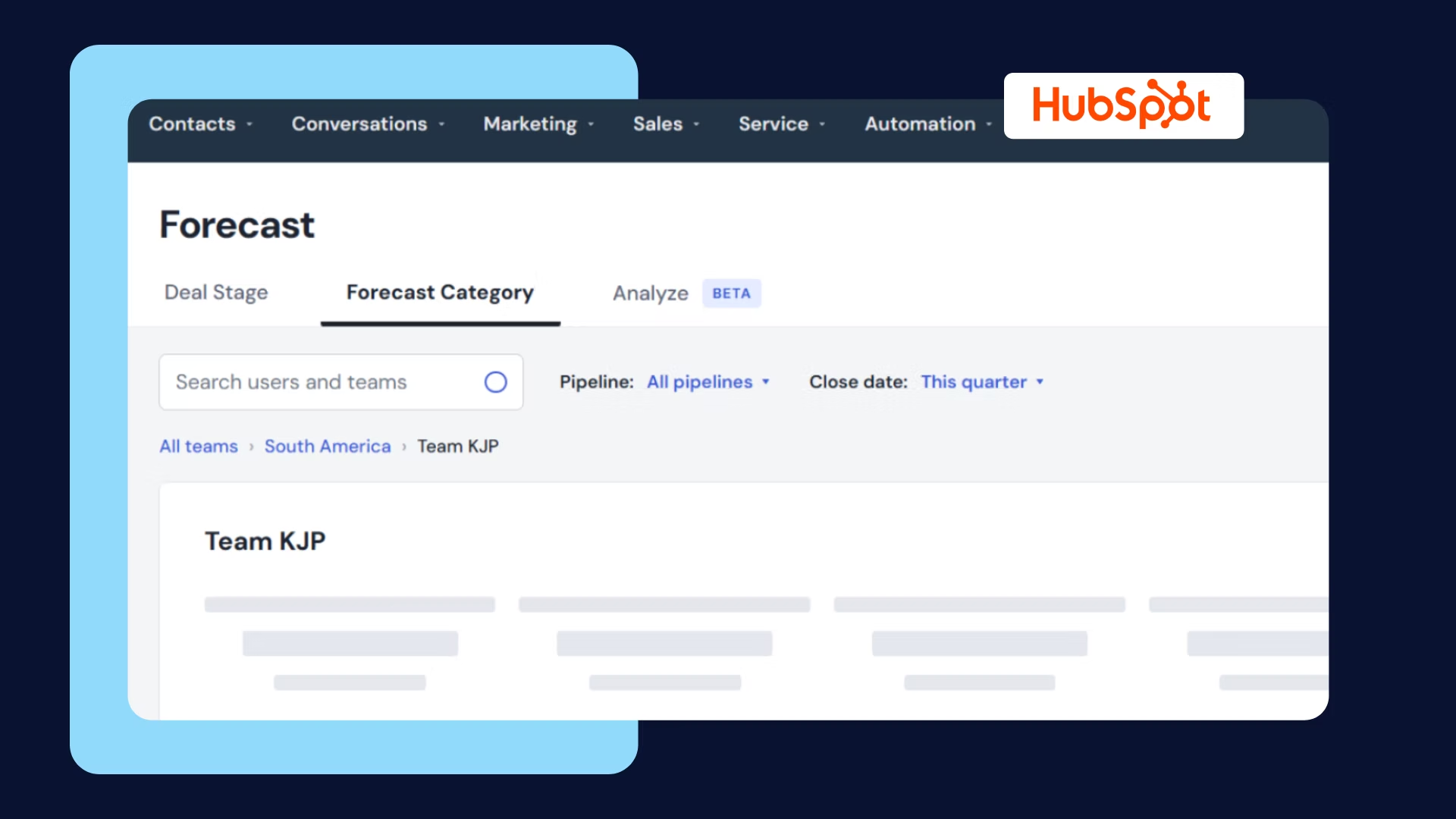
HubSpot's Sales Hub combines CRM, email tracking, sequences, meeting scheduling, and pipeline management. Its biggest advantage is how tightly it connects to HubSpot's marketing tools, making lead handoff seamless.
Standout features:
Pricing: Free CRM available. Sales Hub Starter: $15/month. Professional: $90/user/month. Enterprise: $150/user/month.
The honest take: HubSpot is the easiest ramp-up on this list, and the free tier is genuinely useful. The limitation is flexibility: HubSpot is opinionated about how your sales process should work, and heavy customization can feel constraining compared to Salesforce-native tools. The jump from Starter to Professional pricing is steep.

Best for: SMB and mid-market teams that want multichannel outreach with transparent pricing and no surprises.
Klenty focuses on email, phone, and LinkedIn outreach with AI-driven personalization. Its biggest selling point against Salesloft and Outreach is straightforward pricing with no hidden fees.
Standout features:
Pricing: Growth: $60/user/month. Plus: $85/user/month. Pro (with AI SDR agents): $120/user/month. All published upfront.
The honest take: Klenty delivers comparable features to Salesloft and Outreach at 50 to 70% lower cost, with full pricing transparency. The trade-off is brand recognition and ecosystem; if your enterprise buying committee wants a "name brand" vendor, Klenty might face internal pushback despite being functionally competitive.
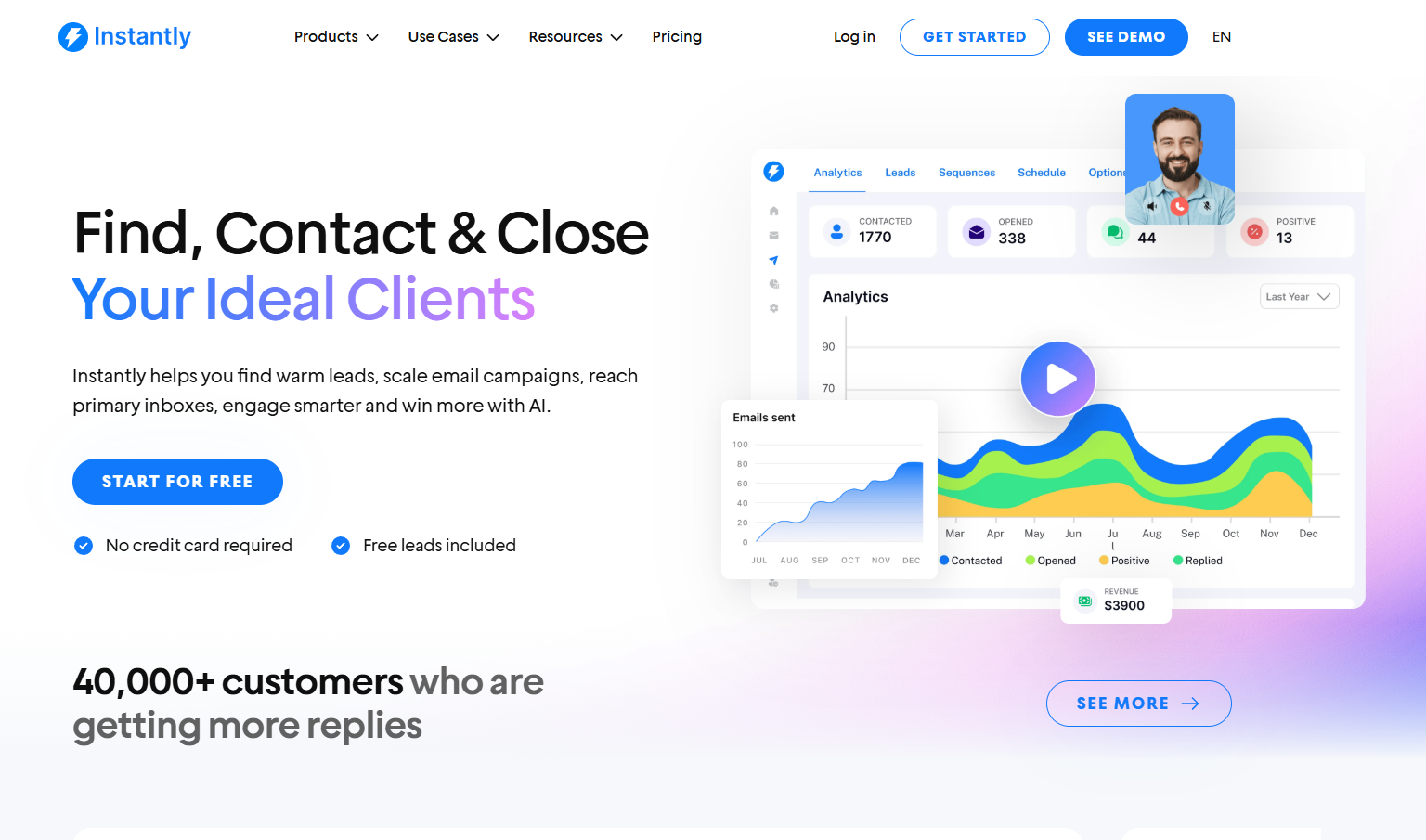
Best for: Cold email specialists and agencies who need high-volume sending with strong deliverability.
Instantly is built purely for cold outreach at scale. Unlimited email accounts, automated warmup, lead database access, and campaign analytics. It's not a CRM or a sales engagement platform; it's a cold email machine.
Standout features:
Pricing: Growth: $30/month (1,000 contacts). Hypergrowth: $77.6/month (25,000 contacts). Light Speed: $286.3/month (100,000 contacts).
The honest take: Instantly is excellent if cold outbound is your entire motion and deliverability is your top concern. It's not designed for post-call workflows, CRM updates, or deal management. If you need the full sales workflow, pair it with a tool like Sybill for everything that happens after the prospect replies.
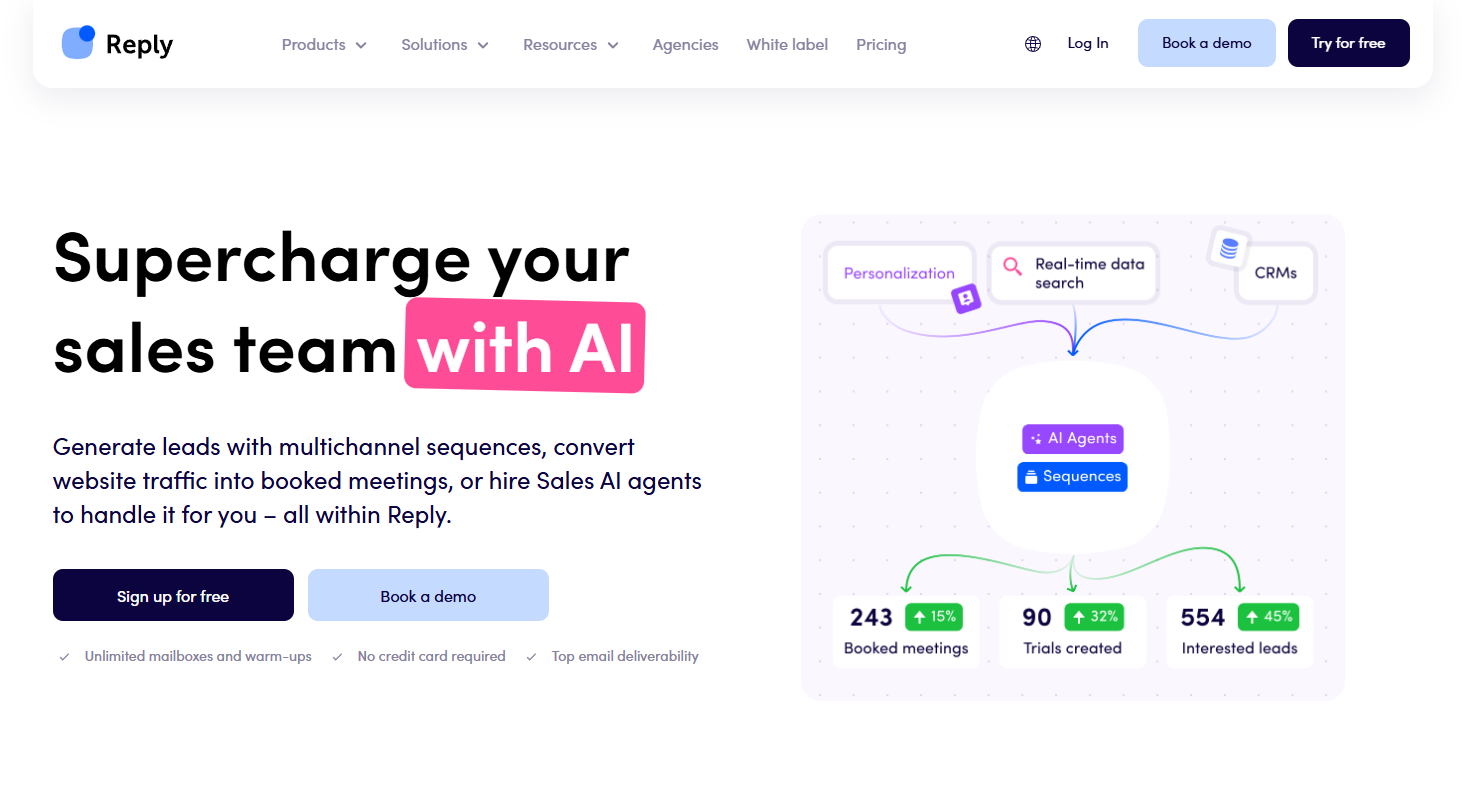
Best for: Sales teams running multichannel outreach who want AI-assisted email writing and automation.
Reply.io combines email sequences with LinkedIn automation, calls, SMS, and WhatsApp in one platform. Its AI assistant, Jason AI, helps draft personalized emails and handle initial prospect engagement.
Standout features:
Pricing: Email Volume plan starts at $49/month. Multichannel starts at $89/user/month. Agency plans available.
The honest take: Reply.io offers solid multichannel coverage at a reasonable price point. The AI writing quality is decent but not conversation-aware like Sybill's; it drafts from templates and prospect data rather than from actual call context. Good for outbound-heavy teams; less useful for teams focused on post-meeting deal progression.
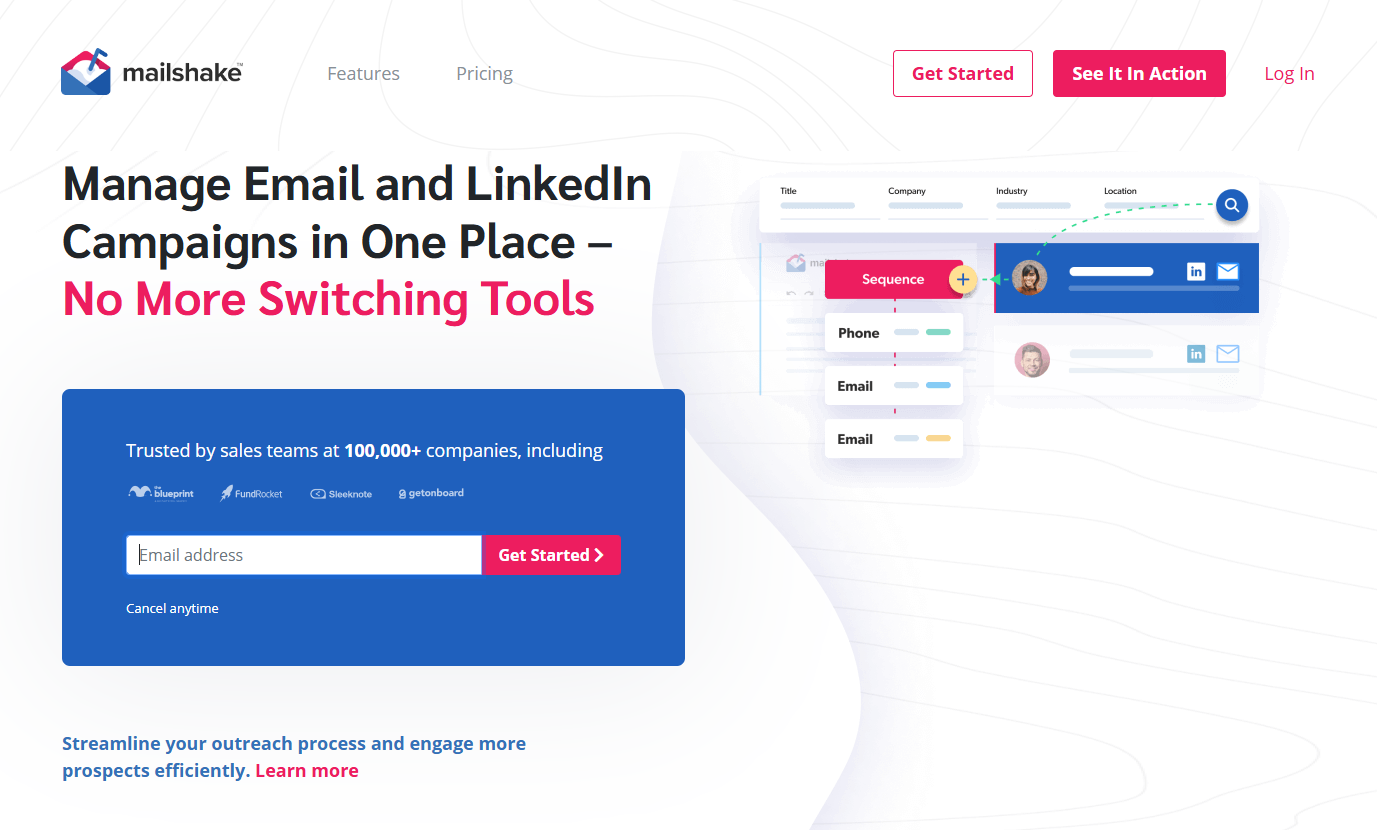
Best for: Small sales teams and solo reps who want simple, affordable cold email automation.
Mailshake keeps things straightforward: email outreach, phone dialer, LinkedIn automation, and basic analytics. No complex setup, no enterprise bloat.
Standout features:
Pricing: Starter: $29/month. Email Outreach: $49/month. Sales Engagement: $99/month.
The honest take: Mailshake is the "keep it simple" option. It does the basics well and won't overwhelm a small team. The downside is limited scalability; once you need advanced CRM integrations, conversation intelligence, or AI-generated content, you'll outgrow it.
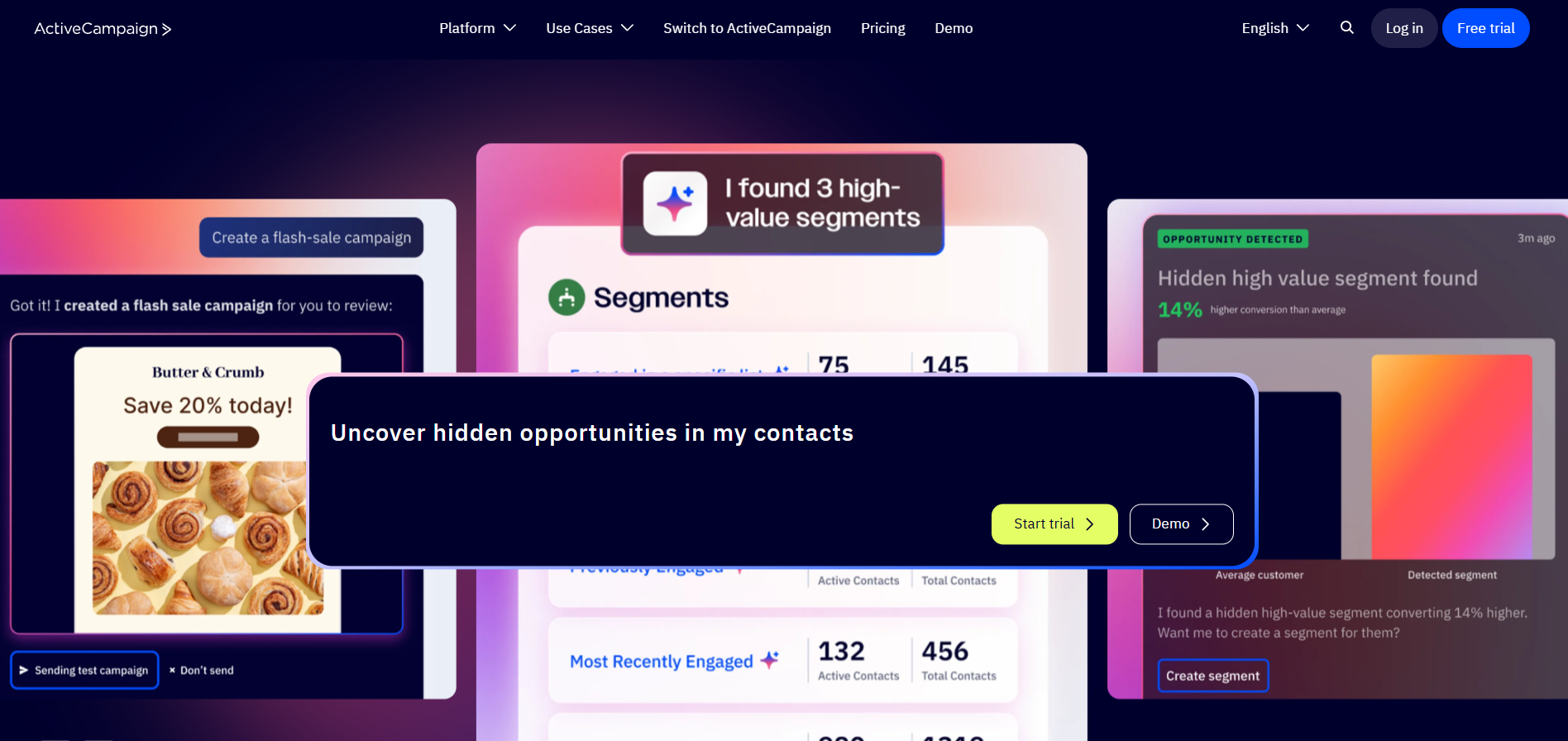
Best for: Teams that need both marketing automation and sales email sequences in one platform.
ActiveCampaign straddles the line between marketing automation and sales CRM. It offers email sequences, lead scoring, pipeline management, and robust marketing automation (drip campaigns, landing pages, forms).
Standout features:
Pricing: Starter: $15/month. Plus: $49/month. Pro: $79/month. Enterprise: $145/month.
The honest take: ActiveCampaign is one of the most versatile platforms on this list, especially if your team handles both marketing nurture and sales outreach. The trade-off is that it's not purpose-built for sales; the CRM is functional but not as deep as Salesforce or HubSpot, and it lacks conversation intelligence or call-based features entirely.
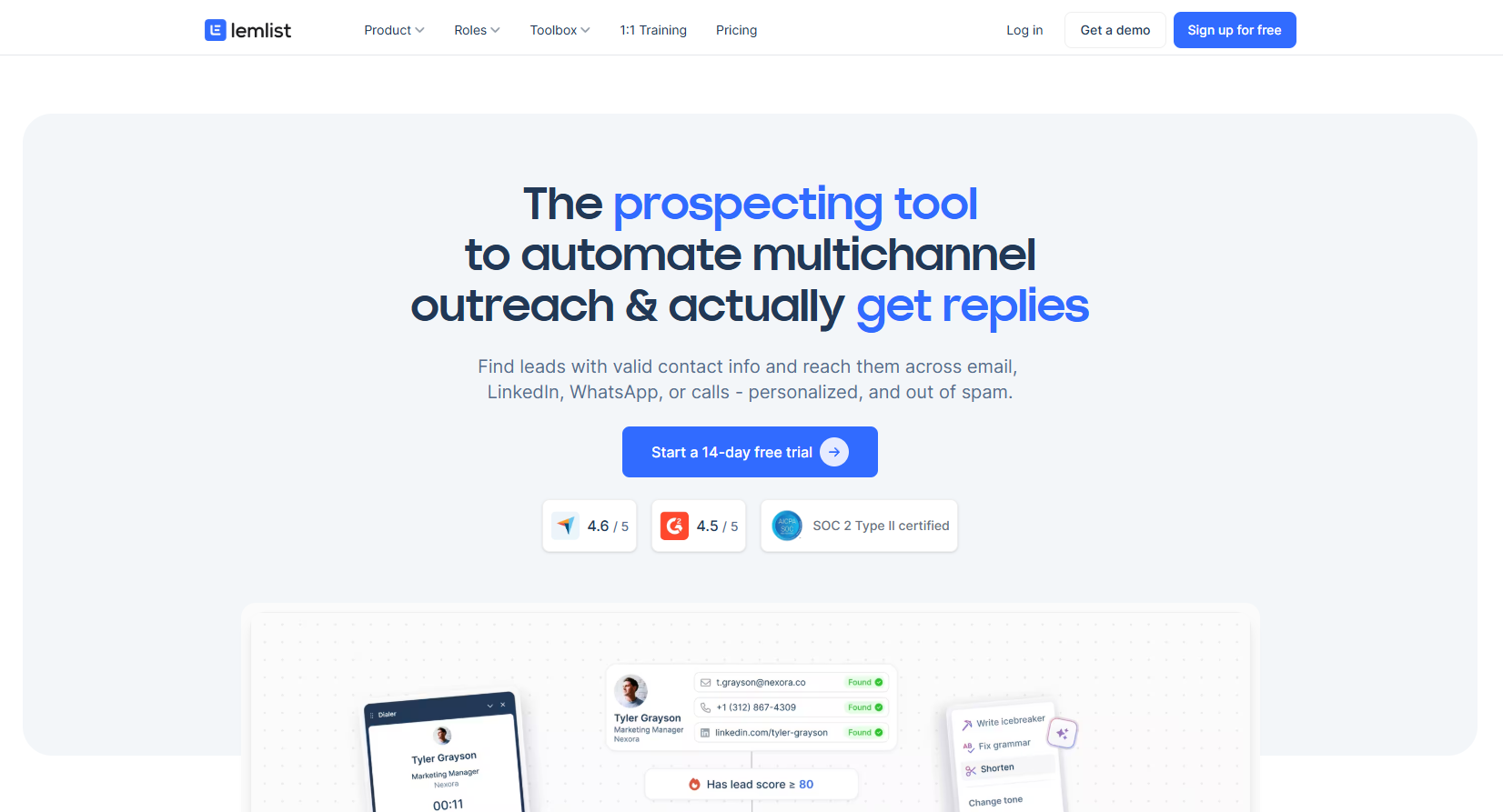
Best for: Creative outbound teams that want to stand out with personalized images and videos in their cold emails.
Lemlist's differentiator is visual personalization: you can embed custom images, GIFs, and video thumbnails into cold emails that dynamically populate with prospect data. It also offers standard sequencing and deliverability tools.
Standout features:
Pricing: Email Starter: $32/user/month. Email Pro: $55/user/month. Multichannel Expert: $79/user/month. Outreach Scale: $129/user/month.
The honest take: If your outreach strategy relies on visual differentiation (custom screenshots, personalized landing pages, video thumbnails), Lemlist does something no other tool on this list does well. For standard text-based B2B outreach, the visual features are a nice-to-have, not a must-have, and the core sequencing is comparable to cheaper alternatives.
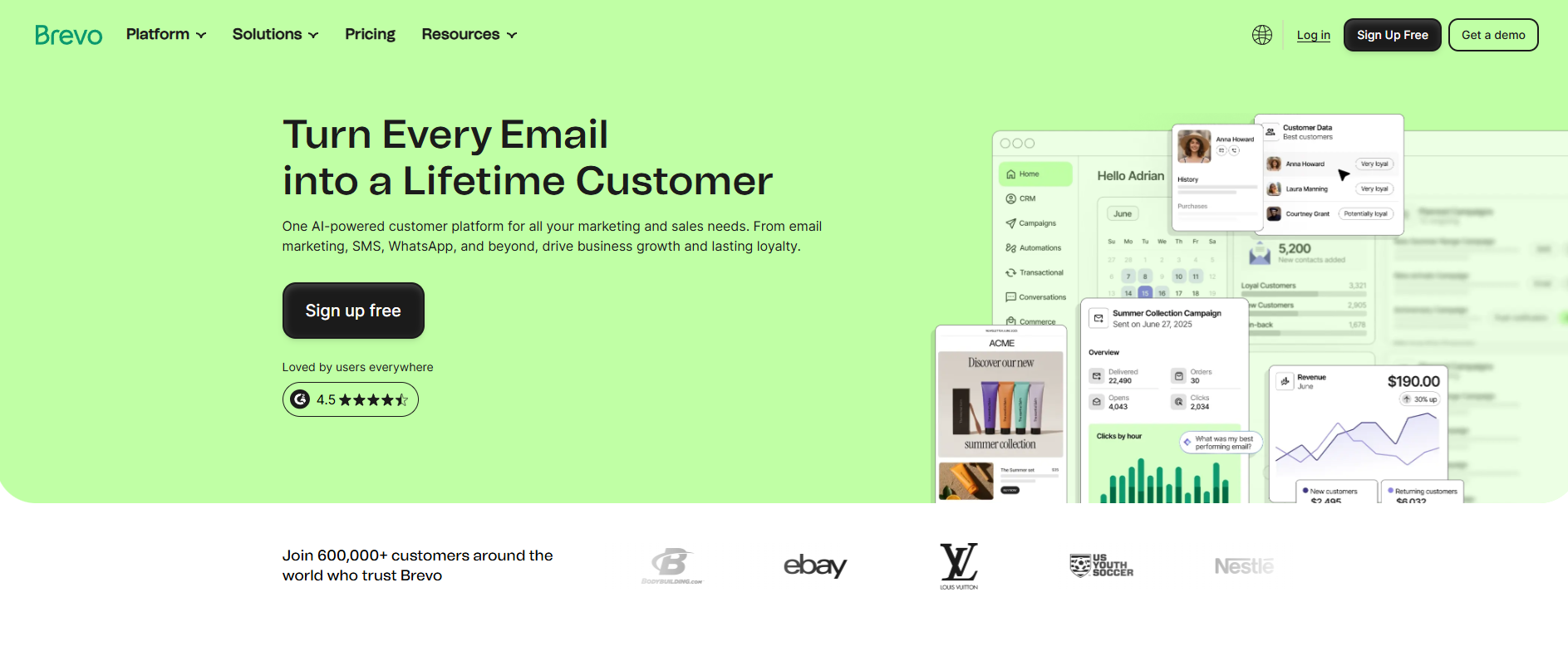
Best for: Small businesses that want email automation, SMS, and basic CRM in one affordable platform.
Brevo combines email marketing, SMS campaigns, a chat widget, and a lightweight CRM. It's more marketing-oriented than sales-oriented, but works for small teams that handle both.
Standout features:
Pricing: Free plan available (300 emails/day). Starter: $9/month. Business: $18/month. Enterprise: custom pricing.
The honest take: Brevo is the budget-friendly generalist. It handles email marketing and basic sales automation well enough for small teams. It's not built for complex B2B sales workflows, multichannel outbound, or conversation-based personalization. If your needs grow beyond basic email campaigns, you'll likely need a more specialized tool.
Choosing a sales email automation tool isn't about finding "the best" tool. It's about finding the right tool for your specific workflow. Here's a quick decision framework.
If your biggest problem is post-call follow-ups and CRM hygiene: Start with Sybill. It automates the most time-consuming parts of a meeting-heavy sales process. Reps save 10 to 14 hours per week on average. Get started for free and see the difference on your first call.
If you need prospecting data and outbound sequencing in one place: Apollo.io or Reply.io give you the database plus the automation.
If you're building an enterprise-scale outbound operation: Outreach or Salesloft are the established players, but budget for the implementation lift and ongoing admin.
If you're a small team that just needs the basics: Mailshake or Brevo will get you started without overwhelming you.
If you want the best of both worlds: Many top-performing teams combine a sequencing tool (for cold outbound) with Sybill (for everything that happens after a prospect engages). Sybill's integrations mean it fits into your existing stack rather than replacing it.
A sales email automation tool is software that handles repetitive email tasks in the sales process. This includes sending scheduled sequences, generating follow-up emails after meetings, updating your CRM with email activity, and triggering personalized messages based on prospect behavior. The best tools in 2026 use AI to generate emails from actual conversation context rather than relying on static templates.
It depends on your CRM. HubSpot and Salesforce have built-in email sequencing, but they're often limited in personalization depth and lack conversation-aware automation. Most sales teams get better results pairing their CRM with a specialized tool. For example, Sybill integrates with your CRM and handles the AI-powered follow-ups and field updates that native CRM features can't match.
Email marketing tools (like Mailchimp or Brevo) are built for one-to-many campaigns: newsletters, promotions, and nurture drips to large lists. Sales email automation tools are built for one-to-one outreach: personalized emails from individual reps to specific prospects. The goals differ too. Marketing tools optimize for opens and clicks across a list. Sales tools optimize for replies and meetings from targeted accounts.
Entry-level tools start at $15 to $30 per user per month. Mid-tier platforms with AI features and CRM integrations run $50 to $80 per user per month. Enterprise-grade platforms like Outreach and Salesloft range from $100 to $175 per user per month, often with additional implementation fees. The key is evaluating total cost of ownership, including setup time, admin overhead, and any credits or add-ons that inflate the base price.
Yes, if misused. Sending high volumes of generic emails from a single domain without warmup will damage your sender reputation. The best tools include deliverability features like email warmup, domain rotation, spam testing, and send-time optimization. Equally important: the quality of your content matters. Personalized, relevant emails get better engagement signals, which improves deliverability over time.
For cold outreach: Mailshake ($29/month) or Apollo's free plan. For post-call workflows: Sybill's free plan with 500 credits per week. For CRM + basic sequences: HubSpot's free CRM. Start with one or two tools, master them, and expand your stack as your process matures. Trying to implement five tools at once is a recipe for adoption failure.
They solve different problems. Outreach and Salesloft are sequencing platforms built for structured outbound cadences. Sybill is a conversation intelligence and automation platform built for everything that happens after a prospect engages: follow-ups, CRM updates, deal intelligence, and meeting prep. Many teams use a sequencing tool for top-of-funnel outreach and Sybill for mid-funnel and post-call automation. They complement each other rather than compete.
A sales email automation tool is software that handles repetitive email tasks in the sales process. This includes sending scheduled sequences, generating follow-up emails after meetings, updating your CRM with email activity, and triggering personalized messages based on prospect behavior. The best tools in 2026 use AI to generate emails from actual conversation context rather than relying on static templates.
It depends on your CRM. HubSpot and Salesforce have built-in email sequencing, but they're often limited in personalization depth and lack conversation-aware automation. Most sales teams get better results pairing their CRM with a specialized tool. For example, Sybill integrates with your CRM and handles the AI-powered follow-ups and field updates that native CRM features can't match.
Email marketing tools (like Mailchimp or Brevo) are built for one-to-many campaigns: newsletters, promotions, and nurture drips to large lists. Sales email automation tools are built for one-to-one outreach: personalized emails from individual reps to specific prospects. The goals differ too. Marketing tools optimize for opens and clicks across a list. Sales tools optimize for replies and meetings from targeted accounts.