Find us at booth #83, join us for a harbor side happy hour, or catch Gorish’s talk.

Sept, 16-18 > Learn more

%20(1).avif)
Mamta Tainwala

January 20, 2026
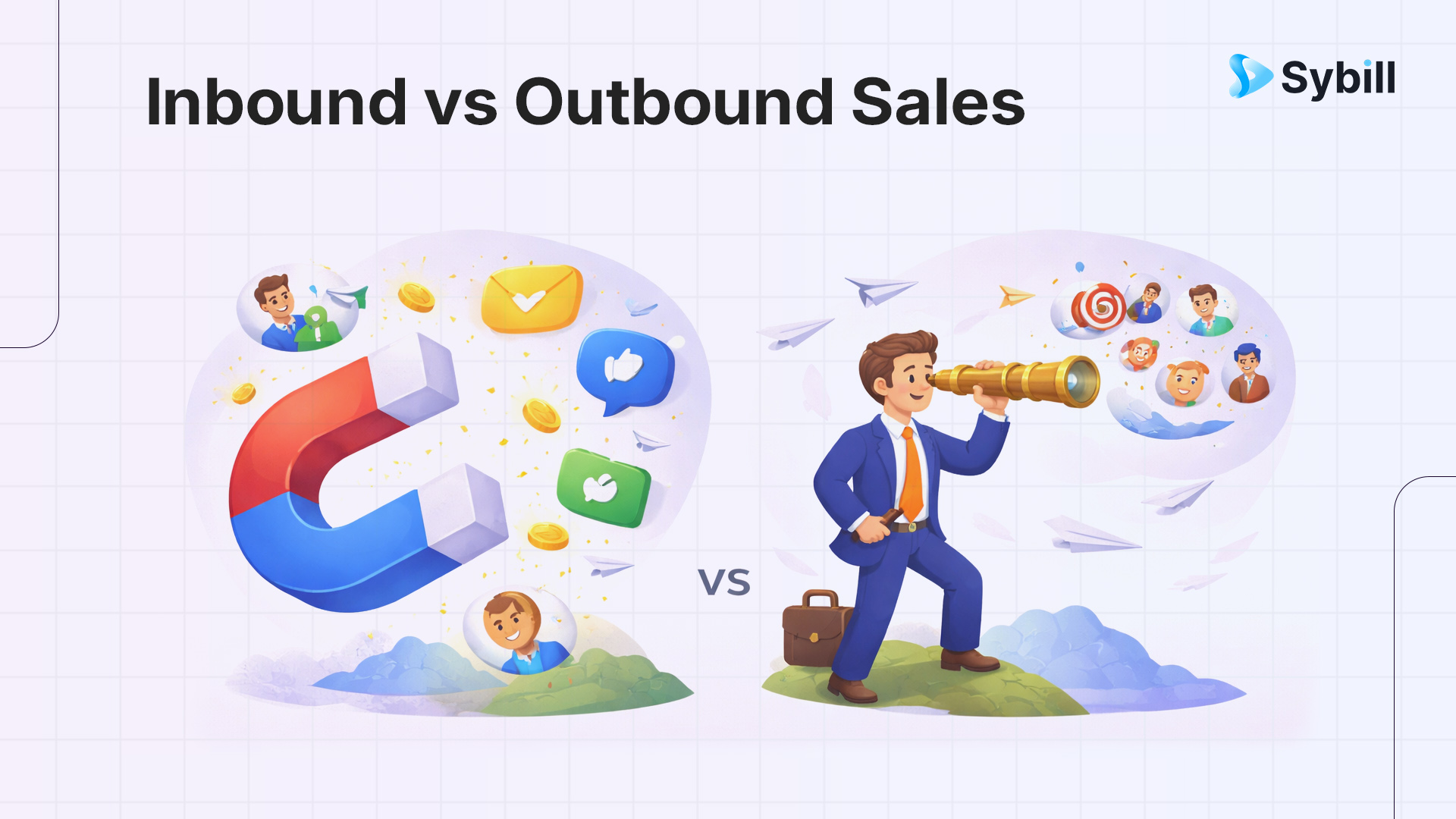
The inbound vs outbound sales debate isn't about picking sides. It's about understanding which motion fits your buyers, your product, and your quota timeline. Inbound sales attract prospects who already want what you're selling, creating warm leads through content and SEO. Outbound sales involve actively reaching out to prospects who may not know you exist yet, using cold calls and targeted outreach. Most successful sales teams use both. The real differentiator? Having conversation intelligence that turns every call into actionable insights, whether your prospect found you or you found them.
Remember that scene in The Matrix where Morpheus offers Neo the red pill or the blue pill? "You take the blue pill, the story ends. You take the red pill, you stay in Wonderland."
Sales reps face a similar choice every quarter: inbound or outbound?
Except here's the plot twist nobody tells you—you don't have to choose. And unlike Neo's existential crisis, this decision won't require you to dodge bullets in slow motion. (Though some rejection on cold calls might feel close.)
The inbound vs outbound sales conversation has been raging since someone invented the telephone and thought, "What if I just... called people who didn't ask me to?" But here's what's changed: in 2025, the best sales teams aren't fighting over which approach is "better." They're using both strategically, and they're using AI to make every conversation count, regardless of who initiated it.
Let's break down what actually matters.
Its basically when a prospect comes knocking. Inbound sales is when prospects initiate contact with your company. They found your website, downloaded your ebook, attended your webinar, or filled out a demo request form. They're raising their hand and saying, "Hey, I might want what you're selling."
Think of inbound sales as fishing with the perfect bait in a well-stocked pond. The fish are already interested. Your job isn't to convince them they're hungry. It's to help them realize your solution is exactly what they've been searching for.
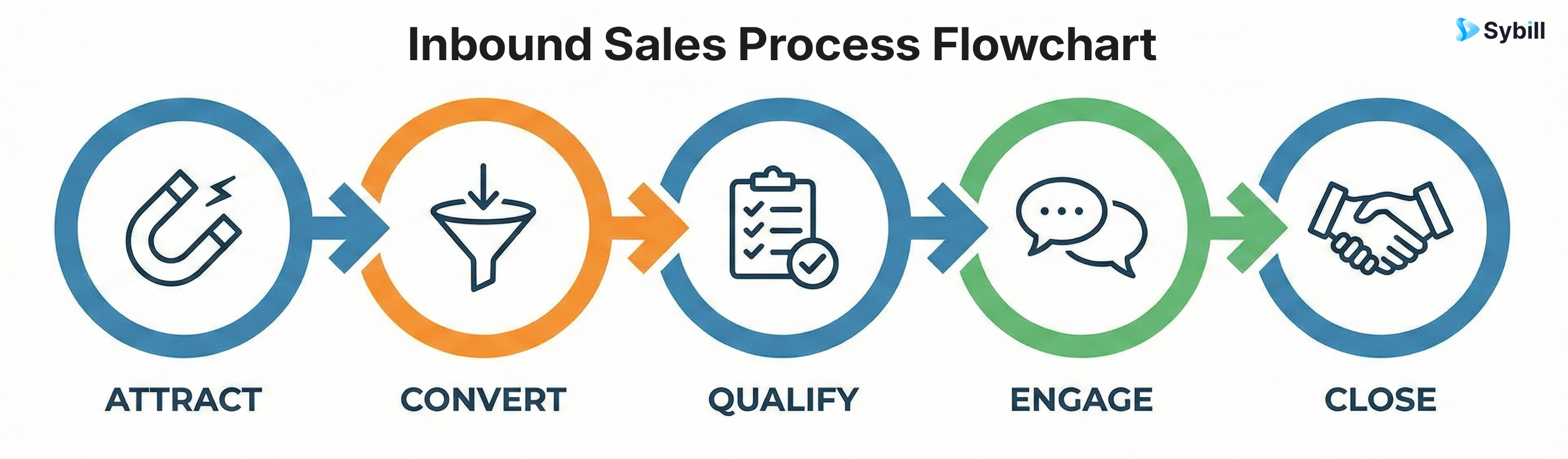
Attract: Create content that brings prospects to you. Blog posts, webinars, SEO-optimized landing pages, social media presence. This is where your marketing team earns their keep.
Convert: Turn visitors into leads. Gated content, demo requests, free trials, chatbots. Give them a reason to share their contact info.
Qualify: Not everyone who downloads your whitepaper is ready to buy. Score leads based on fit and intent. This is where your sales pipeline management skills matter.
Engage: Reach out with personalized, helpful communication. Because they came to you, they're already warm. Don't kill that warmth with a robotic email sequence.
Close: Guide them through the buying process. Address objections. Show ROI. Get the signature.
Inbound works brilliantly when your product has strong market demand and people are actively searching for solutions like yours. If you sell project management software and people are Googling "best project management tools for remote teams," inbound is your friend.
It's also ideal when you have longer sales cycles and can invest time in content creation. Building an inbound engine takes months, but once it's running, it compounds. That blog post you wrote six months ago? Still bringing in leads while you sleep.
Inbound shines for B2C companies and self-serve SaaS products where buyers prefer to research independently before talking to sales. If your ideal customer is a millennial marketing manager who'd rather read five comparison articles than take a sales call, lean into inbound.
When you make the first move is outbound. Outbound sales is when your sales team initiates contact with prospects. Cold calls, cold emails, LinkedIn messages, direct mail. You're identifying potential customers and reaching out before they've expressed interest.
Outbound sales is like being a talent scout. You spot potential before others do, and you make the first move to start a conversation.
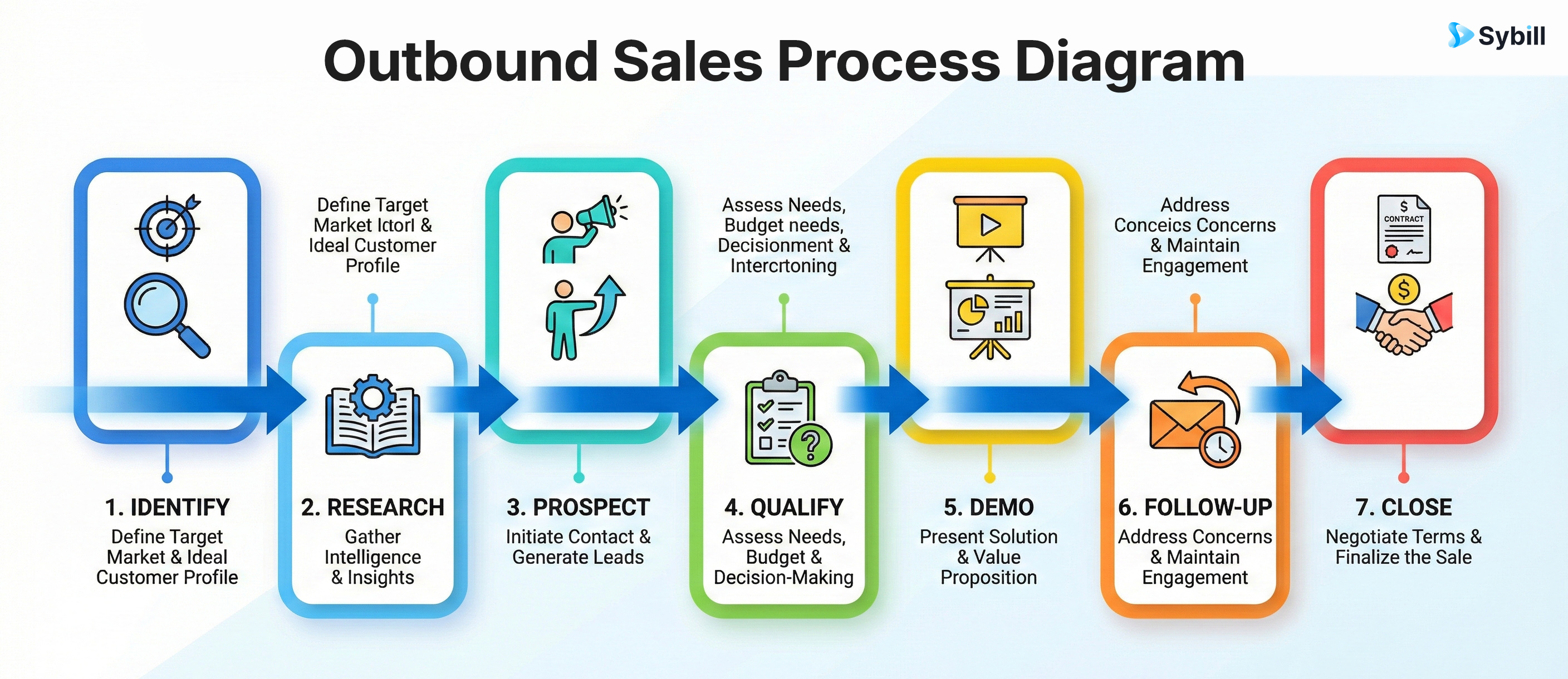
Identify: Build lists of prospects who fit your ideal customer profile. This requires research and a clear understanding of who actually needs what you sell.
Research: Before you reach out, know something about them. What's their tech stack? What challenges is their industry facing? What did their CEO say in the last earnings call?
Prospect: Craft personalized outreach that demonstrates you've done your homework. Generic "I noticed you're a Director at CompanyName" emails get deleted faster than you can say "spray and pray."
Qualify: Get them on a call. Ask discovery questions. Figure out if there's real potential here or if you're both wasting time.
Demo: Show them exactly how you solve their problem. Not a generic product tour. A tailored demonstration of why they specifically should care.
Follow-up: Stay persistent without being annoying. The average sale requires 8 touchpoints. Most reps give up after 2.
Close: Negotiate, handle final objections, and get the contract signed.
Outbound works when you're targeting a specific set of accounts or a niche market that isn't actively searching for solutions. If you sell enterprise software to Fortune 500 companies, those VPs aren't Googling "solutions for my very specific enterprise problem." You need to reach them directly.
It's ideal for higher ACV (average contract value) products where the upfront effort of personalized outreach pays off. If your average deal is worth $50,000+, spending time on targeted outbound makes economic sense.
Outbound is also essential when you're launching something new or entering a market where you don't have brand recognition yet. Nobody's searching for you if they don't know you exist.
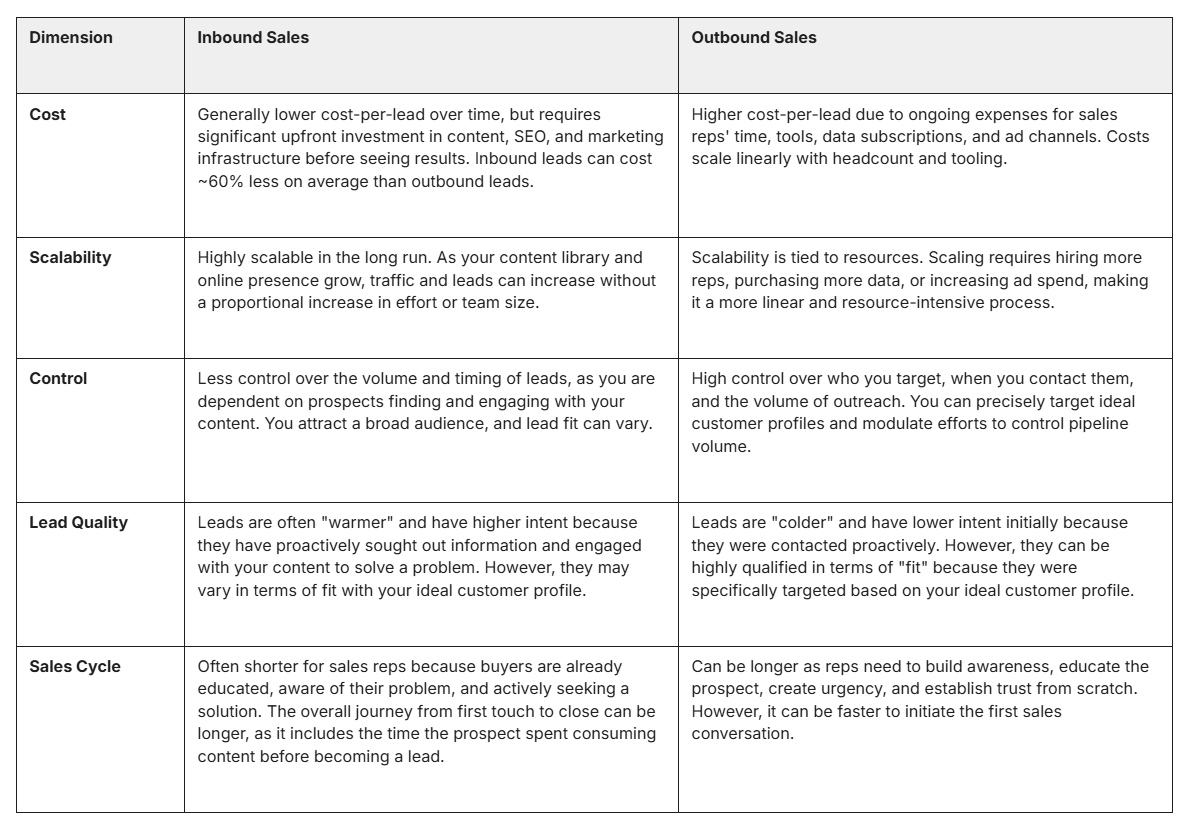
Let's cut through the noise and talk about what actually separates these approaches.
Inbound: The prospect reaches out first. They filled out a form, downloaded content, or requested a demo.
Outbound: Your sales team makes first contact. They identified the prospect and initiated the conversation.
This single difference cascades into everything else.
Inbound: Higher intent, warmer leads. They're already interested in your category of solution. But they might be early-stage researchers or tire-kickers who'll never buy.
Outbound: Lower initial intent because they didn't ask to hear from you. But if you've done your targeting right, they're high-fit prospects who just didn't know you existed yet.
Inbound: High upfront costs for content creation, SEO, marketing automation. Lower marginal cost per lead once the engine is running.
Outbound: Lower setup costs but higher per-lead costs. Each prospect requires individual research and personalized outreach.
Inbound: Scales beautifully once you've built the foundation. One great blog post can generate leads for years.
Outbound: Scales linearly with team size and tools. Want to double your outbound pipeline? You'll need roughly double the SDR capacity.
Inbound: Can be faster because leads are already educated and interested. They've done their research before talking to you.
Outbound: Often longer because you're starting from scratch on awareness and trust-building.
Inbound: Less control over who enters your funnel. You attract whoever resonates with your content.
Outbound: Total control over who you target. You decide exactly which accounts and contacts to pursue.
Here's the uncomfortable truth: asking "inbound or outbound?" is the wrong question.
The right question is: "What mix of inbound and outbound will hit my revenue targets most efficiently?"
Because in reality, most successful B2B sales teams use both. Here's how they fit together:
(Which is almost always.)
Run outbound to high-value target accounts while simultaneously building inbound motion for broader market coverage. Use inbound content to warm up your outbound prospects before you reach out. Deploy outbound to re-engage inbound leads that went cold.
The teams that win aren't the ones who picked a side. They're the ones who orchestrated both motions into a revenue machine.
Here's where things get interesting.
Whether your lead came from inbound or outbound, the moment you get them on a call, the same challenge exists: extracting value from the conversation, identifying what actually matters, and moving the deal forward.
This is where conversation intelligence becomes your unfair advantage.
Your inbound leads already showed intent, but that doesn't mean the call is easy. Conversation intelligence helps you:
Identify where they are in the buyer journey. Did they download one piece of content or consume everything you've published? The call transcript reveals their true understanding level.
Spot buying signals and objections. When they mention budget in month three, pricing concerns, or competitive alternatives, AI flags it instantly.
Personalize follow-up based on what actually resonated. Which features got them excited? What pain points did they emphasize? Use that to craft follow-up emails that feel like you were actually listening because you were.
Qualify faster. Inbound leads can be a mixed bag. Conversation intelligence helps you separate the tire-kickers from the serious buyers by analyzing engagement patterns and question depth.
Your outbound prospects didn't ask to talk to you, which means every second counts. Conversation intelligence helps you:
Prove value quickly. Cold calls need to establish credibility fast. Review recordings of your best calls to identify exactly which opening lines and value props work.
Handle objections with data. "We're already using CompetitorX" isn't the end of the conversation. It's the beginning. AI can surface talking points from past wins against that competitor.
Personalize at scale. Even with research, you can't know everything. Real-time conversation analysis surfaces topics and concerns you can address during the call.
Improve your sales cadence timing. By analyzing when prospects are most engaged and responsive, you can optimize your outreach sequences.
Regardless of whether the lead is inbound or outbound, every conversation is a learning opportunity.
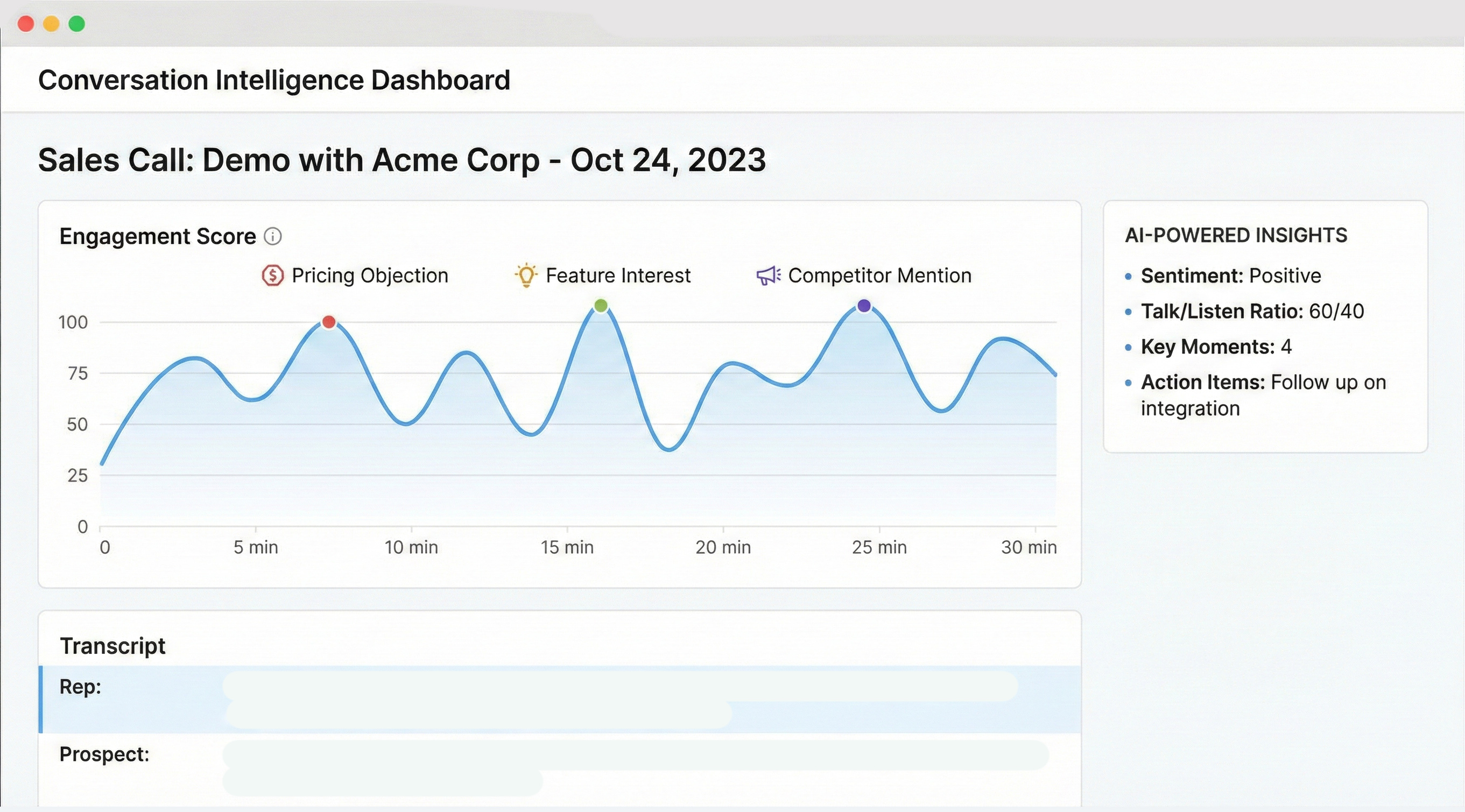
Sybill's conversation intelligence doesn't just record and transcribe. It analyzes buyer engagement, flags key moments, auto-generates summaries, drafts follow-up emails, and updates your CRM automatically. All so you can focus on the actual selling part instead of the administrative nightmare that follows every call.
Imagine finishing a call and having:
That's not science fiction. That's what modern conversation intelligence does.
Get started for free with Sybill and see how AI transforms your sales calls into a competitive advantage, whether you're handling inbound leads or crushing outbound quotas.
The most sophisticated sales teams don't treat inbound and outbound as separate universes. They create feedback loops between them.
Use your inbound content to warm up your target accounts before you reach out. See which contacts from your target companies are engaging with your content, then personalize your outbound approach based on what they've consumed.
If someone from your dream account downloaded your ROI calculator, that's your opening. Your cold email just became a warm introduction.
Inbound leads go cold all the time. Someone requested a demo, ghosted you, and is now sitting in your CRM collecting dust. This is where strategic outbound re-engagement makes sense.
A well-crafted sequence that references their initial interest can resurrect deals you thought were dead. Especially if you can point to new features, case studies, or insights that address whatever concern made them go quiet.
Your best outbound emails aren't sales pitches. They're valuable pieces of content that happen to come from a salesperson. Share a relevant case study, an industry insight, or a piece of analysis that demonstrates expertise.
This is where understanding sales funnel stages helps. Different content works at different stages, and knowing where your prospect sits determines what you send.
If someone from your target account visits your pricing page five times in a week, that's a signal to bump them up in your outbound queue. Use inbound engagement data to inform your outbound targeting and timing.
Before we wrap up, let's talk about how sales teams sabotage themselves.
Treating all leads equally. Not all form fills are created equal. The CEO who downloaded your enterprise guide is not the same as the intern doing research for a school project. Qualify ruthlessly.
Slow response times. Inbound leads have a shelf life measured in minutes, not days. Respond within five minutes or accept that your conversion rate will tank.
Generic nurture sequences. If your drip campaign treats everyone the same regardless of what content they engaged with or what they said on the first call, you're leaving money on the table.
Ignoring cold leads. Just because they went quiet doesn't mean they're dead forever. Have a reactivation strategy.
Spray and pray. Blasting the same message to 1,000 prospects is not outbound sales. It's spam with a CRM attached.
No research. If you can't articulate why you're reaching out to this specific person at this specific company, don't hit send.
Giving up too early. One email and one call is not a "sequence." Persistence matters, but so does adding value at every touch.
Pitching too soon. Outbound is about starting conversations, not closing deals on the first call. Ask questions before you present solutions.
Not tracking the right metrics. Pipeline coverage matters more than activity counts. Focus on what actually predicts revenue.
Ignoring conversation data. You have a goldmine of insights in your sales calls. Not using conversation intelligence to extract patterns and improve performance is leaving revenue on the table.
CRM chaos. If your reps hate updating the CRM, they won't do it. Automate it. Tools like Sybill can push deal summaries and call insights directly to Salesforce or HubSpot so your pipeline actually reflects reality.
Different motions require different metrics.
The teams that consistently hit quota aren't guessing. They're measuring, iterating, and optimizing based on real data.
If there's one thing that's certain, it's that the line between inbound and outbound will continue to blur.
We're moving toward intent-based selling, where the traditional categorization matters less than understanding where a buyer is in their journey and what signal they're sending.
Your marketing team runs ads that drive inbound interest. That interest generates data. Your sales team uses that data to inform smarter outbound targeting. An outbound prospect engages with your content. That engagement triggers an automated sequence. Everything feeds everything else.
The sales teams that thrive won't be the ones arguing about inbound versus outbound. They'll be the ones who've built systems that leverage both, with AI providing the intelligence layer that makes it all work seamlessly.
Get started for free with Sybill and stop choosing between inbound and outbound. Start winning with both.
The core difference is who initiates contact. In inbound sales, prospects come to you first by downloading content, requesting demos, or engaging with your marketing. In outbound sales, your sales team reaches out to prospects who may not know your company exists yet. Inbound typically generates warmer leads with higher intent, while outbound gives you more control over exactly who you target. Most successful sales teams use both approaches strategically rather than choosing one over the other.
It depends on your time horizon and business model. Inbound sales typically have higher upfront costs for content creation, SEO, and marketing infrastructure, but lower marginal cost per lead once your engine is running. Outbound sales have lower setup costs but higher per-lead expenses since each prospect requires individual research and personalized outreach. For B2B companies with higher average contract values, outbound's targeting precision often justifies the cost. For companies with broader markets and lower ACVs, inbound's scalability makes it more economical long-term. The most cost-effective approach is usually a strategic mix of both.
Conversation intelligence transforms sales calls into actionable data regardless of how the lead originated. For inbound leads, it helps you quickly identify where prospects are in their buyer journey, spot buying signals, and personalize follow-up based on what actually resonated in the conversation. For outbound prospects, it helps you prove value quickly, handle objections with data-backed responses, and improve your approach by analyzing which messaging works best. Tools like Sybill automate call summaries, CRM updates, and follow-up email drafts while providing insights on buyer engagement patterns, making both inbound and outbound reps more effective and efficient.