Find us at booth #83, join us for a harbor side happy hour, or catch Gorish’s talk.

Sept, 16-18 > Learn more

%20(1).avif)
Mamta Tainwala

January 16, 2026
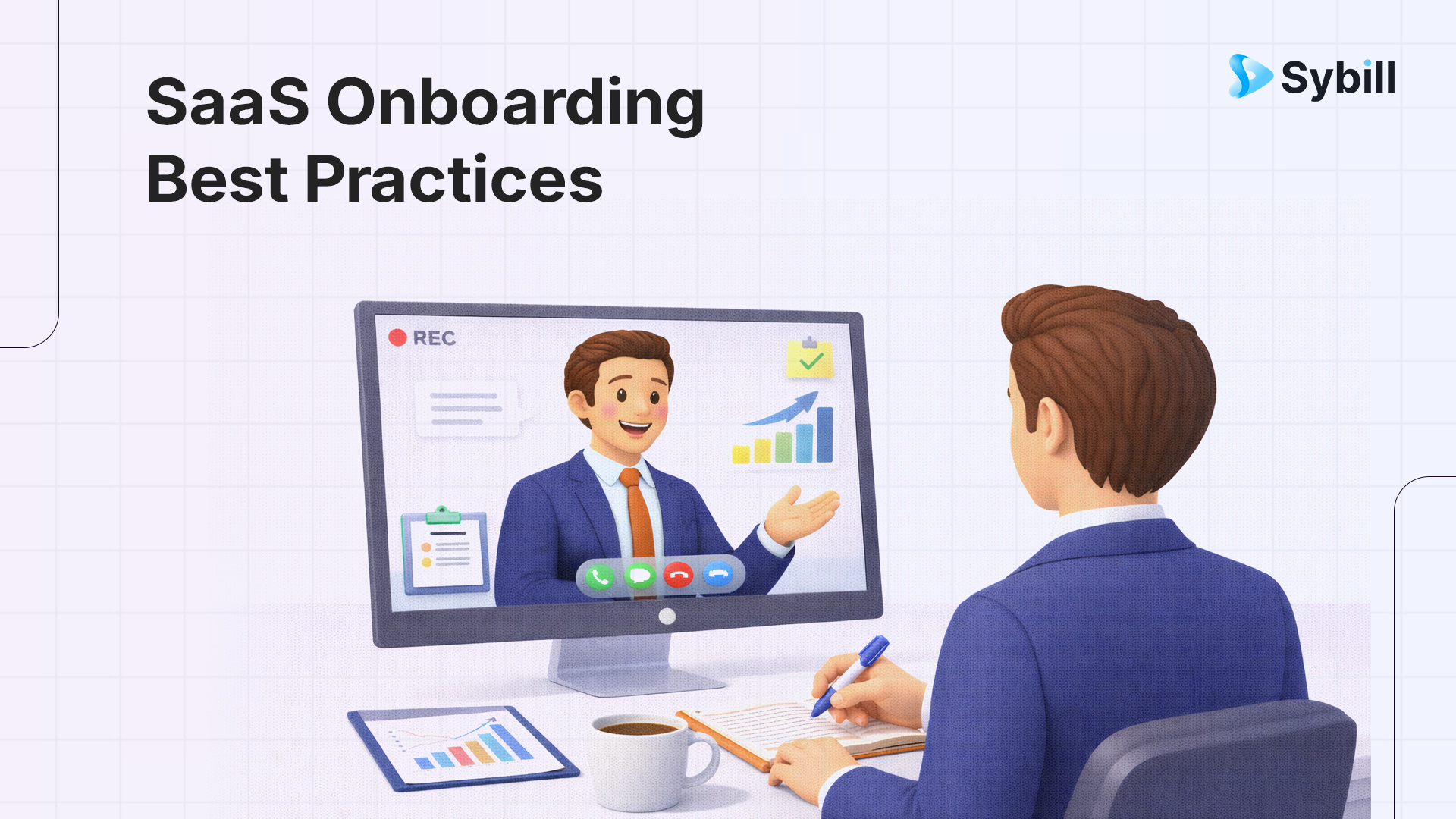
You know that feeling when you download a new app, create an account, and then... crickets? You're staring at a blank dashboard like it's the first day of high school and nobody told you where your locker is. There's a button that says "Get Started" but started with what? There are 47 features you don't understand, a tooltip that disappeared before you could read it, and somewhere in the distance, your free trial clock is ticking.
That's bad SaaS onboarding, and it's killing your retention before users even get to week two.
Here's the brutal truth: 40-60% of users who sign up for your product will never come back after that first session. And get this—75% of new SaaS users churn within the first week if onboarding doesn't click. That's not a leaky bucket. That's a bucket with no bottom.
But here's the thing: those users didn't sign up to ghost you. They signed up because they genuinely believed your product could solve their problem. They were excited. They had hope. Then your onboarding dropped them into feature-bloat hell with no roadmap, no context, and no reason to believe this wouldn't be another "I'll figure it out later" (which means never).
Great SaaS onboarding doesn't just teach people how to use your product. It shows them why they should care, guides them to their first win, and makes them feel like they made the right choice. It turns confused strangers into confident power users who wouldn't dream of switching to a competitor.
In this guide, we're breaking down the customer onboarding best practices that actually work in 2026—from reducing friction in your signup flow to personalizing the journey for different user segments, plus the tools that make it all scalable. Whether you're a Customer Success Manager trying to reduce churn or a product leader building onboarding from scratch, this is your playbook.
SaaS onboarding is the process of guiding new users from signup to successfully using your product to solve their specific problem. It's not just a product tour. It's not just a welcome email. It's the entire journey that takes someone from "I hope this works" to "I can't imagine my workflow without this."
The goal of a customer onboarding process? Get users to their "aha moment" as fast as possible. That's the moment when they experience real value from your product for the first time. For Slack, it's when a team sends their first message. For Canva, it's when someone creates and downloads their first design. For your product, it's whatever makes users think, "Oh damn, this actually solves my problem."
Quick distinction because people mix these up constantly:
User onboarding focuses on product adoption—helping individual users learn features, navigate the UI, and complete key actions. Think tooltips, product tours, and self-service resources.
Customer onboarding (especially in B2B SaaS) is relationship-focused. It's about understanding business goals, setting success criteria, and ensuring the entire buying team gets value. This includes kickoff calls, implementation support, and building champions inside the customer's org.
Most SaaS companies need both. Your PLG motion might lean heavily on user onboarding, while your enterprise deals need white-glove customer onboarding programs with dedicated CSMs.
Here's where companies screw up:
Mistake #1: Feature dumping instead of value delivery
You show users everything your product can do instead of helping them accomplish the one thing they signed up to do. It's like giving someone a 300-page car manual when they just want to know how to start the engine.
Mistake #2: One-size-fits-all onboarding
A startup founder has completely different needs than an enterprise admin. A power user switching from a competitor needs a different journey than someone who's never used this type of tool. Yet most companies treat everyone the same.
Mistake #3: No clear path to value
Users don't know what success looks like. There's no progress indicator, no milestone celebration, no "you're 60% of the way to your first report" nudge. They're just wandering through features hoping something clicks.
Mistake #4: Abandoning users after the first week
Onboarding isn't a one-and-done welcome sequence. Users need ongoing guidance as they adopt more features, encounter edge cases, and expand usage. But most companies disappear after the initial setup.
The companies that nail customer onboarding SaaS? They treat it like a guided expedition, not a self-serve buffet. They understand what users are trying to accomplish, remove every possible roadblock, and celebrate progress along the way.
Alright, enough diagnosis. Let's talk solutions. These are the proven customer onboarding best practices that separate products people tolerate from products people evangelize.
Your signup process is not the place to collect their life story. Every additional form field is a chance for users to bail. Studies show that even asking for a phone number can drop conversion rates by 5-10%.
The best practice? Ask for the absolute minimum to create value. Email and password. That's it. Everything else—company size, use case, team size—can be collected contextually later when users actually care about those features.
Look at how Notion does it. They let you sign up with Google in literally two clicks. No email confirmation gate. No "tell us about your company" survey before you've even seen the product. You're in, you're creating pages, and you're experiencing value within 60 seconds.
Pro move: If you must verify emails (and sometimes you must for security), do it after users are inside the app. Let them explore, experience the product, hit a natural stopping point, then ask them to verify. By that time they're invested.
Not everyone signs up for the same reason. Some users want to replace their current tool. Others are exploring for the first time. Some have clear use cases; others are kicking tires.
The best SaaS onboarding programs ask 1-2 targeted questions upfront to segment users, then deliver completely different experiences:
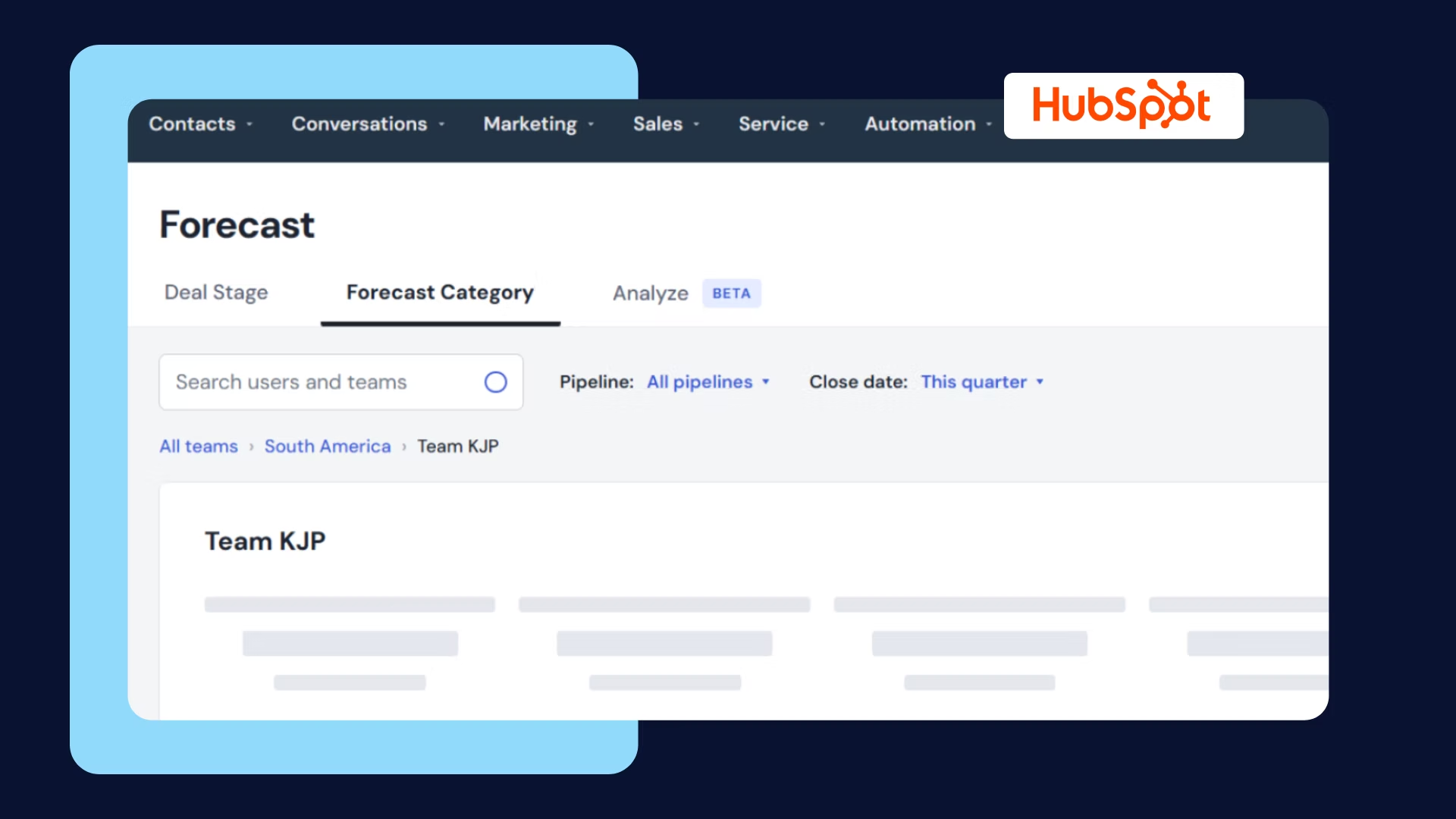
HubSpot does this brilliantly. After signup, they ask what you want to accomplish (grow traffic, generate leads, close deals) and which tools you're currently using. Then they customize your dashboard, suggest relevant features, and only show the 20% of functionality you actually need right now.
For high-touch vs low-touch engagement models, this is critical. Enterprise customers might get a dedicated CSM and custom onboarding plan. Self-serve users get automated emails and in-app guidance. Same product, completely different journeys.
The biggest mistake in product onboarding? Trying to teach everything at once. Users don't need a comprehensive tutorial. They need to accomplish one thing that proves your product works for them.
This is called "time to first value" and it's the most important metric in onboarding. How fast can someone go from signup to experiencing real benefit?
For Dropbox, it's uploading and accessing a file from another device. For Superhuman, it's processing your inbox twice as fast as Gmail. For your product, it should be whatever delivers the core promise.
Once users hit that first win, they're hooked. Now you can gradually introduce advanced features, integrations, and optimizations. But that first session? Laser focus on one valuable outcome.
Implementation tip: Create a primary onboarding flow that ignores 80% of your features. Build separate, contextual flows that introduce advanced functionality when users are actually ready for it. This is where customer onboarding tools become essential—they let you trigger different experiences based on user behavior, not just time elapsed.
Humans are wired to complete things. Show someone a progress bar that's 70% full, and they'll want to finish it.
The best customer onboarding programs gamify progress without being cheesy about it. LinkedIn's profile strength meter. Asana's flying unicorn when you complete a task. Duolingo's streak counter that makes you feel personally attacked if you miss a day.
These aren't just cute UI flourishes. They're psychological triggers that drive completion:
For B2B SaaS customer onboarding, this might look like:
Each completed step builds confidence and commitment. Plus, it gives your CS team clear visibility into who's actually progressing versus who's stuck.
Nobody reads documentation before they need it. They google frantically when they're stuck, click through your help center hoping for a magic answer, and often give up before finding it.
Smart SaaS onboarding anticipates confusion and surfaces help proactively:
The key word here is contextual. Don't hit users with a 20-step product tour the second they log in. Instead, trigger micro-guidance when they interact with specific features for the first time.
Webflow does this masterfully. Their interface is complex (it's a visual web development tool, after all), but they use subtle tooltips and just-in-time videos that explain concepts right when you encounter them. You're never overwhelmed because you're only learning what's relevant to your current task.
Ready to give your customers the context they need? Get started for free with Sybill and ensure your sales-to-CS handoffs include every detail your customer success team needs to deliver a seamless onboarding experience.
Here's a stat that should terrify every SaaS company: most users who churn had a perfectly fine first week. They completed onboarding, set up their account, maybe even used the product a few times. Then life happened, they got busy, and your product became that tab they keep meaning to go back to.
The best customer onboarding programs treat the first 90 days like a guided journey with multiple checkpoints:
Week 1: Core setup, first value delivery, immediate wins
Week 2-4: Feature expansion, integration setup, team adoption
Month 2: Optimization, advanced workflows, power user features
Month 3: ROI validation, success review, expansion opportunities
This requires a mix of automated and human touchpoints:
For sales enablement teams, this is where you transition from "closing the deal" to "ensuring they get value." The handoff from sales to customer success needs to be seamless, with complete context on what was promised, what the customer's goals are, and what success looks like.
Not every user wants or needs high-touch onboarding. Some people prefer to figure things out themselves. Your job is to make that path as smooth as possible while knowing when to step in.
The best SaaS companies build comprehensive self-service resources:
But here's the critical part: you still need to monitor engagement and identify users who are struggling. If someone's clicked around for 20 minutes without completing a key action, trigger an intervention. Offer live chat support. Send a targeted email with helpful resources. Assign a temporary CSM for that first call.
Intercom built its entire business on this philosophy. Their product combines self-service help content with smart triggers that connect users to human support exactly when they're about to rage-quit.
Your customer onboarding process should never be "done." The best programs are constantly evolving based on actual user behavior and feedback.
Track these signals religiously:
Then run experiments. Test different signup flows. Try various tutorial formats. Measure everything. The companies with the best retention rates treat onboarding like product development—continuous iteration based on data.
Pro tip: Use tools that can surface customer sentiment from actual onboarding calls and emails. AI-powered sales coaching tools like Sybill can analyze hundreds of customer interactions to identify patterns in what's working and what's confusing users. This gives CS teams actionable insights to improve onboarding at scale.
Onboarding at scale requires the right tech stack. Here are the five customer onboarding tools that CSMs and product teams swear by, plus what makes each one worth the investment.
Userpilot is a product adoption platform built specifically for SaaS companies that want to create personalized in-app onboarding experiences without writing code. If you're tired of begging engineering for resources every time you want to tweak a tooltip, Userpilot is your escape hatch.
What makes it great:
The platform's segmentation engine is where it really shines. You can create completely different onboarding flows for different user types—startup founders see one journey, enterprise admins see another, power users switching from competitors get a fast-track experience. All triggered based on actual behavior, not just static attributes.
The flow builder lets you combine multiple UI patterns (modals, tooltips, hotspots, slideouts, banners) into cohesive experiences. You're not limited to one format. A new user might get a welcome modal, then contextual tooltips as they explore, then a checklist that drives them toward activation.
Analytics tie onboarding actions directly to business outcomes. You can see which flows correlate with higher activation rates, faster time-to-value, and better retention. This means you can actually prove ROI on your onboarding efforts instead of guessing.
Where it fits in your stack:
Userpilot works best for PLG companies with self-serve onboarding motions. If you have thousands of users signing up and you need to activate them without human intervention, this is your tool. It integrates with major analytics platforms (Mixpanel, Amplitude, Segment) and CRMs (Salesforce, HubSpot) so user data stays synced.
Pricing reality: Starts around $249/month for up to 2,500 MAUs. It's not cheap, but the time you save from not bothering dev team makes it worth it for most product-led companies.
Appcues has been in the product adoption game longer than most, and it shows in their polish. The platform is specifically designed for non-technical teams (Product, CS, Marketing) to build and deploy in-app experiences that drive activation and adoption.
What makes it great:
The visual builder is genuinely intuitive. You can create multi-step product tours, targeted announcements, embedded forms, and satisfaction surveys without touching a line of code. The editor uses your actual product UI, so what you build is what users see—no surprises.
Appcues excels at event-based targeting. You can trigger experiences based on incredibly specific conditions: "Show this checklist to users from accounts >100 seats who haven't connected an integration within 7 days." That level of precision means you're not annoying power users with beginner content.
The NPS and feedback collection features are built right in, which is huge. You can measure user sentiment at key onboarding milestones and actually do something with that data. See a drop in satisfaction after a specific step? You know exactly where to optimize.
Where it fits in your stack:
Appcues works for both product-led and sales-led SaaS companies. The difference is how you use it. PLG teams use it for automated self-serve onboarding. Sales-led teams use it to supplement human CS efforts with in-app guidance that scales.
Integration-wise, it plays nicely with analytics tools, CRMs, and support platforms. You can push event data to Segment, sync user attributes from Salesforce, and trigger Appcues flows from Intercom conversations.
Pricing reality: Starts around $249/month for 2,500 MAUs on the Essentials plan. Mid-market and enterprise pricing scales based on monthly active users and feature access.
Pendo is the Swiss Army knife of product experience platforms. It combines product analytics, in-app guidance, user feedback, and roadmap planning in one platform. If you want a single source of truth for both understanding user behavior and influencing it, Pendo delivers.
What makes it great:
The analytics depth is what separates Pendo from pure onboarding tools. You can see exactly how users navigate your product—which features they use, where they get stuck, what paths lead to activation. Then you can build guides directly on top of those insights.
Resource center functionality is a game-changer for reducing support volume. You can create an in-app help hub with guides, videos, and announcements that's always accessible. Users get help without leaving your product, and your support team gets fewer "how do I..." tickets.
The feedback and roadmap features close the loop. Collect feature requests and pain points directly from users, aggregate them, and use that data to inform your product roadmap. Your CS team can show customers that their feedback matters and actually gets prioritized.
Where it fits in your stack:
Pendo makes the most sense for mid-market to enterprise SaaS companies who need both analytics and onboarding. If you're already paying for Mixpanel or Amplitude AND an onboarding tool, Pendo might consolidate your stack and save money while giving you deeper insights.
The platform integrates with Salesforce, Gainsight, Zendesk, Jira, and most major CS and product tools. Data flows both ways—you can trigger Pendo guides based on CRM data and push product usage back to Salesforce for CS teams to action.
Pricing reality: Pendo doesn't publicly list pricing (which tells you it's enterprise-level). Expect $20K+ annually for smaller deployments. The cost goes up based on MAUs, feature access, and support tier. Worth it if you need the full platform; overkill if you just need basic onboarding.
WalkMe is the heavyweight champion of digital adoption platforms. It's designed for companies with incredibly complex software—think enterprise ERPs, healthcare systems, banking platforms—where onboarding isn't just "nice to have," it's mission-critical.
What makes it great:
WalkMe can layer guidance onto literally any software, not just your own product. This is huge for companies that need to onboard users across multiple systems. Your customers might need to use your platform plus Salesforce plus their internal tools—WalkMe can guide them through all of it.
The automation capabilities go beyond typical onboarding. WalkMe can actually complete tasks for users, auto-filling forms, navigating through multi-step processes, and reducing errors. For complex workflows that require 47 clicks across different systems, this is a lifesaver.
Analytics show you where users struggle across your entire tech ecosystem. You can identify bottlenecks in processes that span multiple applications, which is impossible with single-product analytics tools.
Where it fits in your stack:
WalkMe is enterprise-grade infrastructure. If you're a CS team supporting Fortune 500 customers with complex deployment requirements, this is your platform. It's overkill for simple SaaS products but essential for mission-critical enterprise software.
Integration is WalkMe's superpower—it can work with any web-based application, whether you own it or not. It layers on top of Salesforce, SAP, Workday, or your custom internal tools without requiring API access.
Pricing reality: Enterprise pricing only. Expect six figures annually for most deployments. The ROI comes from reduced training costs, lower support volume, and faster time-to-productivity for employees using complex software. B2B SaaS companies typically use it for onboarding their own customers onto complex products.
Chameleon is the platform you reach for when you need sophisticated in-app experiences with a focus on user feedback and contextual engagement. It's lighter-weight than Pendo but more flexible than basic tour tools.
What makes it great:
Micro-surveys are Chameleon's killer feature. You can ask users questions exactly when they're relevant—right after they use a feature, when they complete a workflow, when they show signs of confusion. The response rates are 10x higher than email surveys because you're catching users in the moment.
The styling and customization options are phenomenal. Every element can be tailored to match your brand perfectly. If you care about onboarding experiences that feel native to your product (not obviously bolted-on), Chameleon delivers.
A/B testing is built into the core platform. You can test different onboarding approaches, measure which one drives higher activation, and roll out the winner—all without engineering help. This is how high-performing CS teams continuously improve onboarding.
Where it fits in your stack:
Chameleon works best for growth-stage SaaS companies (Series A to C) that have found product-market fit and are optimizing for activation and expansion. You've got enough users to make A/B testing meaningful but probably don't need Pendo's full analytics suite yet.
It integrates with all the usual suspects: Segment for event tracking, HubSpot and Salesforce for CRM data, Intercom for support context. You can trigger Chameleon experiences based on external data and push Chameleon interactions back to your data warehouse.
Pricing reality: Starts at $279/month for 2,000 MAUs. Mid-tier plans run $500-1,000/month. Enterprise pricing is custom. The cost scales with monthly active users and feature complexity, but it's generally more affordable than Pendo while more capable than basic tools.
Tools are great, but they're useless without a solid strategy. Here's how to build a customer onboarding program that actually drives adoption and retention.
Not all customers are created equal, and they shouldn't all have the same success criteria. Your enterprise customer's "success" looks completely different from your SMB customer's.
Start by segmenting your customer base:
By deal size:
By use case:
By technical complexity:
Then define what "activated" means for each segment. For some, it's completing their profile and inviting team members. For others, it's processing their first workflow or hitting a usage threshold.
Every product has a critical path—the shortest route from signup to experiencing real value. Your job is to identify it, ruthlessly remove obstacles, and guide every user down that path.
Here's how to find it:
For a project management tool, the critical path might be:
Everything else—custom fields, integrations, advanced reporting—can wait until after they've experienced that core workflow.
Customer onboarding happens across multiple channels. The best programs orchestrate all of them into a cohesive experience.
In-app guidance:
Email sequences:
Human touchpoints:
Resources:
The key is coordinating these channels so they reinforce each other, not compete. An in-app checklist should align with your email sequence. Your CSM's talking points should reference the resources you've already sent.
Even with perfect onboarding, some users will struggle. The difference between good and great customer success teams is catching those users before they churn.
Set up automated alerts for warning signs:
When these triggers fire, your CS team should have playbooks ready:
Low-touch intervention:
High-touch intervention:
The best customer success platforms integrate with your product analytics and CRM to surface these signals automatically. For CS managers juggling hundreds of accounts, this is the difference between reactive firefighting and proactive success management.
Speaking of which, sales coaching tools that analyze actual customer conversations can help identify common friction points before they become escalations. When CS teams can see patterns in what confuses users across dozens of onboarding calls, they can fix the root cause instead of treating symptoms.
Your onboarding program should be a living, evolving system. Track these metrics religiously:
Activation rate: What % of signups complete onboarding?
Time to first value: How long until users experience core value?
Feature adoption: Which features do activated users embrace?
Support ticket volume: Are onboarding improvements reducing questions?
30/60/90-day retention: Are users sticking around after onboarding?
Expansion rate: Do well-onboarded customers expand faster?
Then run experiments:
The companies with the best retention rates treat onboarding like a product. They have dedicated owners, regular retrospectives, and continuous improvement cycles.
Want to accelerate your onboarding improvements? Get started for free with Sybill and use AI to analyze customer onboarding calls, identify common friction points, and give your CS team the insights they need to make every new customer successful.
Here's a truth bomb most SaaS companies ignore: onboarding doesn't begin when the contract is signed. It begins during the sales process, and the quality of your sales-to-CS handoff determines whether onboarding succeeds or crashes.
Think about it from the customer's perspective. They spent weeks talking to an AE who understood their pain points, promised specific outcomes, and set clear expectations. Then they sign the contract and... get introduced to a completely different person who asks all the same discovery questions again.
That's not onboarding. That's starting over.
The best sales organizations treat the handoff as sacred. Before CS ever talks to the customer, they should have:
Complete context on the deal:
Key stakeholder map:
Technical requirements:
Timeline and expectations:
When CS has this context, they can personalize onboarding from Day 1. No redundant questions. No surprised customers. Just seamless continuation of the journey.
This is where AI-powered sales tools become essential. Sales reps are notoriously bad at documentation. They're focused on closing, not creating perfect handoff notes.
Tools like Sybill solve this by automatically capturing everything that matters from sales conversations:
All of this gets synthesized into handoff briefs that CS teams can actually use. No more digging through old emails and call recordings. No more playing telephone with the AE. Just complete context, ready to deploy.
For CS managers, this means:
The handoff shouldn't be optional or informal. Build it into your revenue operations:
Required fields before deal closes:
Handoff meeting protocol:
Measurement and feedback:
When you make the handoff a formal part of your process, customer onboarding success rates skyrocket. Because you're not trying to succeed despite a bad handoff—you're building on a strong foundation.
Even with best practices in hand, most teams still make predictable mistakes. Here's how to avoid them.
The problem: You're so proud of everything your product can do that you try to show it all at once. Users feel like they're drinking from a fire hose.
The fix: Embrace progressive disclosure. Show users the minimum they need to get value, then gradually reveal advanced features as they're ready. Notion does this brilliantly—they start with basic blocks and pages, then introduce databases and relations after users have mastered the fundamentals.
The problem: You've built one onboarding flow and force everyone through it, regardless of their experience level, use case, or company size.
The fix: Segment ruthlessly. Use welcome surveys to identify user intent, then create different paths. A user migrating from a competitor needs a different journey than someone new to this product category.
The problem: Users don't know if they're making progress or what "done" looks like. They wander around hoping to stumble onto value.
The fix: Build visible progress markers. Show completion percentages. Celebrate milestones. Set clear expectations: "Complete these 5 steps and you'll be fully set up." Asana's task completion animation (the flying unicorn) is silly but effective—it rewards progress and makes people smile.
The problem: Your onboarding was designed for desktop and it's a disaster on mobile. Users can't tap small buttons, tooltips cover critical UI, or features just don't work.
The fix: Design mobile-first or at least mobile-conscious. Test your onboarding flows on actual phones. Consider separate mobile onboarding paths that emphasize swipe gestures, larger touch targets, and condensed information.
The problem: Users complete your onboarding checklist, then you disappear. They use the product a few times, get busy, and churn because there's no re-engagement.
The fix: Build a 90-day onboarding journey, not a one-week sprint. Set up triggered emails based on usage (or lack thereof). Have CSMs check in at Day 7, 30, and 60. Introduce new features gradually. Keep the momentum going.
There's no universal answer because it depends entirely on product complexity and customer segment. For simple, self-serve tools, onboarding might be 5-10 minutes of guided setup. For complex enterprise software, it might be 90 days of phased implementation. The real metric to optimize isn't time—it's time to first value. How quickly can you get users to experience real benefit? For most SaaS products, that should happen in the first session (ideally within minutes), even if full onboarding takes weeks. The key is delivering quick wins early, then expanding adoption over time.
Both, depending on customer segment. The best SaaS companies use a blended engagement model that matches onboarding intensity to deal size and complexity. Self-serve customers ($0-$10K ARR) get automated, product-led onboarding with in-app guidance and email sequences. Mid-market accounts ($10K-$100K ARR) get a mix of automated onboarding plus light CSM touch at critical milestones. Enterprise customers ($100K+ ARR) get white-glove, high-touch onboarding with dedicated CS resources and custom implementation plans. The goal is to deliver the right level of support without over-servicing low-value accounts or under-servicing strategic customers.
Focus on three things: eliminate friction, deliver value fast, and stay engaged. First, ruthlessly simplify your signup and setup process—every extra click is an opportunity to lose users. Second, identify your product's "aha moment" and build a direct path to it. Users should experience real value within their first session, not after a week of configuration. Third, don't disappear after initial setup. Build a 30-day engagement plan with in-app nudges, helpful emails, and proactive check-ins when usage drops. The companies with the lowest churn track leading indicators (feature adoption, usage frequency, help doc searches) and intervene before users ghost them. Tools like AI-powered coaching platforms can help identify patterns in what causes early churn so you can fix root causes instead of treating symptoms.