AI & Automation

Sales Funnel Software

Picture your sales funnel like a Marvel movie.

You have:

  • Total strangers at the top
  • Mildly curious lurkers in the middle
  • A small, chaotic band of almost-customers at the bottom

Now imagine trying to wrangle that entire cast using nothing but spreadsheets, calendar reminders, and vibes.

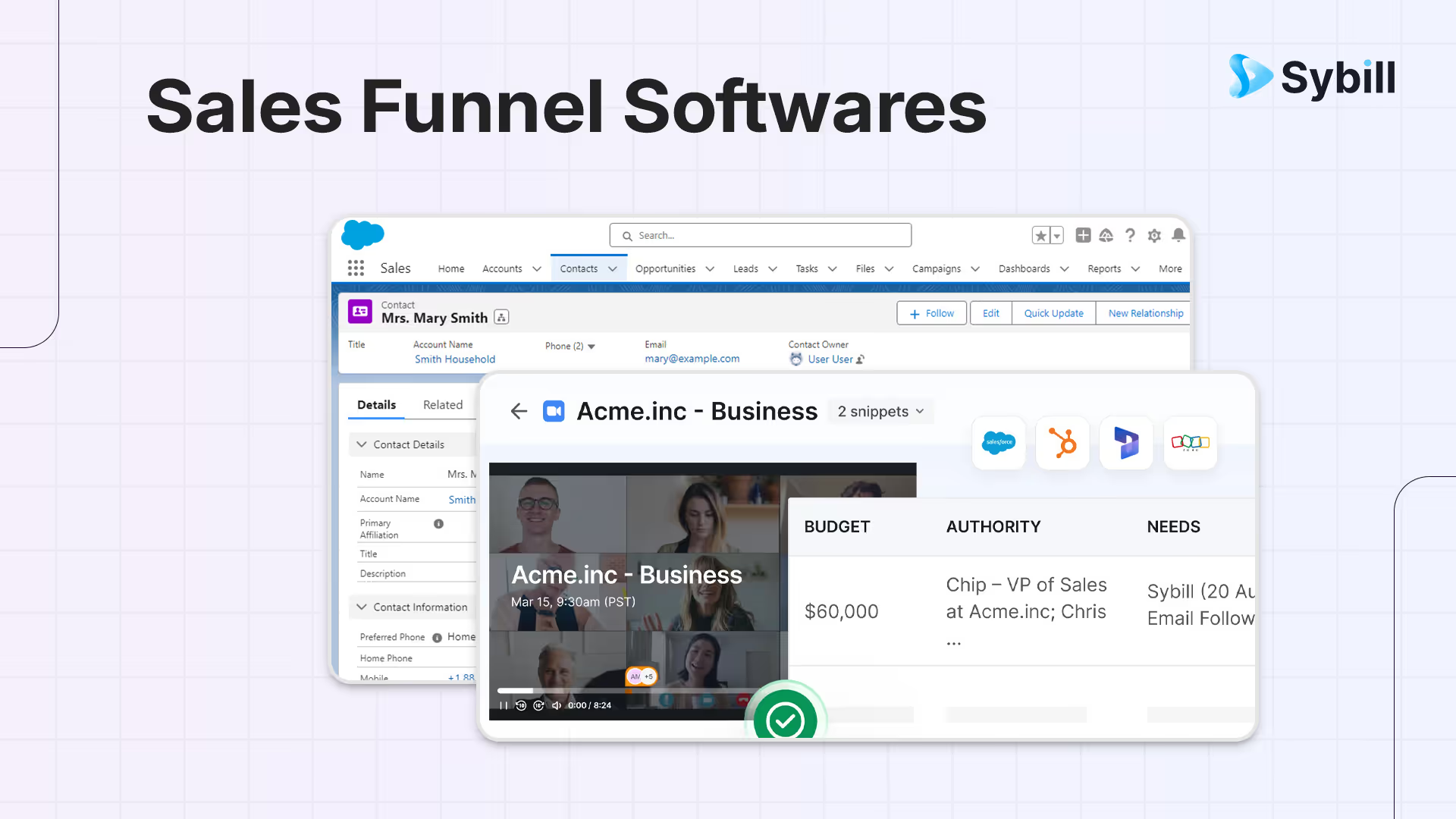
The best sales funnel software in 2026 includes HubSpot (best free CRM with visual funnel tracking), Salesforce (best enterprise funnel management with AI forecasting), Pipedrive (best visual funnel for SMBs), ClickFunnels (best for landing page and marketing funnel building), Freshsales (best for built-in communication at every funnel stage), Zoho CRM (best value full-suite funnel management), and Sybill (best AI layer for automating the between-stage work that makes funnels actually move). Sales funnel software tracks where deals sit in your pipeline, but the deals themselves advance through post-meeting actions — follow-ups, CRM updates, stakeholder engagement — which is why AI tools like Sybill that automate these actions after every call have a larger impact on funnel velocity than the funnel visualization tool itself.

That is most teams.

Sales funnel software exists so you can stop running a soap opera in your CRM and start running an actual system.

In this guide we will:

  • Decode what sales funnel software really is in 2025
  • Show you how it fits with your funnel and your pipeline
  • Walk through 12 sales funnel tools worth your time
  • Show where an AI assistant like Sybill plugs in to make all of this actually usable in real life

Let’s go.

Quick peek: the 12 best sales funnel software tools for B2B teams

Here is the shortlist before we go deep:

  1. HubSpot Sales Hub – Best all round sales funnel for growing B2B teams
  2. Salesforce Sales Cloud – Best for complex, enterprise funnels
  3. Pipedrive – Best simple, visual pipeline for SMBs
  4. Bitrix24 – Best low cost all in one CRM plus funnel hub
  5. ClickFunnels – Best for drag and drop funnel pages
  6. Kartra – Best for “all in one” marketing funnels and digital products
  7. Leadpages – Best pure landing page and opt in flows
  8. ConvertFlow – Best on-site personalized funnels and pop ups
  9. Kajabi – Best sales funnels for creators and course businesses
  10. involve.me – Best interactive quiz and calculator funnels
  11. Moosend – Best budget friendly email first funnel tool
  12. Sybill – Best AI funnel intelligence on top of your calls, CRM and email

Now, context first.

Sales funnel 101: the backbone you are about to digitize

A sales funnel is just the story of how a stranger becomes a customer, seen from their side of the table.

Most B2B funnels follow some version of:

  • Awareness – They discover you exist
  • Interest – They poke around, maybe download or attend something
  • Evaluation – They compare options and bring in stakeholders
  • Engagement / Intent – Real conversations and serious problem solving
  • Action – The actual yes and onboarding
  • Expansion / Loyalty – Renewals, expansions, referrals

Sybill’s own guide to the 6 stages of a B2B sales funnel calls out exactly this journey and how buyers bounce around between stages instead of moving in a perfect line. 

Important distinction:

  • Funnel = outside in view of conversion
  • Pipeline = inside out view of activities and deal stages

Sybill’s breakdown of sales pipeline vs sales funnel leans on that exact difference: pipelines reflect what your team does, funnels measure how well that effort converts.

You need both.

What is sales funnel software in 2025?

Most definitions sound like marketing soup, so here is the simple version.

Sales funnel software is any tool that helps you:

  • Design and run the path from awareness to revenue
  • Track who is where in that journey
  • Automate the handoffs between marketing and sales
  • Measure how efficiently leads move between stages

Good tools typically combine:

  • Landing pages and forms
  • Lead capture and routing
  • Email and multi channel nurture
  • Deal and pipeline views
  • Analytics and reporting

Moosend’s overview basically says the same thing in more corporate language: sales funnel software helps you build and monitor funnels and pipeline in one place, from lead gen and landing pages to email campaigns and pop ups.

HubSpot’s own funnel software explainer adds that you want repeatability and scale, not just random one off campaigns.

So this entire space exists for one reason:

Turn your funnel from a blurry concept into a system that anyone on your team can understand, improve, and scale.

How to choose sales funnel software?

Before we start throwing tools at your browser, zoom out and ask four questions.

1. What kind of selling motion do you run?

  • Product led, self serve SaaS
  • High ACV, sales led deals
  • Agencies and services
  • Creators and info products

A PLG motion will lean more on landing pages, onboarding and automated nurture.
A sales led motion will lean more on CRM, sequences and call based selling.

Sybill’s guide to B2B sales prospecting and funnel entry is a good gut check here.

2. What tools do you already have?

You probably have:

  • A CRM (or spreadsheets pretending to be one)
  • Email marketing
  • Some form of analytics

You do not need sales funnel software that recreates everything you already own unless you are intentionally consolidating. Moosend and EmailToolTester both call this out: all in one funnel builders are great if you are starting fresh, trickier if you are replacing a mature stack.

3. Who will actually live in this tool?

  • Reps
  • RevOps
  • Marketing
  • Founders

Design for the people who will stare at it for 4 hours a day. A gorgeous funnel map no one updates is a very pretty lie.

4. How opinionated do you want the tool to be?

There is a spectrum:

  • “We will give you everything, from website to courses to funnels” (Kartra, Kajabi)
  • “We will do one thing insanely well, bring your own CRM” (Leadpages, ConvertFlow)
  • “We will be your main operating system and connect everything” (HubSpot, Salesforce)

Pick a camp consciously.

The 12 best sales funnel software tools in 2025

Now for the main course.

Each tool breakdown includes:

  • What it is really good at
  • Where it fits in your funnel
  • Why you might pick it
  • Why you might not

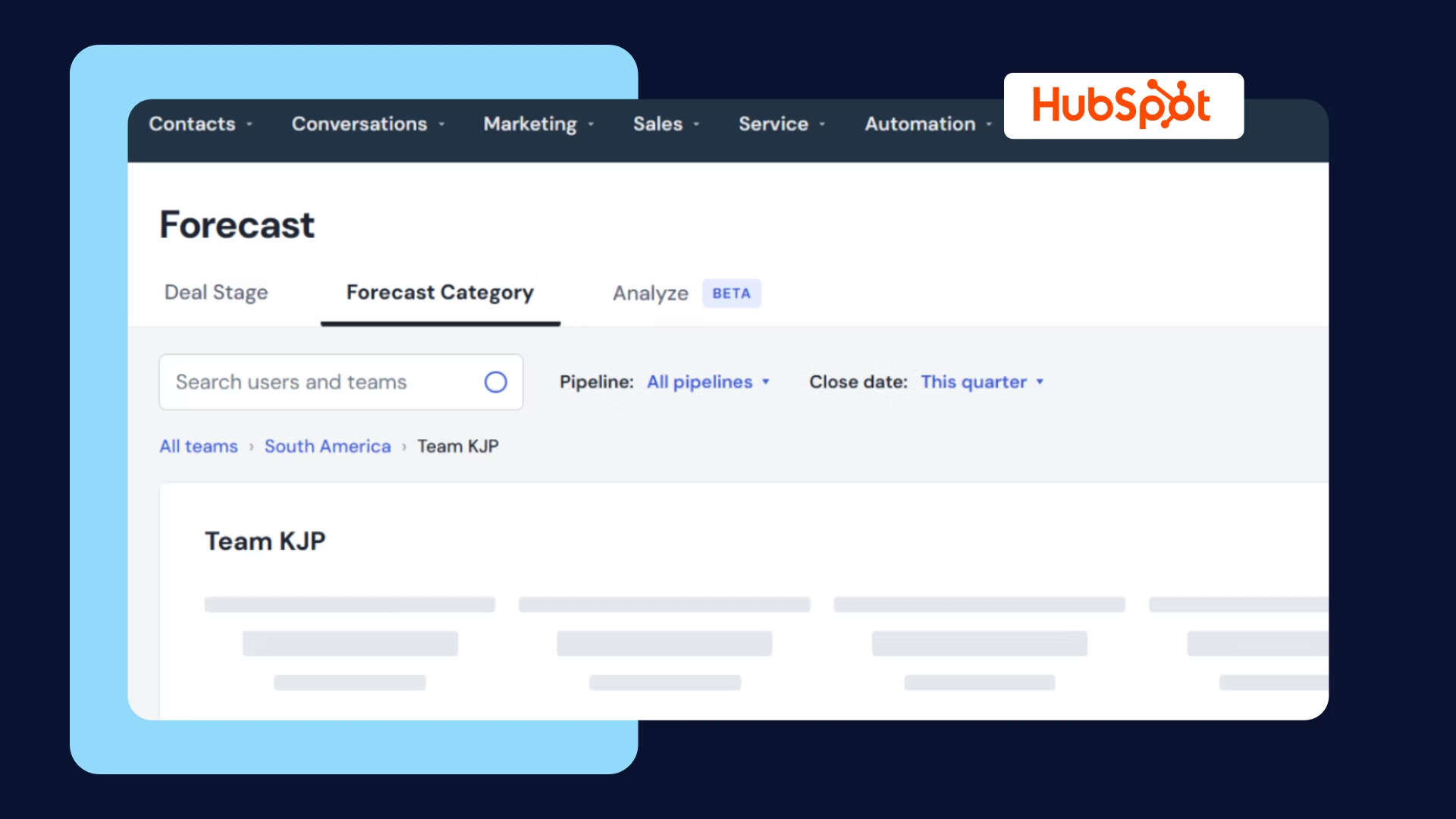
1. HubSpot Sales Hub – the “default” sales funnel platform for growing teams

If your company has outgrown spreadsheets and “let’s just wing it in Gmail”, HubSpot is usually the first serious stop.

What it is

An all in one CRM and sales platform, with:

  • Contact and company records
  • Deal pipelines
  • Automation workflows
  • Email templates and sequences
  • Reporting across the entire funnel

Where it shines in the funnel

  • Capturing leads from website forms, chat, and ads
  • Automatically assigning and nurturing leads based on rules
  • Moving deals through stages using workflows and sequences
  • Reporting on conversion rates across each funnel stage

HubSpot’s own docs and third party guides show how people use workflows to automate lead capture, stage progression, follow ups and pipeline health checks.

Why you would pick HubSpot

  • You want a single platform for marketing plus sales funnels
  • You care about visual reports and dashboards
  • You have a sales team big enough that automation and consistency really matter

Why you might not

  • Pricing climbs as you add contacts and features
  • Very small teams may find the learning curve heavy

If you end up in the HubSpot universe, Sybill layers on top as your AI sales assistant that pulls call insight, funnel context and deal data into one brain, then writes follow ups and updates the CRM for you.

2. Salesforce Sales Cloud – enterprise grade funnel and pipeline

Salesforce is the “we are definitely not a startup anymore” option.

What it is

A highly customizable CRM and sales platform with:

  • Complex opportunity stages
  • Territory and account hierarchies
  • AI lead and opportunity scoring
  • Advanced reporting and forecasting

Salesforce’s own funnel content highlights AI lead scoring, funnel optimization and customer journey mapping as key use cases.

Where it shines in the funnel

  • Multi product, multi region funnels
  • Large buying committees and complex opp structures
  • Detailed, board level reporting on funnel health

Why you would pick Salesforce

  • You have multiple teams and regions hitting the same accounts
  • You want to deeply customize every stage of the funnel and pipeline
  • You have RevOps resources to maintain it

Why you might not

  • Massive overkill for small teams
  • Implementation and admin overhead are real

For Salesforce shops, Sybill is that modern conversation intelligence layer that makes calls, follow ups, and CRM hygiene far less painful, without swapping out the CRM.

3. Pipedrive – visual, no fluff pipeline centric funnel tool

If HubSpot and Salesforce are the 12 course tasting menus, Pipedrive is the good burger.

What it is

A sales CRM built around visual pipelines, with:

  • Drag and drop deal stages
  • Activity management
  • Email integration
  • Basic marketing and automation features 

Where it shines in the funnel

  • Middle of funnel clarity
  • Keeping reps focused on actions, not just contacts
  • Very digestible deal and stage reporting

Pipedrive’s funnel tracking can be broken into customizable templates and funnel metrics like deal volume and close rates.

Why you would pick Pipedrive

  • You are a small to midsize team that wants clarity fast
  • You want less configuration, more “it works out of the box”
  • Your marketing stack is already solid and you mainly need sales funnel discipline

Why you might not

  • Marketing automation is limited compared to heavier tools
  • Enterprise reporting expectations may feel constrained

For teams here, pairing Pipedrive with Sybill gives you:

  • Call capture and analysis
  • Auto follow ups in your tone
  • Clean pipeline data without extra manual entry

4. Bitrix24 – low cost all in one hub for funnels and operations

Bitrix24 tries to be the Swiss Army knife: CRM, tasks, telephony, chat, collaboration.

What it is

An all in one platform that includes:

  • CRM with funnels and pipelines
  • Marketing automation
  • Contact center features
  • Project and task management

Bitrix24’s funnel templates, unlimited deals, collaboration and AI lead scoring are note-worthy. TechRadar’s CRM review highlights its focus on sales funnels, automation and a very generous free tier. 

Where it shines in the funnel

  • Visualizing and automating leads through stages
  • Connecting sales communications, quotes, invoices and follow ups
  • Keeping everything for smaller teams in a single tool

Why you would pick Bitrix24

  • You want a free or low cost entry point with a lot of features
  • You prefer an integrated “work hub” instead of separate apps
  • Your team is okay living in one interface for most work

Why you might not

  • The interface can feel busy compared to newer tools
  • You may not need everything it ships with

If you choose Bitrix24 as your “OS”, adding Sybill on top gives you deeper call intelligence and AI driven follow ups without ripping anything out.

5. ClickFunnels – drag and drop funnel builder for campaigns and launches

ClickFunnels is practically a character in every “make your first dollar online” story.

What it is

A dedicated funnel builder focused on:

  • Landing pages and sales pages
  • Upsell and order bump flows
  • Email automation
  • One click checkout and funnel templates

Where it shines in the funnel

  • Top and middle of the funnel for digital offers
  • Product launches, webinar funnels, simple checkout funnels
  • Funnels driven by paid traffic from channels like Meta and YouTube

Multiple reviews point out that ClickFunnels is easy to use, ships with funnel templates and shows each step visually, which is great for non technical marketers.

Why you would pick ClickFunnels

  • You care more about conversion pages and upsells than CRM detail
  • You want to test offers and funnels quickly
  • You like all in one hosting for your funnel pages

Why you might not

  • Design can feel “templatey” if you do not customize heavily
  • Not ideal as your primary CRM for complex B2B deals

For B2B teams, ClickFunnels is often the acquisition layer. The real funnel visibility happens in your CRM and call stack, which is where tools like HubSpot, Pipedrive and Sybill pick up the baton.

6. Kartra – all in one marketing and funnel platform

Kartra is the “we want everything under one roof” choice.

What it is

A platform that includes:

  • Page and funnel builders
  • Email marketing and automation
  • Membership and course hosting
  • Video hosting
  • Helpdesk and calendars

Where it shines in the funnel

  • Full lifecycle funnels for digital products and services
  • Multi step email and page journeys where you want everything connected
  • Campaigns you can clone and reuse

Why you would pick Kartra

  • You do not want to stitch together five different point tools
  • You run a lot of campaigns, launches or info products
  • You like visual funnel mapping and built in assets

Why you might not

  • Overkill if you only need a landing page or two
  • B2B teams with established CRMs may not want to move data into yet another system

7. Leadpages – simple but powerful landing page and opt in funnels

Leadpages is the “let me build high converting landing pages without bugging design” tool.

What it is

A landing page and lead gen platform with:

  • Drag and drop landing page builder
  • Pop ups and alert bars
  • Form and lead capture tools
  • A/B testing and analytics 

Features like 250+ templates, unlimited A/B testing, ROI tracking and a toolkit of pop ups and checkout forms make this tool valuable.

Where it shines in the funnel

  • Top of funnel lead capture
  • Simple opt in funnels like ebooks, trials, webinar registrations
  • Fast experiments with messaging and offers

Why you would pick Leadpages

  • You want to keep using your existing CRM and email tools
  • You want a reliable way to spin up landing pages for campaigns
  • Your team is not super technical, but cares about testing

Why you might not

  • Not a full CRM or marketing automation platform
  • Complex account based funnels will need other tools around it

8. ConvertFlow – on-site funnel personalization engine

ConvertFlow is like a “what you see depends on who you are” layer for your website.

What it is

An on-site funnel tool that lets you build:

  • Dynamic pop ups and slide ins
  • Personalized calls to action
  • Quizzes and forms
  • Targeted landing experiences without dev work

ConvertFlow can be described as a no code funnel builder for pop ups, forms, quizzes, recommendations and pages, all with A/B testing and analytics.

Where it shines in the funnel

  • Top and mid funnel conversion on your site
  • Showing different offers based on behavior or segment
  • Reducing drop off from key pages

Why you would pick ConvertFlow

  • You already get decent traffic and want more conversions
  • You use tools like HubSpot, Klaviyo or ActiveCampaign and want tight integration
  • You like the idea of “personalized funnels” instead of one generic CTA

Why you might not

  • Not a full CRM or standalone marketing platform
  • You need decent traffic before fine grained targeting pays off

9. Kajabi – funnels for creators and knowledge businesses

Kajabi is the “teach what you know and get paid for it” platform.

What it is

An all in one platform focused on:

  • Websites and landing pages
  • Courses and digital products
  • Email marketing
  • Funnel templates for launches, webinars and lead gen

Where it shines in the funnel

  • Course, membership and coaching funnels
  • Personal brand driven offers
  • Webinars and launch sequences

Why you would pick Kajabi

  • Your product is content, not complex B2B software
  • You want to keep tech overhead low
  • You are fine using Kajabi as your main website plus funnel platform

Why you might not

  • More limited as a pure B2B CRM
  • Pricing may feel heavy for early stage creators

10. involve.me – interactive quiz and calculator funnels

involve.me is for when you want your funnel to feel like BuzzFeed and McKinsey had a baby.

What it is

A tool for interactive content that includes:

  • Quizzes and assessments
  • Calculators and pricing tools
  • Forms and surveys
  • Visual funnel analytics and segmentation 

Note how involve.me’s funnels can 4x lead to sale conversion using segmented leads and interactive formats, plus hundreds of templates and integrations.

Where it shines in the funnel

  • Top of funnel engagement and lead capture
  • Middle of funnel education and qualification
  • Feeding your CRM with rich, self reported data

Why you would pick involve.me

  • You sell something where assessments or ROI calculators are natural
  • You want leads who have already told you their pains and numbers
  • You like visual builders and templates

Why you might not

  • It is not a full CRM or email platform
  • You will need to integrate it with your main sales stack

11. Moosend – budget friendly email first funnel builder

Moosend is a good example of “email marketing platform that turned into proper funnel software”.

What it is

An email and automation platform that now includes:

  • Landing page builder
  • Advanced automations
  • Segmentation and scoring
  • Visual funnel style workflows

Moosend’s own guide defines sales funnel software exactly this way, calling out landing pages, pop ups, email communications and automation in one place.

Where it shines in the funnel

  • Lead nurture flows from top to bottom
  • Email driven product and content funnels
  • Budget conscious teams that want decent automation

Why you would pick Moosend

  • You value automation and email above fancy page builders
  • You want a single tool for email plus simple funnels
  • You are early stage and price sensitive

Why you might not

  • You may want a stronger CRM and pipeline view as you grow
  • Heavy ABM and complex B2B motions may outgrow it

12. Sybill – the AI sales assistant that becomes your funnel’s actual brain

Everything above helps you design and track your funnel.

Sybill helps your team actually run it.

What it is

Sybill is an AI sales assistant that connects to:

  • Your calendar and meeting platforms
  • Your CRM and pipeline
  • Your email and templates

Then it:

  • Takes notes on calls
  • Drafts follow up emails in your tone
  • Answers deal questions
  • Keeps CRM fields updated without manual data entry

Reviews and breakdowns describe Sybill as a conversation intelligence platform that uses multimodal AI to analyze not just what was said on calls, but how it was said, then turns that into summaries, follow ups and accurate CRM data.

Where it shines in the funnel

  • Middle and bottom of the funnel, where live conversations happen
  • Post meeting follow ups that move deals, not just “checking in”
  • Revenue intelligence across deals and stages

Sybill’s own resources on sales funnel stages, pipeline vs funnel, and product led sales metrics tie this together and show how call data improves funnel optimization. (sybill.ai)

What Sybill does for your funnel stack

So while it is not a “traditional funnel builder”, it is the glue that keeps your funnel honest.

Putting it together: sample sales funnel stacks you can steal

You do not need all 12 tools. That would be chaos.

Here are a few sane stacks based on common motions.

Stack A: PLG SaaS with a lean team

  • Moosend or ActiveCampaign for email heavy funnels
  • Leadpages or ConvertFlow for fast landing pages and website CTAs
  • Pipedrive for sales pipeline and simple CRM
  • Sybill to handle call summaries, follow ups and CRM hygiene for higher intent leads

Result: Marketing runs most of the top and mid funnel, sales jumps in for hand raisers with great context.

Stack B: High ACV B2B, 10 to 100 reps

  • HubSpot Sales Hub or Salesforce as your core CRM and funnel engine
  • Leadpages or involve.me for lead capture and qualification
  • ConvertFlow or similar on site personalization
  • Sybill across the team for call intelligence, follow ups and deal visibility

Result: Leadership gets clear funnel reporting, reps get AI help instead of more admin, RevOps gets clean data to work with.

Stack C: Creator or education business

  • Kajabi or Kartra as your main platform for pages, courses and funnels
  • involve.me for assessments, quizzes and calculators
  • Sybill if you do lots of high ticket sales calls and want AI summaries, follow ups and better close rates

Result: Your funnel is mostly automated, but your high ticket calls and cohorts get the white glove treatment without burning you out.

Stack D: Early stage startup, founder led sales

  • Pipedrive or HubSpot free as your CRM and pipeline
  • Leadpages for basic landing pages
  • Moosend for email nurture
  • Sybill as your personal AI cofounder in sales, handling meeting notes, follow ups and mini playbooks as you learn

Result: You get a tidy funnel view and spend more time talking to customers than typing into tools.

Final thought: tools support your funnel, they do not replace owning it

Sales funnel software will not magically fix a bad offer or a fuzzy ICP.

What it can do is:

  • Make your funnel visible
  • Make your team consistent
  • Make optimization possible
  • Make grunt work disappear with AI

Pick one or two tools from this list that match your stage and motion.
Layer in Sybill when you are ready for an AI teammate that understands your calls, pipeline and email better than any human could.

Then your sales funnel stops being a hand drawn diagram on a whiteboard and starts behaving like a living, learning system that actually closes deals.

‍

Get started with Sybill

Accelerate your sales with your personal assistant

Get Started Free

Frequently Asked Questions

Do I need “sales funnel software” if I already have a CRM?

Maybe, maybe not. Many modern CRMs are already strong funnel tools. HubSpot and Salesforce both market themselves as funnel software, not just contact databases.

How many tools are “too many” in a funnel stack?

If your reps cannot describe, in a sentence, what each tool does, you have too many. As a rule of thumb: 1 core CRM plus funnel brain (HubSpot, Salesforce, Pipedrive, Bitrix24); 1 to 2 tools for landing pages and on site conversion (Leadpages, ConvertFlow, ClickFunnels); 1 email and automation platform (Moosend or your CRM’s built in tools) and 1 AI assistant like Sybill for calls and follow ups

Where does AI fit into sales funnel software?

AI has gone from “cute feature” to “core requirement” pretty fast. You will see it in: Lead scoring and routing (Salesforce, HubSpot, Bitrix24), subject line and copy suggestions in email tools, funnel performance predictions and alerts. Sybill takes a more conversation centric approach as it uses multimodal AI to interpret calls, draft follow up emails in your style and update CRM data so your funnel metrics actually reflect reality

Get started with Sybill

Once you try it, you’ll never go back.