Find us at booth #83, join us for a harbor side happy hour, or catch Gorish’s talk.

Sept, 16-18 > Learn more

%20(1).avif)
Mamta Tainwala

May 14, 2026
Remember that scene in The Wolf of Wall Street where Leonardo DiCaprio's Jordan Belfort whips out a pen, thrusts it at a room full of wannabe brokers, and barks: "Sell me this pen"?
Some stammer through feature lists. Others freeze. But one guy nails it (supposedly) by asking Belfort to write his name on a napkin, then revealing - surprise! Belfort doesn't have a pen. "Supply and demand, bro."
The correct answer to "sell me this pen" is not to pitch the pen's features — it's to ask questions that uncover the buyer's need first ("When was the last time you used a pen?" "What do you typically use it for?" "What matters most to you in a pen?"), then position the pen as the solution to their specific situation, demonstrating the consultative selling principle that great salespeople diagnose before they prescribe. The "sell me this pen" exercise tests three core sales competencies: needs-based discovery (asking before telling), value articulation (connecting features to the buyer's specific context), and closing confidence (making the ask after establishing relevance) — the same skills that AI tools like Sybill measure and develop by analyzing actual sales conversations for question-to-talk ratios, discovery depth, and how effectively reps connect product capabilities to stated buyer needs.
Mic drop. Lights out. Sales lesson learned, right?
Wrong.
That scene became one of the most quoted moments in modern sales culture. Interviewers love throwing it at candidates. Sales trainers use it in workshops. LinkedIn bros post it with fire emojis. But here's the thing: the movie got it wrong.
Let's break down what the "sell me this pen" challenge actually teaches, why most people (including Hollywood) get it wrong, and how mastering this principle will make you a better salesperson, whether you're selling pens, software, or seven-figure enterprise deals.
Before DiCaprio made it famous, the "sell me this pen" exercise existed in sales training circles for decades. The technique is often attributed to legendary sales trainer Zig Ziglar, who used it to teach the fundamentals of persuasion.
In a famous appearance on The Tonight Show, Ziglar was challenged by Johnny Carson to sell him an ashtray on the desk. Ziglar didn't launch into a feature dump. He asked questions:
"Before I can do that, I'd have to know why you want the ashtray."
Carson responded with reasons - it's well-made, looks nice, serves its purpose.
Ziglar then asked: "What do you think it's worth to you?"
That's the magic. Ziglar understood that you can't sell anything until you know what the buyer values. The ashtray isn't just an ashtray. It's whatever meaning or utility the buyer attaches to it. Same goes for the pen.
Jordan Belfort adopted this technique in his own sales training, using the pen as a quick litmus test to see if salespeople understood the basics. But when Hollywood adapted his story, they simplified it into a trick - create demand by creating scarcity.
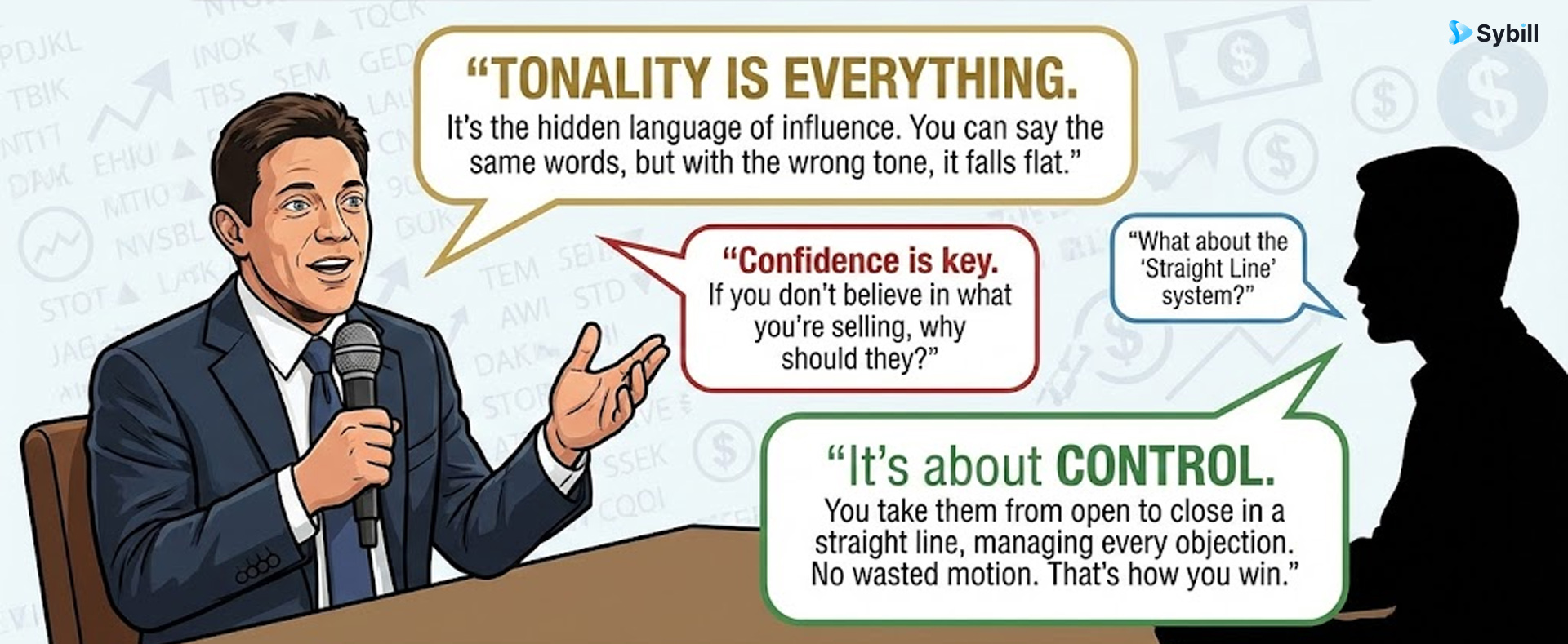
It made for a great movie moment. Terrible sales advice.
In the film, Brad Bodnick (Jon Bernthal's character) "solves" the pen challenge by asking Belfort to sign his name, revealing Belfort doesn't have a pen, then offering to sell it back to him. "Supply and demand, bro."
It's a slick moment. But let's be real: in actual sales, this is a gimmick. You're not going to build a career or close meaningful deals by stealing your prospect's tools and selling them back.
Here's why the movie's answer falls short:
The prospect (Belfort) didn't need a pen until Bodnick created an artificial need by taking it away. That's not selling. That's manufacturing a problem to sell a solution. Real buyers aren't playing games. They have genuine needs, challenges, and priorities. Your job is to uncover those, not invent them.
"Supply and demand" works in theory, but only when there's actual demand. Creating fake scarcity might get someone to act impulsively, but it doesn't build trust or long-term relationships. Prospects who feel manipulated don't come back. They don't refer you. They churn.
The "take it away and sell it back" move is a one-time parlor trick. It doesn't scale. It doesn't work for complex B2B sales. It doesn't build repeatable success. Real sales frameworks like MEDDPICC, BANT, or SPICED are built on understanding needs, not manufacturing urgency.
The movie version makes for great cinema. But in the real world? It's smoke and mirrors.
In a 2015 interview with Piers Morgan, the real Jordan Belfort was asked the infamous question: "Sell me this pen."
His response? He didn't pitch the pen. He asked questions.
Belfort: "How long have you been in the market for a pen?"
Morgan: "I've wanted a pen for three months."
Belfort: "So you've been looking for a pen for three months now?"
Morgan: "Yes."
Belfort: "And what type of pens do you usually use when you use a pen?"
Morgan: "I like a nice, easy-to-use ballpoint pen."
Belfort then explained: "Before I'm even going to sell a pen to anybody, I need to know about the person. I want to know what their needs are, what kind of pens they use, do they use a pen, how often do they use a pen."
That's the real lesson. You can't sell anything - pen, software, consulting services until you understand the buyer. Not just what they want, but who they are, what they're trying to accomplish, and why a pen (or your solution) actually matters to them.
This is consultative selling. This is gap selling. This is how actual deals get closed.
So how do you actually answer "sell me this pen" in a way that demonstrates real sales skill? Here's the step-by-step:
Don't start by describing the pen. Don't talk about features. Don't create fake urgency. Ask questions.
Good discovery questions:
Your goal isn't to pitch. It's to listen. You're gathering information about the buyer's current situation, pain points, preferences, and priorities. Learn more about asking the right discovery questions.
Based on what the buyer tells you, figure out if there's a real need for the pen. Maybe they write constantly and their current pen cramps their hand. Maybe they're in client-facing meetings and want something that looks professional. Maybe they're an author who values a smooth writing experience.
Or maybe, and this is important, they don't need a pen at all. They use a tablet. They dictate everything. They haven't physically signed a document in two years.
If there's no need? Don't force it. Real salespeople qualify out bad-fit prospects. They don't waste time selling to people who won't benefit from their solution.
Now, and only now do you talk about the pen. But you're not listing features like a robot reading a spec sheet. You're connecting the pen's qualities to what the buyer said they care about.
Example:
You're not pitching the pen. You're pitching the solution to their specific problem.
Get started for free with Sybill to automatically capture buyer needs from every conversation and turn them into personalized pitches that resonate.
Maybe they push back: "I already have a pen." Great. That's not a rejection, it's an opportunity to dig deeper.
"That makes sense. What do you like about your current pen?"
Listen to their answer. If they say it works fine, acknowledge that and move on because they're not a fit. But if they say something like, "It's okay, but the ink runs out fast," you've just uncovered a new angle.
"Totally get that. This pen uses a refillable cartridge that lasts three times longer than standard pens. You'd be replacing it way less often."
Then close: "Want to give it a try?"
That's it. No pressure. No tricks. Just understanding, value delivery, and a natural close.
The "sell me this pen" challenge isn't about pens. It's about the mindset shift that separates mediocre salespeople from elite ones.
Mediocre salespeople think their job is to convince people to buy. They lead with features. They pitch before they listen. They try to create urgency through scarcity or pressure tactics.
Elite salespeople know their job is to understand people and solve problems. They ask questions. They listen actively. They position their solution as the logical answer to a need the buyer already has (or didn't realize they had).
This is how consultative selling works. This is how solution selling works. This is how you build trust, create value, and close deals that stick.
And it's not just theory. Studies show that asking open-ended discovery questions can boost earnings by up to 20%. Yet those questions make up less than 10% of what most salespeople say in conversations. That's a massive missed opportunity.
When you flip the script and prioritize questions over pitches, everything changes:
"Sell me this pen" has become a cliché interview question. Hiring managers use it to test how candidates react under pressure, whether they understand basic sales principles, and if they default to feature-dumping or actually try to understand the buyer.
If you're in an interview and someone asks you to sell them a pen, here's exactly what to do:
Step 1: Smile and pause.
Don't rush. Take a breath. Confidence starts with composure.
Step 2: Ask questions.
"Before I can do that, I'd love to know a bit about you. How often do you write by hand? What do you typically use for writing?"
Step 3: Listen actively.
Whatever they say, show you're listening. Nod. Take mental notes. Maybe even jot something down (ironically, with your own pen).
Step 4: Tailor your pitch.
Based on what they told you, connect the pen's features to their needs. Be specific. Be brief. Be confident.
Step 5: Close.
"Based on what you've said, it sounds like this pen would be a great fit. Want to give it a try?"
That's it. You've demonstrated discovery, active listening, value alignment, and closing skills - all in under two minutes.
The interviewers who know what they're doing won't care if you "sell" the pen. They'll care that you understood the process.
Let's talk about what not to do:
Mistake #1: Immediately Describing the Pen
"This is an amazing pen. It's made for professionals. It has a metal body and smooth ink flow."
This is the rookie move. You're talking before you've earned the right to talk. The buyer doesn't care about features until they understand how those features solve their problem.
Mistake #2: Creating Fake Urgency
"This is the last one in stock. If you don't buy it now, you'll miss out."
Maybe this works for impulse buys. Maybe it closes a desperate prospect. But it doesn't build trust or long-term relationships. And in B2B sales? It's a red flag.
Mistake #3: Assuming You Know What the Buyer Needs
"Everyone needs a pen, so let me tell you why this one is great."
Not everyone needs a pen. And even if they do, they don't all need the same kind of pen for the same reasons. Stop assuming. Start asking.
Mistake #4: Talking More Than Listening
If you're doing more than 30% of the talking in the discovery phase, you're doing it wrong. Sales isn't a monologue. It's a conversation.
Mistake #5: Skipping the Close
You've asked great questions, delivered a tailored pitch, and handled objections. Now… awkward silence. You forgot to actually ask for the sale.
Always close. Even in a practice scenario. "So, shall we get you set up with this pen?"
The pen challenge is a microcosm of every sales conversation. The principles are the same whether you're selling a $2 pen or a $2 million software deal:
But here's the problem: doing this manually, at scale, across dozens or hundreds of prospects, is exhausting. You're taking notes during calls, trying to remember what each buyer said, and scrambling to customize follow-ups based on fragmented CRM data.
This is where Sybill becomes your unfair advantage.
Sybill listens to your sales calls and automatically captures what your prospects care about - their pain points, objections, preferences, and buying signals. No more frantic note-taking. No more "Wait, what did they say about their current solution?"
Sybill surfaces key insights so you can tailor your pitch based on actual conversation data, not vague hunches. You'll know exactly which features to emphasize, which objections to address, and which stakeholders to loop in.
Sybill generates personalized follow-ups that reference specific moments from the call, proving you were listening and reinforcing the value you discussed. It's like having an AI co-pilot who never forgets a detail.
In other words, Sybill helps you apply the "sell me this pen" principles to every single conversation - automatically.
Get started for free with Sybill and turn every sales call into an opportunity to understand, tailor, and close with precision.
The "sell me this pen" challenge endures because it exposes a fundamental truth about sales: you can't sell anything until you understand the buyer.
Hollywood gave us a flashy, cinematic answer that misses the point. Jordan Belfort himself corrected the record. And the best salespeople in the world - the ones crushing quota, building lasting relationships, and earning trust, know that discovery always comes before delivery.
So the next time someone asks you to sell them a pen (or a product, or a service), resist the urge to pitch. Instead, ask questions. Listen actively. Understand their world. Then, and only then, show them how your solution fits into their life in a way that actually matters.
Because here's the secret: nobody cares about the pen. They care about what the pen does for them. Your job is to figure out what that is.
Now go forth and sell, but do it the right way.
Yes, it's still common, though it's become somewhat of a cliché. Interviewers use it to test whether candidates understand the basics of consultative selling like asking questions, understanding needs, and tailoring a pitch or if they default to feature-dumping. The best candidates treat it as a discovery exercise, not a feature recital.
Then don't sell them the pen. Real sales professionals qualify prospects and walk away from bad-fit opportunities. If your discovery reveals they don't write by hand, prefer digital tools, or have no use for a physical pen, acknowledge it and move on. Forcing a sale to someone who doesn't need your product damages trust and wastes everyone's time.
Frame your questions naturally within a conversation. Use open-ended questions ("What's your current writing workflow like?") instead of yes/no questions ("Do you write?"). Mirror their answers back to show you're listening. Mix discovery with light rapport-building. And always explain why you're asking: "I want to make sure I understand your situation so I can recommend something that actually helps."