Find us at booth #83, join us for a harbor side happy hour, or catch Gorish’s talk.

Sept, 16-18 > Learn more


Tamanna Mishra

February 2, 2026
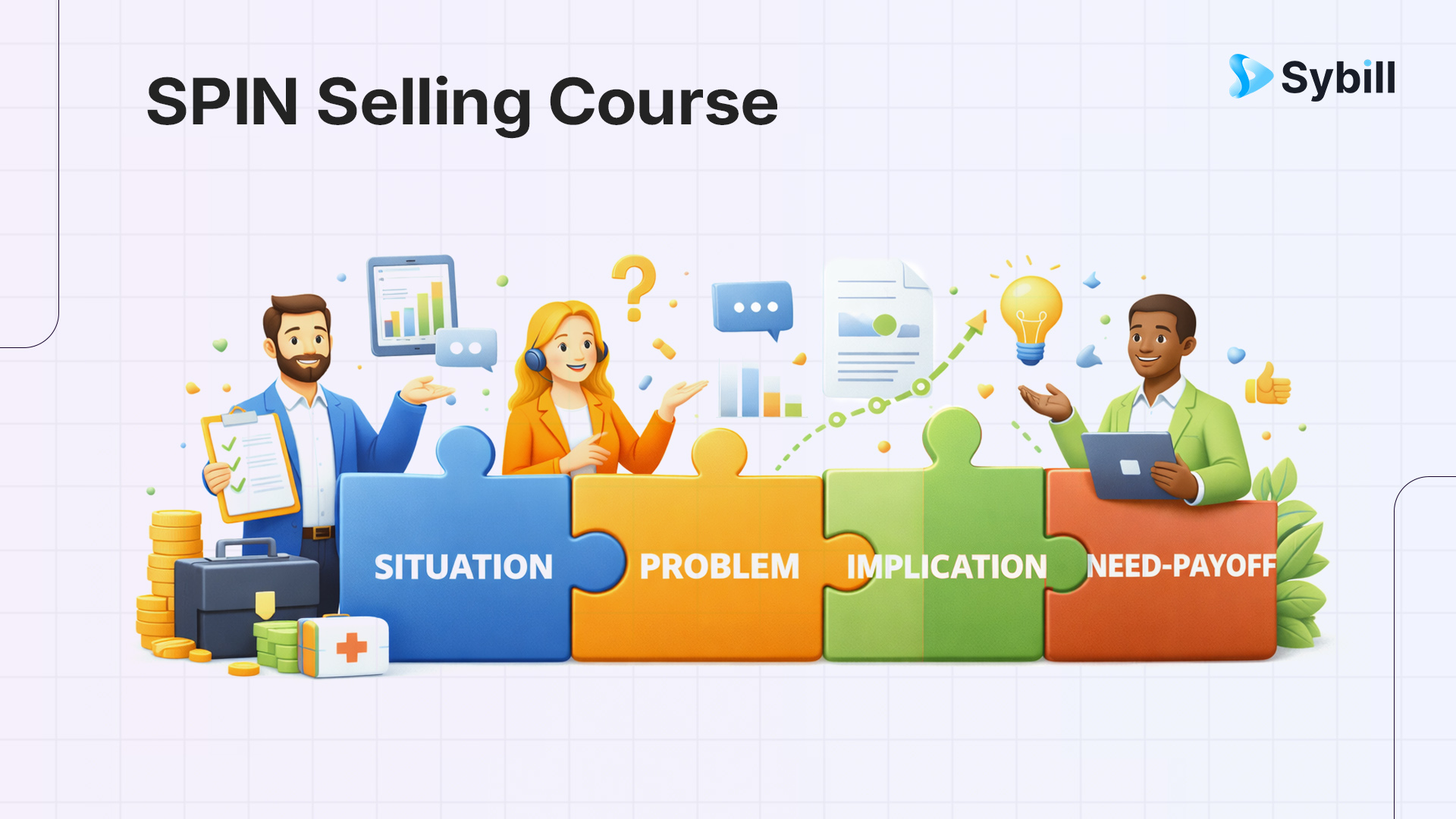
A SPIN selling course teaches reps how to ask the right questions in the right order to move complex deals forward. There is no single universal SPIN selling certification, but several credible SPIN selling online courses and training programs exist. This guide breaks down the best SPIN selling training courses, what they actually offer, and how to choose the right one based on your role and goals.
But first, some basics.
Click here for an in-depth overview of SPIN selling in 2026.
A SPIN selling course teaches sales professionals how to structure conversations using a proven questioning framework, not a memorized pitch or rigid script. SPIN selling, created by Neil Rackham, is built on decades of research into real B2B sales conversations and what actually moves complex deals forward.
Unlike transactional sales training, a SPIN selling training course is designed for consultative, high-stakes B2B environments where buyers need help diagnosing problems, not hearing features. The core focus is on asking the right questions in the right sequence to uncover latent pain, explore implications, and clearly connect value to the buyer’s reality before any solution is positioned.
SPIN selling courses emphasize:
This is also why SPIN selling still works in modern, AI-assisted sales environments. Buyers are more informed, more skeptical, and less tolerant of generic discovery. A strong SPIN selling course trains reps to lead thoughtful, insight-driven conversations that stand up even when buyers already know the market. Execution, not persuasion, is the differentiator.
There is no globally standardized SPIN selling certification issued by an independent accrediting body. Most programs marketed as a SPIN selling certification or SPIN selling training certification are, in practice, structured training courses that provide a certificate of completion, not formal accreditation.
This distinction matters. Certification implies a universally recognized standard. Training focuses on skill development and application. SPIN selling falls firmly in the second category.
When you see the term spin selling certification online, it usually means the learner has completed a course covering the SPIN framework and assessments set by the provider. The real value is not the badge itself, but how consistently a seller applies SPIN questioning in live buyer conversations. Execution is what determines results, not the label on the certificate.
Not every SPIN selling online course teaches SPIN the way it was intended. Many cover the terminology but stop short of changing real selling behavior. Use the criteria below to separate surface-level training from programs that actually improve deal outcomes.
Framework depth, not just definitions: A strong course goes beyond naming Situation, Problem, Implication, and Needs Payoff. It explains sequencing, timing, and how each question type builds commercial value across a deal.
Real sales conversation examples: Look for courses that break down real discovery conversations. SPIN is learned by hearing how questions land, not by reading slides.
Objection handling and deal progression: Effective SPIN training shows how questioning influences objections, urgency, and next steps. If the course ends at discovery, it is incomplete.
Practice, reinforcement, and coaching: Theory fades fast without practice. The best programs include exercises, call analysis, or manager reinforcement to lock in behavior.
Fit for complex B2B sales cycles: SPIN selling was built for multi-stakeholder, high-consideration deals. A course optimized for transactional selling will dilute the framework and limit results.
Not all SPIN selling courses are equal. Some are official and methodology-owned. Some are academic. Others teach SPIN as part of a broader sales toolkit. Below are the SPIN selling training courses that actually exist, how they differ, and who each one is best suited for.
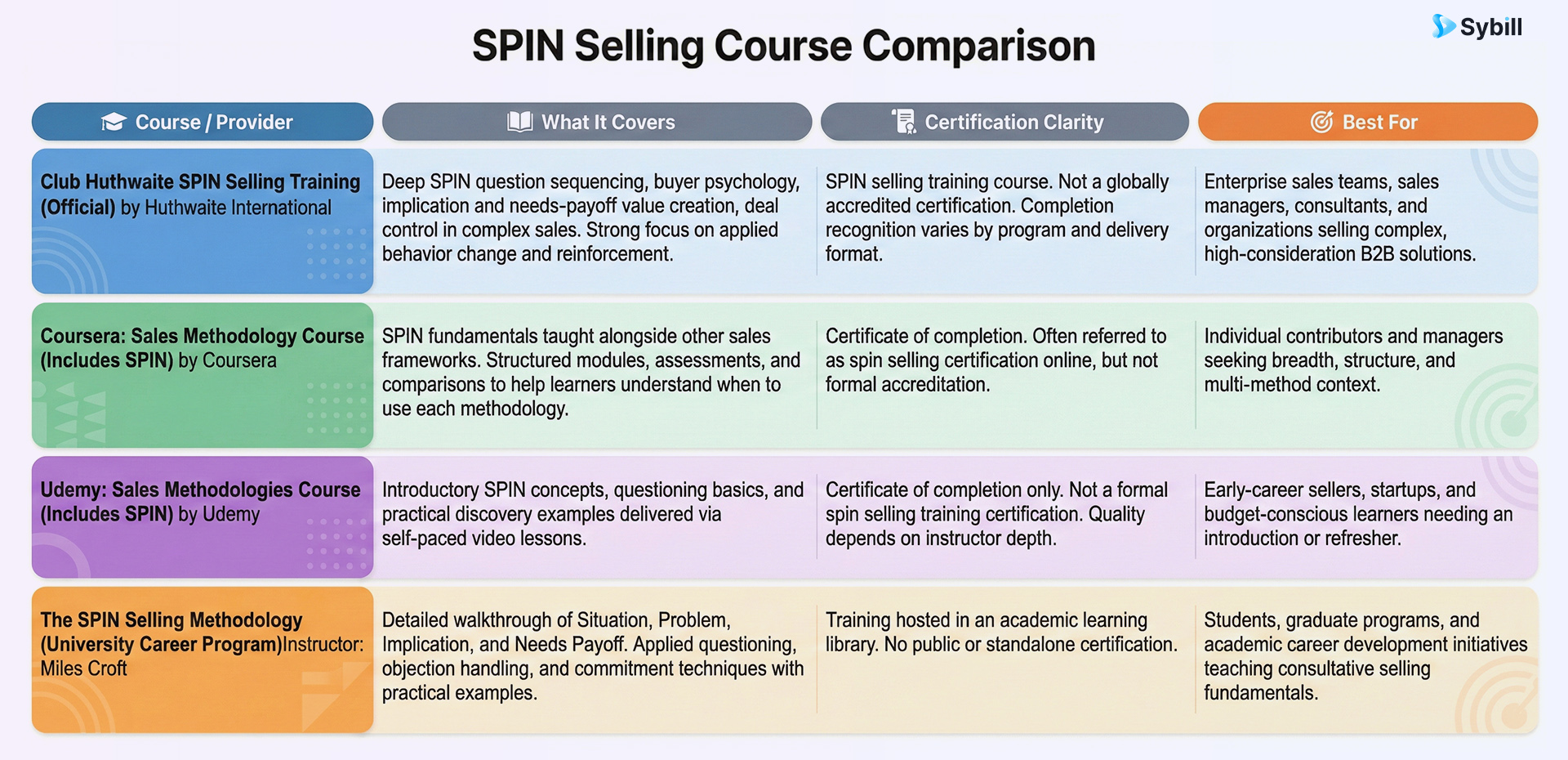
This is the original SPIN selling training course, created and maintained by Huthwaite International, the organization founded by Neil Rackham. If you are looking for the purest form of SPIN selling, this is the reference standard.
What it covers
Training format
Certification clarity
Best for
Enterprise sales teams, sales managers, consultants, and organizations selling complex, high-consideration solutions.
This option teaches SPIN selling as part of a multi-method sales curriculum, rather than as a standalone framework. SPIN is positioned alongside other modern sales methodologies to help learners understand when and how each approach applies.
What it covers
Certification clarity
Best for
Individual contributors and managers who want breadth, context, and a structured online learning experience.
Udemy courses that include SPIN selling are typically instructor-led interpretations bundled with other sales methodologies. This makes them accessible, affordable, and flexible, but quality varies.
What it covers
Certification clarity
Best for
Early-career sellers, startups, or budget-conscious learners looking for an introduction or refresher.
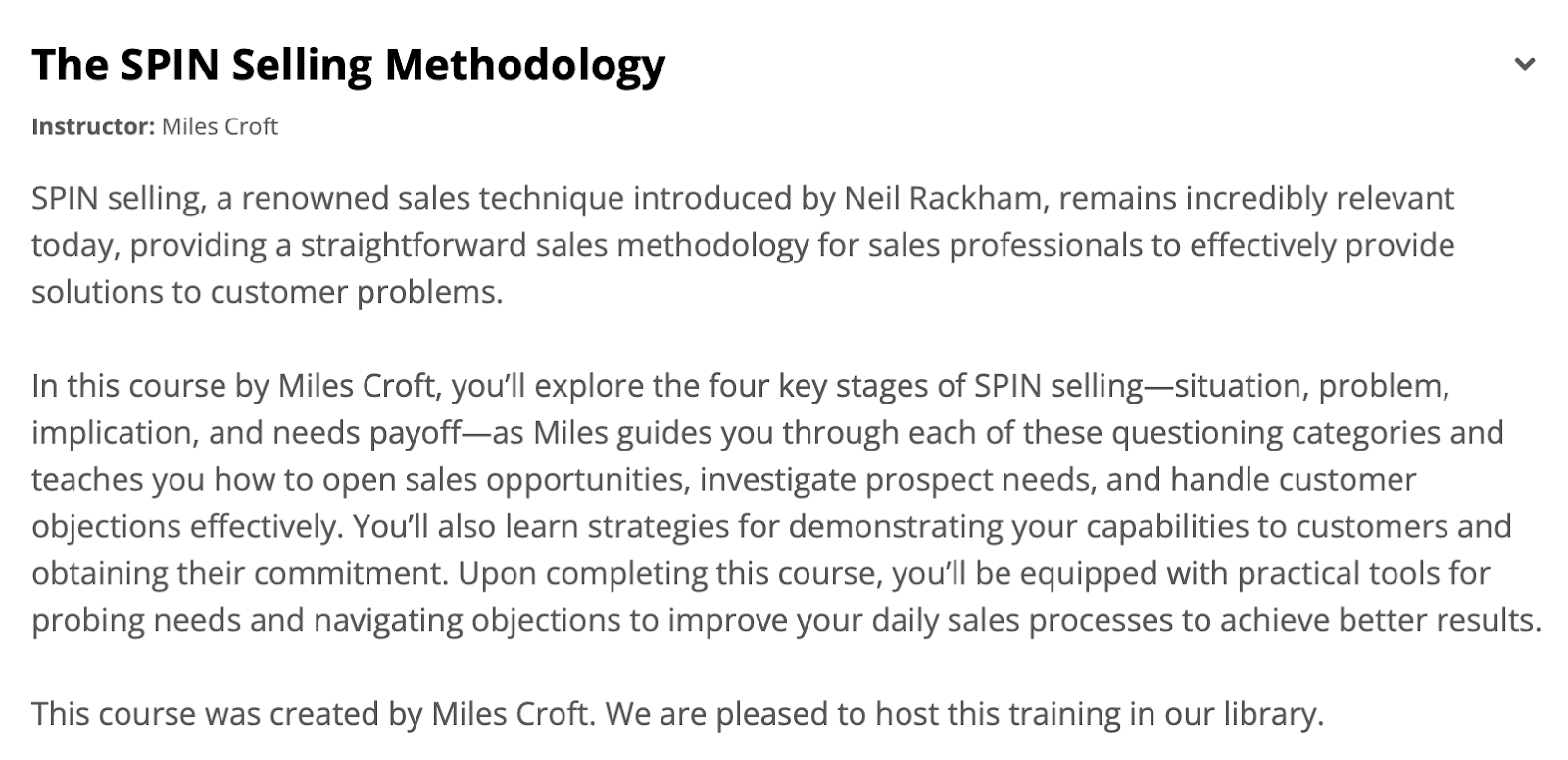
This SPIN selling training course is hosted inside an academic career development ecosystem and is taught by Miles Croft. It demonstrates how SPIN is still taught in formal education and career readiness programs.
What it covers
Delivery context
Certification clarity
Best for
Students, graduate programs, and academic career development initiatives teaching consultative selling fundamentals.
The right SPIN selling course depends less on the badge and more on how and where you sell. Use the framework below to narrow your choice.
If you sell high-consideration, multi-stakeholder solutions, choose a SPIN selling training course built for complex B2B sales. Lightweight or transactional courses dilute the framework.
If your goal is credibility signaling, a certificate of completion may help. If your goal is revenue impact, prioritize courses that change questioning behavior in live deals.
Enterprise SPIN training requires more investment but delivers depth. Online courses trade depth for flexibility and speed.
Solo learners can succeed with structured online courses. Teams need consistent training, shared language, and reinforcement to make SPIN stick.
Choosing the right SPIN selling course is ultimately about alignment. Match the training to your sales reality, not the marketing promise on the course page.
Most SPIN selling training fails for reasons that have nothing to do with the framework itself.
Courses are good at teaching theory, not consistency. Reps understand Situation, Problem, Implication, and Needs Payoff in a classroom setting, then revert to old habits the moment a deal gets tense. Under pressure, sellers default to pitching, feature dumping, or premature closing because that is what feels safe.
Managers face a different problem. Even when they believe in SPIN, they struggle to coach it in real calls. Without visibility into how questions are actually asked, feedback becomes generic and SPIN turns into a slide from onboarding that no one revisits.
This is where modern AI tools change the equation. Platforms like Sybill help teams reinforce SPIN selling by grounding coaching in real buyer conversations. Managers can see where implication questions were missed, where value was never tied to buyer language, and where next steps lost momentum. SPIN stops being theoretical and becomes observable.
The takeaway is simple. SPIN only works when it shows up in real conversations, not just training decks.
Modern sales teams do not struggle with understanding SPIN. They struggle with making it repeatable. Reinforcement is what turns SPIN from a training event into a sales habit.
Ground SPIN in real buyer conversations: High-performing teams reinforce SPIN by reviewing real sales calls, not role-play scenarios. Listening to actual buyer language reveals whether Situation and Problem questions are exploratory or superficial, and whether Implication questions create urgency or fall flat.
Coach to outcomes, not scripts: Effective coaching focuses on what changed the deal, not whether a rep followed a checklist. Managers coach SPIN by pointing to moments where buyer language signaled risk, interest, or hesitation and tying those moments back to stronger questioning.
Spot missed implication and needs-payoff moments early: Most deals stall because sellers fail to expand problems into implications or connect value to buyer-defined outcomes. Modern teams look for these gaps across calls and fix them before deals drift late in the funnel.
Turn SPIN into behavior, not training content: When SPIN is reinforced through ongoing call review, coaching, and shared examples, it becomes how teams sell by default. Tools like Sybill support this shift by making buyer conversations visible, searchable, and coachable at scale.
The result is fewer surprises, clearer value alignment, and more controlled deal progression.
SPIN selling has endured because it mirrors how buyers actually think, not how sellers wish they would behave. The right SPIN selling course sharpens questioning, improves deal clarity, and reduces late-stage surprises by anchoring conversations in buyer reality. The wrong course becomes shelfware. Completed, forgotten, and never applied when it matters most.
When evaluating SPIN selling training, prioritize programs that reinforce execution, not just theory. Results come from how consistently SPIN shows up in real conversations, under pressure, across deals.
See how Sybill helps teams reinforce SPIN selling at scale using real buyer conversations.
A SPIN selling course is worth it if you sell complex B2B solutions and need better discovery, not better pitches. SPIN improves how reps uncover real problems, build urgency, and tie value to buyer language. The return does not come from completing the course. It comes from applying SPIN consistently in live deals and reinforcing it through coaching. Without execution, even a strong SPIN selling course will not change outcomes.
You can complete a SPIN selling certification online, but it is important to understand what that means. There is no universally accredited SPIN selling certification. Most online programs offer structured training with a certificate of completion. When you see spin selling certification online, it usually indicates course completion, not formal accreditation. The practical value comes from how well the training improves questioning behavior in real sales conversations.
The best SPIN selling online course for B2B sales depends on deal complexity and learning goals. Official training from Huthwaite International offers the deepest methodology grounding for enterprise teams. Online platforms like Coursera and Udemy provide accessible options that teach SPIN alongside other sales frameworks. For complex B2B sales, prioritize depth, real conversation examples, and reinforcement over convenience alone.