Find us at booth #83, join us for a harbor side happy hour, or catch Gorish’s talk.

Sept, 16-18 > Learn more


Tamanna Mishra

March 8, 2026
Remember when Customer Success meant sending QBR decks, updating a health score in a spreadsheet, and quietly praying the renewal came through?
That era is over.
Today, Customer Success owns revenue gravity. 77% of executives say Customer Success directly drives revenue growth. This is not a support function. It is a growth function.
The market agrees. Grand View Research projects that the customer success platforms market will grow nearly 4x by 2030. That’s much more than just incremental demand.
And inside CS teams, the mandate is clear. 58% of CS professionals identify churn reduction as their primary success metric.
Not satisfaction. Not ticket resolution. Churn. Retention. Revenue protection.
Also read:
In 2026, Customer Success is revenue defense, expansion acceleration, and adoption orchestration.
If your CSM team still operates like a polite extension of support, you are leaving money on the table.
In this guide, we break down:
This confusion is expensive.
Too many companies think their CRM is “good enough” for customer success management. It is not. A CRM is built to close deals. A CSM platform is built to keep them.
Here is the clean split.
CRMs are designed around revenue creation. They focus on:
They are owned by sales. Their worldview is transactional.
What they are weak at:
In most CRM systems, renewals are treated as another opportunity stage. That means renewal risk is discovered late, often after engagement has already dropped.
CRMs tell you who bought.
They rarely tell you who is quietly disengaging.
Customer success management platforms are built around value realization and retention.
They focus on:
They are owned by Customer Success and RevOps teams.
CSM platforms monitor:
They run renewal playbooks automatically. They surface expansion signals. They alert teams when engagement dips before revenue is at risk.
They are not just tracking accounts.
They are protecting net revenue retention.
CRM answers: Did we close the deal?
CSM platforms answer: Are we keeping it and growing it?
One manages pipeline.
The other manages outcomes.
If you are serious about retention in 2026, you need both.
Every vendor claims “360 visibility.” Everyone says “AI-powered.” Every demo looks polished.
That is not how we evaluated the best CSM platforms for 2026.
We built this CSM platform comparison around one principle: impact on retention and expansion revenue.
Many competitors list features. We evaluated impact.
Here is the exact framework we used.
In 2026, health scoring cannot be a vanity metric.
We evaluated whether CSM platforms 2026 are using true multi-signal intelligence, including:
We looked for:
A green-yellow-red dashboard is not enough. We prioritized platforms that surface risk early, not after the damage is done.
Customer success at scale is impossible without automation.
We evaluated:
Platforms that required heavy manual updating scored lower. Automation maturity was a major differentiator in this CSM platforms comparison.
A “Customer 360” claim is easy. Delivering one is harder.
We assessed whether platforms truly sync:
We also looked for:
A shallow 360 view gives you surface metrics. A deep one gives you renewal leverage.
AI is no longer optional. But not all AI is useful.
We evaluated platforms on practical AI capabilities, including:
Buzzwords did not score points. Embedded, workflow-level intelligence did.
Retention is rarely owned by one person.
We evaluated:
Platforms that isolated data instead of enabling alignment were marked down.
Powerful platforms often come with complexity.
We assessed:
Some platforms are built for 20 CSMs. Others are built for 200. We made that distinction clear.
Because the best CSM platform is not the most powerful one. It is the one your team will actually use.
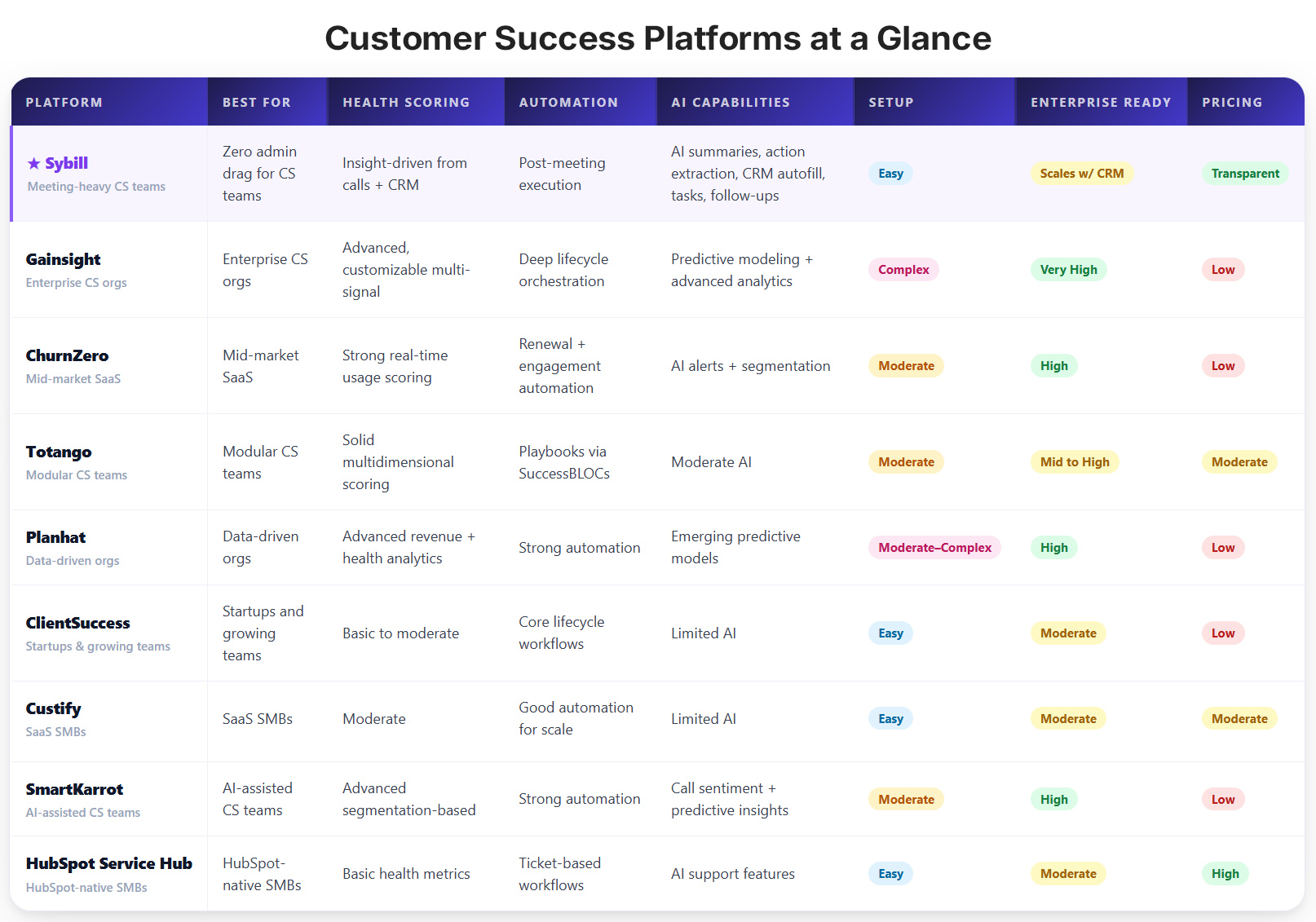
Below is a structured breakdown of the leading CSM platforms, based on real-world impact, automation maturity, AI depth, and operational fit.
Best for: Post-meeting execution that keeps customers moving
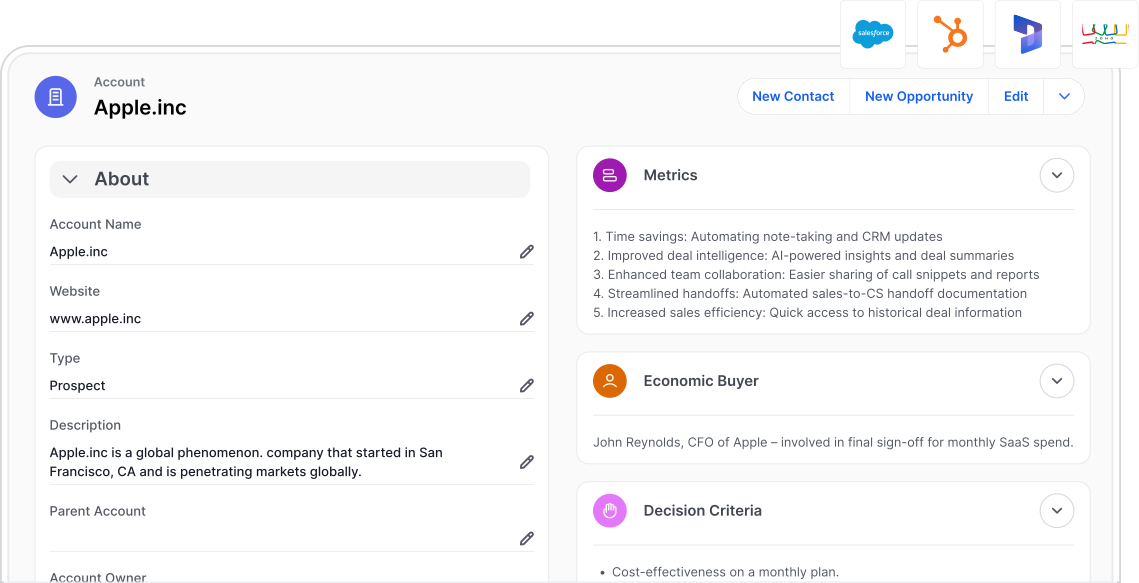
Sybill is not trying to replace your entire CSM stack. It fixes the gap most CSM platforms ignore: execution between conversations.
Most customer success management platforms focus on dashboards and health scores. Sybill focuses on what actually drives renewals: what happens immediately after the call.
What it does well:
Standout strengths:
Limitations:
Ideal team size:
High-touch CS teams with heavy meeting volume across SMB, mid-market, and enterprise accounts.
Learn how to use Sybill effectively as a CS
Best for: Enterprise-scale deployments
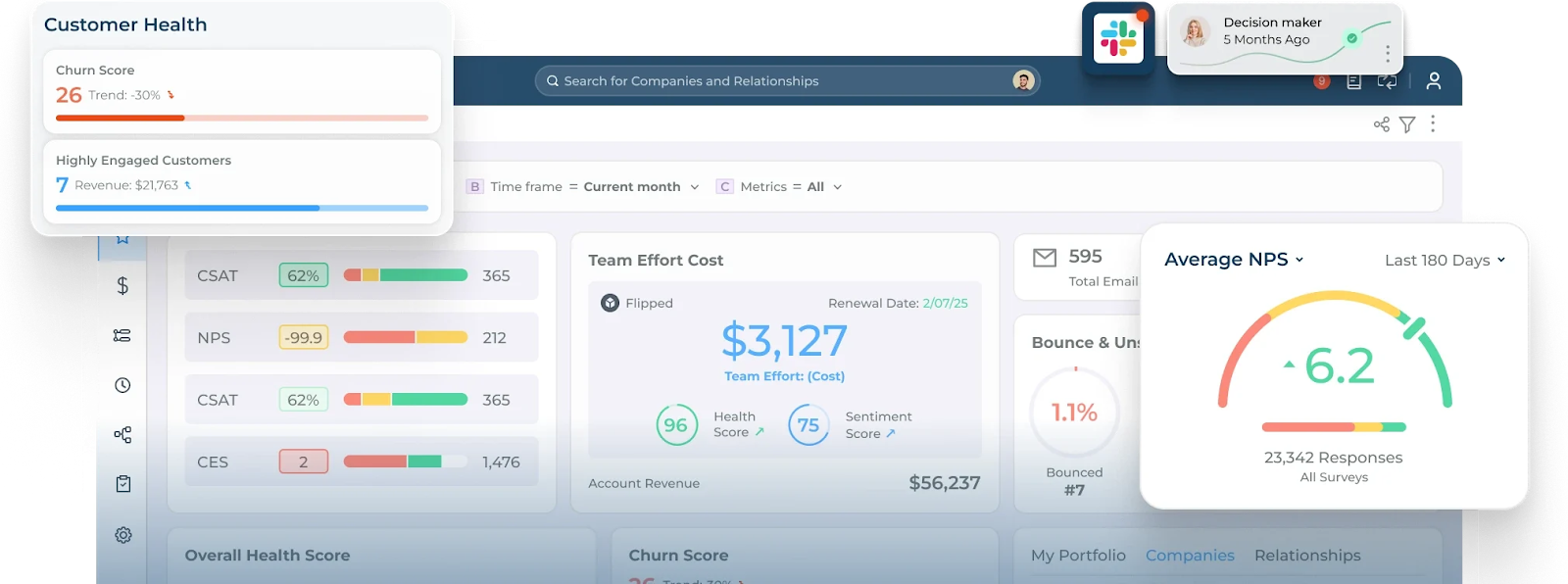
Gainsight is the heavyweight in the room.
Powerful. Expensive. Complex.
What it does well:
Standout strengths:
Limitations:
Ideal team size:
Large enterprise customer success organizations with complex hierarchies and dedicated RevOps support.
Best for: Mid-market SaaS teams
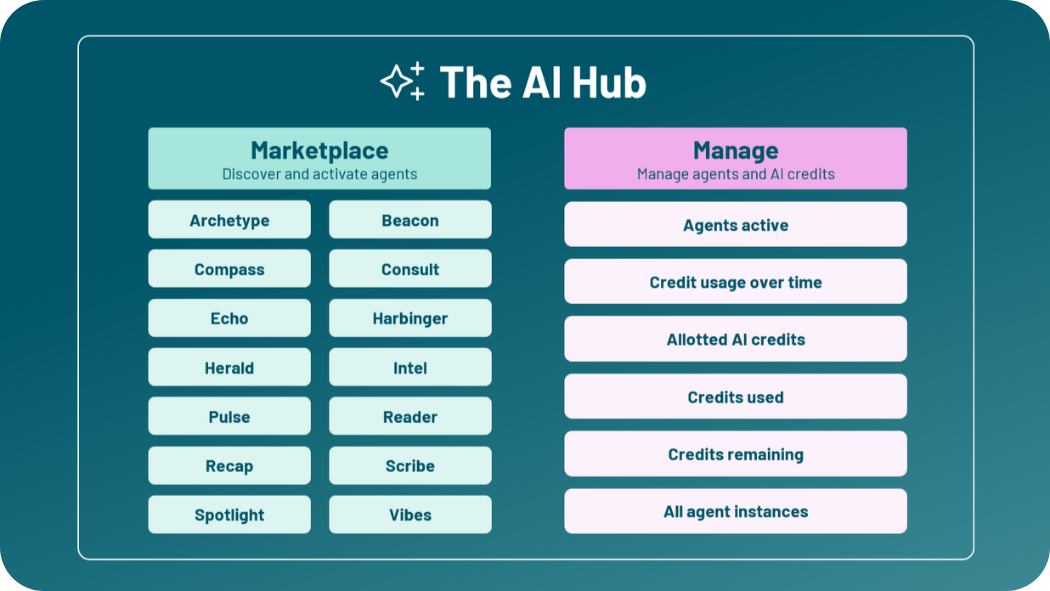
ChurnZero positions itself as automation-first, and that shows.
What it does well:
Standout strengths:
Limitations:
Ideal team size:
Scaling mid-market SaaS teams that want strong automation without enterprise complexity.
Best for: Modular workflows
.png)
Totango’s SuccessBLOC framework gives teams building blocks instead of a monolith.
What it does well:
Standout strengths:
Limitations:
Ideal team size:
Mid-market CS teams that want flexibility without building everything from scratch.
Best for: Data visibility and analytics-heavy teams
.png)
Planhat shines when your data maturity is high.
What it does well:
Standout strengths:
Limitations:
Ideal team size:
Mid to enterprise teams with structured data environments.
Best for: Startups and lean CS teams
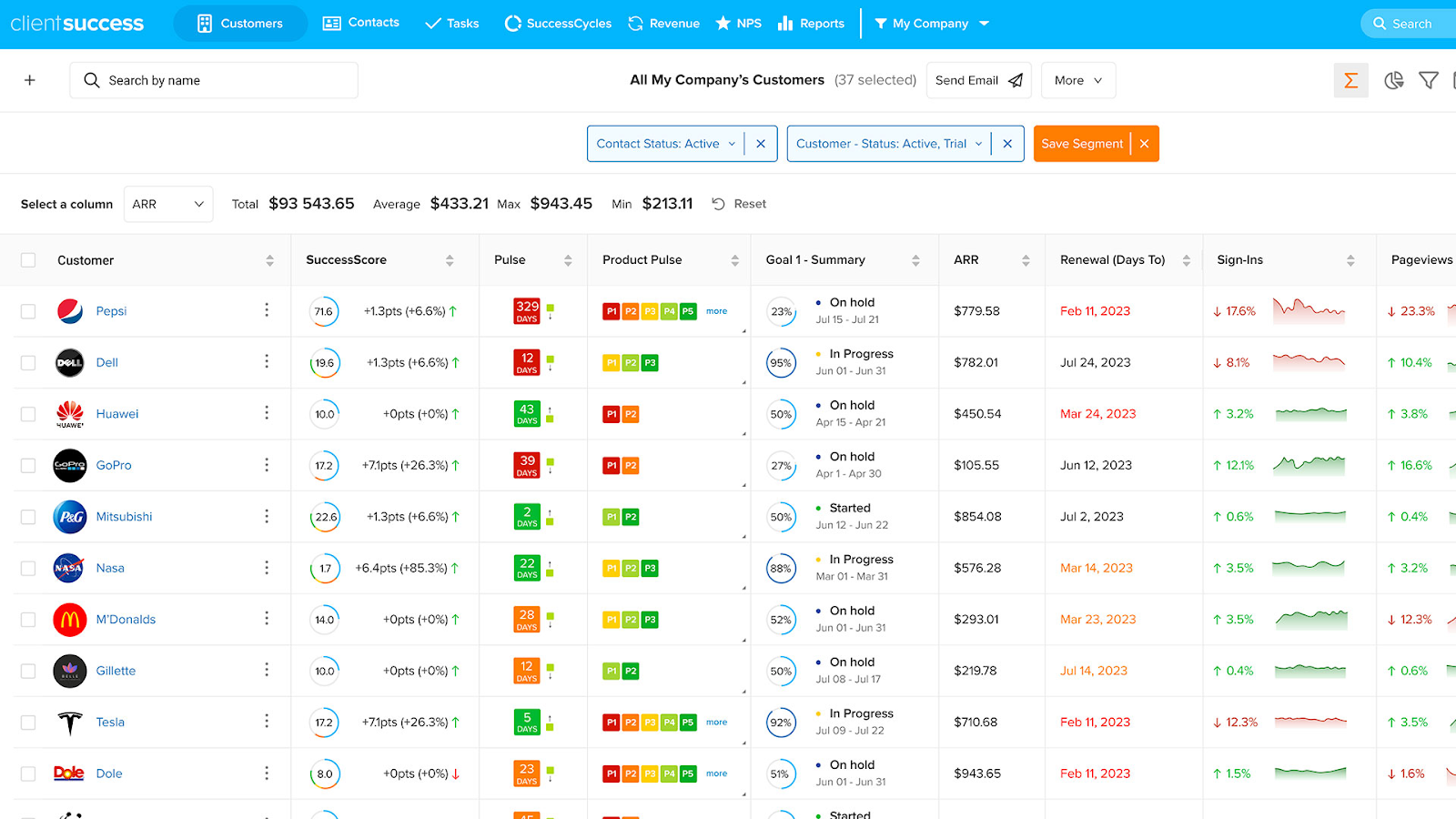
If you are searching for the best CSM platforms for startups and growing businesses 2026, ClientSuccess often appears on shortlists.
What it does well:
Standout strengths:
Limitations:
Ideal team size:
Early-stage startups and lean CS teams under 10 managers.
Best for: Product-led SaaS SMBs
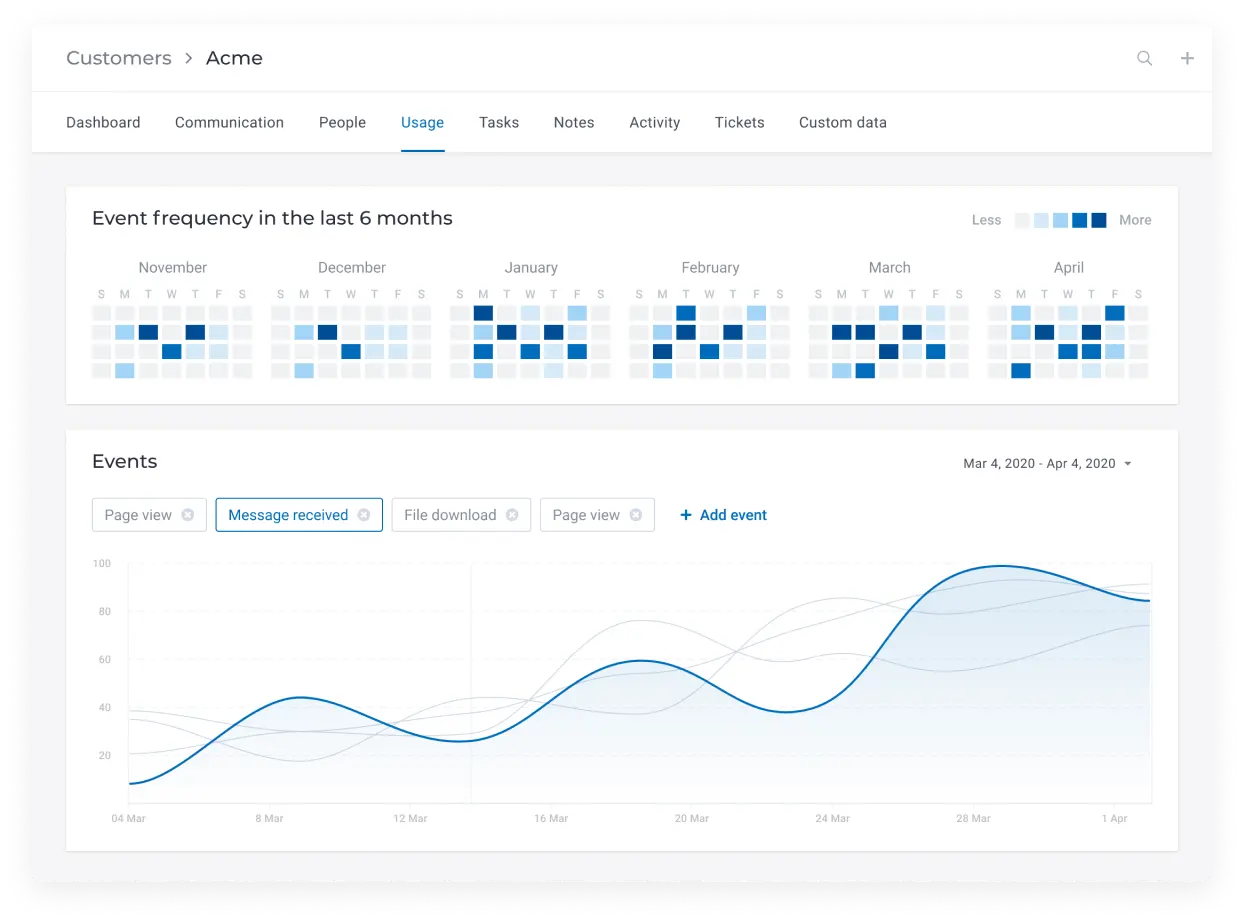
Custify is pragmatic and focused.
What it does well:
Standout strengths:
Limitations:
Ideal team size:
Small to mid-sized SaaS companies with product-led growth models.
Best for: AI-assisted segmentation and playbooks
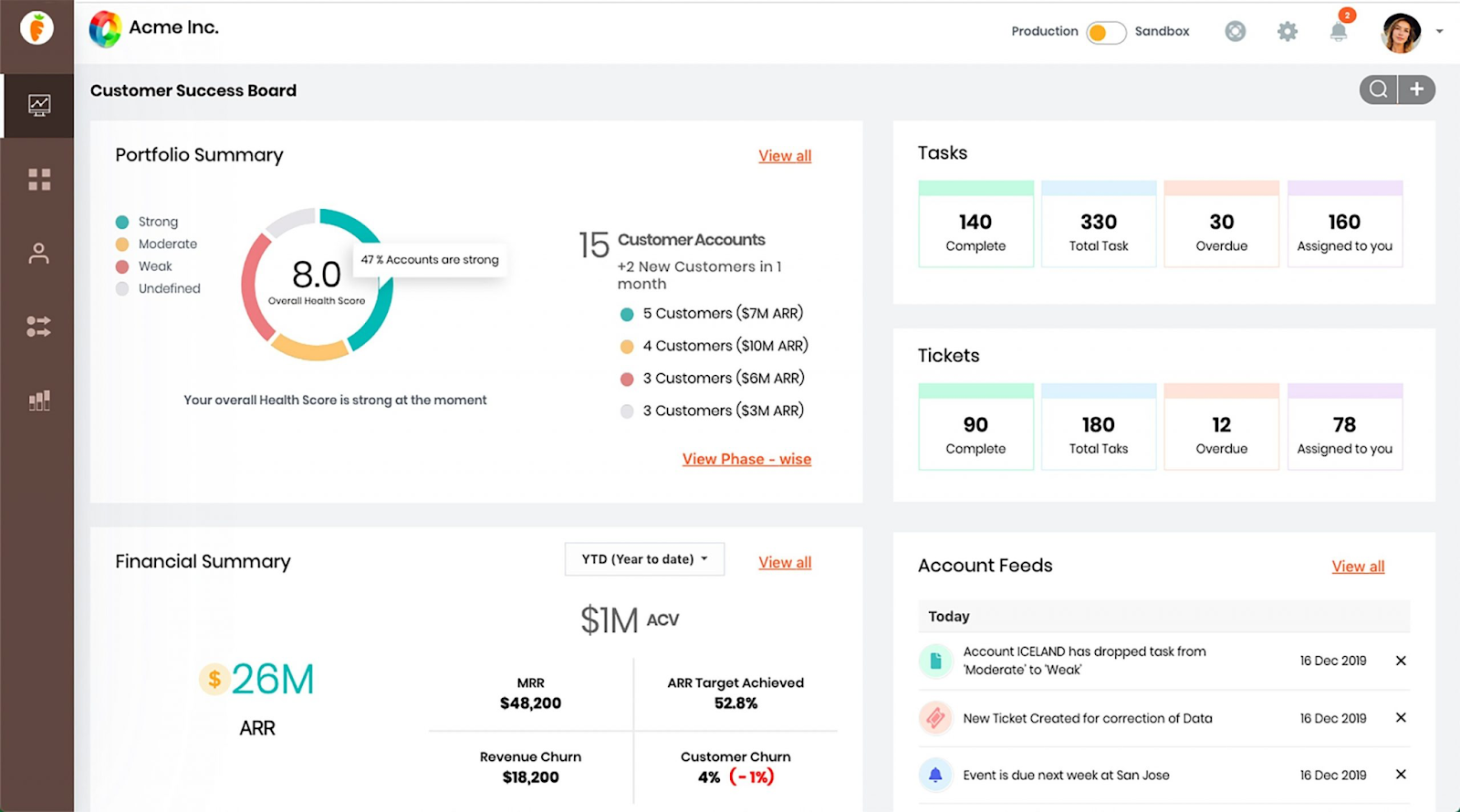
SmartKarrot leans heavily into intelligence-driven workflows.
What it does well:
Standout strengths:
Limitations:
Ideal team size:
Mid-market to enterprise teams that want AI layered into segmentation and risk modeling.
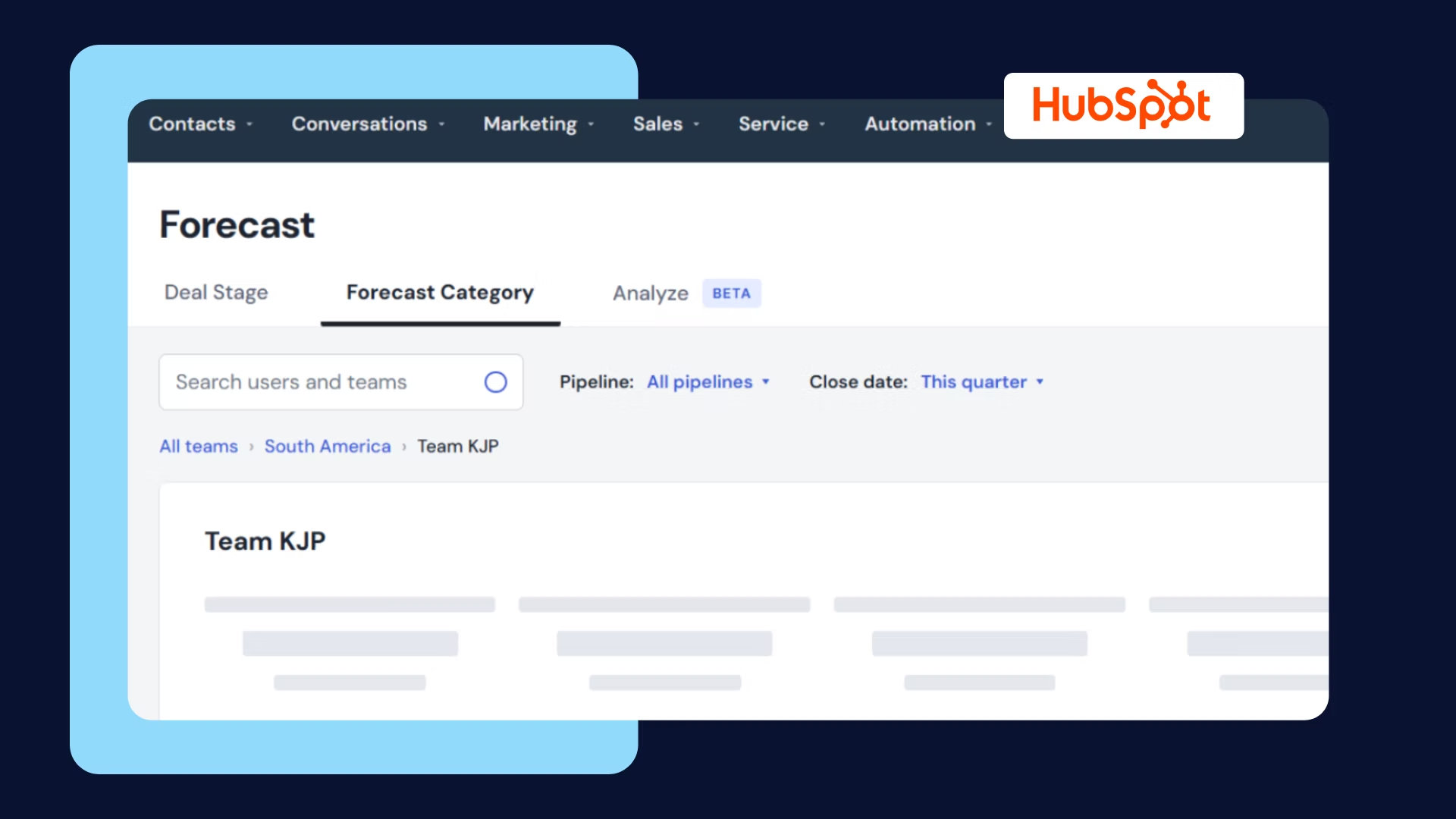
Best for: SMBs already inside the HubSpot ecosystem
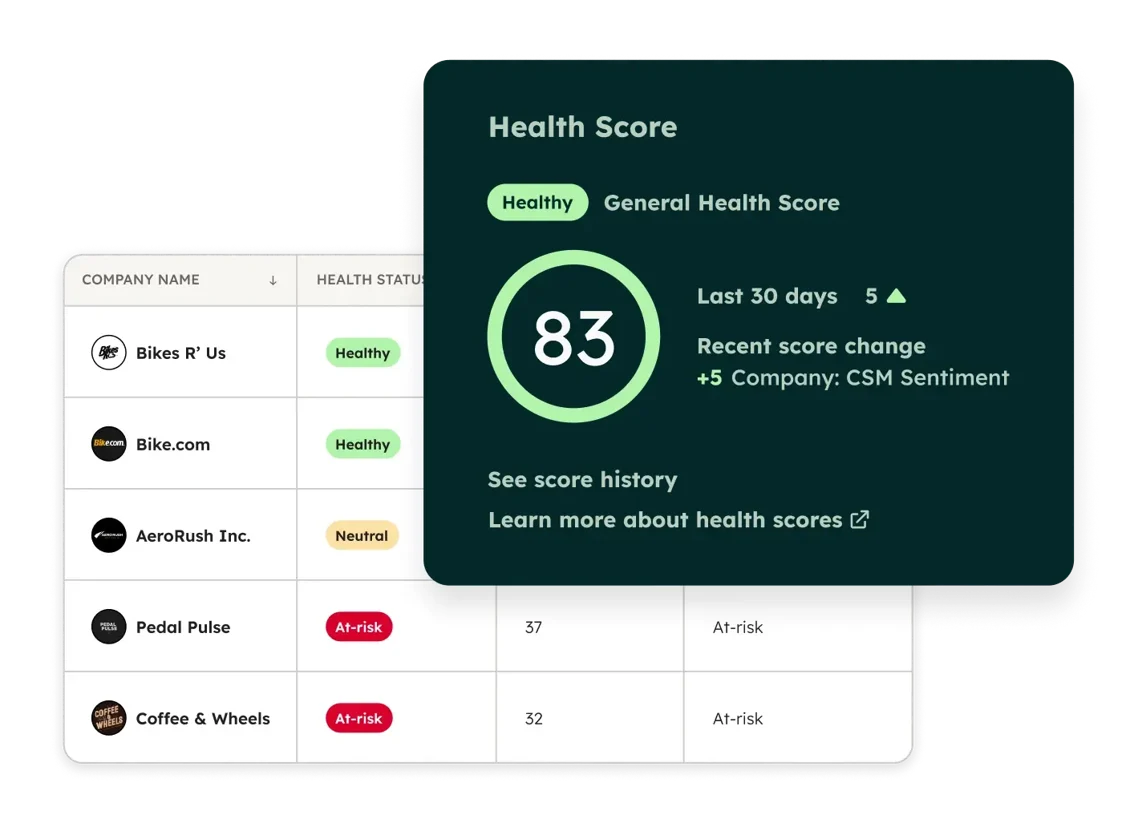
Service Hub works best when your entire stack lives in HubSpot.
What it does well:
Standout strengths:
Limitations:
Ideal team size:
SMBs that want a unified CRM + support + light CS solution.
If you are choosing among the best CSM platforms for 2026, your decision should be based on:
Next, we help you decide which one fits your exact use case.
There is no universal winner.
The best customer success management platform depends on where your friction actually lives. Not your logo size. Not your ARR. Not your tech stack vanity.
TLDR:
Here is the detailed breakdown by use case.
Choose Sybill.
Most CSM platforms optimize dashboards. Sybill optimizes execution.
If your CSMs spend their week in QBRs, renewals, escalations, and expansion calls, your biggest bottleneck is not health scoring. It is follow-through.
Sybill captures the conversation, generates Magic Summary, extracts next steps, assigns owners, drafts follow-ups, and autofills your CRM. It eliminates the gap between “great call” and “nothing moved.”
If renewals stall because action items disappear into inboxes, Sybill is the best customer success platform for that reality.
Choose Gainsight.
You need deep Salesforce integration, advanced multi-signal health scoring, and structured journey orchestration across hundreds or thousands of accounts. Gainsight is powerful and built for scale. It is also complex and admin-heavy.
Choose ChurnZero or Totango.
Both are strong in automation-first environments.
If automation maturity is your priority, these consistently rank high in CSM platforms comparisons.
Choose ClientSuccess or Custify.
These are among the best CSM platforms for startups and growing businesses 2026 because they are lighter, easier to implement, and focused on lifecycle basics without enterprise overhead.
You get structure without operational drag.
Choose Planhat.
If your team thrives on dashboards, cohort analysis, and revenue modeling, Planhat delivers strong analytics depth. It rewards clean data and mature RevOps processes.
Choose HubSpot Service Hub.
If your CRM, marketing, and support already run inside HubSpot, Service Hub keeps everything centralized. It is not the deepest CSM platform, but it reduces stack sprawl and complexity.
The best CSM platform is the one that removes the biggest bottleneck in your retention engine.
Identify your bottleneck. That comes first.
Here is the actionable checklist to avoid overpaying, underutilizing, or overcomplicating your stack.
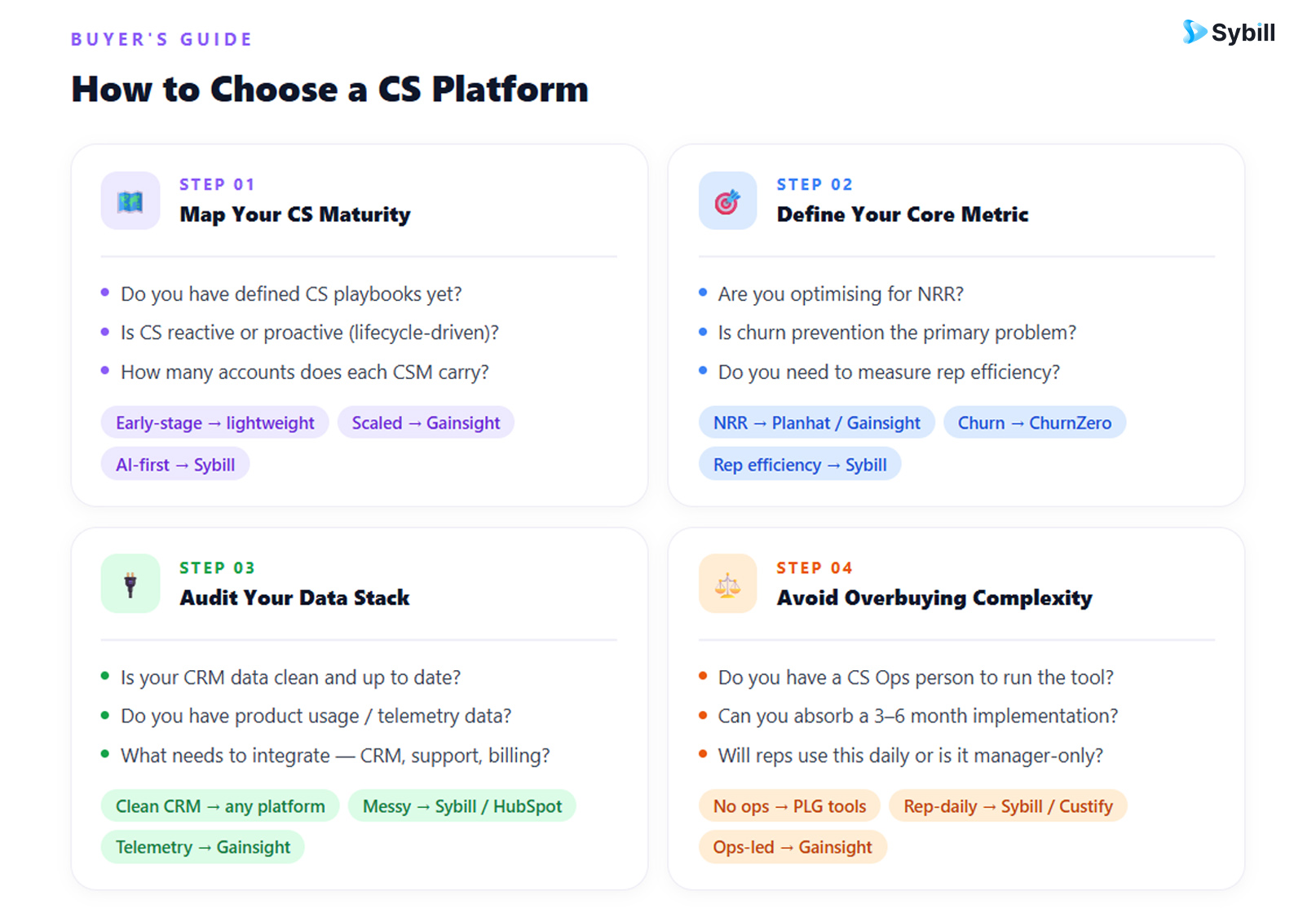
Start with honesty.
Are you reactive or proactive?
Then ask: are you product-led or high-touch?
If you are early-stage and reactive, you may not need deep predictive modeling yet.
If you are scaling and proactive, automation and health scoring become non-negotiable.
Your CSM platform should match your maturity, not the maturity you wish you had.
Every platform claims to “reduce churn.” That is vague.
What exactly are you optimizing for?
If churn reduction is your primary goal, prioritize predictive health scoring and renewal workflows.
If expansion revenue is your north star, you need segmentation, expansion triggers, and cross-sell visibility.
If adoption depth matters most, product analytics integration becomes critical.
Choose the platform that strengthens your core metric, not the one with the longest feature list.
A CSM platform is only as strong as the data it ingests.
Before evaluating vendors, map your existing systems:
Ask:
If your data is fragmented, prioritize platforms that simplify integration and sync automatically.
Complex orchestration tools fail fast in messy environments.
This is where most teams get it wrong.
Enterprise-grade orchestration sounds impressive. It is also expensive and operationally heavy.
Many teams do not need:
If you have five CSMs, you do not need the same stack as a 200-person enterprise CS org.
Buy for where you are.
Scale when your process demands it.
The right CSM platform should feel like operational leverage, not additional overhead.
Customer Success has crossed the line from “post-sales function” to core revenue engine.
Boards track net revenue retention. CFOs model churn impact. Investors scrutinize expansion velocity. Customer Success now operates inside revenue infrastructure.
If your CSM platform is just tracking tasks, you are behind.
Health scores alone do not protect renewals. Dashboards alone do not drive expansion. Visibility without execution creates comfort, not growth.
The best CSM platforms for 2026 are revenue defense systems. They surface risk early. They trigger action automatically. They align CS and Sales around expansion. They connect usage, engagement, and revenue signals into one operating layer.
And when renewals slow down, the friction usually appears in one predictable place: after the meeting.
Action items drift. Follow-ups lag. CRM updates slip. Momentum fades.
If execution between conversations is your bottleneck, address that layer first.
Sybill helps customer success teams turn every call into structured next steps, automated follow-ups, and clean CRM updates in minutes.
No more chasing notes. No more lost action items. No more renewal ambiguity.

Because retention is not won in the dashboard.
It is won in what happens next.
CSM platforms, or customer success management platforms, are software tools designed to help businesses proactively manage customer relationships after the sale. They track product usage, monitor customer health, automate lifecycle playbooks, surface churn risk, and identify expansion opportunities.
Unlike support tools, CSM platforms focus on retention, adoption, and revenue growth.
The top CRM systems widely used across industries are:
A CRM tracks deals, contacts, and sales pipelines.
A CSM platform manages adoption, health scoring, renewals, and expansion.
CRM supports revenue creation.
CSM platforms protect and grow that revenue.
They serve different purposes and often work best together.
The best customer success platform depends on your operating model.
There is no universal winner. The right platform removes your biggest retention bottleneck.
CSM platforms, or customer success management platforms, are software tools designed to help businesses proactively manage customer relationships after the sale. They track product usage, monitor customer health, automate lifecycle playbooks, surface churn risk, and identify expansion opportunities. Unlike support tools, CSM platforms focus on retention, adoption, and revenue growth.
The top CRM systems widely used across industries are: Salesforce HubSpot CRM Microsoft Dynamics Zoho CRM Pipedrive A CRM tracks deals, contacts, and sales pipelines. A CSM platform manages adoption, health scoring, renewals, and expansion. CRM supports revenue creation. CSM platforms protect and grow that revenue. They serve different purposes and often work best together.
The best customer success platform depends on your operating model. Meeting-heavy CS team that needs execution after calls → Sybill Enterprise with complex hierarchies → Gainsight Mid-market scaling automation → ChurnZero or Totango Startup needing speed → ClientSuccess or Custify Data-heavy organization → Planhat HubSpot-native stack → HubSpot Service Hub There is no universal winner. The right platform removes your biggest retention bottleneck.