Find us at booth #83, join us for a harbor side happy hour, or catch Gorish’s talk.

Sept, 16-18 > Learn more


Tamanna Mishra

March 6, 2026
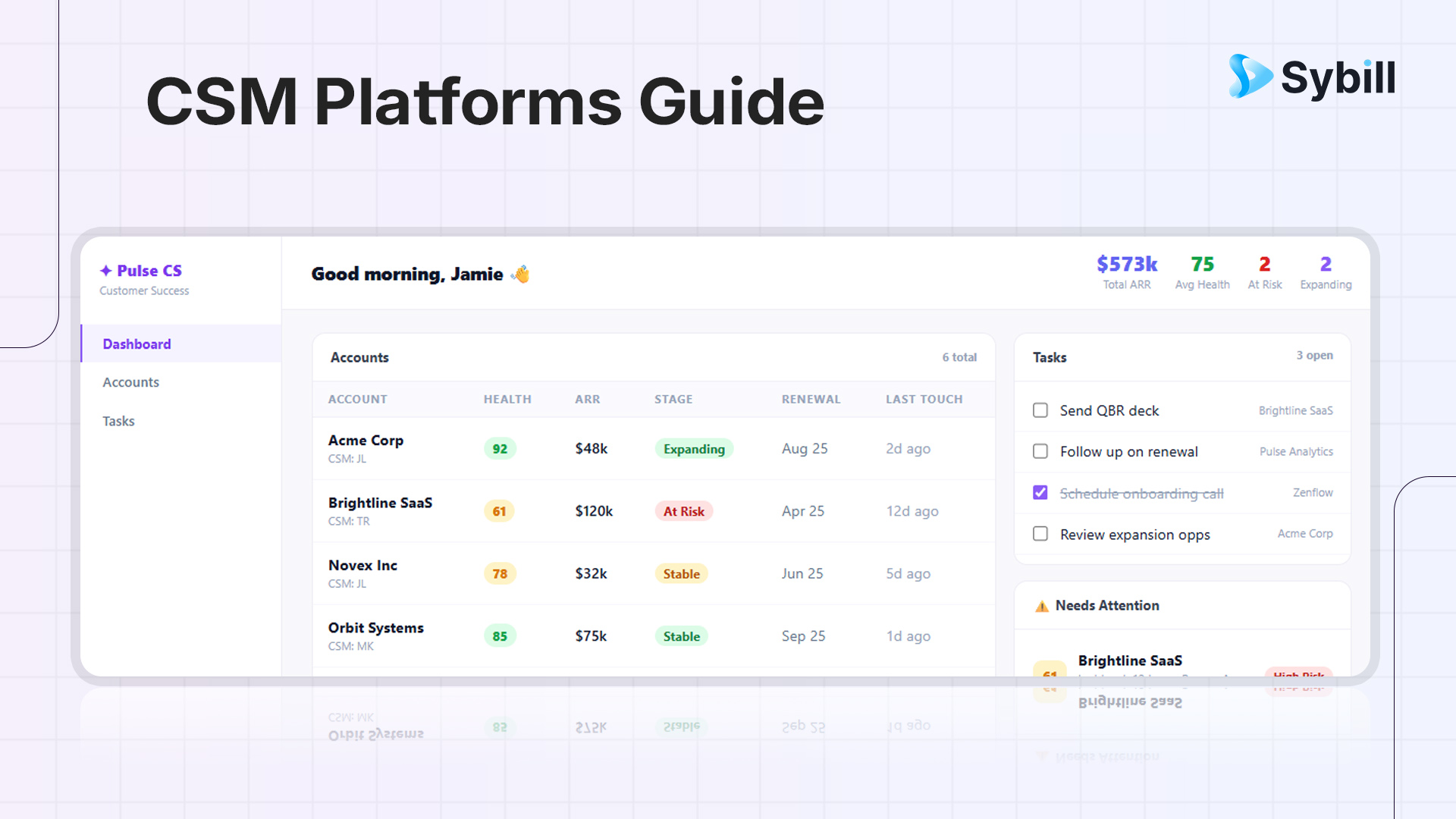
Customer Success used to be a polite follow-up email and a quarterly business review deck.
Now it sits at the center of revenue.
Retention, net revenue retention, expansion, adoption depth, customer lifetime value. All of it lives inside Customer Success. And as growth gets harder and acquisition costs rise, keeping and growing customers becomes the strategic priority.
That shift is exactly why CSM platforms exist.
Also read:
If your Customer Success team is still managing renewals in spreadsheets and chasing action items across inboxes, you are operating without infrastructure.
This guide breaks down:
Let’s start with the fundamentals.
CSM platforms, short for customer success management platforms, are software systems designed to help businesses proactively manage customer relationships after the sale.
They go beyond support. They go beyond CRM. They are built to answer one question:
Are customers realizing value, and are we protecting revenue?
Unlike traditional customer success tools that focus only on tickets or surveys, CSM platforms unify data across product, CRM, support, and communication systems.
The goal is simple: identify churn risk early and surface expansion opportunity before it is obvious.
Customer acquisition costs continue to rise. Growth through new logos is harder. Investors prioritize net revenue retention.
Retention is no longer optional leverage. It is survival math.
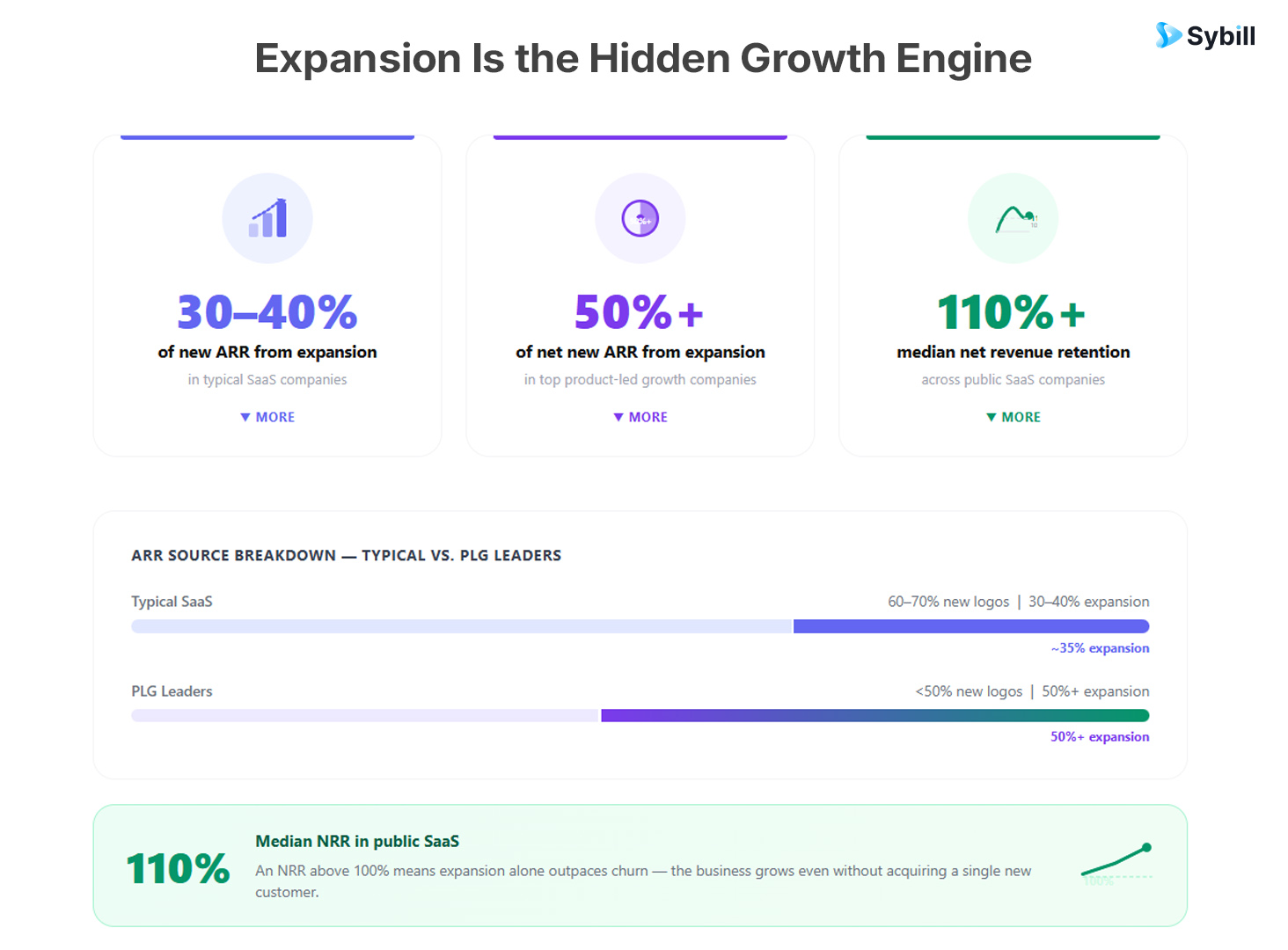
SaaS companies generate 30% to 40% of their new annual recurring revenue from expansion revenue, not new logos. In high-performing product-led companies, expansion can account for over 50% of net new ARR.
Median net revenue retention across public SaaS companies remains above 110%, meaning expansion revenue consistently offsets churn and fuels growth.
To achieve these numbers, CS needs to be proactive. But without structured systems, it becomes reactive:
Customer success management platforms solve this by operationalizing value delivery.
They shift CS from “relationship management” to structured, data-backed revenue defense.
Modern revenue organizations expect:
Manual processes cannot support that expectation.
You need dedicated infrastructure.
When implemented well, CSM platforms unlock measurable operational advantages.
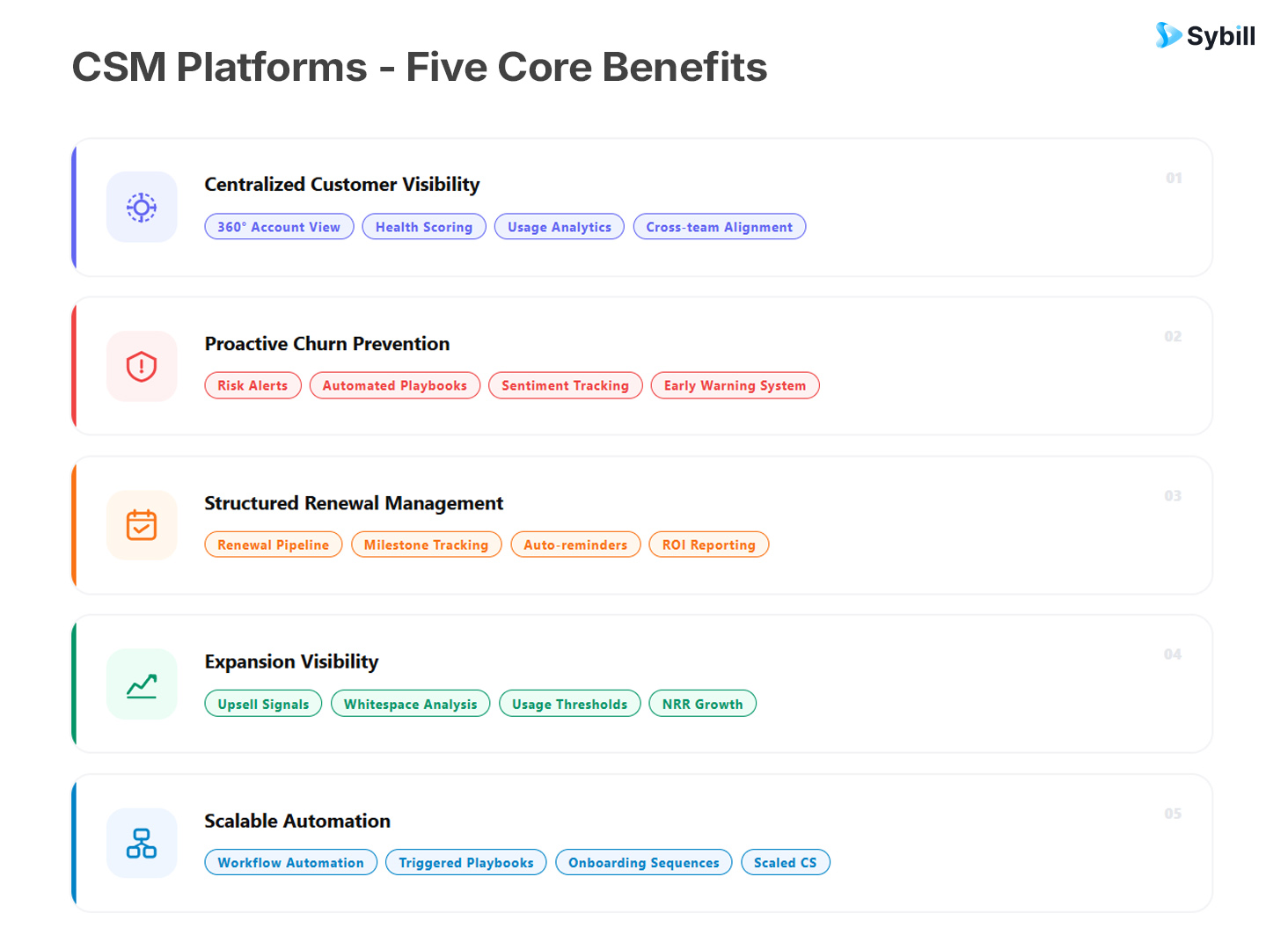
CS teams often juggle:
CSM platforms unify these signals into a single operating view.
A true Customer 360 enables teams to see:
Visibility eliminates guesswork.
One of the most powerful outcomes of customer success tools is early risk detection.
Health scoring models combine multiple signals:
When configured properly, they alert teams before disengagement becomes visible in revenue.
Instead of scrambling during renewal month, teams intervene months earlier.
Renewals are often chaotic.
Without systems:
CSM platforms introduce lifecycle playbooks that:
Predictability improves.
Customer Success is no longer just retention.
Expansion revenue increasingly sits inside CS.
CSM platforms surface:
This transforms CS from cost center to revenue contributor.
As CS teams grow, manual task management breaks.
CSM platforms automate:
Automation reduces operational drag and allows CSMs to focus on strategic conversations.
AI is no longer a feature. It is an expectation.
The newest generation of CSM platforms integrates intelligence at multiple layers.
Rather than static health dashboards, AI models analyze patterns across accounts to predict churn probability.
This enables:
Call transcripts and email analysis can now surface emotional signals.
Negative sentiment, hesitation, budget friction, stakeholder uncertainty. AI helps quantify what previously lived in intuition.
Customer meetings generate enormous context.
AI can now:
This reduces administrative overhead while improving clarity.
Some customer success tools now suggest:
Instead of reacting to dashboards, teams act on structured guidance.
Technology alone does not fix operational friction.
Before implementing CSM platforms, it helps to understand the most common CS roadblocks.
Customer signals live in too many places.
Without integration, risk visibility remains partial.
CSMs often spend large portions of their time:
This reduces strategic bandwidth.
Administrative fatigue slows execution.
Different CSMs manage renewals differently.
Some escalate early. Some wait too long. Some forget internal alignment.
Without structured playbooks, renewal risk increases.
Expansion often requires coordination between CS and Sales.
Without shared visibility:
Alignment friction reduces growth.
This is the subtle one.
A strong QBR happens. A productive renewal call ends. Clear next steps are discussed.
Then:
Momentum quietly disappears.
Many customer success management platforms focus heavily on dashboards and reporting.
Fewer address what happens between conversations.
Sybill does not attempt to replace your entire CSM stack.
It addresses a specific operational gap inside modern customer success workflows: post-meeting execution.
Sybill captures customer calls and automatically:
This reduces administrative overhead and ensures that conversations translate into structured action.
For teams running high-touch accounts with heavy meeting volume, this layer becomes critical.
Dashboards show you risk.
Execution moves the account forward. And Sybill focuses on that exact execution layer.

Before adopting any customer success tools, ask:
The right CSM platform aligns with your bottleneck.
Some teams require advanced enterprise orchestration.
Some require cleaner segmentation.
Some require better meeting follow-through.
Technology should remove friction, not introduce it.
Customer Success is evolving toward:
In 2026 and beyond, CSM platforms will function less like dashboards and more like operating systems for retention.
They will unify:
Customer Success is no longer a reactive function. It is infrastructure.
CSM platforms exist because Customer Success became strategic.
They centralize visibility. They reduce churn. They surface expansion. They automate lifecycle workflows. They amplify CSM productivity.
AI accelerates these capabilities.
But infrastructure alone is not enough.
If the biggest slowdown in your retention engine occurs after meetings, where action items stall and CRM updates lag, address that layer deliberately.
Revenue is protected through visibility and execution.
CSM platforms provide the structure.
Execution sustains the growth.
Customer Success is no longer support.
It is revenue discipline.
CSM platforms, or customer success management platforms, are software systems that help businesses proactively manage customer relationships after the sale. They centralize customer data, track health scores, monitor product usage, automate renewal workflows, and surface expansion opportunities.
Their core purpose is simple: protect and grow revenue by ensuring customers realize value consistently.
For SaaS companies, retention drives profitability. Acquiring customers is expensive. Losing them erodes growth.
CSM platforms help SaaS teams:
Without structured customer success tools, retention becomes reactive and unpredictable.
A CRM focuses on managing sales pipelines, contacts, and deal stages.
CSM platforms focus on managing customer value after the deal closes. They track usage, health scoring, lifecycle playbooks, and renewal forecasting.
CRM supports revenue creation.
CSM platforms protect and expand that revenue.
CSM platforms, or customer success management platforms, are software systems that help businesses proactively manage customer relationships after the sale. They centralize customer data, track health scores, monitor product usage, automate renewal workflows, and surface expansion opportunities. Their core purpose is simple: protect and grow revenue by ensuring customers realize value consistently.
For SaaS companies, retention drives profitability. Acquiring customers is expensive. Losing them erodes growth. CSM platforms help SaaS teams: Detect churn risk early Improve product adoption Standardize renewal processes Identify expansion opportunities Align Customer Success and Sales Without structured customer success tools, retention becomes reactive and unpredictable.
A CRM focuses on managing sales pipelines, contacts, and deal stages. CSM platforms focus on managing customer value after the deal closes. They track usage, health scoring, lifecycle playbooks, and renewal forecasting. CRM supports revenue creation. CSM platforms protect and expand that revenue.