Find us at booth #83, join us for a harbor side happy hour, or catch Gorish’s talk.

Sept, 16-18 > Learn more


Tamanna Mishra

February 12, 2026
.avif)
Every AE still learns the same classic moves: mirror your buyer, tell a great story, master objection handling, ask sharp discovery questions. But in 2025, the sales battlefield has shifted.
The winners aren’t the ones who hustle hardest. They’re the ones who walk into every call knowing exactly what their buyer cares about, when to speak, when to pause, and when to push.
That’s where AI changed the game. Tools like ChatGPT gave reps an instant brainstorm partner - a place to practice objection handling, draft follow-up emails, or rework scripts before a big call. But the smartest teams didn’t stop there. They moved beyond “ChatGPT for sales ideas” to AI built for live buyer context.
That’s where Sybill comes in. Its AI sits inside your conversations, capturing emotion, tone, and intent in real time. So instead of just applying techniques, you’re adapting them dynamically.
Because in modern sales, it’s not about knowing the playbook. It’s about reading the room - and AI helps you do better.
Every Account Executive knows the workflow by heart - prep, discovery, demo, handle objections, follow up, review, repeat. But what separates the top 10% from everyone else isn’t the number of calls or demos they run. It’s how intelligently they move through each step.
Let’s map it out.
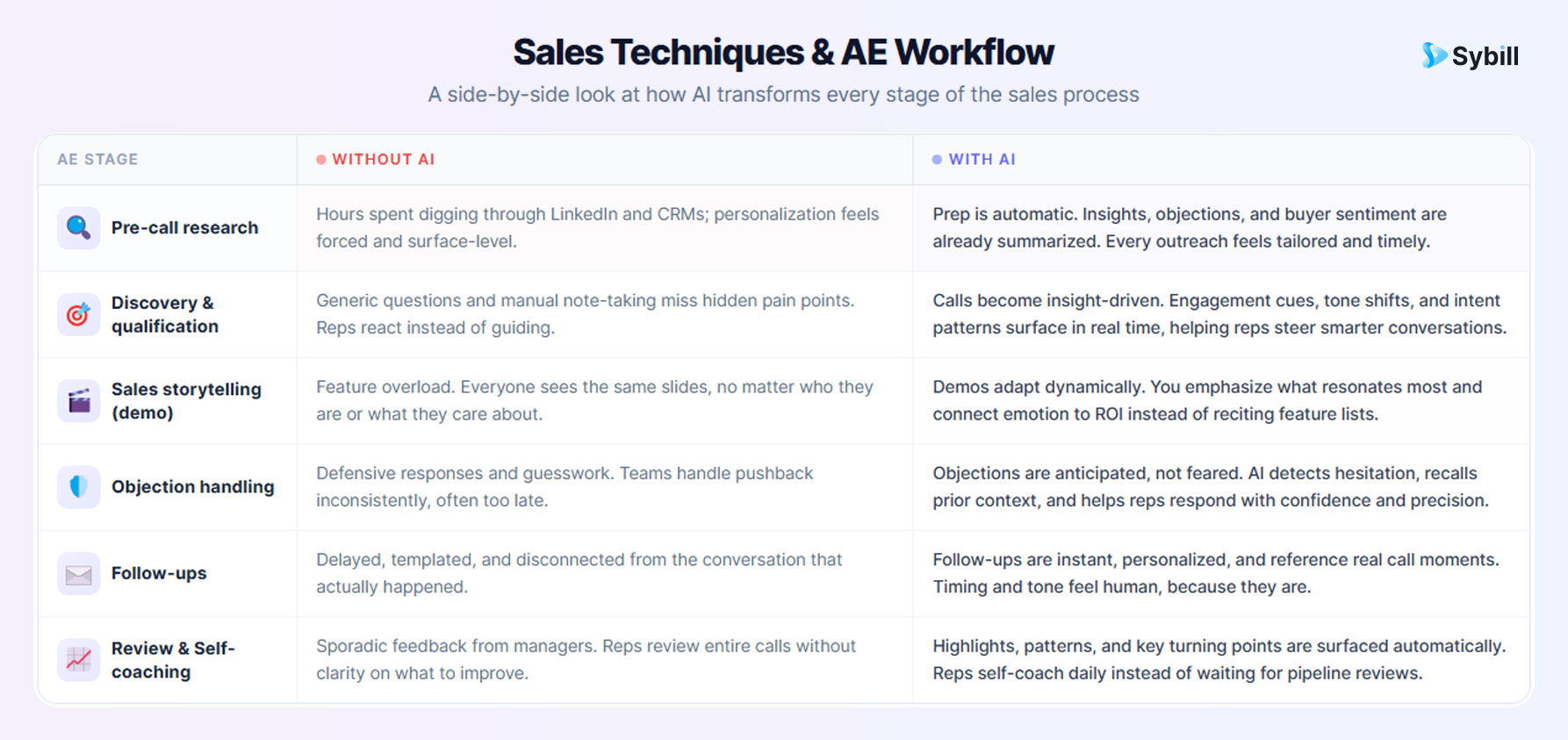
Preparation used to be a badge of honor. The longer you spent on LinkedIn and company blogs, the more “ready” you felt. But time isn’t the differentiator anymore. Relevance is.
The best sales preparation techniques today aren’t about digging deeper. You want to connect faster.
The classic 3x3 Rule still holds: three company insights, three personal insights, three thoughtful questions. The difference is that in 2025, AI gets you there before your coffee cools.
.avif)
Without AI, Reps easily lose 30 minutes to a black hole of Google searches, profile scrolls, and disconnected CRM notes. Maybe they even ask ChatGPT for background summaries. The result - scattered insights, inconsistent personalization, and a pre-call plan that looks polished but lacks precision.
With ChatGPT, you can get decent head starts - summary of the company’s mission, public pain points, maybe a few opener ideas. But ChatGPT doesn’t know what’s been said in your own pipeline. It’s smart but it’s definitely not situational.
Sybill’s pre-call brief now pulls from previous meetings, sentiment signals, and deal data, surfacing the blockers, the believers, and the ones still on the fence. You walk in already knowing who hesitated last time, what competitors were mentioned, and what next steps need a nudge.
No tabs. No guesswork. No context switching. Just insight that feels instinctive.
Discovery in 2025 about asking the right questions, at the right moments. The best AEs know when to stay silent, when to probe, and when to mirror emotion instead of words. The rule still stands: listen 80%, talk 20%. But now, AI helps you hear what others can’t.
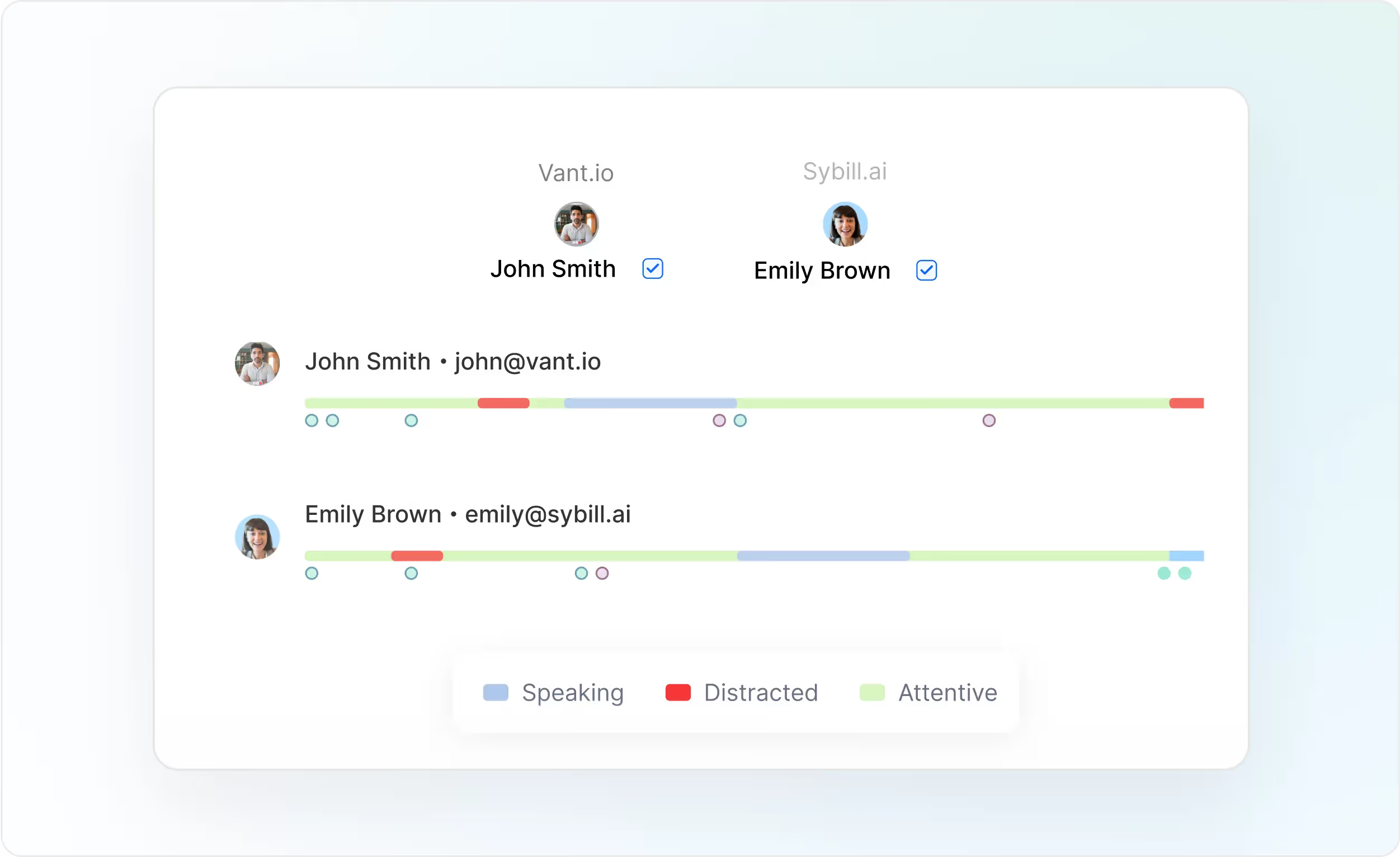
Without AI, traditional discovery depends on note-taking and memory. Reps juggle frameworks like SPICED or MEDDIC while trying to stay conversational. It’s a balancing act, capturing every detail while building rapport. In reality, that means missed cues, half-heard pain points, and forgotten follow-ups. When the buyer leans back and says, “Let me think about it,” most reps don’t realize that hesitation was the deal slipping away in real time.
Sure, you can use ChatGPT before the call to brainstorm better discovery questions or mid-meeting to reframe your deck on the fly. It’s useful as a thought partner, but it can’t tell you what just happened when your buyer went quiet or when interest spiked. There’s no live emotional radar.
AI now listens beyond words. It tracks tone, engagement, and sentiment shifts, showing you which questions lit up interest and which ones created resistance. It recalls insights from past conversations (You can simply Ask Sybill “What did the buyer care about most?”) and even organizes them into actionable next steps.
Every “hmm,” pause, nod, or excitement spike becomes data you can use. Instead of finishing the call hoping you understood, you leave knowing exactly what moved the buyer - and what to do next.
Every great demo is a story, not a slideshow. The best sellers don’t just show what a product does; they connect the pain → proof → product → payoff. That’s the Story Stack - and it’s what turns a standard walkthrough into an emotional close.
Without AI, most demos still sound like product tours. Reps walk through every feature, regardless of who’s in the room. The CFO hears technical jargon. The user sees irrelevant dashboards. The prospect feels like they’re sitting through a webinar instead of a solution. The result is demo fatigue. Everyone smiles politely, but nobody’s buying in.
Reps are starting to use ChatGPT for demo prep. You can ask it for metaphors, stories, or industry analogies to make your pitch more relatable. Make it your creative co-pilot.
AI brings data into the art. It shows you which slides, sound bites, or proof points sparked attention, nods, smiles and more across stakeholders. It identifies patterns - maybe product integrations excite IT, while automation wins over Ops. It even detects emotional peaks during your presentation, revealing what moments built conviction.
.avif)
You know which narrative arcs win hearts, which metrics win wallets, and how to tell the same story differently to each buyer.
Objection handling is where even seasoned reps can stumble, not because they lack skill, but because they lack context. Every objection sounds familiar: “It’s too expensive.” “We’re happy with our current solution.” “We need more time.” Yet every objection hides something deeper. Uncertainty, risk aversion, or a missing piece of perceived value.
The best sellers don’t bulldoze over objections. They use the timeless Feel, Felt, Found technique: “I understand how you feel. Others felt the same way. They found that…” But in 2025, this empathy loop comes with an AI upgrade, one that turns “I understand” from a polite phrase into a data-backed insight.
Without AI, most reps rely on instinct. When someone pushes back on price, they pivot to discounts or over-explain ROI. When a buyer says they’re happy with their current vendor, the rep starts feature-dumping. Each response feels defensive. Because it is. Objections handled by gut often sound rehearsed, inconsistent, or out of sync with what the buyer actually meant.
Reps are now starting to use ChatGPT as a virtual sparring partner. They feed it tough objections and role-play conversations before big calls. ChatGPT helps refine tone, inject empathy, and even rephrase rebuttals in more natural language. It’s like batting practice before the real game.
AI built for sales conversations changes everything. It listens between the lines. When a buyer says “We’re still evaluating,” it hears hesitation layered with concern about implementation risk. When they say “It’s too expensive,” it connects the dots back to an earlier discussion about budget cycles or missing stakeholder buy-in.
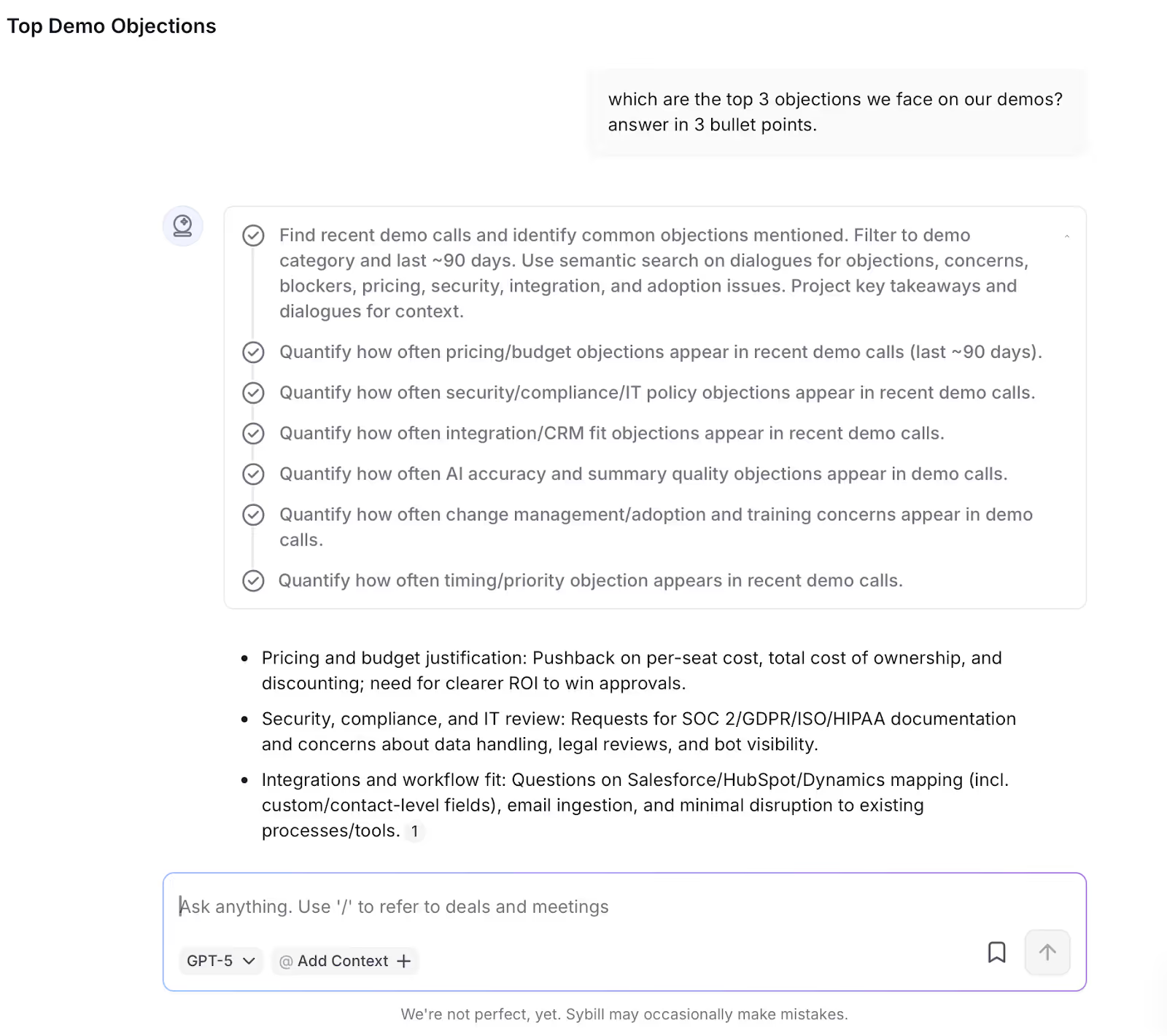
Ask Sybill to identify those objections - even the ones that never make it into your CRM notes - and surface them with clarity. It recalls what was said in previous meetings (“Your CTO mentioned integration risks last week”) so you can respond with precision. And after the call, it helps craft follow-ups that reference those exact concerns, with empathy baked into every sentence.
Now, instead of reacting defensively, you’re addressing the root cause. You’re not just saying, “I understand how you feel.” You’re showing it. With data, context, and confidence.
Follow-ups are where deals either gain momentum or quietly die. Yet, most reps treat them like an afterthought. A polite “just checking in” that lands in a crowded inbox. But the best sellers know that every touchpoint either builds trust or erodes it.
The greats follow a simple rhythm - the 3R Rule: Reference, Reassure, Recommend. Reference a real call moment (“You mentioned integration challenges…”), reassure the buyer of value (“That’s exactly why our customers love the API flexibility…”), and recommend a next step (“Let’s align your IT lead on the call next week.”). It’s a small formula, but in a noisy world, that kind of context cuts through.
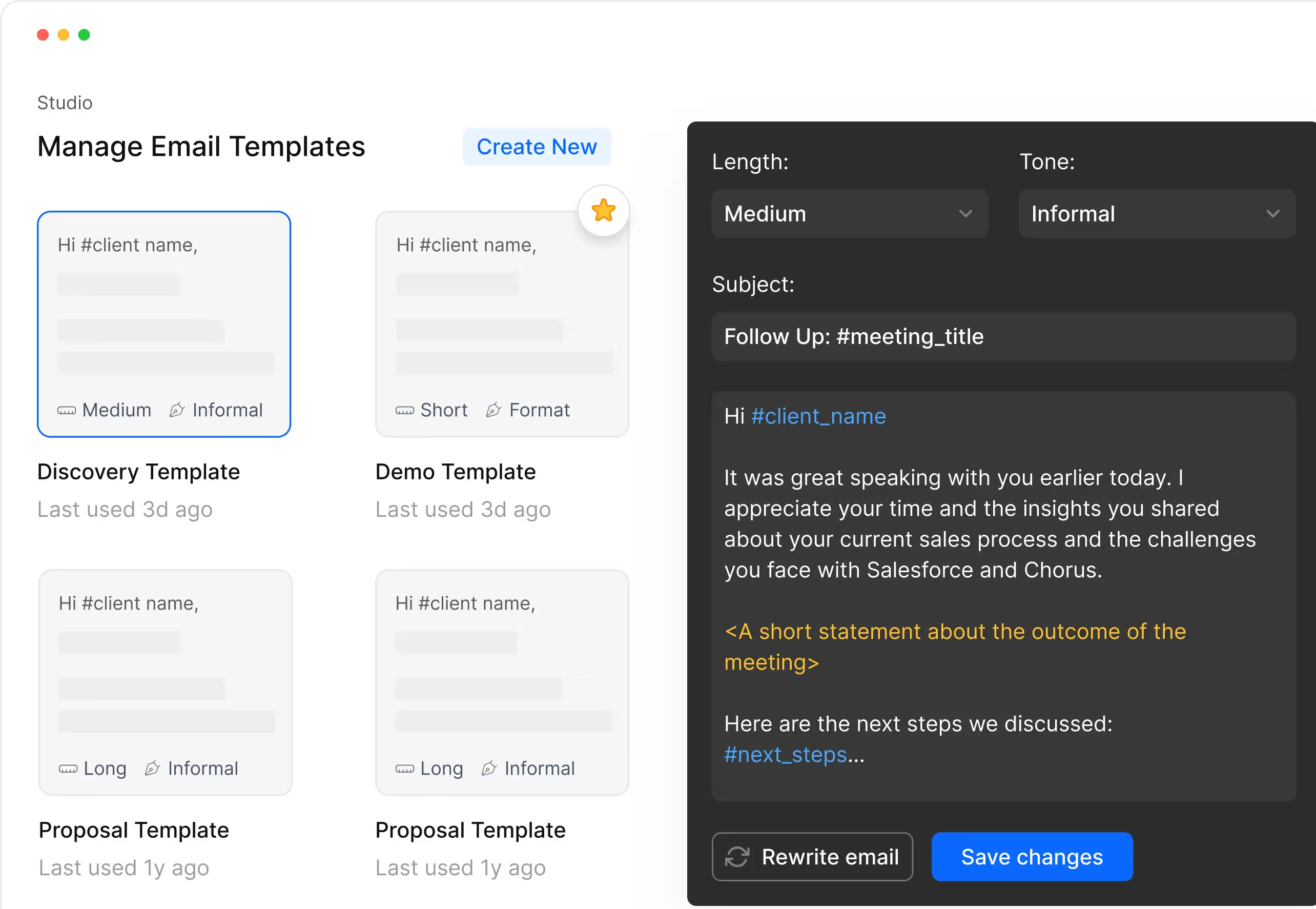
Without AI, reps try to piece together follow-ups from half-finished notes and fuzzy memories. Important details slip. The tone feels robotic. Buyers sense it immediately - they feel like they’re in a sequence, not a conversation. And in enterprise sales, feeling unheard is how trust dies.
Many sellers now turn to ChatGPT for help. It’s great at writing smoother, more natural emails - friendly, polished, even empathetic. But unless you copy-paste your entire transcript, it has no idea what actually happened on the call. The result is sometimes messages that sound good but lack the heartbeat of the real conversation.
Now, with AI tools like Sybill that live inside your workflow, that gap disappears. Every email, reminder, and next step flows directly from the meeting itself. Follow-ups reference specific buyer concerns automatically, match your tone, and highlight the next best move based on where the deal stands. Even tasks - “Send the ROI deck,” “Loop in legal,” “Confirm budget timeline” - are captured and queued. Often, even executed.
Click here to learn more about AI tasks and see how that works.
Coaching used to mean waiting for your manager to tell you what went wrong. Now, the best sellers don’t wait. They self-coach daily.
The classic coaching advice still applies: “Watch your own highlight reel.” Review what worked, what didn’t, and what you’d do differently. But AI now curates that highlight reel for you. It surfaces the moments that changed your deal’s trajectory - good or bad - so you can skip straight to insight instead of replaying an hour of conversation.
Without AI, self-coaching is painfully manual. Reps rely on manager feedback that’s often delayed, inconsistent, or focused on anecdotes instead of data. Reviewing your own calls feels like guesswork. You spend an hour listening to your own voice, wondering where exactly things went off the rails. Most give up halfway through.
ChatGPT can help a little, summarizing transcripts or even pointing out repeated filler words and talk ratios if you feed it enough text. It can flag language, but not behavior. It can summarize, but not diagnose.
With AI designed for deal intelligence, coaching becomes automatic. Every call is analyzed for pacing, engagement, sentiment, and talk balance. You see where the buyer disengaged, when enthusiasm spiked, and how your delivery compared to top performers. Red and green flags across your deal pipeline tell you which conversations need attention before it’s too late.
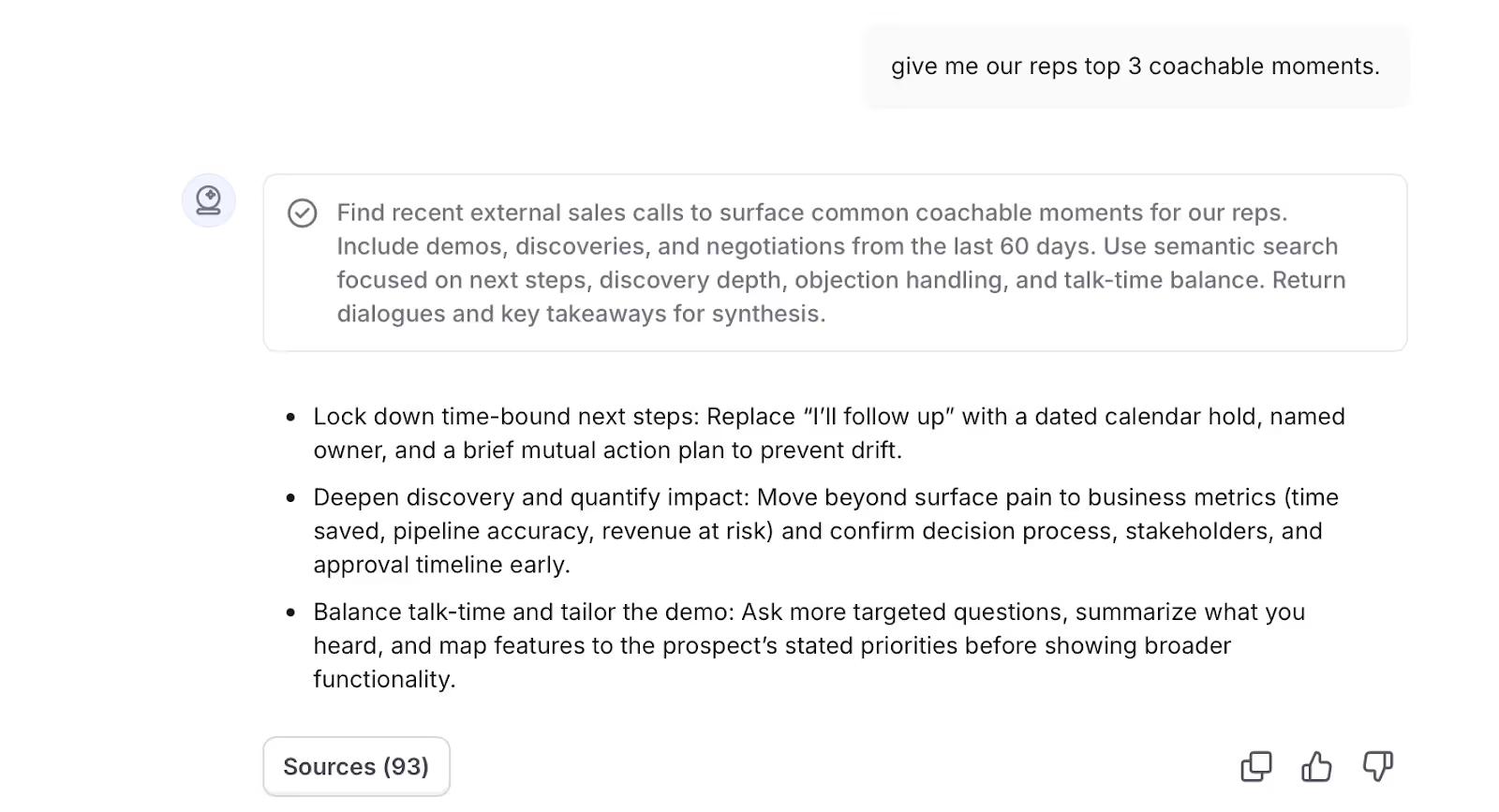
You’re no longer dependent on one-off manager reviews or hunches. Supersellers simply Ask Sybill to give them their most coachable moments. What they get is feedback that is constant, data-driven, and surprisingly personal.
The best sales techniques are evolving. Empathy, storytelling, and objection handling will always define great sellers. What’s changing is how those techniques are powered.
AI tools like ChatGPT and Sybill amplify reps’ natural intuition with precision, memory, and personalization.
Try Sybill free - the AI for sales platform that turns sales techniques into sales momentum.
The best sales techniques in 2025 blend timeless fundamentals with modern intelligence. Top-performing reps lean on empathy, strong storytelling, structured discovery frameworks like SPICED or MEDDIC, and AI-assisted listening that captures emotional cues in real time. Tools like ChatGPT help with brainstorming stories or refining talk tracks, while Sybill brings execution intelligence, analyzing tone, engagement, and buyer behavior to show what actually works across deals.
Two proven approaches still dominate: the Feel–Felt–Found method and the LAER framework - Listen, Acknowledge, Explore, Respond. What’s new is how AI reveals the unseen side of objections. It detects hesitation in tone, surfaces references from earlier calls, and connects each concern to the underlying risk or misconception. With those insights, sellers address what buyers truly mean, not just what they say.
The most effective close remains a mix of assumptive closing and next step confirmation. Great sellers make the next action feel natural and agreed upon. AI ensures those next steps don’t slip through the cracks. Automated task capture, reminders, and deal health tracking keep momentum moving without loose ends and follow-up fatigue.