Find us at booth #83, join us for a harbor side happy hour, or catch Gorish’s talk.

Sept, 16-18 > Learn more

%20(1).avif)
Mamta Tainwala

March 3, 2026
TL;DR
Most B2B SaaS companies treat onboarding like an afterthought and then wonder why customers churn in month three. The deal you just closed is only worth what happens next.
Customers who do not reach a clear first win within two weeks are 3X more likely to disengage before renewal.
The biggest predictor of whether onboarding succeeds is not your CS team's effort. It is the quality of the context your sales team hands over. When AEs document goals, commitments, and stakeholder dynamics poorly, CS teams start every onboarding in a hole.
AI tools like Sybill solve this by capturing every signal from the sales cycle automatically and surfacing it before the first kickoff call. This blog breaks down exactly where onboarding breaks down, what it costs you, and what best-in-class looks like across the full first 90 days.
Picture this: you've just binged a show your friend hyped up for three weeks. The first episode is confusing, slow, and nothing like what was promised. You close the tab. You never go back.
That is exactly what happens to your customers when onboarding misses the mark.
The deal is signed, champagne is theoretically popped, and then the customer meets a completely different team that asks all the same discovery questions the AE already answered. No context. No continuity. Just that sinking feeling of, "Wait, did they even talk to each other?"
For most B2B SaaS companies, the post-sale experience is where revenue quietly disappears. Not because the product fails. Because the handoff does.
This blog covers exactly why customer onboarding is one of the highest-leverage activities in your entire revenue engine, and how to make sure yours is working for you, not against you.
Customer onboarding is the structured process of helping a new customer achieve their first meaningful outcome with your product. It begins the moment a deal closes and typically spans the first 30 to 90 days of the relationship.
What it is not is a product tour, a welcome email, or a single kickoff call. Those are ingredients. Onboarding is the full recipe.
Effective onboarding covers three dimensions:
The third dimension is where most teams fall short, and it is entirely dependent on how well the sales team documented and transferred what was promised.
Before we talk about what great onboarding looks like, let us sit with what bad onboarding costs.
Customers who churn within the first 90 days rarely do so because the product stopped working. They churn because they never achieved the outcome they were sold on. They got lost, frustrated, or simply lost momentum.
From a pure math standpoint, bad onboarding destroys the economics of your go-to-market motion:
Understanding how customer onboarding boosts sales success and loyalty starts with accepting that the post-sale phase is just as much a sales motion as the pipeline stage before it.
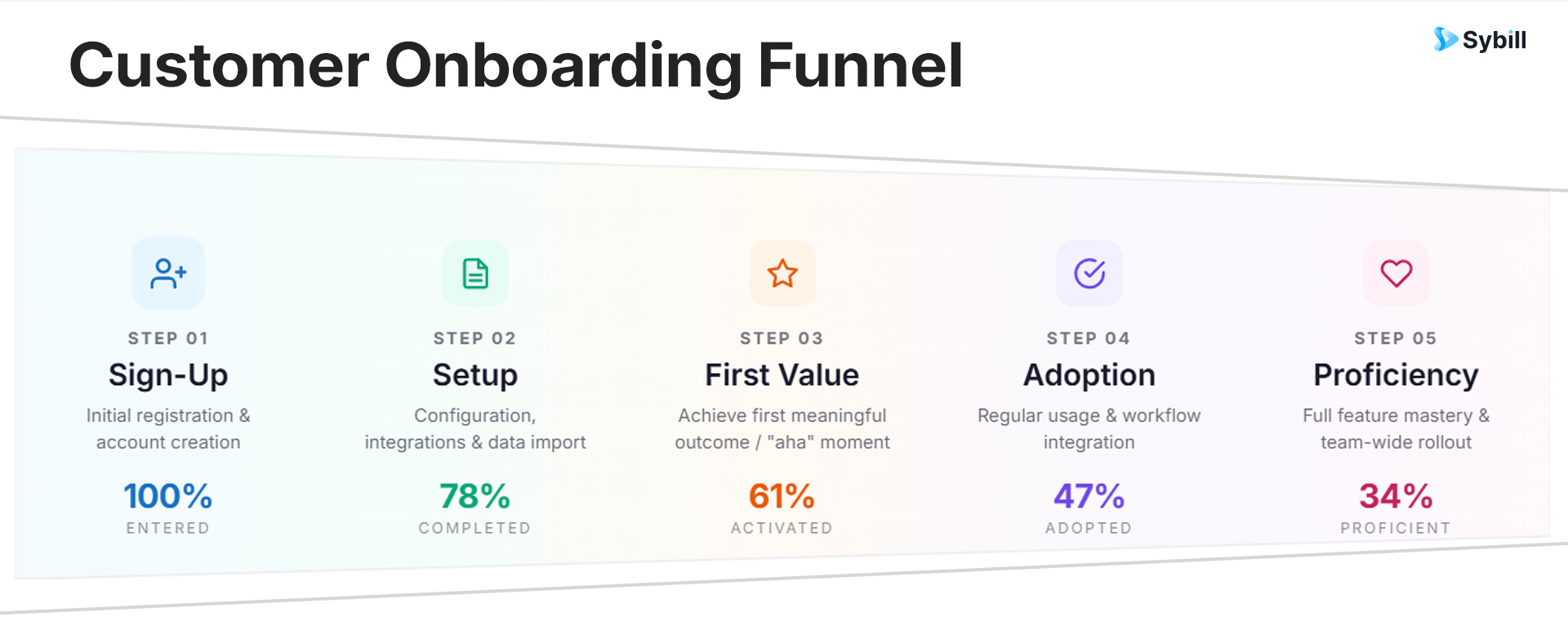
The experience a customer has in their first two weeks with your product shapes their perception for months. A smooth, confident onboarding tells them: "You made the right call. We've got you." A choppy one tells them: "You might want to start exploring alternatives."
This is why your sales-to-customer-success handoff deserves far more attention than most teams give it. The AE knows things about the customer, their priorities, their internal politics, the objections they almost walked away over, that CS desperately needs to deliver a great experience. When that knowledge transfer breaks down, customers feel it immediately.
Time-to-value (TTV) is the single most important metric in the early customer lifecycle. The faster a customer achieves a meaningful win with your product, the more likely they are to stick around, expand usage, and become an advocate.
A well-structured onboarding process maps the customer's specific goals to concrete product actions. It does not show them everything. It shows them the right things in the right order. For more on building this kind of structured journey, SaaS onboarding best practices is a good starting point.
Churn is largely predictable, and most of its early signals are visible during onboarding. A customer who is not completing setup steps, skipping check-in calls, or going quiet in week three is showing you something. Teams that catch these signals early and intervene are the ones with the best retention numbers.
Great onboarding builds in structured checkpoints tied to outcomes. Did they complete integration? Did they hit their first use case? Did they get their team adopted? Each of these is a health signal, and collectively they tell you whether a customer is on track or at risk.
Your best expansion revenue does not come from a clever upsell pitch. It comes from a customer who has already won with your product and is ready to do more. Onboarding is what creates those wins.
When CS teams inherit complete deal context, what success looks like, who the stakeholders are, what use cases were discussed, they can design an onboarding path that naturally leads to those expansion conversations. The customer does not feel sold to. They feel like you understood them from day one.
This connection between onboarding depth and revenue growth is a core reason why companies investing in customer success tools and AI-powered workflows are pulling ahead of competitors.
A customer who felt genuinely supported from day one, who hit their goals early, and who trusts your team is not just a retained account. They are a reference, a case study, a source of referrals.
Turning customers into advocates is not a separate program you bolt onto your customer success motion. It is the natural result of getting onboarding right from the start.
If there is one moment that most directly determines whether onboarding succeeds or fails, it is the handoff from sales to customer success. It is that moment of the relay where the baton is passed.
This is where everything the AE learned about the customer, their goals, their stakeholders, their timeline expectations, their concerns, either gets transferred cleanly to CS or disappears. And in most companies, it disappears.
Why? Because sales reps are built to close, not document. Their notes are often incomplete, scattered across emails and call recordings that CS has no time to dig through. Customers end up repeating themselves, onboarding feels generic, and trust erodes before it has a chance to build.
A great handoff document includes:
The reason this level of documentation is rare is simple: it is a lot to capture manually after a long sales cycle. This is exactly where AI closes the gap.
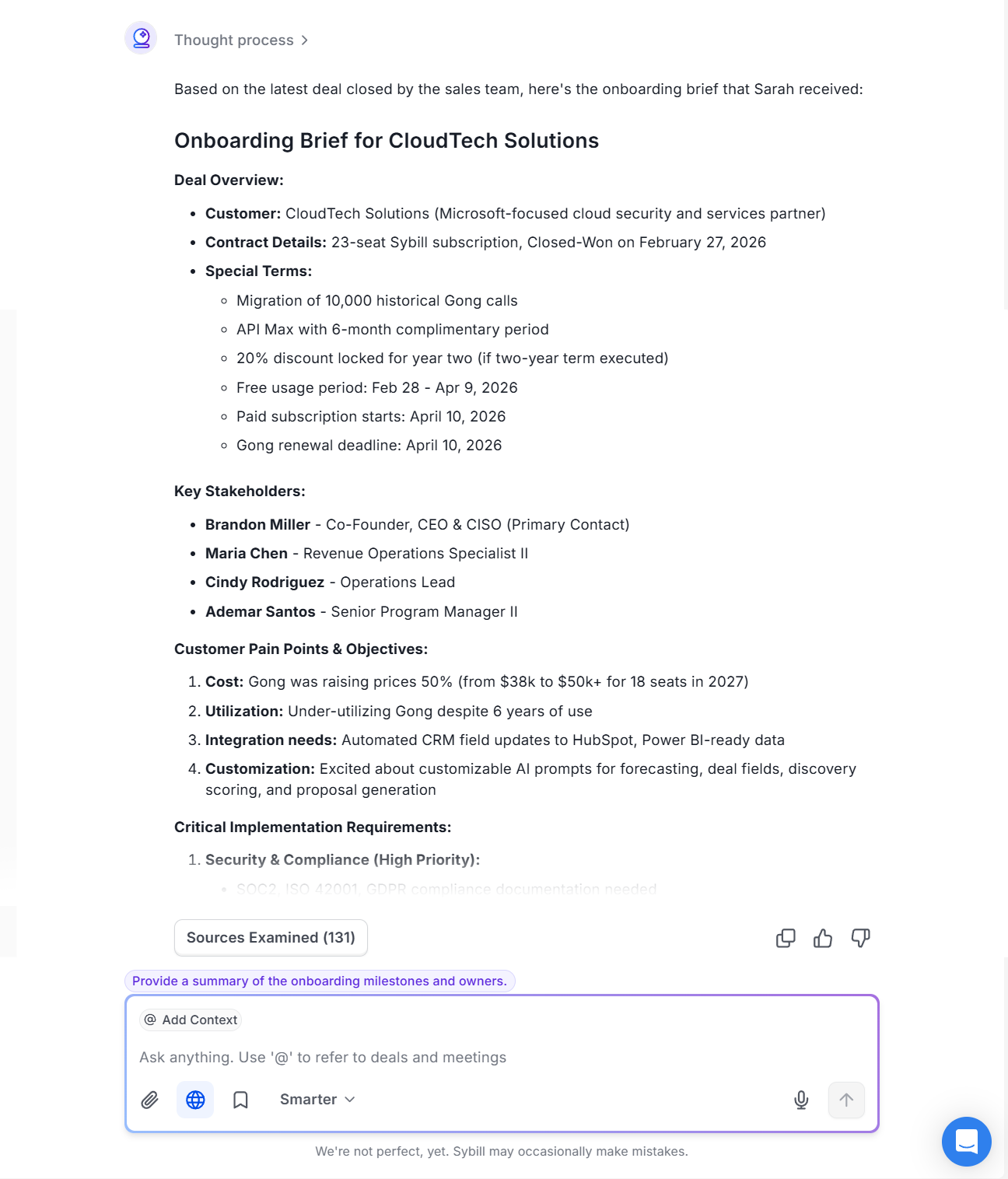
AI does not replace the human side of onboarding. It removes the excuse for skipping the documentation side.
When sales teams use Sybill, every call, email, and interaction throughout the deal lifecycle is automatically captured and synthesized. By the time a deal closes, there is a complete record of what was promised, what the customer cares about, and what risks CS needs to know about. No manual effort required from the AE.
Sybill's Magic Summary does not just transcribe calls. It captures the emotional texture of conversations, moments of hesitation, excitement, and concern, and surfaces them alongside the factual content. That means CS teams walk into onboarding with richer context than a traditional handoff note could ever provide.
Beyond the handoff, AI-powered sales call transcripts give CS teams a searchable record of every conversation from the sales cycle. Instead of asking the AE what the CFO said about their timeline, they can ask Sybill directly.
And when it comes to onboarding calls themselves, AI meeting summarizers automatically generate structured notes, action items, and follow-up emails after every check-in. CS managers spend less time on admin and more time actually guiding customers to success.
Ready to see the difference AI-powered onboarding prep makes? Get started for free with Sybill and give your CS team the context they need from day one.
The best onboarding programs follow a structured journey across the first 90 days, with clear milestones at each stage.
Week 1: First value delivery. The goal is a single, meaningful win. Not full product adoption, just evidence that the product works for this customer's specific use case. This win builds momentum and resets any early anxiety about the purchase decision.
Weeks 2 to 4: Core adoption. Expand usage to the primary workflow the customer purchased for. Introduce the relevant stakeholders to the platform. Confirm integration setup is complete and the customer's team is actively using the product.
Month 2: Depth and optimization. Now that the basics are running, go deeper. Review usage data with the customer, identify any gaps in adoption, and proactively address concerns before they become churn signals. This is also when expansion conversations start to feel natural rather than pushy.
Month 3: ROI validation. Run a success review tied directly to the goals set during the sales process. Show the customer measurable impact. This meeting has three outcomes: confirm the value delivered, surface expansion opportunities, and ask for a reference or case study while the customer is at peak satisfaction.
Understanding the best sales strategy for SaaS means recognizing that this 90-day journey is not a CS responsibility alone. Sales, CS, and product all have a role in ensuring customers cross the finish line.
You cannot improve what you are not measuring. Here are the core metrics that connect onboarding quality to sales outcomes:
Each of these tells a story. Together, they tell you whether your onboarding is driving revenue or costing you it. Tools like AI meeting recorders and CRM note-taking best practices can help make data capture consistent enough that these metrics are actually reliable.
And because call summaries elevate sales teams in ways that go far beyond note-taking, the data you generate during both the sales cycle and onboarding becomes a flywheel. Better context in means better outcomes out.
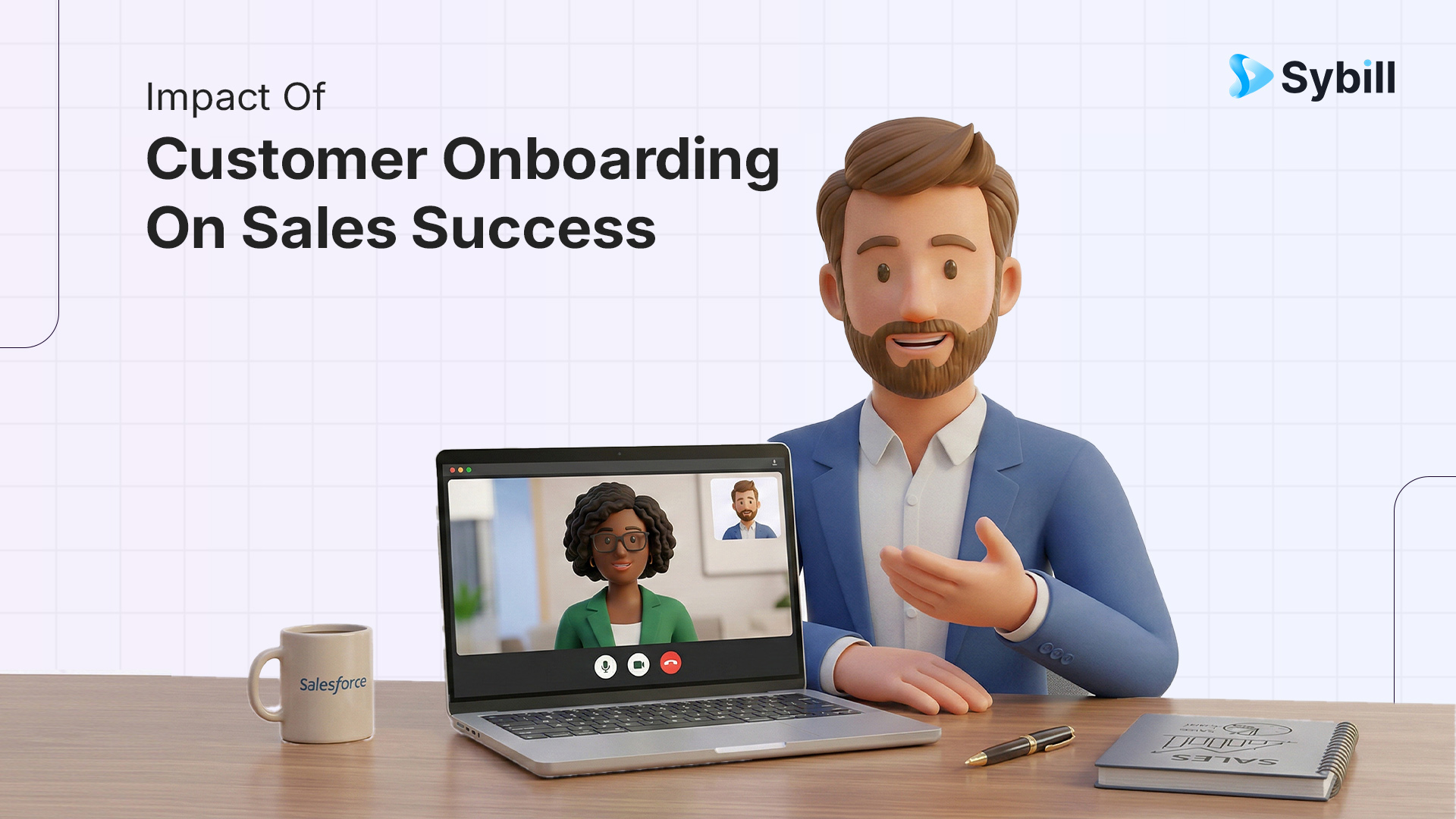
What is the impact of customer onboarding on sales success?
Customer onboarding directly affects revenue through three mechanisms: it reduces early churn, accelerates repeat purchases and expansion, and builds the trust needed for referrals and advocacy. Companies with structured onboarding programs consistently report higher net revenue retention and lower CAC payback periods.
When does customer onboarding actually begin?
Onboarding begins during the sales process, not when the contract is signed. Every expectation set, every goal discussed, and every commitment made during the sale shapes how a customer experiences onboarding. The quality of the sales-to-CS handoff determines whether those inputs actually reach the people running onboarding.
What is the biggest mistake companies make with customer onboarding?
Treating it as a customer success problem instead of a company-wide responsibility. Onboarding success depends on context from sales, infrastructure from product, and execution from CS. When any one of those is missing, the customer feels it.
How does AI improve customer onboarding?
AI improves onboarding primarily by ensuring that everything learned during the sales cycle gets transferred to CS without manual effort. Tools like Sybill automatically capture commitments, goals, and context from sales calls and synthesize them into handoff briefs CS can actually use. During onboarding itself, AI generates meeting summaries, action items, and follow-up emails so CS managers can focus on the relationship rather than the admin.
What is a good time-to-first-value benchmark for B2B SaaS?
It depends heavily on product complexity, but as a general guide: transactional SaaS products should aim for TTV within 24 to 72 hours. Mid-complexity platforms should target first value within the first two weeks. Enterprise implementations with deep integrations may have TTV targets in the 30 to 60 day range, but should have milestone wins built in throughout.
How do you measure onboarding success?
Track TTV, onboarding completion rates, 30/60/90-day retention, and expansion revenue in months three to six. Pair quantitative data with qualitative CS feedback on handoff quality. If your CS team consistently says "we did not know enough about this customer going in," that is a signal worth acting on immediately.
The deal is signed. The hard part is done. Except it is not, not if onboarding drops the baton.
The revenue you worked months to close can evaporate in 90 days if the customer experience after the signature does not match the experience before it. Great onboarding is not a nice-to-have. It is the continuation of your sales motion into the post-sale world.
Sybill is the AI sales assistant that makes sure every onboarding starts with complete context. It captures every call, commitment, and customer nuance from the entire sales cycle and puts it in the hands of your CS team before the first kickoff call. No digging through recordings. No asking the AE to rewrite notes. Just a clean, context-rich handoff that sets onboarding, and the entire customer relationship, up for success.
Get started for free with Sybill and give your customer success team everything they need to make every onboarding a win.
Customer onboarding directly affects revenue through three mechanisms: it reduces early churn, accelerates repeat purchases and expansion, and builds the trust needed for referrals and advocacy. Companies with structured onboarding programs consistently report higher net revenue retention and lower CAC payback periods.
Onboarding begins during the sales process, not when the contract is signed. Every expectation set, every goal discussed, and every commitment made during the sale shapes how a customer experiences onboarding. The quality of the sales-to-CS handoff determines whether those inputs actually reach the people running onboarding.
Treating it as a customer success problem instead of a company-wide responsibility. Onboarding success depends on context from sales, infrastructure from product, and execution from CS. When any one of those is missing, the customer feels it.