Find us at booth #83, join us for a harbor side happy hour, or catch Gorish’s talk.

Sept, 16-18 > Learn more


Tamanna Mishra

March 27, 2026
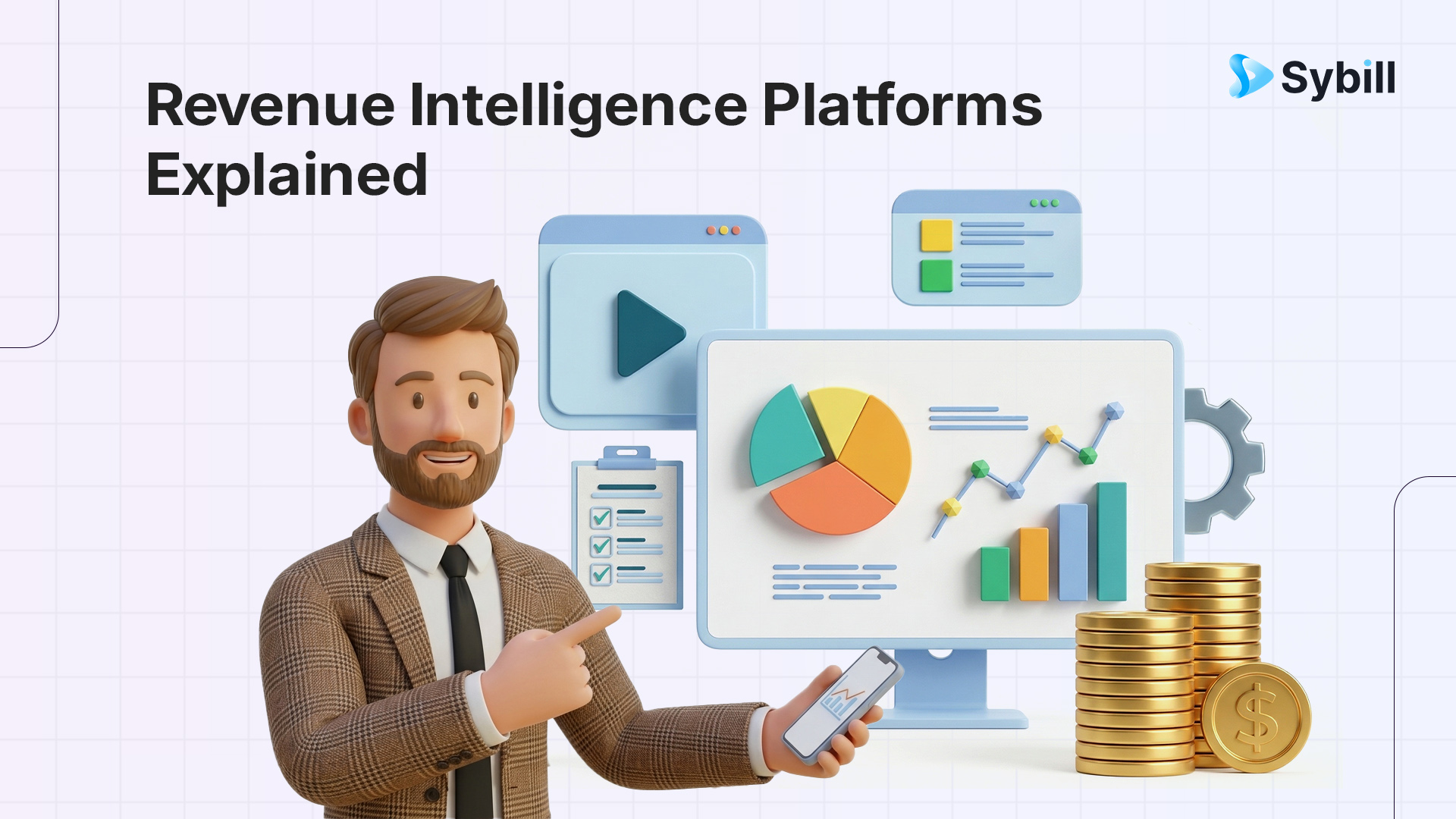
If you have ever sat through a sales forecast meeting, you know the ritual.
The CRM dashboard looks tidy.
The pipeline chart trends upward.
Reps say deals are progressing nicely.
Then leadership asks the inevitable question.
“Are these deals actually real?”
Silence.
Someone says the champion sounded excited.
Another rep says procurement is “just reviewing paperwork.”
The VP of Sales nods slowly while quietly wondering which deals will evaporate before the quarter ends.
Sales forecasting has always had a little theater in it.
The reason is simple. Most pipeline decisions rely on secondhand information.
Sometimes, happy ears.
Reps summarize conversations.
CRM fields are updated from memory.
Deal stages move forward based on optimism.
But the actual signals that determine whether a deal will close are buried inside conversations with buyers.
What questions did the buyer ask?
Did they mention budget?
Did they involve additional stakeholders?
Did a competitor come up?
Revenue intelligence exists to surface those signals.
Instead of guessing what is happening inside deals, revenue intelligence platforms analyze real conversations and pipeline activity to show sales teams what is actually happening.
In this article, we will break down what revenue intelligence is, how revenue intelligence platforms work, and why this category is becoming essential infrastructure for modern revenue teams.
Revenue intelligence is the process of analyzing sales conversations, buyer interactions, and pipeline activity to understand deal health and improve revenue outcomes.
Traditional sales analytics focuses primarily on activity metrics such as:
Those metrics are useful, but they rarely explain why deals progress or stall.
Revenue intelligence focuses on buyer behavior instead.
It analyzes signals that reveal the real status of deals, including:
This approach represents the evolution of predictive vs prescriptive sales analytics.
First came basic sales reporting.
Then came conversation intelligence tools that transcribed calls.
Revenue intelligence goes a step further by connecting conversation insights directly to pipeline performance and revenue outcomes.
When organizations adopt revenue intelligence, sales data shifts from simple reporting to actionable insight.
Instead of asking, “How many calls did we make?” leaders can ask more meaningful questions:
That level of visibility fundamentally changes how sales teams forecast, coach, and execute deals.
A revenue intelligence platform is software that captures and analyzes sales interactions to generate insights about deals, pipeline health, and sales performance.
These platforms collect data from multiple sources across the sales process.
Typical data sources include:
Once this data is captured, artificial intelligence analyzes conversations to identify patterns and signals that influence deal outcomes.
A revenue intelligence platform then connects these signals directly to pipeline opportunities and forecasting models.
This allows revenue teams to move beyond activity tracking toward a deeper understanding of buyer behavior.
In practice, revenue intelligence platforms help teams:
Instead of relying solely on CRM updates, revenue intelligence platforms provide a more complete view of how deals are actually progressing.
To understand how revenue intelligence works, it helps to think of the process as a four-stage system.
Each stage converts raw sales activity into structured insight.
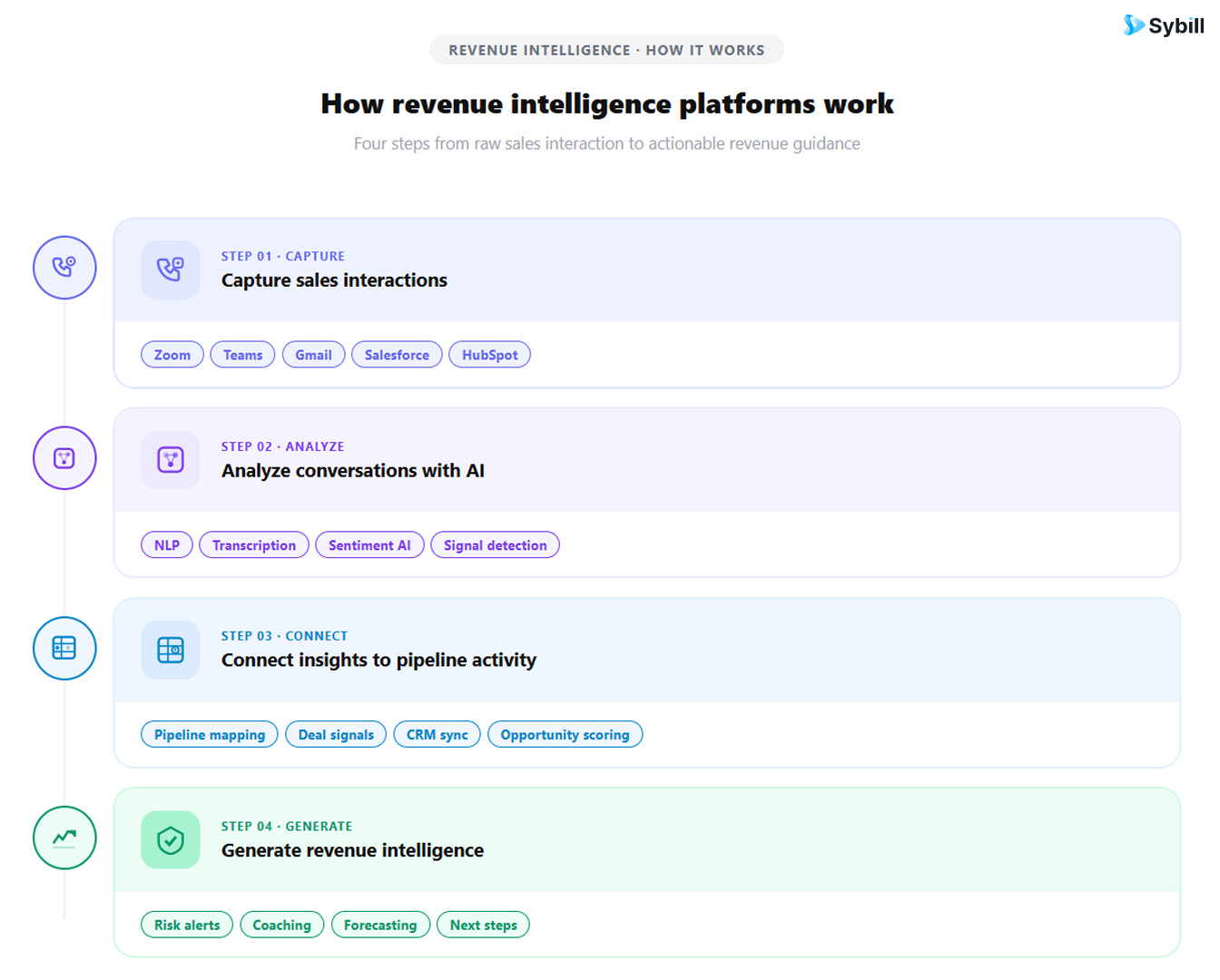
Step 1: Capture sales interactions
The first step is capturing interactions between sales teams and buyers.
Revenue intelligence platforms record and collect data from:
This creates a detailed record of customer conversations and engagement patterns.
Once conversations are captured, artificial intelligence analyzes the content to detect important signals.
These may include:
This analysis transforms raw conversation transcripts into meaningful insights.
Next, these insights are mapped directly to opportunities inside the CRM pipeline.
For example, the platform may identify:
This step is critical because it links conversation signals to real pipeline outcomes.
Finally, the platform converts these insights into guidance for sales teams.
Examples include:
This is the stage where raw sales activity becomes true revenue intelligence.
Not all revenue intelligence tools are built the same way.
The most effective revenue intelligence platforms combine several layers of technology to transform sales conversations into actionable insight.
Conversation intelligence analyzes sales calls and meetings.
This includes:
Conversation intelligence forms the foundation of revenue intelligence.
Without accurate conversation analysis, deeper insights become unreliable.
Deal intelligence connects conversation insights directly to pipeline opportunities.
It surfaces signals such as:
These insights help revenue leaders understand which deals are progressing and which may be at risk.
One of the biggest productivity drains in sales is manual CRM updates.
Revenue intelligence software can automatically update CRM fields using insights extracted from conversations.
This improves both data accuracy and forecasting visibility.
Revenue intelligence platforms can identify patterns in sales conversations that highlight coaching opportunities.
Examples include:
Managers can then coach sales reps using real examples from actual customer conversations.
The newest generation of revenue intelligence platforms also automate actions such as:
This capability moves revenue intelligence from analysis to execution.
Platforms like Sybill combine conversation intelligence, CRM automation, and AI-driven actions into a single workflow.

When implemented effectively, revenue intelligence platforms can transform how sales organizations operate.
Here are some of the most significant benefits.
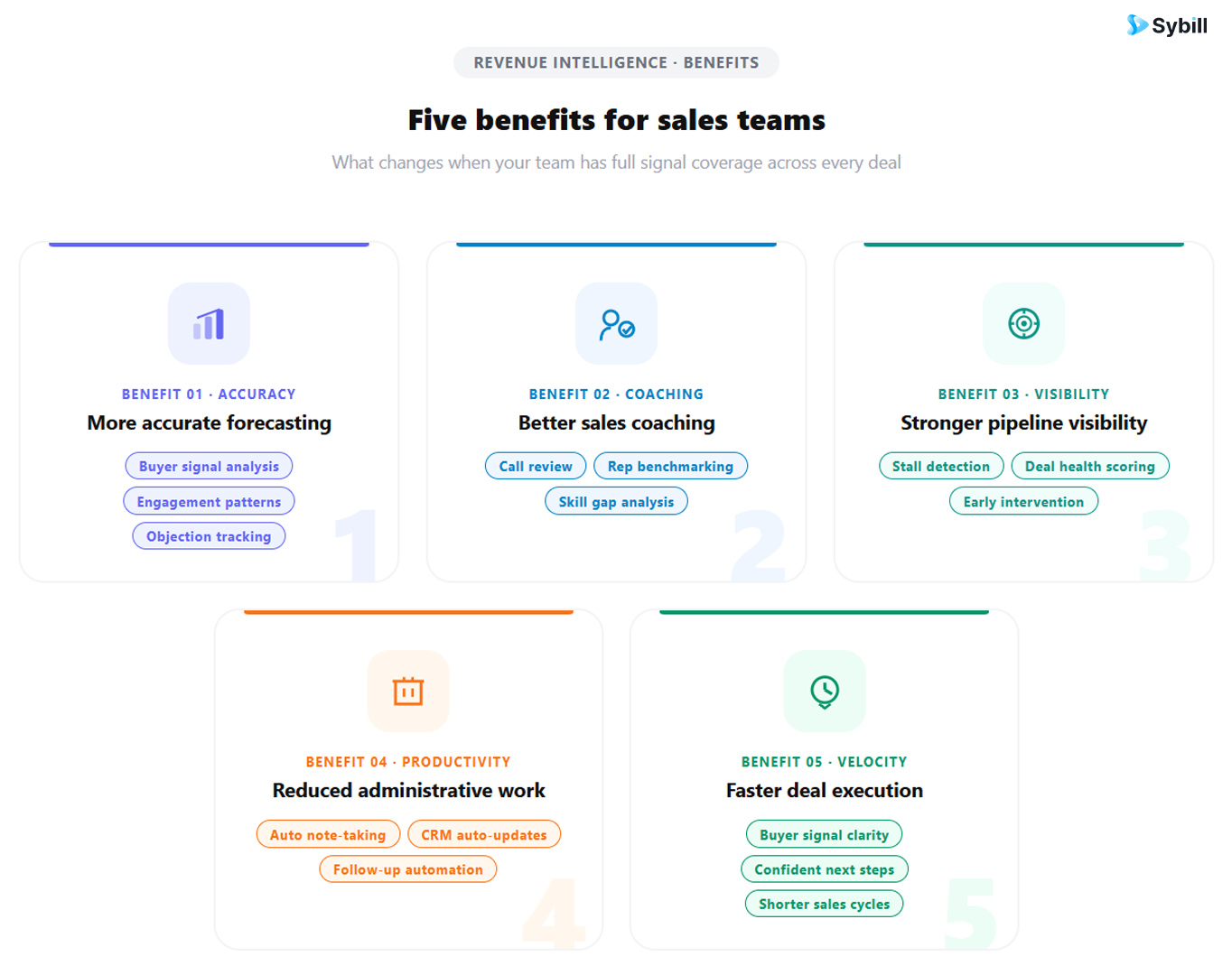
Revenue intelligence improves forecast accuracy by incorporating real buyer signals into pipeline analysis.
Instead of relying only on stage progression, leaders can evaluate engagement patterns and objections raised during conversations.
Managers can review actual sales conversations to identify strengths and weaknesses in rep performance.
This makes coaching far more effective than relying on anecdotal feedback.
Revenue intelligence platforms reveal how deals are actually progressing.
This helps leaders identify stalled opportunities earlier and intervene before deals collapse.
Many revenue intelligence platforms automate note taking, CRM updates, and follow-up tasks.
This allows sales reps to spend more time selling and less time managing administrative work.
When sales teams understand buyer signals more clearly, they can move deals forward with greater confidence and speed.
Revenue intelligence platforms deliver value across multiple roles within revenue organizations.
Sales leaders benefit from improved forecasting accuracy and deeper pipeline visibility.
They can identify risks earlier and allocate resources more effectively.
RevOps teams gain a more accurate view of pipeline health and performance metrics.
Revenue intelligence also improves data quality across CRM systems.
Managers can use conversation insights to coach sales reps more effectively.
This enables targeted coaching that improves performance over time.
Reps benefit from automated summaries, CRM updates, and follow-up suggestions.
This reduces administrative work and helps reps focus on advancing deals.
Modern sales teams face several persistent challenges that revenue intelligence platforms are designed to address.
Deals often appear healthy in CRM systems but stall unexpectedly.
Revenue intelligence platforms detect risk signals earlier by analyzing buyer conversations.
Sales reps frequently forget or delay CRM updates.
Revenue intelligence tools automatically capture insights from conversations, improving data accuracy.
Important deal signals often appear inside conversations rather than CRM fields.
Revenue intelligence platforms analyze these conversations to surface critical insights.
Without conversation analysis, managers must rely on anecdotal feedback.
Revenue intelligence platforms provide concrete examples from real customer interactions.
The revenue intelligence category is evolving rapidly.
Early tools focused mainly on analyzing past conversations.
The next generation of platforms is moving toward real-time guidance and automated actions.
Key trends shaping the future of revenue intelligence include:
In other words, revenue intelligence platforms are evolving into AI sales copilots.
These systems will not only analyze sales activity but also actively guide sales teams toward better outcomes.
Revenue teams generate an enormous amount of data through conversations, meetings, and pipeline activity.
But data alone does not create clarity.
Revenue intelligence platforms transform these signals into structured insight that helps organizations forecast more accurately, coach more effectively, and execute deals with greater confidence.
As AI capabilities continue to evolve, revenue intelligence is becoming foundational to modern sales operations.
Organizations that adopt revenue intelligence platforms gain a clearer understanding of buyer behavior and pipeline health.
Revenue intelligence is the process of analyzing sales conversations, buyer interactions, and pipeline data to understand deal health and improve revenue outcomes.
A revenue intelligence platform captures and analyzes sales interactions such as calls, meetings, and emails to generate insights about pipeline health, buyer behavior, and sales performance.
Revenue intelligence platforms analyze buyer engagement signals and conversation data to detect deal risks and opportunities earlier. This provides a more accurate picture of pipeline health than relying on CRM updates alone.
Examples of revenue intelligence tools include platforms such as Sybill, Gong, Clari, People.ai, Revenue.io, and Salesloft. These tools analyze sales conversations and pipeline data to improve forecasting and deal execution.
Revenue intelligence is the process of analyzing sales conversations, buyer interactions, and pipeline data to understand deal health and improve revenue outcomes.
A revenue intelligence platform captures and analyzes sales interactions such as calls, meetings, and emails to generate insights about pipeline health, buyer behavior, and sales performance.
Revenue intelligence platforms analyze buyer engagement signals and conversation data to detect deal risks and opportunities earlier. This provides a more accurate picture of pipeline health than relying on CRM updates alone.