Find us at booth #83, join us for a harbor side happy hour, or catch Gorish’s talk.

Sept, 16-18 > Learn more


Tamanna Mishra

March 18, 2026
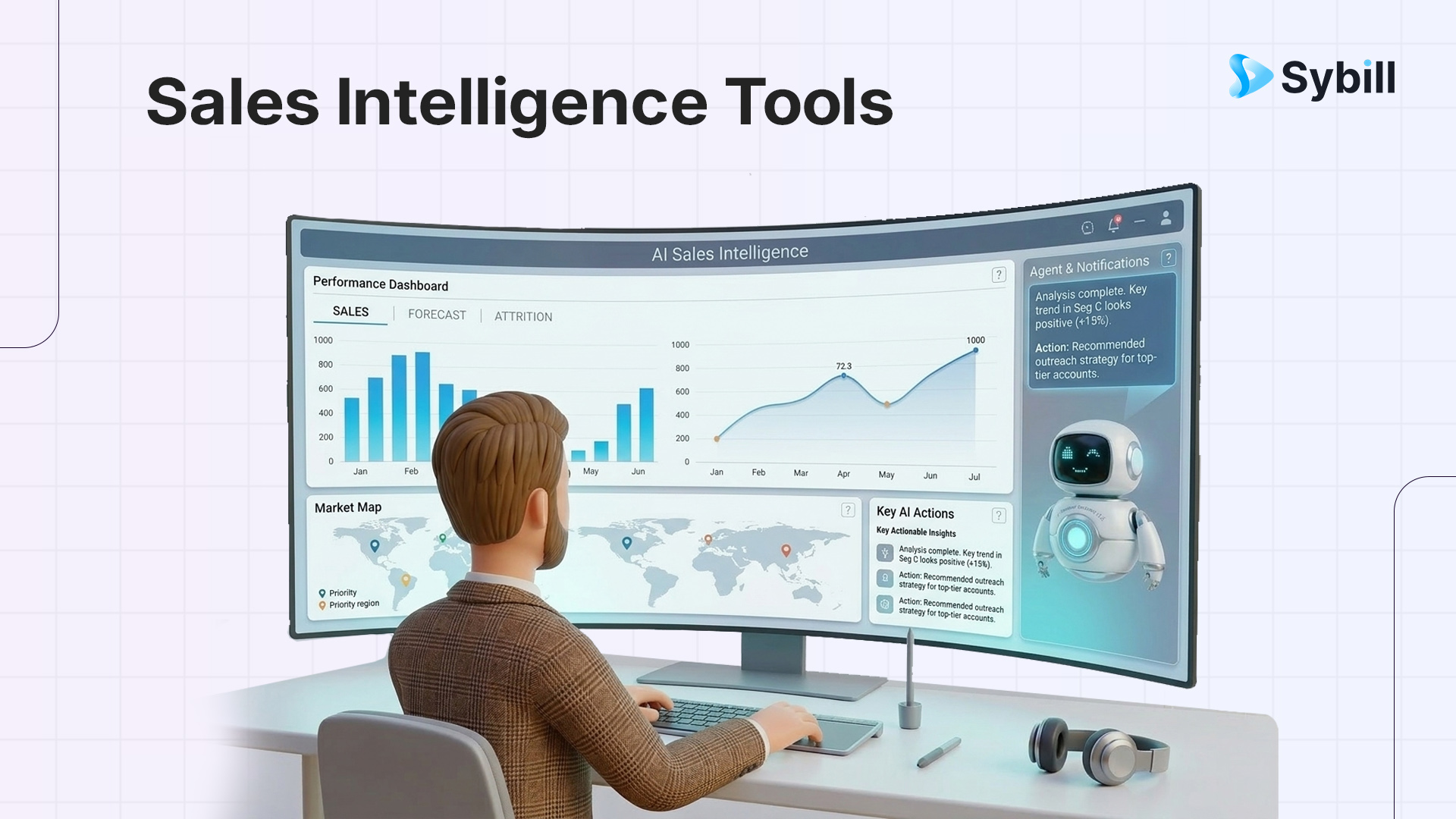
Sales teams today are not short on technology. What they are definitely short on is clarity.
A typical sales rep operates inside a stack that includes a CRM, meeting tools, email platforms, sales engagement systems, and multiple dashboards. Every call is recorded. Every email is logged. Every activity is tracked.
Yet when pipeline reviews happen, the same questions appear again and again:
Which deals are actually real?
Which prospects are serious buyers?
Why did the last three deals stall?
This is the paradox of modern selling. Sales teams produce enormous amounts of data, but very little of it turns into actionable insight.
Instead of forcing reps and managers to manually interpret scattered signals, sales intelligence software analyzes buyer behavior, deal activity, and conversation patterns to surface insights that help teams make faster, smarter decisions.
In this guide, we explain:
Sales intelligence tools are platforms that collect, analyze, and interpret data about prospects, buyers, and sales activity in order to help sales teams make better decisions.
Instead of simply storing information, a sales intelligence platform converts activity signals into insights that guide sales strategy.
These platforms typically gather data from multiple sources:
CRM activity
Sales calls and meetings
Email interactions
Prospect and firmographic data
Intent signals
The system then analyzes those signals to surface insights such as:
Put simply:
Sales data tells you what happened.
Sales intelligence tells you what to do next.
The category has evolved significantly over the last decade.
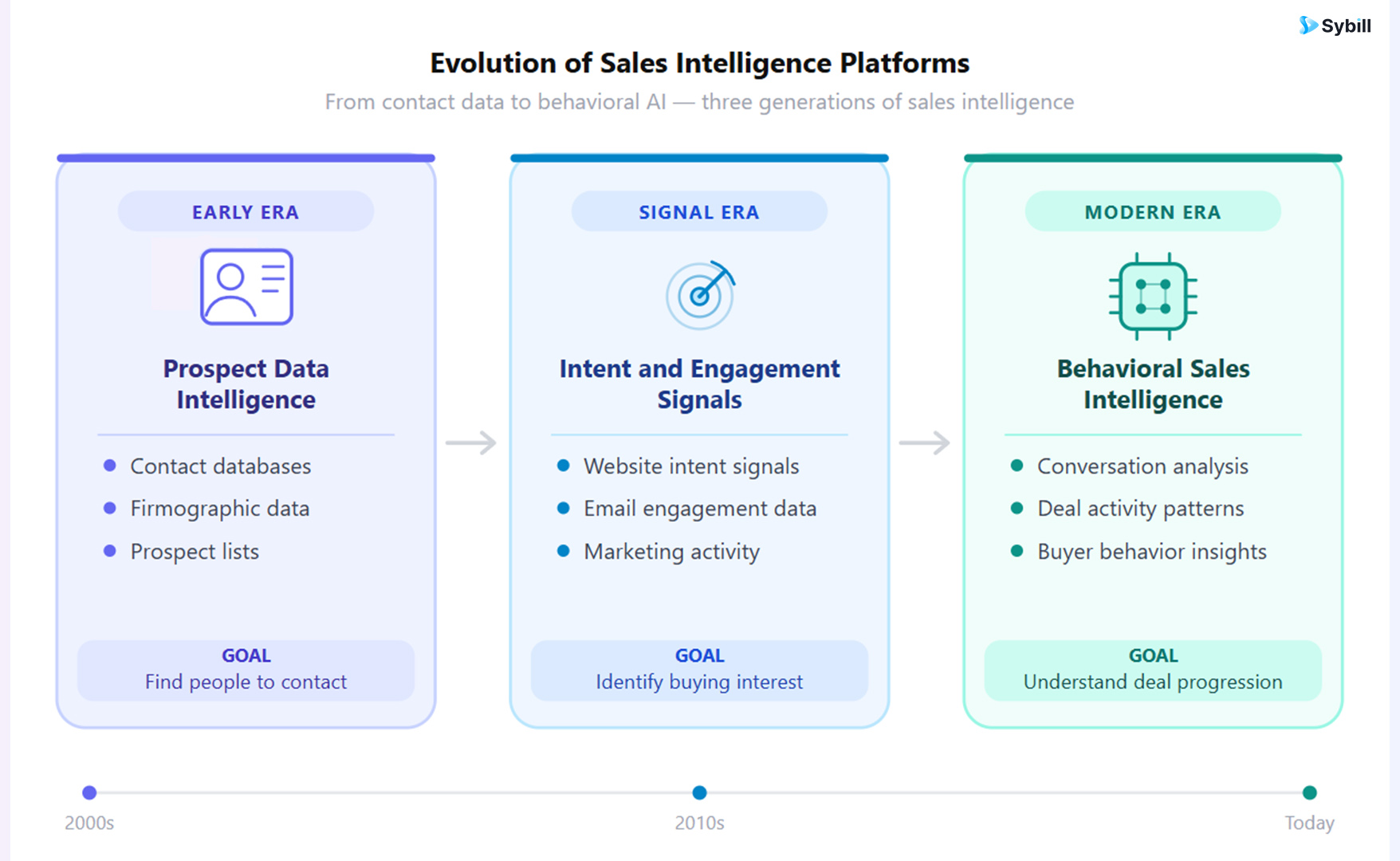
Early sales intelligence tools focused mainly on prospect data. They helped sales teams find contact information, company details, and firmographic attributes to improve outbound prospecting.
These tools were useful, but they only answered one question: Who should we contact?
Modern sales intelligence software goes much further.
Today’s platforms analyze sales conversations, deal activity, and buyer engagement to reveal patterns that help teams understand how deals actually progress.
Instead of just helping teams find prospects, modern sales intelligence platforms help teams understand buyer behavior inside the sales cycle.
A typical sales intelligence platform operates in three stages: collecting signals, analyzing patterns, and delivering insights directly into sales workflows.
The system gathers signals from across the revenue stack, including:
CRM systems
Call recordings and transcripts
Email interactions
Intent data
Prospect databases
These signals create a unified view of prospect behavior and deal activity.
Modern sales intelligence software uses machine learning and AI to analyze patterns such as:
Buyer engagement signals
Conversation topics and objections
Deal progression patterns
Rep activity patterns
The goal is to detect patterns humans would struggle to identify manually.
Finally, the platform surfaces insights directly inside the sales workflow.
Examples include:
Deal risk alerts
Suggested next steps
Automated CRM updates
Coaching insights for sales reps
Instead of digging through dashboards, reps receive actionable insights during the selling process.
The ultimate goal is simple: remove guesswork from selling.
Sales intelligence tools create value across the entire revenue organization, from individual reps to sales leadership.
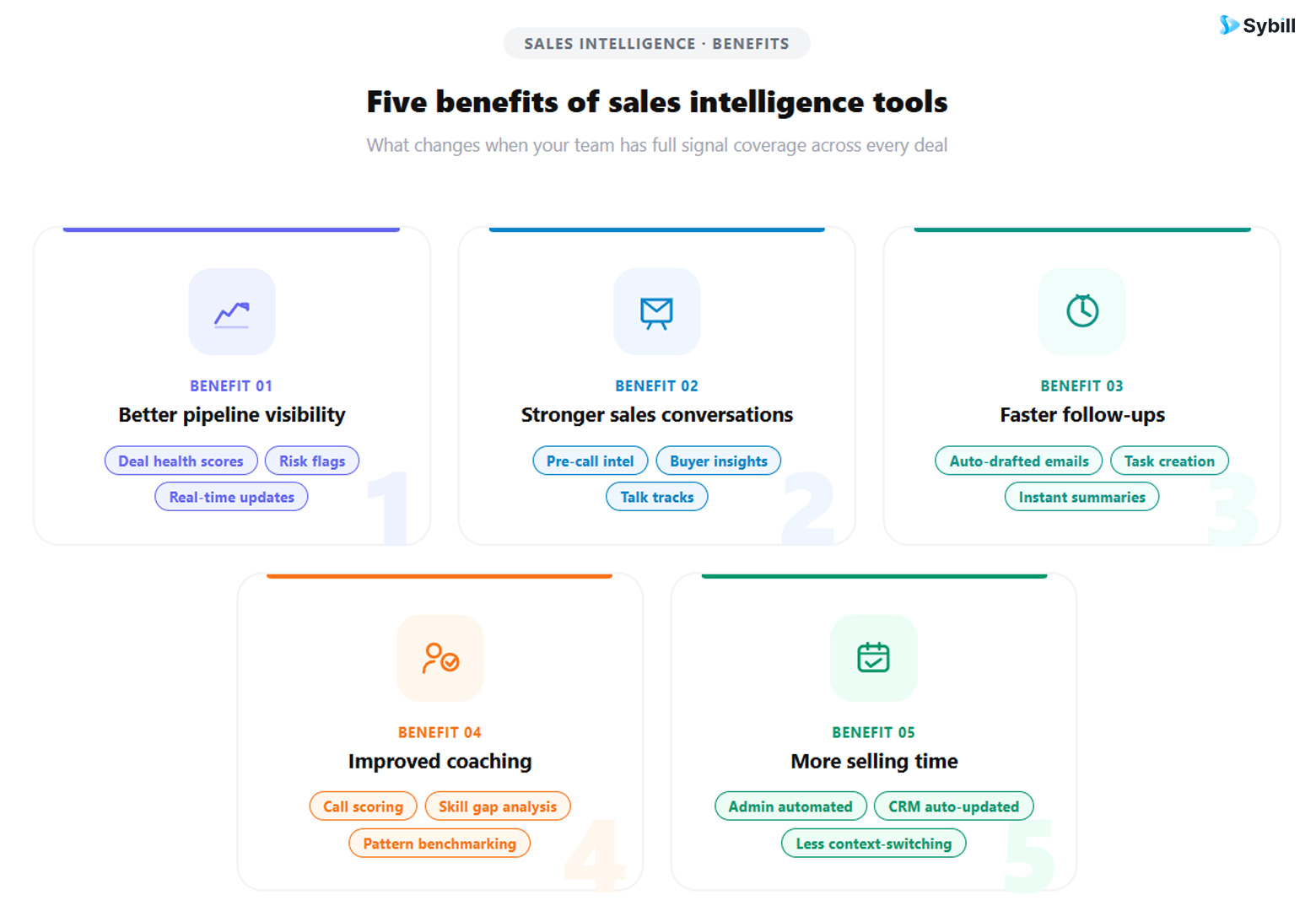
Managers gain a clearer understanding of which deals are healthy and which opportunities need intervention.
By analyzing previous calls and buyer responses, reps learn what messaging works best and which objections require preparation.
Automatically generated insights and summaries help reps respond quickly with relevant information after meetings.
Managers can identify patterns across top-performing reps and apply those insights to the broader team.
Automation reduces repetitive tasks such as CRM updates, call notes, and follow-up emails.
The result is a sales team that spends less time documenting activity and more time closing deals.
When evaluating B2B sales intelligence tools, teams should prioritize platforms that deliver actionable insight rather than simply collecting more data.
The best sales intelligence platforms provide several key capabilities.
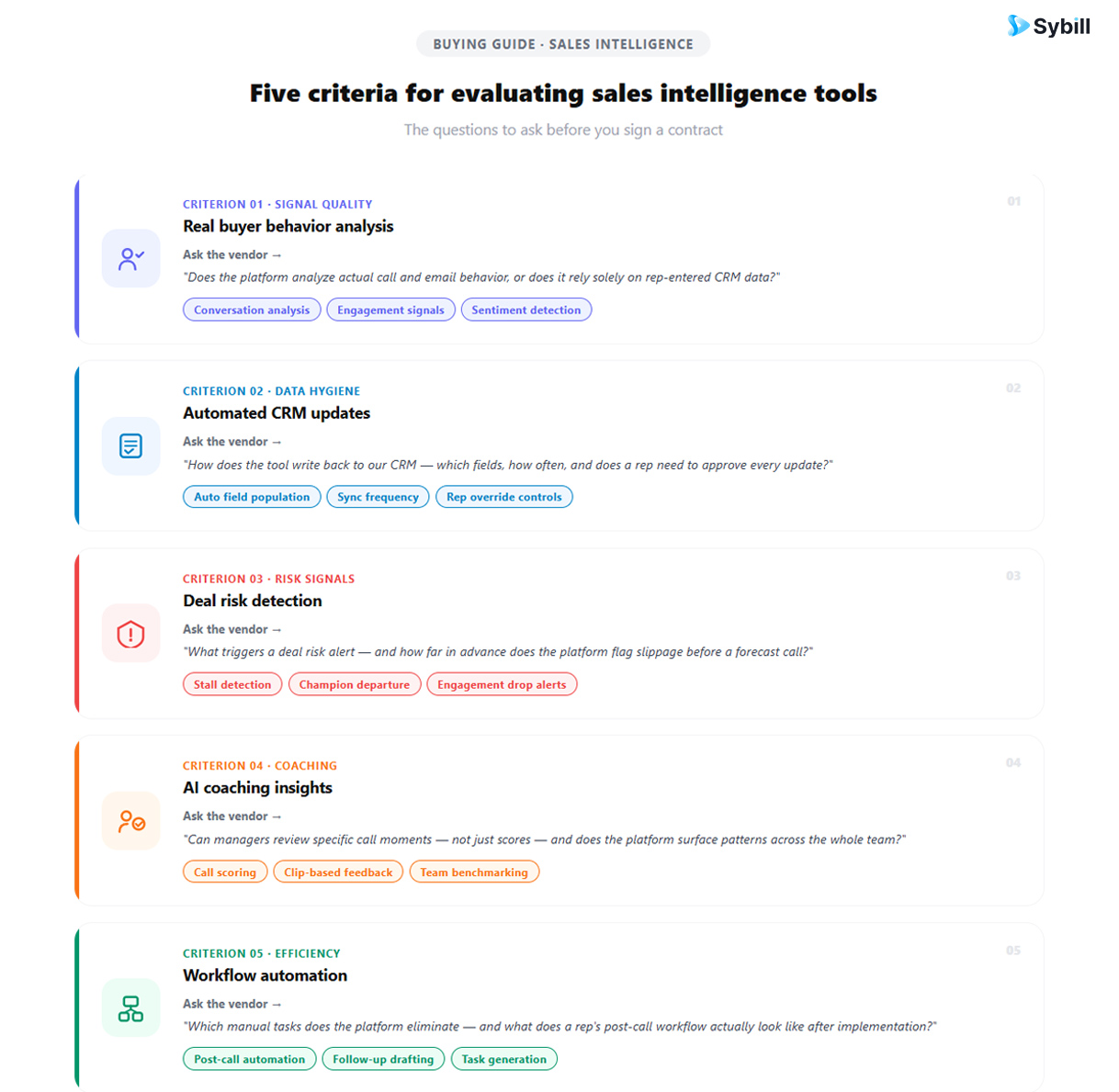
Modern tools analyze real conversations and deal interactions rather than just prospect databases.
Manual CRM data entry slows down adoption. Effective platforms automatically capture insights and update fields.
The ability to identify stalled deals early allows managers to intervene before opportunities are lost.
Advanced platforms highlight patterns in successful sales conversations and provide coaching recommendations.
The strongest tools integrate directly into everyday workflows instead of forcing users to check another dashboard.
If a platform produces more reports but fewer decisions, it is probably not delivering true sales intelligence.
The sales intelligence platform category is evolving rapidly.
Earlier tools focused primarily on contact databases and prospect enrichment. They helped teams find new prospects and gather firmographic information.
Today’s platforms analyze sales conversations and buyer engagement.
The next generation of sales intelligence software will push even further toward automation.
Future platforms will combine:
In other words, sales intelligence is moving from data collection to decision automation.
Instead of telling sales teams what happened, these platforms will increasingly recommend or even execute the next best action.
Tools like Sybill are already moving in this direction. By combining buyer behavior analysis, automated CRM updates, deal intelligence, and AI-driven coaching, platforms like Sybill help sales teams act on insights immediately instead of manually interpreting data.

Sales teams generate more activity data than ever before. But data alone does not close deals.
Sales intelligence tools turn scattered signals into clear insight. They help teams understand:
When implemented well, a sales intelligence platform becomes the decision layer of the revenue organization. Every conversation and deal interaction makes that system smarter.
Sales intelligence tools help sales teams gather and analyze data about prospects, buyers, and sales activity. These platforms use analytics and AI to reveal insights about buyer behavior, deal progress, and sales performance.
Sales intelligence software helps teams prioritize prospects, understand buyer signals, improve sales conversations, and automate administrative tasks such as CRM updates and call summaries.
No. Many B2B sales intelligence tools are designed for teams of all sizes. Smaller teams use them to improve prospecting efficiency and follow-ups, while larger teams rely on them for pipeline visibility, coaching insights, and deal intelligence.
Sales intelligence tools help sales teams gather and analyze data about prospects, buyers, and sales activity. These platforms use analytics and AI to reveal insights about buyer behavior, deal progress, and sales performance.
Sales intelligence software helps teams prioritize prospects, understand buyer signals, improve sales conversations, and automate administrative tasks such as CRM updates and call summaries.
No. Many B2B sales intelligence tools are designed for teams of all sizes. Smaller teams use them to improve prospecting efficiency and follow-ups, while larger teams rely on them for pipeline visibility, coaching insights, and deal intelligence.